Laura May's Recipe for Kitchen Magic
Inside the pages of Kitchen Magic: Over 65 Enchanting Recipes and Rituals for a Cozy, Witchy Kitchen and the stories that inspired them
By: The Lace Ledger Staff
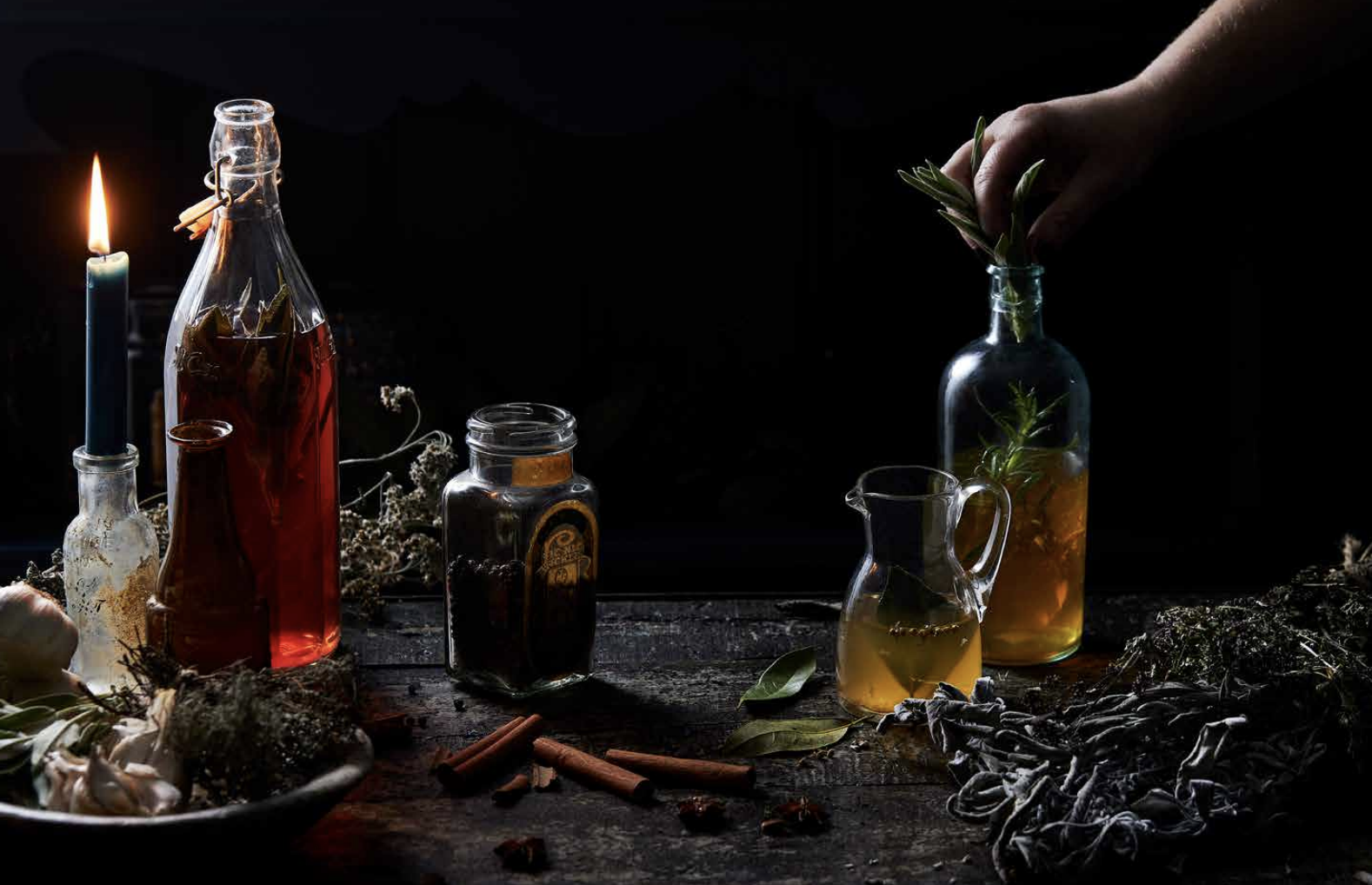
Photo Credit: Andrew Burton Photography
It's easy to forget where our food comes from when most of us move through at least one meal each day on autopilot. Breakfast between emails. Lunch at our desks. Dinner in front of the television. Laura May, cookbook author and creator of @lauramayritualkitchen invites us to slow down, reconnecting with seasonality (and the harvests they yield) and rediscovering the folklore hidden in the ingredients we enjoy every day.
Laura shares her favourite summer kitchen witch ingredients for everything from allergy remedies and herbal teas to midsummer menus, seasonal rituals and the meals that carry us from breakfast through supper, along with the meanings behind the ingredients.
1. Your work is rooted in ritual, folklore, seasonality and a very intimate relationship with the natural world. Looking back, what first drew you toward that way of living? Were there early experiences or family traditions that shaped your fascination with kitchen magic?
I was lucky enough to grow up as a feral child in the English countryside - probably with less supervision than would be advisable, but I am so grateful that nature became my caretaker, guardian and confidant. The story with food is very much the same. I was a pub kid, so there was very little time for childcare and cooking because my mum was always behind the bar. I had to learn to cook for myself from a very young age. Sometimes I would cook my dinner on a fire outside in a den I had built. I was always trying to carve out a little corner of the world for myself in nature, and it was always quite domestic. Thickly leafed ground ivy could be a bedroom, tree stumps level enough to place a cup on would be the dining table, and low-slung branches I could hang my coat on became the wardrobe. The idea that I had everything I needed in nature (food and a home) is still something that I find really appealing.
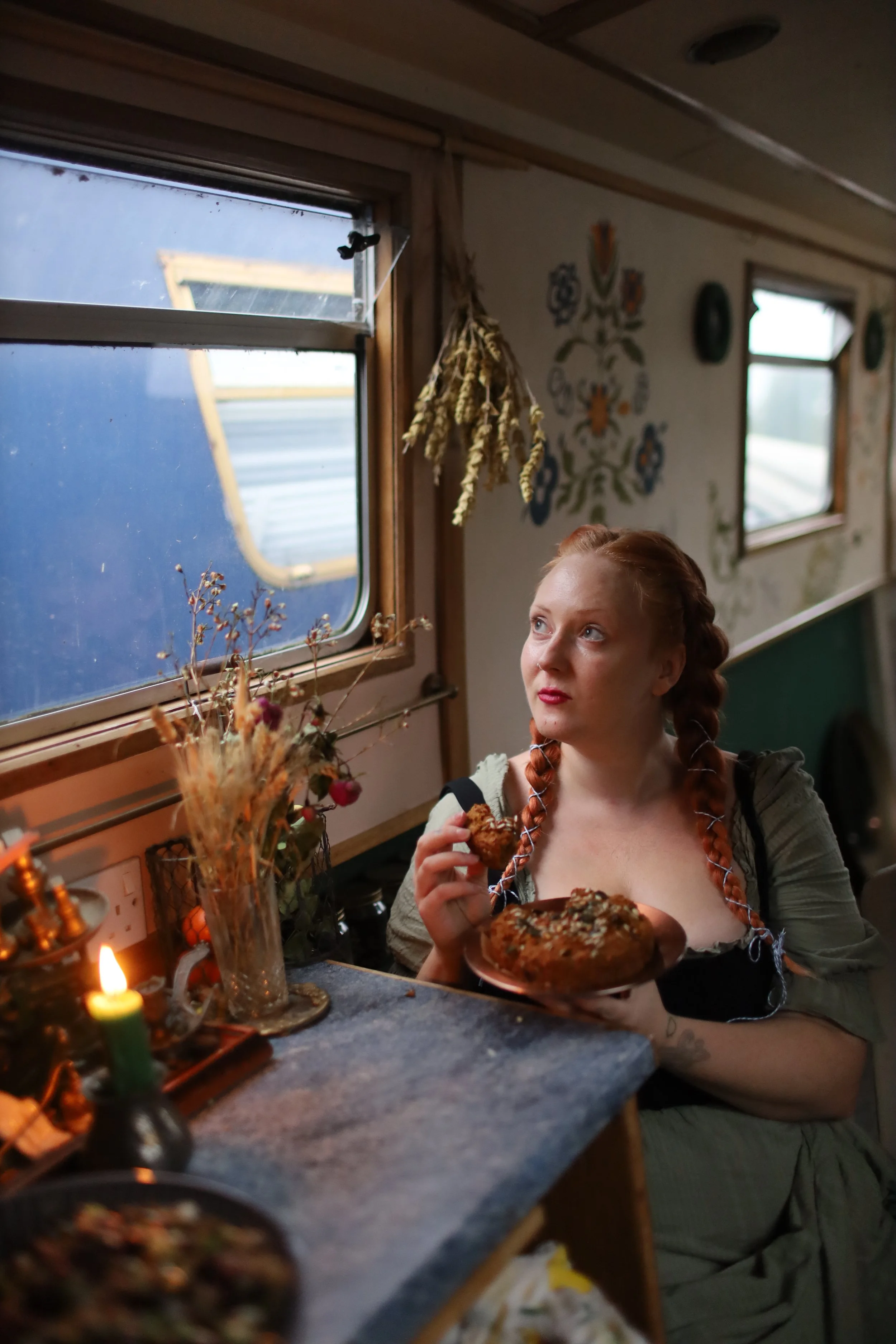
Photo Credit: Laura May
2. So much of what you do seems to sit at the crossroads of instinct and academia. I’m curious what your learning process looks like: are you someone who falls down research rabbit holes, learns by doing, collects old books, asks questions, or experiments in the kitchen?
I have always been a curious person, but it took me a long time to appreciate any kind of academia. It was always something slightly beyond my world, something that I didn’t have the language or the credentials for, and my protection from that was to disengage from it and stay in what I thought was my lane. What has helped me to mature out of that mindset is the accessibility of knowledge. I have hundreds of books. I dip into one, which might spark a memory or an idea that relates to another. I am often scrawling down an idea with 5 or 6 books laying open for cross reference at once. Travel is an important factor because so much folklore is tied to a specific place, maybe a building, a tree or a whole landscape. I also love podcasts and falling down Wikipedia rabbit holes. Knowledge is everywhere and so accessible now.
When it comes to practical things like cooking, I am very much making it up as I go. And I am certainly not a chef. I’m a slapdash home cook who loves to play around, but I do not have the patience for precise and intricate cooking and baking. I have been lucky with foraging, as that seems to come relatively easily. I have a terrible memory for facts and figures, but once I've met a plant I tend to remember its story, how it looks and smells, and how to identify it. The plants I struggle with are the ones without much lore or use beyond their beauty.
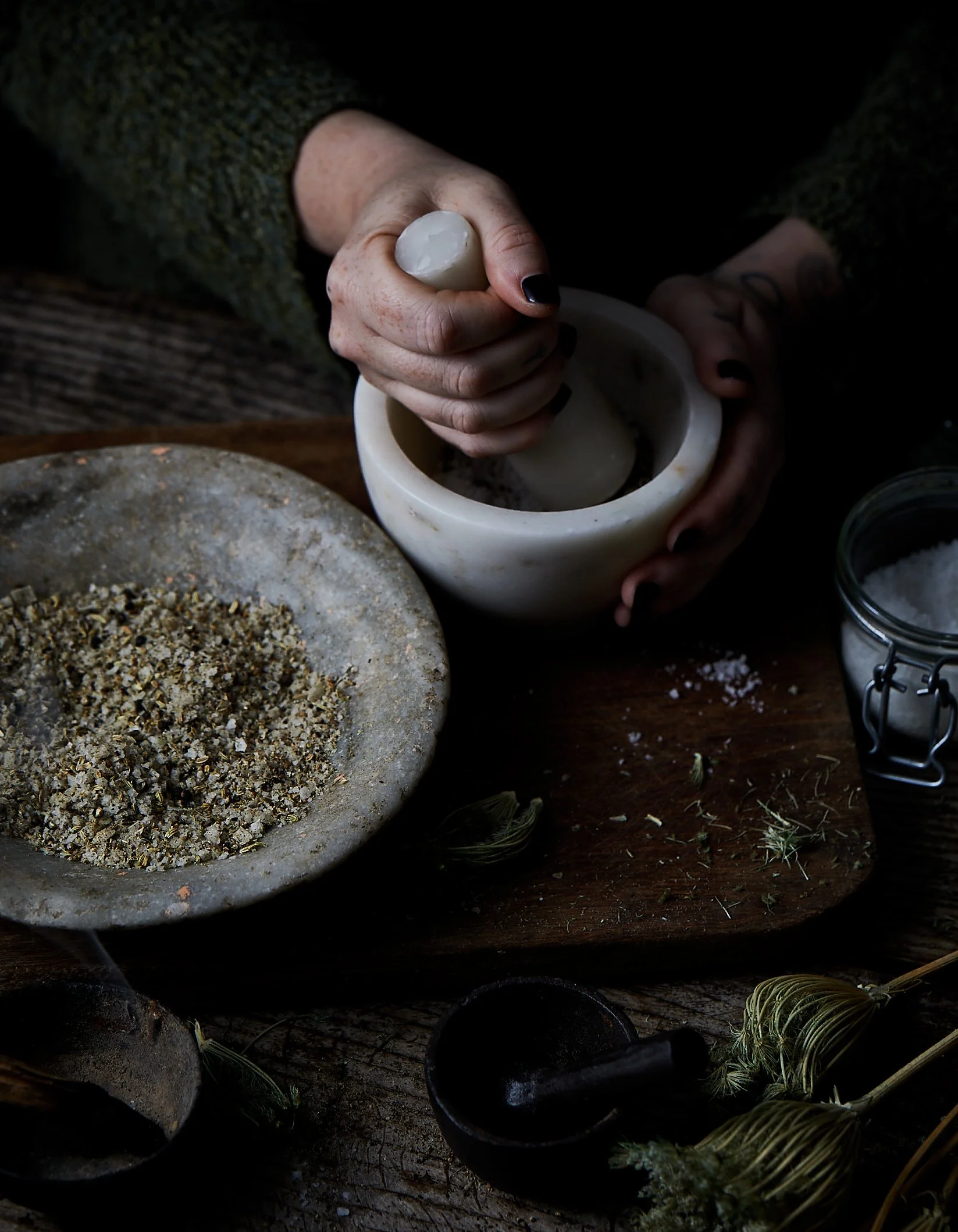
Photo Credit: Andrew Burton Photography
3. Living aboard a narrowboat feels almost mythic from the outside; part domestic life, part pilgrimage, part floating cottagecore fever dream. How has life on the water changed your relationship to cooking, ritual and the pace of your days?
Buying my boat has transformed my entire life. I am not quite the same person I was six years ago when I met her. We have had so many adventures, happy memories and challenges. I was already experimenting with kitchen witchery and ritual cooking for a few years prior to getting my boat, but she really gave me the space (ironic for a place so small) to curate my life around that as I saw fit. Even in small and silly ways; I had lived with a partner or in house shares since I was 17 - suddenly I didn’t have to wait to use the kitchen until someone else was done. I didn’t have to apologize for leaving a proving loaf of dough on the side or a pile of nettles in the sink. I loved living with people, but having even the tiniest kitchen all to myself was so formative.
One thing that is hidden behind the idyllic, dreamy imagery of the boat is that I have anxiety issues that have always been exacerbated by the boat, and have never truly gone away. Some of the shortcuts, or perhaps eccentricities, within how I cook are down to the fact that I didn’t have a fridge for many years (I didn’t like having to run the engine for the extra power), or I would do what I could to not use water and excess gas. The boat carried me into an entirely different life, but I feel that another may be on the horizon.
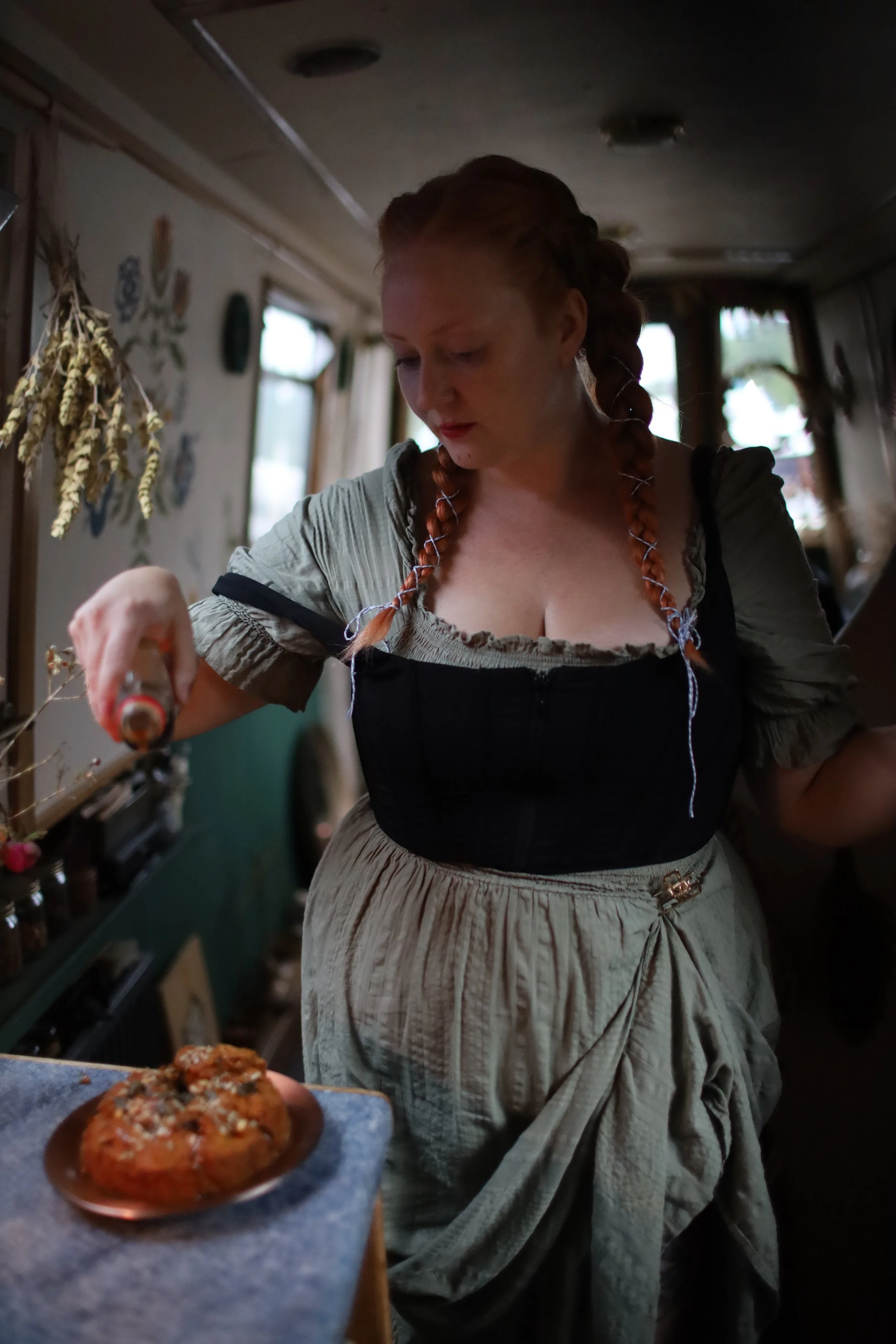
Photo Credit: Laura May
4. With summer in full swing, are there any herbs, ingredients or rituals you personally return to each year for allergy support? We’d love to know what has earned a permanent place in your own kitchen apothecary.
I am incredibly lucky that I don’t suffer from any allergies or hay fever, and each year I am so grateful because I have witnessed how people around me seem to be struggling more and more. One thing that I make for them is an alternative to "local honey". Local honey is often cited as a way of improving hay fever as it exposes you to tiny doses of the pollen in your environment. The theory itself doesn’t stand up that well to scrutiny, but there are certain plants that can help.
I make a "Meadow Maple" by steeping nettles, apple and elderflower in maple syrup for a few days and then straining it to use as an elixir. Nettle has been used against allergies for centuries. It contains compounds which have mildly antihistamine and anti-inflammatory effects, and you don’t need to sting yourself with them, you can ingest them instead. Elderflower supports the upper respiratory tract, and apple is rich in quercetin. I also make nettle seed dukkah, which is a firm favourite.
5. If you were building the ideal midsummer breakfast, what ingredients would be at the centre of it — and why? What you reach for to start your day, considering both seasonally-inspired flavour and availability, as well as ritual-driven purpose.
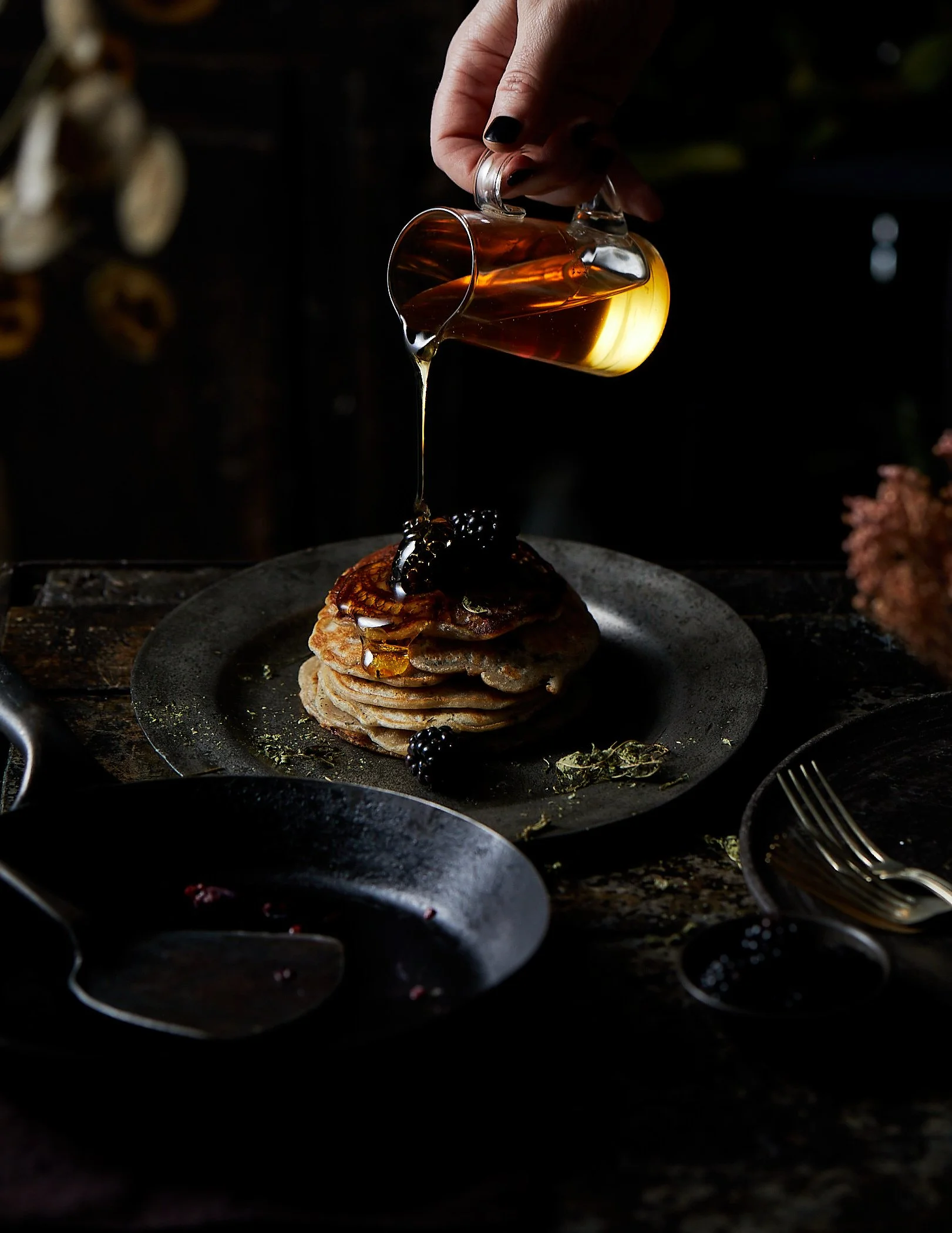
An ideal summer breakfast for me would be a long table covered in various jams and curds, baked goods and pancakes, freshly made flower syrups for coffees and teas, all being passed around by my friends. I have never been a huge breakfast person. I prefer making it to eating it, but I love adorning the tablescape with fresh flowers and treats for my friends.
In early summer I’d be making syrups and jams with elderflower and strawberry, both such unmistakable summer flavours which go together so well. Elderflowers are associated with witches, fairies and protection. I love lilacs for sweetness and lady’s smock for a little pep. In mid to late summer it’ll be jams made with wild golden plums, greengage, gooseberries and blackberries. I especially love blackberries for their association with transformation. The threshold between summer and autumn means they have always had a connection to death and rebirth. Once the elderberries come out, I like to make a daily tonic for keeping illness at bay as they are so associated with protection and are both anti-inflammatory and antimicrobial.
6. What does a summer lunch look like when you want something seasonal and satisfying while retaining its romance? Are there ingredients, textures or flavour combinations you think are especially underrated this time of year?
I recently got back from my second summer visit to see a friend in Oslo, something which I hope can be a summer tradition for a long time. One thing we really focus on there is food. Whether we are going for a hike, a swim in the sea or camping in the woods, food is usually at the centre. For that reason, summer lunches are often outside, on the go or a picnic. There is something so satisfying about unfurling parchment paper-wrapped sandwiches while sat on a log.
If I’m at home, I love a summer salad selection. Fruits with herbs go particularly well. Peach and tarragon, mint and apple, served with something creamy like a thick yoghurt dressing or whipped lemon tofu and sprinkled with a crunch - toasted pine nuts or crispy chickpeas. All decorated with wild petals to make it beautiful.
7. Dinner can be especially atmospheric in summer — later light, open windows, herbs on the table, a little ceremony to it all. What are your favourite ingredients to build a summer supper around, and what makes them so compelling to cook with?
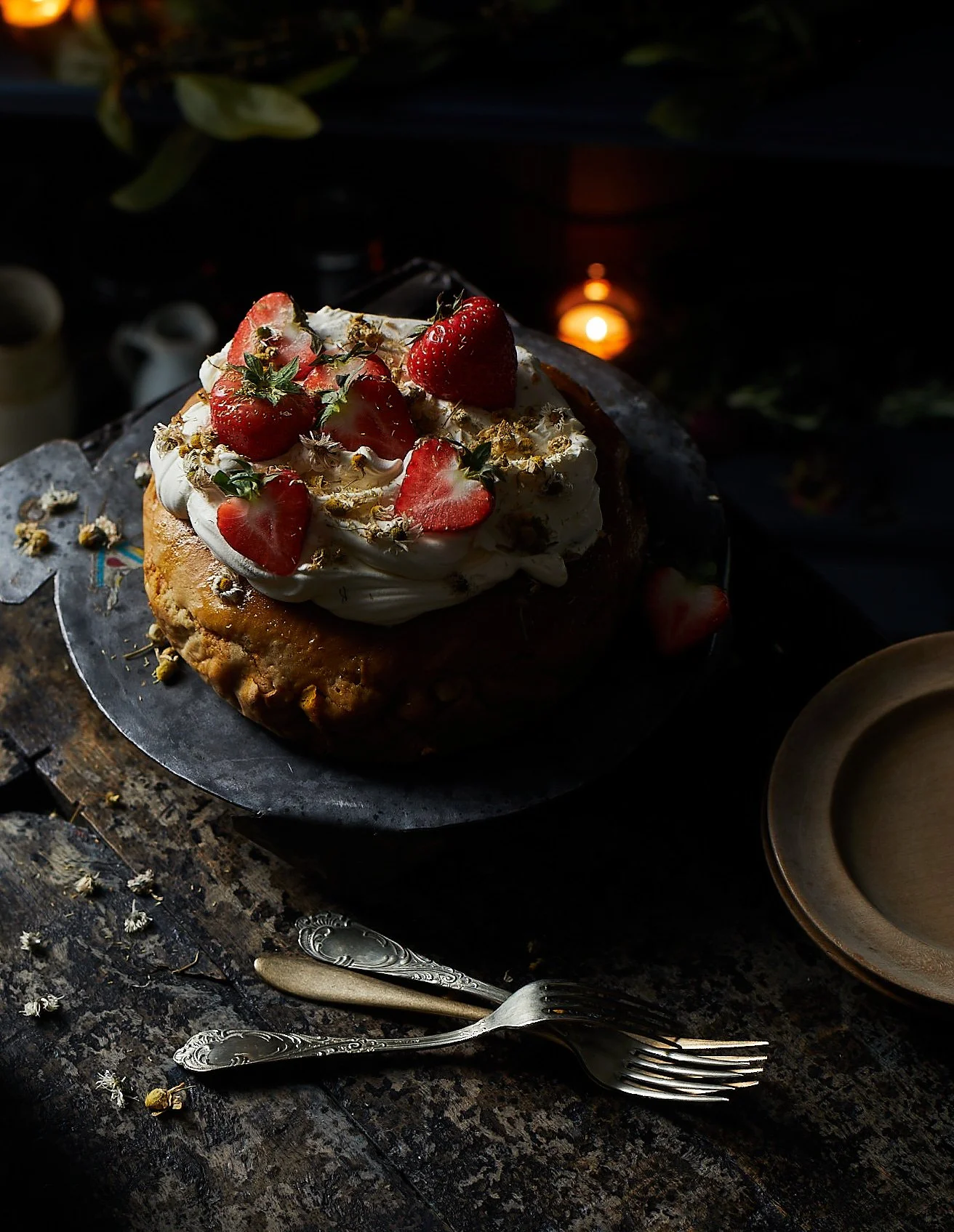
Dinner is definitely my favourite meal of the day, especially when it comes to ritual. In every season my most prized ingredients are the ones that have a fleeting season or are at their peak. Only having wild garlic in spring, harlequin squash in autumn and chestnuts in winter builds a sense of nostalgia around the flavours when you’re able to revisit them each year. Summer for me is all about fruits and flowers, especially in salads, chutneys, syrups and cakes. It isn’t just the produce but also the nature of how it’s cooked. There is something really special about cooking on a fire or even a barbecue. The fire becomes part of the ritual itself, burning late into the evening after dinner is finished. It can then be used to burn dried herbs, or to throw your intentions into, or simply to share stories around.
A couple of fire-roasted favourites are watermelon skewers (with halloumi if you’re vegetarian, or firm salted tofu if you don’t eat dairy). It sounds weird but it works incredibly well. I also like to wrap aubergines and potatoes in foil and throw them straight in the fire, turning every now and then. Once they’re done you can make jacket potatoes, and unwrap the aubergines, scoop out the innards and make a nice creamy fire-roasted baba ganoush to put inside your jacket potatoes.
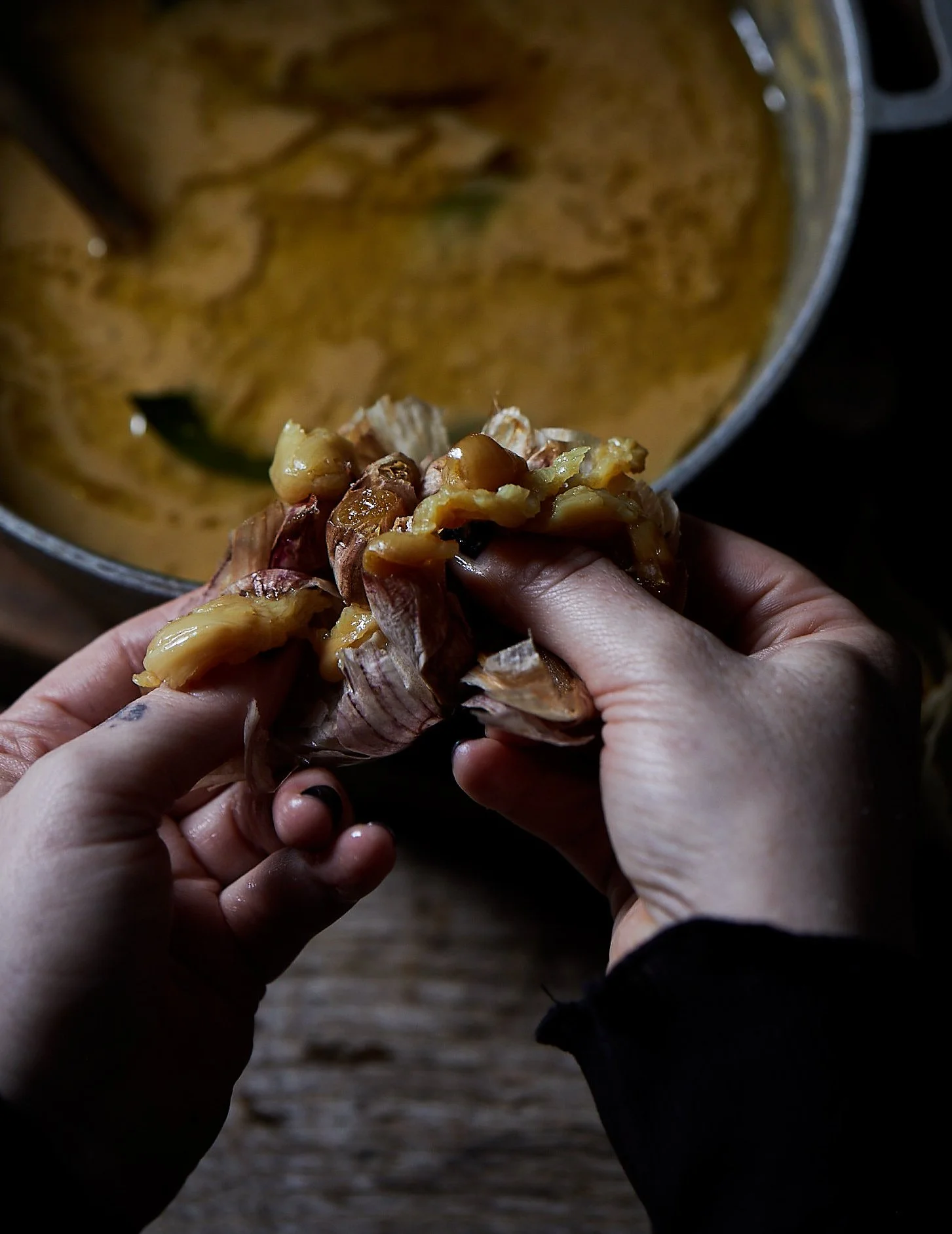
Photo Credit: Andrew Burton Photography
8. Are there teas, tinctures, cooling drinks or simple remedies you turn to during summer for pleasure as much as practicality? If someone wanted to build a small warm-weather ritual around one drink, what would you suggest?
In summer I love cold brew teas. One I always have in the fridge, ready to go, is chamomile tea. I steep dried chamomile in a large glass jar overnight and strain it throughout the day. Chamomile calms the nervous system and relieves anxiety. It aids sleep and is connected to healing, luck, prosperity and peace. I like to add fresh mint and strawberries to my glass, a great alternative to Pimm's if you don’t drink alcohol. The flavour is subtly floral and, when it’s cold brewed, I find it so refreshing.
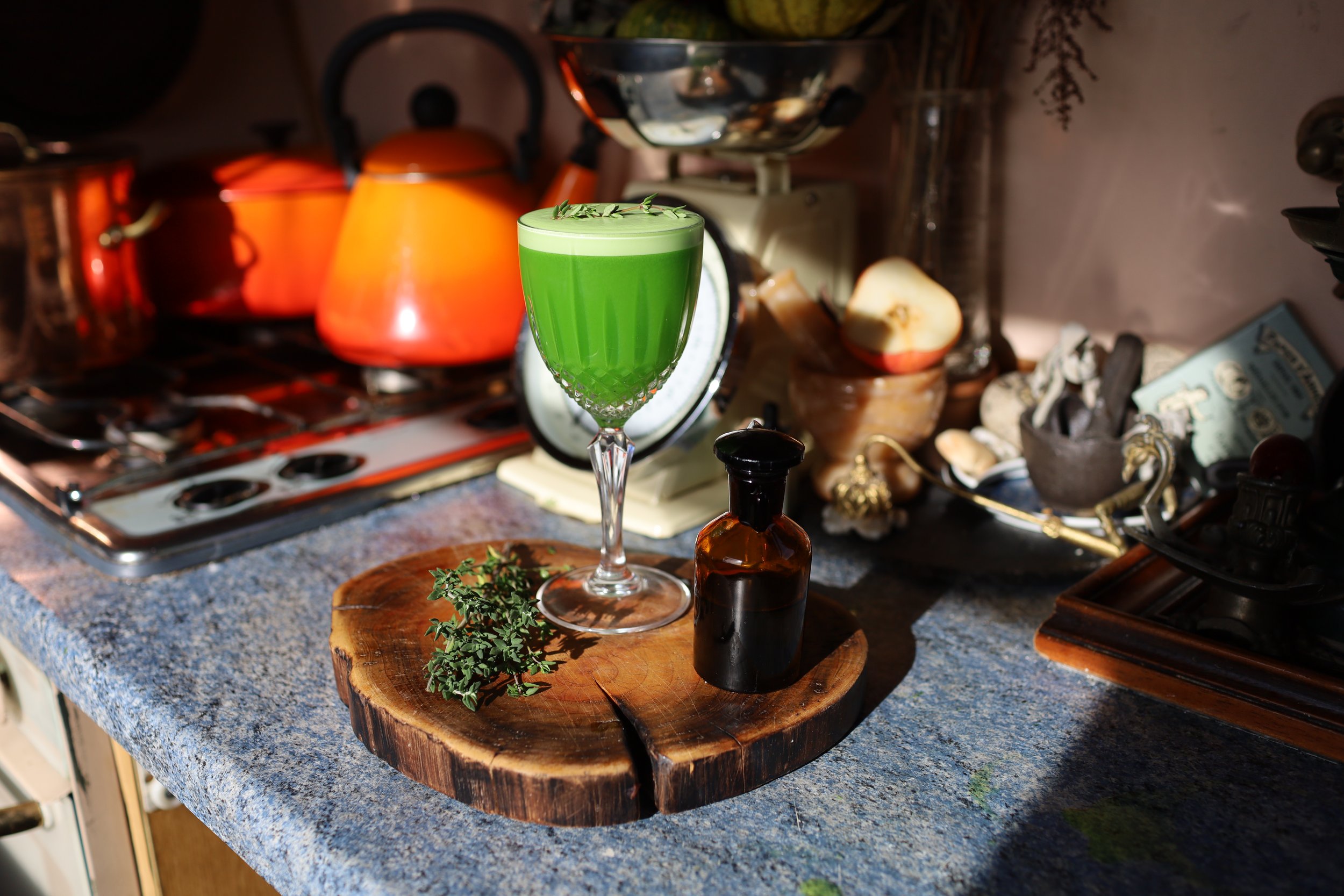
Photo Credit: Laura May
9. You spend so much time with recipes, plants and domestic traditions that have been carried across generations. What’s one piece of folklore attached to a food or recipe that genuinely surprised you — especially one many of us might be eating or making without realizing its history?
This one is slightly convoluted, but I just could not get over the serendipity of it. I was doing some research about a flower called Queen Anne’s lace, which is the common name for wild carrot - where all modern cultivated carrots originate from. It is said that the flower is known as Queen Anne’s lace because Queen Anne had an affinity for the flowers, whose lace-like appearance is made up entirely of a head of tiny white flowers, bar one small red flower in the centre. This was said to be the drop of blood Queen Anne left on the flower after she pricked her finger while lacing them.
What is interesting about the ancestral carrot is that it is not orange. It’s sometimes purple, red or yellow. So the folklore goes, carrots were cultivated to be orange in the 16th century by Dutch farmers to honour William of Orange. By the 18th century, orange had become the standard. So the wild carrot’s common name comes from Queen Anne of Great Britain, and the cultivated carrot’s colour came from William of Orange, who would later become William III of Great Britain. And not only that, they were brother and sister-in-law! It's ironic that this tale is so complex when carrots are connected to clarity in witchcraft.
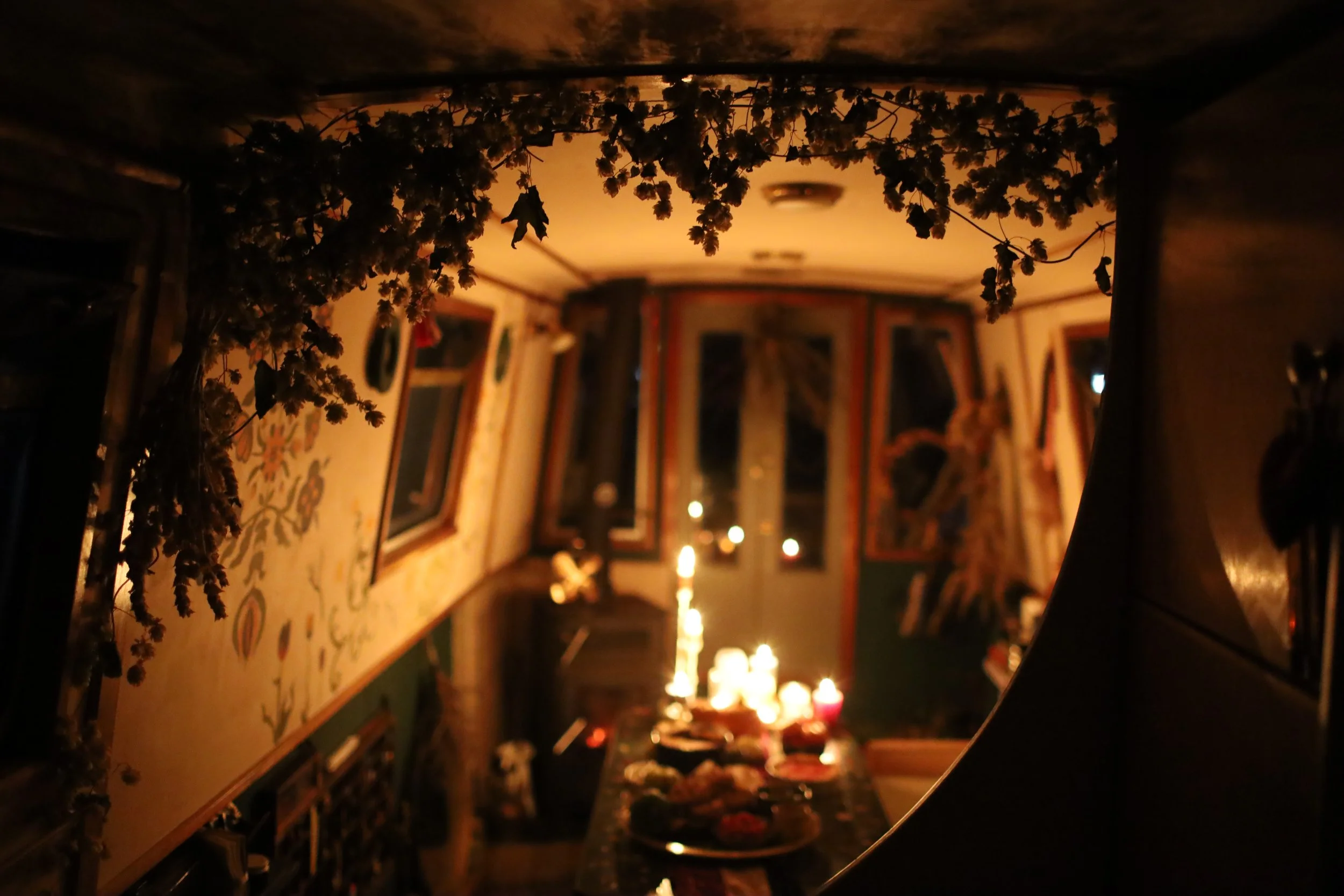
Photo Credit: Laura May
10. Your work is so rich in sensory detail — scent, texture, atmosphere, smoke, herbs, flowers. Does this attention to detail extend to your bathroom vanity regarding perfume and/or skincare? When you’re choosing a fragrance, what notes or ingredients tend to pull you in, and do you have any perfumers or houses you especially love?
The bathroom apothecary is something I am utilizing my plants and flowers for more and more each year. I recently did an entire month dedicated to beauty remedies and glamour magic on my Patreon, The Ritual Academy, and I would love to explore it further, especially as there are so many ingredients whose power cannot be unlocked by eating them because they are poisonous, but they have incredible scents or topical benefits.
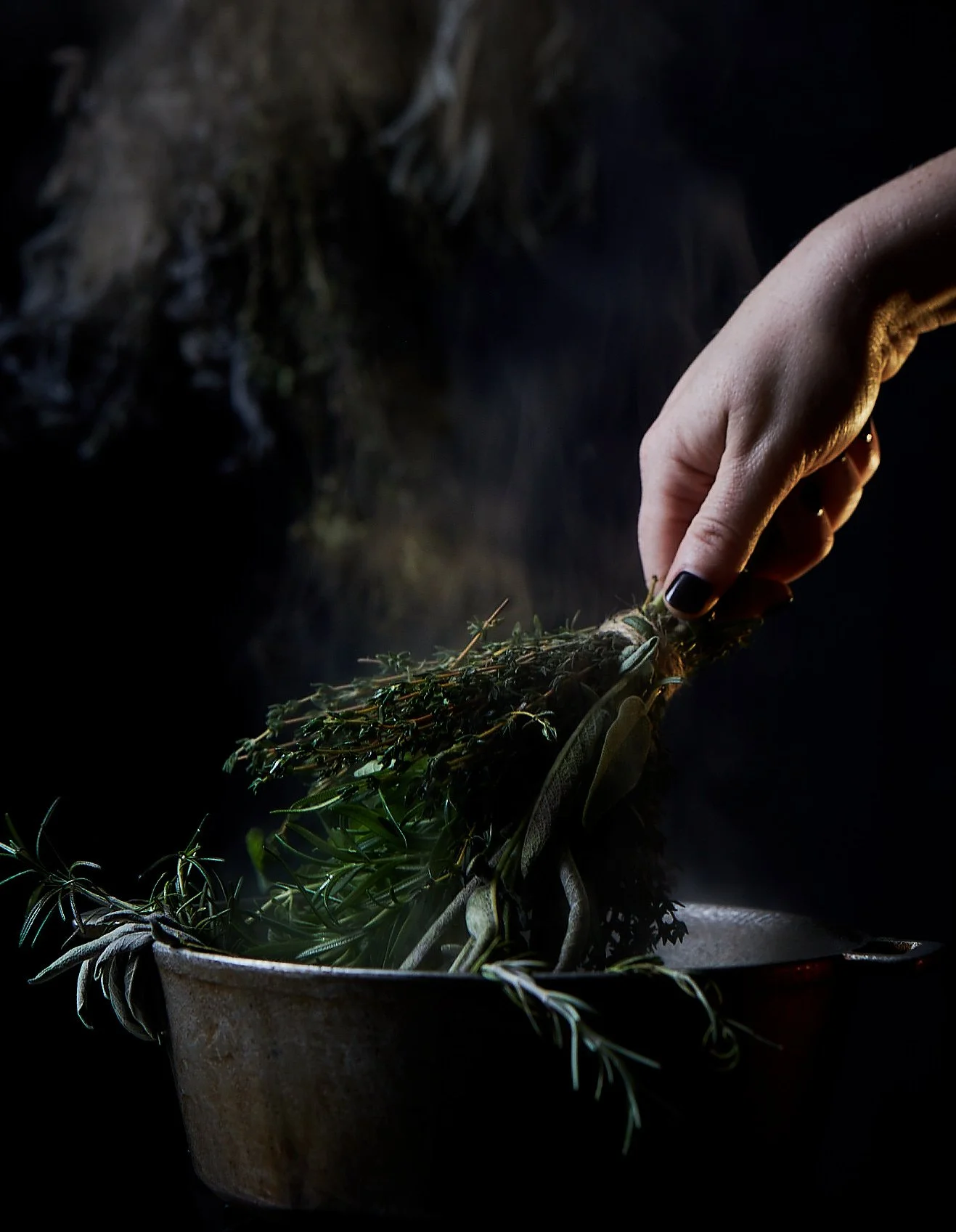
11. If you could plant your dream garden with no limitations — practical, financial, climatic or otherwise — what would be growing there?
I think I would intentionally have a garden made up entirely of weeds. Weeds are actually a human invention - no plants are specifically classified as weeds. Only a human being annoyed by the presence of a plant growing somewhere it "shouldn't be" makes it a weed. The weeds and wildflowers are often the most valuable, powerful and useful plants. I adore ornamental flowers for how they look, but I'd be more interested to know what flowers pop up of their own accord. Justice for weeds!
12. Your recently launched cookbook, Kitchen Magic; 65 Recipes for a Cozy Witchy Kitchen, is such a natural extension of the world you’ve been building online, allowing your community a piece of your magic they can hold in their hands (and conjure at home). What did writing it allow you to say — or preserve — that shorter-form content simply can’t?
The beautiful thing about books is that they are not designed to capture short snippets of attention through simplistic means. We have to engage with them by actually using them or reading them. I have thousands of screenshots in my phone of things I intend to "come back to", but I know deep down I never will. That collection remains hidden and theoretical. It doesn’t exist in the physical. Magic and ritual are all about bringing your will, your thoughts and manifestations into the physical. A book is real. It’s a solid object you can feel with your hands and hold the weight of. The tactile nature of being able to turn a page simply means more. The information goes in differently. I have designed my book to be utilised as a reference, a cookbook, but also something full of stories which you could read cover to cover without ever lifting a spoon.
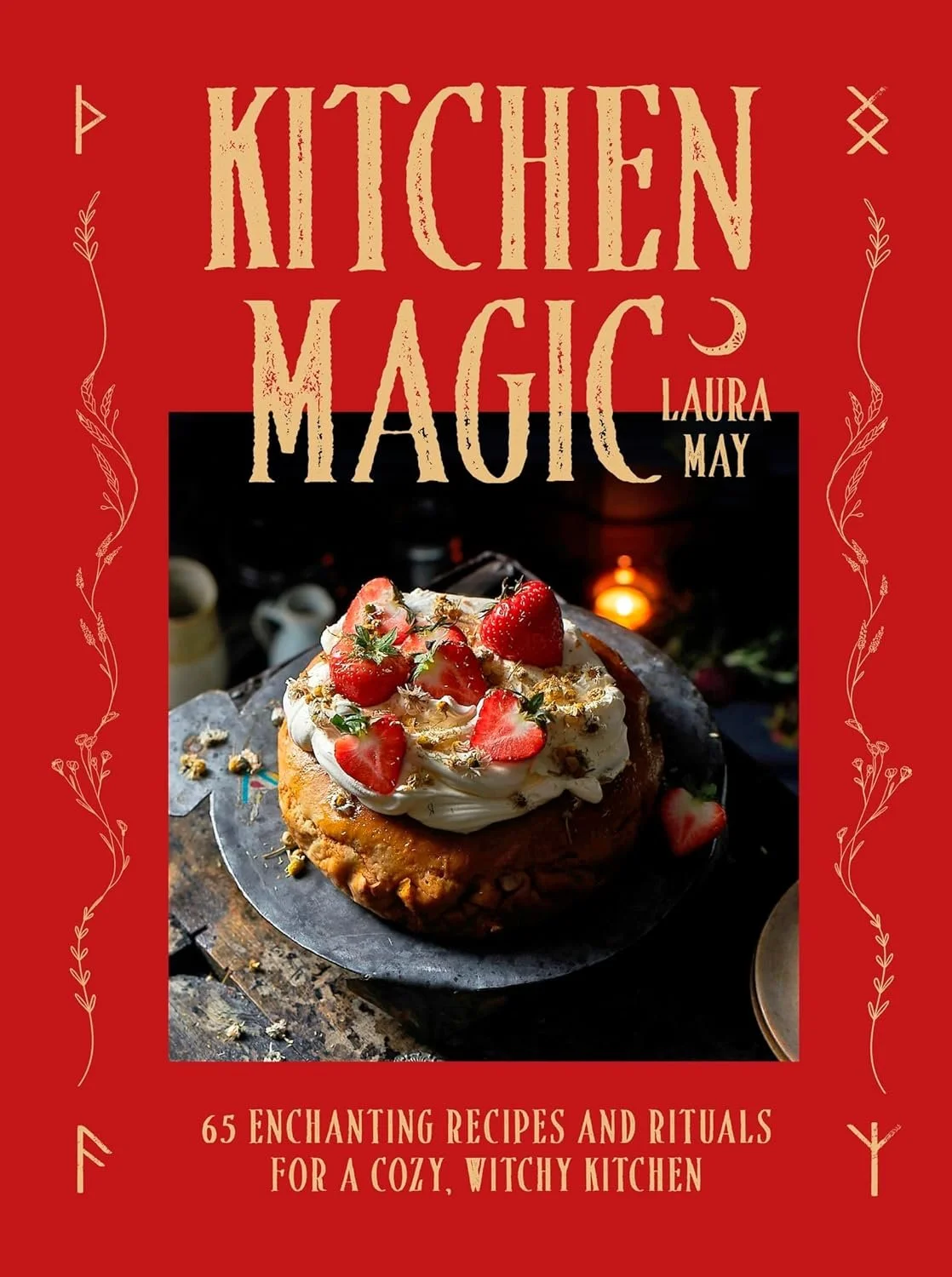
Photo Credit: Andrew Burton Photography
13. Finally, for anyone discovering your work for the first time through this story, what do you hope they carry with them after spending time in your world, and what appetite do you hope Kitchen Magic awakens in them?
I hope that my work speaks to discovering a new way to see food and the natural world around you, even without any cooking. You may not immediately run to bake a loaf of sweet woodruff Hokkaido milk bread, but somehow you'll find yourself feeling differently about that apple you've picked up in the supermarket. You know now that it isn’t just an apple. It’s a little piece of magic that has a story to tell beyond just its taste and macros.
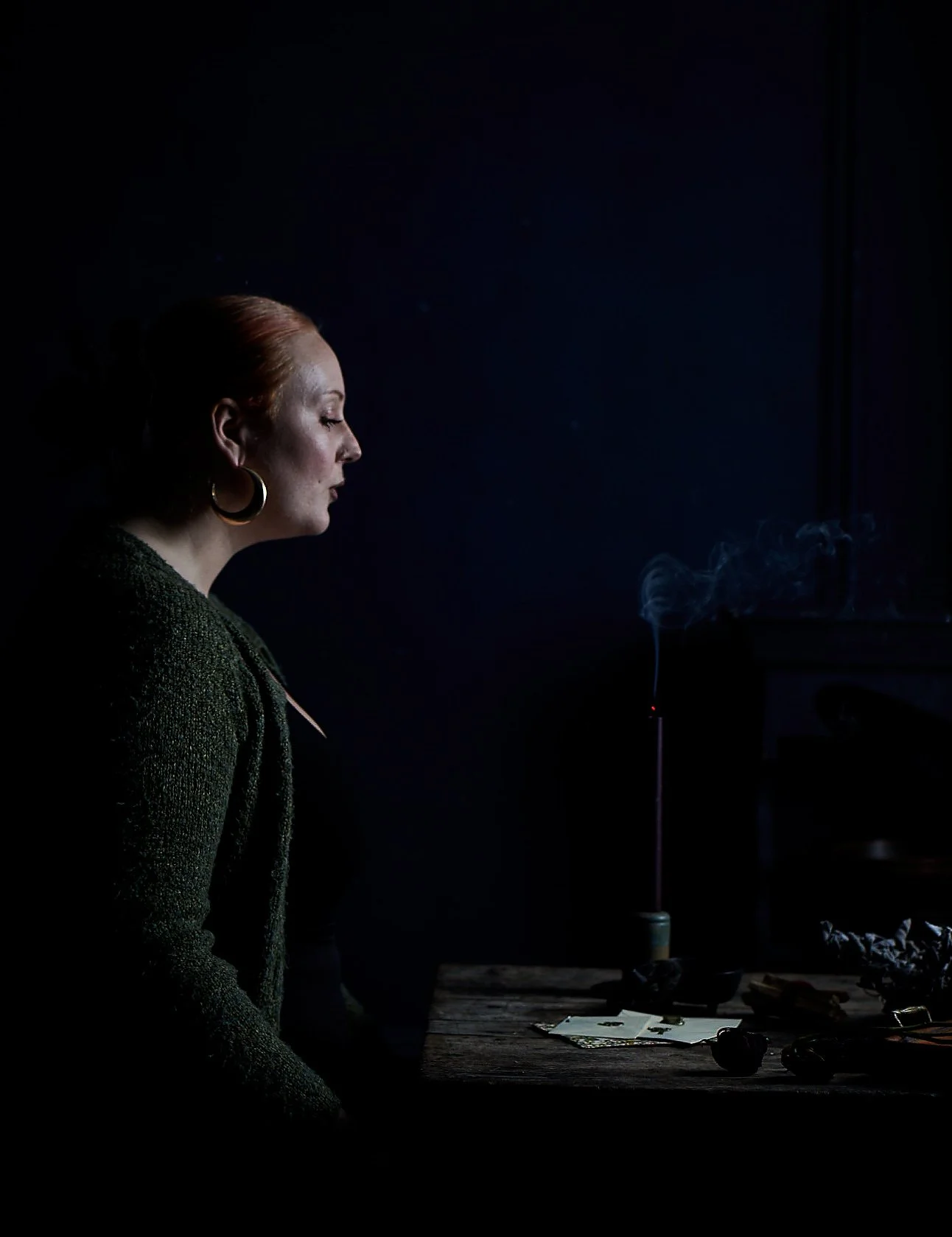
Photo Credit: Andrew Burton Photography
Curiosity has a way of changing the ordinary. We hope Laura's work encourages you to look a little closer at the ingredients already in your kitchen and discover the stories they've been carrying all along.
Follow @lauramayritualkitchen for more seasonal inspiration, pick up a copy of Kitchen Magic to continue the journey and subscribe below to receive our free monthly digital issue, where conversations like this continue to unfold.