The Electric Vision of Noël Nielsen: Deadly Night Shades
How an unconventional idea became a thriving creative pursuit without compromising its artistic vision
By: The Lace Ledger Staff

Photo Credit: Deadly Night Shades
There is a special kind of frustration reserved for those moments when you know exactly what you want and discover that nobody makes it. Urgh. For Noël Nielsen, the artist behind Deadly Night Shades, that frustration began with lampshades. Boring beige cylinders were plentiful, but something with a pinch more personality seemed beyond the imagination of conventional home décor retailers. So, she took matters into her own hands.
What began as a solution to a decorating dilemma gradually developed into a business specializing in extravagant gothic lampshades, each lovingly crafted by hand. The designs are fabulously eccentric, with some requiring upwards of 50 hours of work. Yet, behind all that extravagance is a carefully considered approach to entrepreneurship. From early experiments for friends to commissioned creations, Deadly Night Shades has grown at a pace that allows Nielsen to remain both artist and business owner, without sacrificing the joy of either.
She understands that sustaining a creative practice requires knowing when to push forward and when to let an idea go. There are limits to how often she wants to reproduce a design, even when customers are eager to purchase it. As she explains, the key is finding a medium you enjoy enough that it doesn't feel like work, while maintaining enough objectivity to recognize when a creative direction has run its course.
We spoke with Nielsen about Deadly Night Shades’ evolution and the discipline of keeping an independent creative vision alive.

Photo Credit: Deadly Night Shades
1. Deadly Night Shades occupies such a specific design niche: gothic lampshades with extraordinary craftsmanship and serious personality. How does one discover that this is their calling? Take us back to the beginning—where did the idea come from, and what did your first experiments look like?
I'm very particular about my aesthetic and I was looking for lampshades that weren't just beige cylinders. Everything I found that was more elaborate still wasn't exactly right, so I just decided the best way to get exactly what I wanted was to do it myself.

Photo Credit: Deadly Night Shades
2. There’s an important leap between making something because you love it and realizing other people might actually pay you to keep making it. How did Deadly Night Shades make that transition from creative pursuit to business? What would you tell another maker wondering if their wonderfully niche obsession could become something bigger?
Monetizing a creative pursuit can definitely be challenging, because the pressures of business can really sour the experience. When I started, I kept the stakes low by making pieces for friends. I progressed to making more "stock" pieces for an art fair, and then received my first commissions.
I think it helps to start slowly with a small inventory to avoid getting in over your head too quickly. I don't want to feel like a factory.
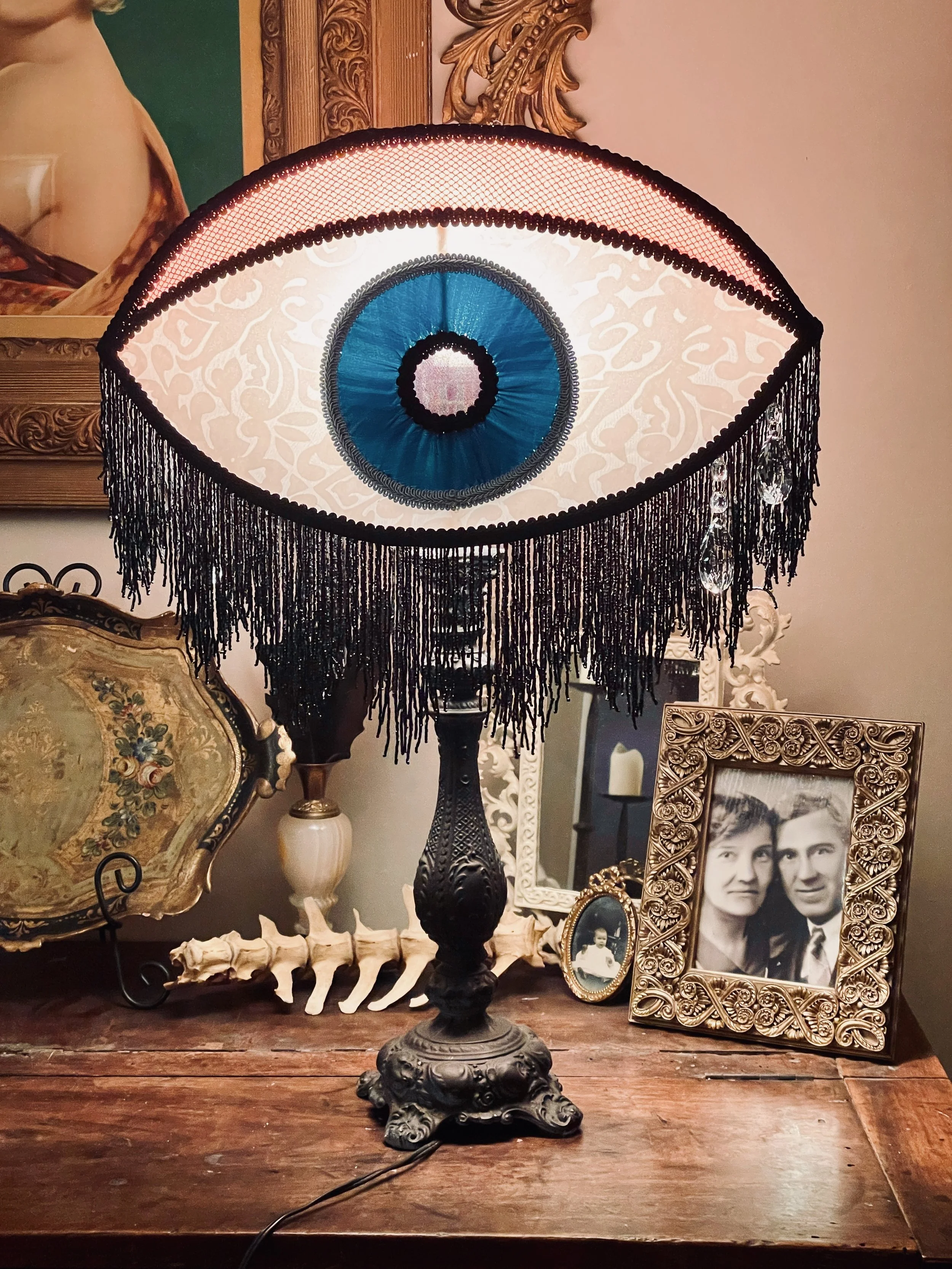
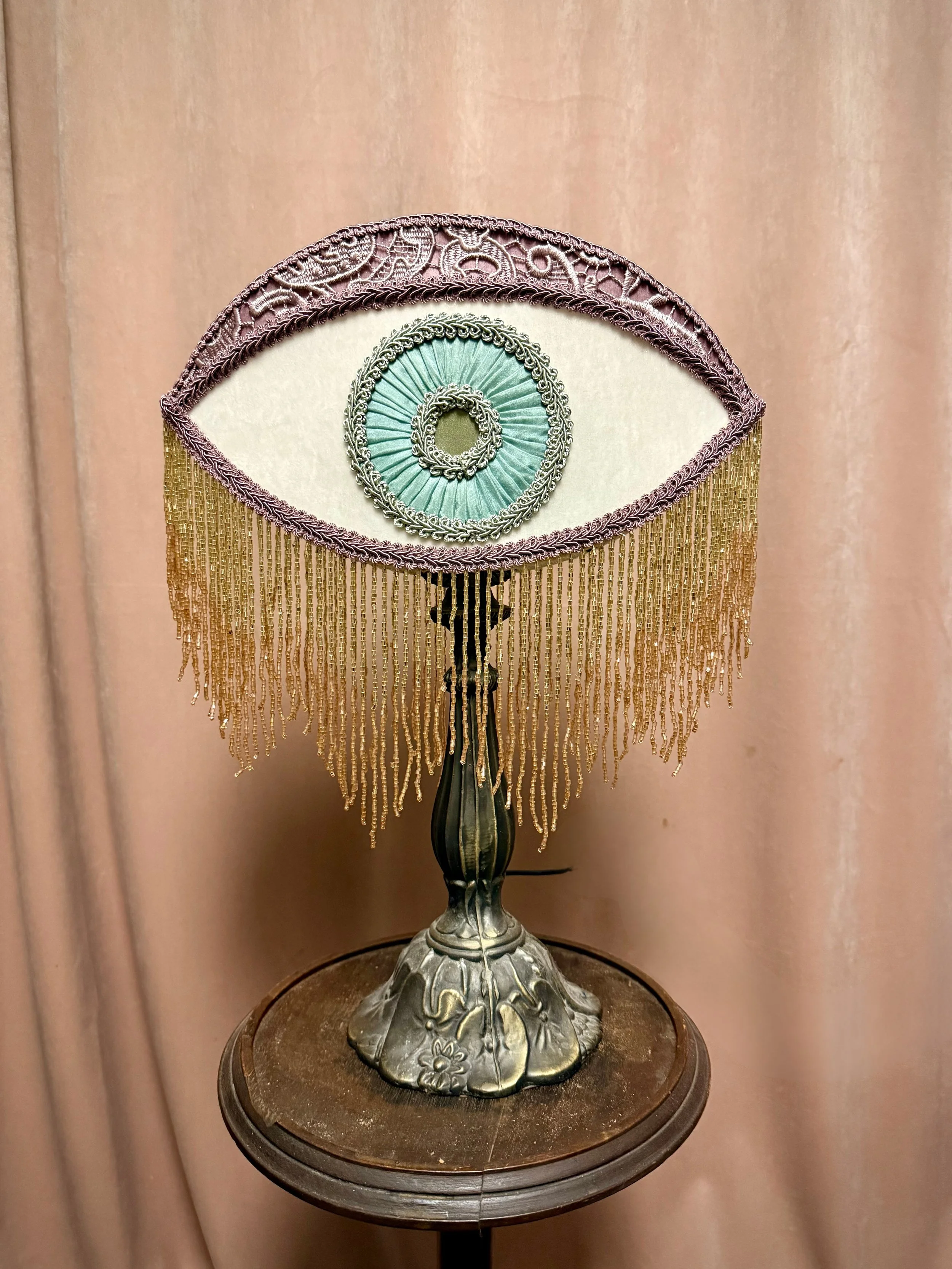
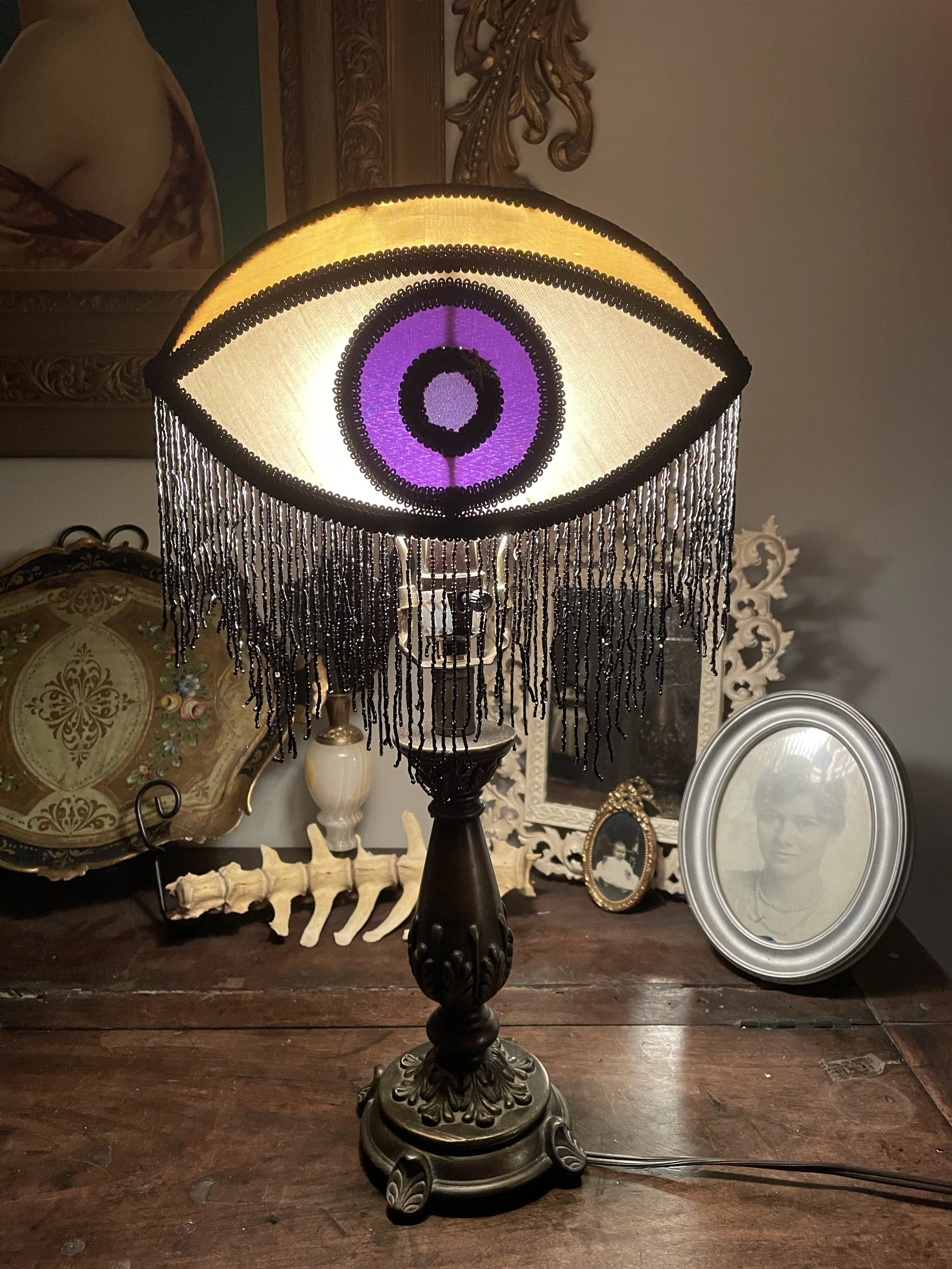
3. Every Deadly Night Shades creation carries an exceptional amount of artistry and care. Is there one piece that remains especially close to your heart, whether for its story or what it represented for you creatively?
I’m very attached to the eyes! It's a shape I designed myself, which frame maker, Janet with @arowireframesandmore, generously facilitated and built for me.
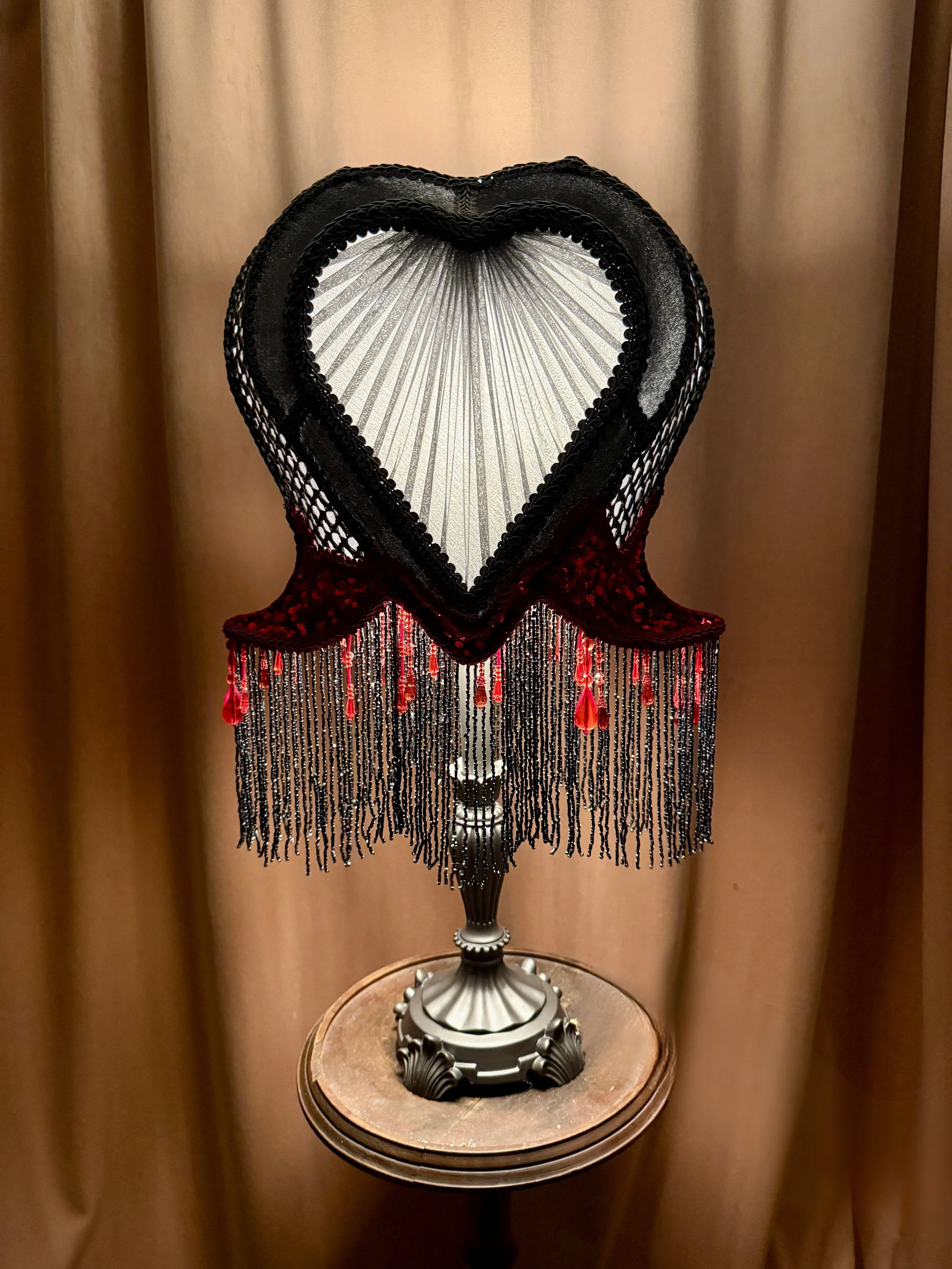
Photo Credit: Deadly Night Shades
4. Before you hit the workbench, where do you go looking for inspiration? Where does your imagination wander when you’re searching for the beginnings of your next piece?
I have an elaborate imagination, and I love watching movies and tv shows. I'll watch a horror movie and then think, "But what if I made a lampshade that looked like it was dipped in blood?" And then, I'll figure out how to do it.
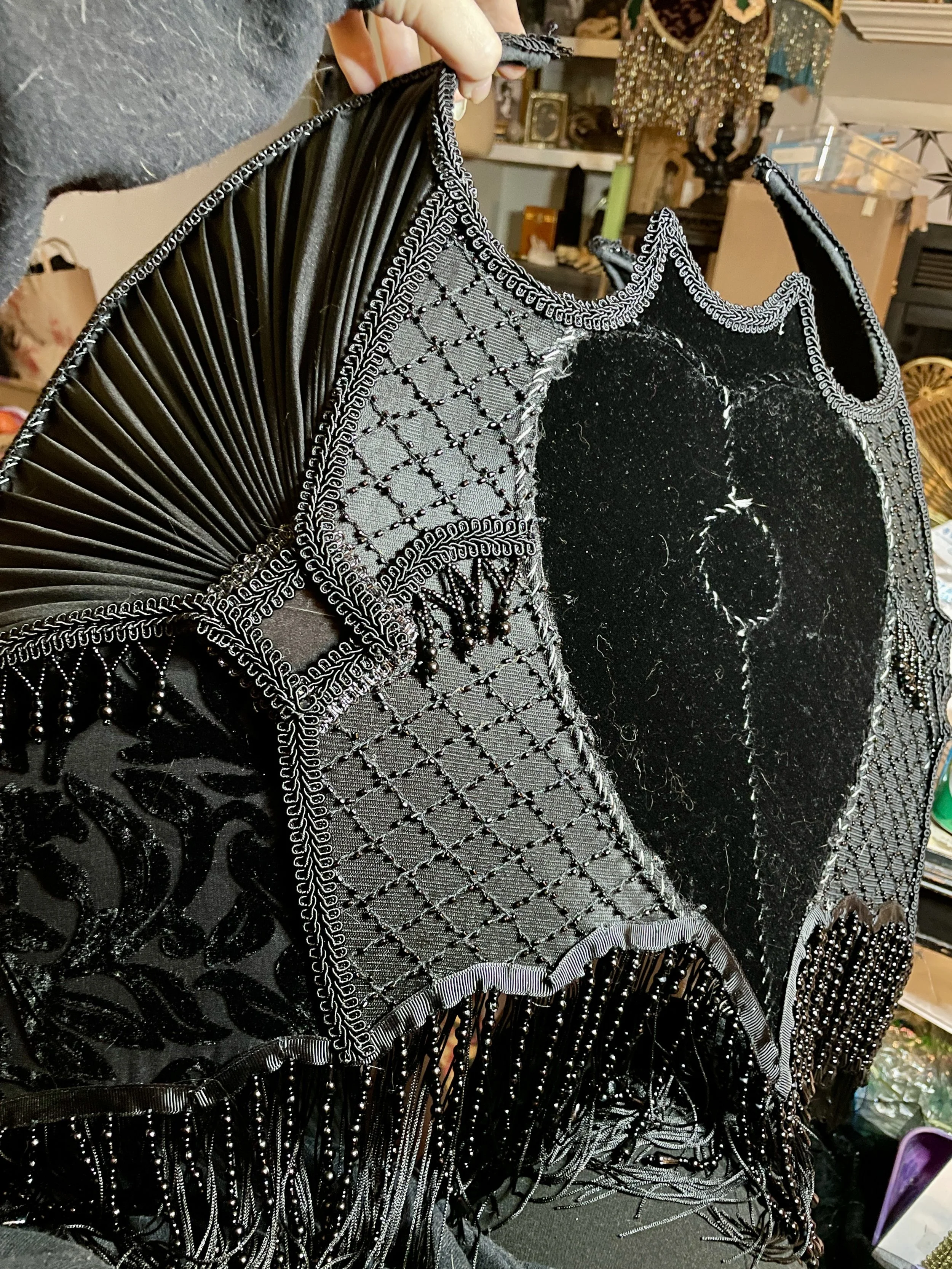
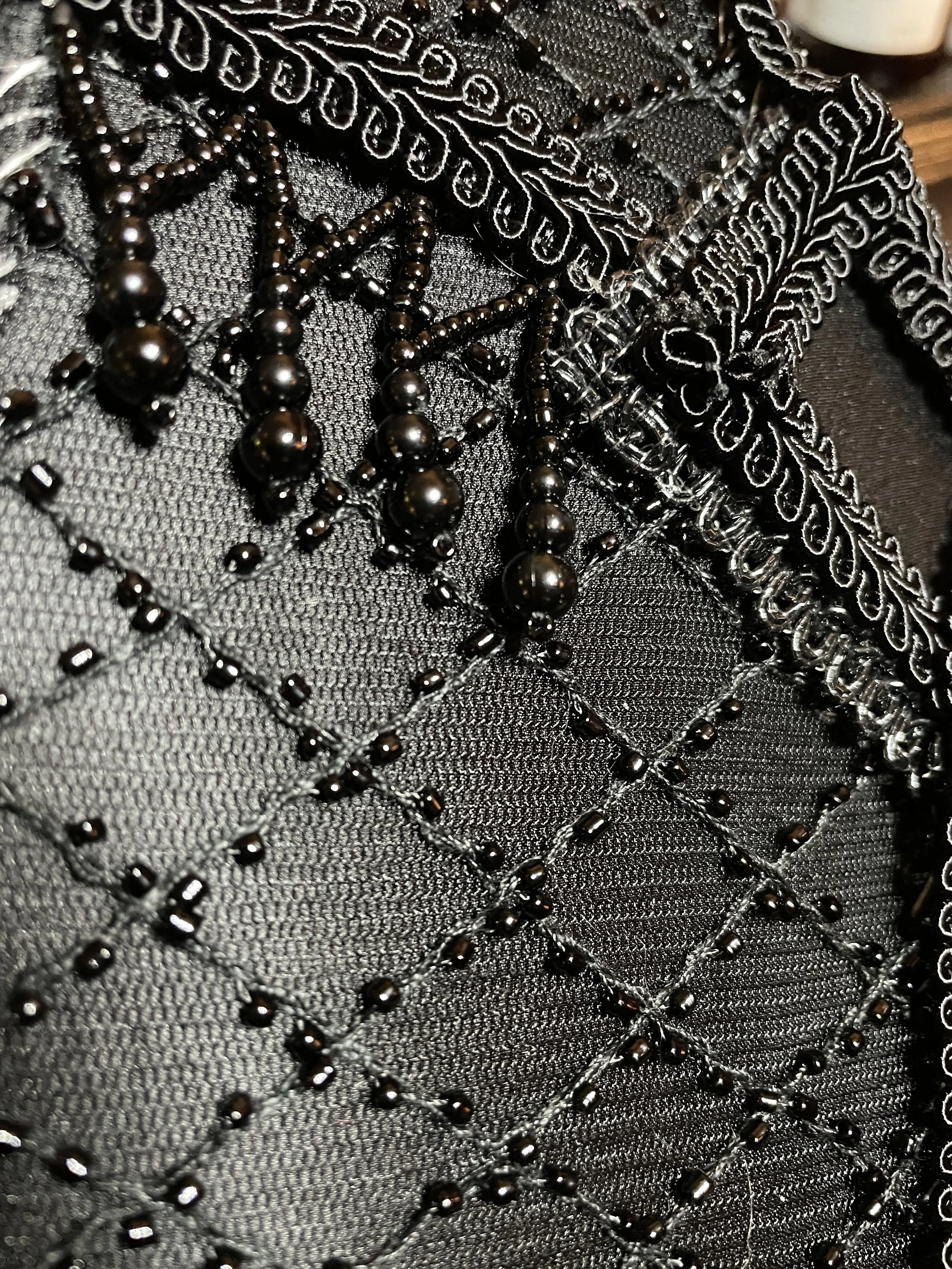
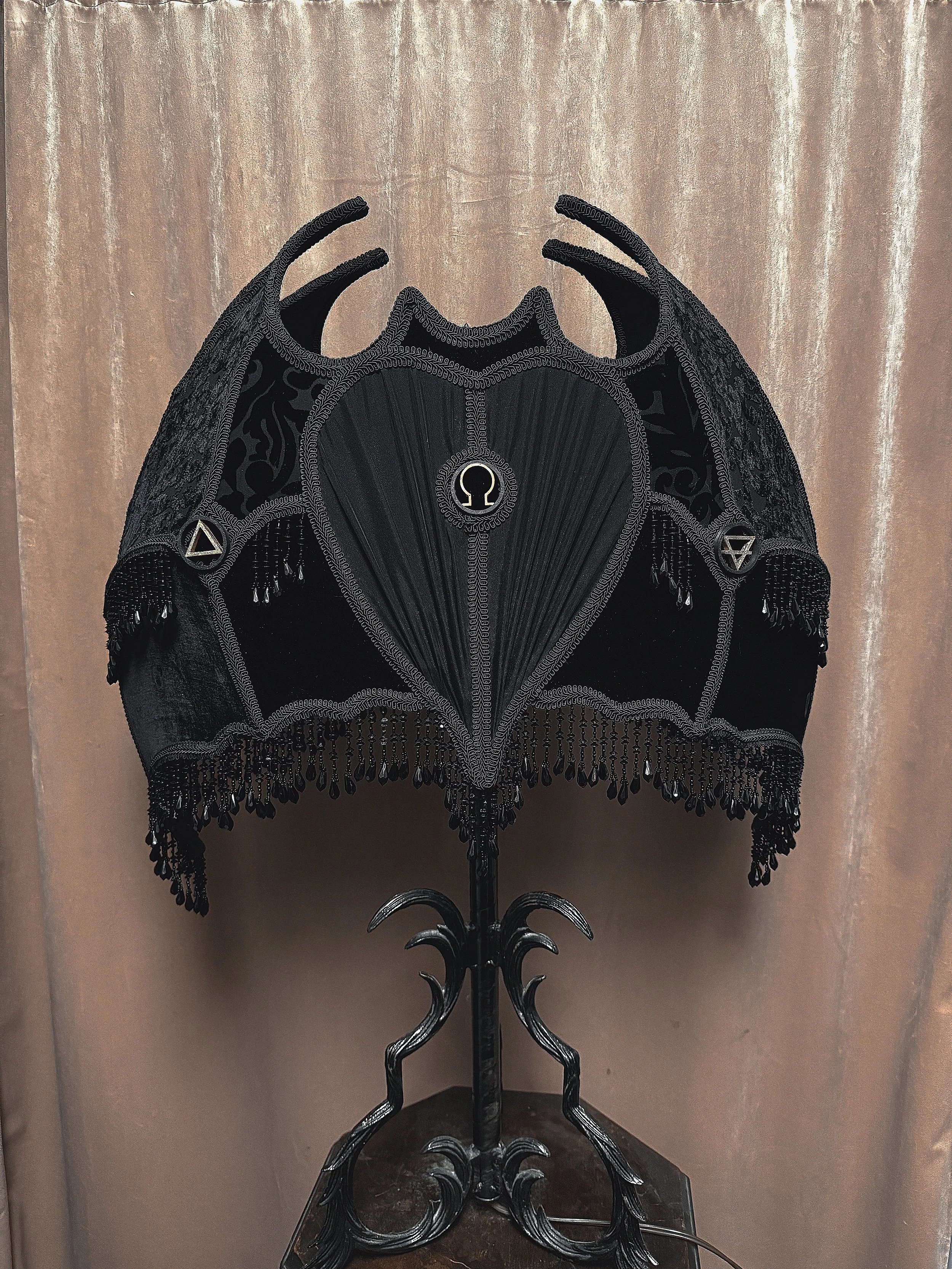
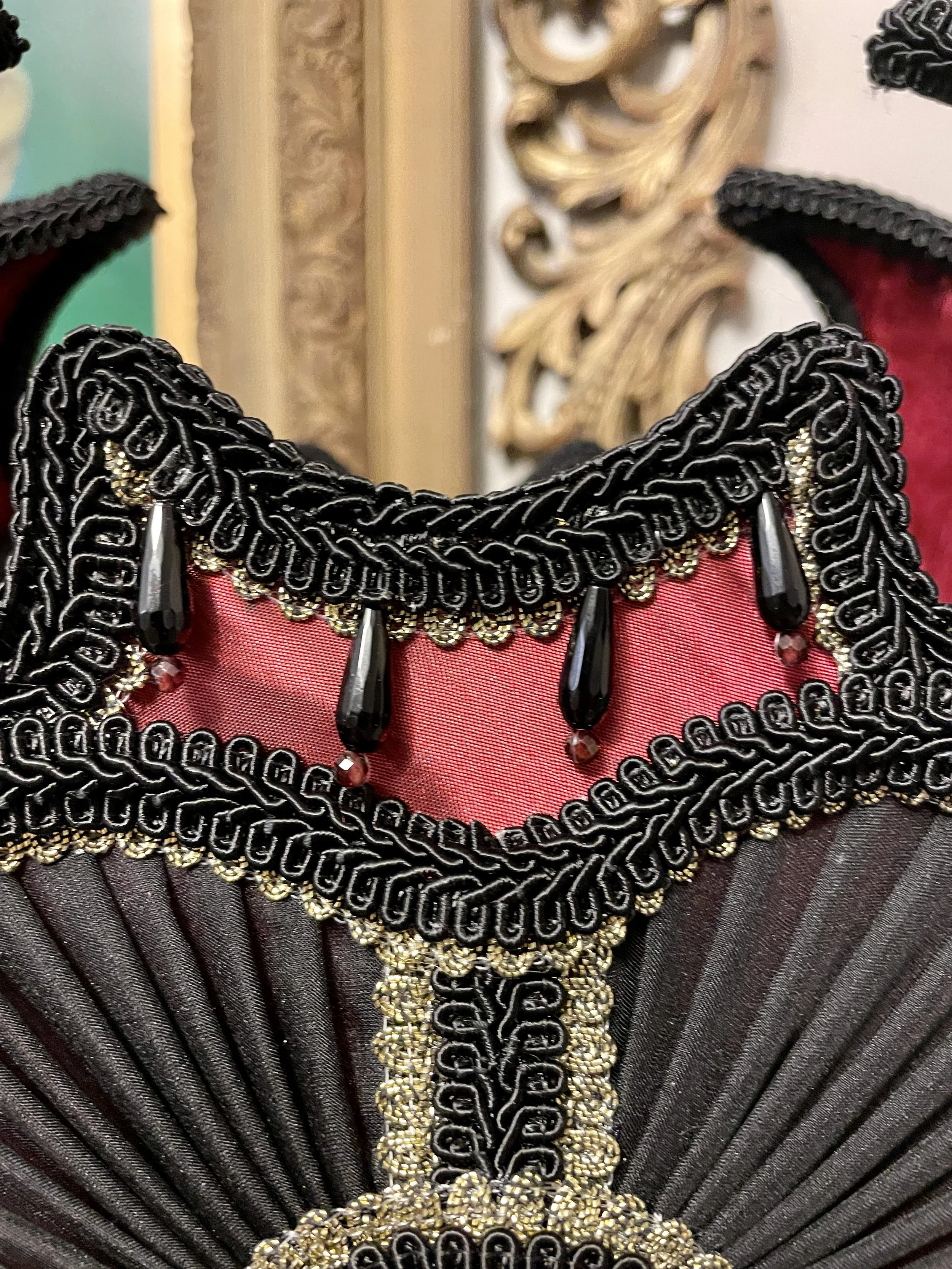
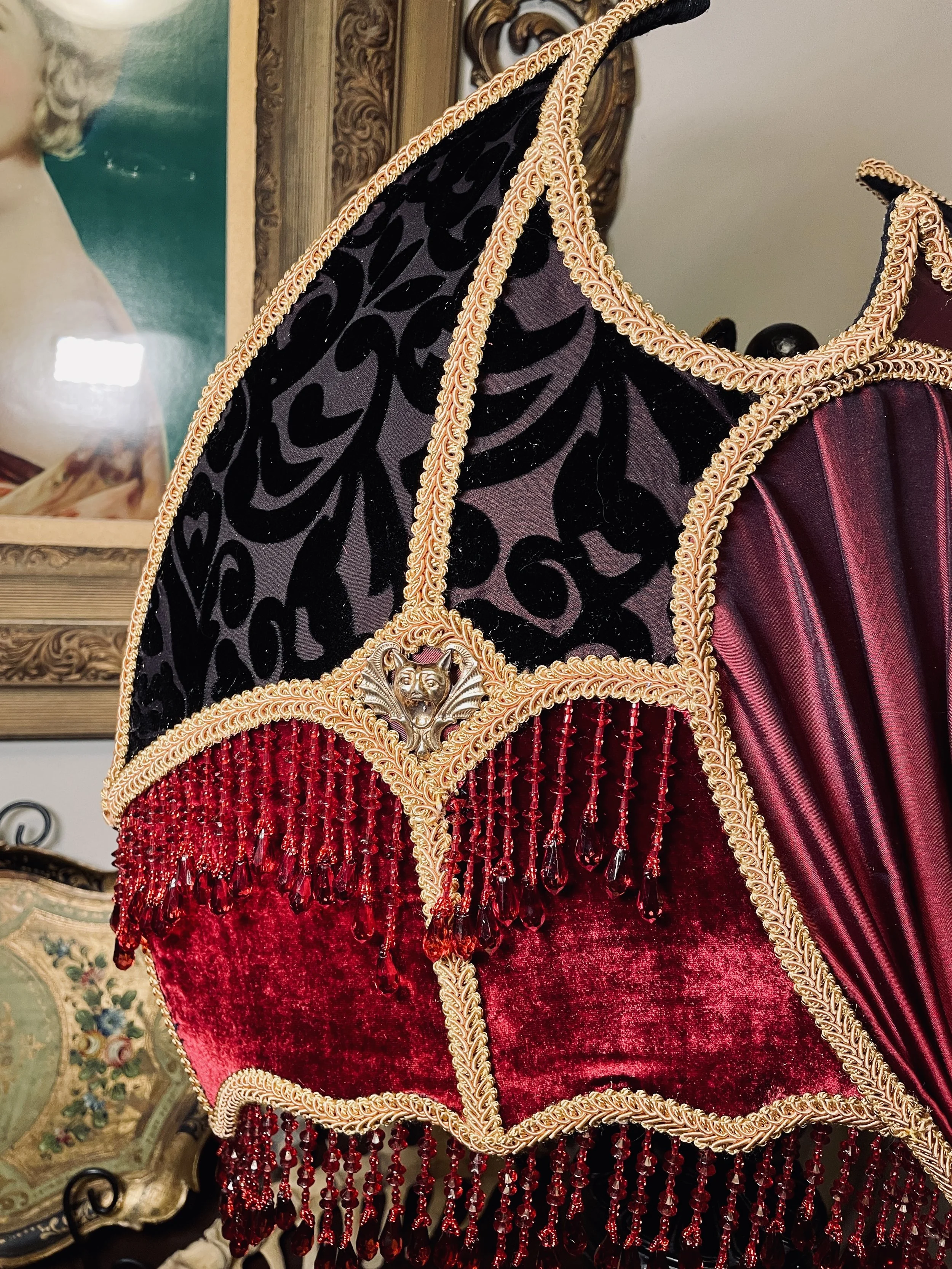
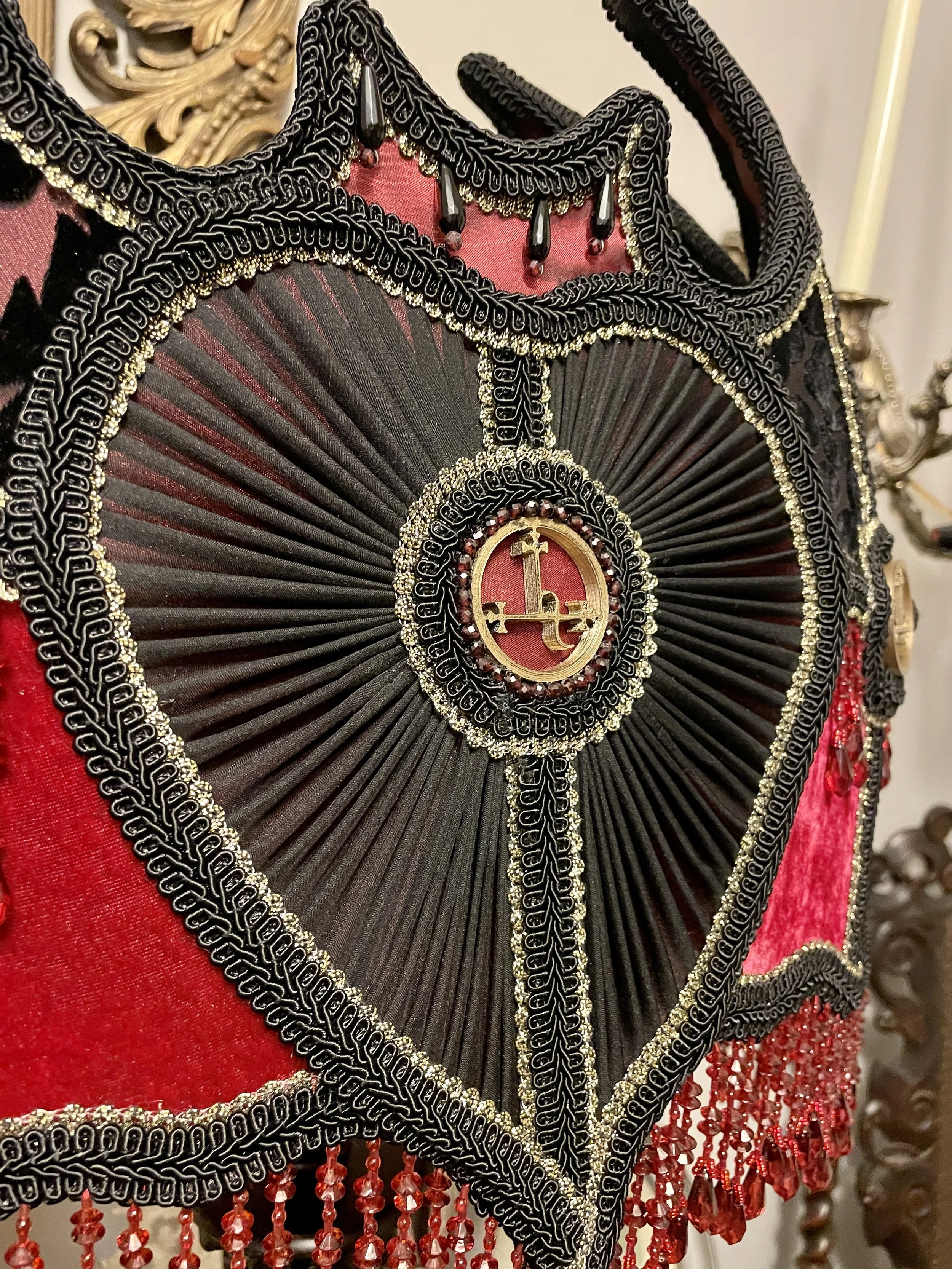
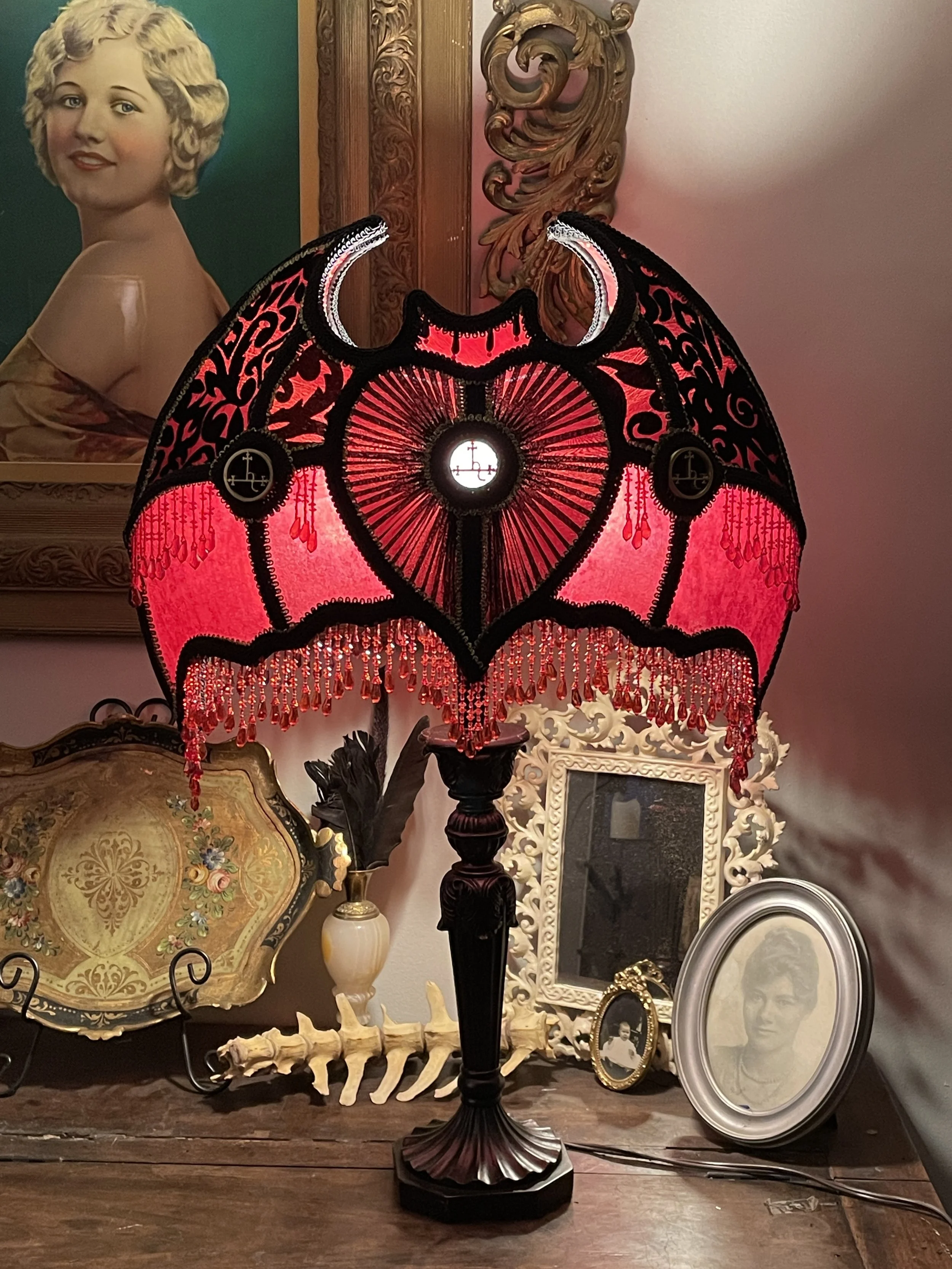
5. The finished pieces are fabulously theatrical, but behind every tassel is an enormous amount of handwork. Can you walk us through the making of a Deadly Night Shade, from the first idea to the final stitch? How much time can one of your more intricate designs demand?
Cohesion is important to me, so I'm always thinking about what colours, textures, and shapes to combine to create the most pleasing piece. Every shade starts with a purpose-built frame from Janet, and then I hand apply every layer until I achieve the desired look.
Like many artists, I find that the hardest part isn't the beginning or the middle, but knowing when a piece is "done". Some smaller pieces can take me 16 hours, but the larger and more elaborate pieces can take me 50+.

Photo Credit: Deadly Night Shades
6. No one develops a craft this specialized without a few ‘well, we’re never doing THAT again’ moments. What are some of the most ... memorable, lol, hard-learned lessons that have come across your work room—and were there any early disasters that ultimately made you better at what you do?
My biggest challenge has really been maintaining my own artistic voice. I never want to make something that doesn't look like "me," so balancing a client's desires while maintaining my signature aesthetic is critical.

Photo Credit: Deadly Night Shades
7. For all the decadence of the finished product, handmade work requires tremendous effort and patience. For our Discipline issue, we have to ask: what does discipline mean to you as an artist and maker? What keeps your hands working when inspiration alone isn’t enough?
I think the key is finding a medium that you enjoy doing enough so that it doesn't feel like a job, but not something that you love so much that you can't look at it objectively.
I try to keep enough projects going so that I always have something to work on, but not so many that I feel like I'm drowning. There's also a limit to how many times I want to replicate a piece. I love when people see something I've made and say "I want that exact thing!", but there can come a point when it starts to feel like factory work. So, staying fluid and knowing when to retire or rework a design has been critical for me as an artist. I find that when you get so attached to an idea or a process that you can't let it go, that's when you can really stagnate.

Photo Credit: Deadly Night Shades
8. Regular lampshades can sometimes be treated as supporting characters when designing a room; thankfully, not on your watch ;). When someone brings one of your designs home, what do you hope it changes about the way they experience their space?
I hope that it makes them feel like their highest fantasy self. Sometimes, that fantasy self is a Madame of a vampire brothel, and sometimes it's a quirky fairy with an eyeball obsession. Whoever my client is, I want to help them fully embody that self.
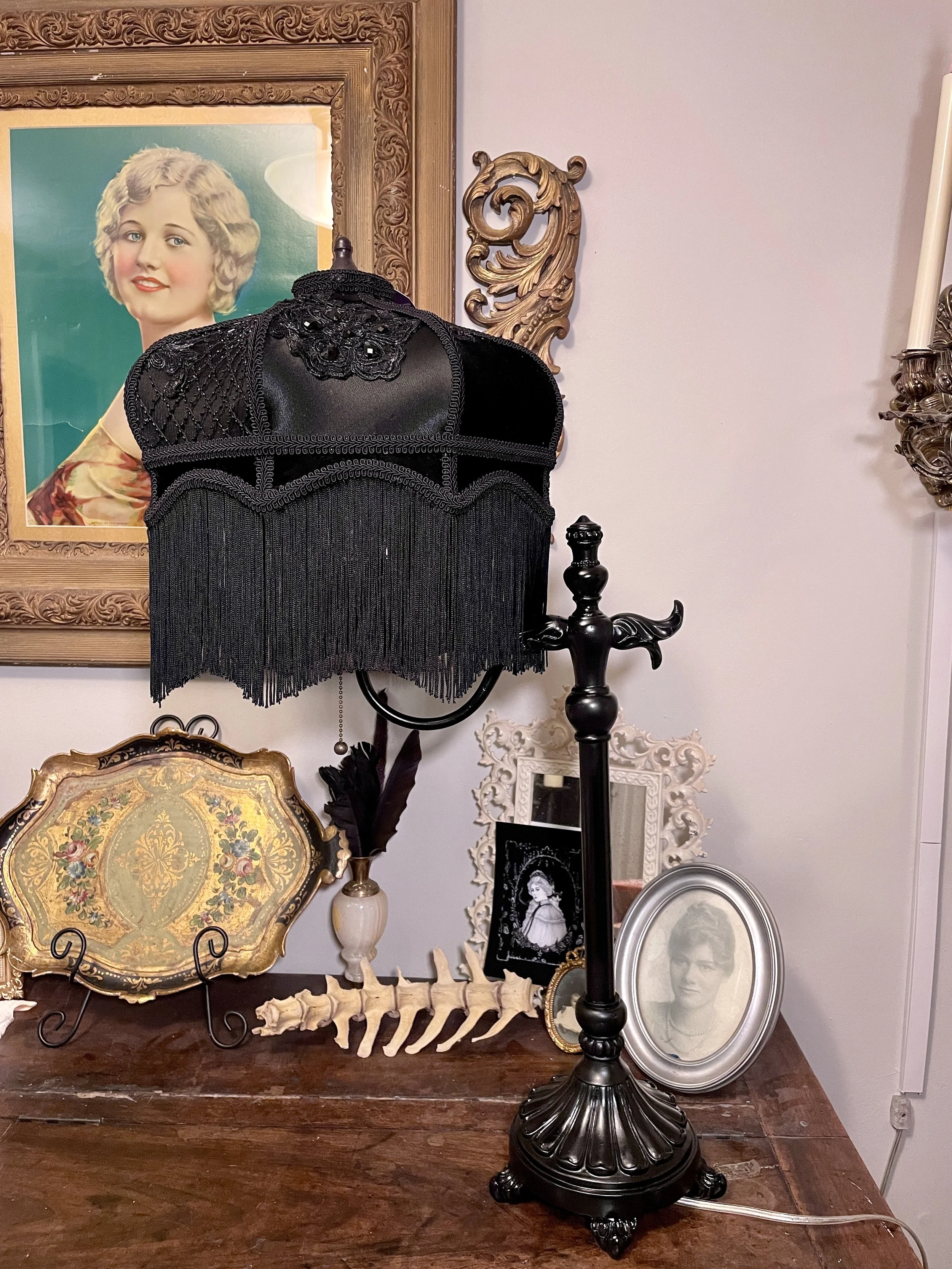
Photo Credit: Deadly Night Shades
9. Finally, whose creative world would you love to collide with your own? If you could dream up a Deadly Night Shades collaboration with anyone, inside the design world or somewhere completely unexpected, who would you choose? What would you love to create together?
I love working with adventurous people who have very deliberate personal aesthetics, so drag queens like Katya and The Boulet Brothers, and burlesque performers like Dita von Teese are high on my list.
Perhaps the greatest lesson in Noël Nielsen's story is that a creative calling doesn't always arrive as some grand revelation. Sometimes, it begins with a frustrating shopping trip and the determination to make something better yourself.
There is wisdom in her approach to building Deadly Night Shades, particularly her understanding that a successful creative business should leave room for the artist to keep growing. Take your curiosities seriously, roll up your sleeves and see what you can make of them. If you discover a demand along the way, all the better. Just remember that the vision which inspired you to begin deserves a place in whatever you build.
To bring a little Deadly Night Shades magic into your own home, DM Noël on Instagram to inquire about purchasing or commissioning a piece, and follow her to discover her latest designs. Subscribe below to receive our free monthly digital issue, where conversations like this continue to unfold.