The (Haunted) Fairytale Atelier: A Conversation with Linda Friesen
Exploring the gothic imagination behind one of bridal fashion’s most distinctive couturiers
By: Amanda Albert
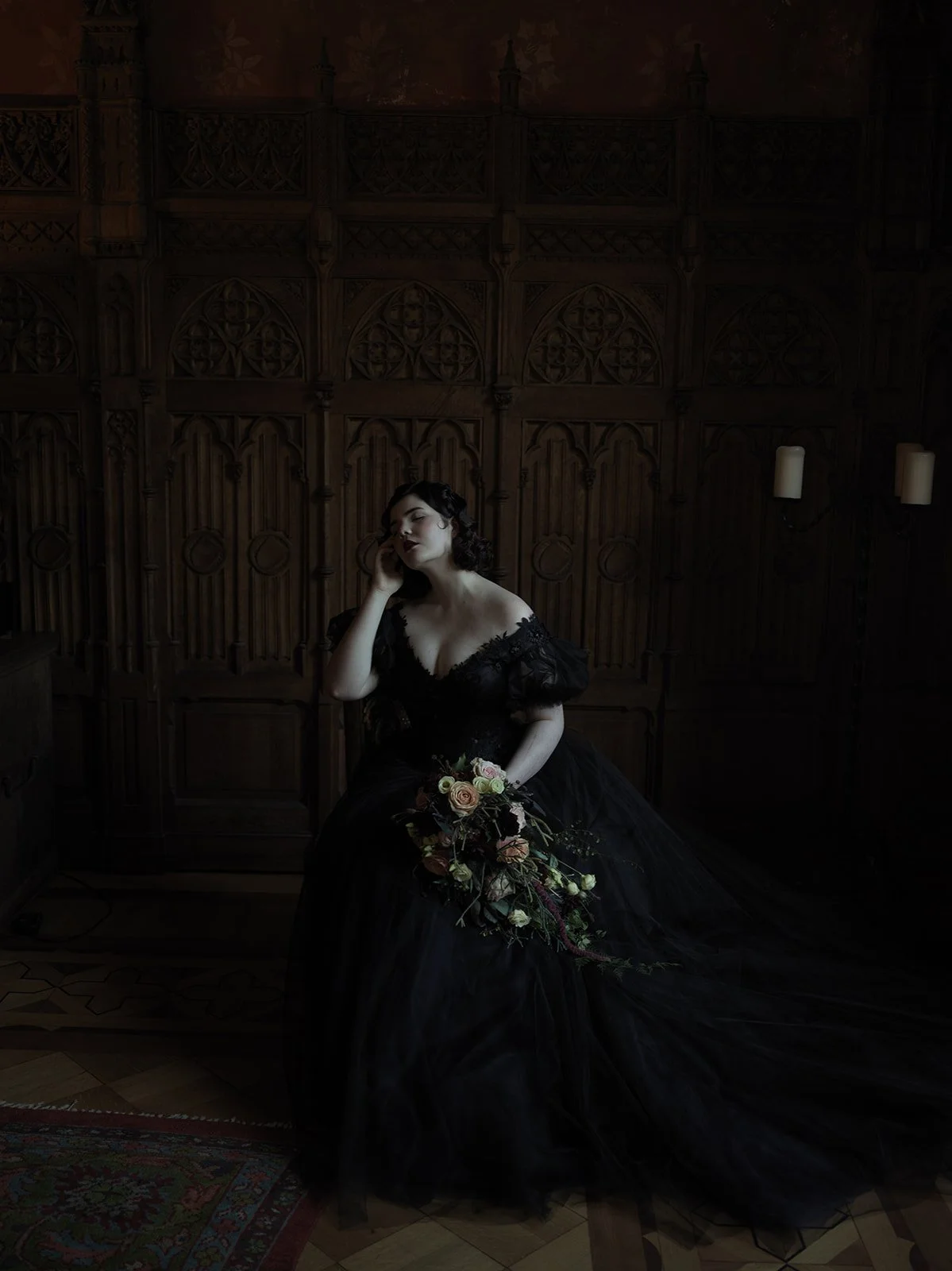
Designer: Linda Friesen
Photography: Muse&Mirror
Bride: Julia Löwen
Once upon a time, a wonderfully weird bride wandered through an endless forest of boring bridal salons brimming with underwhelming ivory gowns. Every rack looked the same, every dress scrubbed of mystery. How dull and disappointing…
At the edge of that forest, stood a delightfully different door. Inside waited an atelier where soft velvet replaces itchy tulle, where storied shadows are welcomed in for afternoon tea and beautiful brides who dream in darker colours bring their visions to life <3.
That atelier, our atelier, belongs to Linda Friesen, a designer whose work reads like myth rendered in real-life. From her studio, Friesen creates gowns shaped by historical memory, narrative imagination, fantasy, fairytale and a romantic gothic sensibility that allows fantasy to coexist with expert craftsmanship.
Brides arrive at her door in search of something that doesn’t exist on ordinary racks, then leave carrying a garment that feels born from their most authentic selves.
In Friesen’s world, couture becomes a form of storytelling, with every seam, silhouette and shade serving the spell of a dark fairytale. Here, we step inside her studio as she reflects on the stories that shape her signature style.
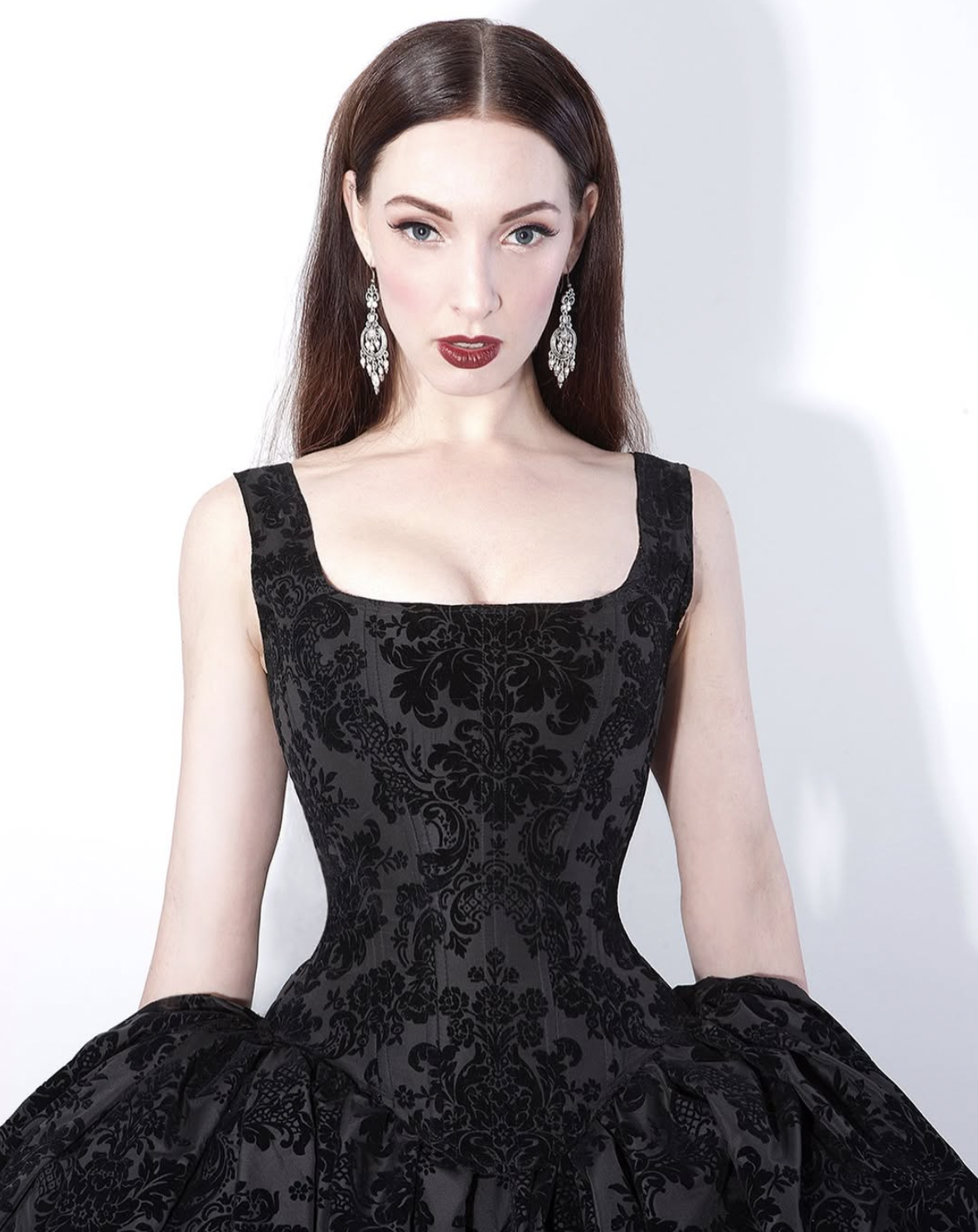
Featuring Linda Friesen courtesy of @lindafriesen.couture + @pierre.von.empire
1. Across your collections, there is a devotion to structure, craftsmanship and narrative presence; how would you articulate the philosophy that guides your work when you begin conceptualizing a gown?
It always begins with a story, a feeling really. A feeling or story carried within a gown to transport the wearer to a different time or realm within the setting of our modern world.
I’ve always felt the need for escapism. Everyday life has never interested me that much. I’ve always been a dreamer and felt carried away by stories, movies, music and also nature. Nature is a timeless story, a wheel going round and round and each time the wheel goes round we are given these fleeting awe inspiring moments found in a thunder storm or snow covered forest. Dew drops and dainty flowers in spring, falling leaves and a golden ray of sunlight in autumn.
Maybe it’s because I love books and movies so much, but I automatically imagine what I would want to look like within these surroundings.
There is a sense of melancholy within my gowns, yearning for times gone by and realms that don’t exist. Through the mist, within the deep dark sea or floating through the endless night sky is where I find inspiration and a story waiting to be told.
Naming a gown is the final part of the design. The right name can elevate a design. A tiny summary of the story you spent weeks writing with needle and thread.
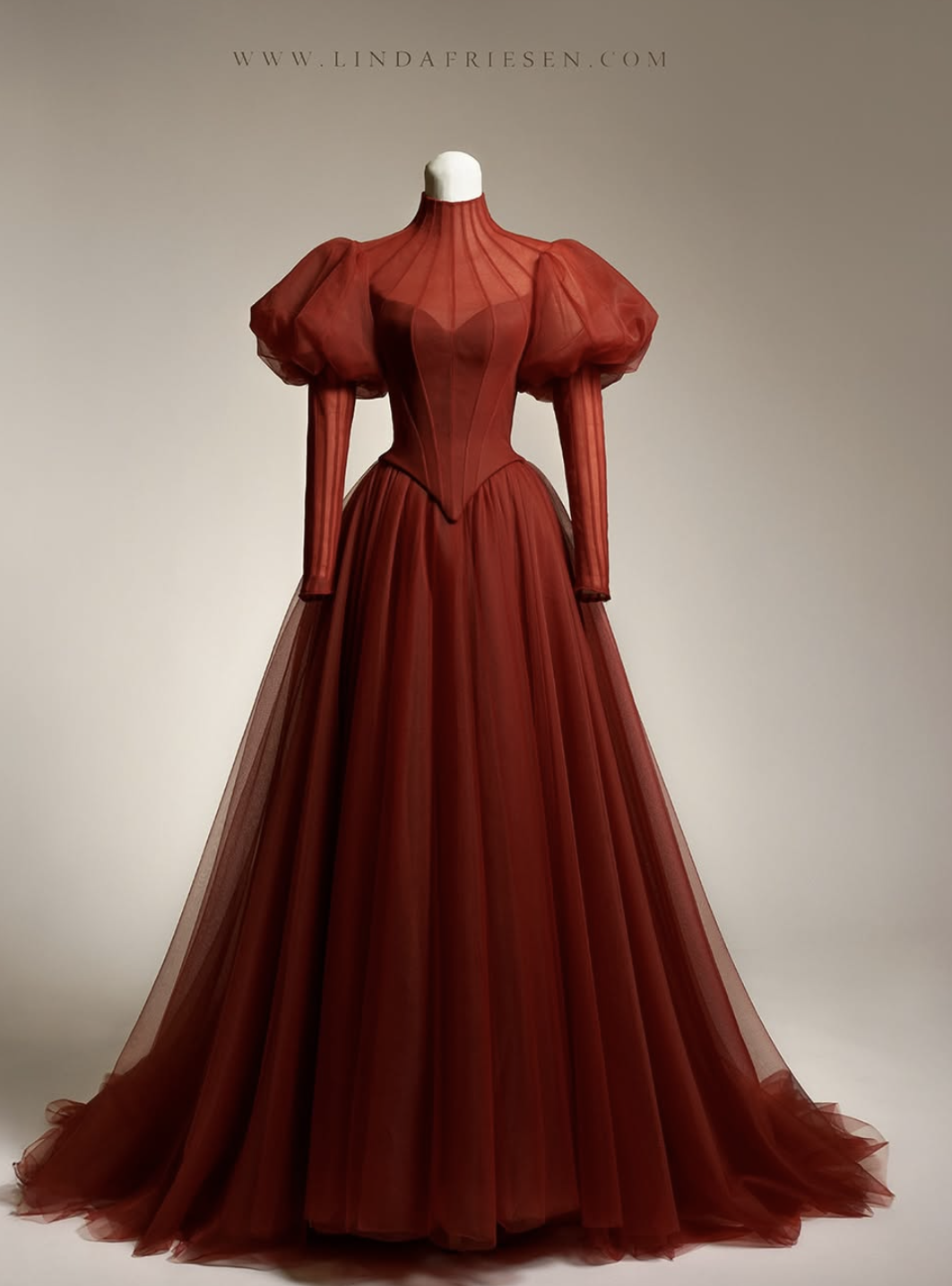
Photo Credit: @lindafriesen.couture
2. The Victorian Vampire Gown and The Blue Velvet Gown both reference historical silhouettes while still feeling contemporary. What is your approach to translating the past into something that resonates with modern women without crossing into costume?
My love of historical or historically-inspired fashion started at a really young age. I must have been born with it. I was always drawn to watching fantasy movies and reading fairytale books. When I was little, my favourite pass time was drawing woman in gowns. An ice queen, an evil vampire queen, a flower fairy. Not much has changed, now that I think about it.
When I was 12 my mom and grandmother taught me how to sew, and when my need to wear gothic clothing began at around 16, I started creating my own clothes. The gothic brands out there all felt too costume-y for my taste; I wanted to look like a real Victorian Vampire, but one that had adapted to modern times. And so I bought my first fabrics and created my first skirts, corsets and jackets. At 18, I began studying fashion design at the art academy and that is when I really developed my own style.
As much as I love historical fashion, I’ve never been interested in recreating something that already exists. I love knowing how something was made and pay close attention to seam placements and historical silhouettes, only to then forget everything and design from the heart. In the back of my mind the aesthetic of a time period still lingers, but I need to make it my own.
I needed to distill a time period into a few recognizable elements, while also keeping it contemporary. A very good example of this is my seams dress which was part of my 2009 graduation collection. A dress where all of the seams start high in the neck and then travel down over the shoulders and bodice in equal width to highlight the female shape only to flare out again at the waist into a full skirt covering a crinoline and petticoat. The high neckline, petticoat and crinoline all reference back to Victorian fashions. But the clean look of the design and the streamlined seams pull you back into the now. And so it became a timeless piece that is historical and modern alike. And one that I still draw inspiration from today.
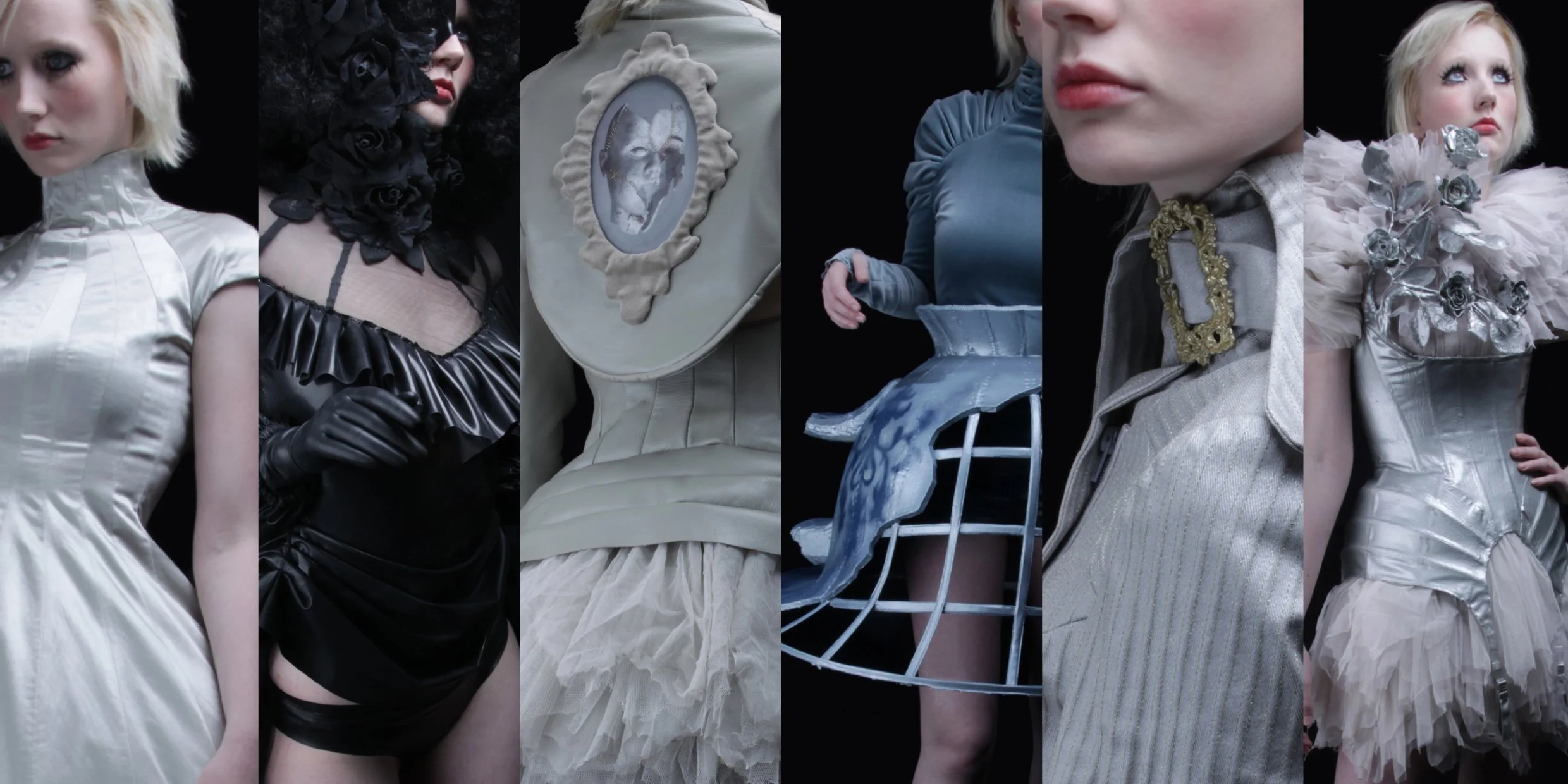
Photo Credit: Linda Friesen 2009 Collection
3. When a bride feels pulled toward something unconventional, yet, is anxious about stepping outside of family expectations, what advice can you give her in finding a gown that feels authentic to her? Something that reflects her truest self rather than the noise surrounding the occasion?
I myself have never really been bothered too much by what is expected of me. I used to wear alternative, gothic and Lolita fashion. I love dressing up in ball gowns and fantasy costumes to go to events where likeminded people dress the same way. And so I don’t know what it feels like to be anxious about not living up to other people’s expectations of you.
Most of my clients also know who they are and are not afraid in the least to show their style through their wedding gown. I find that when a client comes to the studio and they bring their mother, sister or best friend. Those people already know the bride so well that they won’t argue with her choices. We will only discuss shape, colour, materials, etc. And it’s always good to have an extra pair of eyes to see what suits a client best. Especially eyes that know you well.
I can’t remember ever having had a client in my almost 20 years of doing this that felt anxious about stepping outside of expectations, but if I did, I would remind my client that she knows herself best and to trust her inner voice. It’s not about doing what is expected of you; your wedding day, and any day really, is about you. But especially on your wedding day, you and your partner are the centre of the celebration. What a great opportunity to show all of your relations who you are and who you’ve always dreamed to be.
I always feel honoured when clients come to me with their ideas and trust that I will be able to translate it into their dream gown. Sometimes a client has so many ideas or is moving into a direction that my instinct tell me was not her initial vision, that I feel it is my duty to remind her of her vision or to move her into a direction that I feel is what she’s been searching for but couldn’t quite put together on her own.
A client comes to me for a reason. My style is quite recognizable and so I know a client is searching for that style within her own dress too. That’s why I feel confident making suggestions to clients about the style and design of the gown. Though I always ask if a client agrees and feels the same way when she listens to her inner voice.
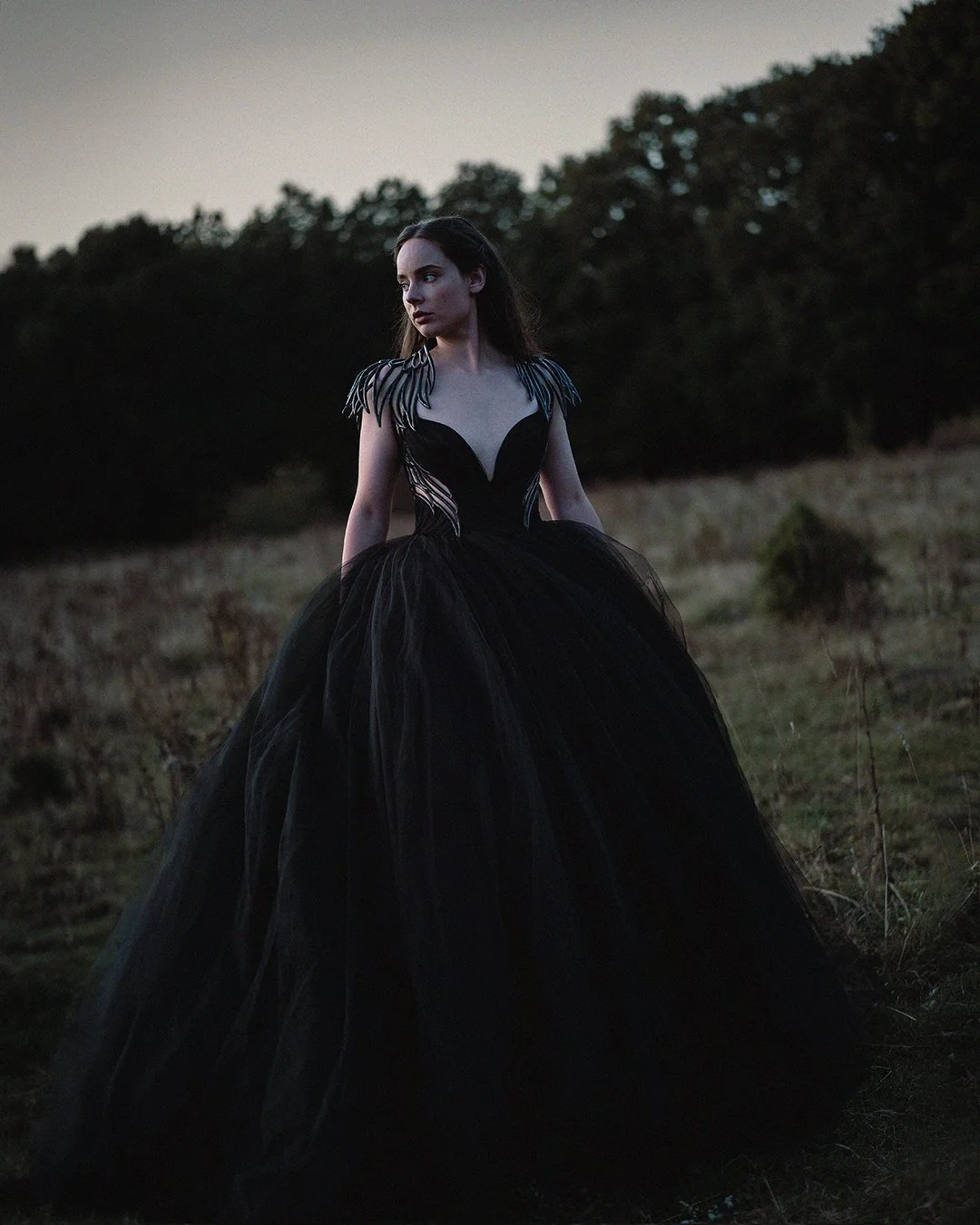
Photo Credit: @lindafriesen.couture; Model: Michelle
4. Black has long been an elegant staple of evening attire, yet your obsidian bridal gowns feel distinct from a traditional black gown. In your view, what transforms a black dress from a gown to a wedding gown? Both emotionally and from a design perspective?
I think, again, that would be the story I aim to tell through my designs. The viewer senses that it’s not just a black dress, it’s a story written in fabrics. Emotionally, black brings a sense of darkness, mystery and power too. I think of my black Raven Queen, the Dark Angel and also of my Witch dress. All of these dresses have been made in other colours, but black gives them the most mystery.
Design-wise I would say, structure and texture. As with all of my work, shape and materials are key. A distinct silhouette with historical elements and well thought through seam placements elevate a design from the ordinary.
The texture is just as important. I love using velvets and tulle. Dupioni silk and silk chiffon. And also metallic fabrics and lace. These rich textures all bring out something different in a design. Tulle and chiffon embody airiness and a fleeting feeling. A ghostlike charm carried within a dress. Metallic fabrics look powerful, like a knight’s armour. Velvet and Dupioni silk give a dress an instant historical look. Lace tells a story too, of flower vines climbing up over the bodice of a dress towards the shoulders and draped down over the hips to show a timelessness. Like an overgrown gothic ruin standing still in time. Fabrics carry emotion too.
As for structure. I’ve always loved playing with seams. I create a lot of my patterns through draping and drawing new seams onto a fabric sleeve I’ve made for my mannequin. Drawing new lines and seams on my mannequin and draping new volumes allows me to directly see what the shapes will do, how the body will be accentuated. To me seams are both functional and decorative. The right placement will ensure the perfect smooth fit. But it will also accentuate the figure any way you like.
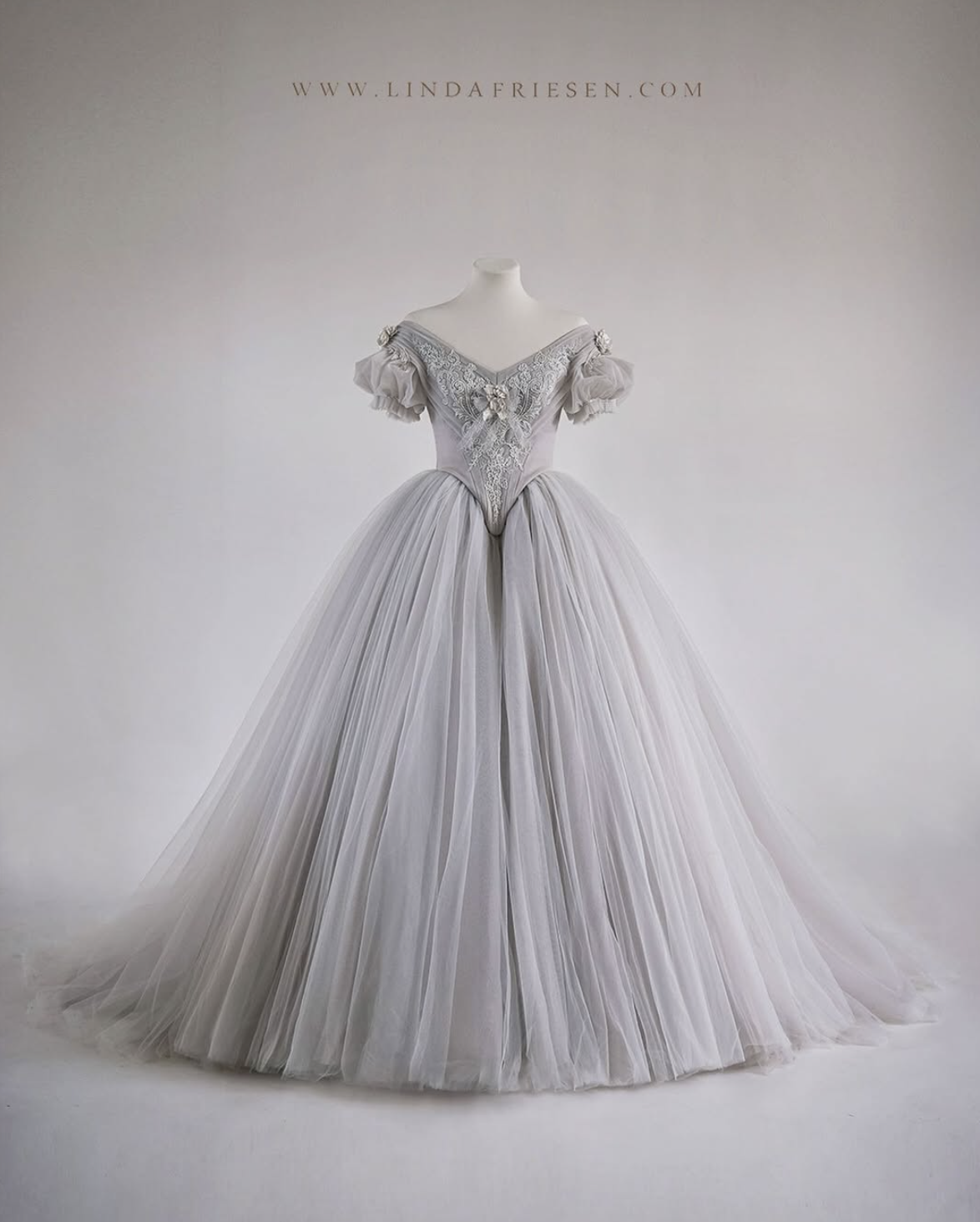
Photo Credit: @lindafriesen.couture
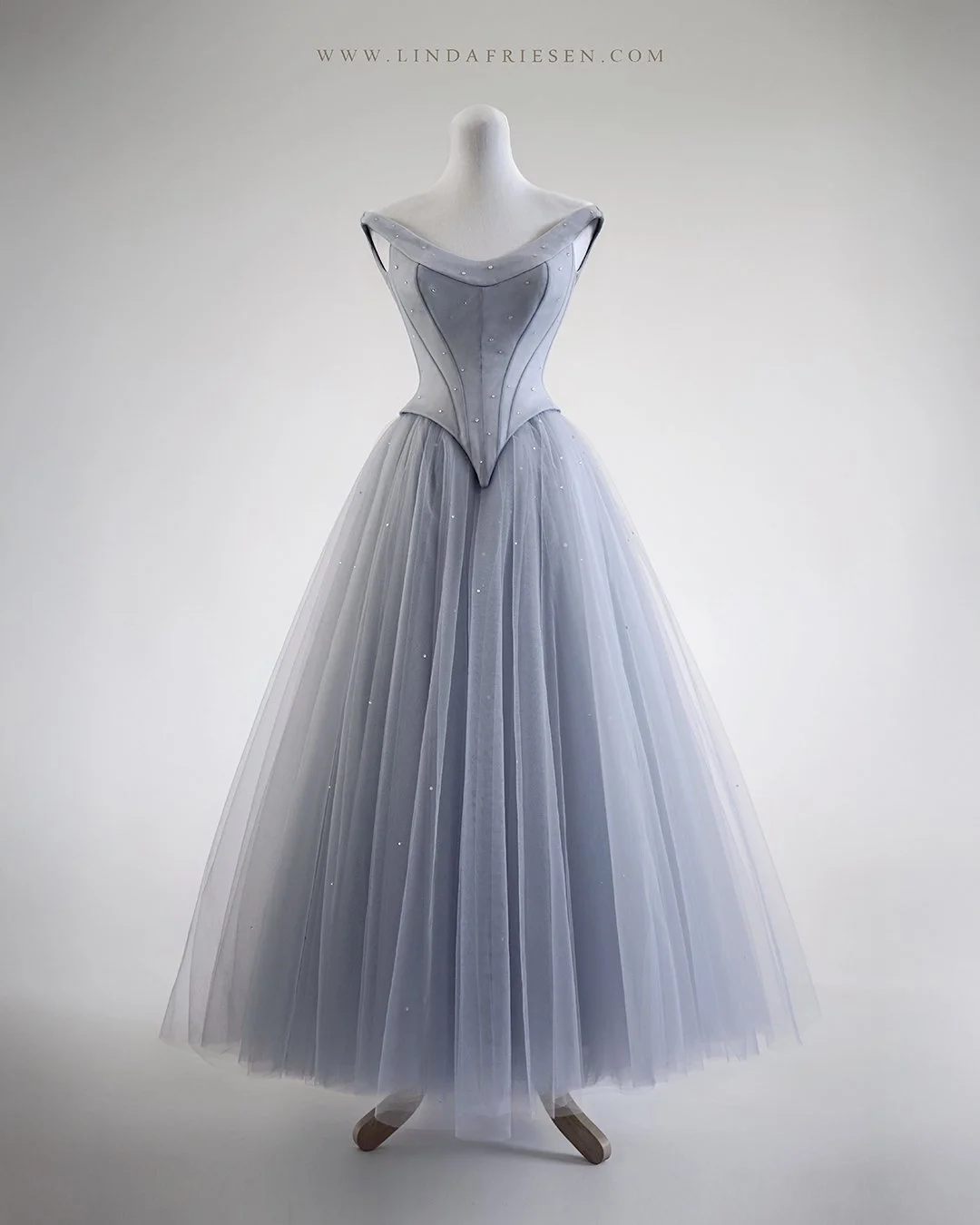
5. From saturated scarlet to misted grey-blue and midnight black, colour plays a defining role in your designs; what does colour allow you to express in a wedding gown that white alone cannot carry?
You directly name three of my favourite colours to work with. Add to this antique whites, golden ochre yellow, midnight blue and silver grey and you’ve probably got my top seven colours I love to work with. And, each colour again supports a story or feeling.
I use mostly muted colours, like the blue-grey and antique whites. Any pink, purple or green I use will also be faded, like a dusty rose, faded lavender or greyish green. Now that I think about it, I notice how all of these, yet again, give a garment a historical look. Colours faded through time. And the saturated colours I use, like the scarlet blood red, the rich ochre yellow and peacock blue are all colours that are so often seen worn by figures in historical paintings. I think it’s safe to say: I will never create a fuchsia, canary yellow or bright sky blue dress. My colours need to carry a darker mood.
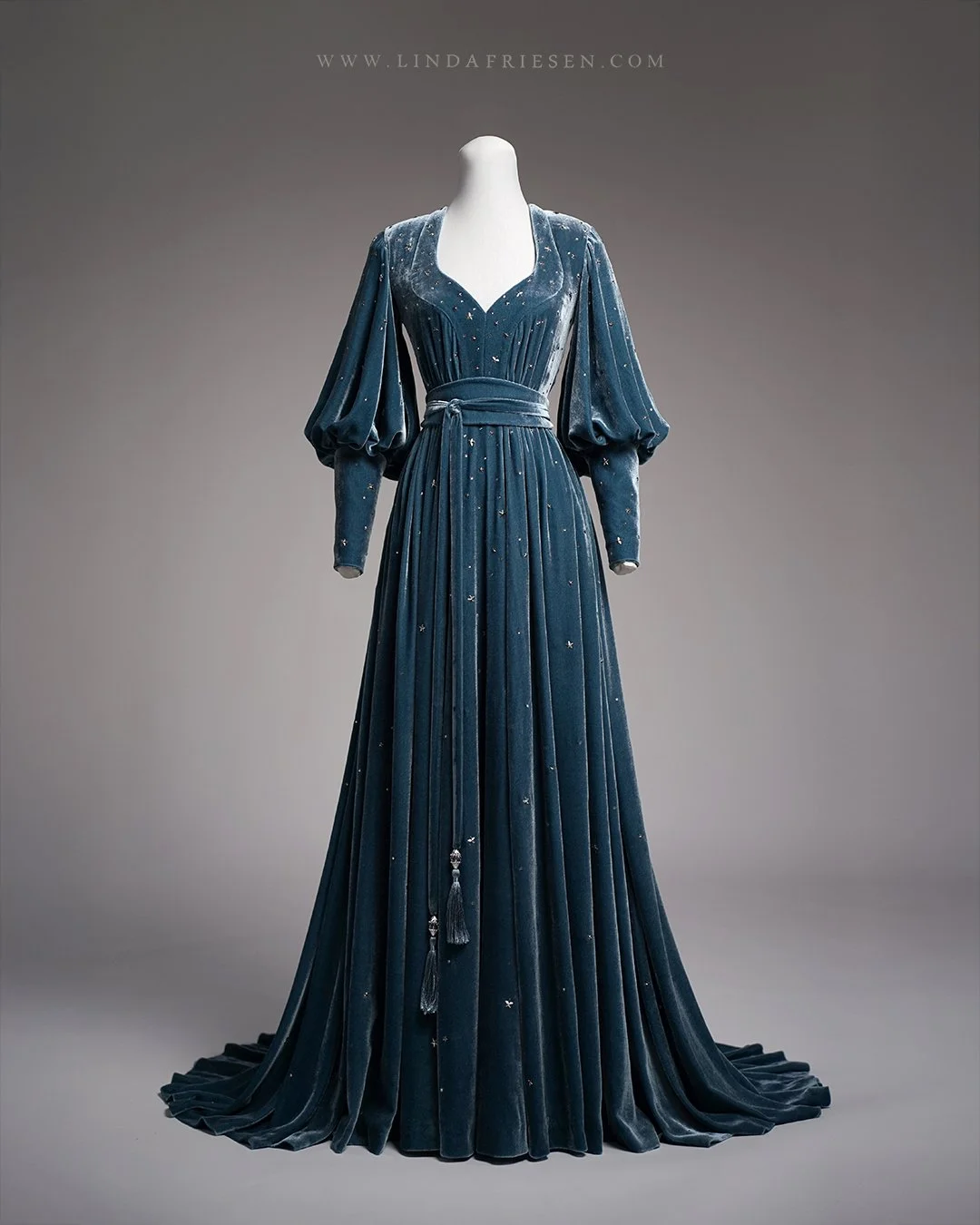
Photo Credit: @lindafriesen.couture
It’s funny, whenever I am searching for a shade of fabric I just can’t find, I will explain to the vendor the shade that I’m looking for, and it always ends up in a story. Blue, like a deep dark stormy sea, or red, like a fresh droplet of blood.Of course they almost never understand what I’m talking about, and I end up needing to order samples anyway.
It often happens that I can’t find the perfect colour and so I need to dye it myself. Most often with just the tip of a teaspoon of powered dye to get just a hint of a colour. Or I will dye a light grey or cream fabric instead of a white to make sure the colour I want will look antique.
I do think white carries it’s own story, but it’s mostly of innocence, ethereal goddess or ghost-like vibes.White can look powerful too, just as black does, the extremeity of the colour does stand out in a room. I don’t know if it’s our brain reacting to a colour by instinct or if we’ve decided through time that a certain colour gives you a certain feeling. But, I do know that the right colour will amplify the story I want to tell with a dress. And, if the colour changes ever so slightly, so will the story.
6. A wedding gown often becomes an heirloom long after the ceremony has ended; when you create a gown for a bride, what do you hope it carries forward beyond the wedding day? What do you hope a bride feels when she looks back on photos of her in her gown?
That it was her day and she was living as her truest self on the day to celebrate her union with her life partner.
Looking back on that special day, I hope my client feels joy and also pride. Seeing herself glow in a gown that perfectly embodies her or the person she was at the time.
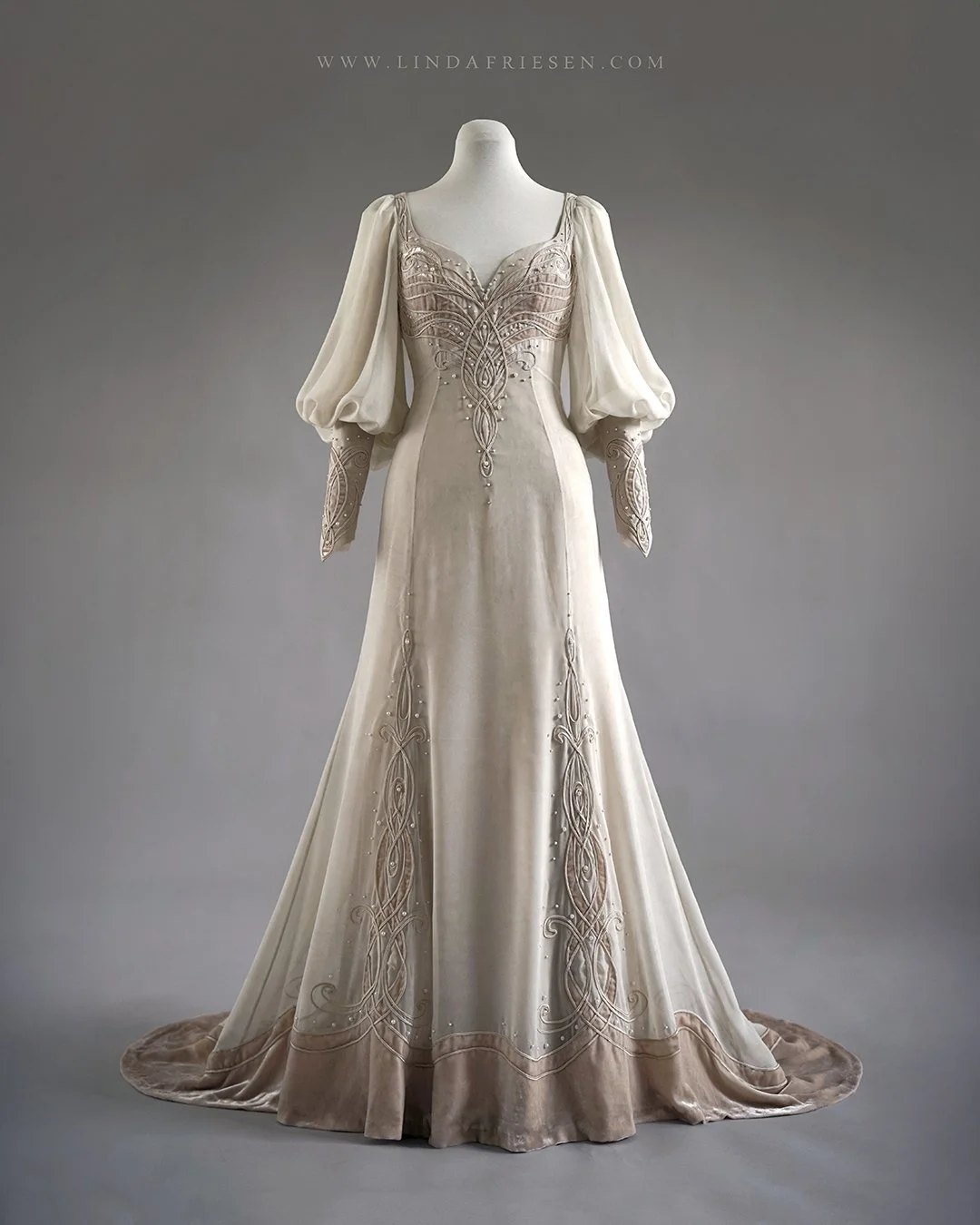
Photo Credit: @lindafriesen.couture
In a bridal landscape that often favours familiarity, Linda Friesen’s work insists on imagination. Her gowns invite brides to step outside of convention and into a narrative all her own.
For those who never quite belonged in the whitewashed forest of traditional bridal fashion, Friesen’s atelier offers something far more compelling: a place where “happily ever after” is designed authentically, on your own terms.
For more conversations with designers redefining dark feminine fashion today, subscribe below to receive our free monthly digital issue, delivered to your inbox.