A soft goth study of the season’s most compelling styles
By: Amanda Albert
The FW26 couture collections began making their way down international runways in the spring, offering an early look at what designers imagined for a season that felt distant at the time. Now, as summer starts relinquishing its sweaty hold and fall clothes make their eagerly anticipated annual migration back to the front of the closet, those ideas hit much closer to home.
With fall approaching, our interest in the season’s runway shifts from admiration to application. The collections have had time to settle in our minds, and the prospect of actually dressing for cooler weather gives us reason to revisit the details that caught our attention the first time around. Some will inspire the pieces we pull from storage; others may earn a place on the fall shopping list.
Across the season, designers found extraordinary range in familiar dark feminine signatures, experimenting with transparency and exaggerated proportion while giving accessories an increasingly important role in shaping the silhouette.
Below, we’ve streamlined our FW26 trend report into ten key categories, returning to the collections and creative choices we’re still thinking about just as fall finally gives us somewhere to wear them.
Motion Picture
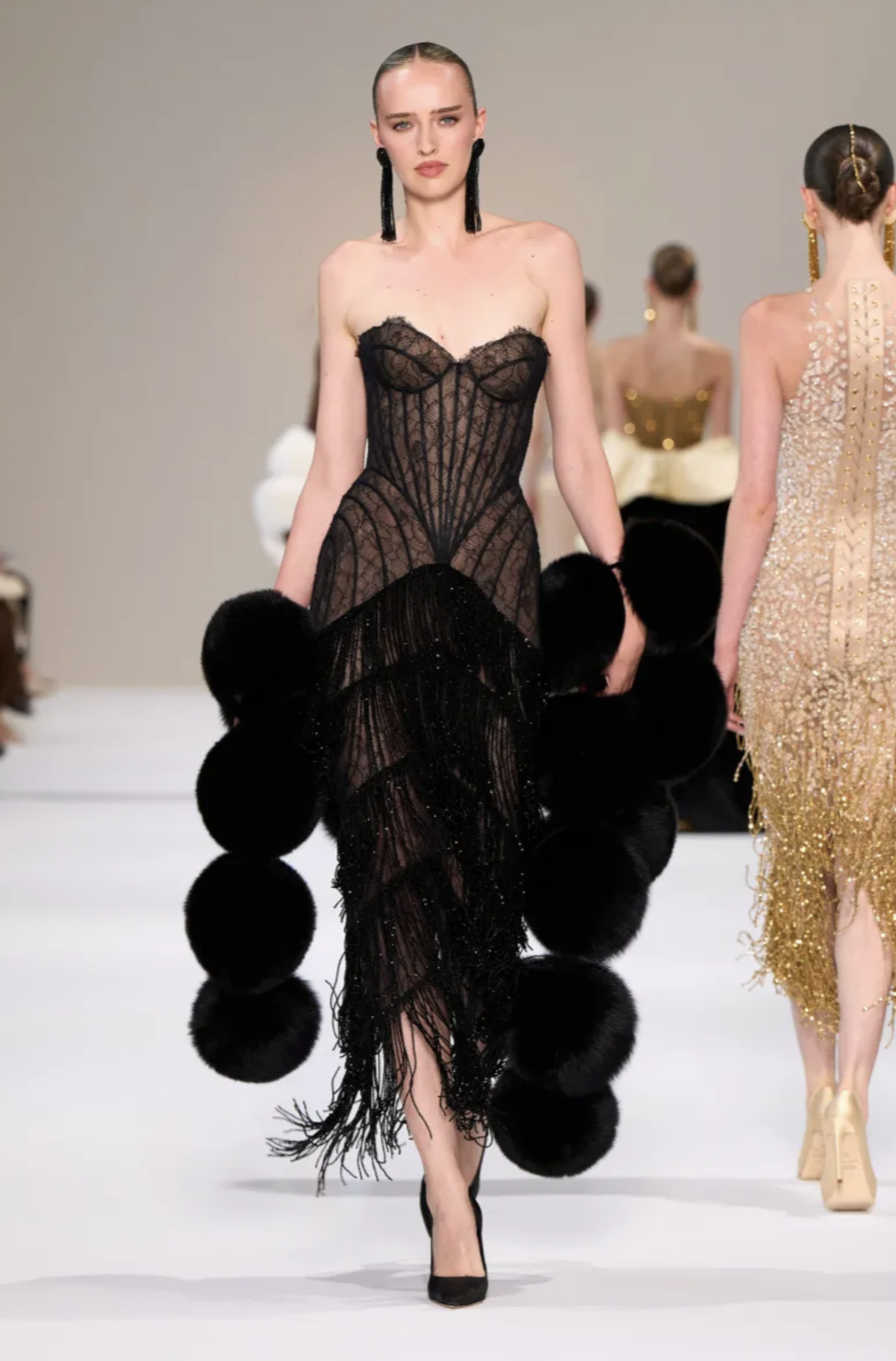
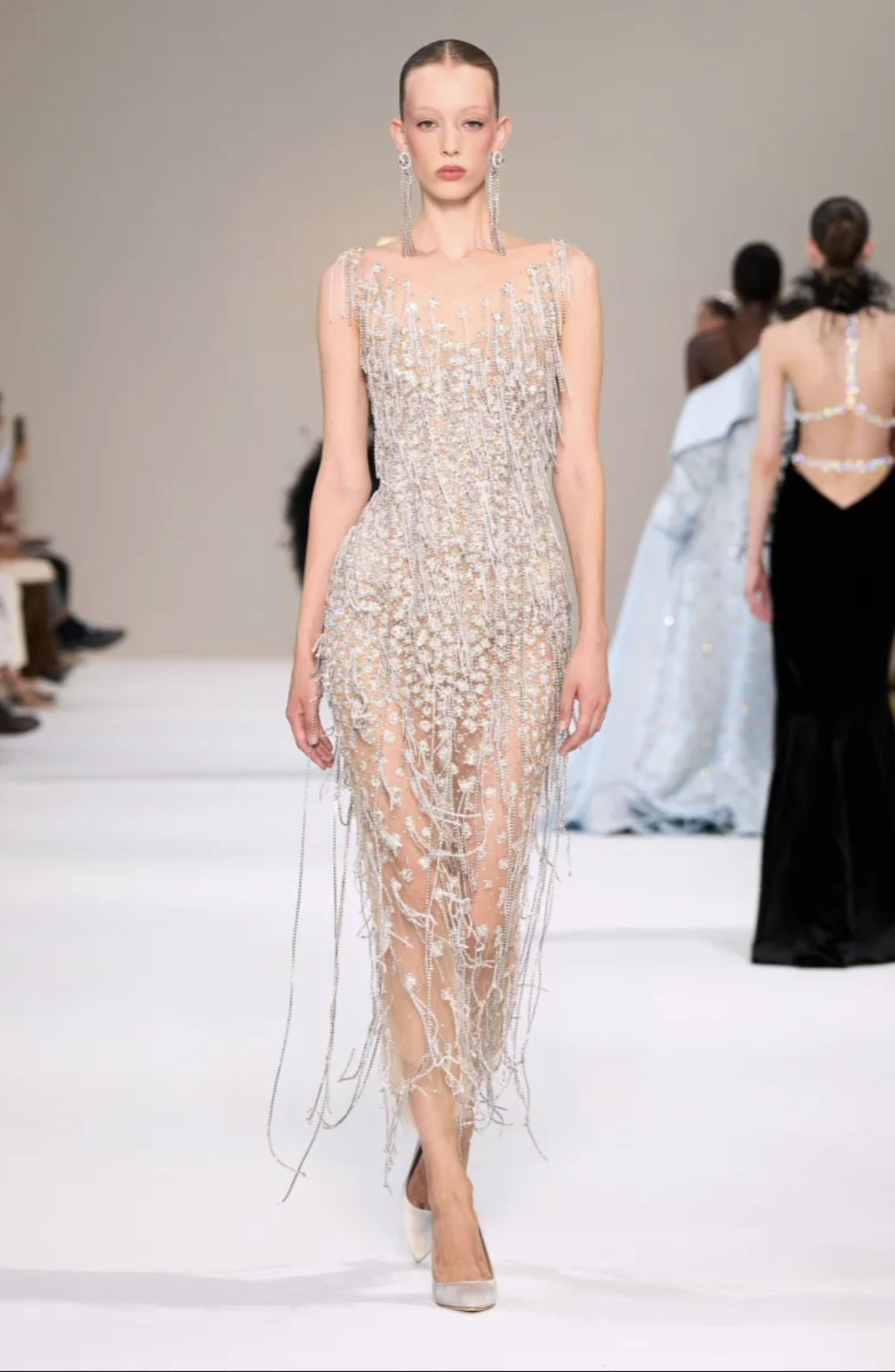
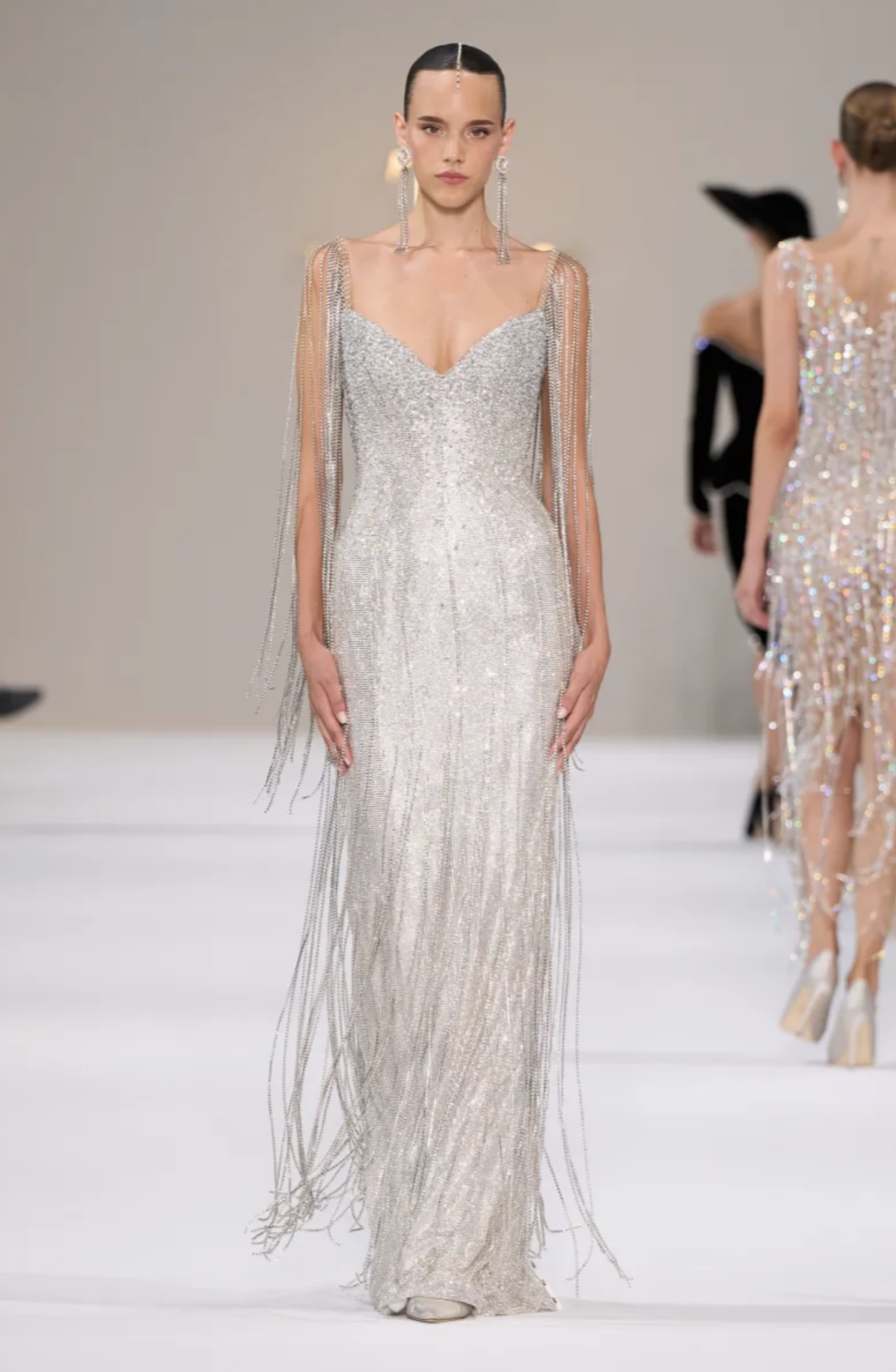
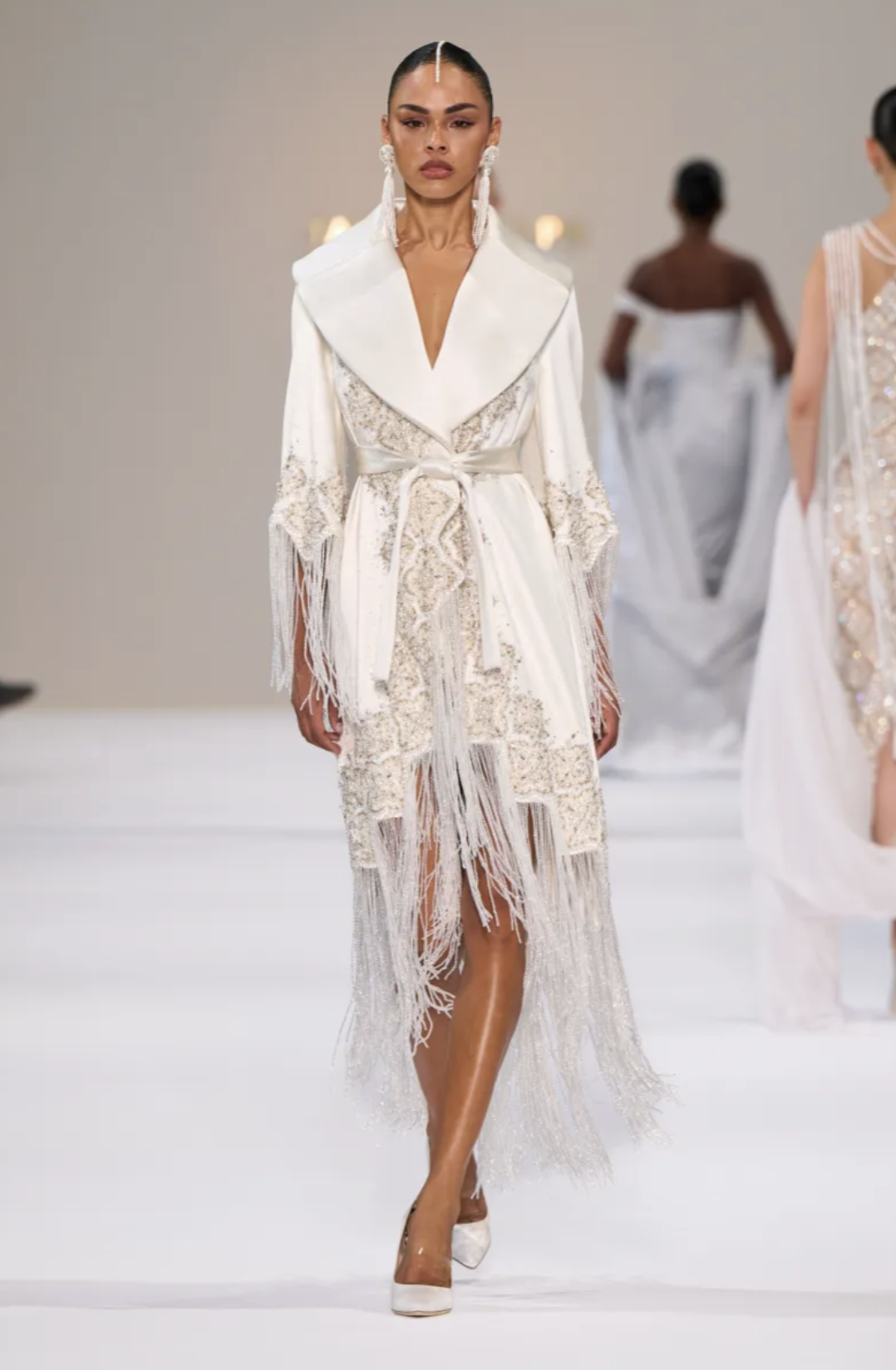
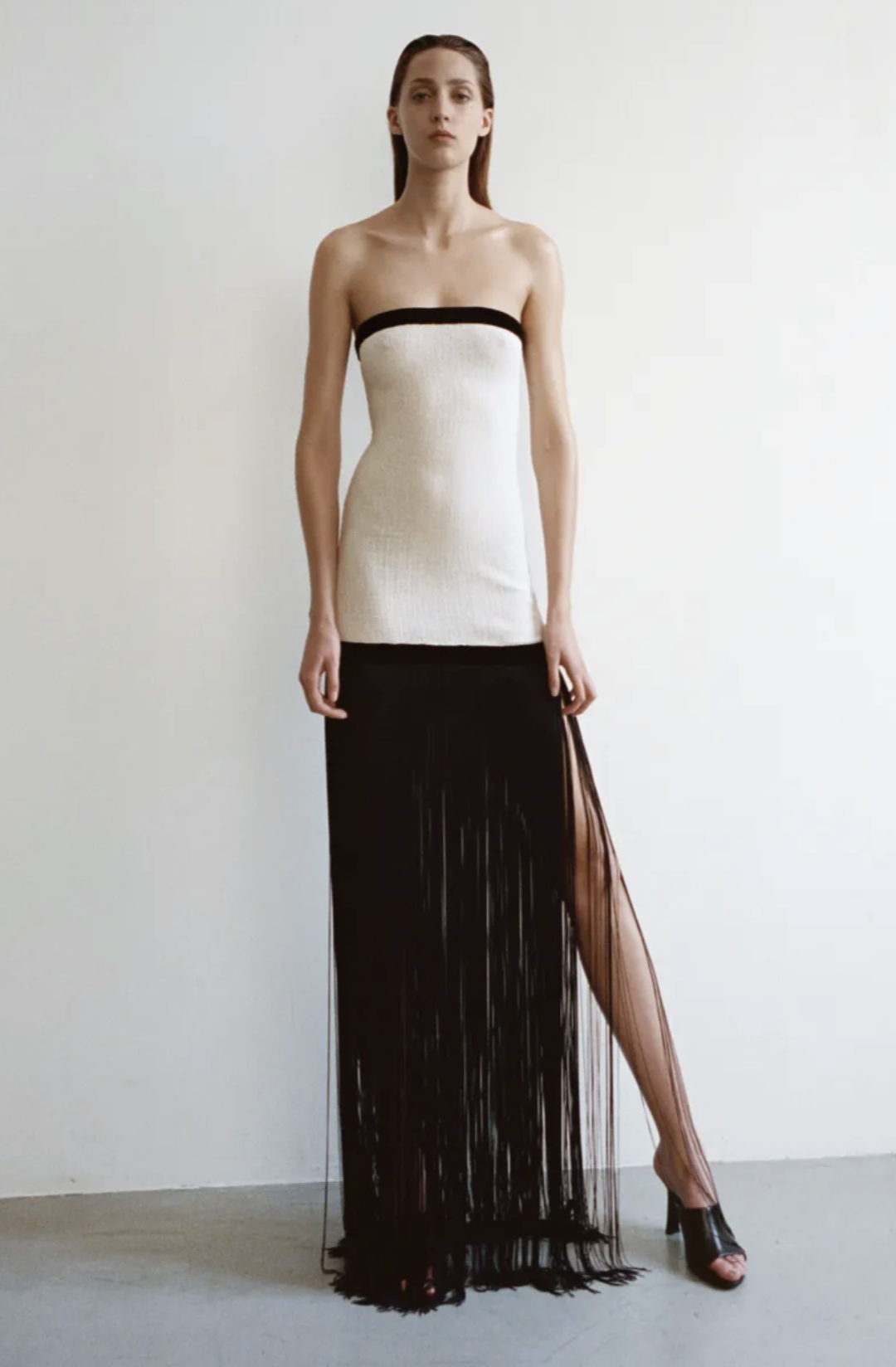
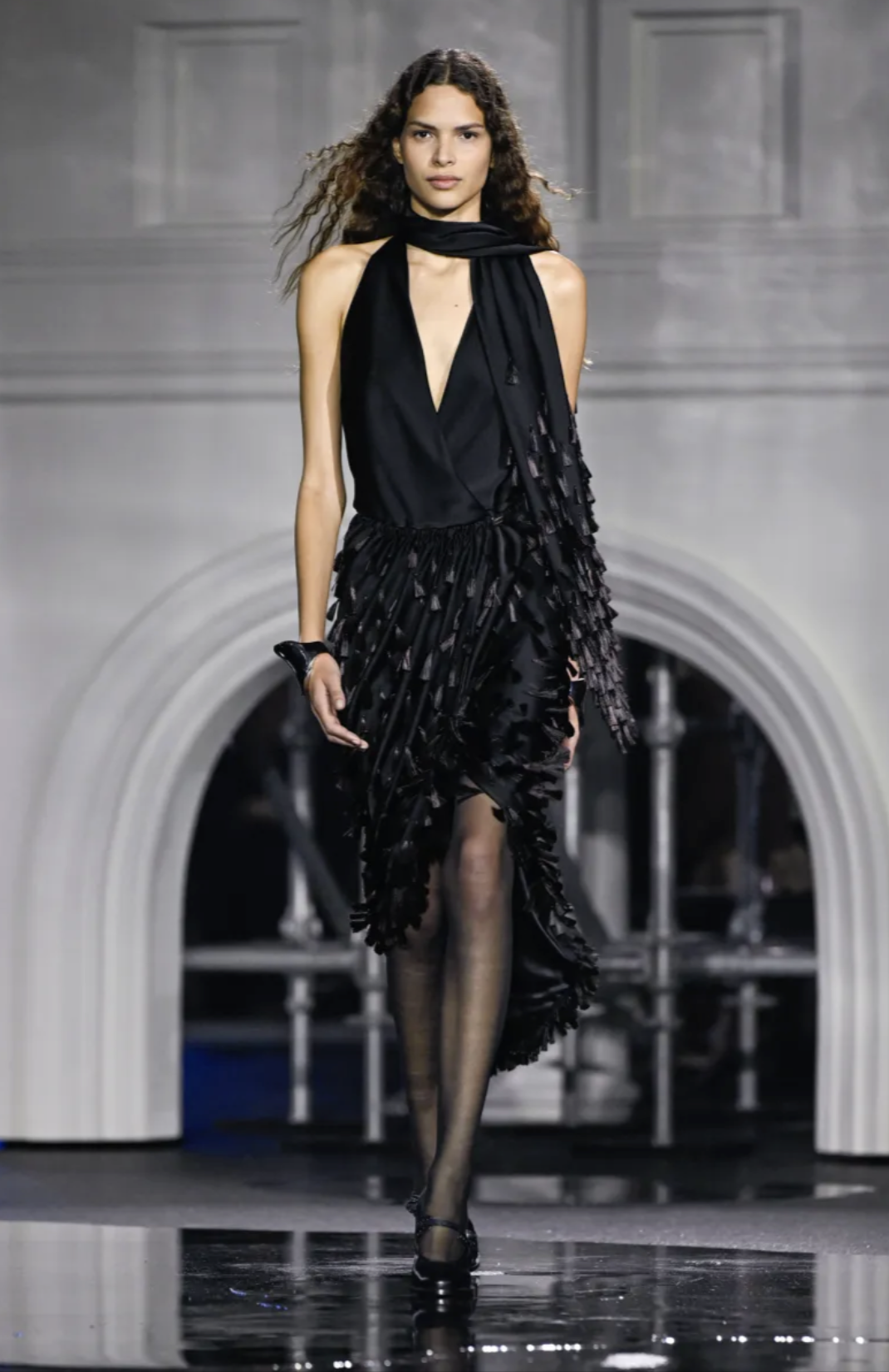
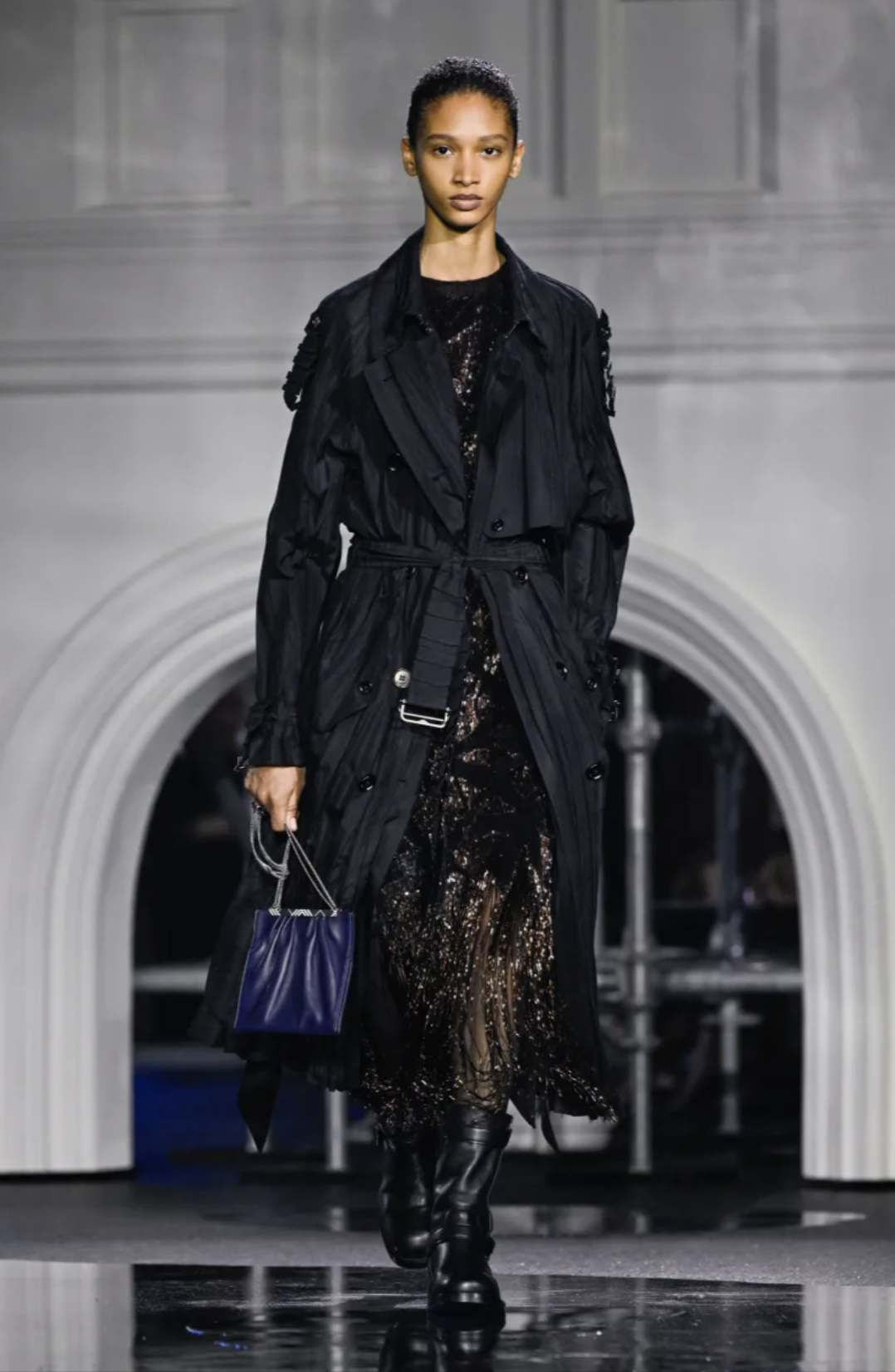
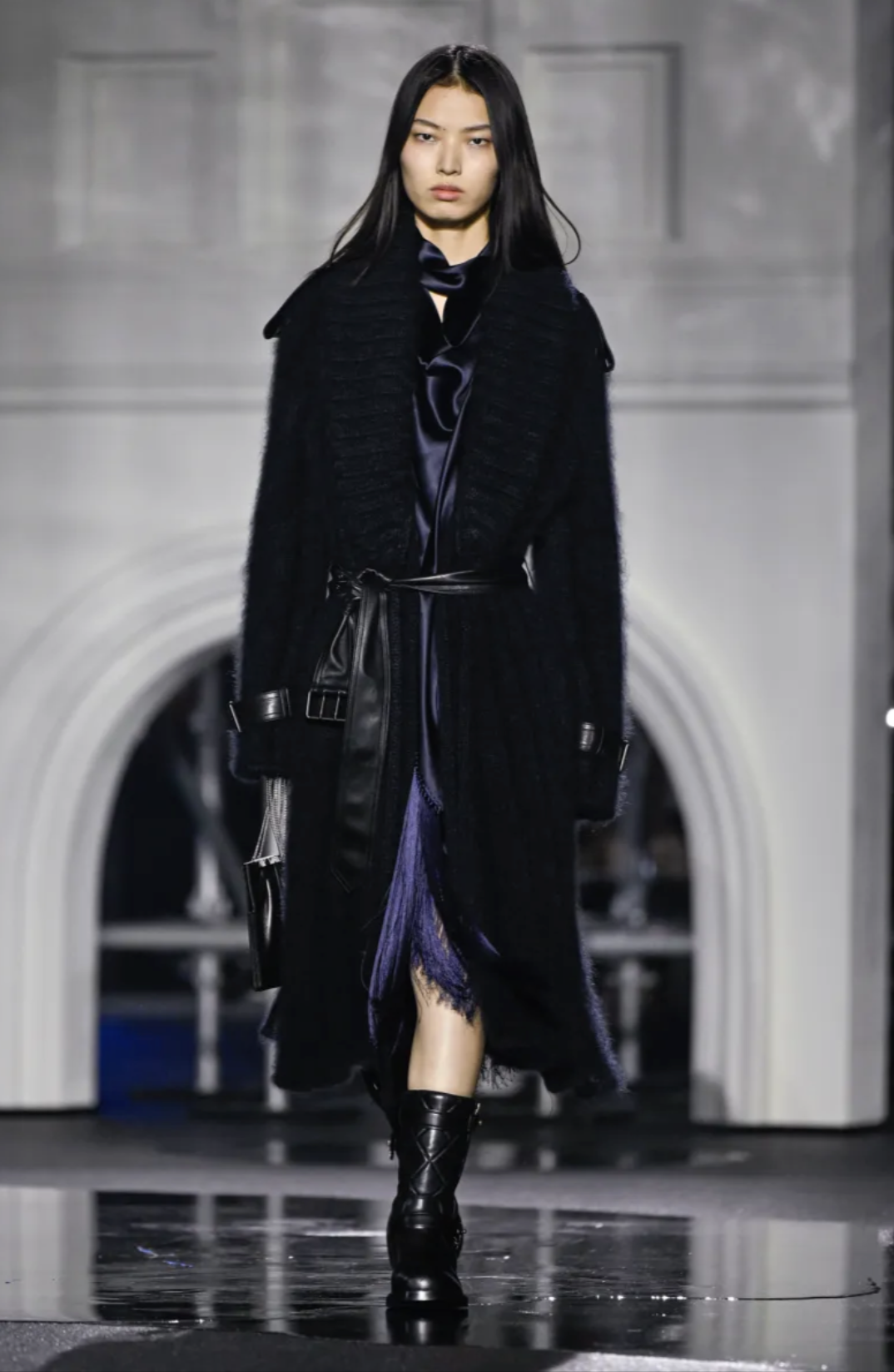
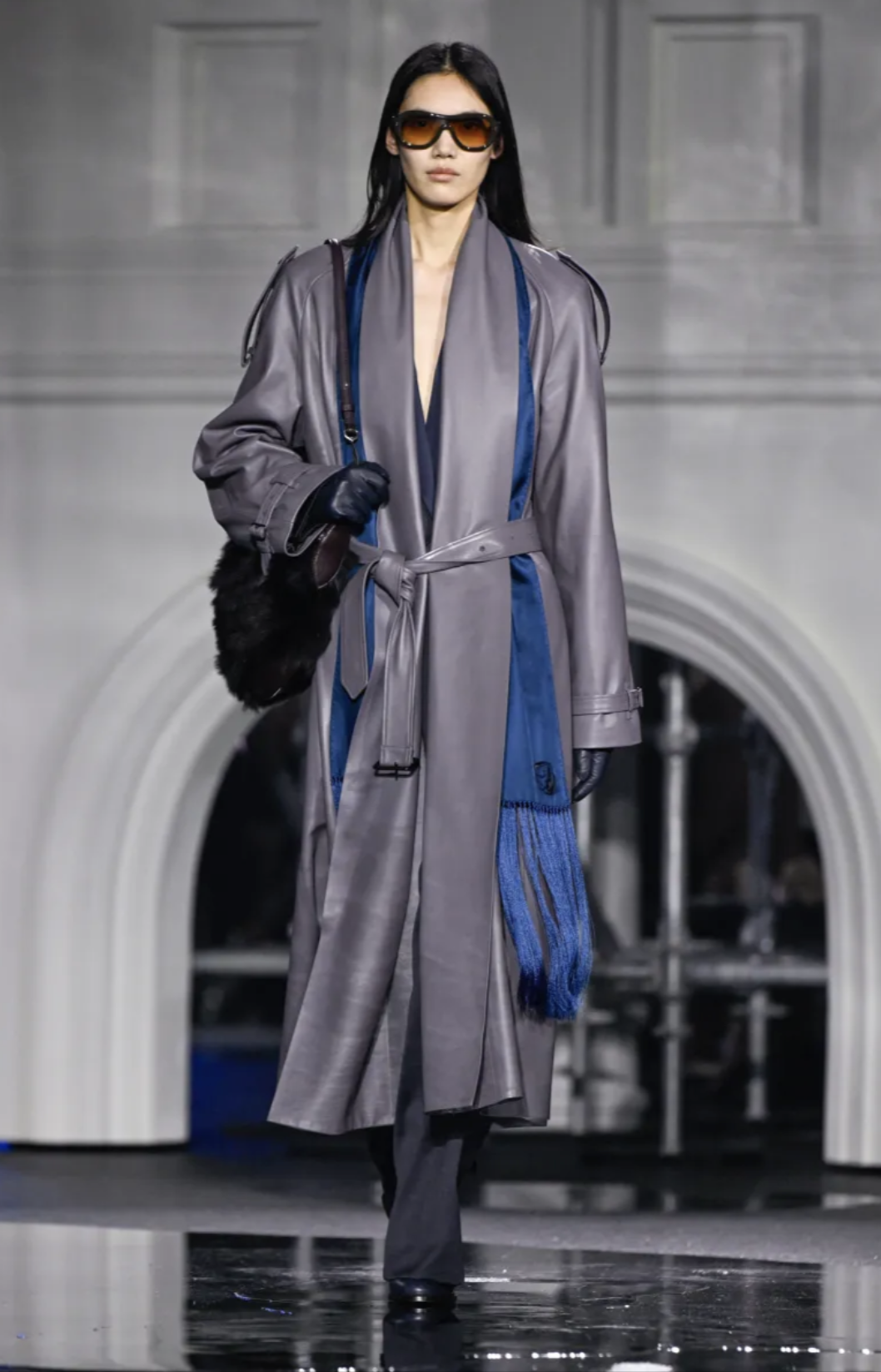
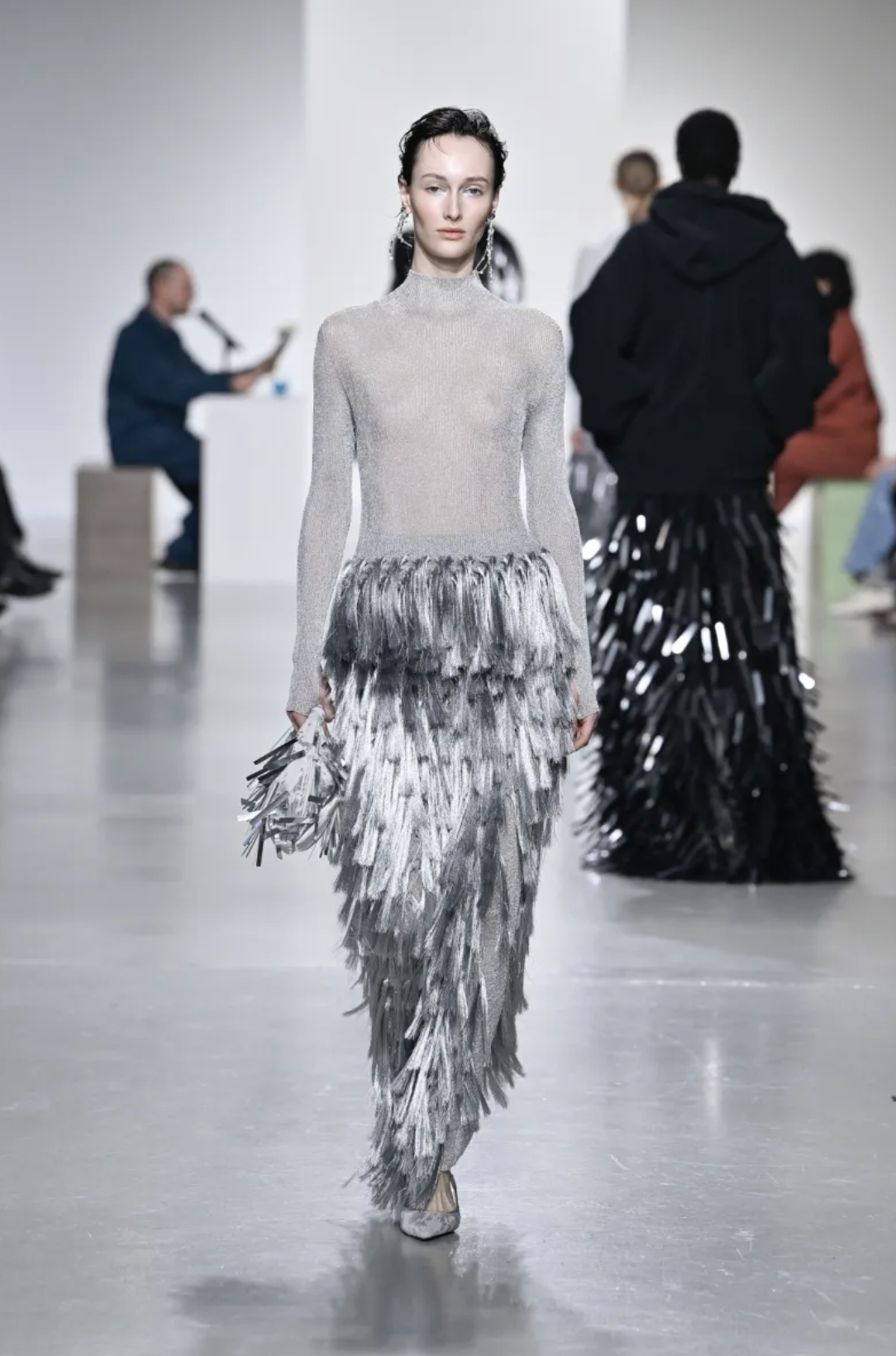
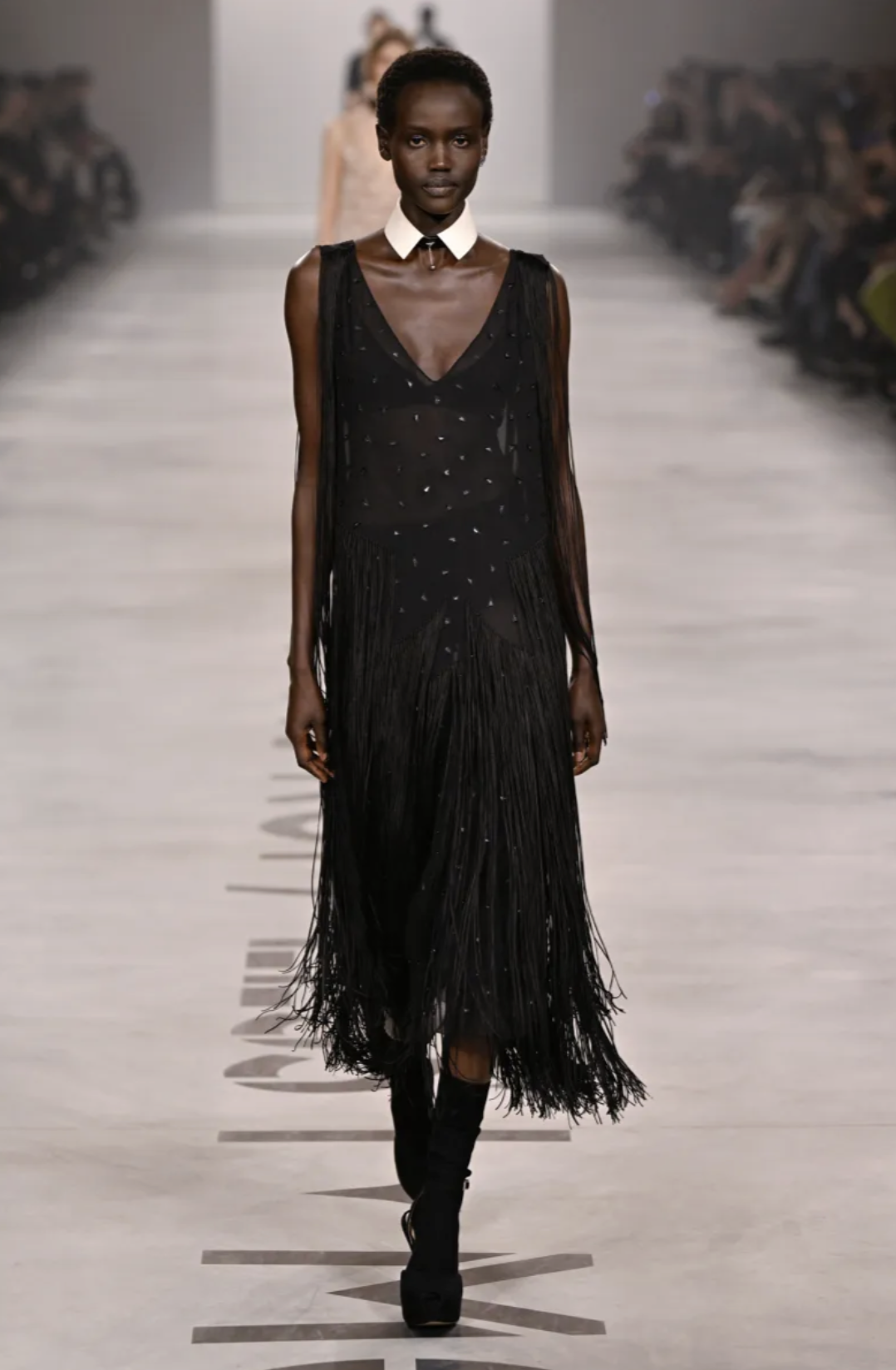
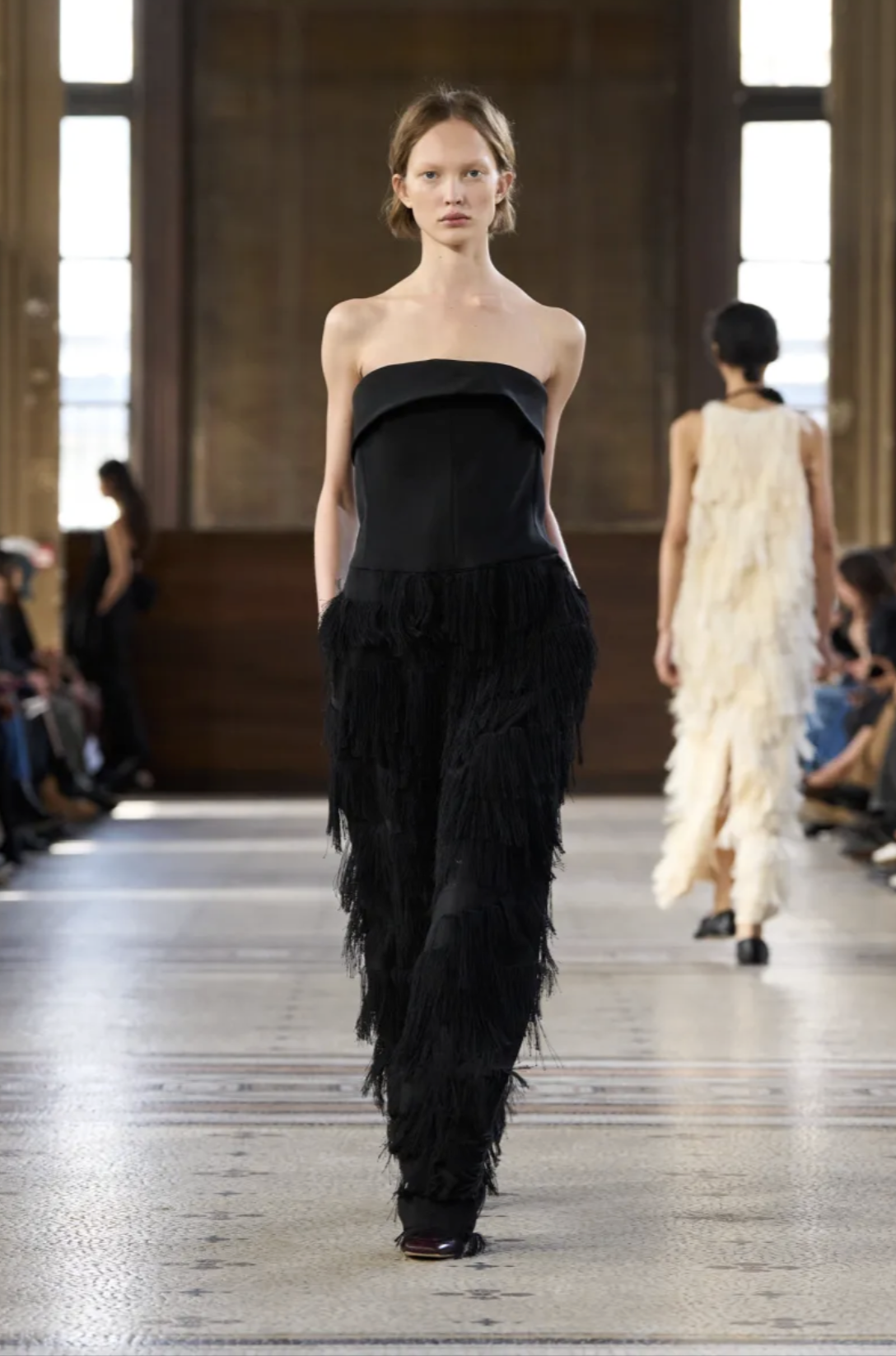
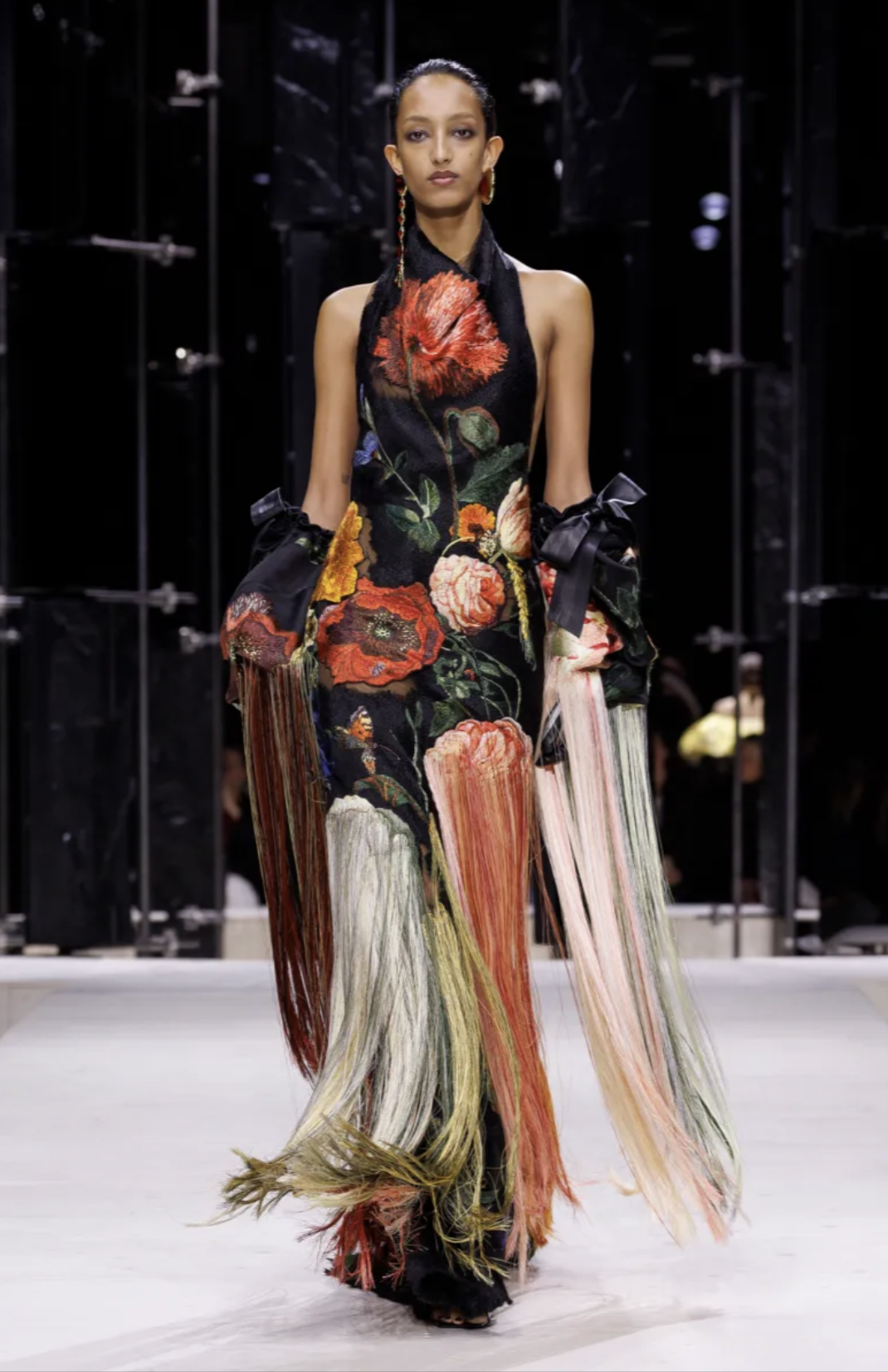
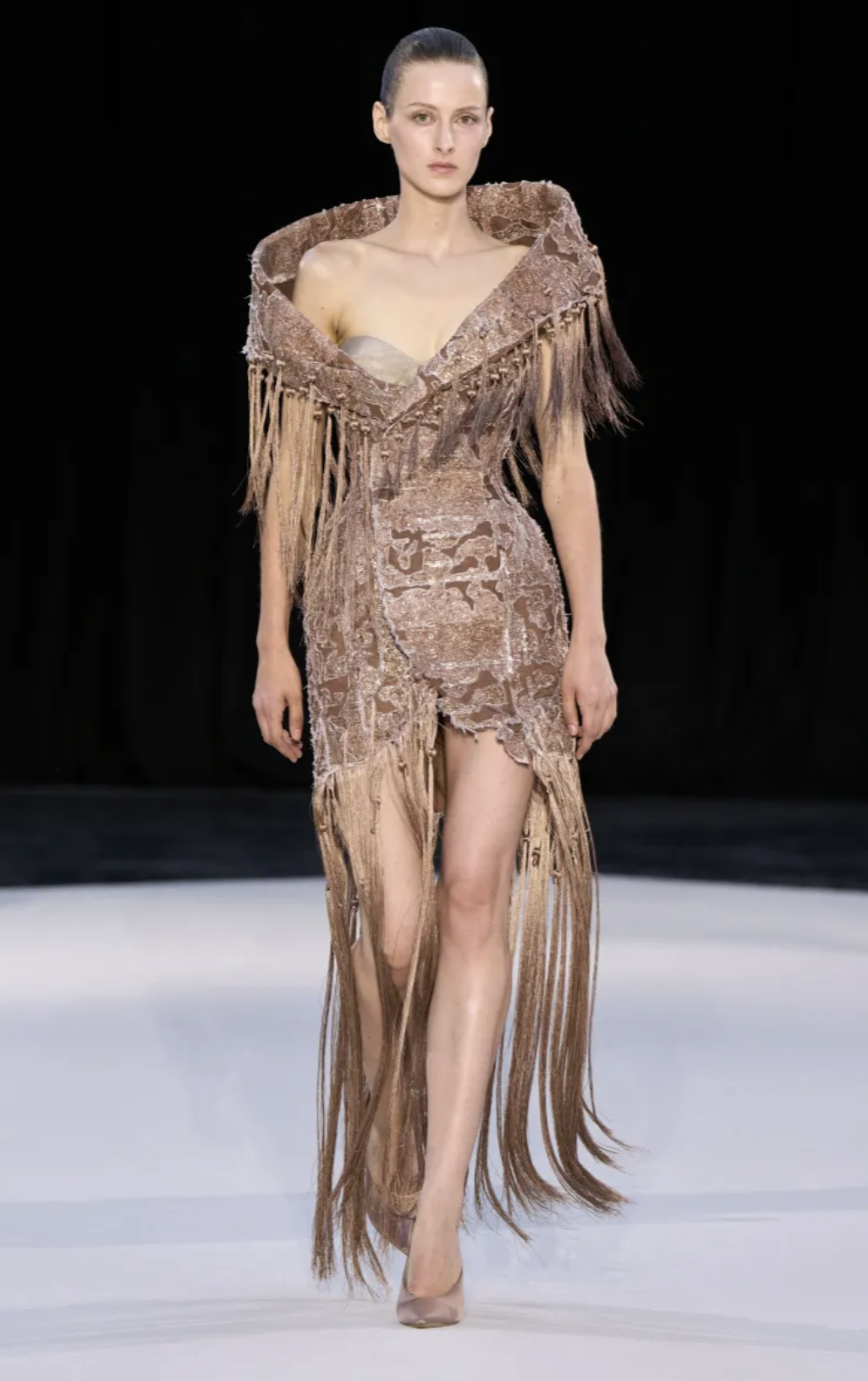
Fringe found extraordinary range this season, appearing as everything from a flirtatious finishing touch to an architectural component of the garment itself. Sometimes it followed the body in long, liquid lines; elsewhere it disrupted tailoring or softened rigid construction, making movement part of the design and ensuring the clothes changed with every step.
Tamara Ralph: Feminine silhouettes drip with long, fluid fringe, extending their movement well beyond the hem.
Ludovic de Saint Sernin: Polite meets playful in a beautifully balanced interpretation that gives fringe a surprisingly sophisticated disposition.
Burberry: Fringe becomes frosting, generously layered across dresses and scarves for a finish that borders on delicious.
CFCL + Fendi: Sheer fabric meets swinging fringe, doubling down on movement while playing beautifully with what lies beneath.
Carven: The black fringed pantsuit is the kind of tailoring we didn’t know we needed.
Givenchy: Sculptural fringe turns movement into wearable art, an idea Cate Blanchett carried beautifully onto the Cannes red carpet in a fringed Givenchy FW26 gown.
Ashi Studio: A precise tan construction framed in fringe makes the contrast between architectural form and free movement especially compelling.
Deco Decadence
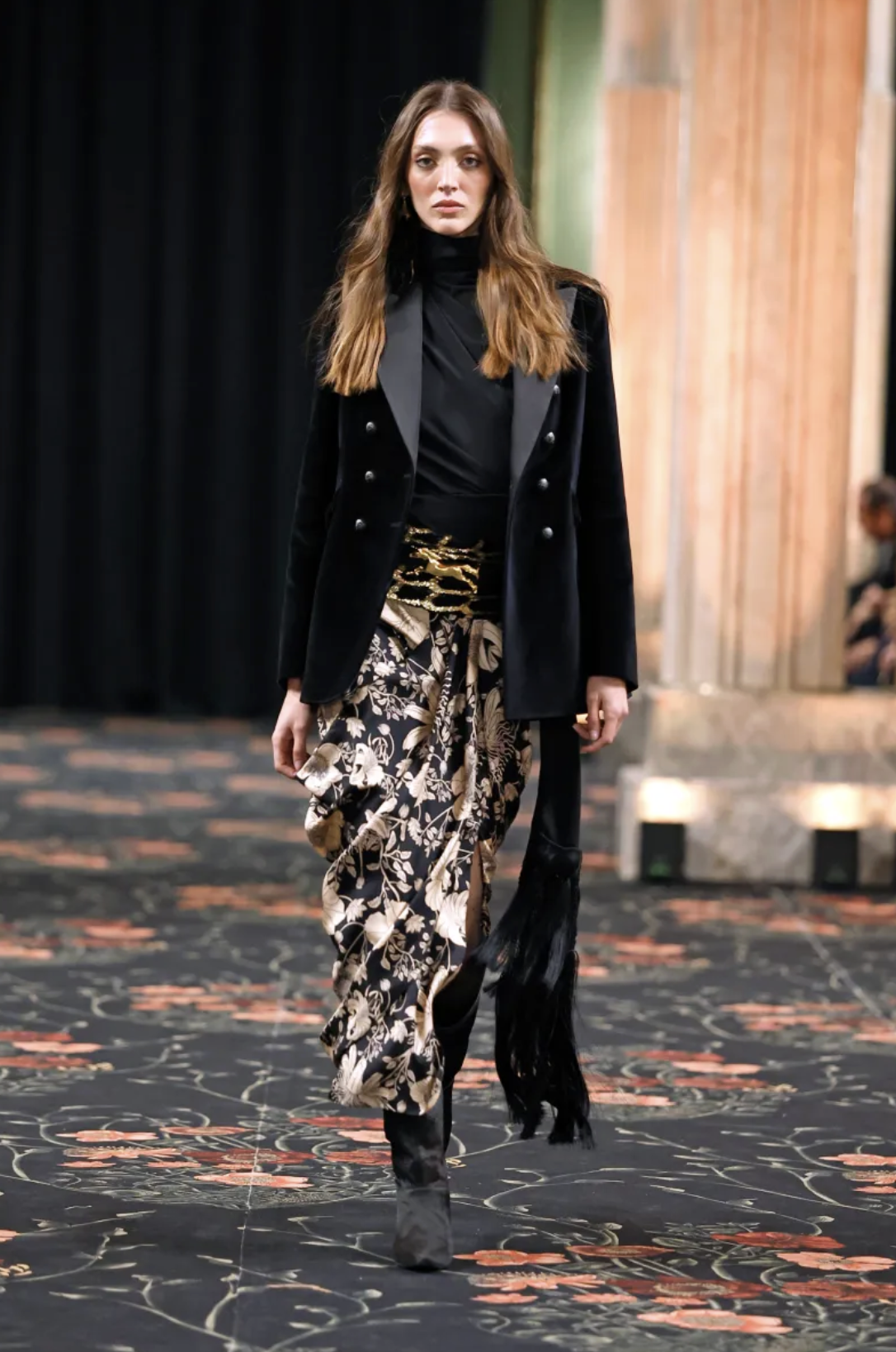
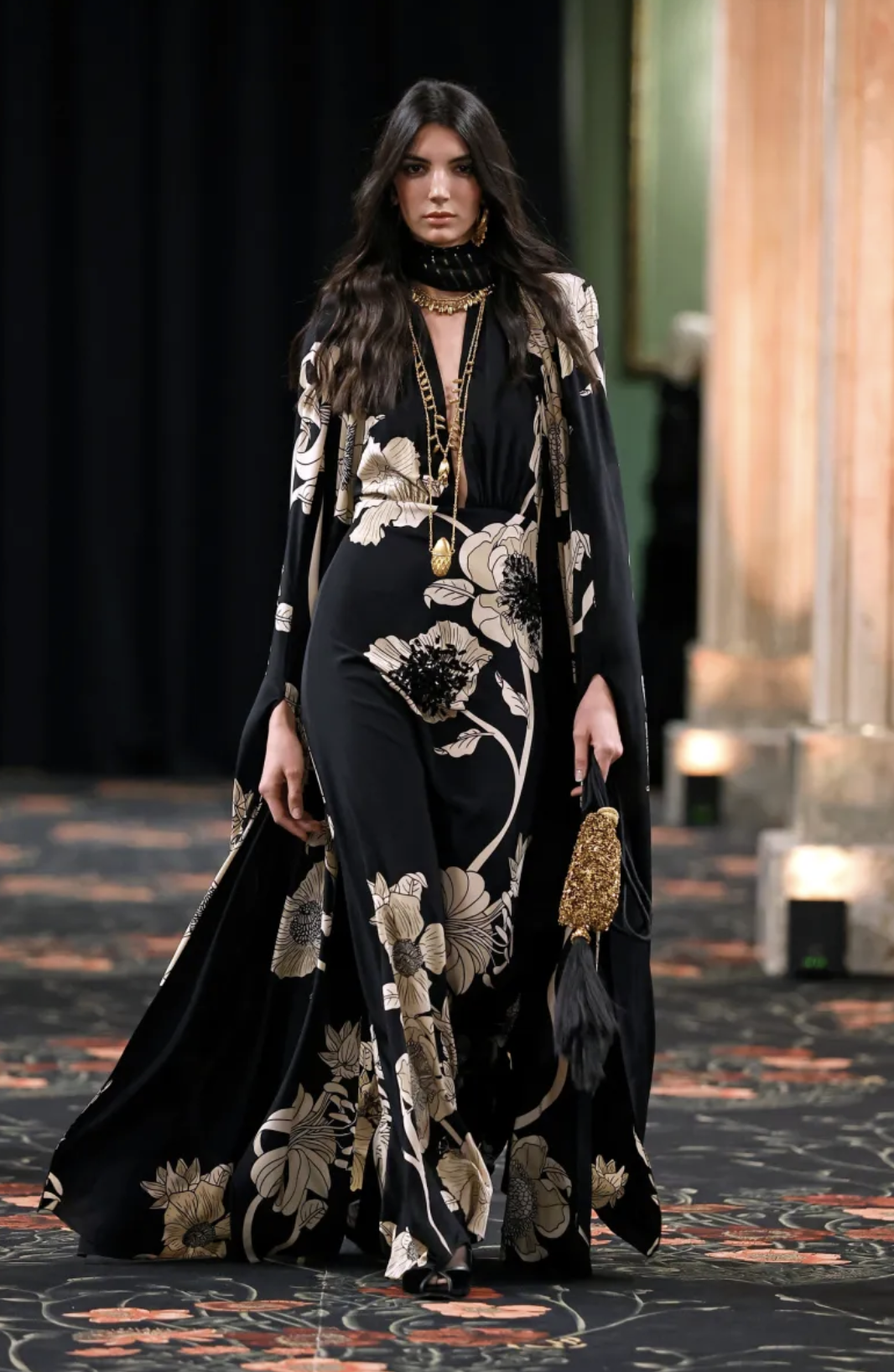
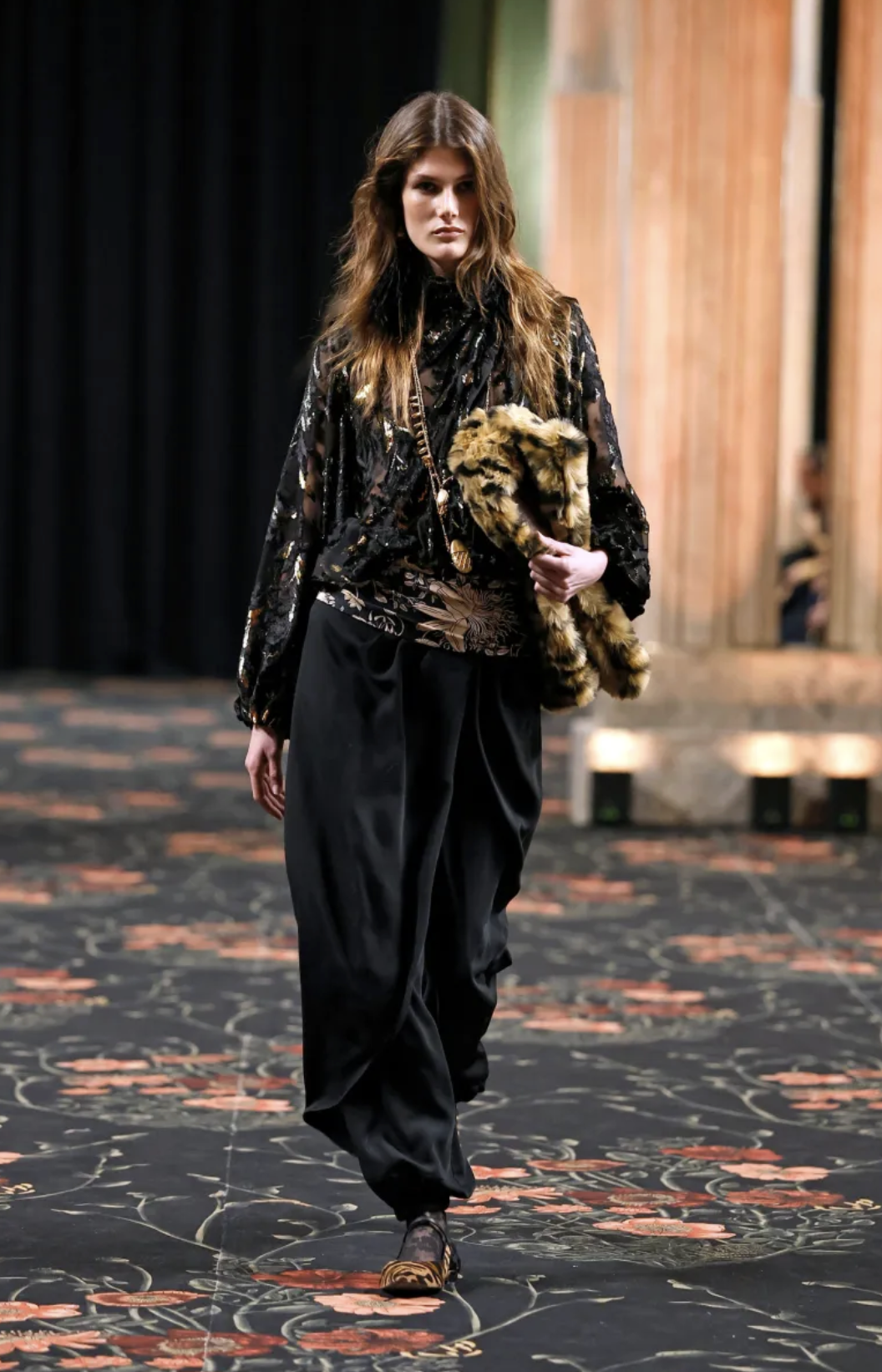
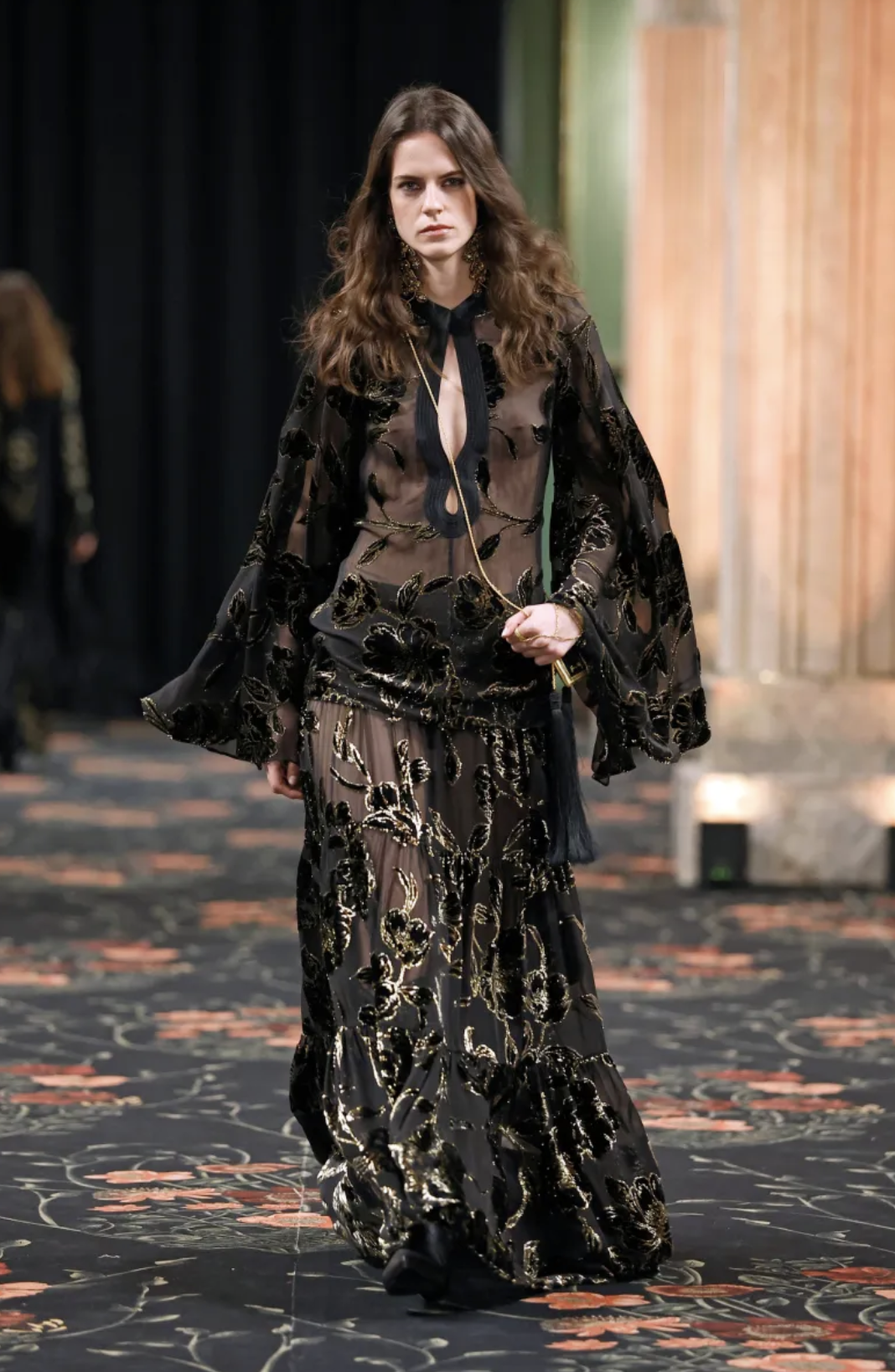
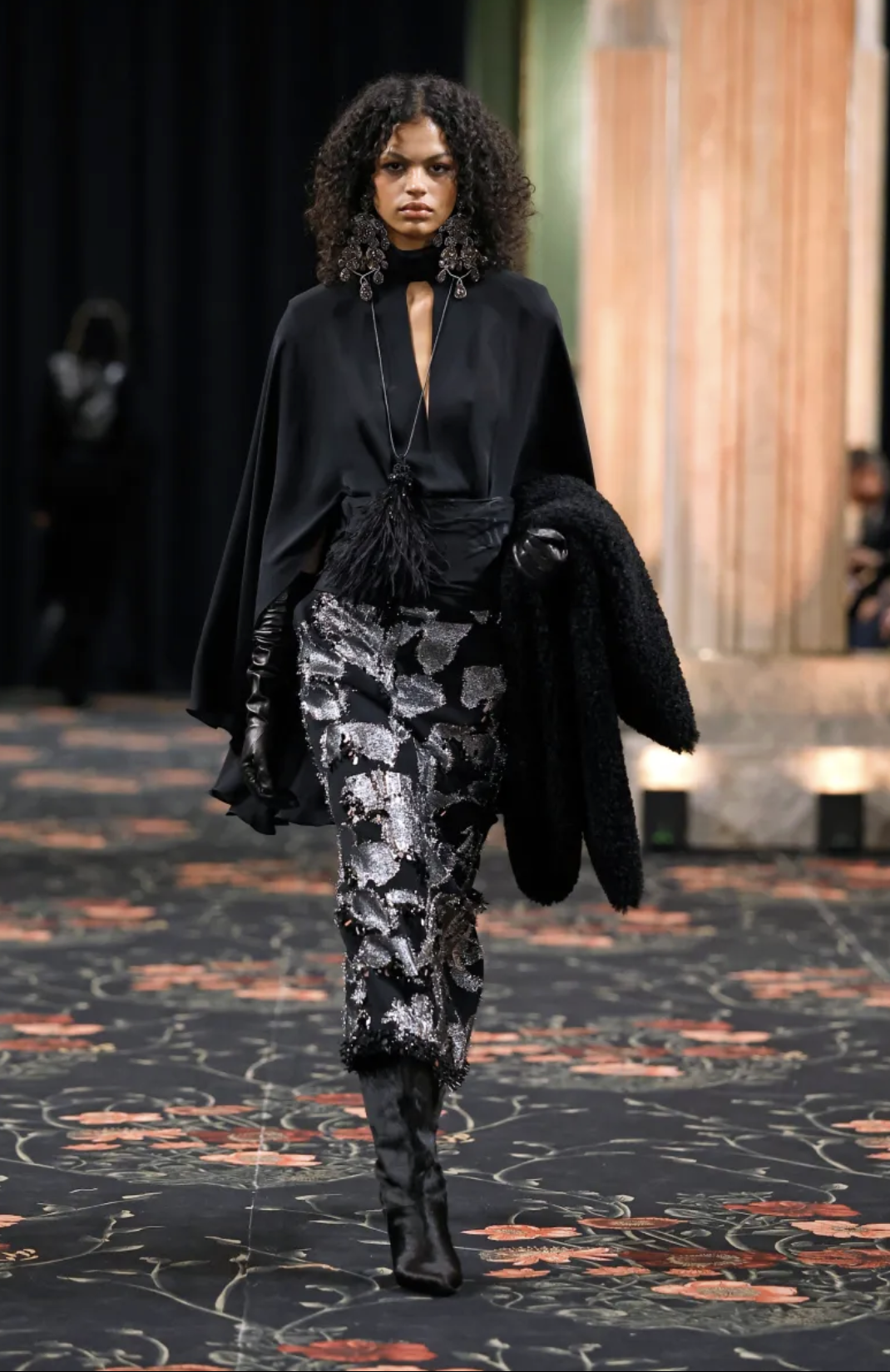
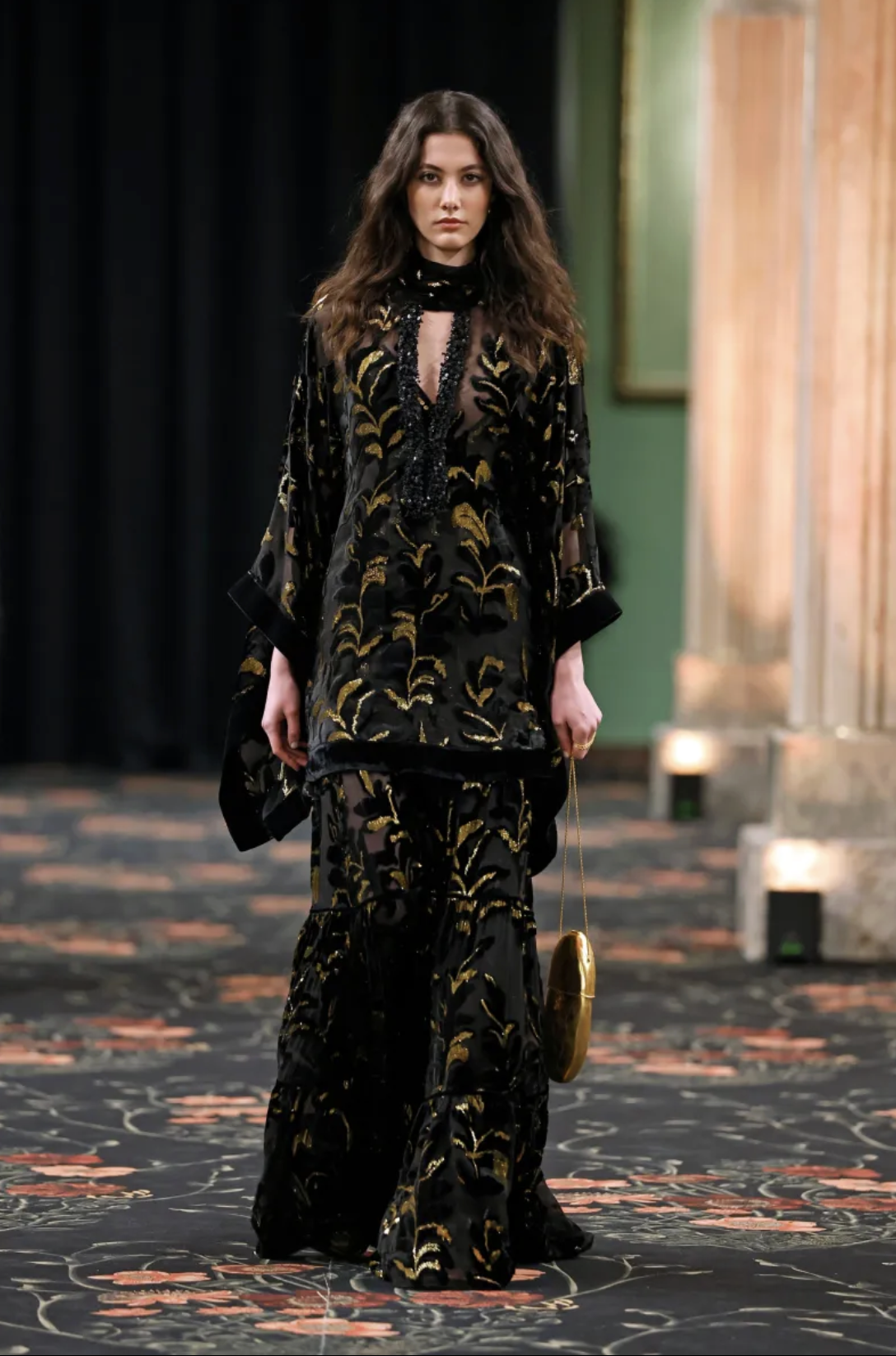
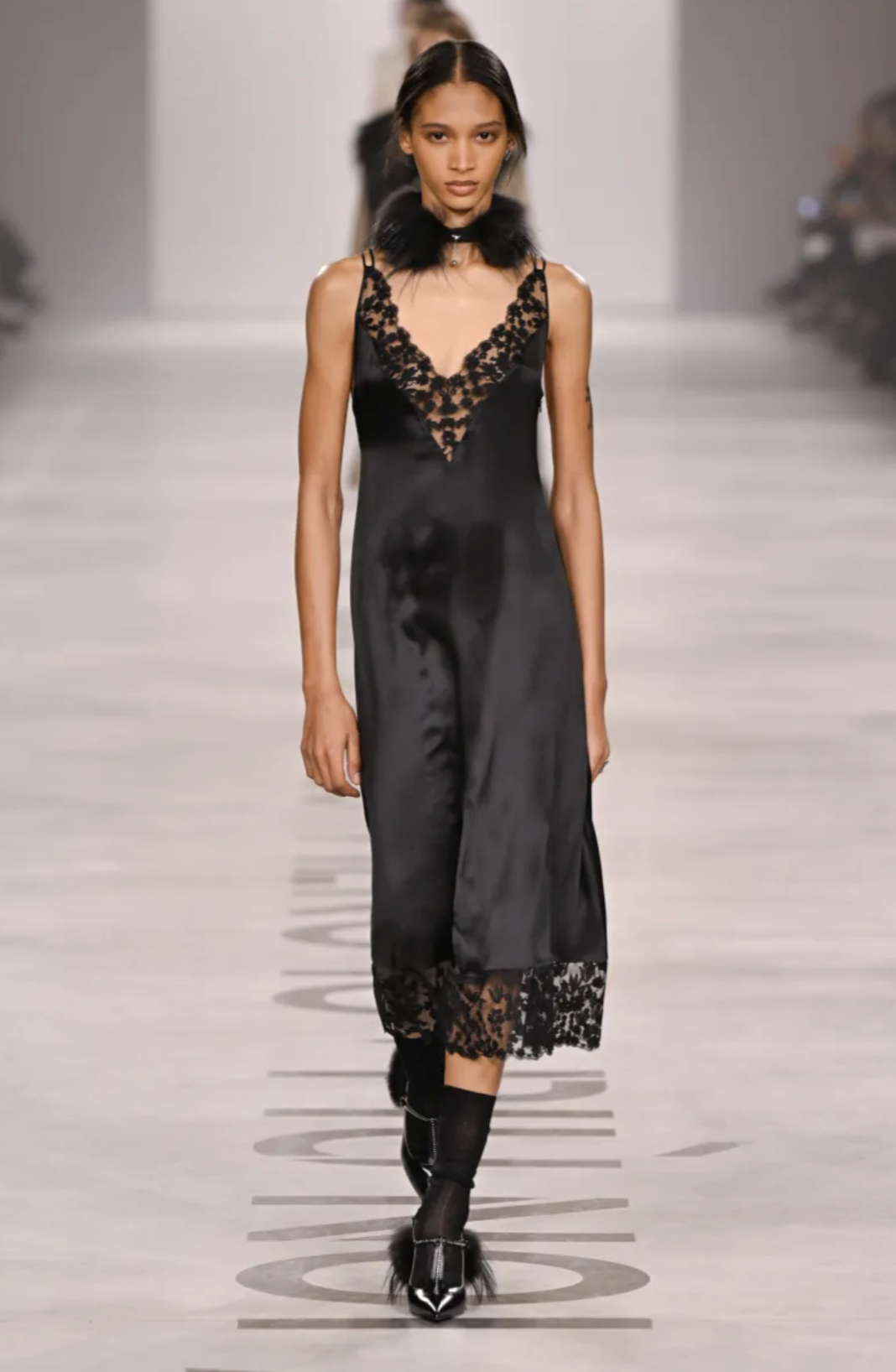
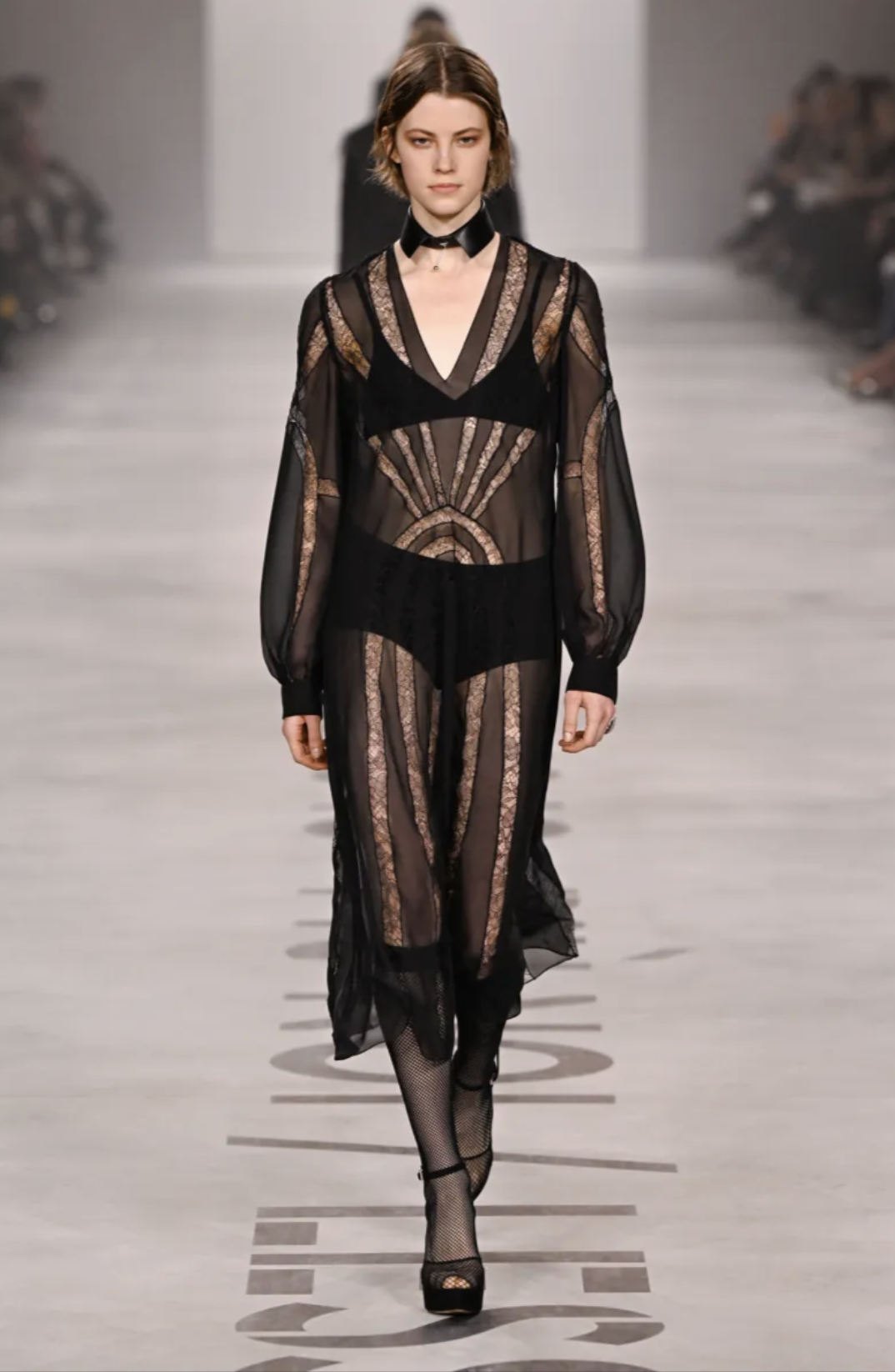
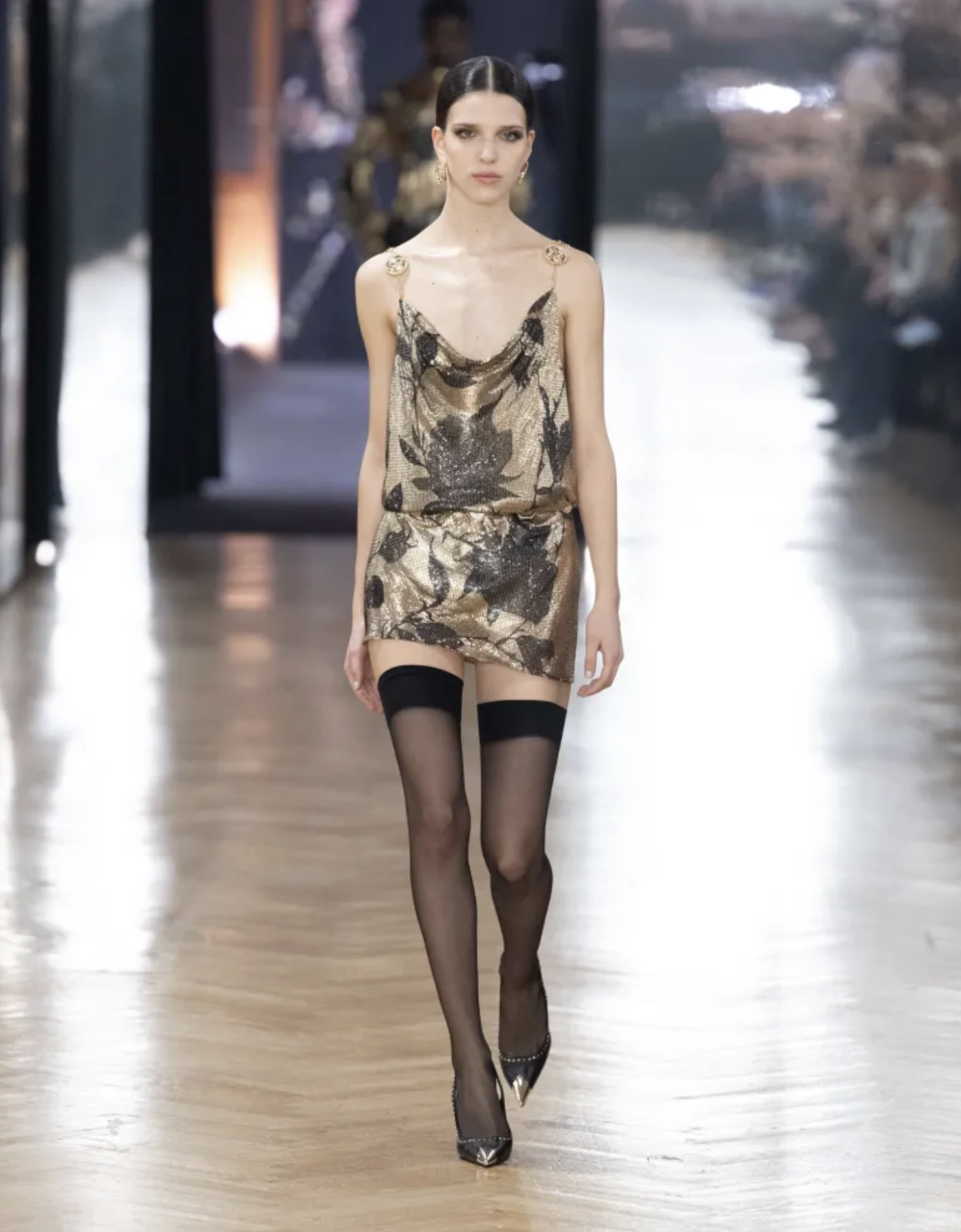
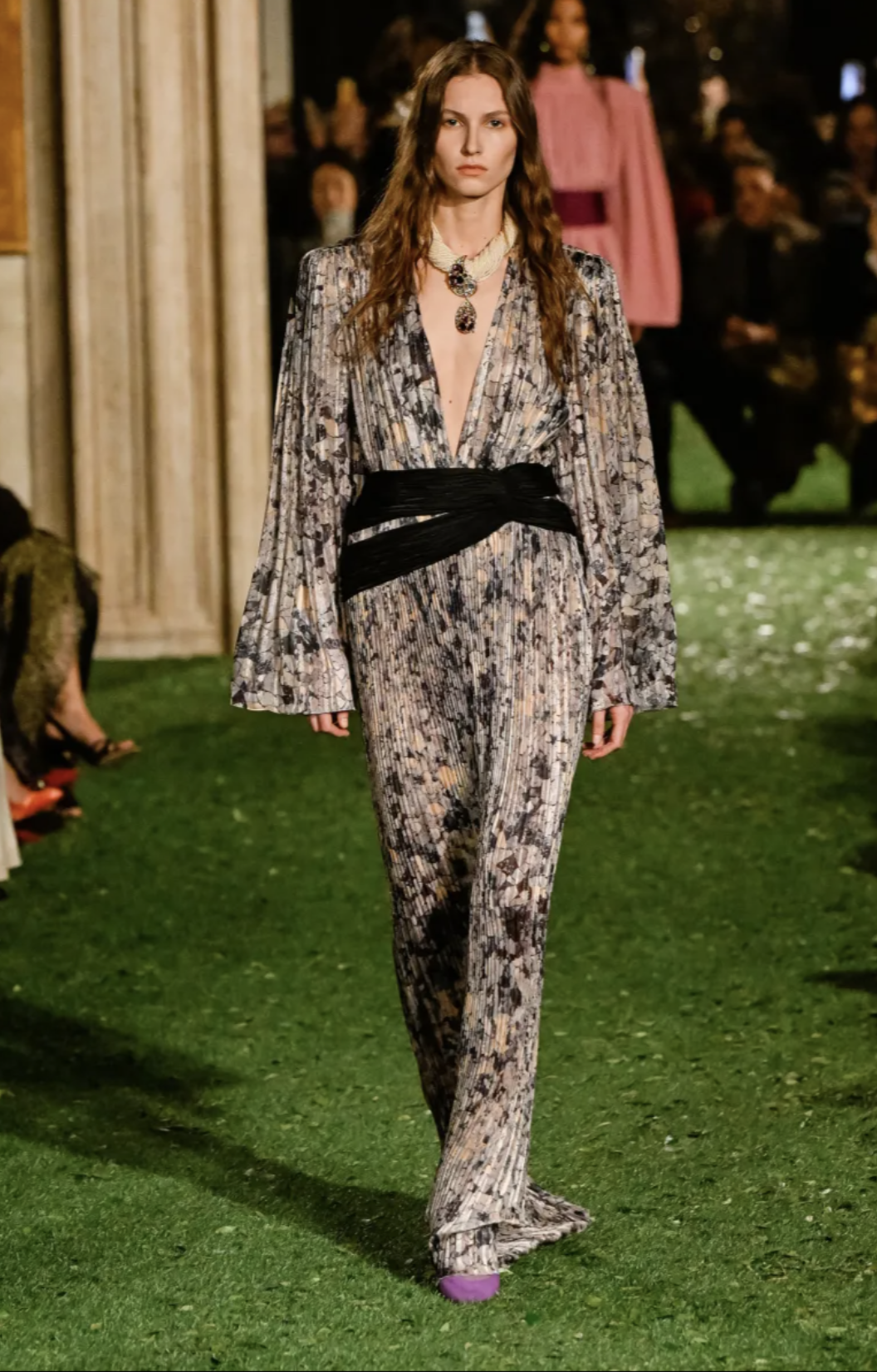
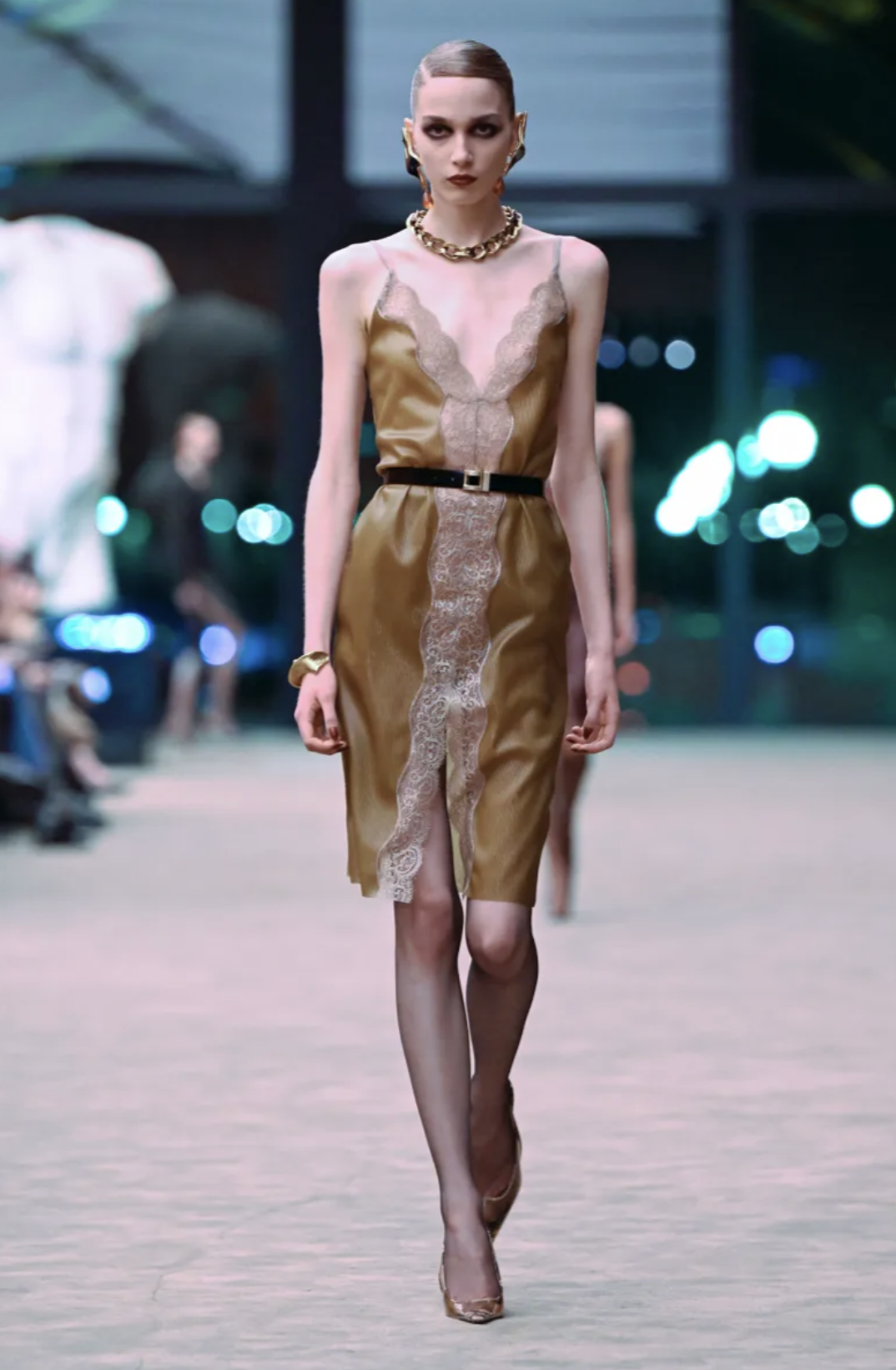
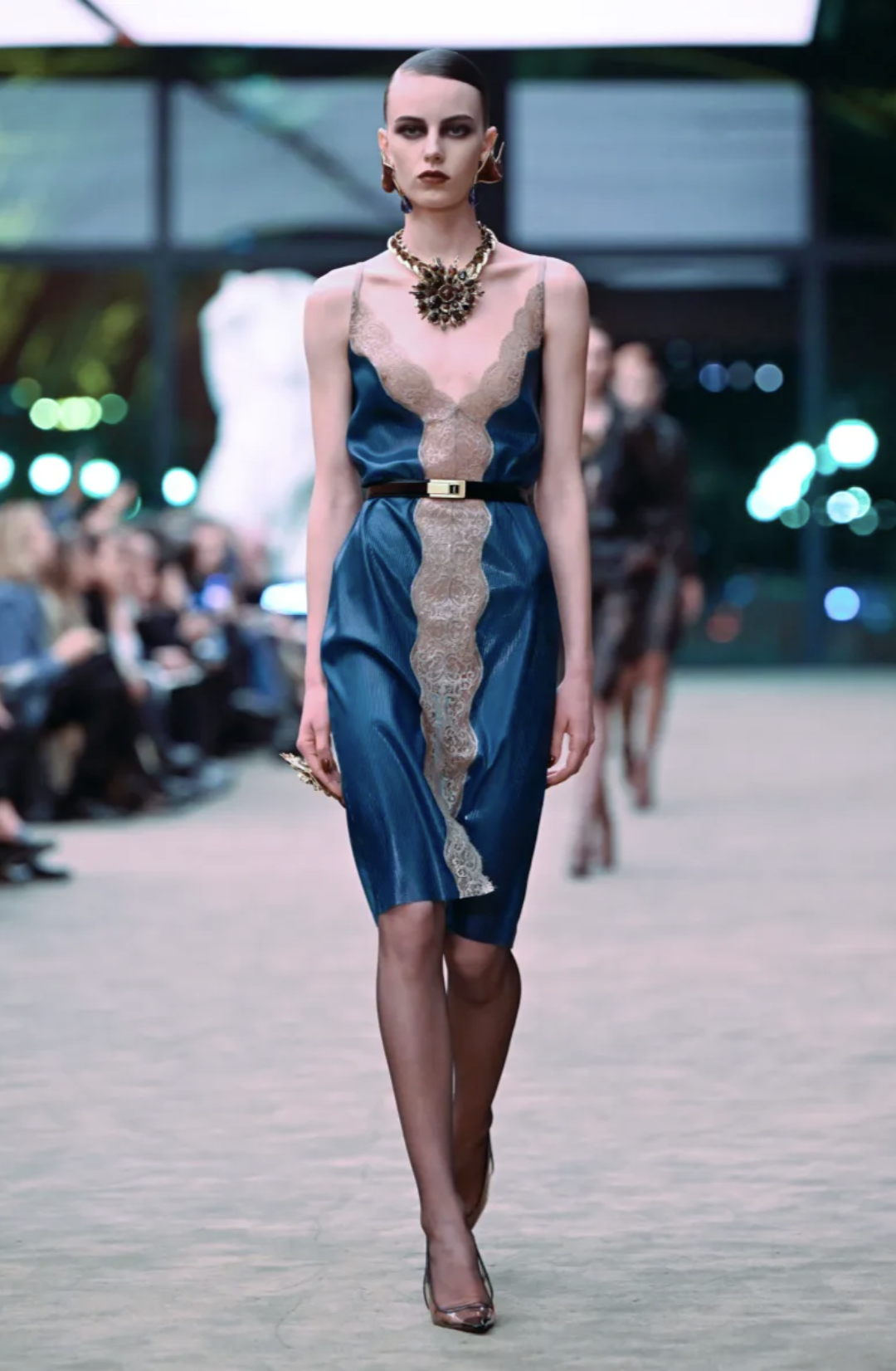
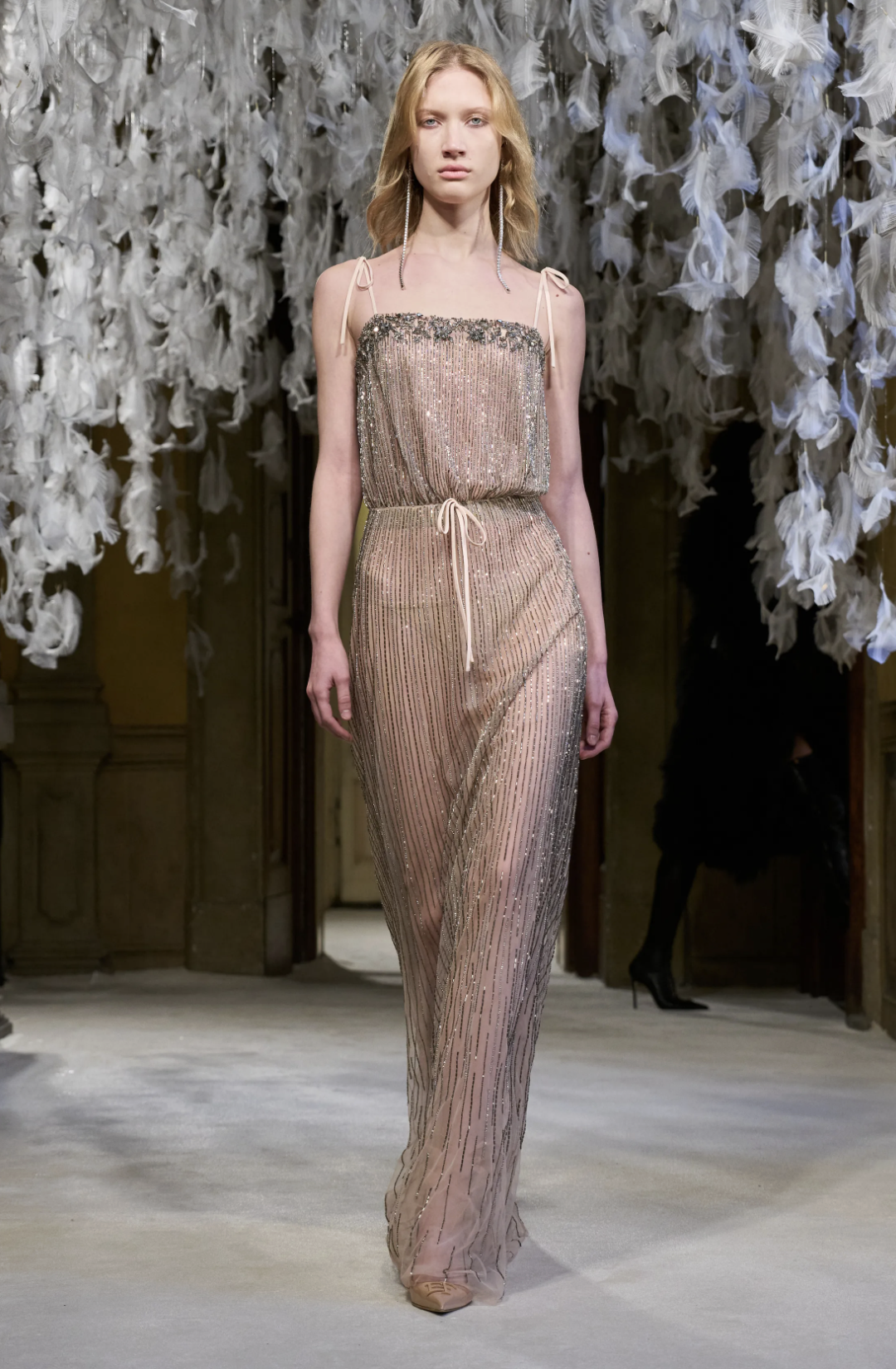
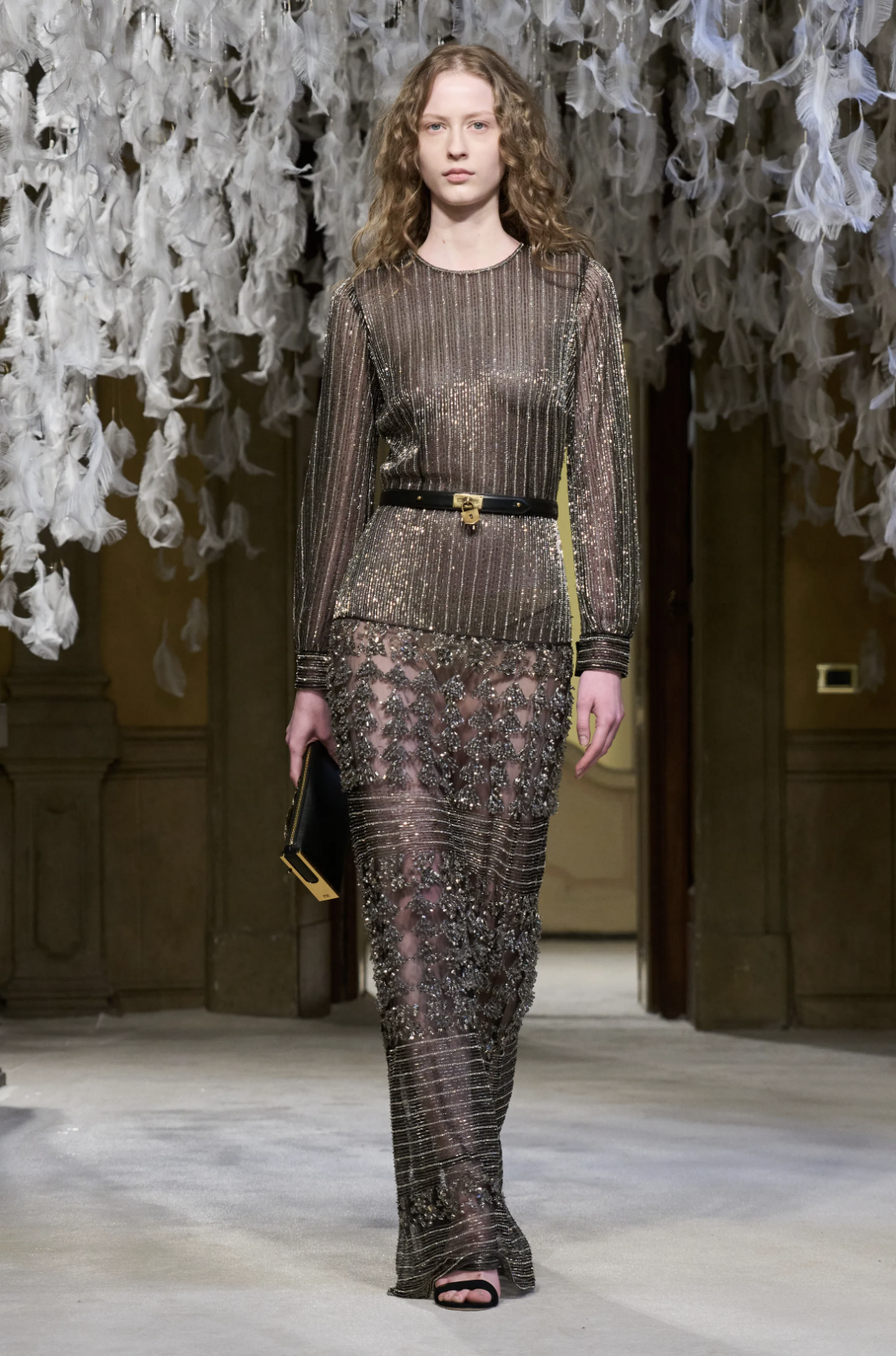
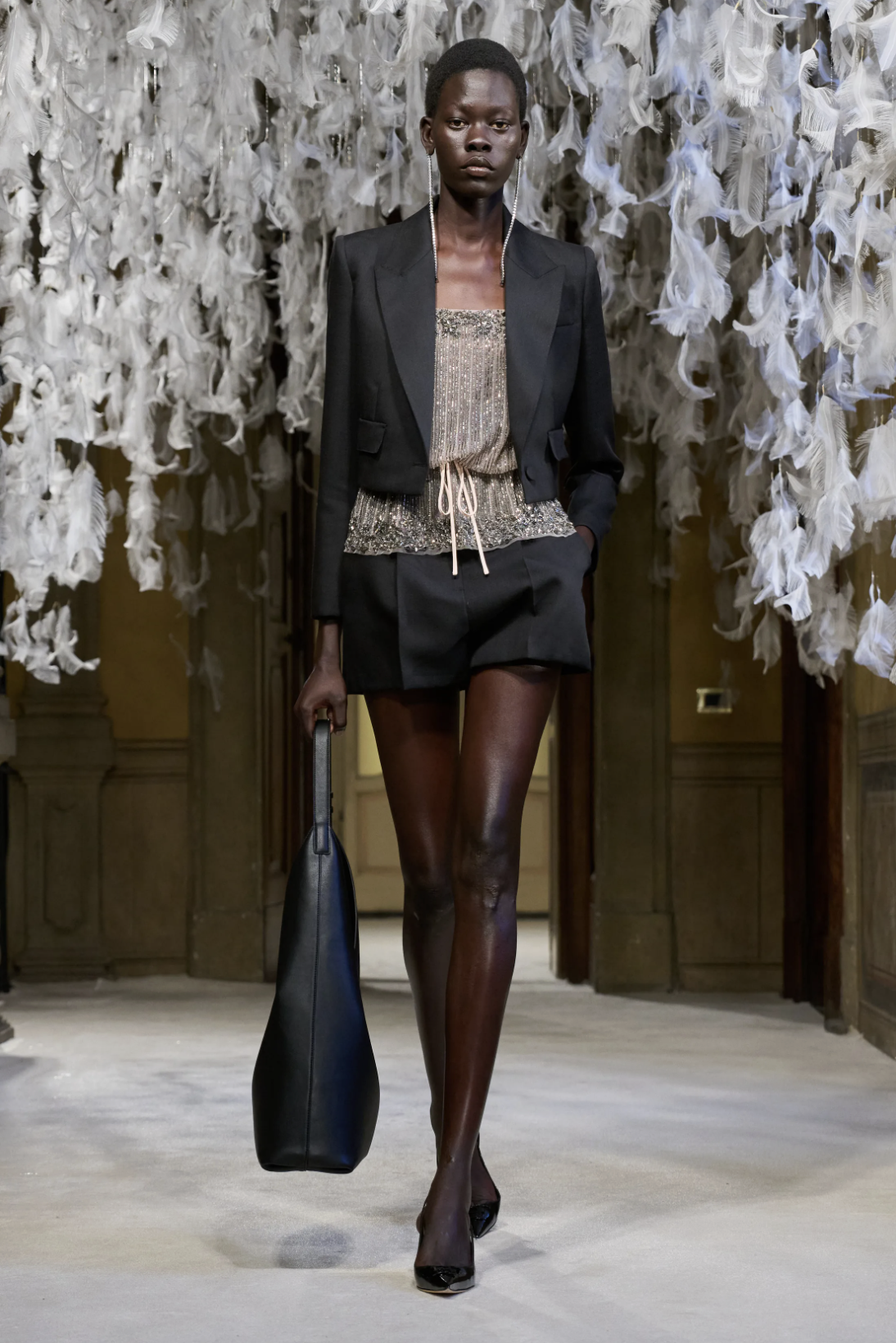
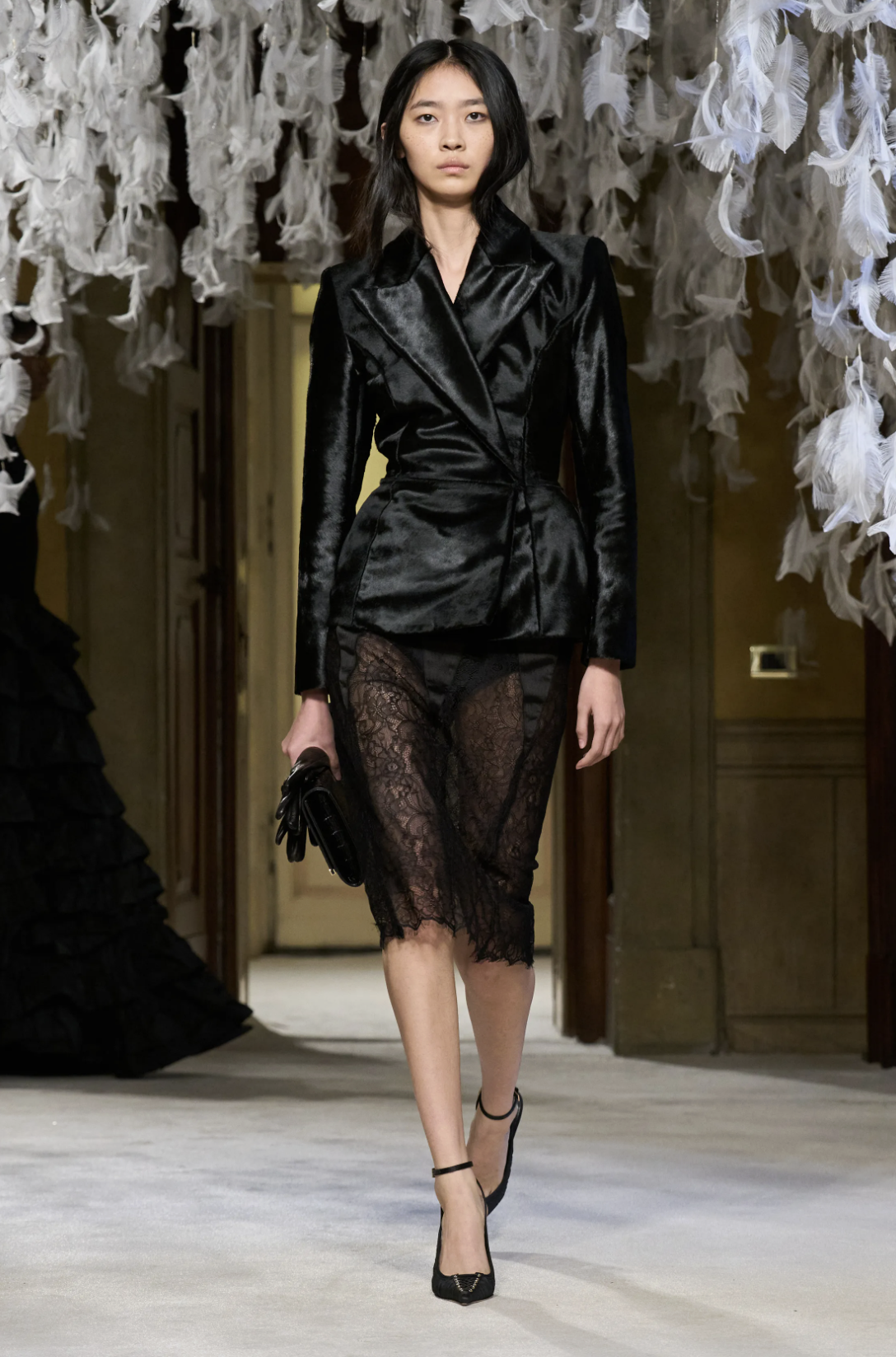
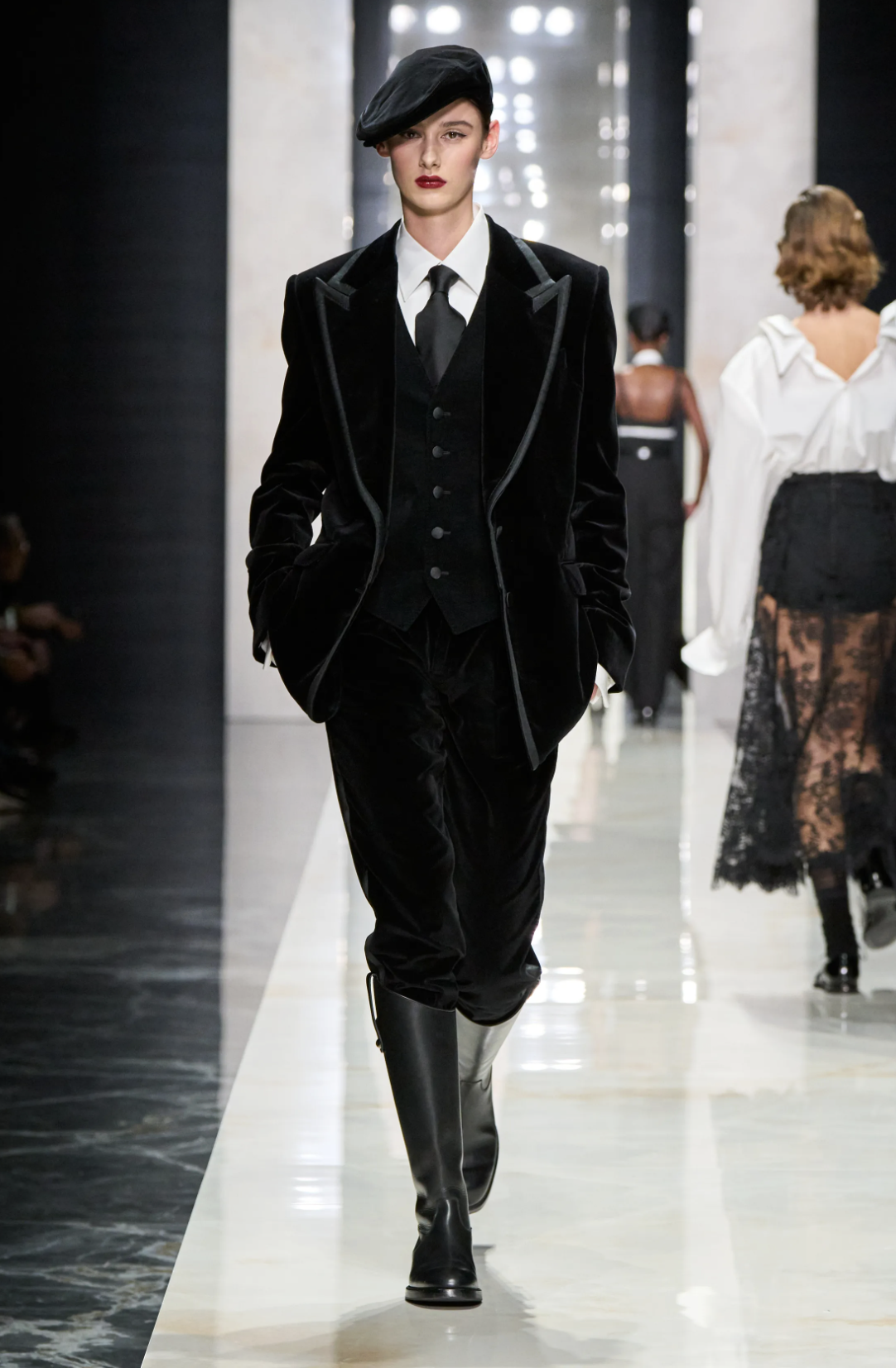
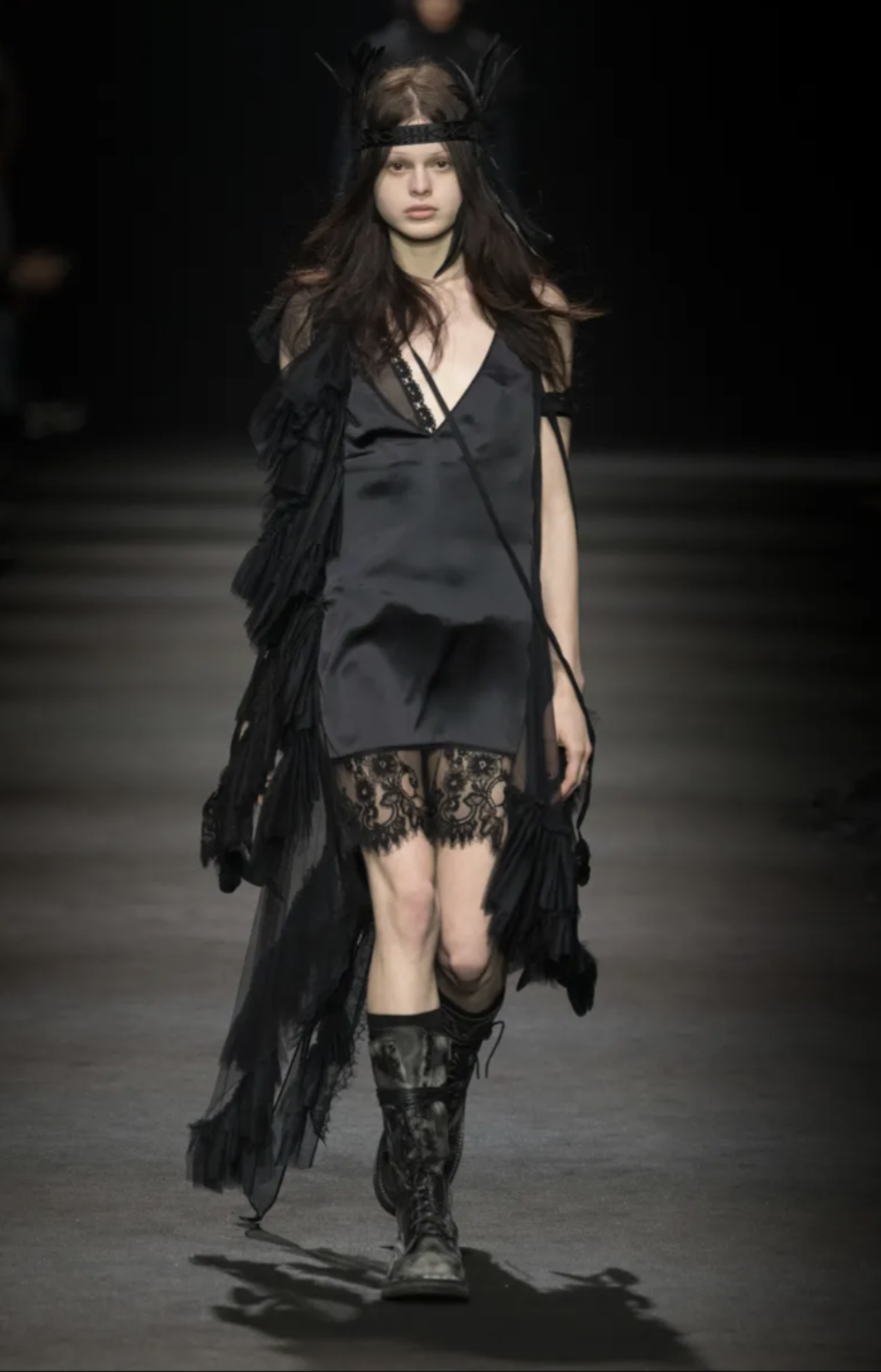
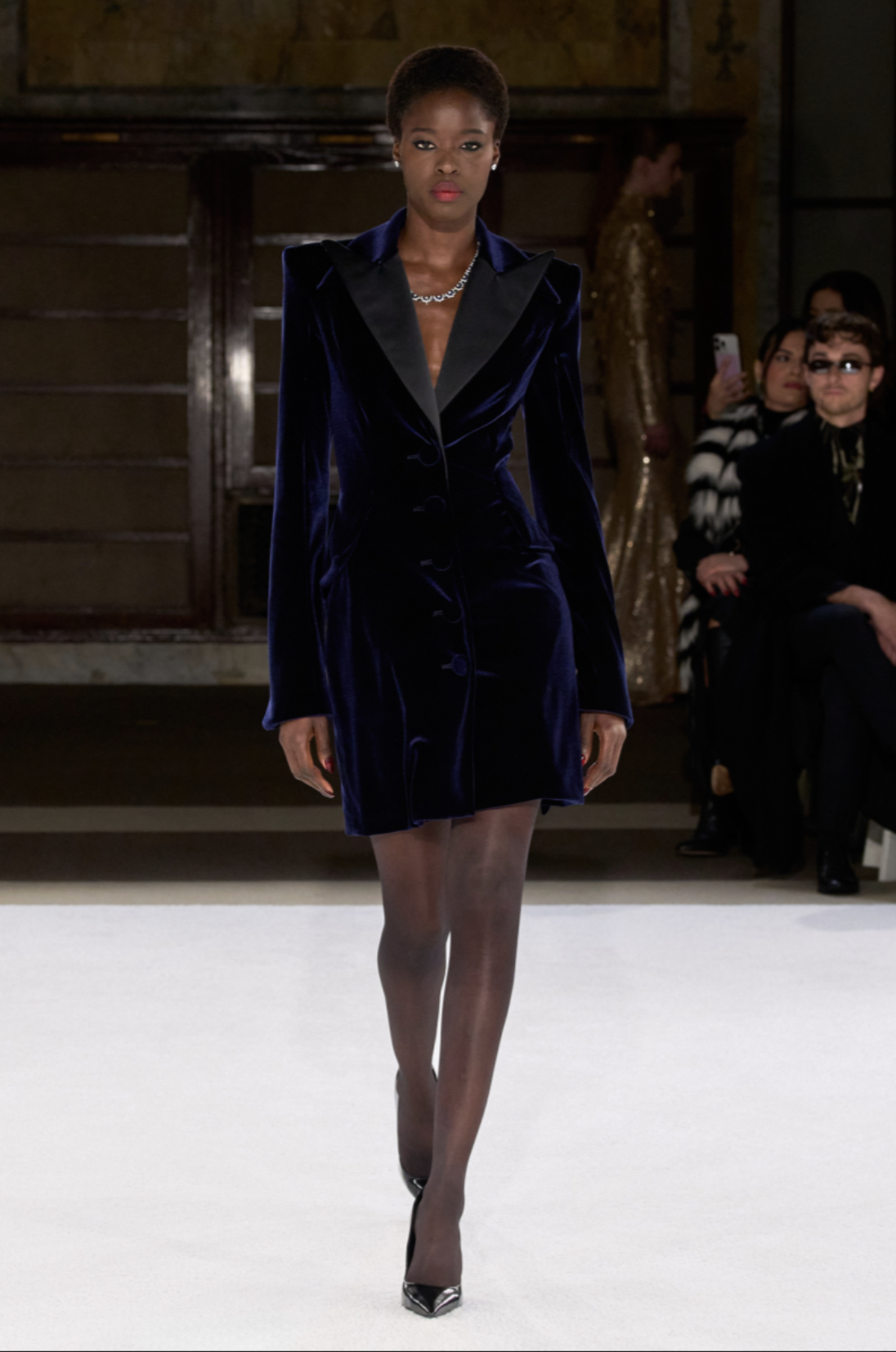
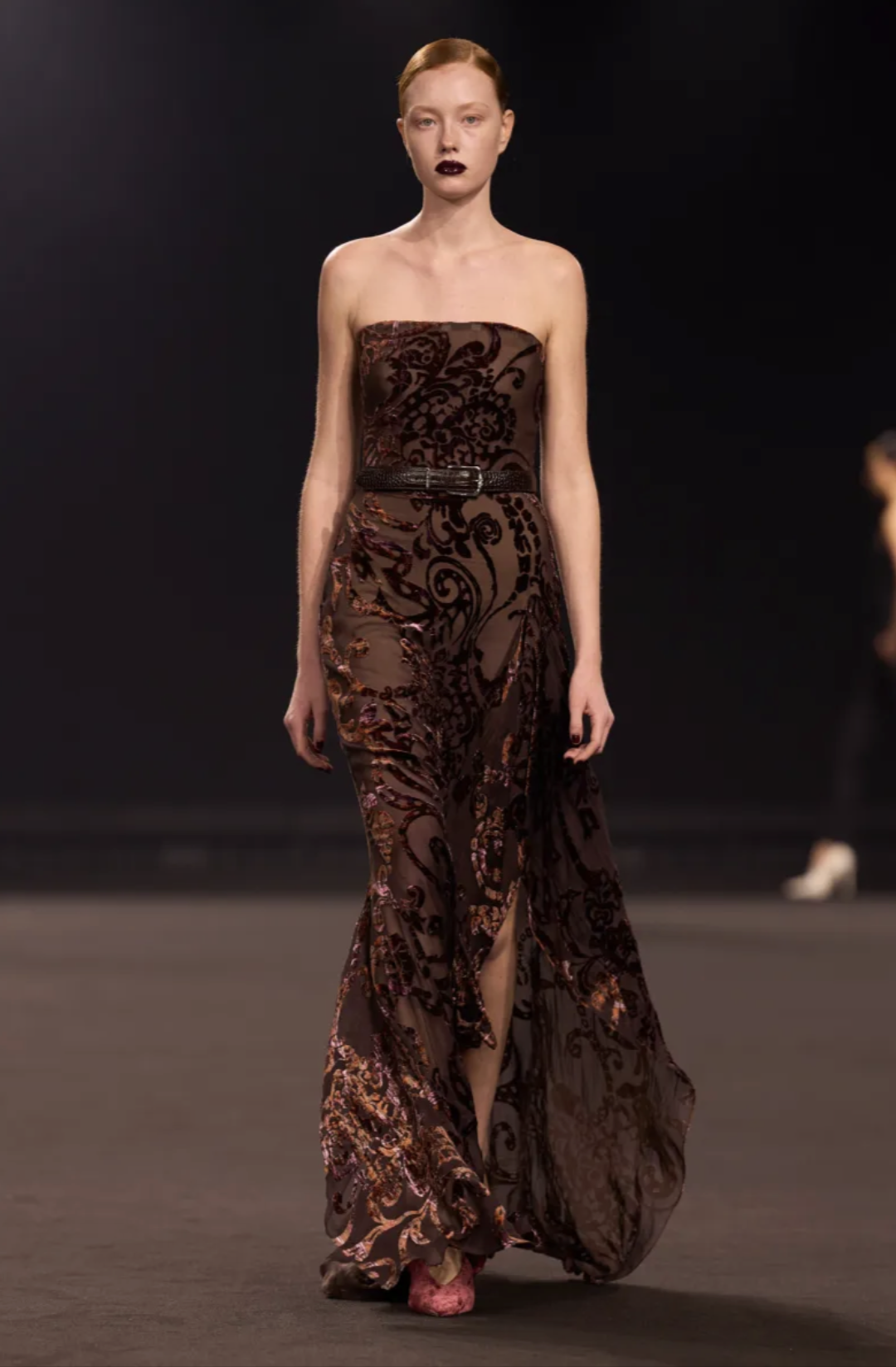
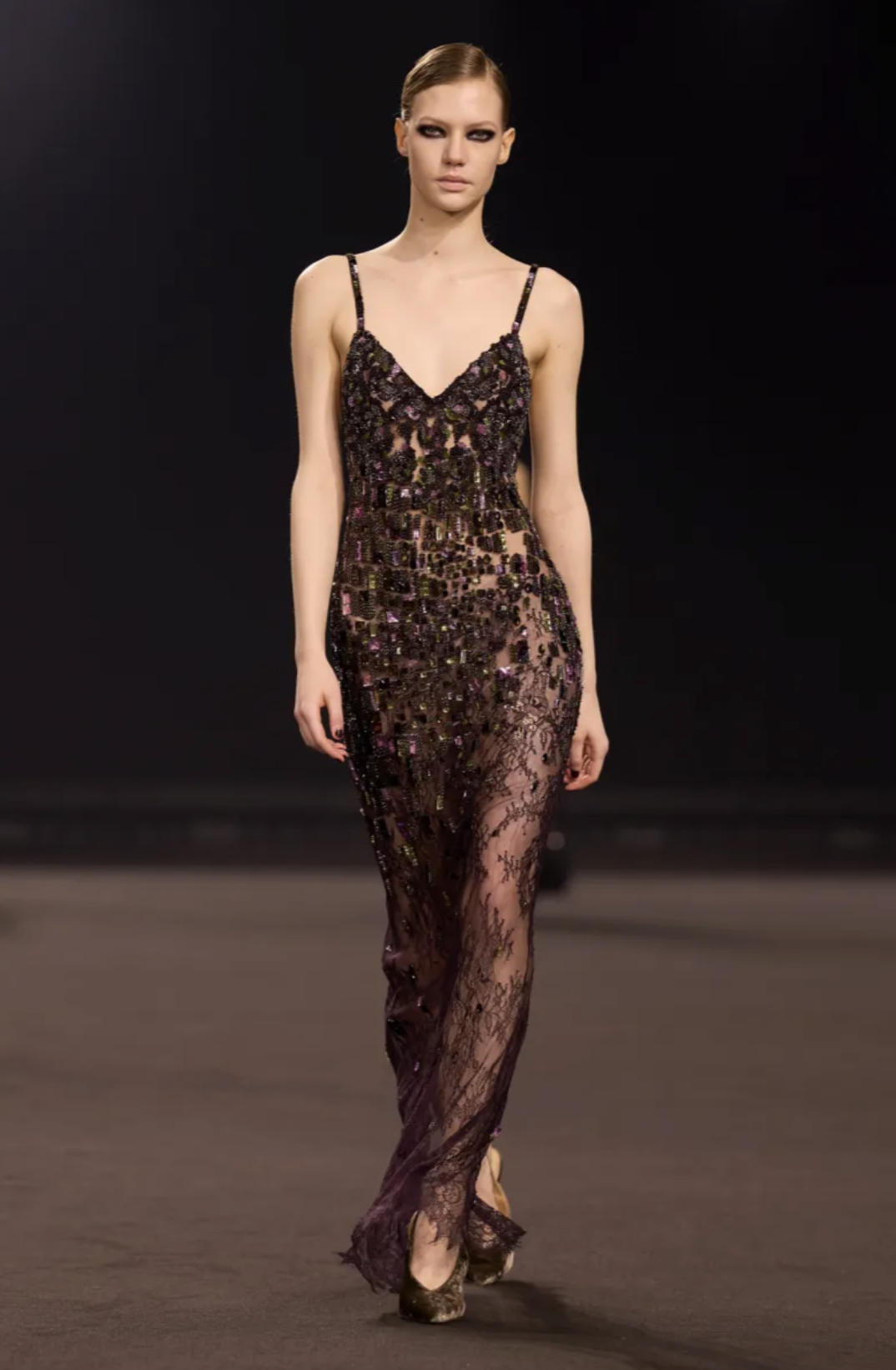
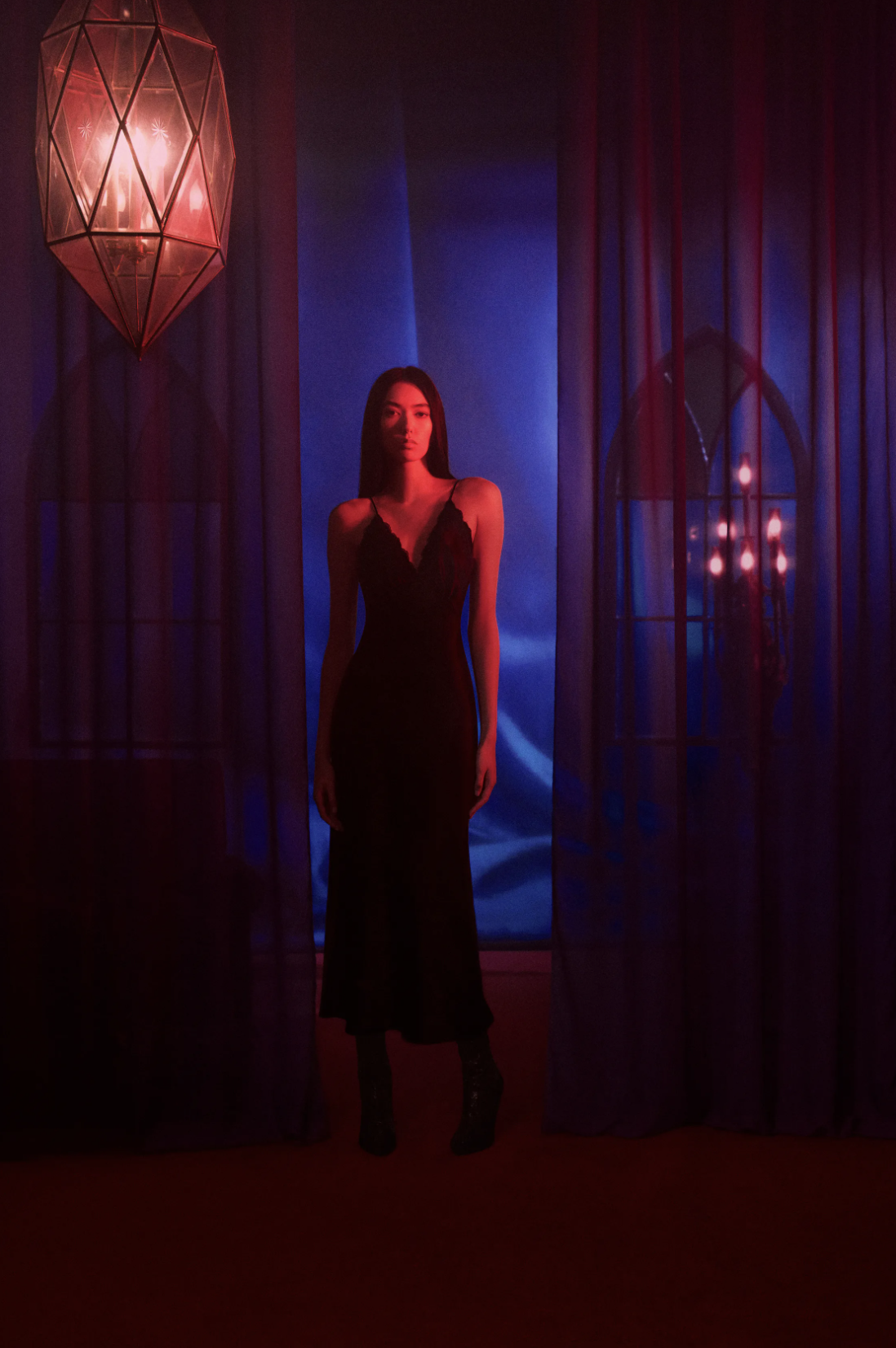
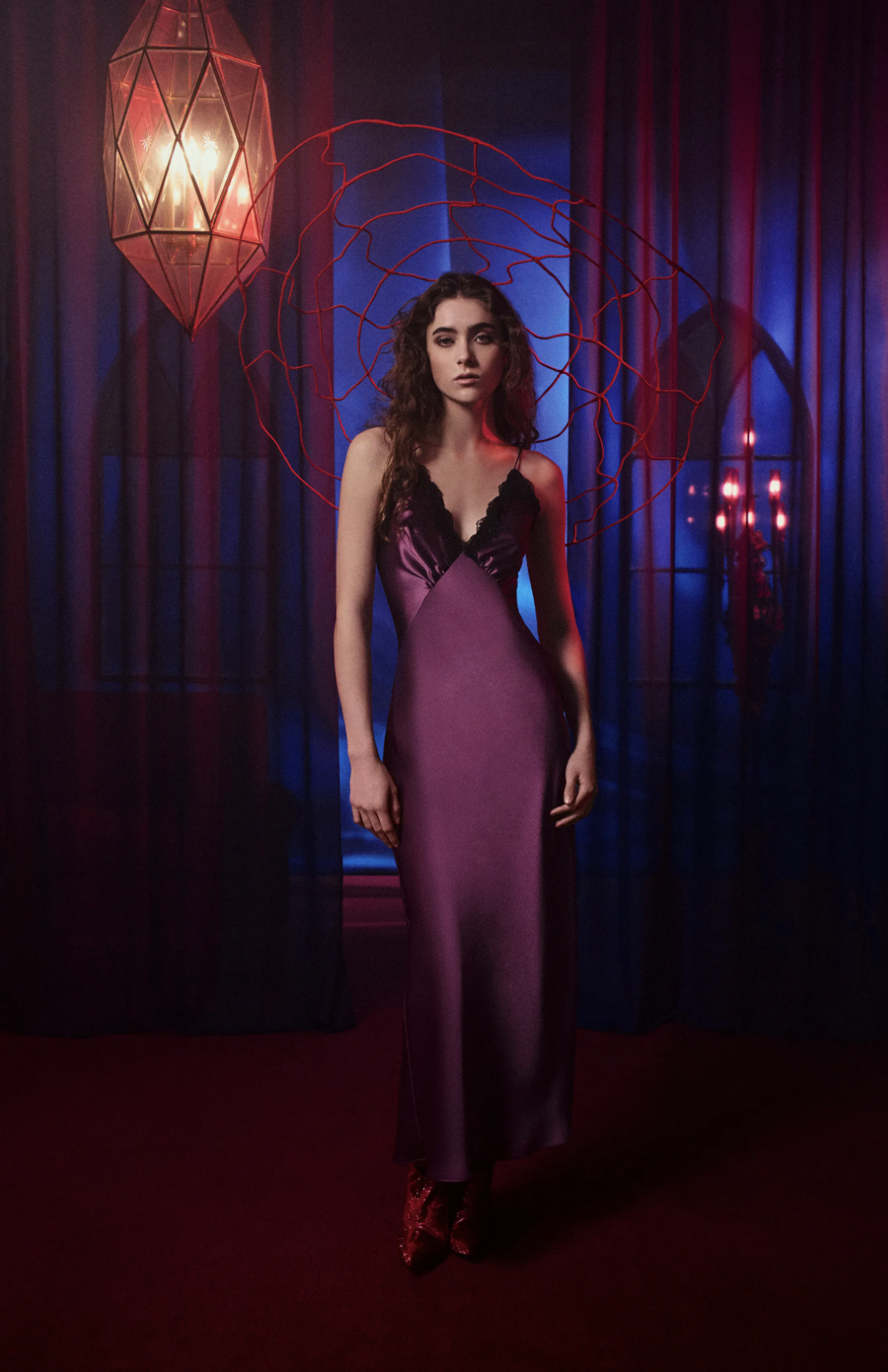
The romance of champagne-soaked evenings and dressing for the occasion finds its way back into fashion, with the era’s decadent glamour echoed through the sharper sensibility of FW26. Bias-cut silk slips share the runway with sumptuous smoking jackets, while metallic embroidery traces the body in patterns that feel lifted from the walls of an old grand hotel. The references may belong to another century, but their sensuality feels perfectly at home in this one.
Johanna Ortiz: The hero of the category. Smoking jackets meet sweeping silk and intricate embroidery, right down to a tasselled evening bag that completes the Deco dream.
Fendi: Silk slips move between liquid simplicity and sheer geometric pattern, giving lingerie dressing a distinctly Deco vocabulary.
Blumarine: A metallic mini channels the geometry of the period, complete with beauty styling that understands the assignment.
Valentino: Knife pleats fall in one long, disciplined line, cinched at the waist for a beautifully elongated take on period glamour.
Saint Laurent + Ann Demeulemeester + Rodarte: Three very persuasive arguments for the silk camisole dress—and frankly, we’re drooling.
Elisabetta Franchi: Nude and metallic tones play against black, culminating in a smoking jacket paired with a silk-and-lace skirt that could have walked straight out of a very expensive supper club.
Dolce & Gabbana: Mic drop. A smoking jacket anchors a menswear-inspired ensemble with all the swagger the reference deserves.
Pamella Roland: The velvet smoking jacket becomes the dress. No further notes.
ELIE SAAB: Burnout textures smoulder across the body, with a smoked-out eye extending the mood all the way above the neckline.
Private Viewing
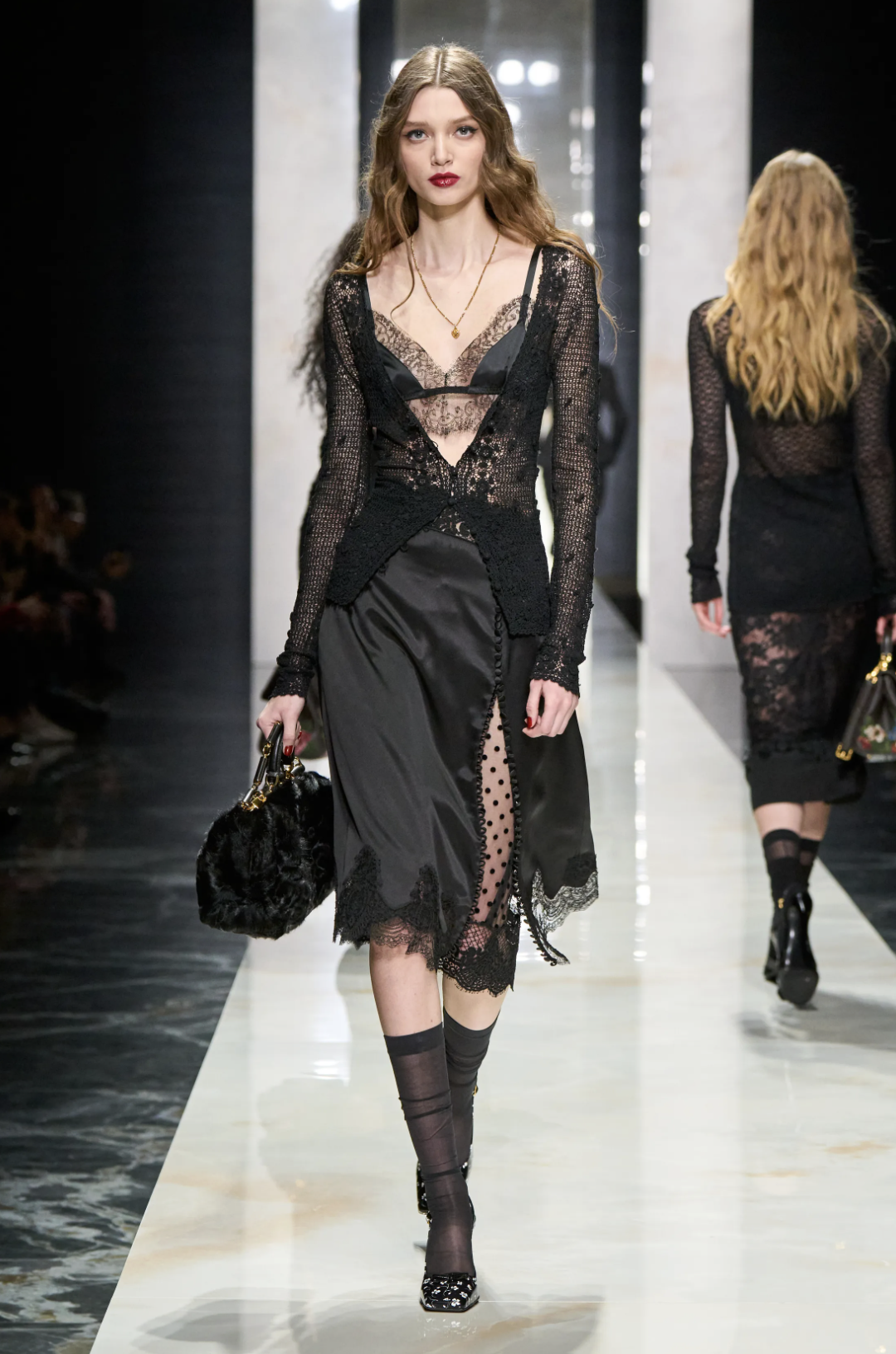
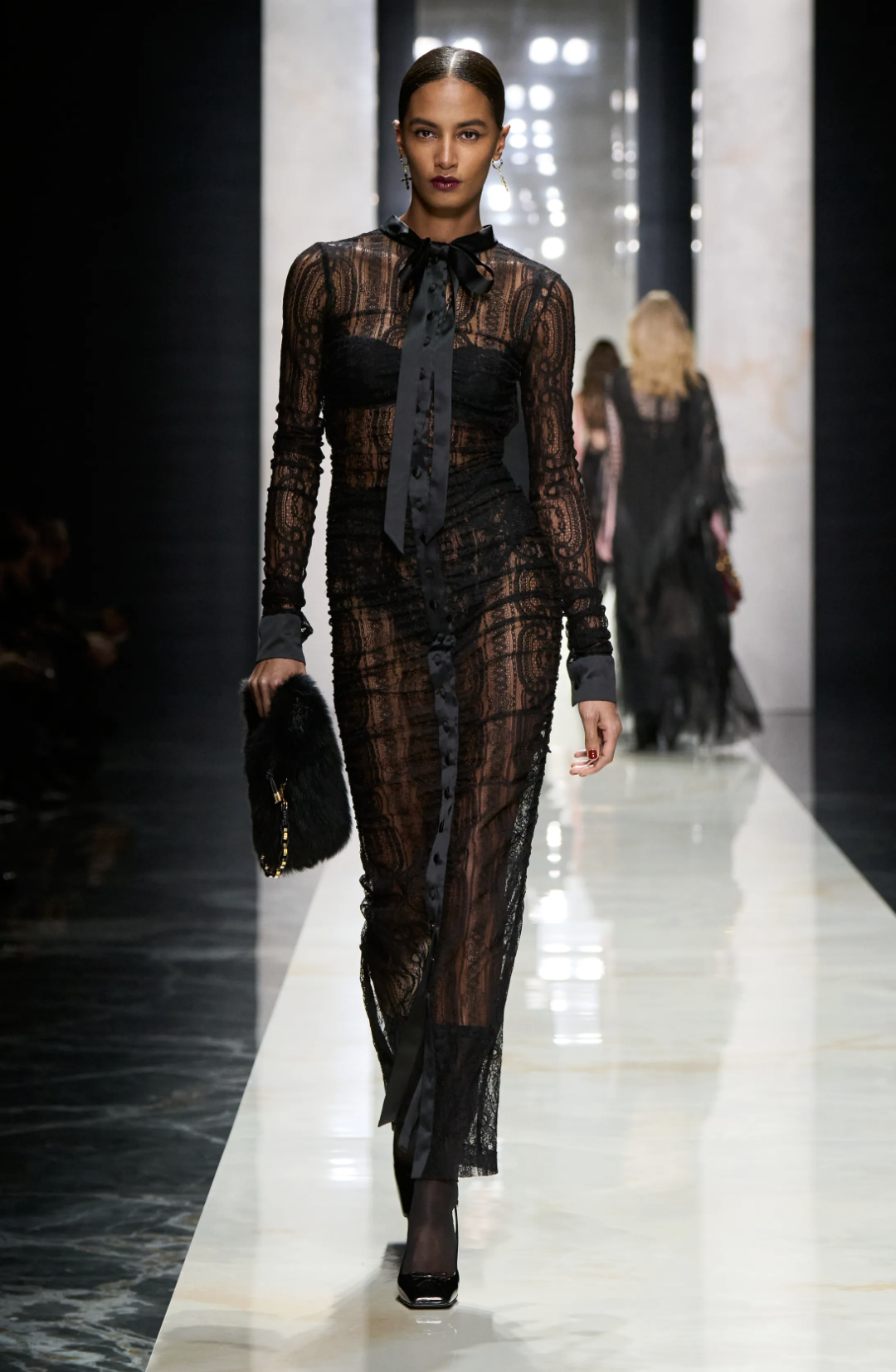
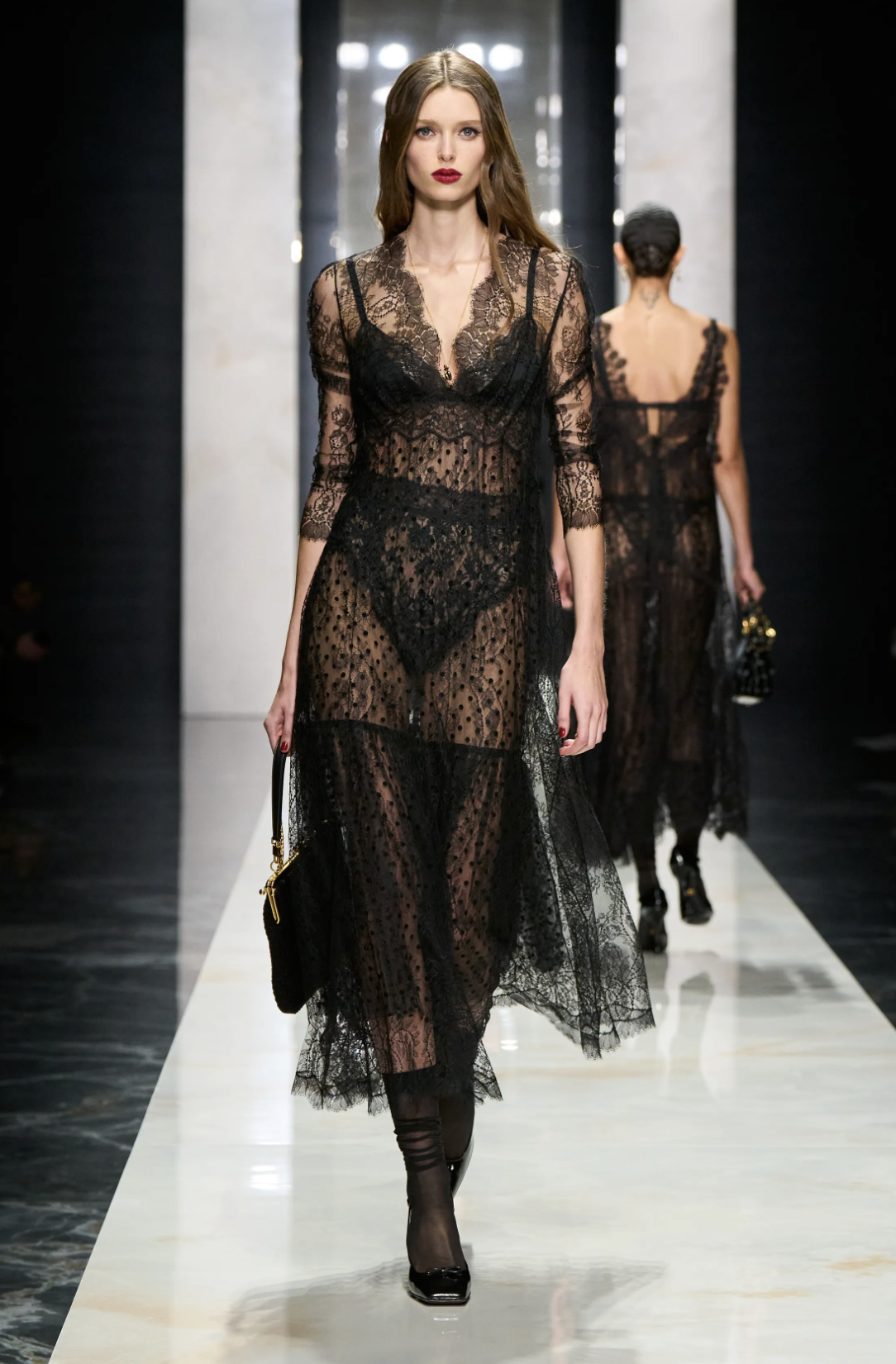
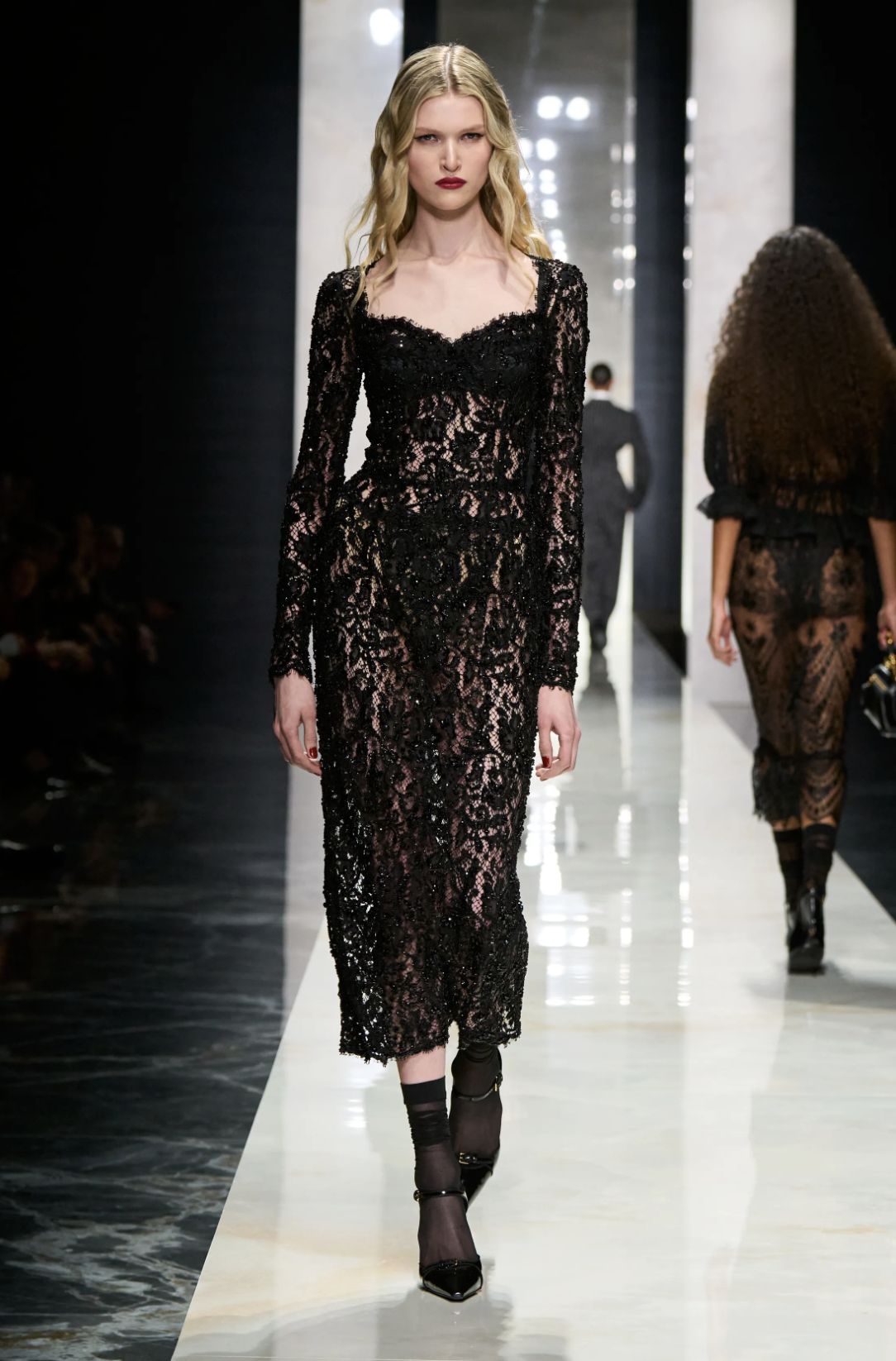
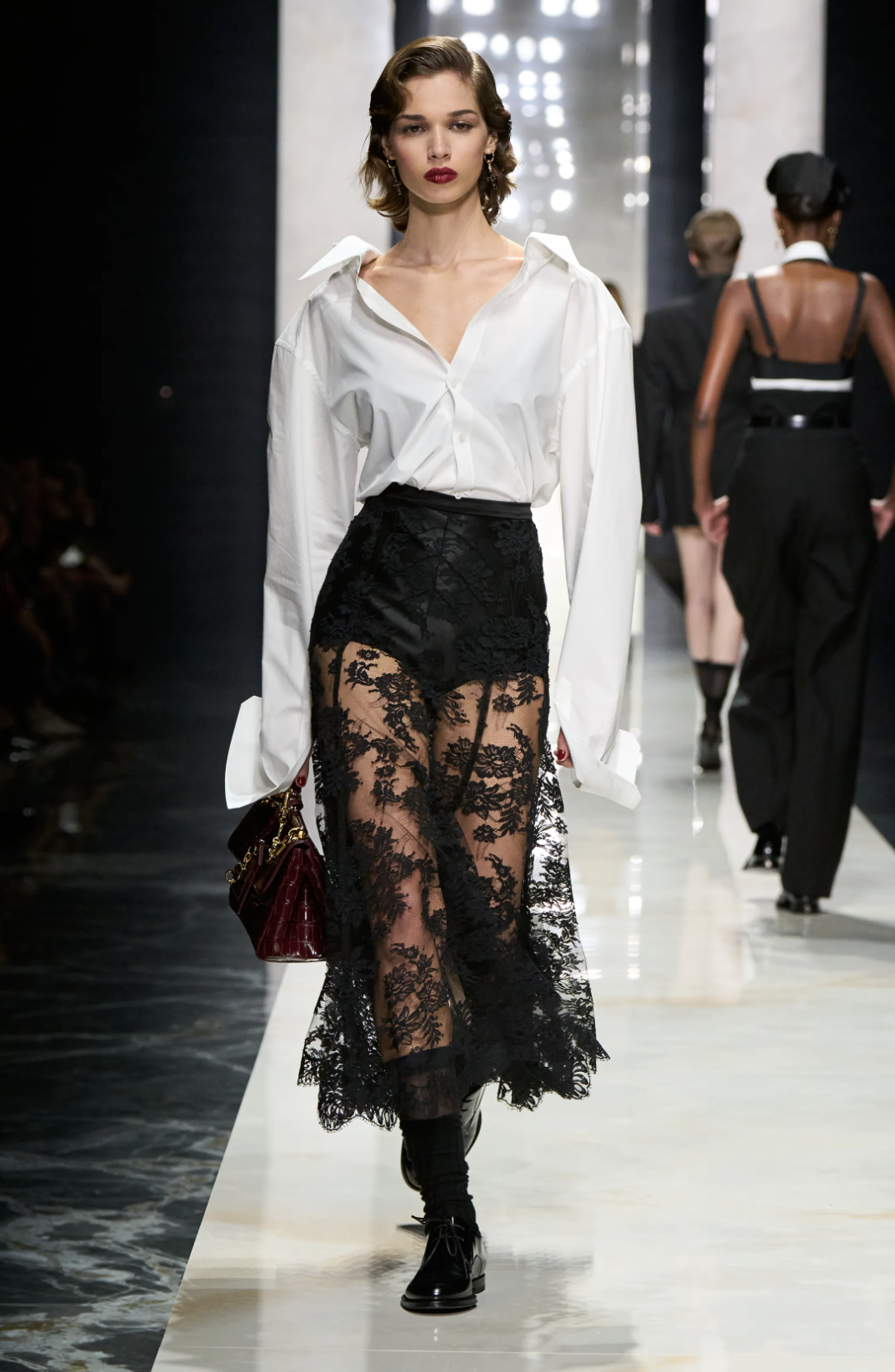
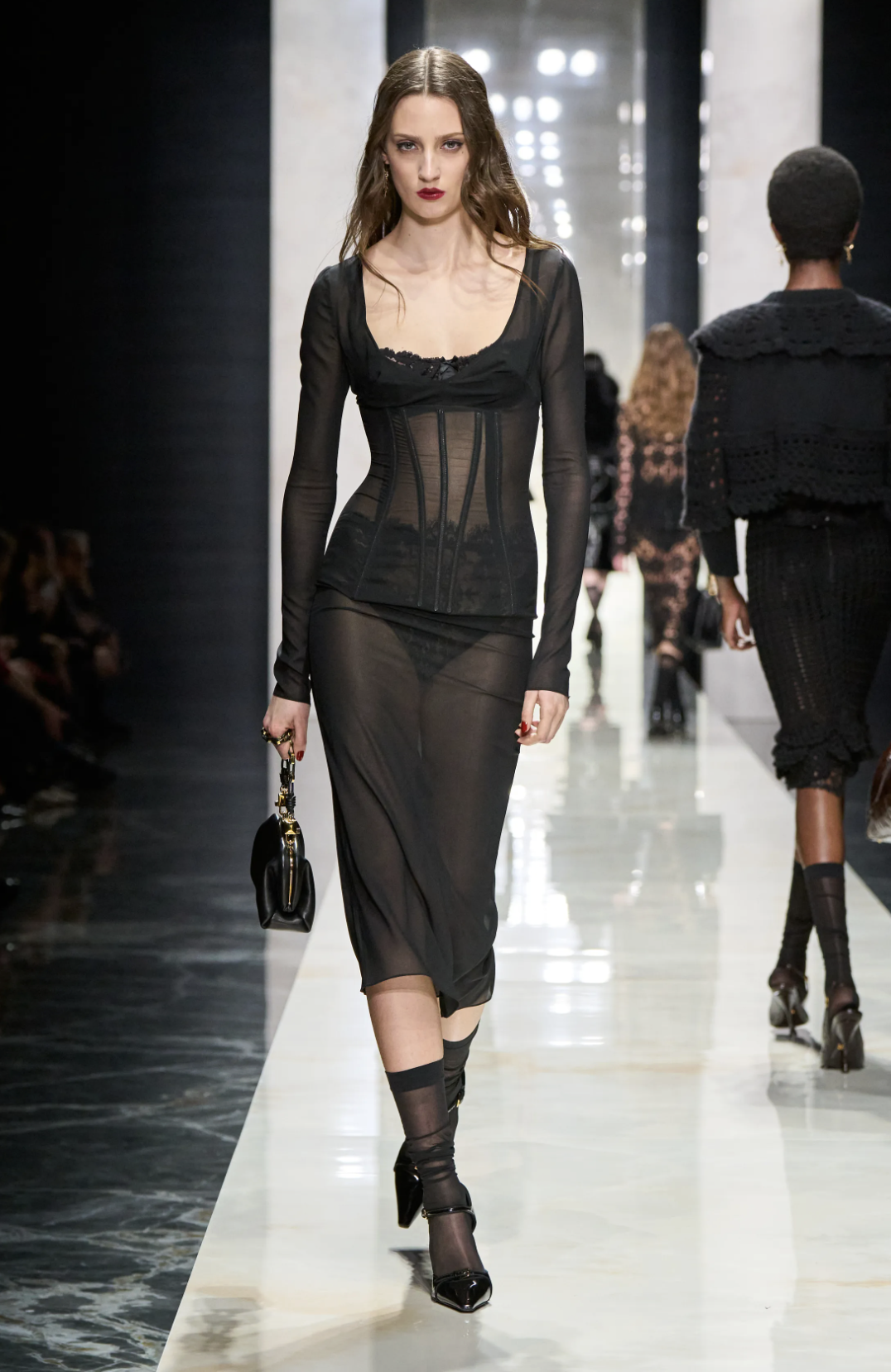
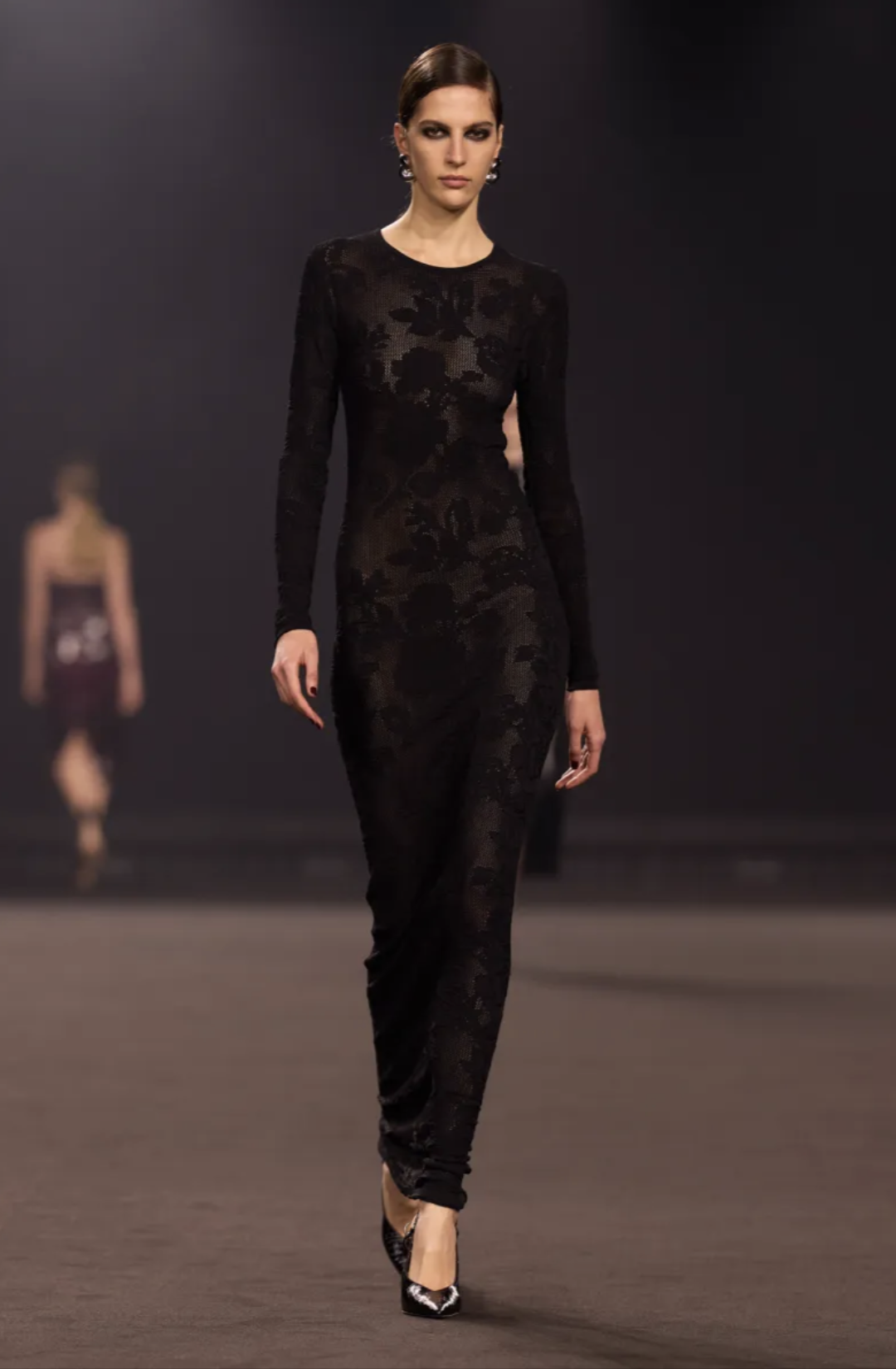
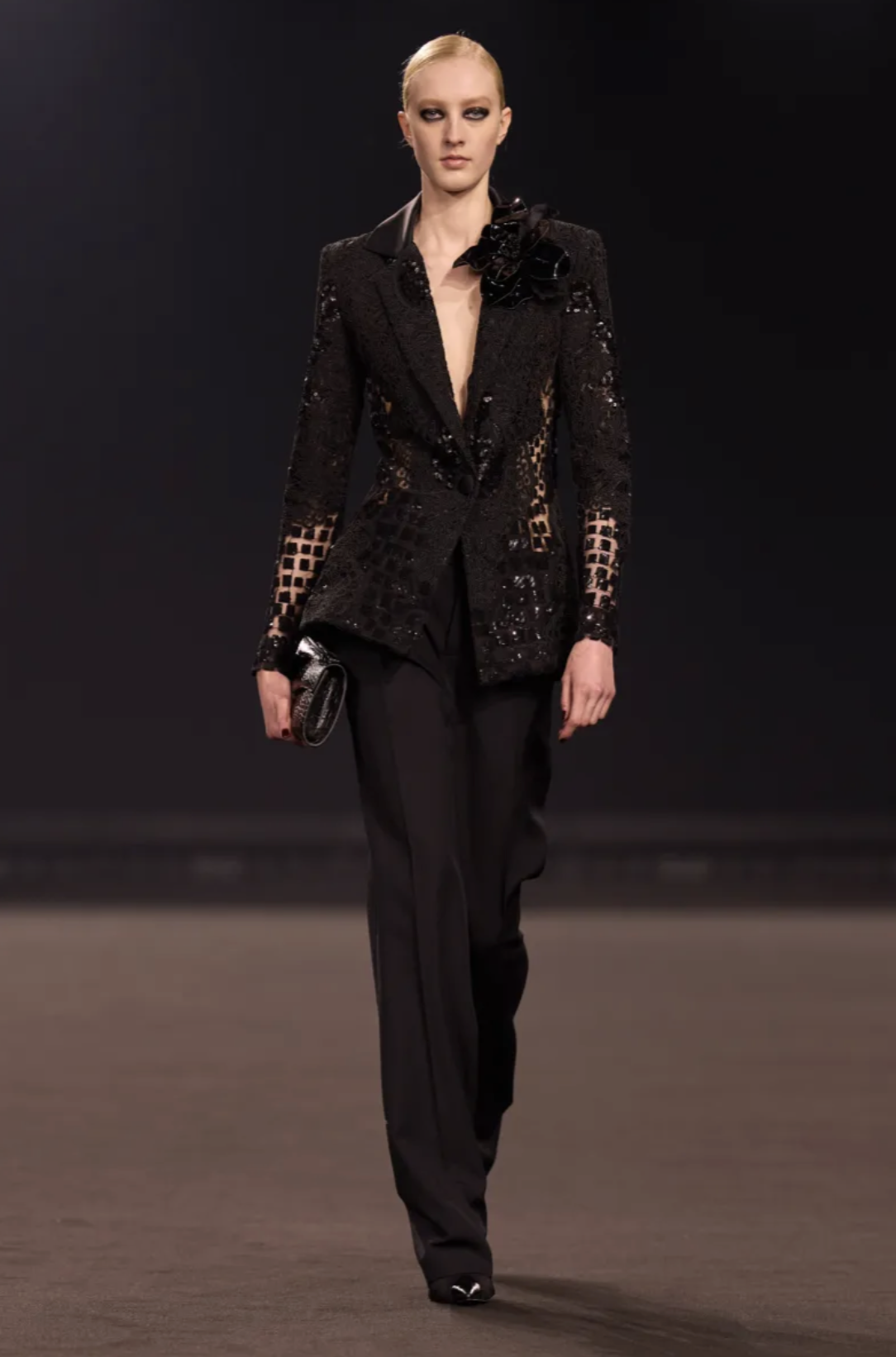
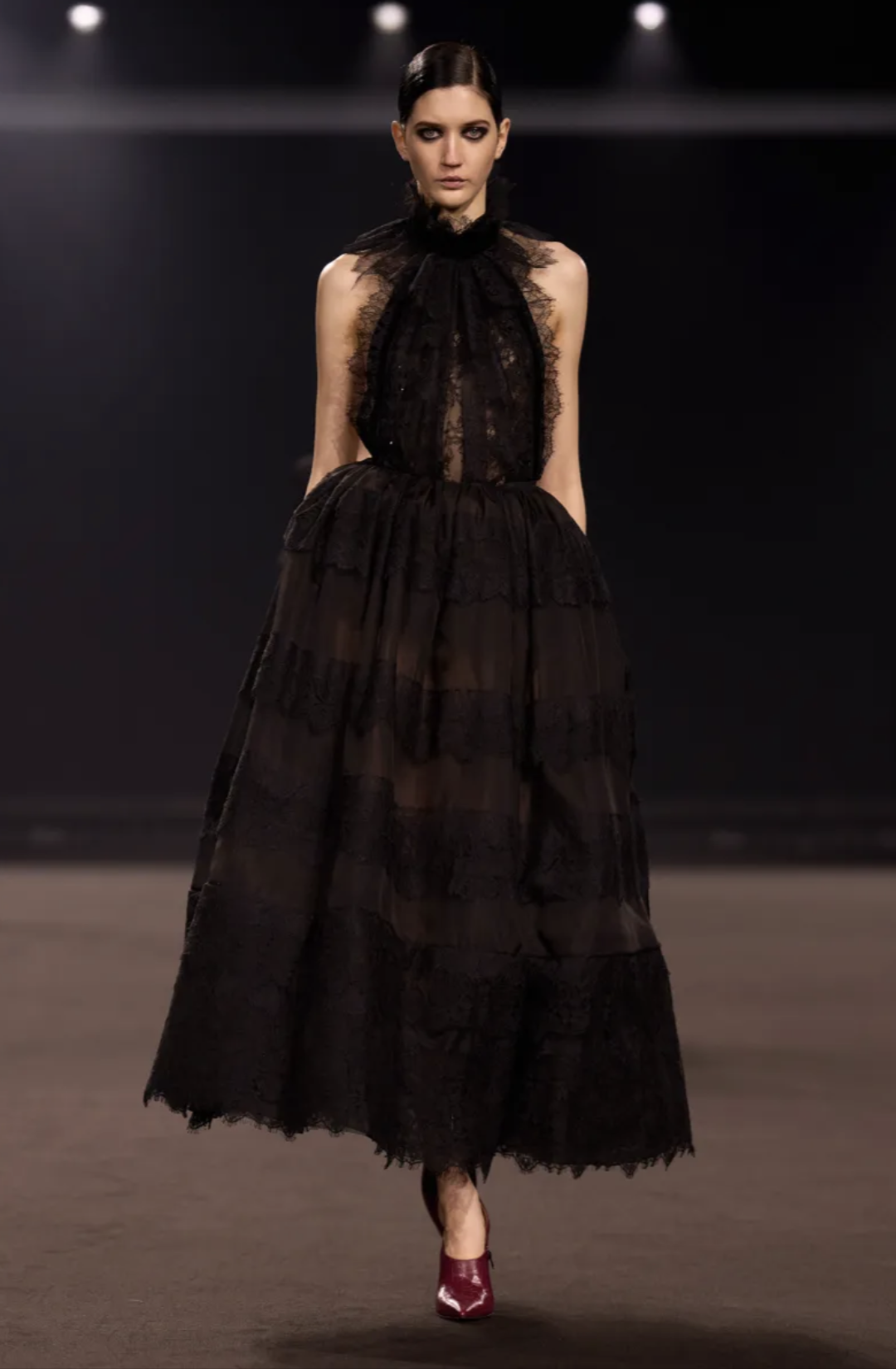
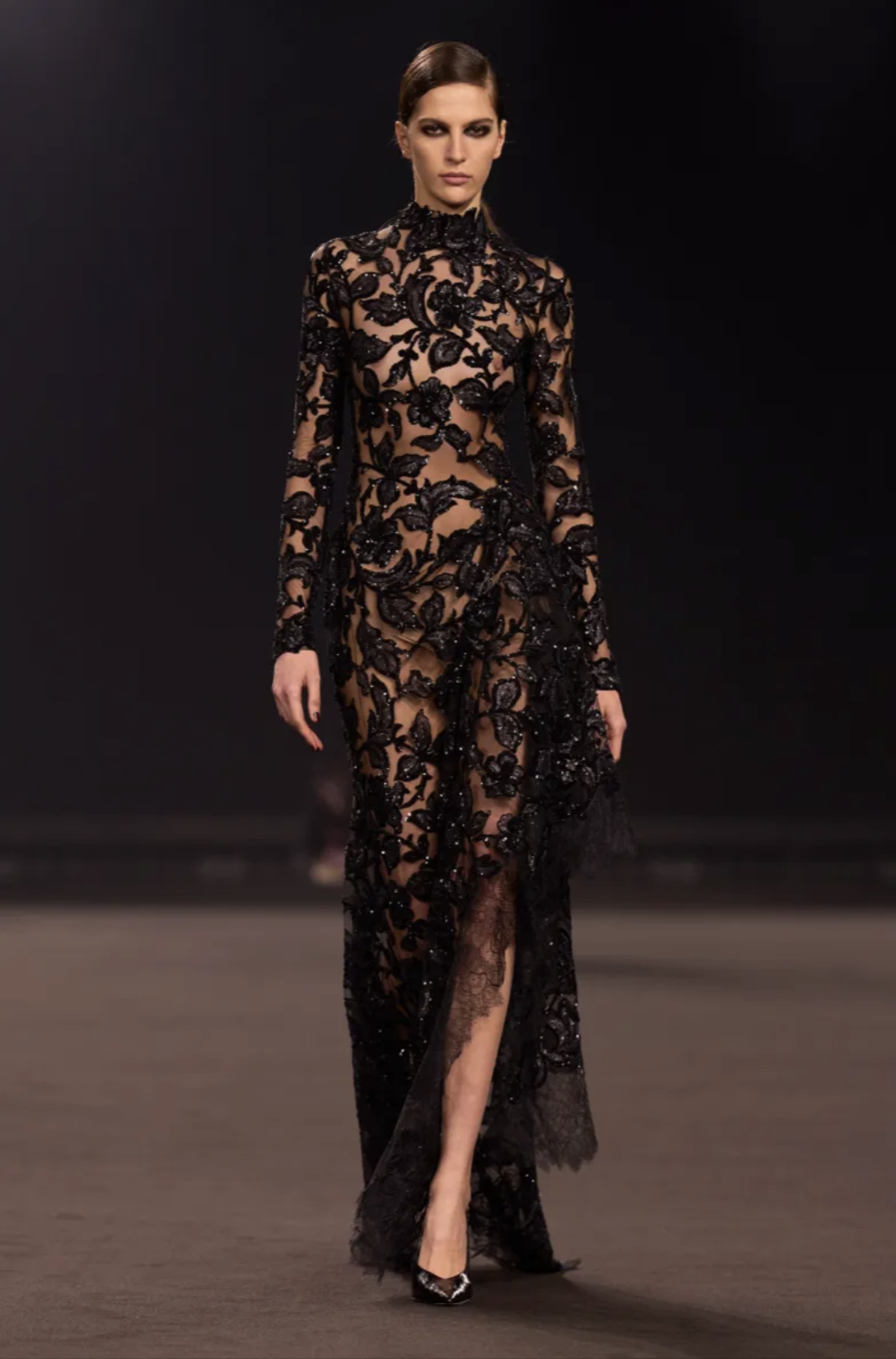
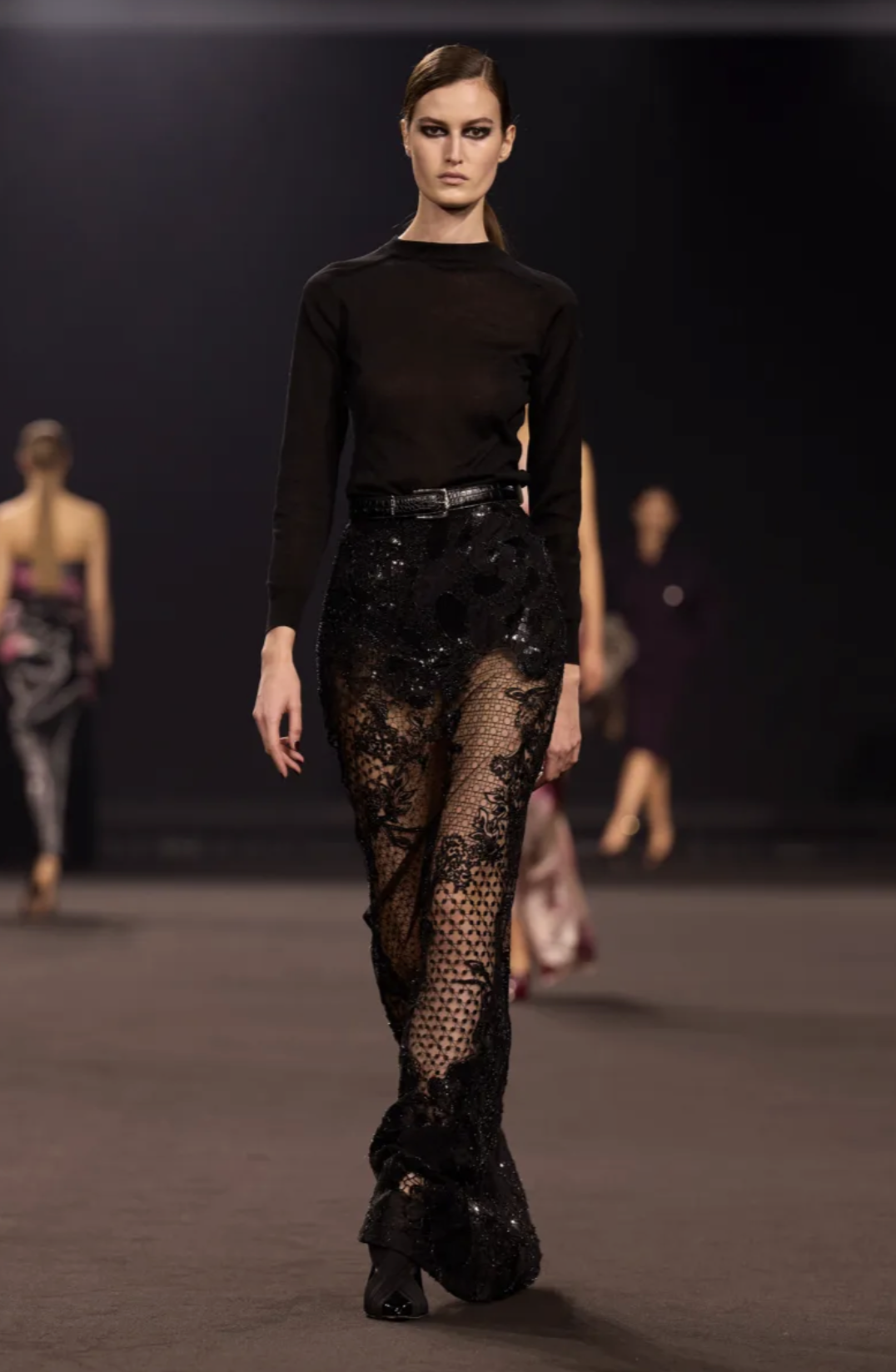
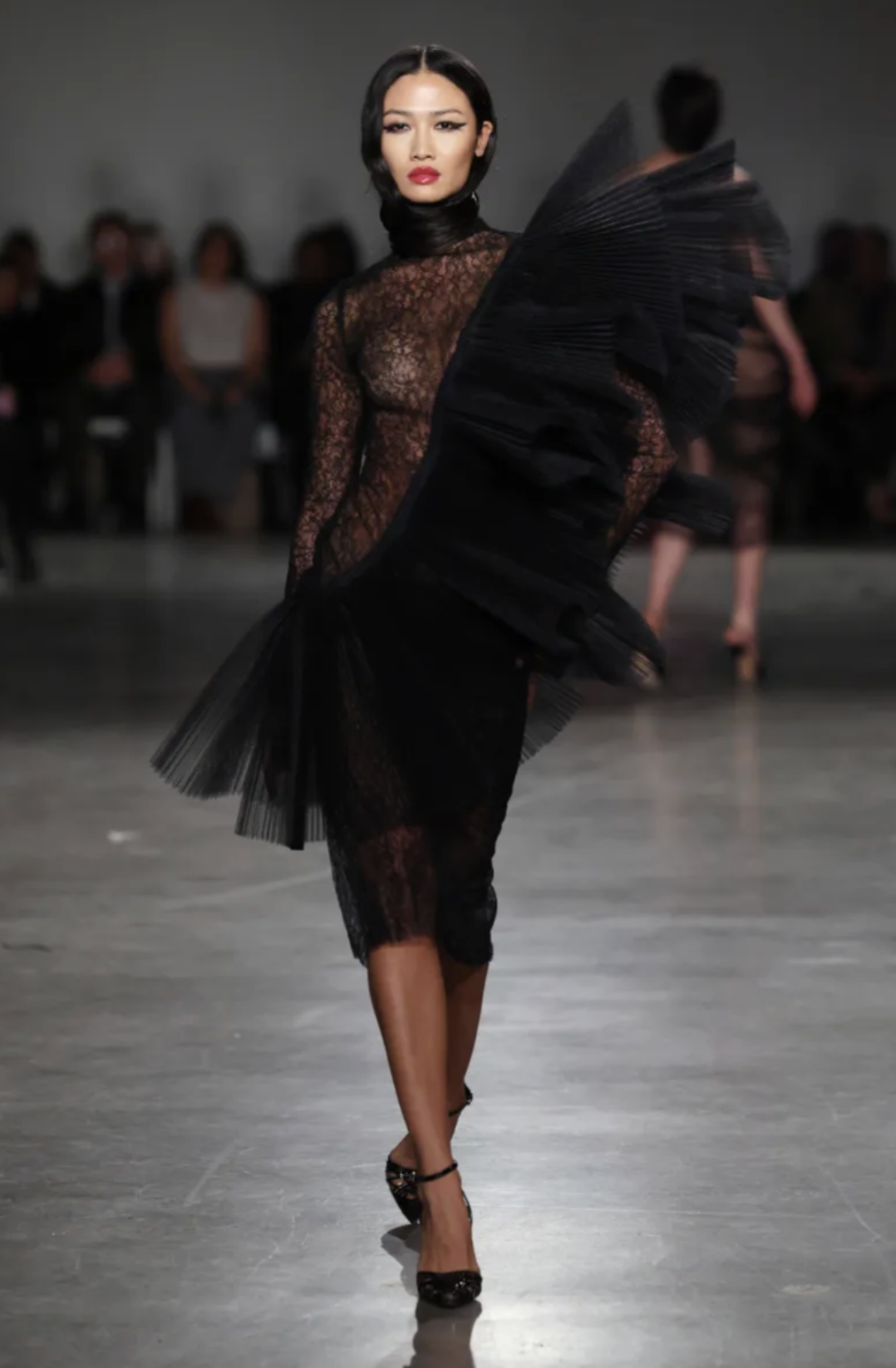
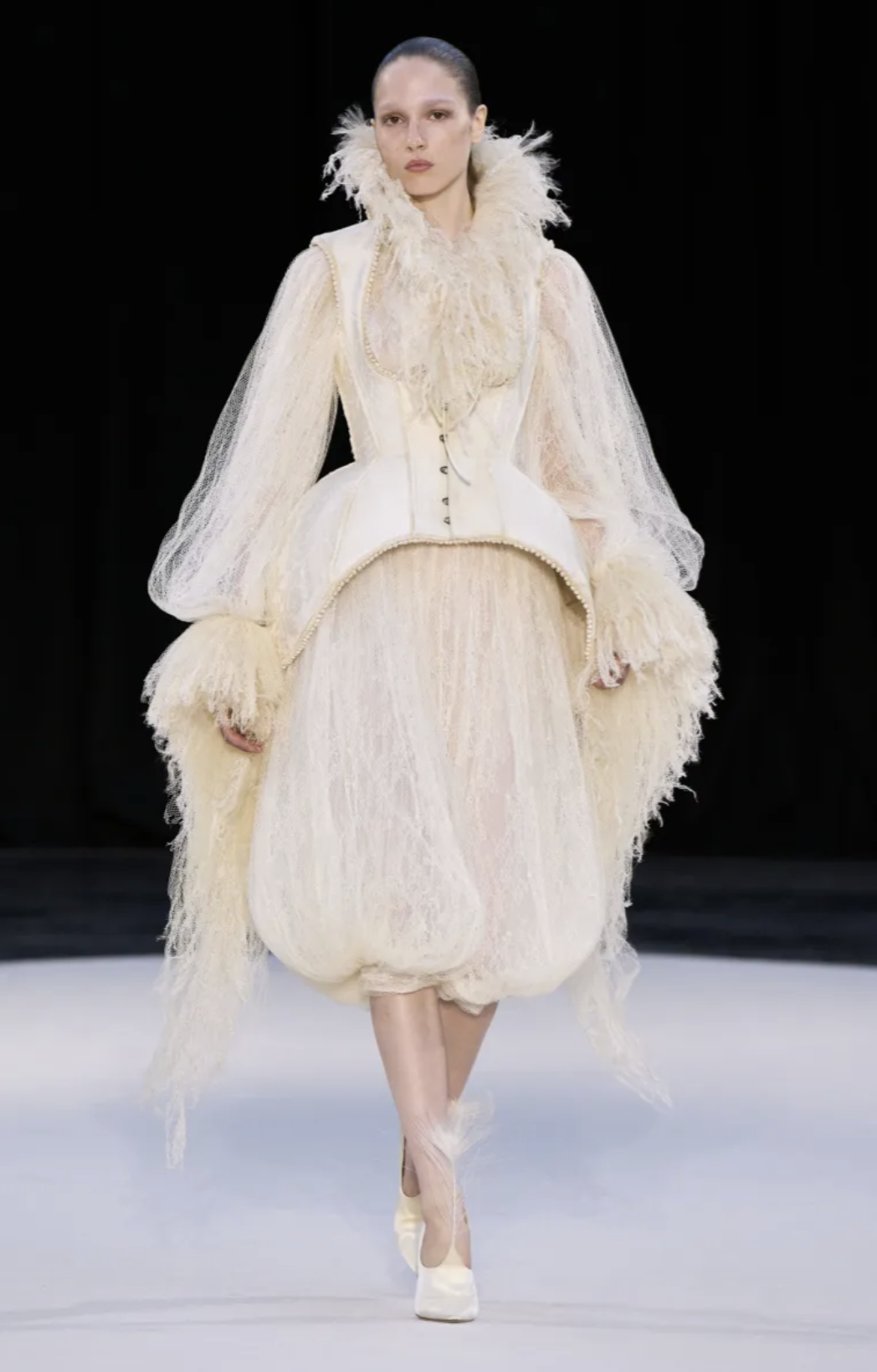
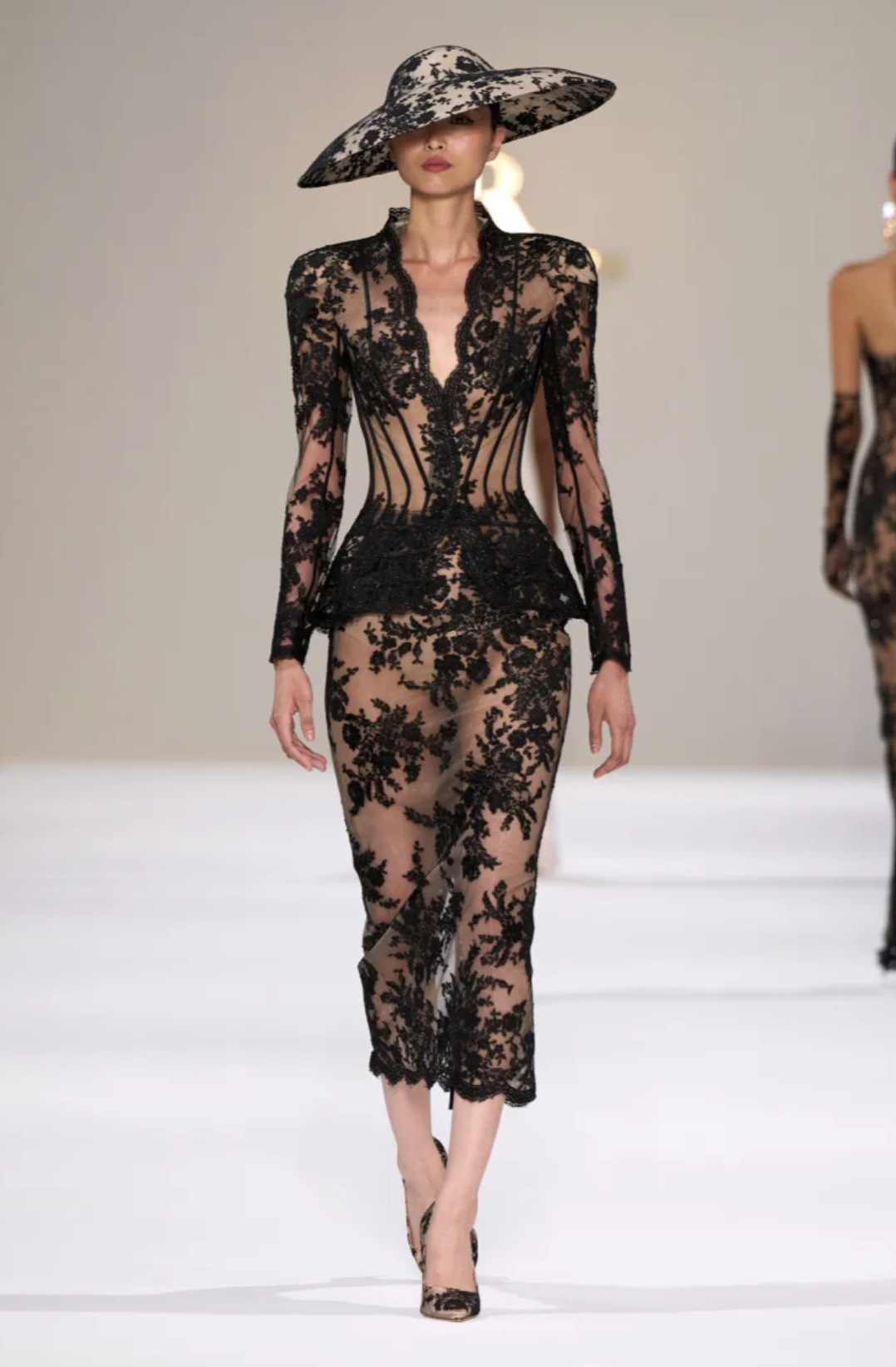
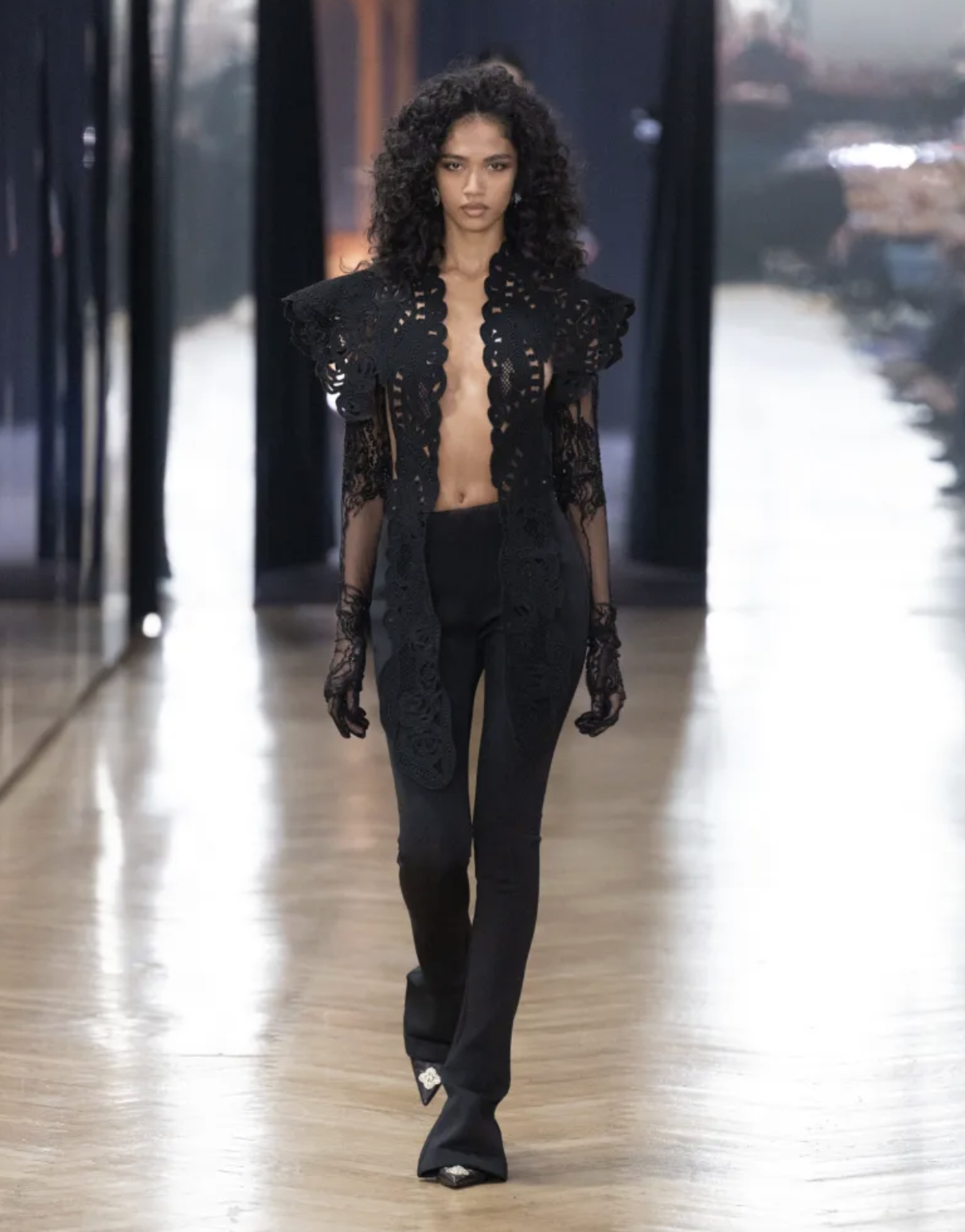
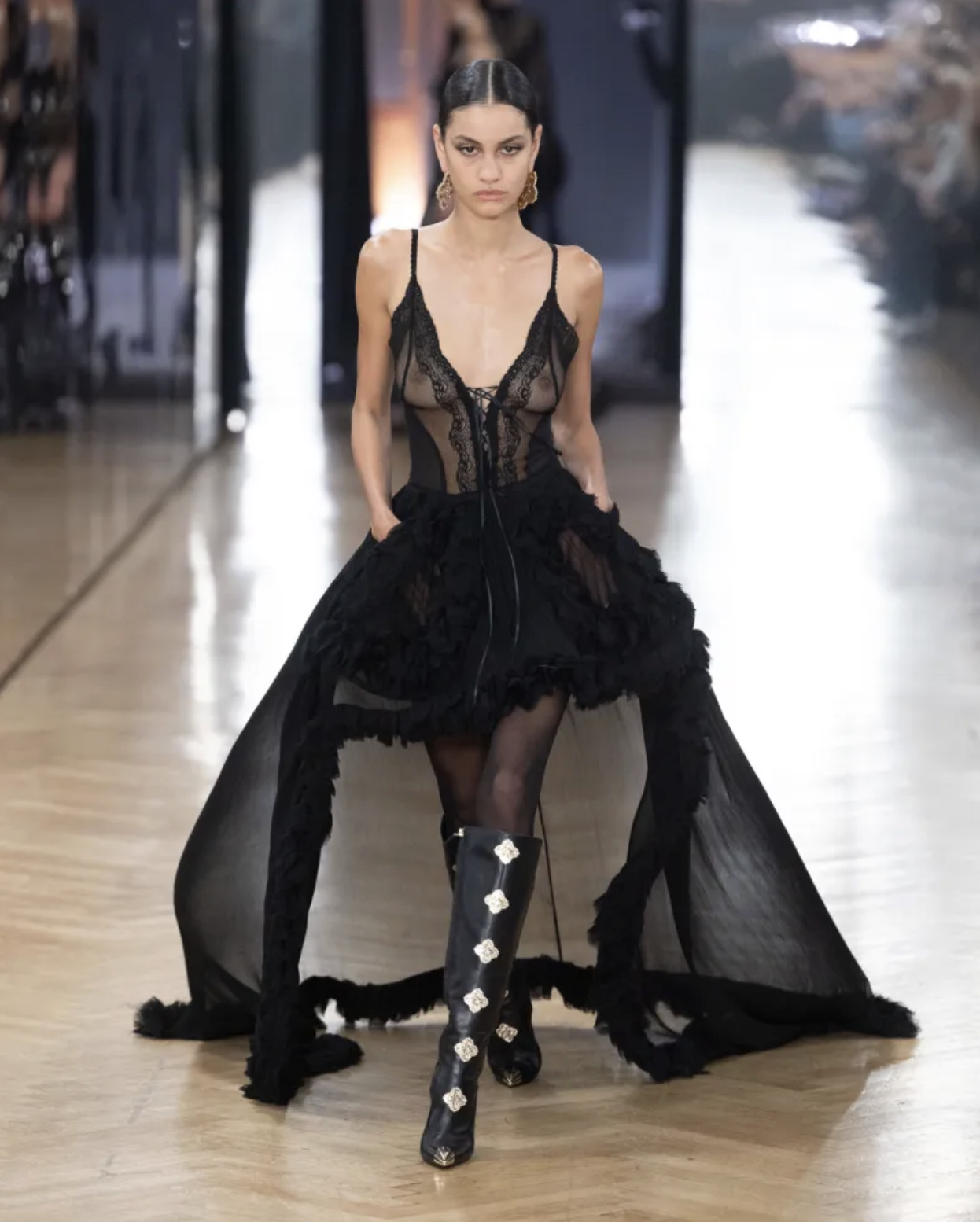
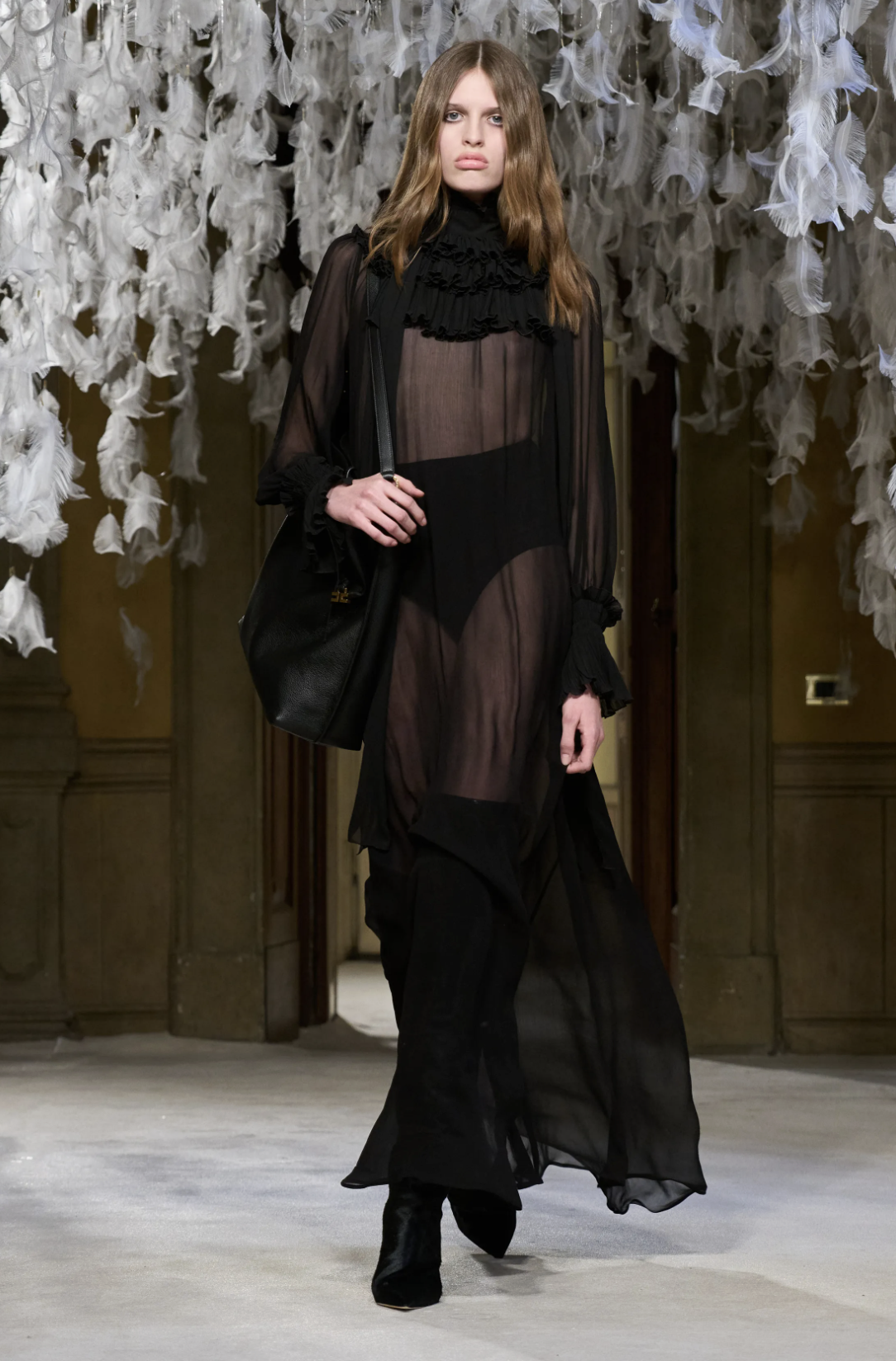
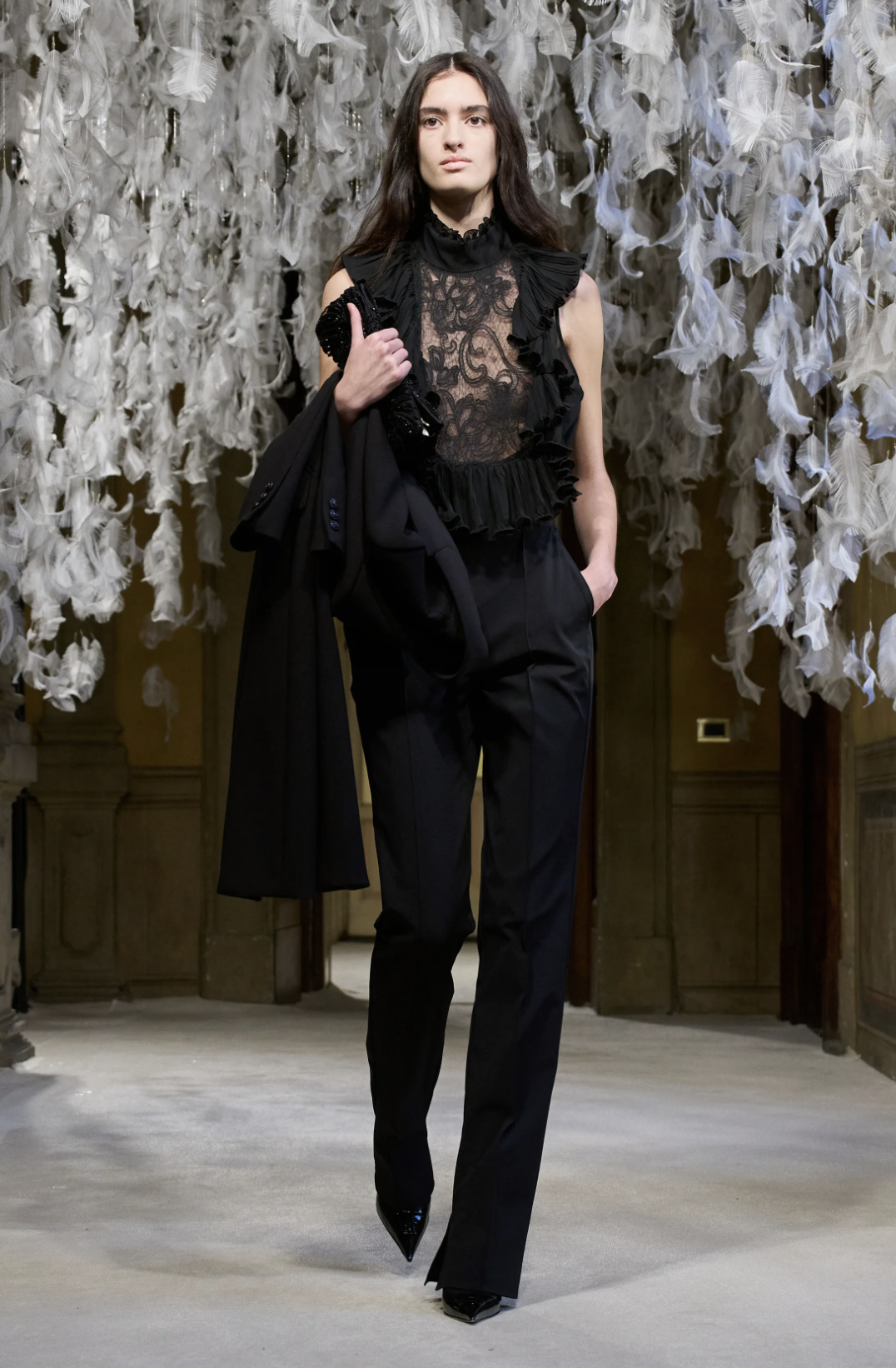
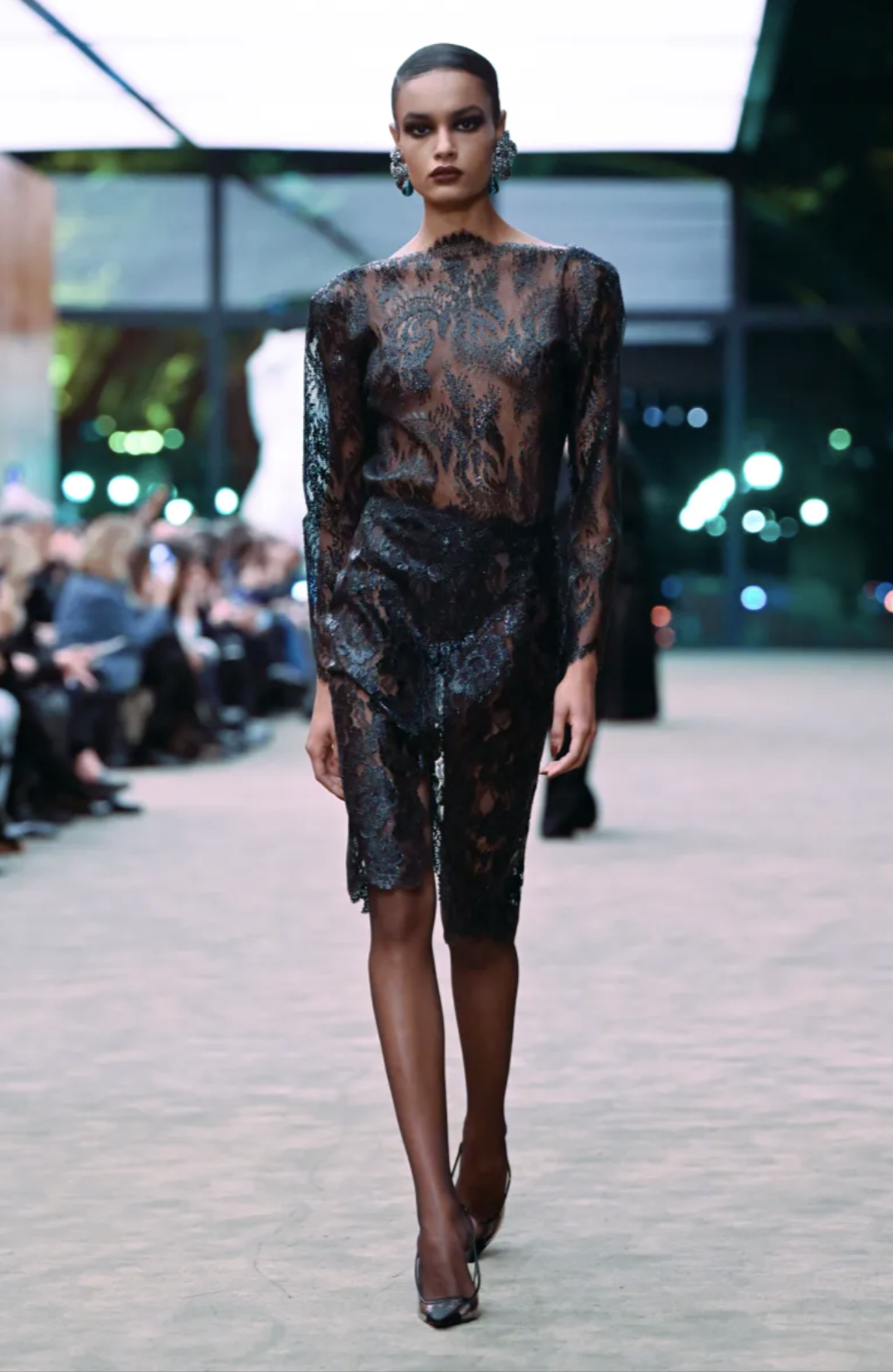
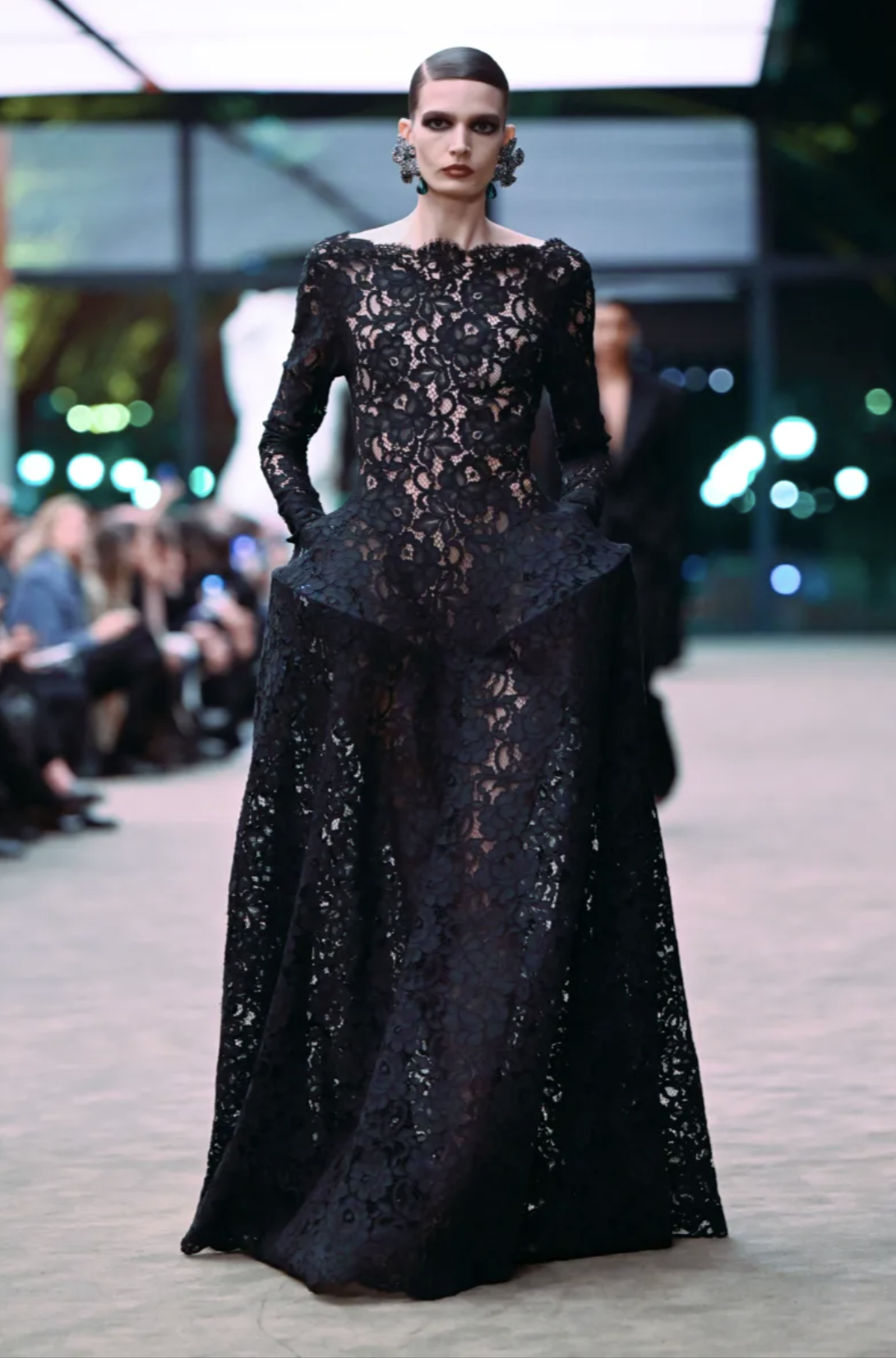
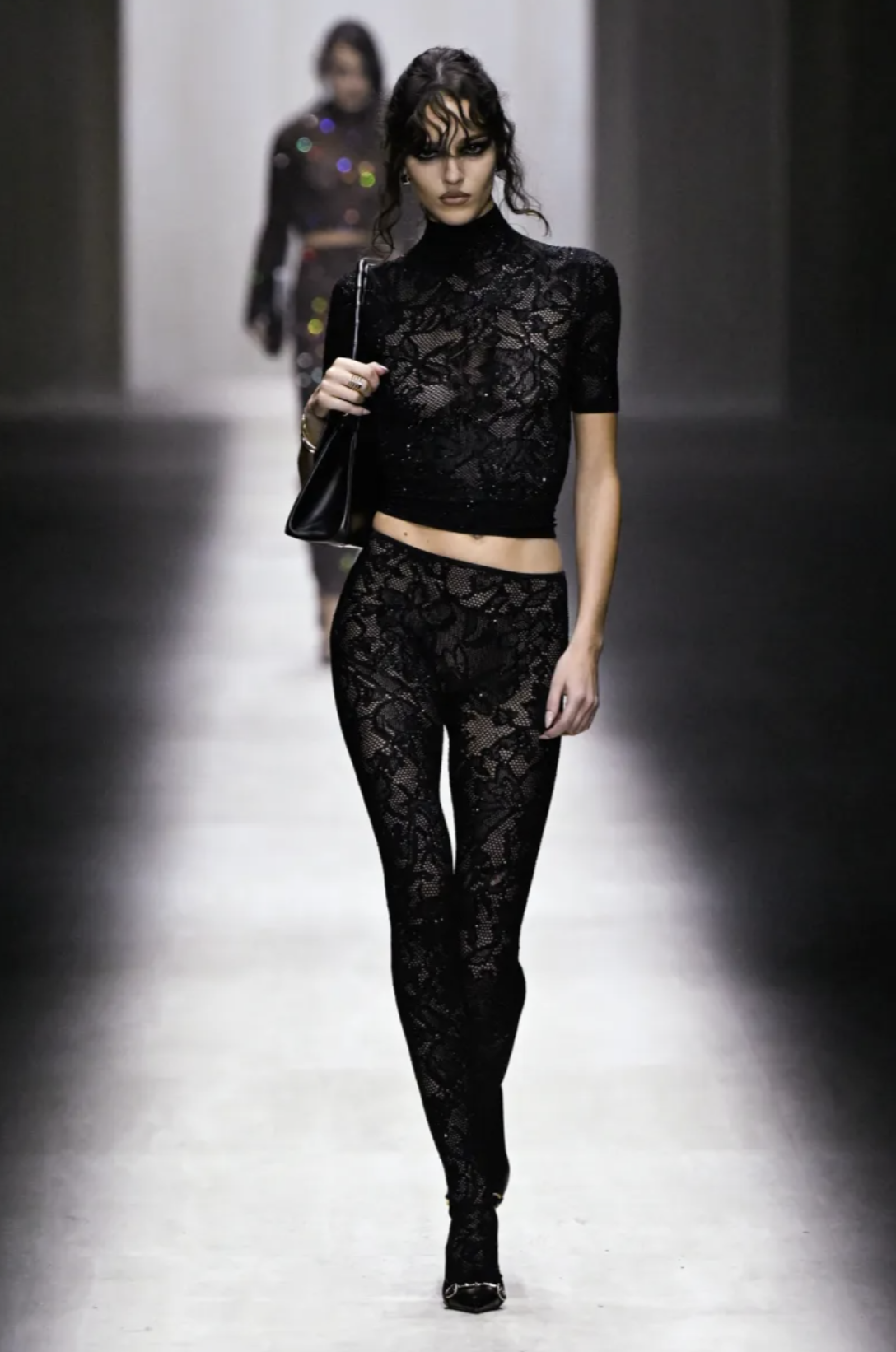
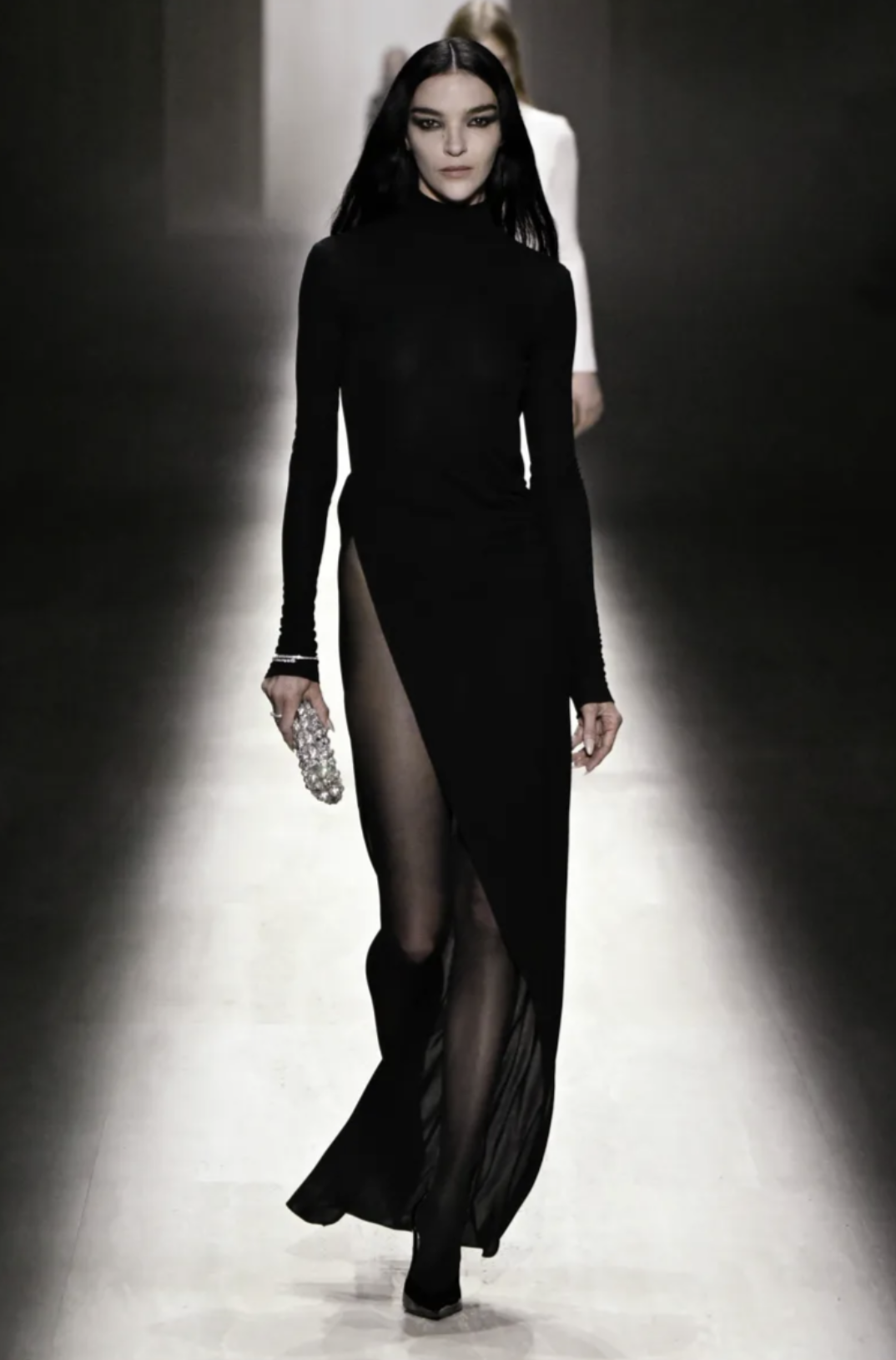
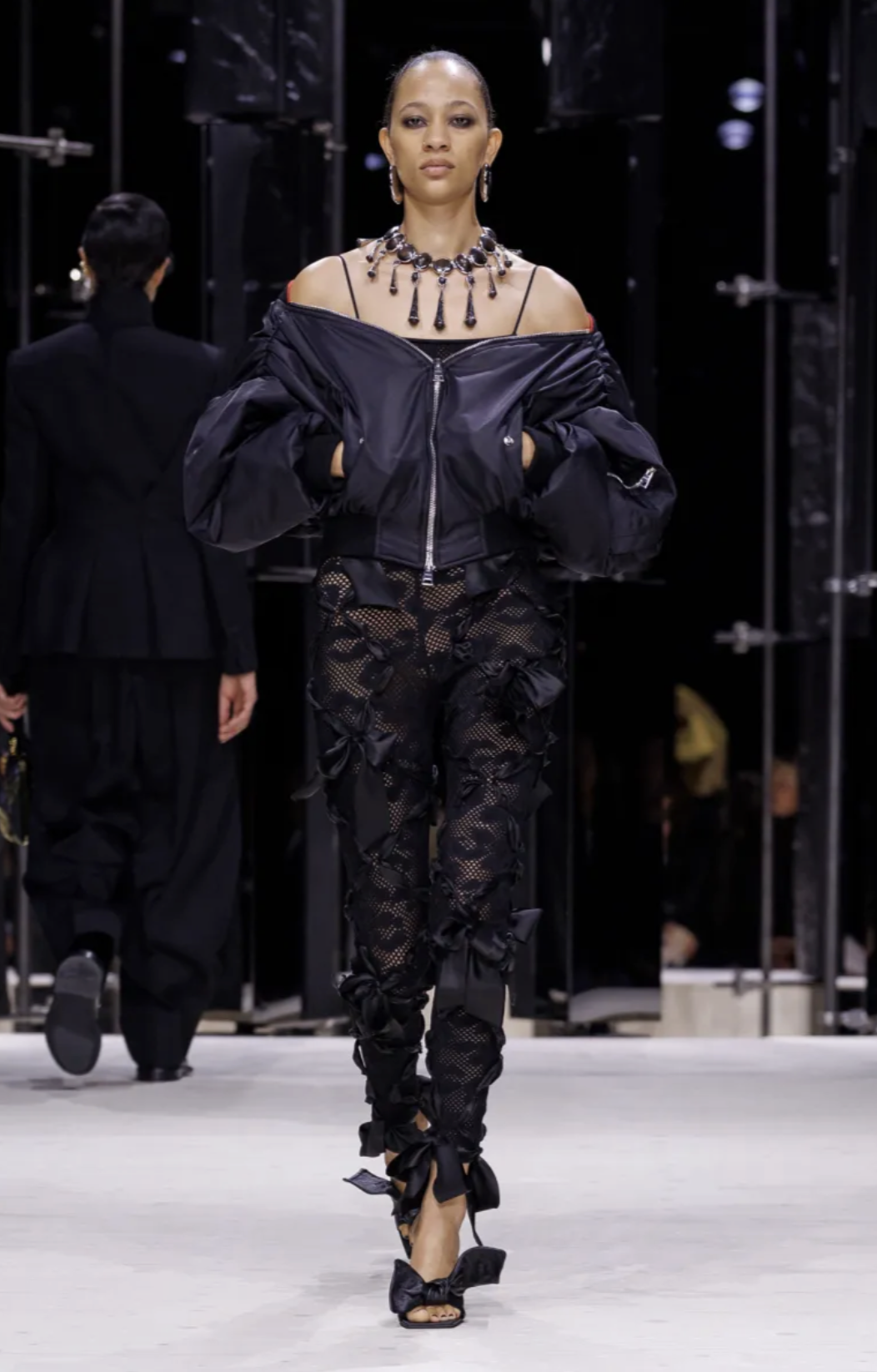
Lace is working overtime for FW26, moving between night garden romance and outright provocation as designers renegotiate how much a garment needs to conceal in the first place. Transparency appears in disciplined columns and fluid layers, while intricate lacework gives even the slightest silhouettes extraordinary visual depth. There is an intimacy to it all, but the ingenuity lies in how readily we mistake visibility for intimacy.
Dolce & Gabbana + ELIE SAAB: Few houses have made a stronger signature of sheer lace, and both return to it with the confidence of designers working in their native tongue: demure black lace maxis designed for dark feminine wardrobes and destined to confuse most men. Layering sheer over sheer creates depth without sacrificing a single inch of transparency.
Ashi Studio: A 17th-century Chantilly lace fever dream—the embodiment of an elegant palace swan, complete with sculptural volume and exquisite excess.
Tamara Ralph: Feminine tailoring meets ethereal transparency, giving lace enough structure to hold its own against the collection’s dramatic styles.
Blumarine: A study in proportion. The severity of a tailored vest against a diaphanous high-low skirt makes the delicacy beneath it feel even more pronounced.
Elisabetta Franchi + Saint Laurent: High collars meet sheer black lace for a particularly persuasive argument in favour of covering up while revealing almost everything, and still nothing at all.
Gucci: Decidedly brattier—and we’re obsessed. Lace loses its preciousness against ballsier styling, with the smoked-out eye driving the point home.
Givenchy: Sheer bow trousers are an irresistible exercise in contradiction: romantic detail, beautifully brazen execution.
Flights of Fancy
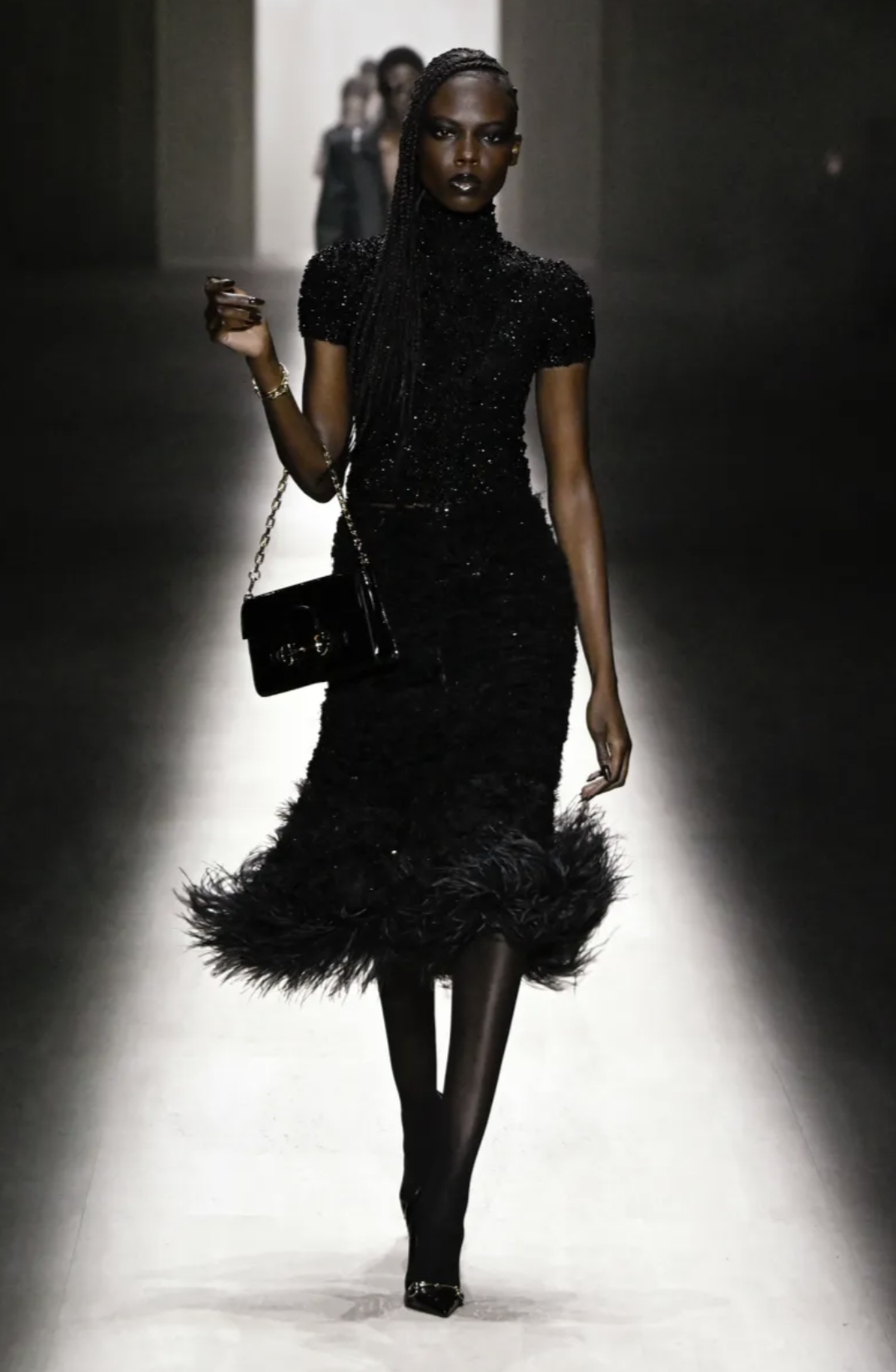
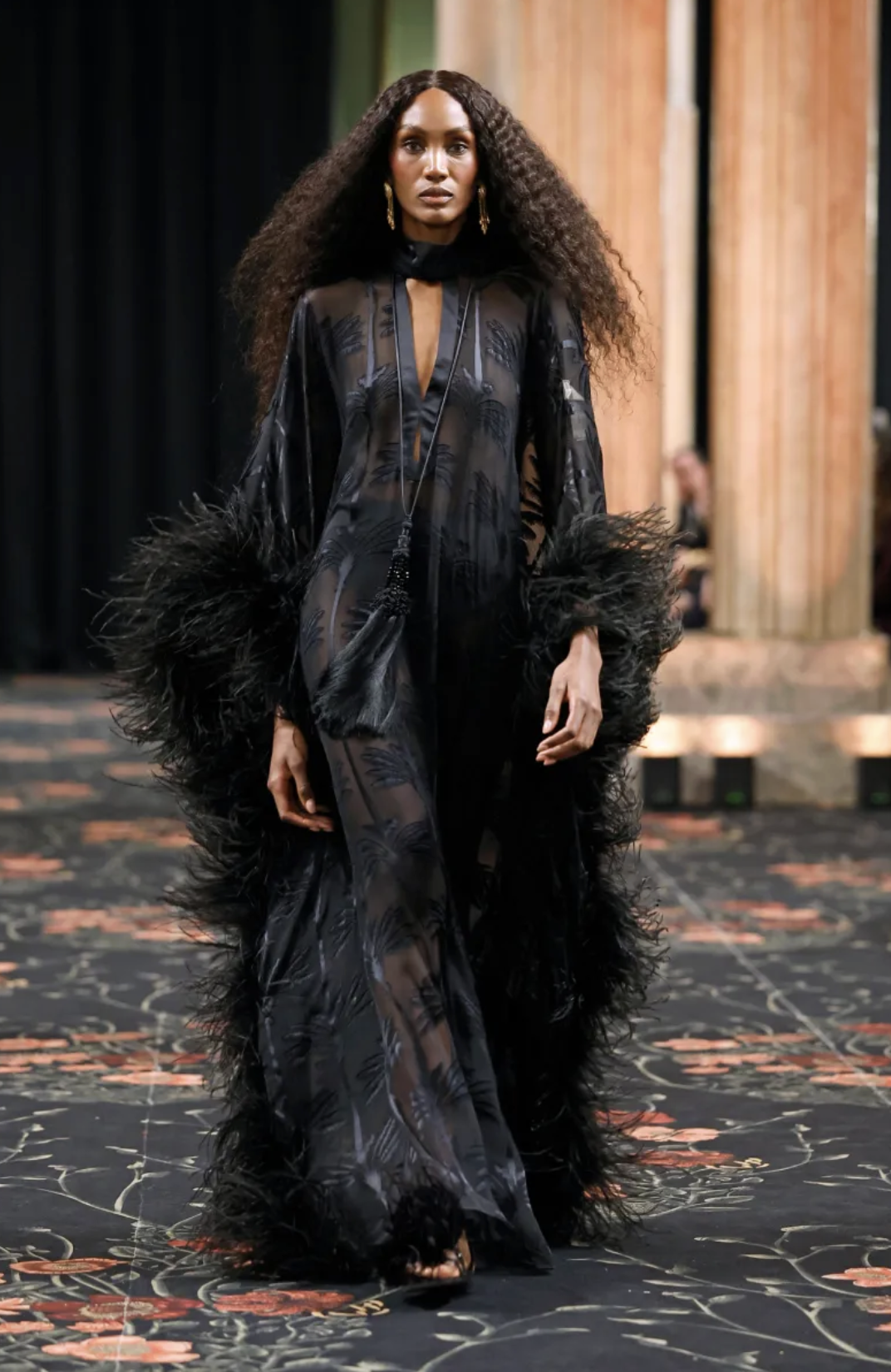
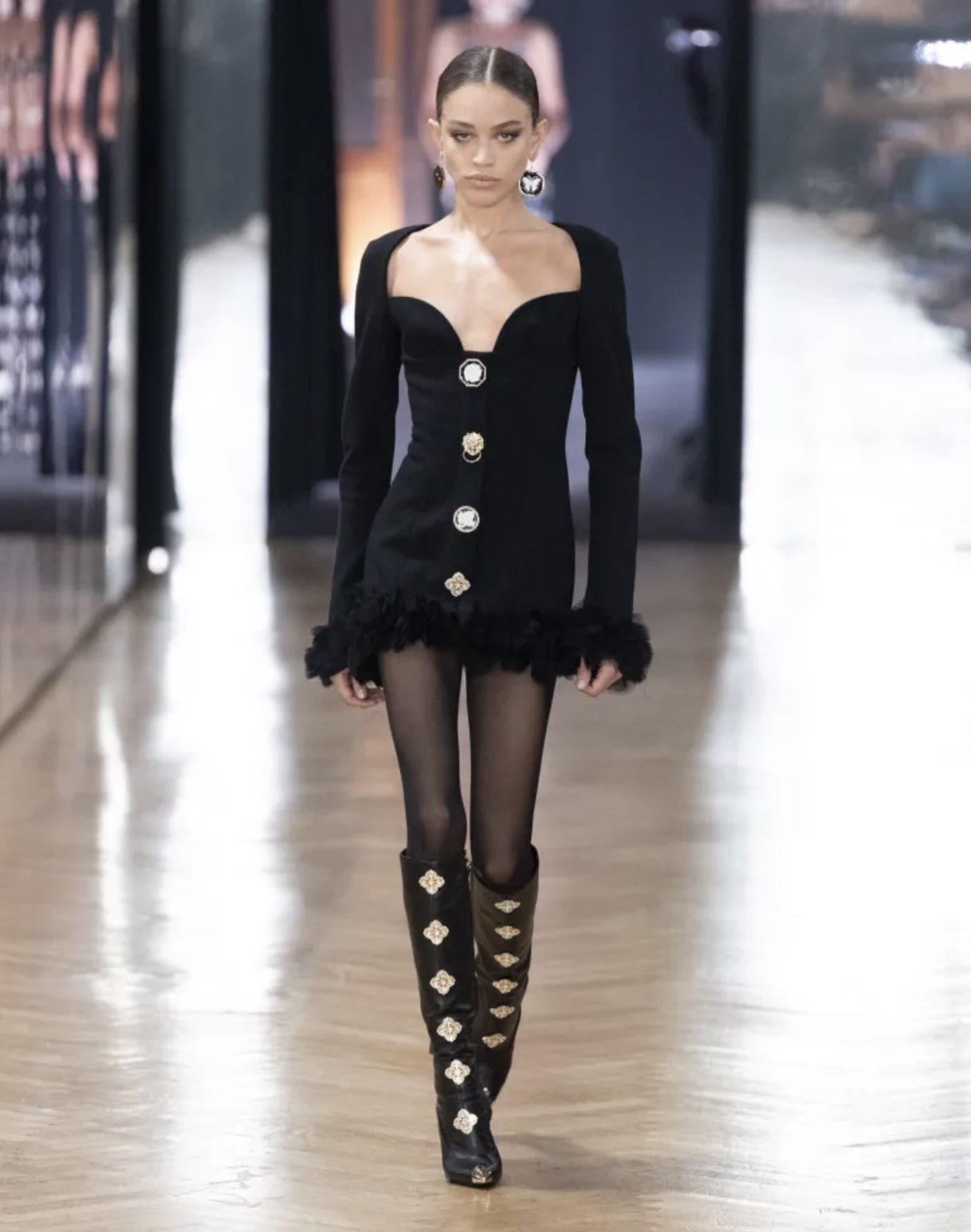
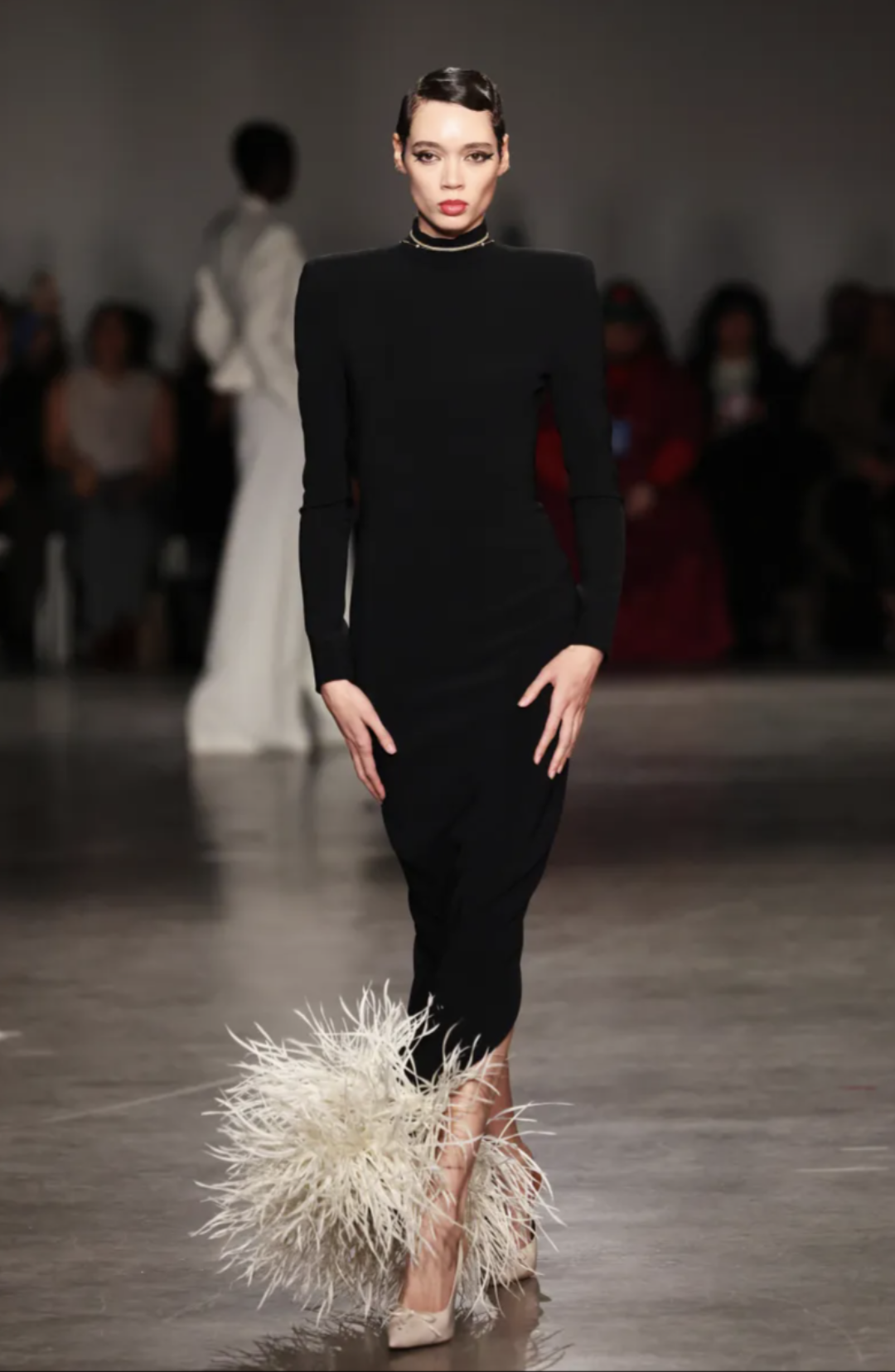
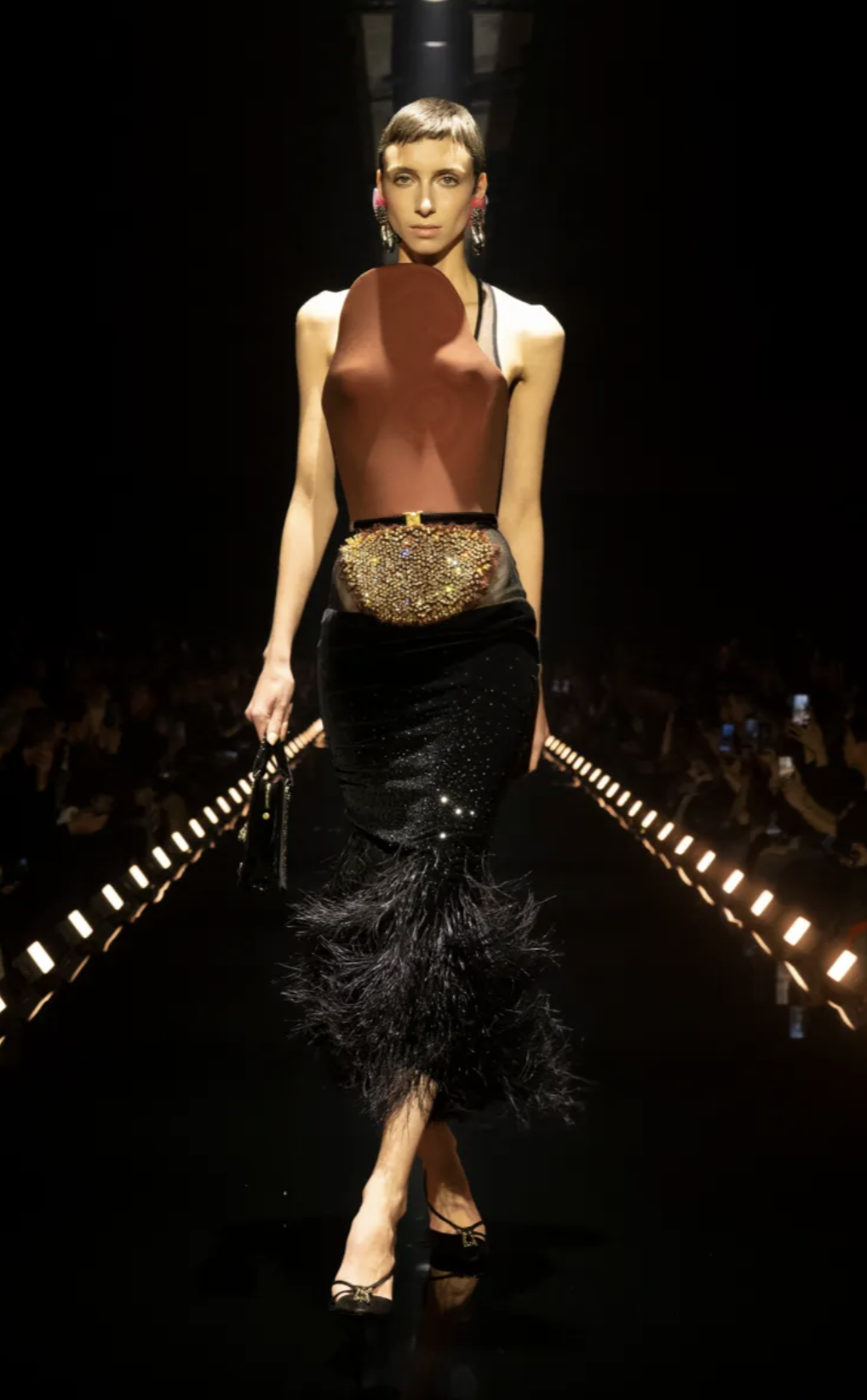
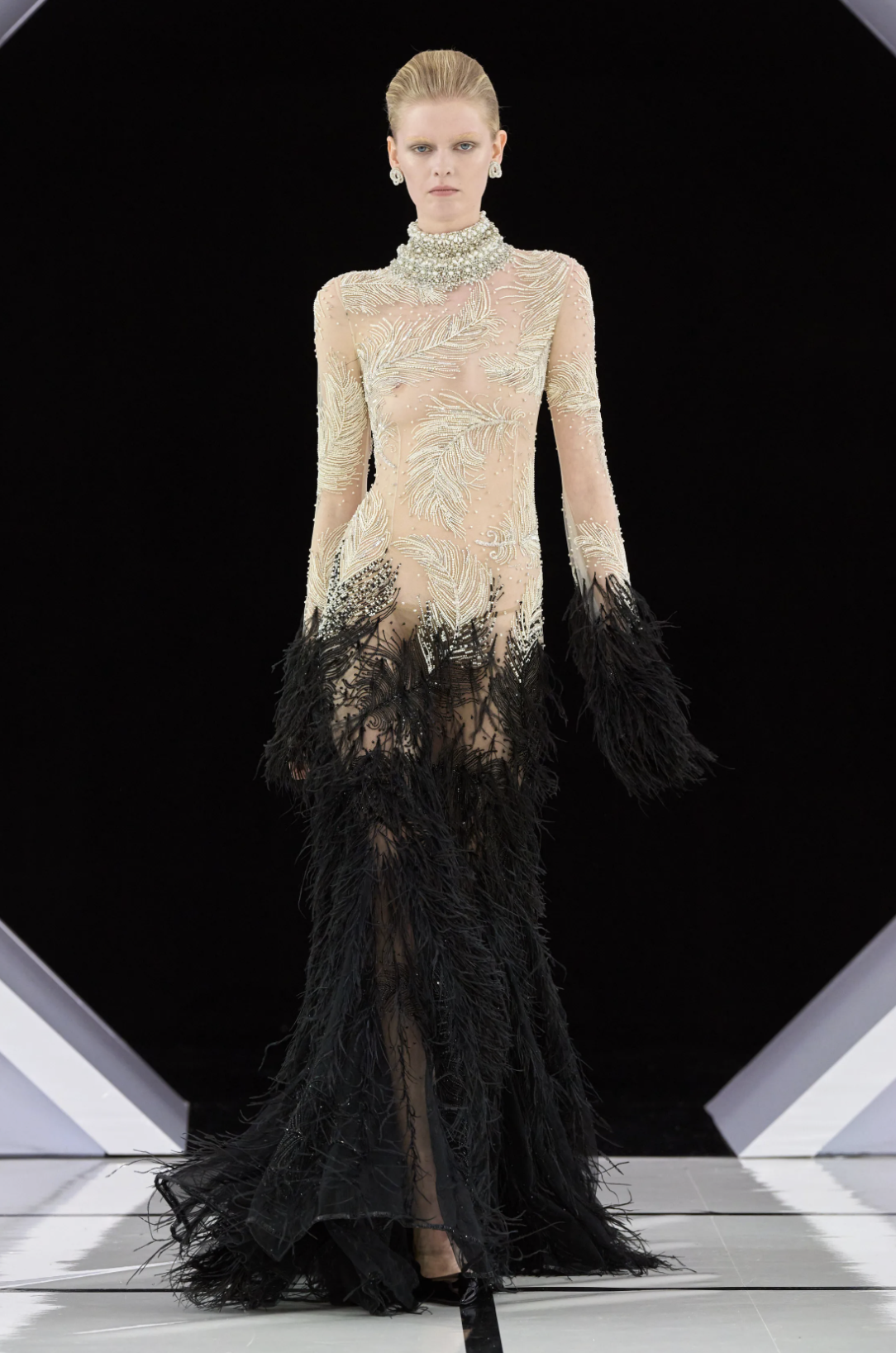
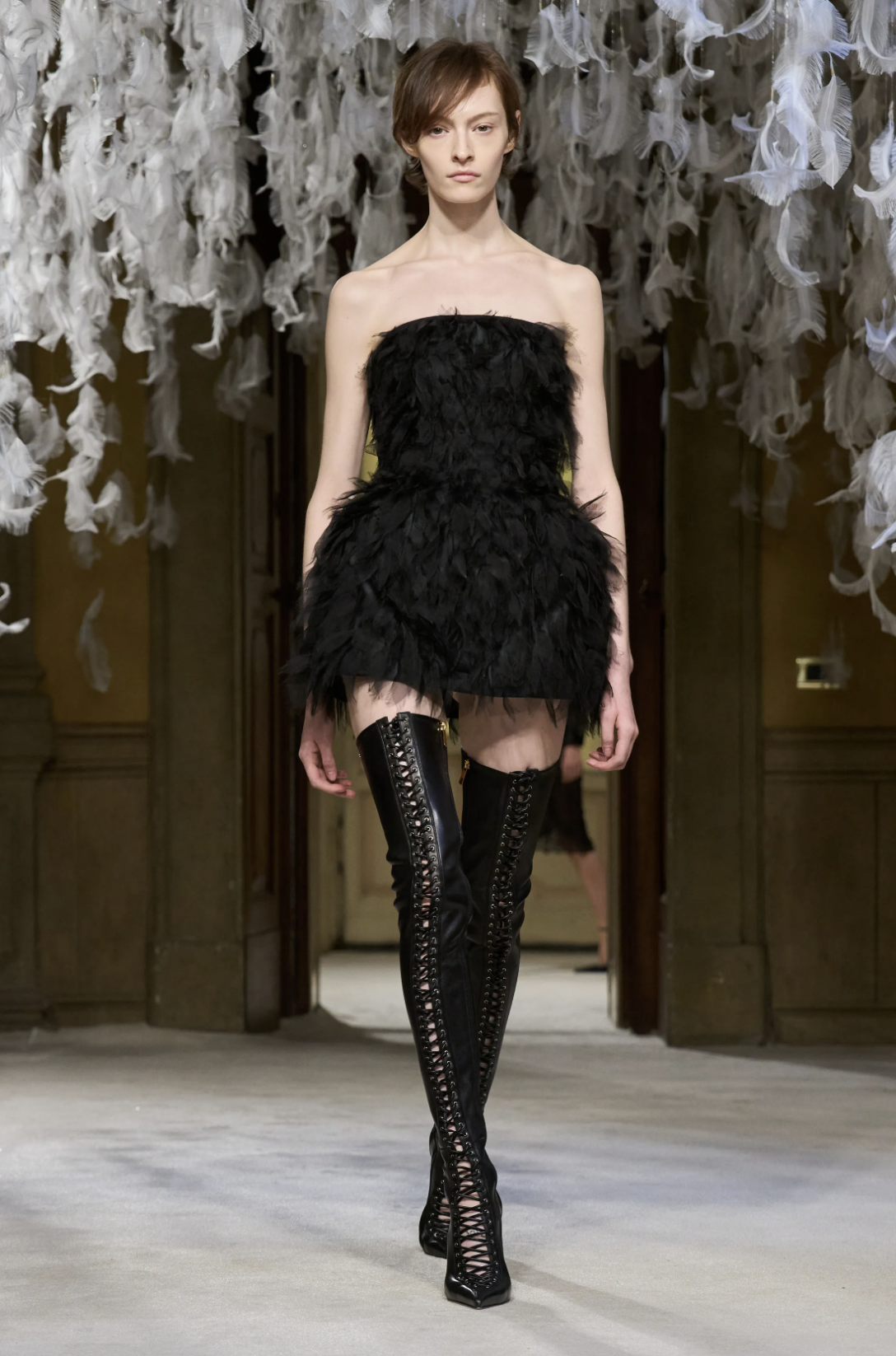
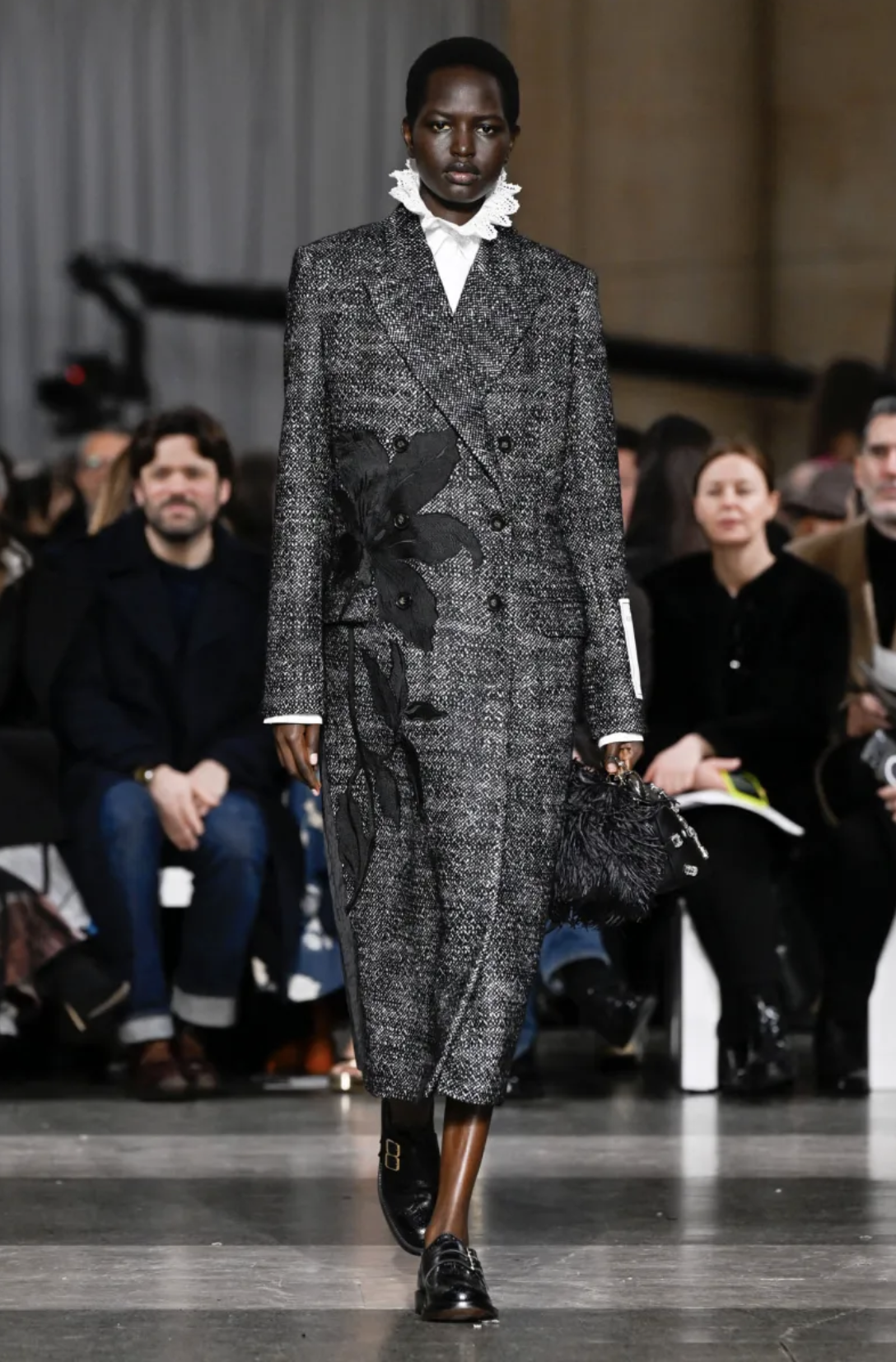
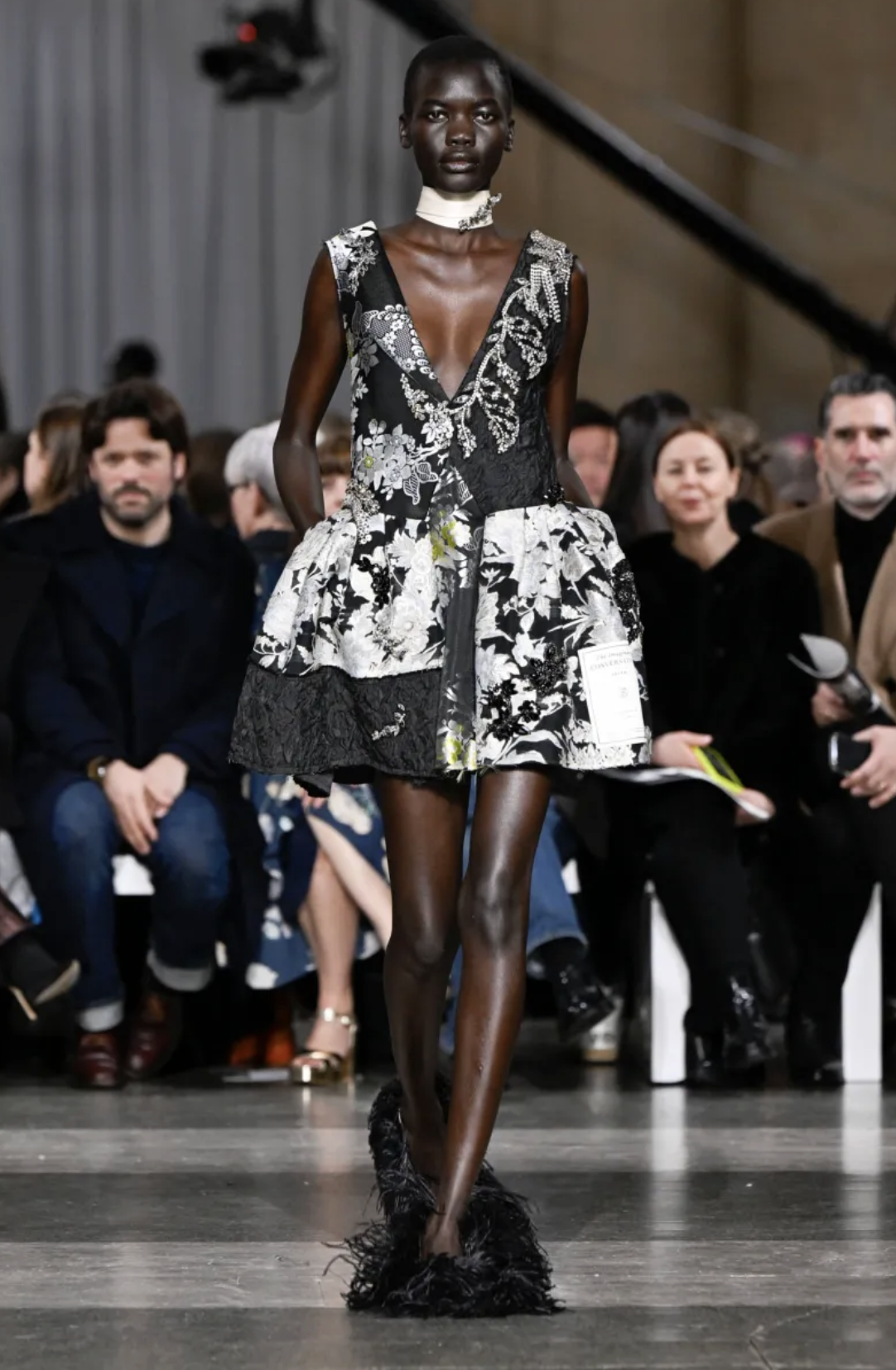
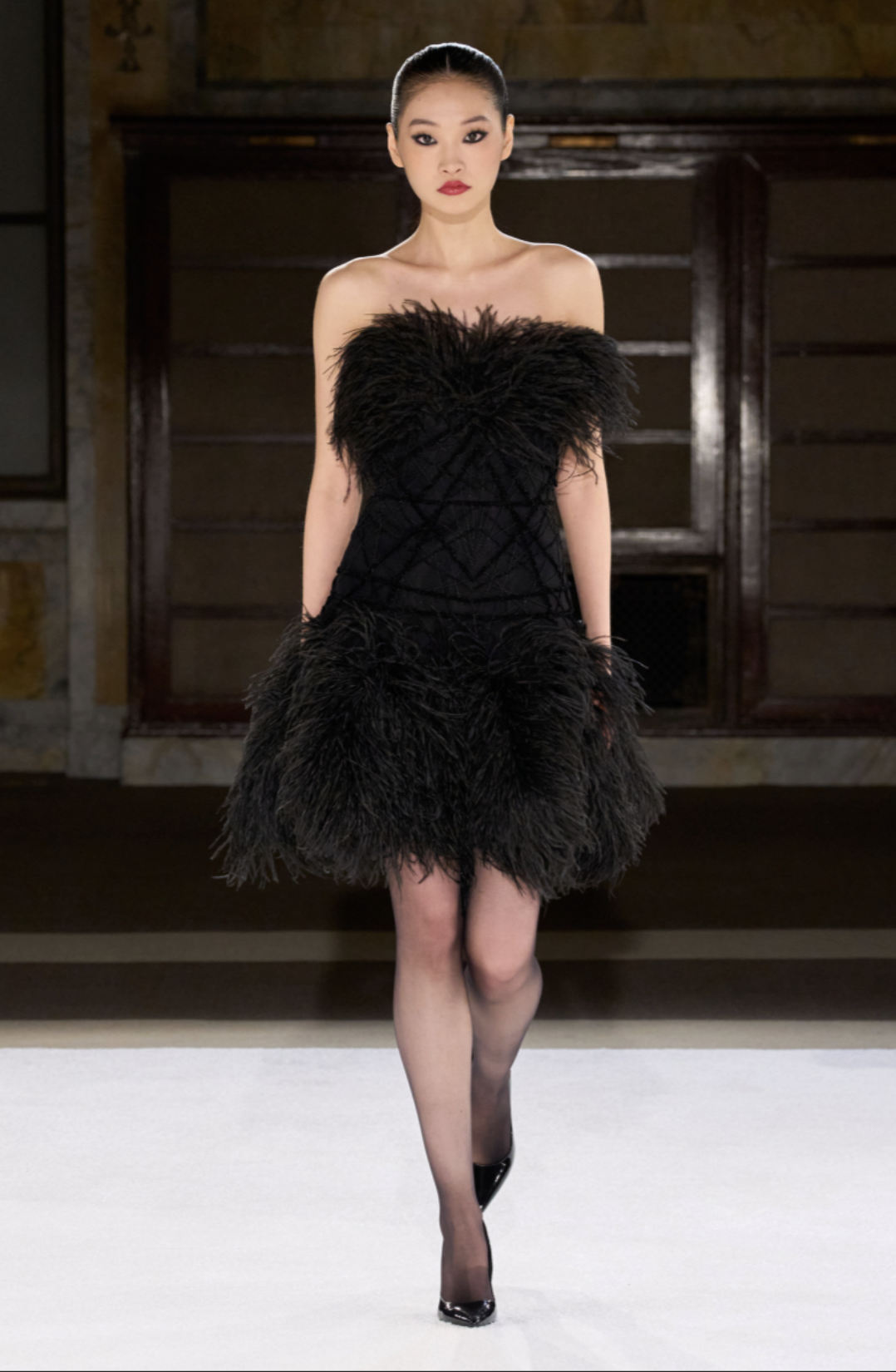
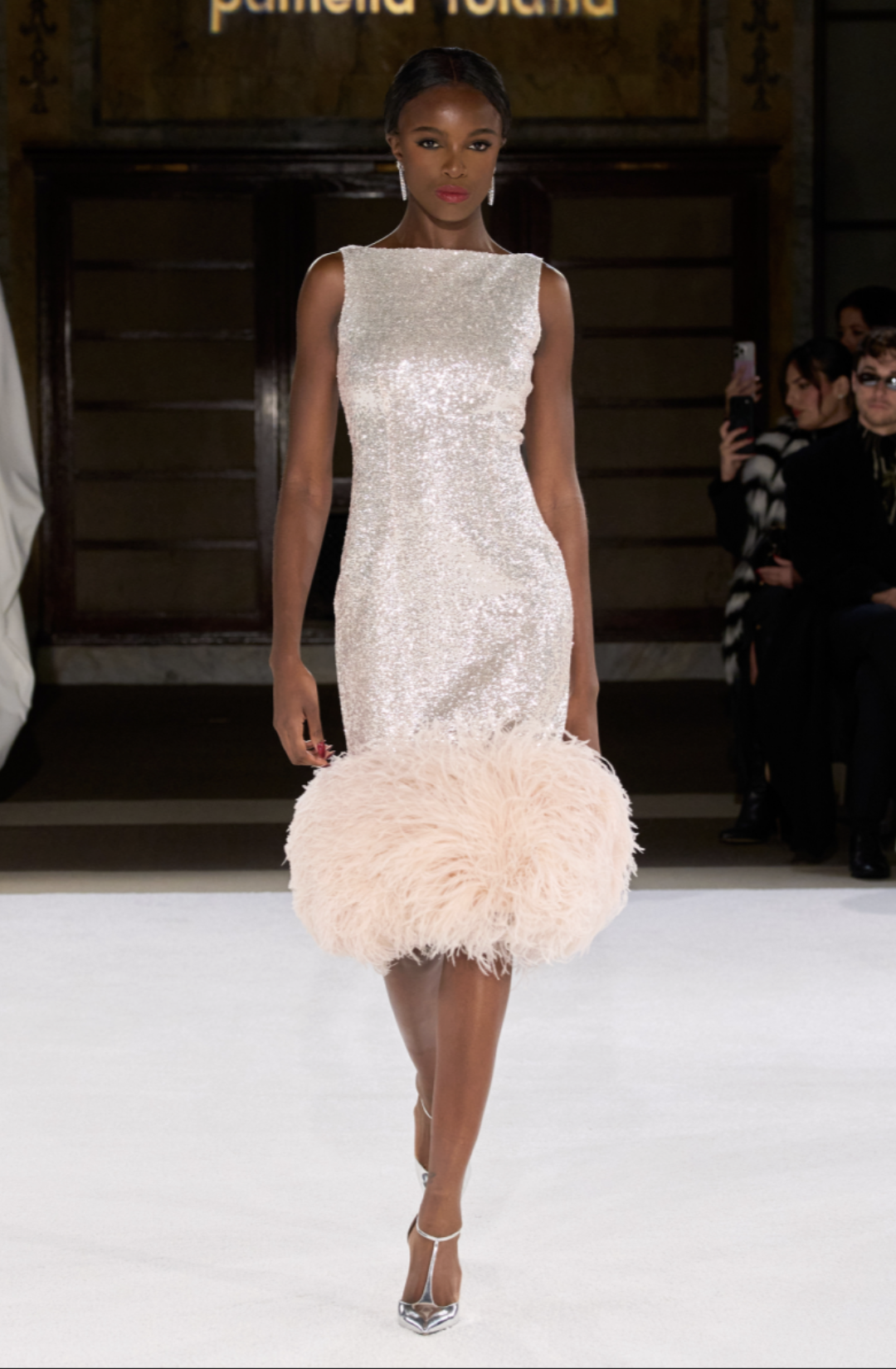
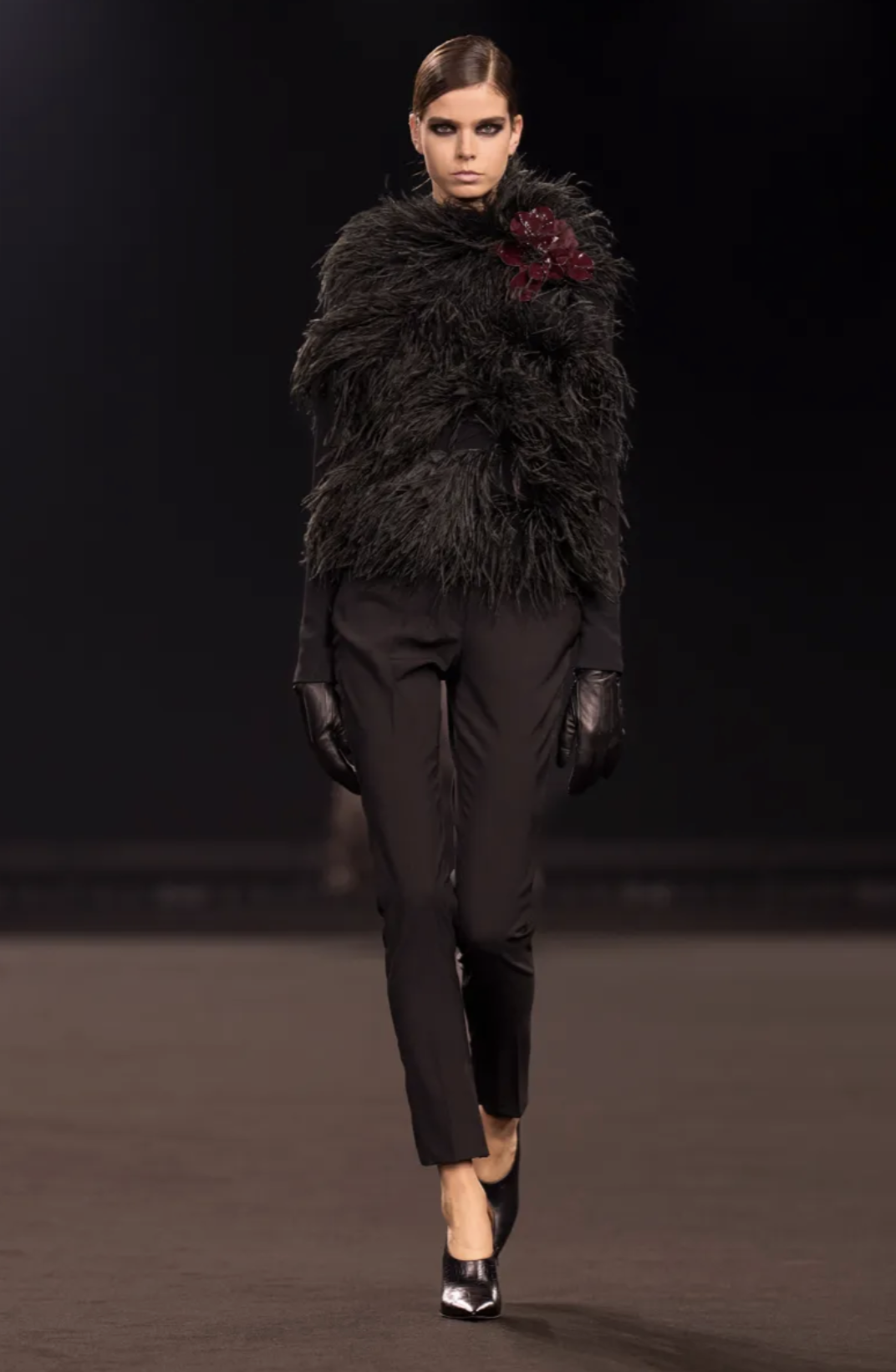
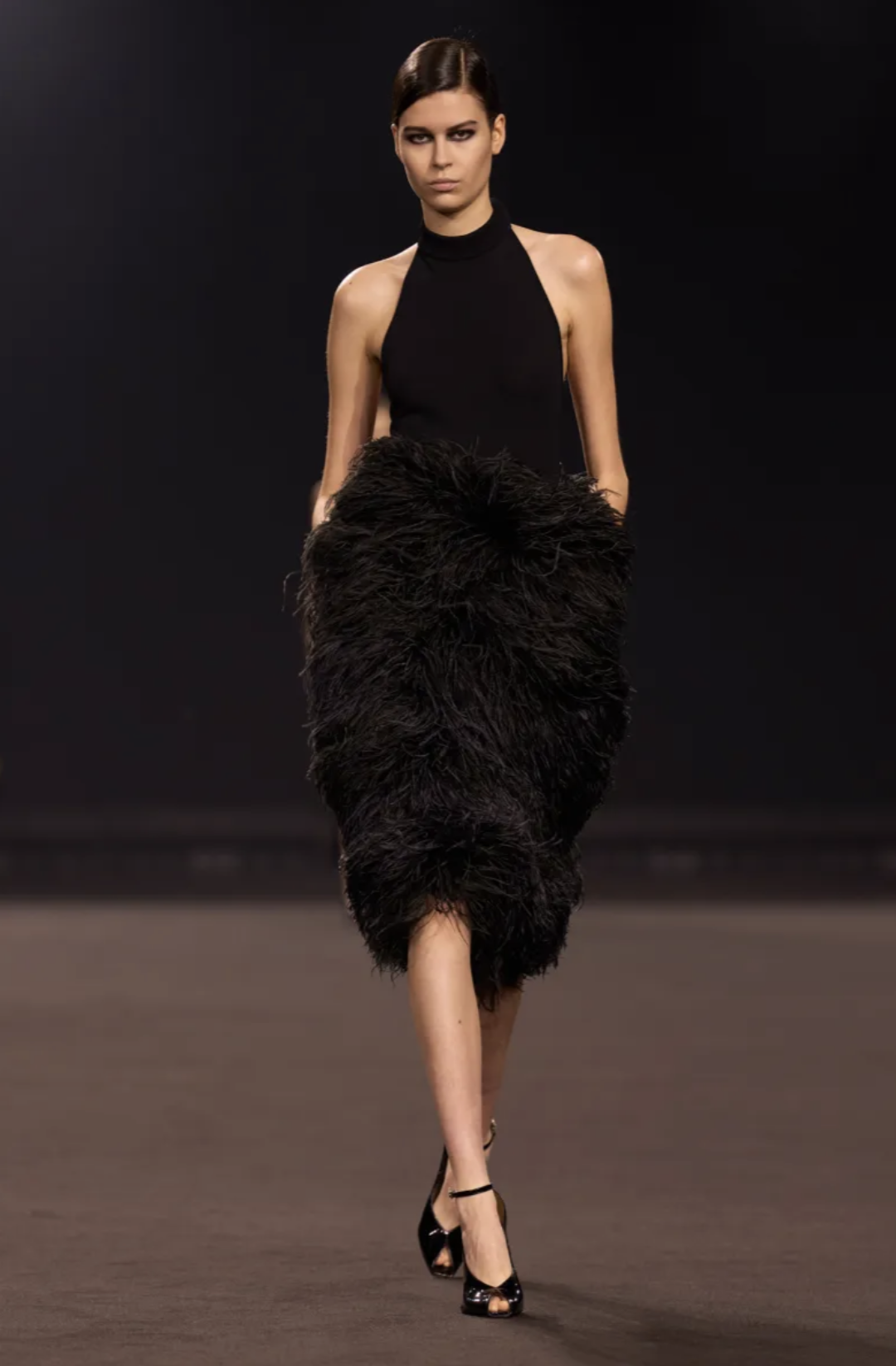
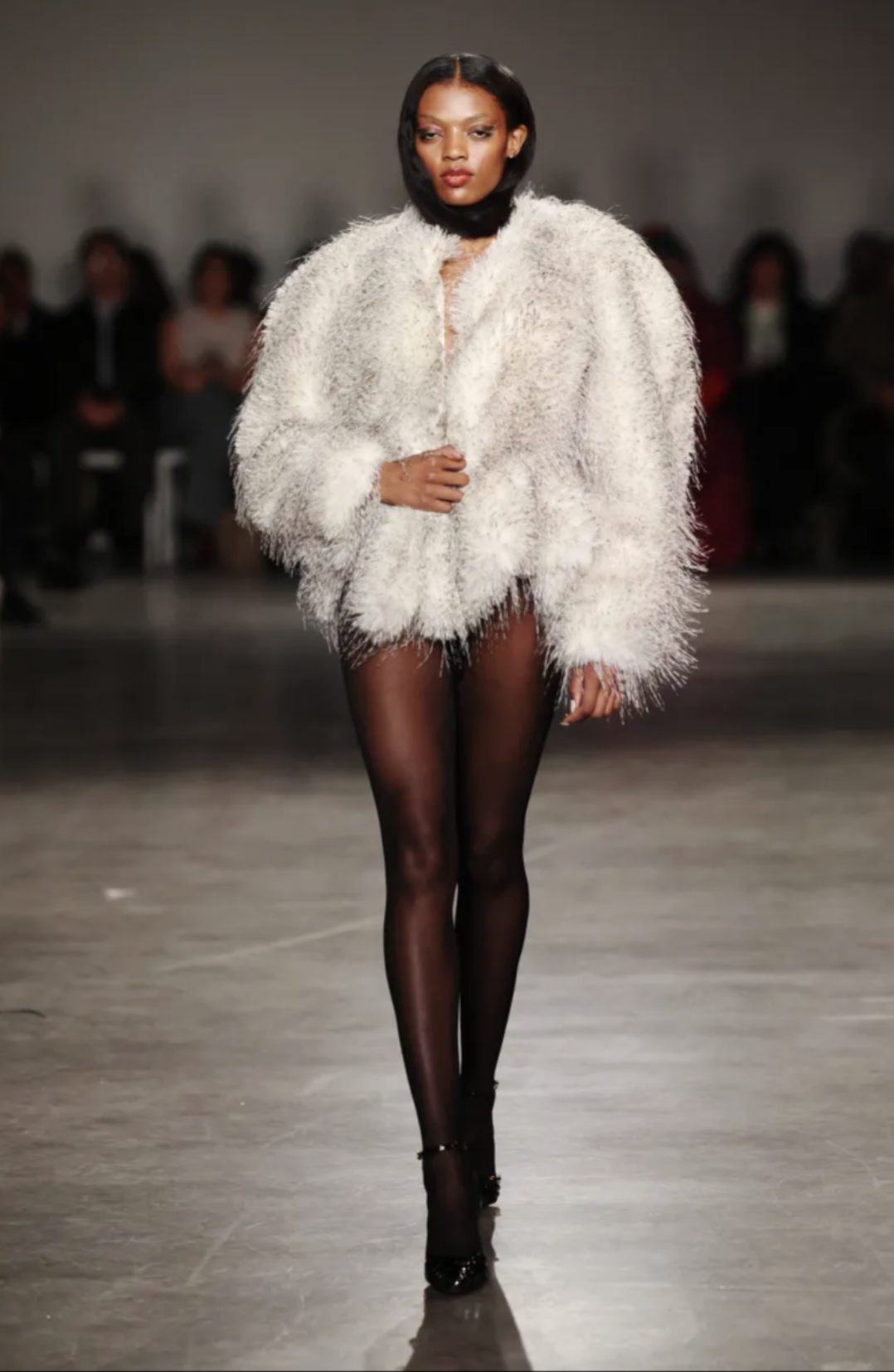
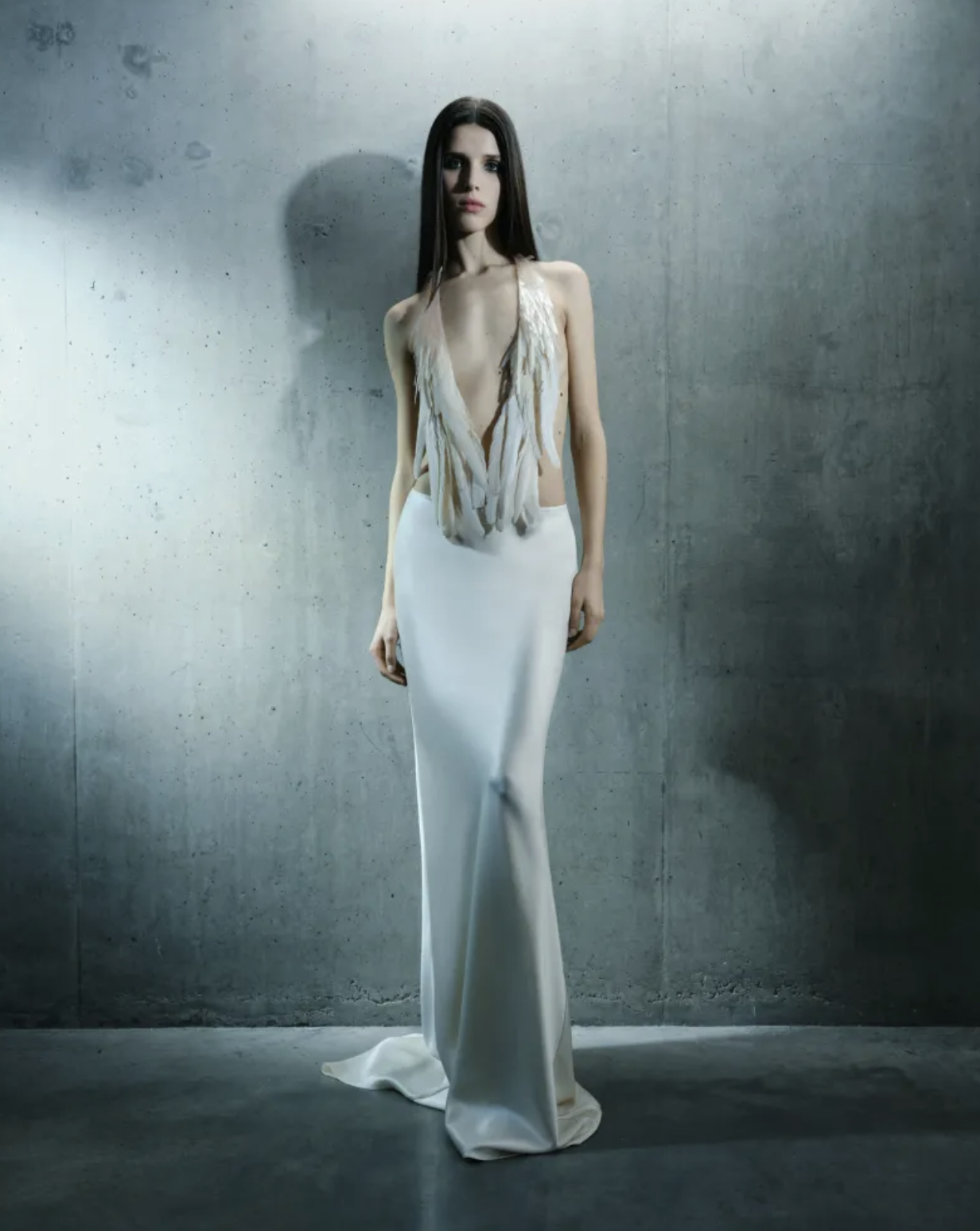
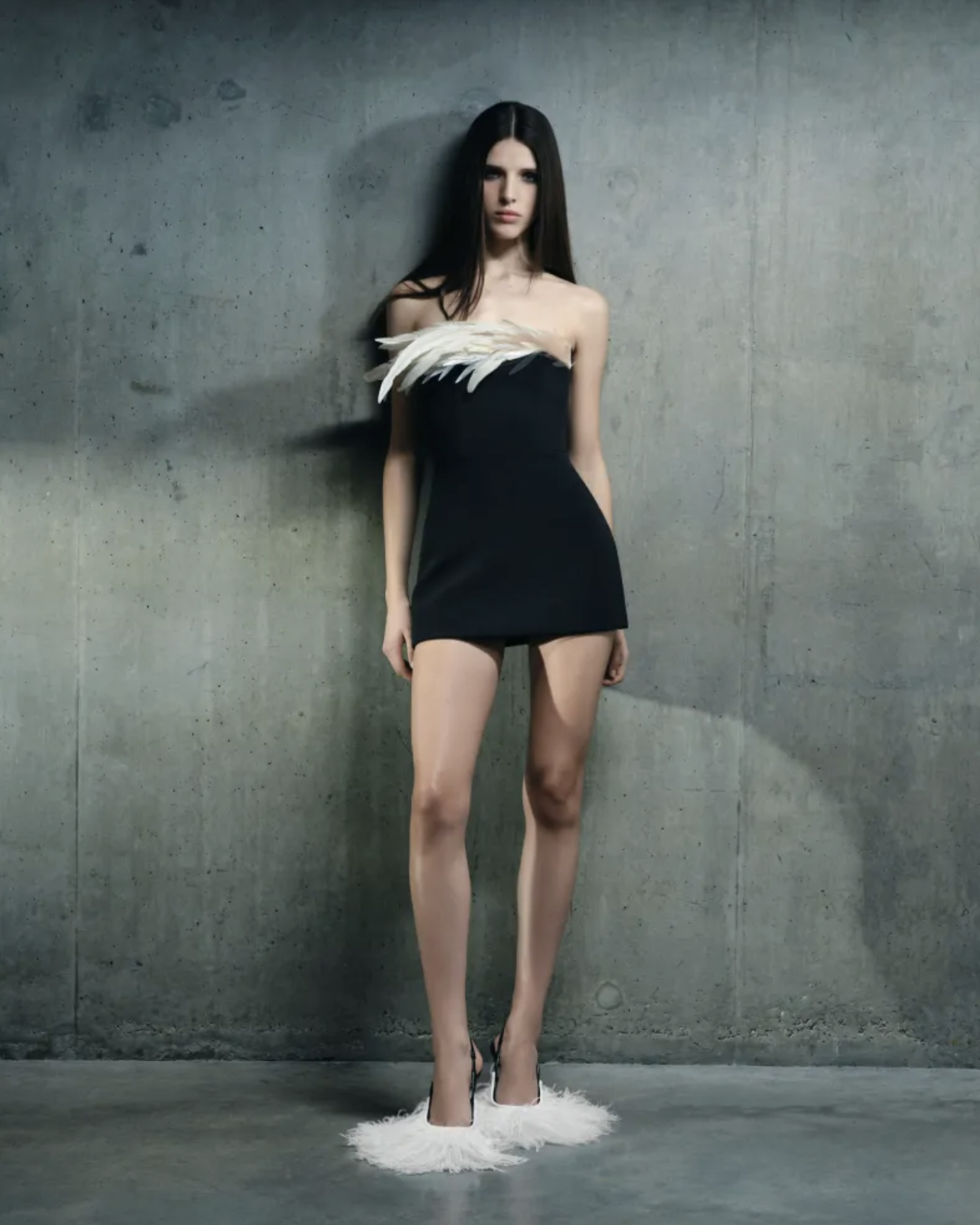
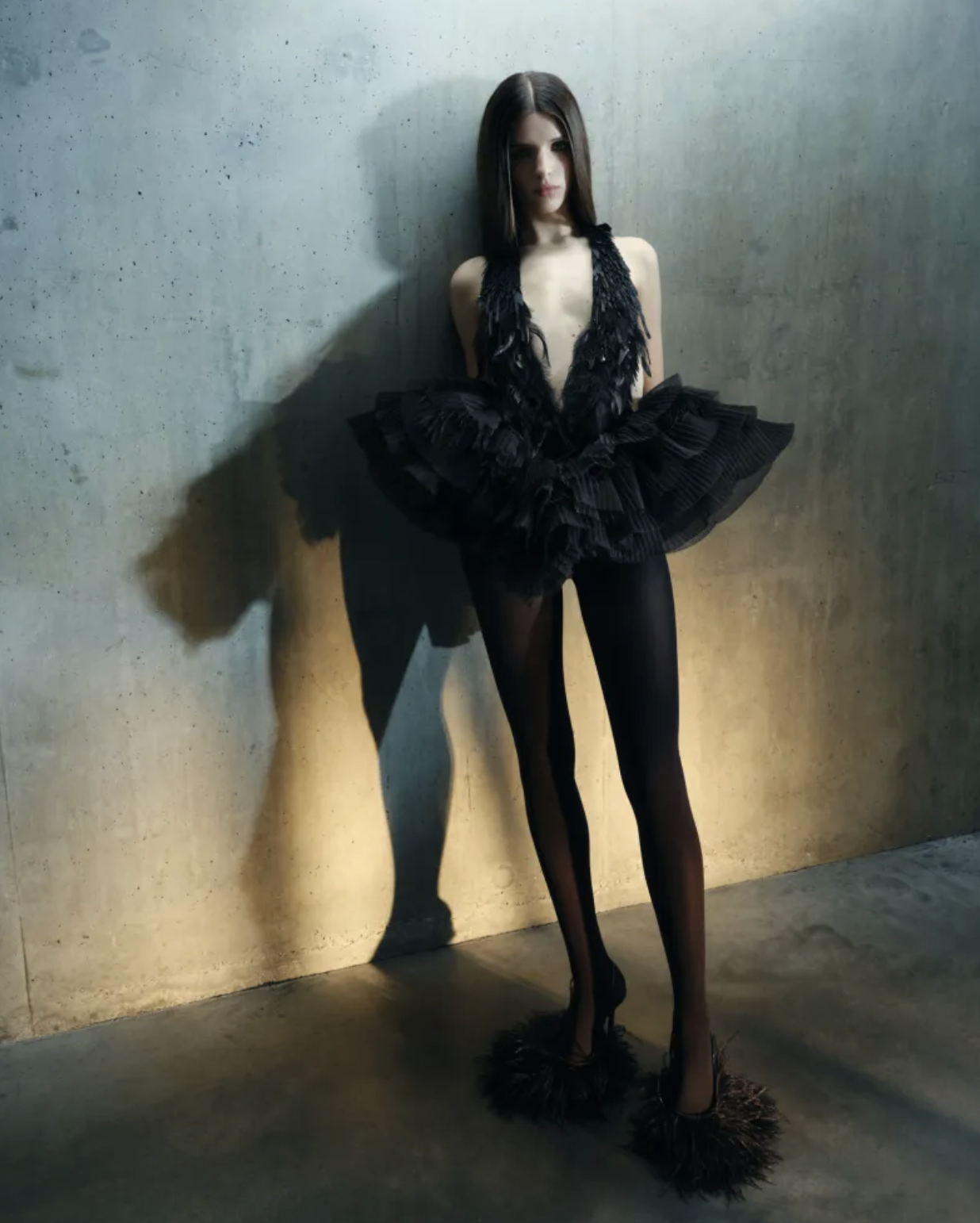
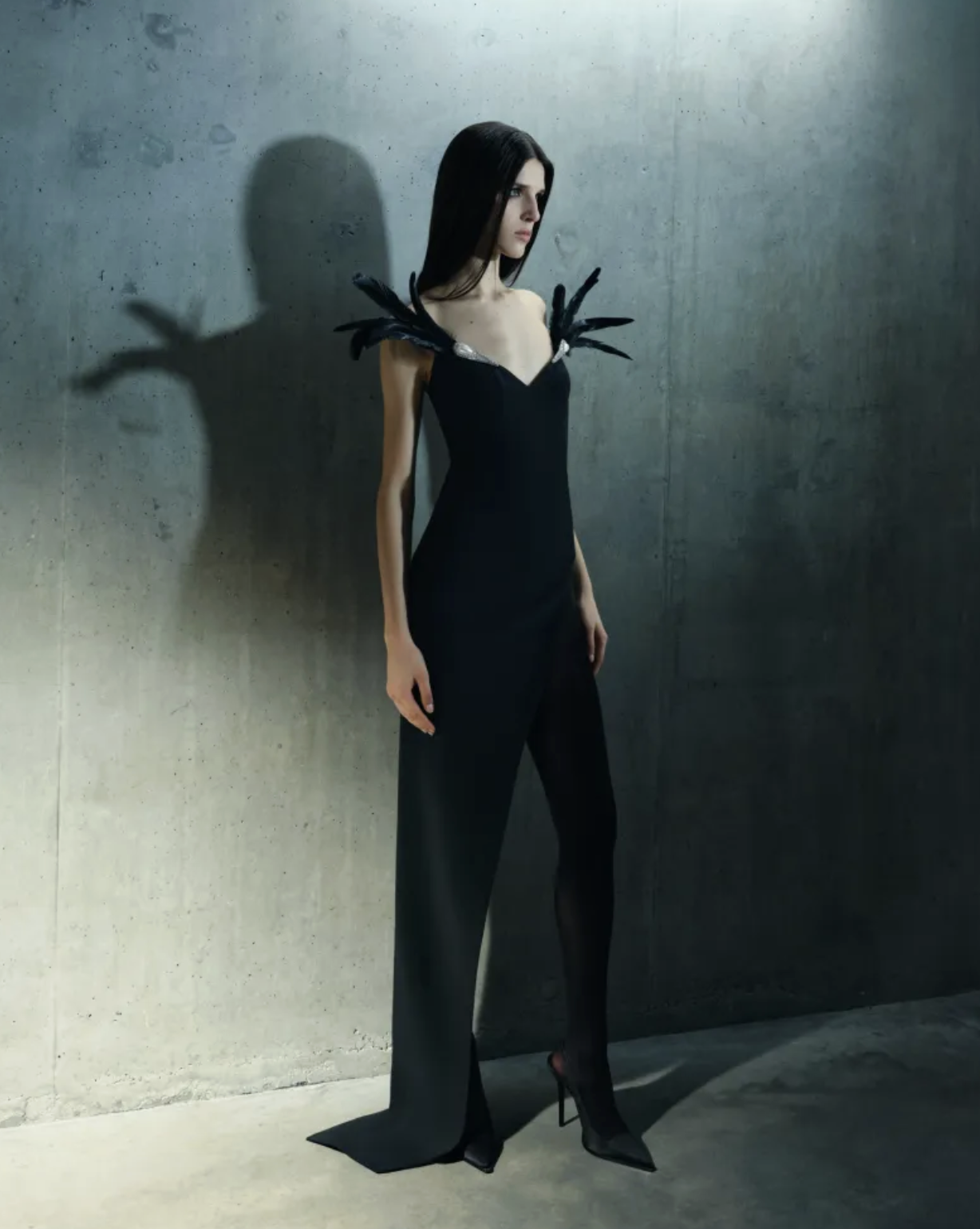
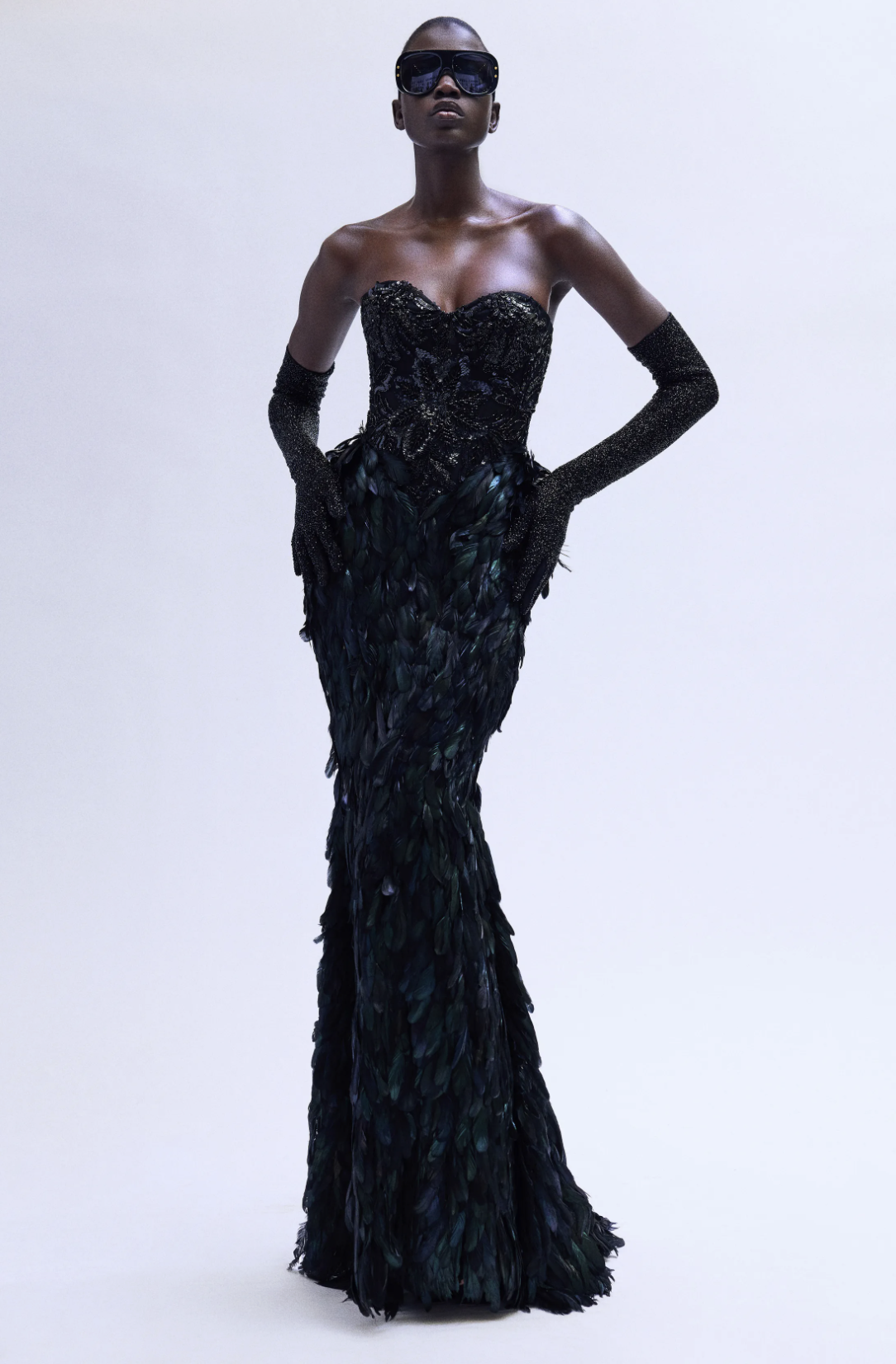
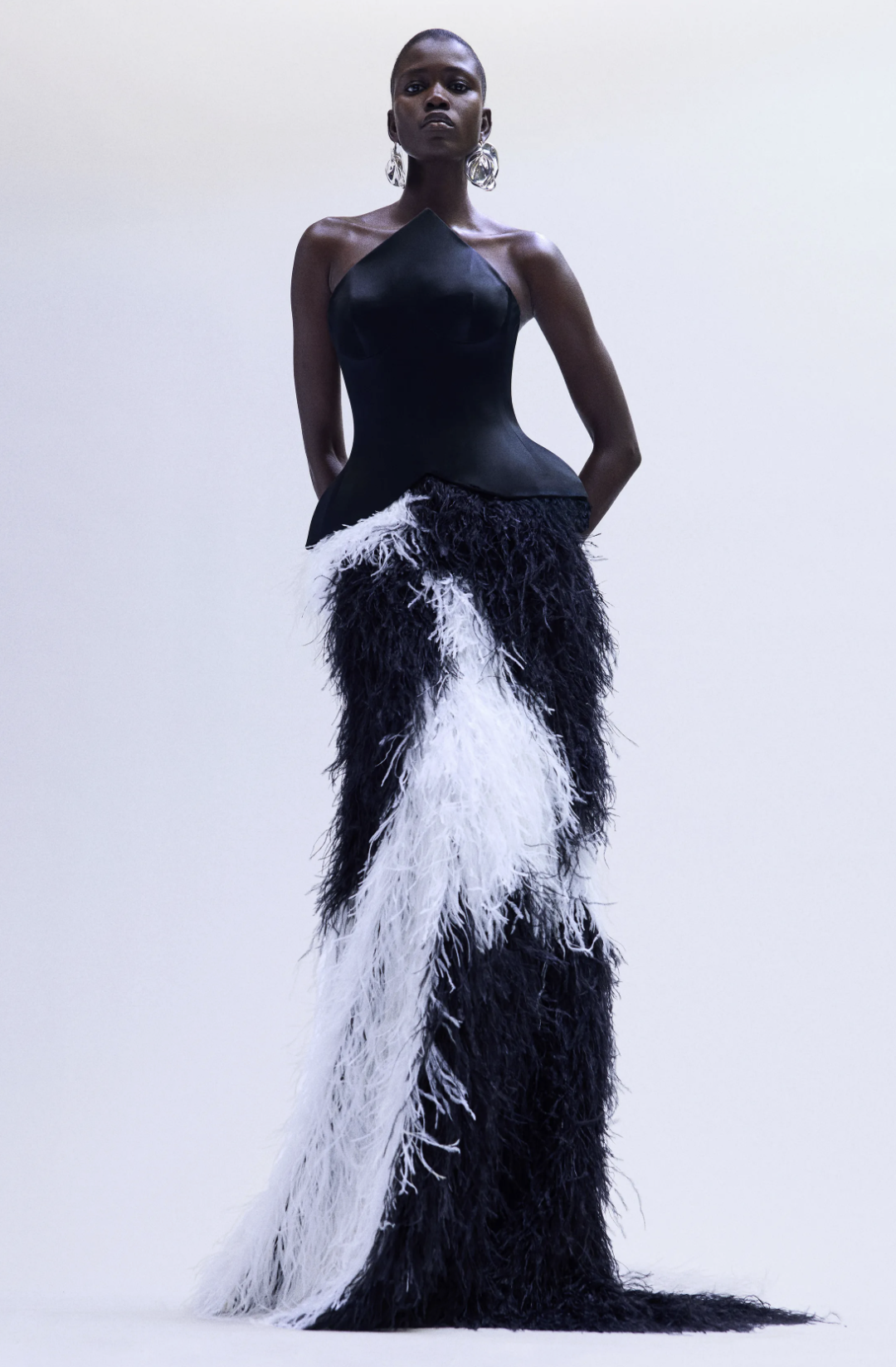
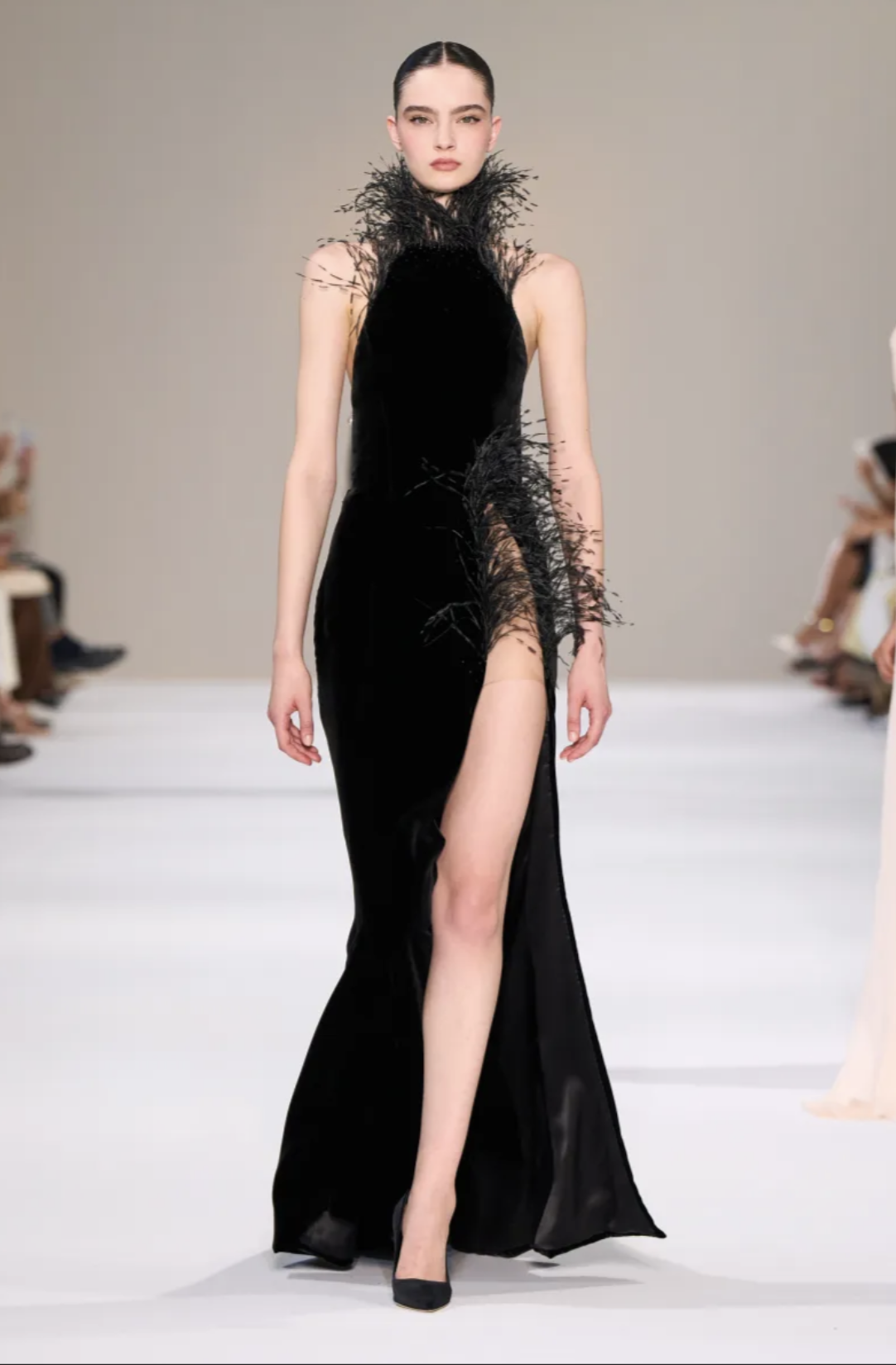
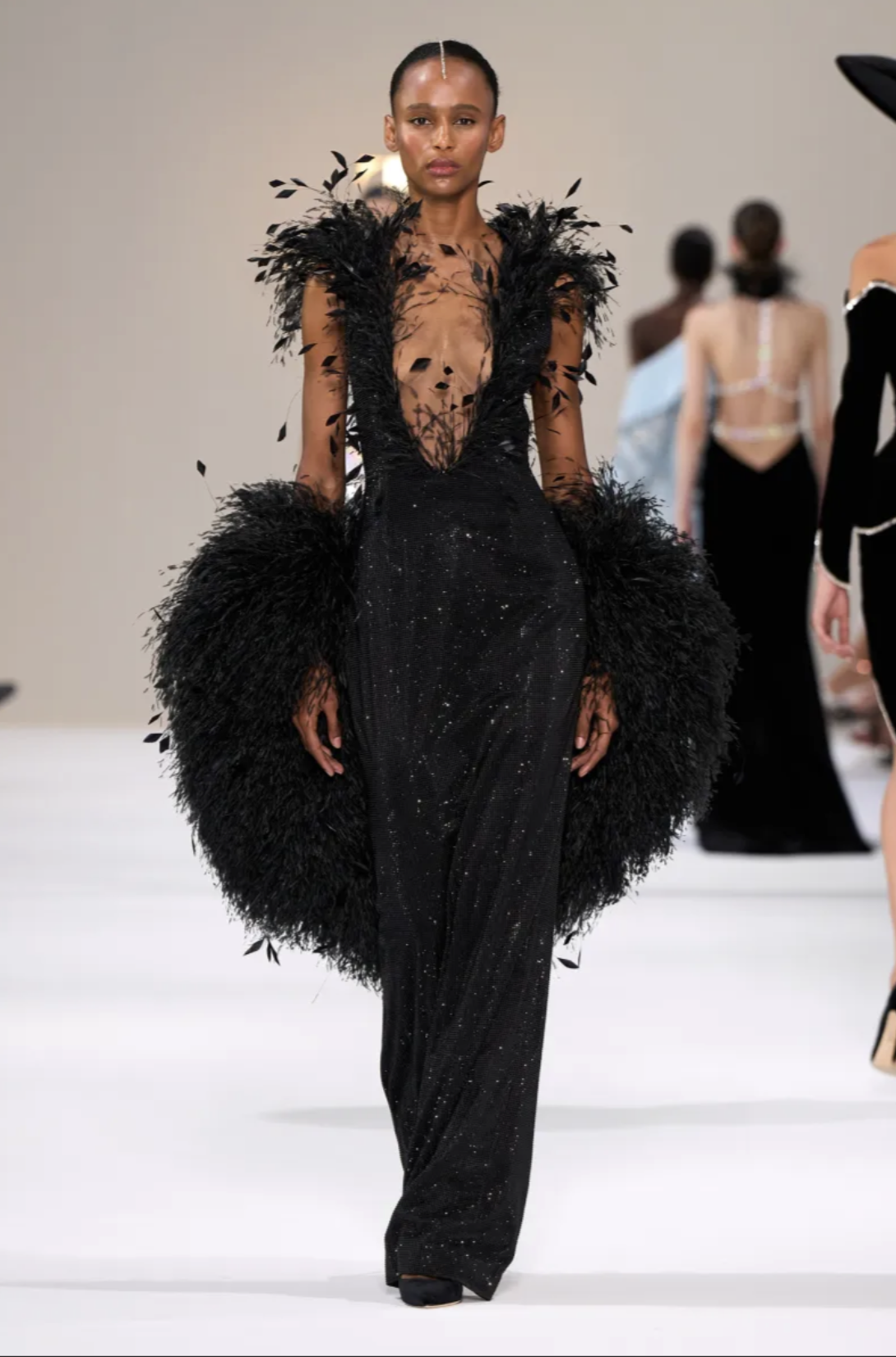
Feathers take flight in many different directions for FW26, showing just how much possibility exists within a single extravagant material. At their most restrained, they trace hems and necklines with an almost calligraphic delicacy; pushed further, they become architecture, transforming the silhouette through volume and texture. Elsewhere, a single plume is enough to give an otherwise polished look a touch of eccentricity.
Gucci + Johanna Ortiz + Schiaparelli RTW + Richard Quinn +: A masterclass in restraint. Carefully placed plumage trims polished silhouettes without overwhelming them, giving classic silhouettes an exquisitely feathered finish.
Elisabetta Franchi: A sculptural feather corset dress is already an event, but paired with those envy-inducing thigh-high lace-up leather boots? We’re looking, respectfully.
Erdem: Feathers migrate to the accessories, turning bags and shoes into whimsical little curiosities that feel plucked from a particularly fashionable aviary.
Pamella Roland + ELIE SAAB: Turn up the volume. Both houses let feathers build outward from the body, using their natural softness to create spectacular scale.
Christian Siriano: Plumage takes on outerwear proportions, making the feathered coat a feat of cold-weather glamour.
David Koma: Perhaps the category’s most inventive study, with feathers clipped, clustered and sculpted into wildly different forms. Against the stark warehouse setting, their theatricality feels even more pronounced.
Naeem Khan + Tamara Ralph: Feathers return to their natural habitat: elegant evening wear, where sweeping placement amplifies the movement of gowns already designed to make an entrance.
Smoke & Mirrors
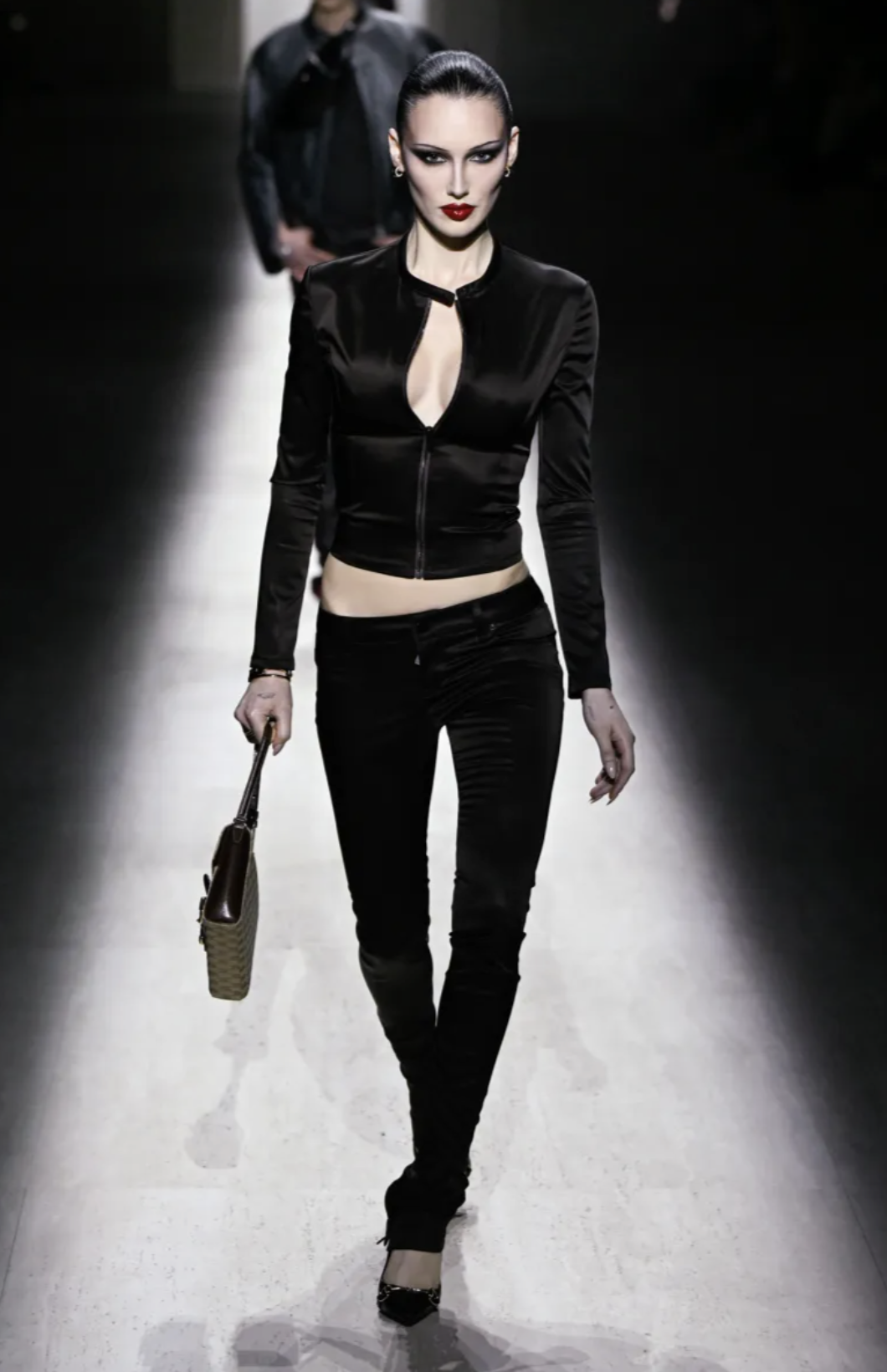
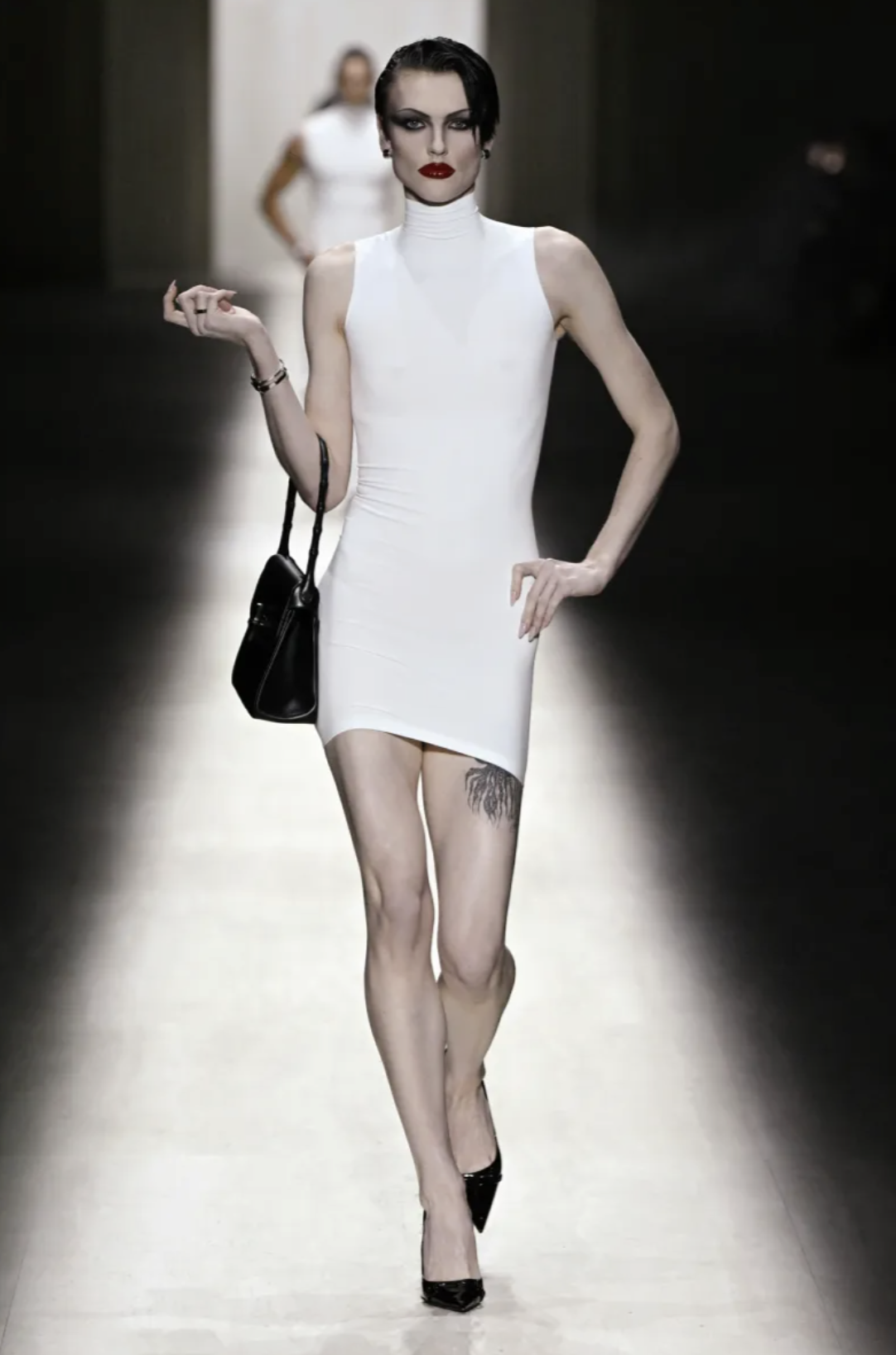
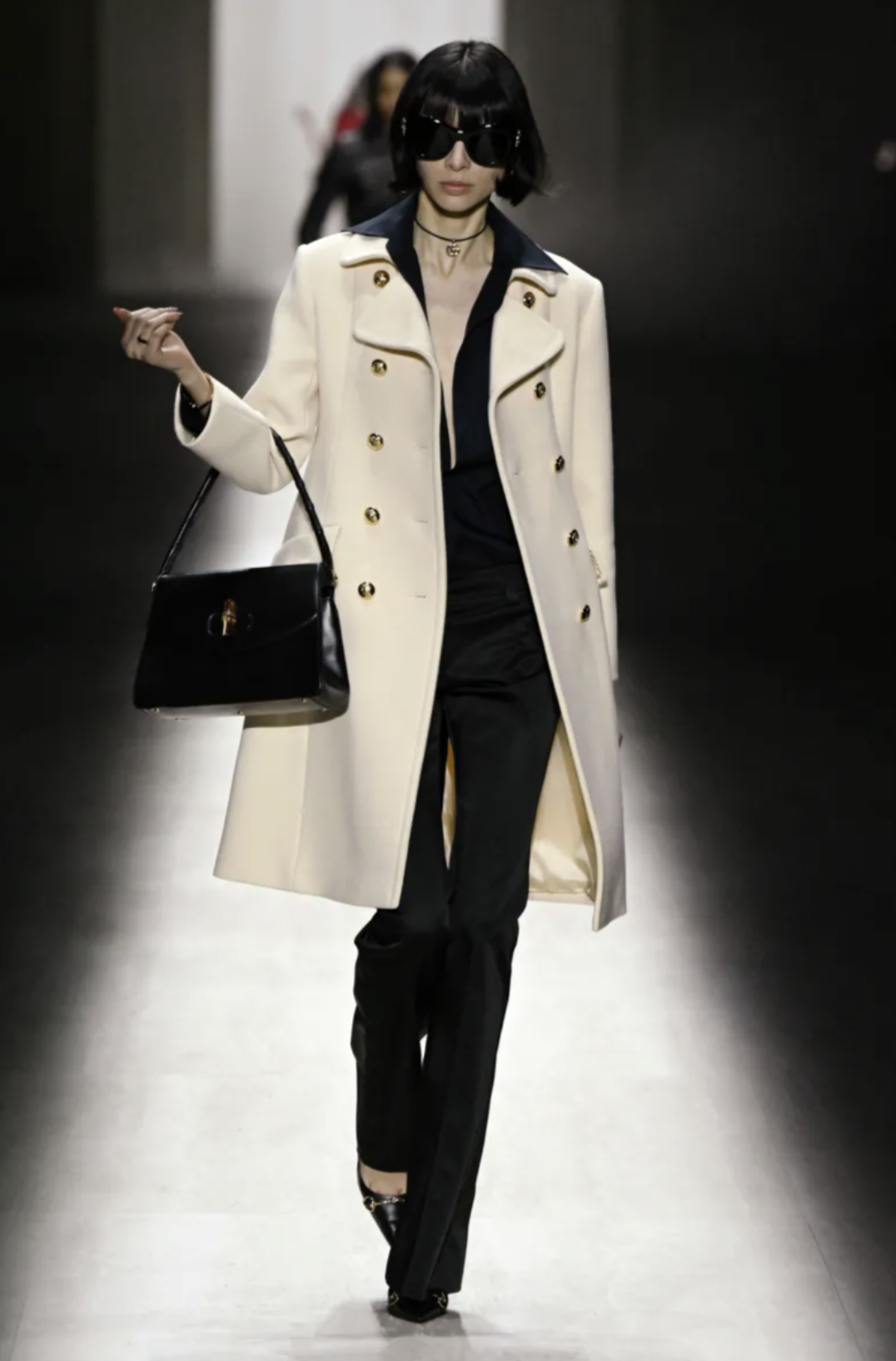
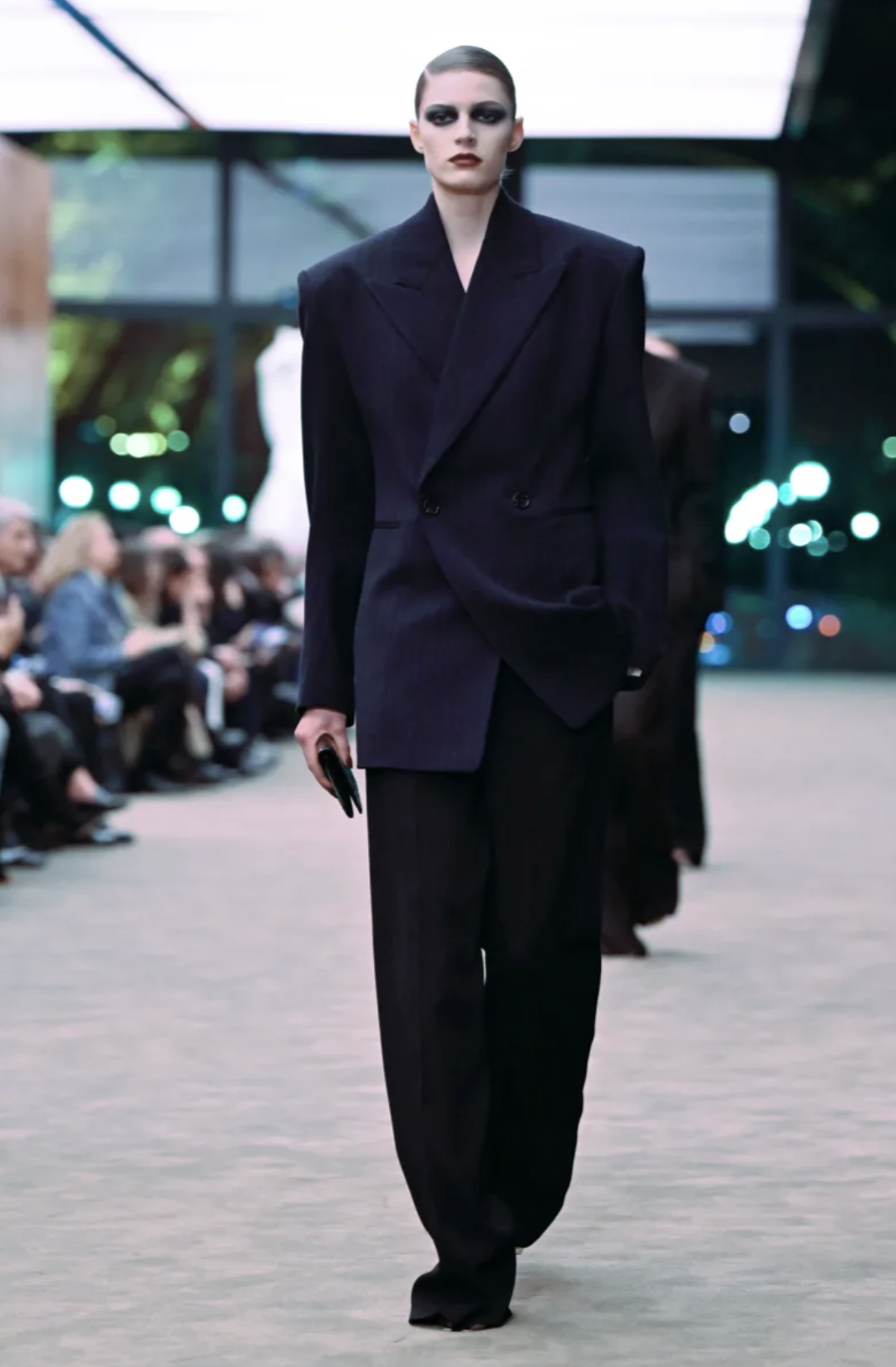
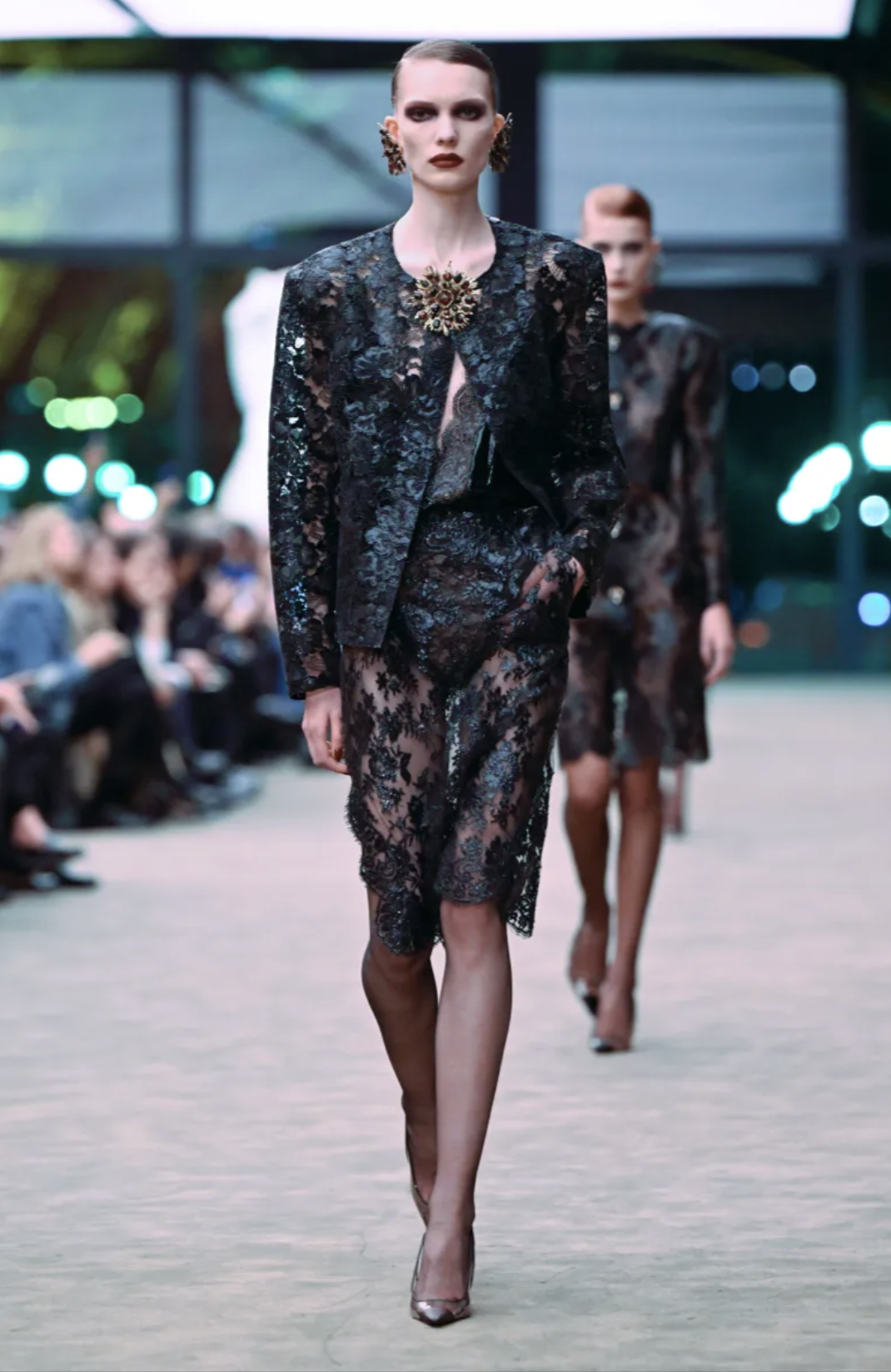
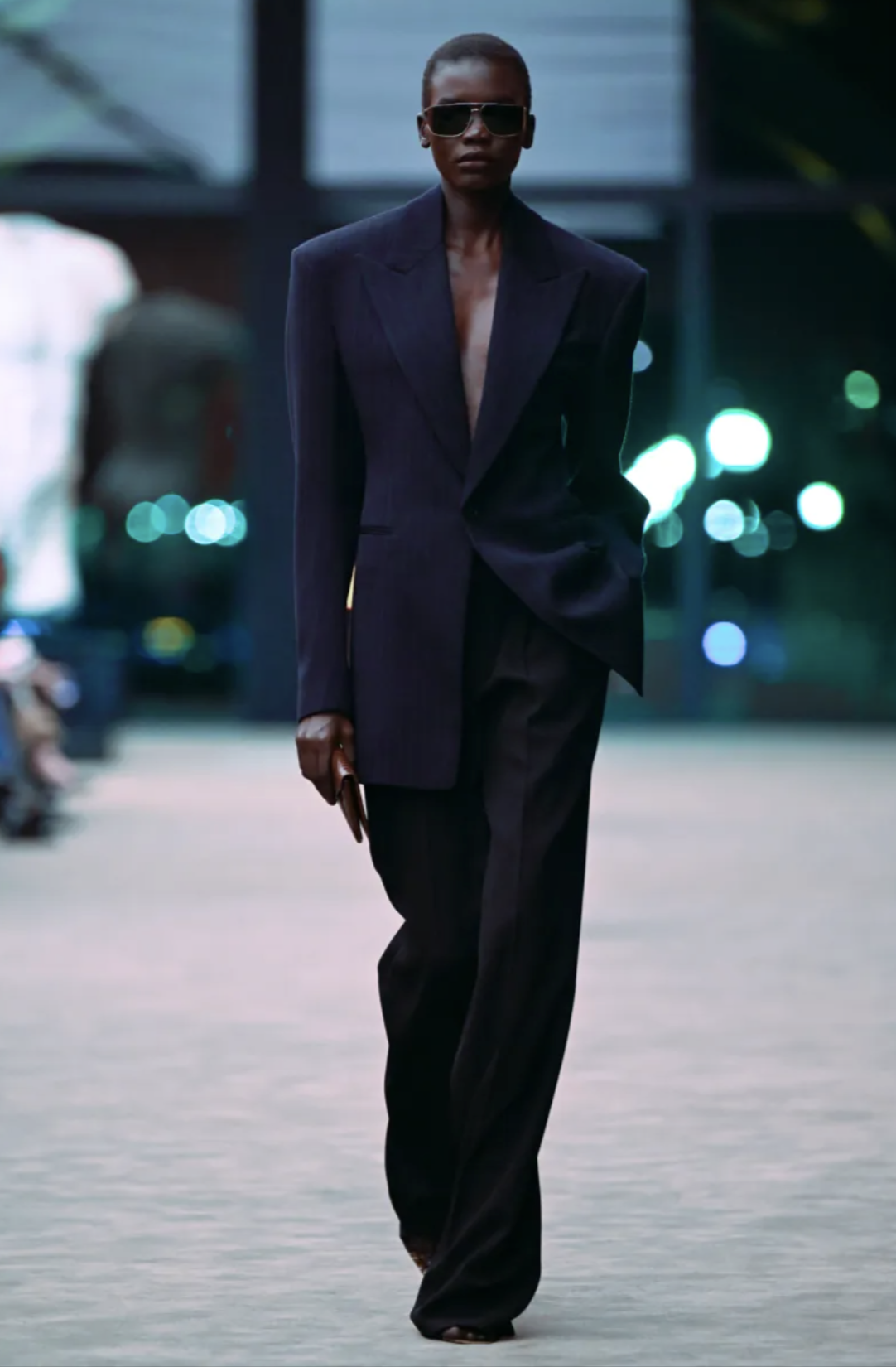
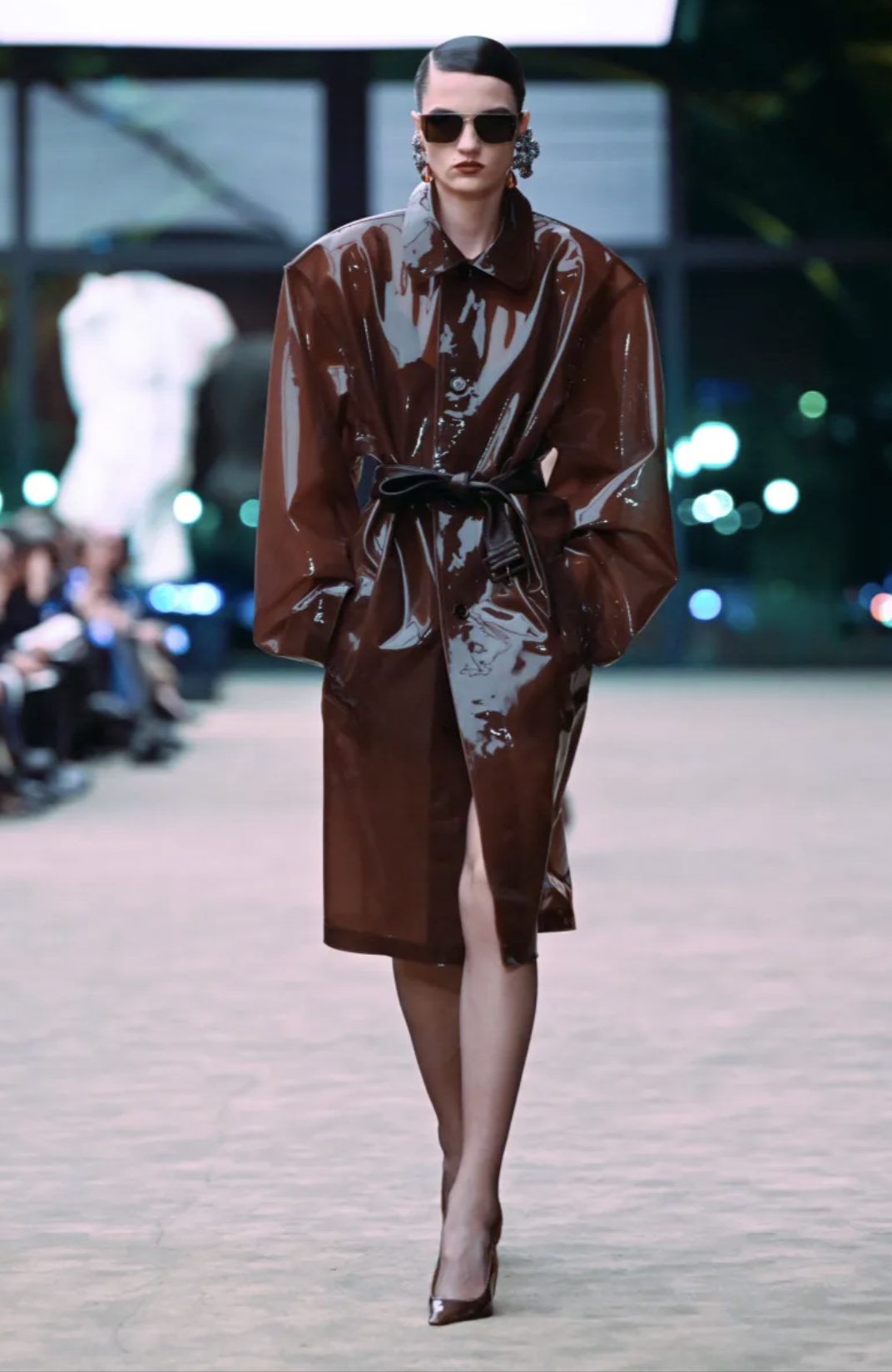
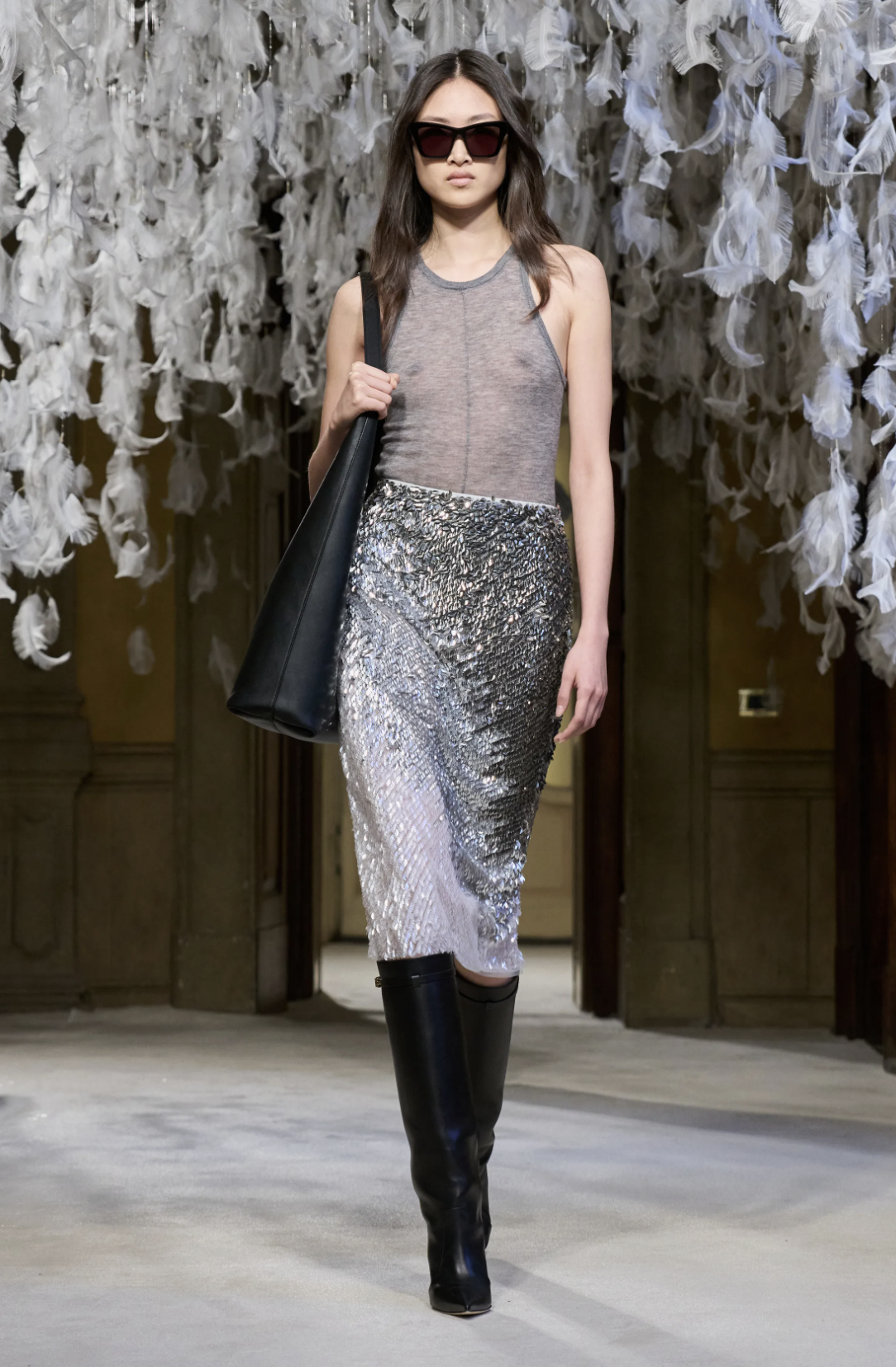
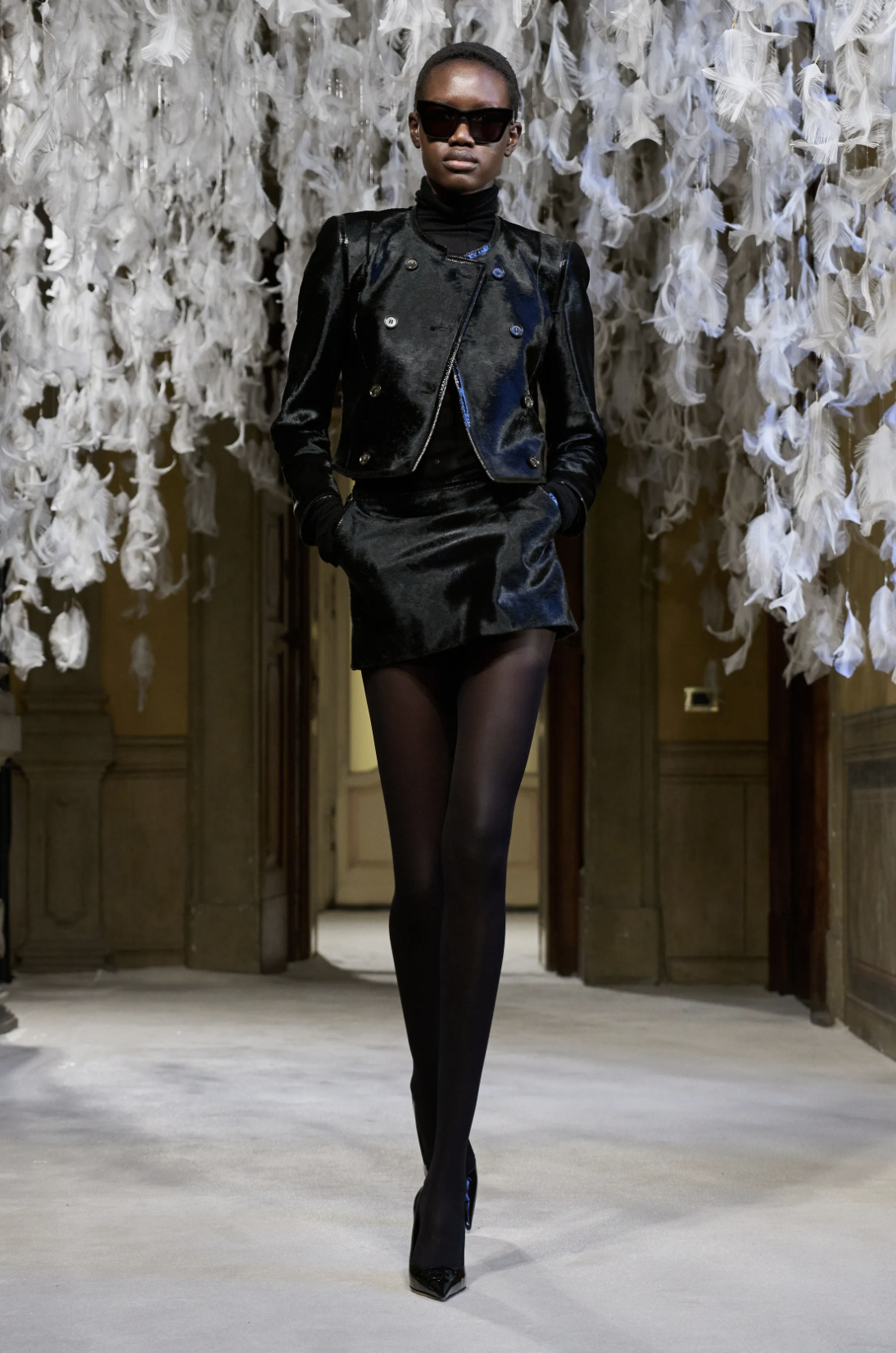
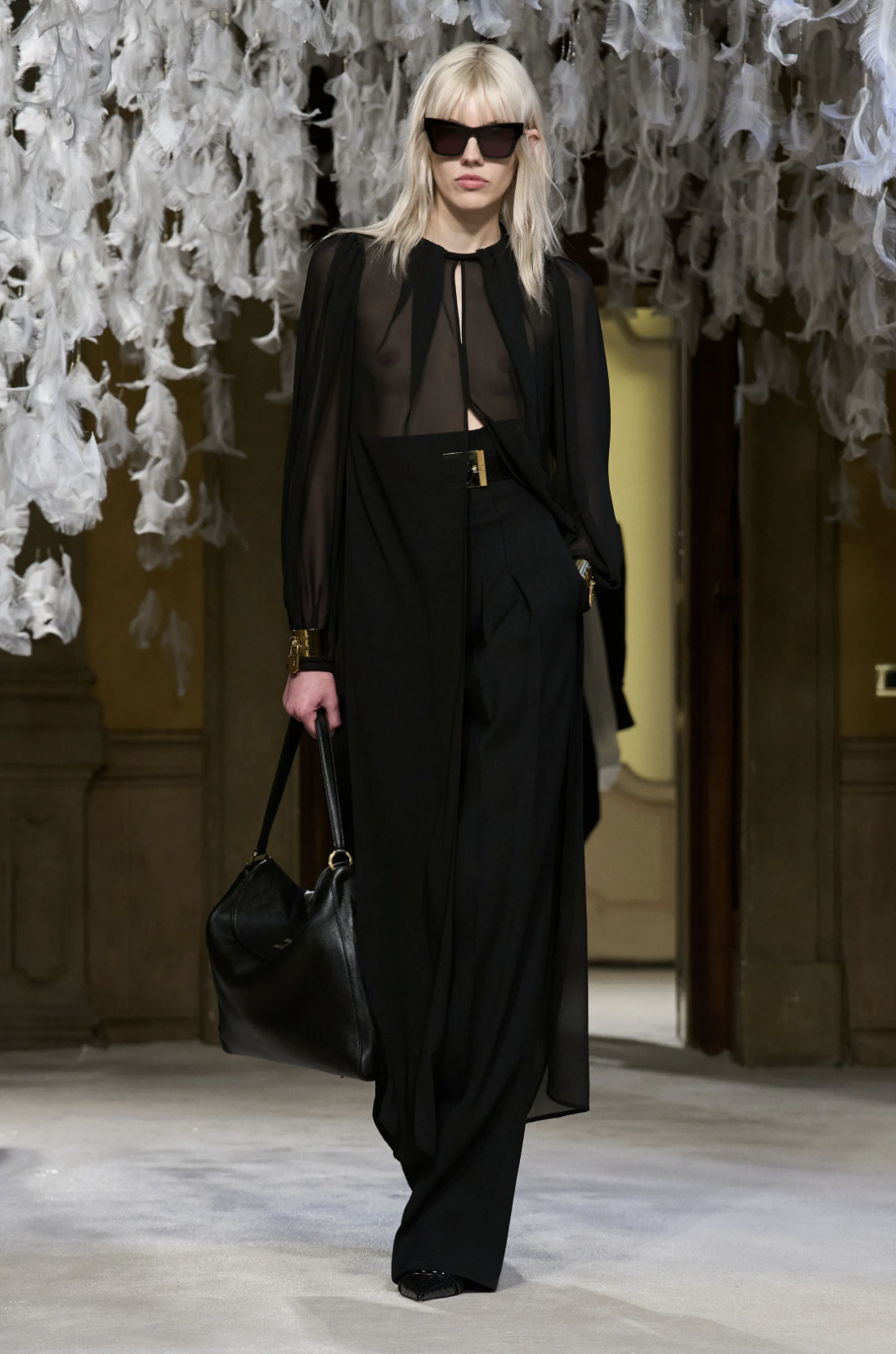
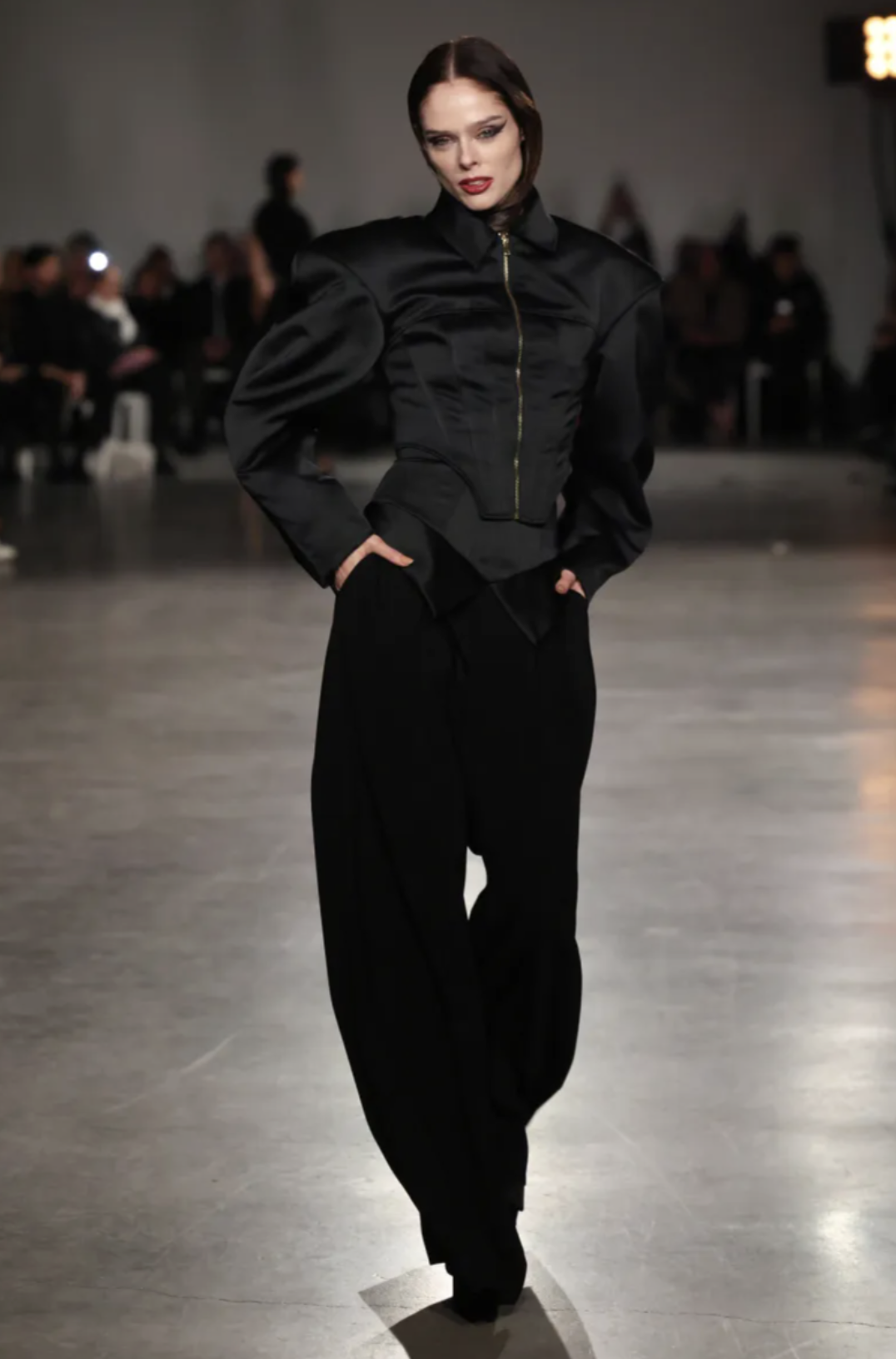
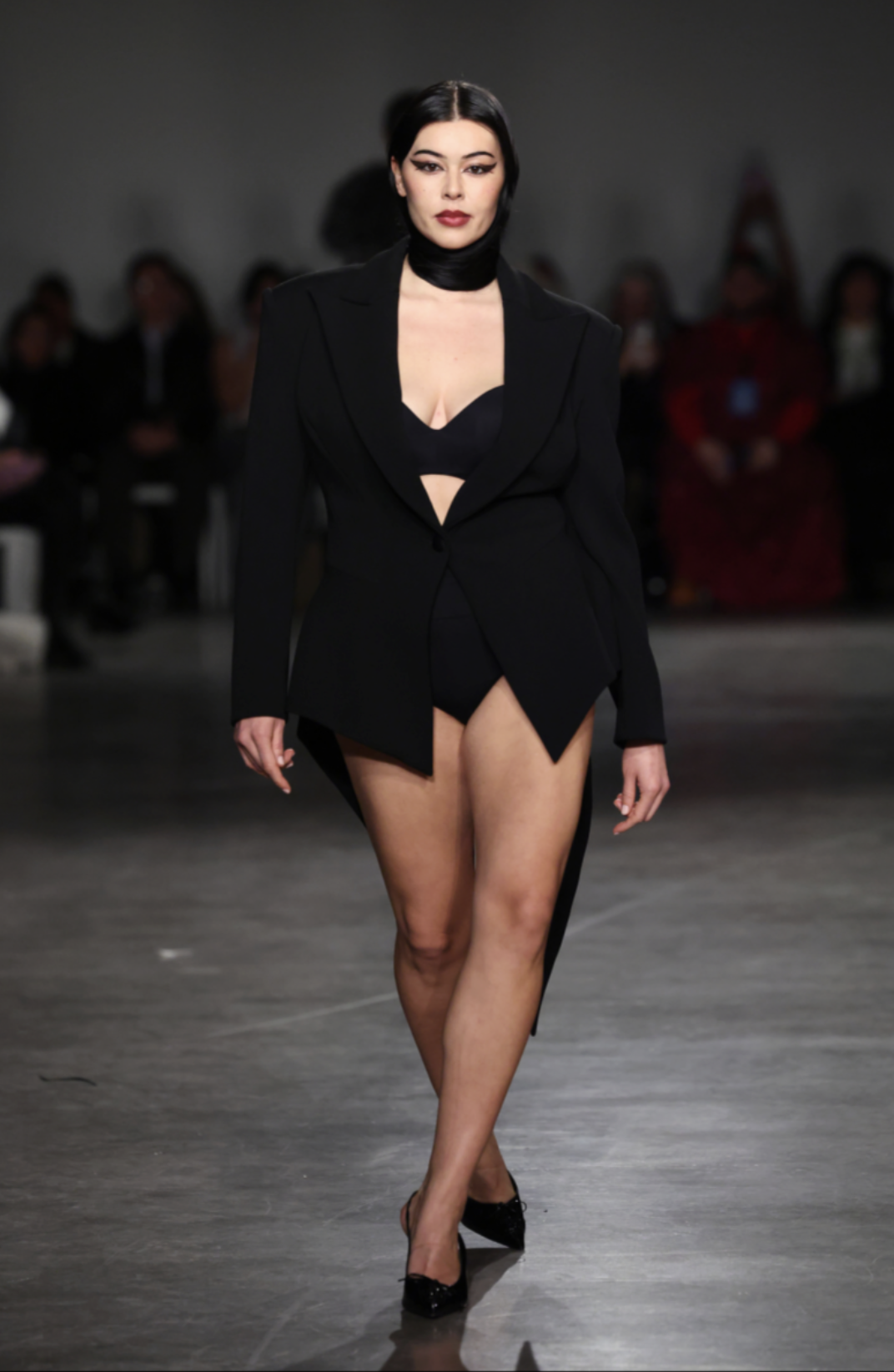
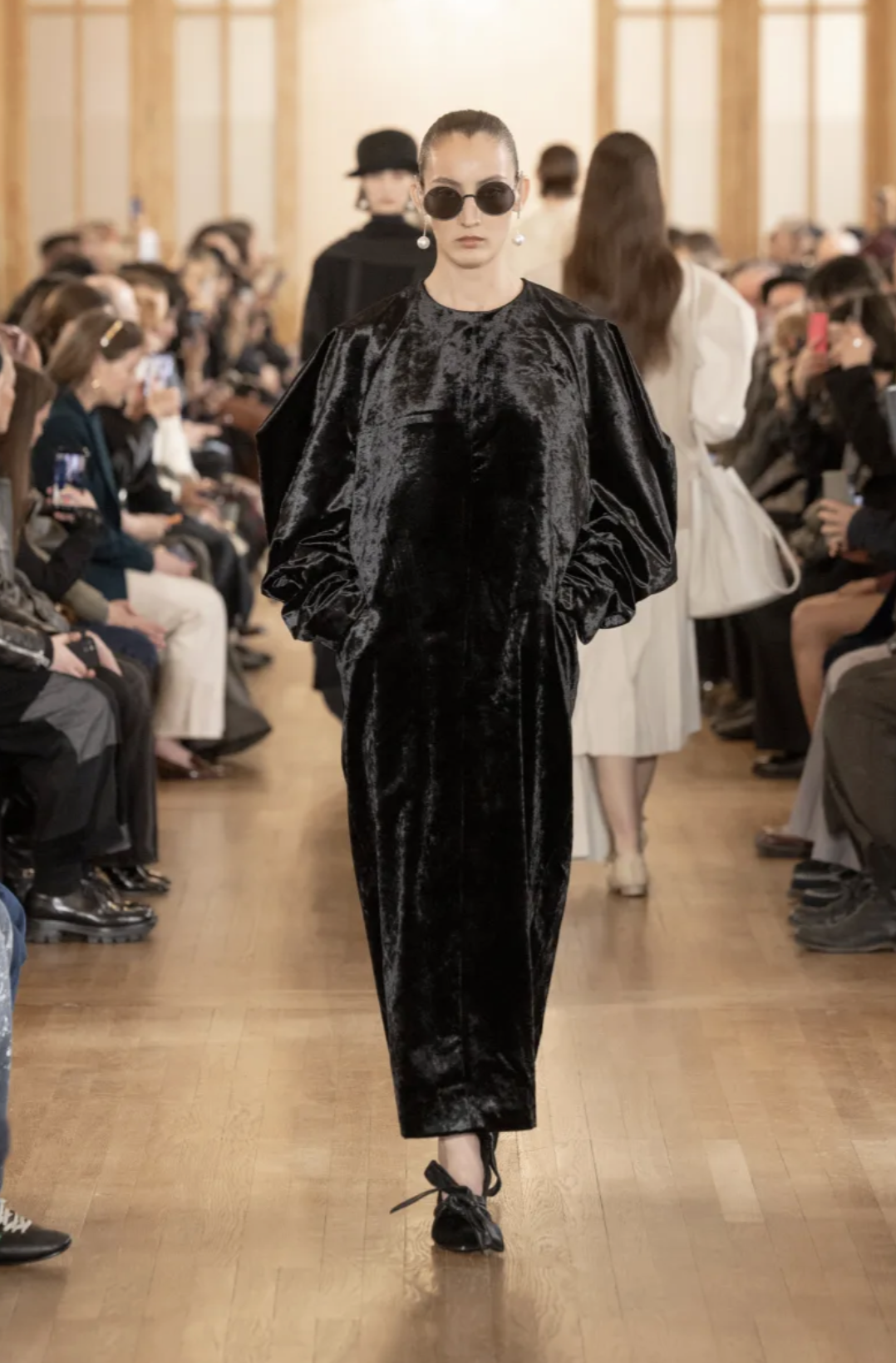
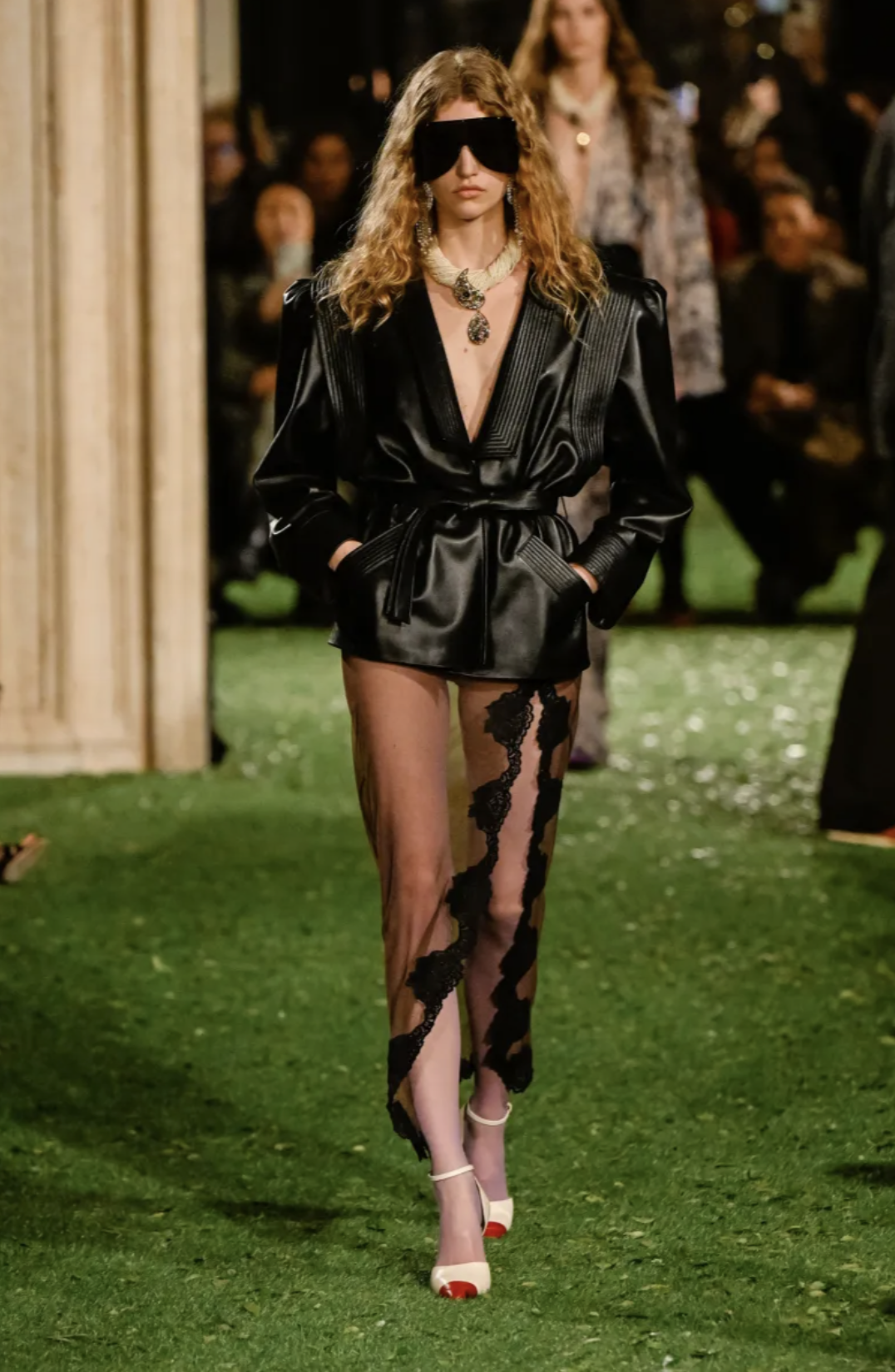
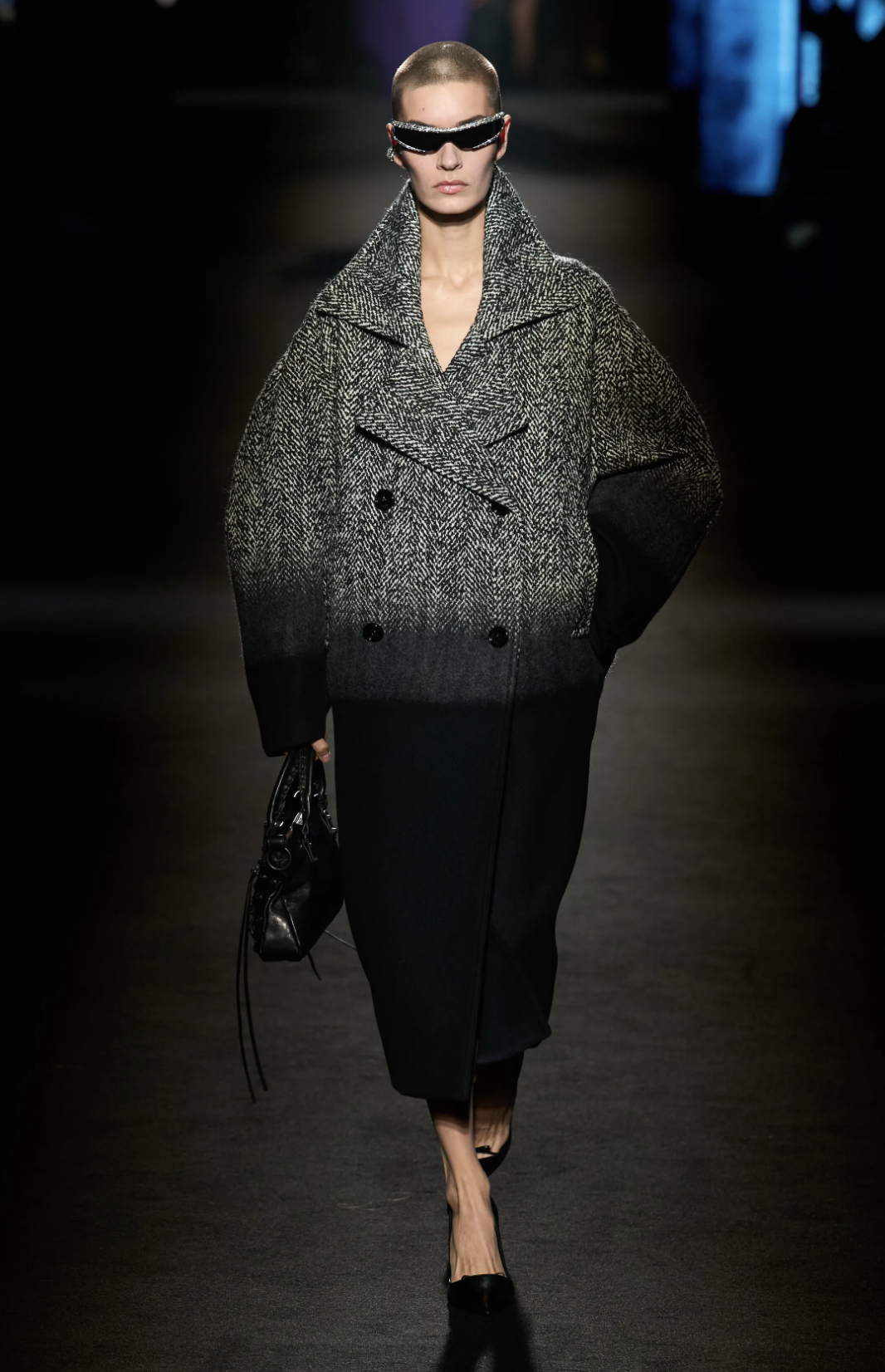
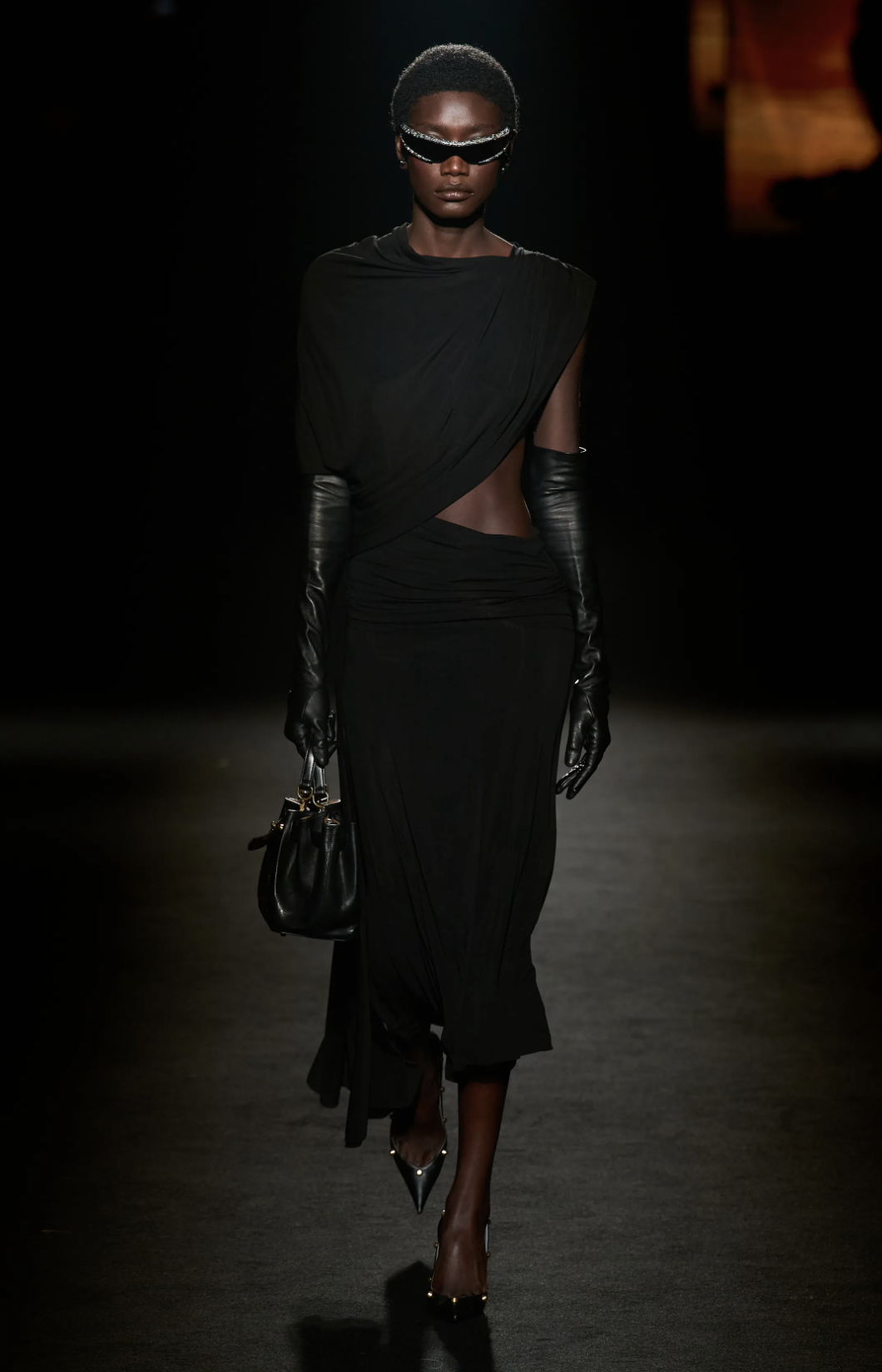
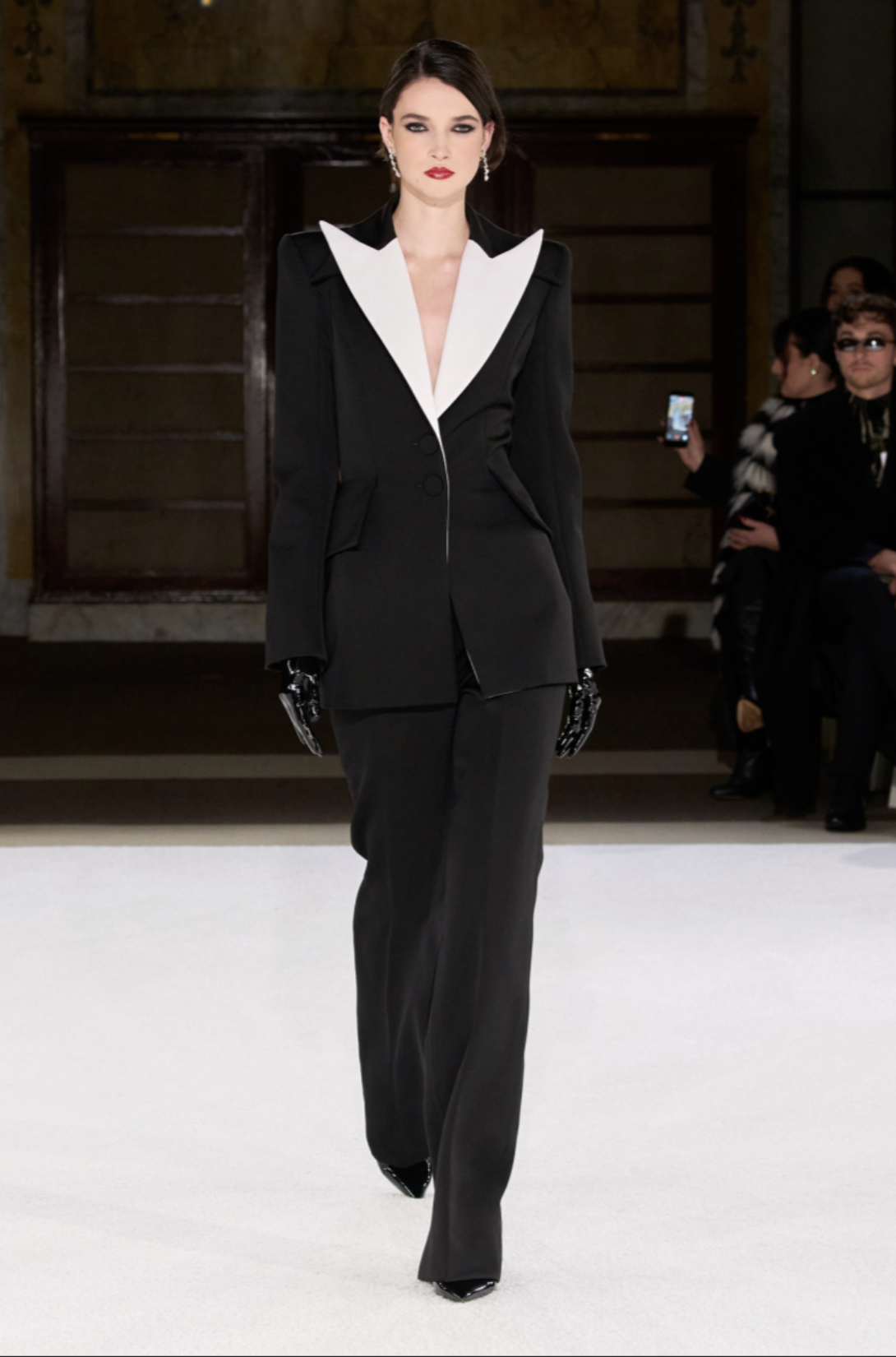
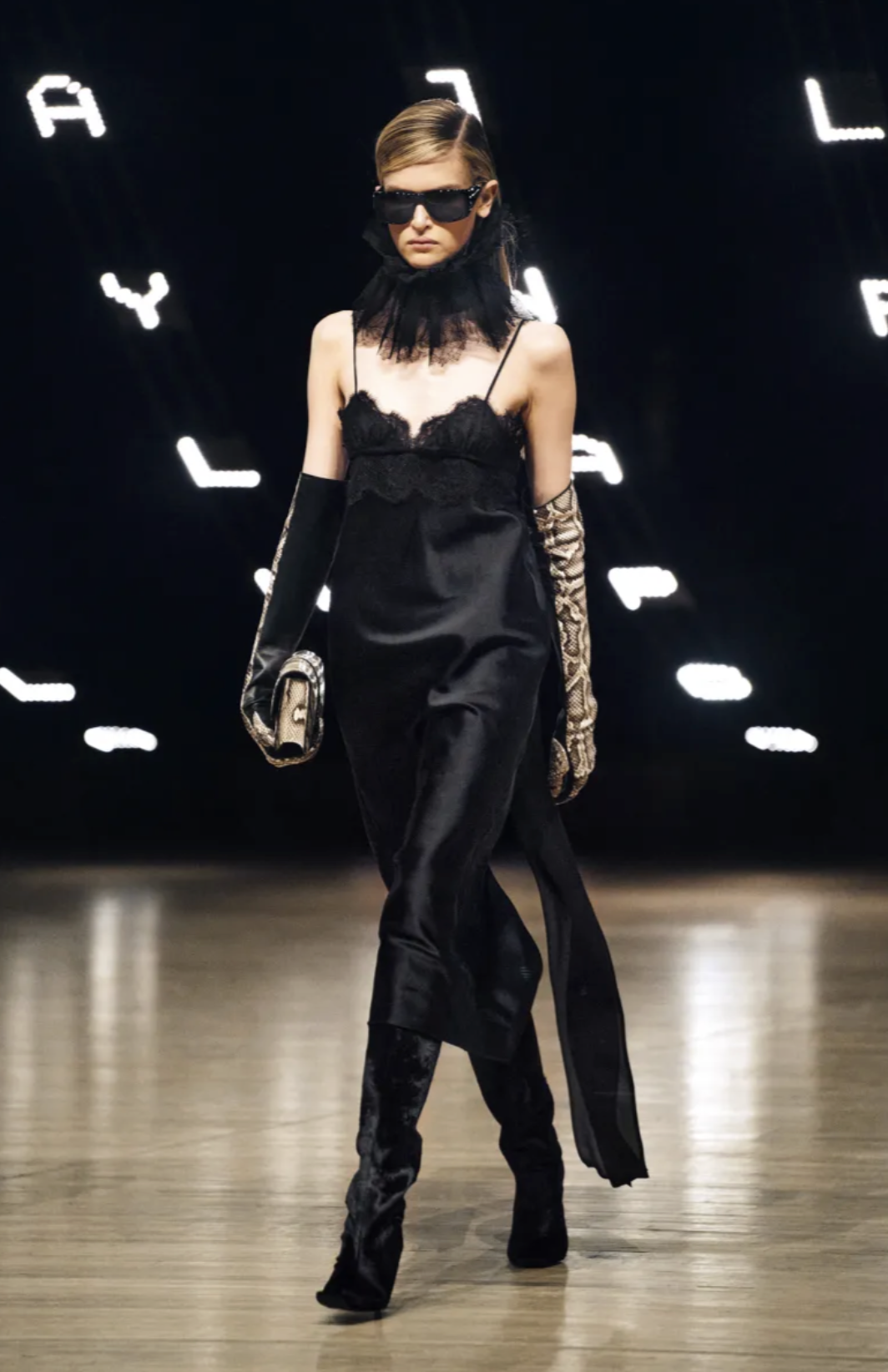
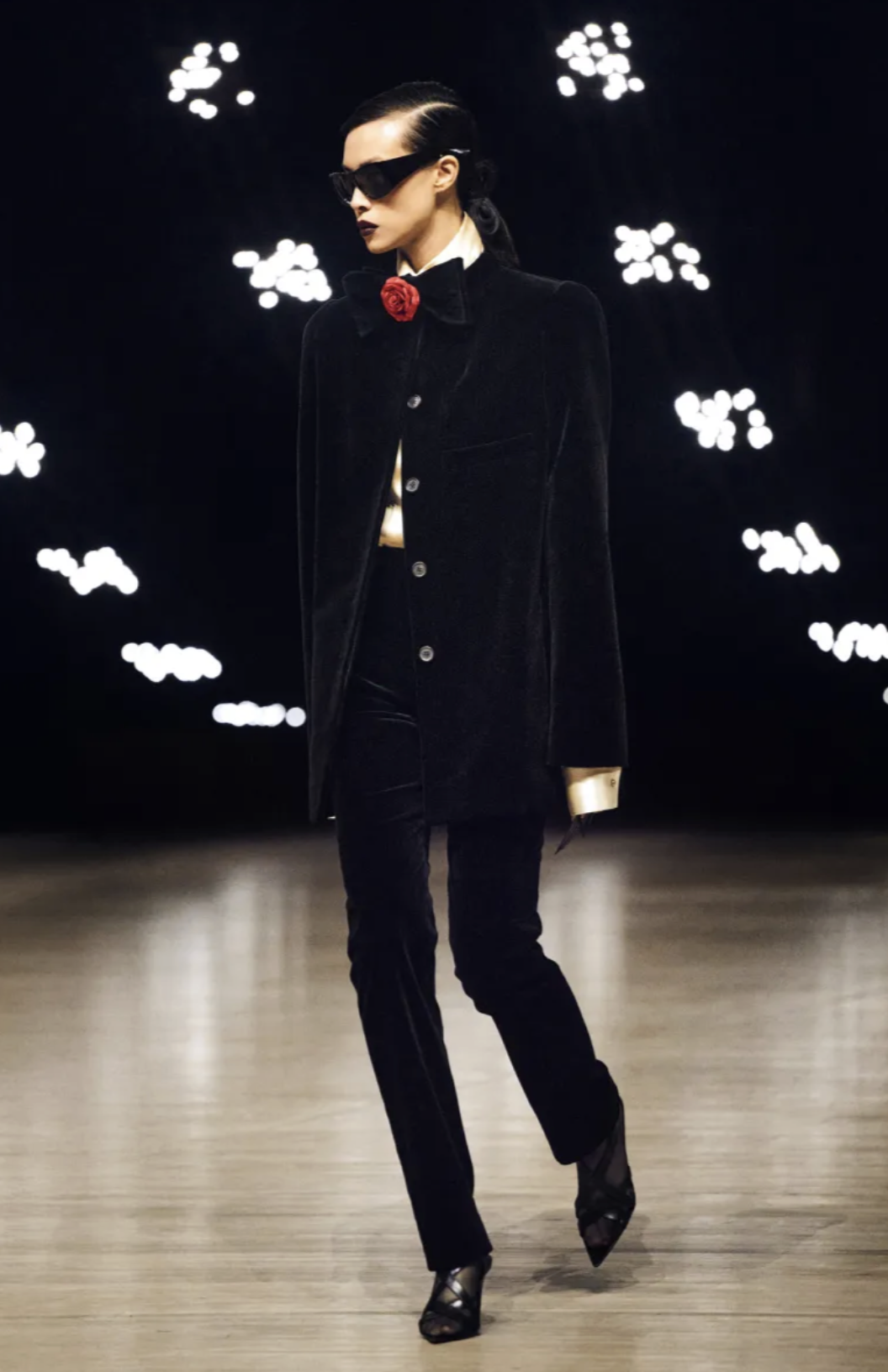
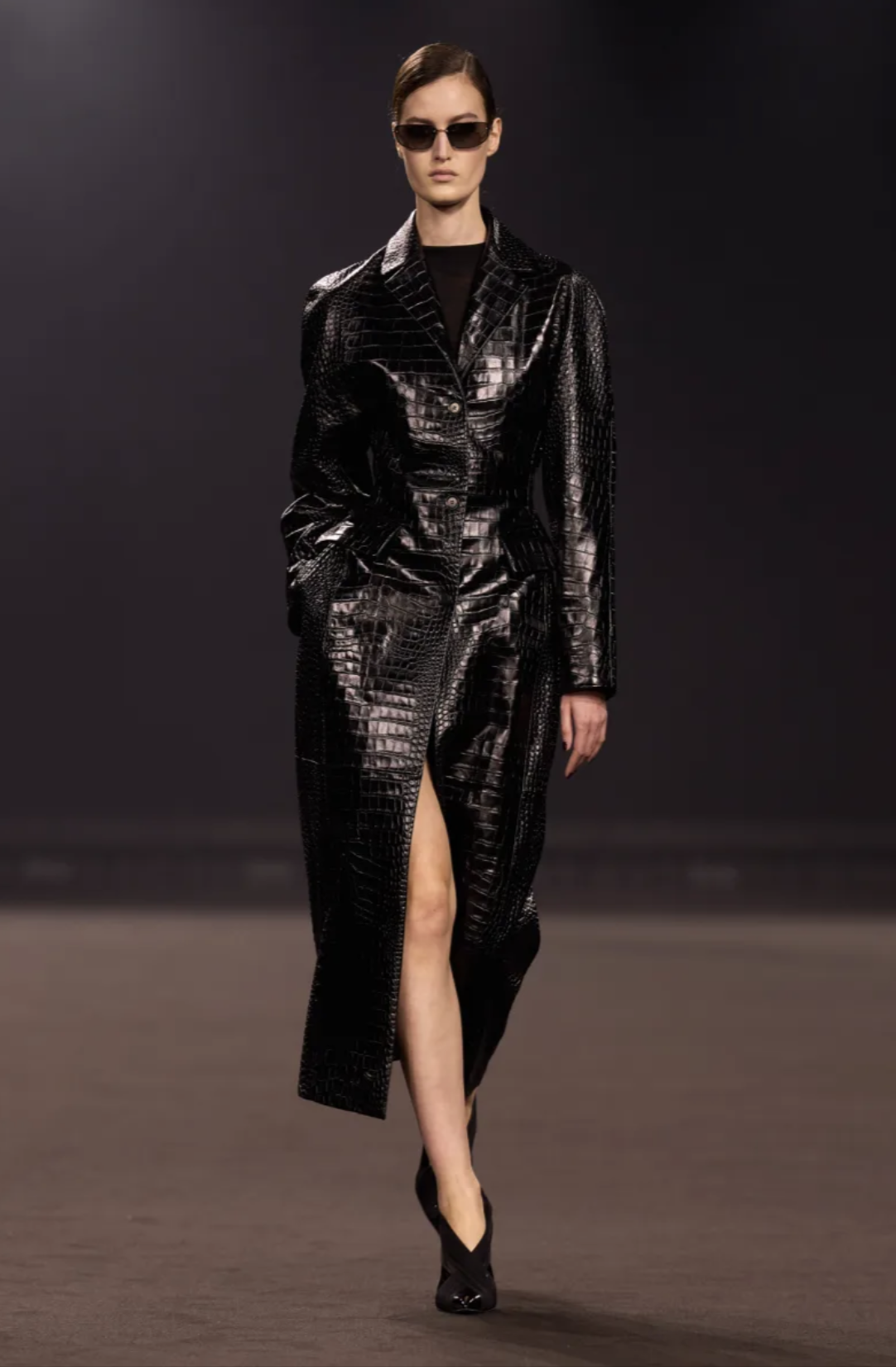
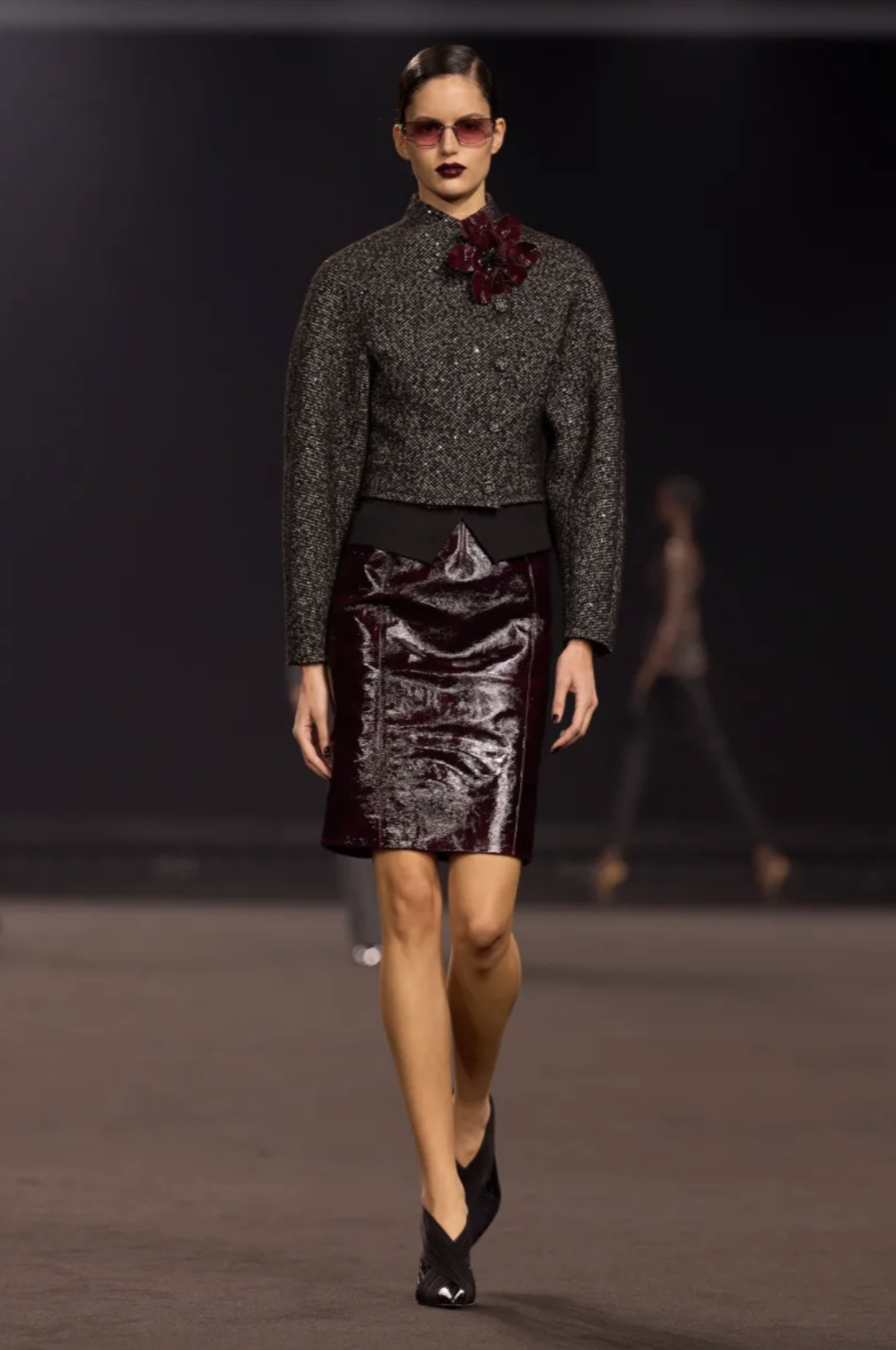
Beauty becomes part of the subterfuge for FW26, with smoked-out eyes and saturated lips giving the face almost as much impact as the fit. Statement eyewear adds another layer, alternately obscuring the wearer or exaggerating her presence; together, the two create a glamorous tension between wanting to be looked at and deciding exactly how much others gets to see.
Gucci: Vampy perfection. Smoked eyes and a deep red lip feel quintessentially Gucci, while oversized frames add another layer of glamour to a beauty look we’re keen to put in rotation.
Saint Laurent: Maximum impact above the neckline. Dramatic makeup does the heavy lifting, allowing classic dark frames to remain almost settled in their simplicity.
Elisabetta Franchi: The cat-eye frame is doing exactly what it should: lifting the face and injecting a little pinup-esque glamour into the collection’s polished sensuality.
Christian Siriano: Red lip, smoked eye and razor-sharp wing—the full dark feminine beauty arsenal deployed at once.
Uma Wang: Those circular frames are adorable, adding an eccentric little punctuation mark to otherwise beautifully serious looks.
Valentino + Balenciaga: For days when maintaining a wide perimeter feels advisable. Oversized frames turn sunglasses into facial architecture, putting a physical barrier between wearer and world.
Pamella Roland: A red lip and smoked eye bring femme-fatale glam to razor-sharp menswear, making the beauty styling integral to the seduction of the look.
Khaite: Chic Secret Service. Narrow black frames and imposing tailoring give the models the appearance of women who know something classified.
ELIE SAAB: Cranberry colour drenching moves throughout the aesthetic, creating a rich tonal effect that makes the making shades newly autumnal.
The Upper Hand
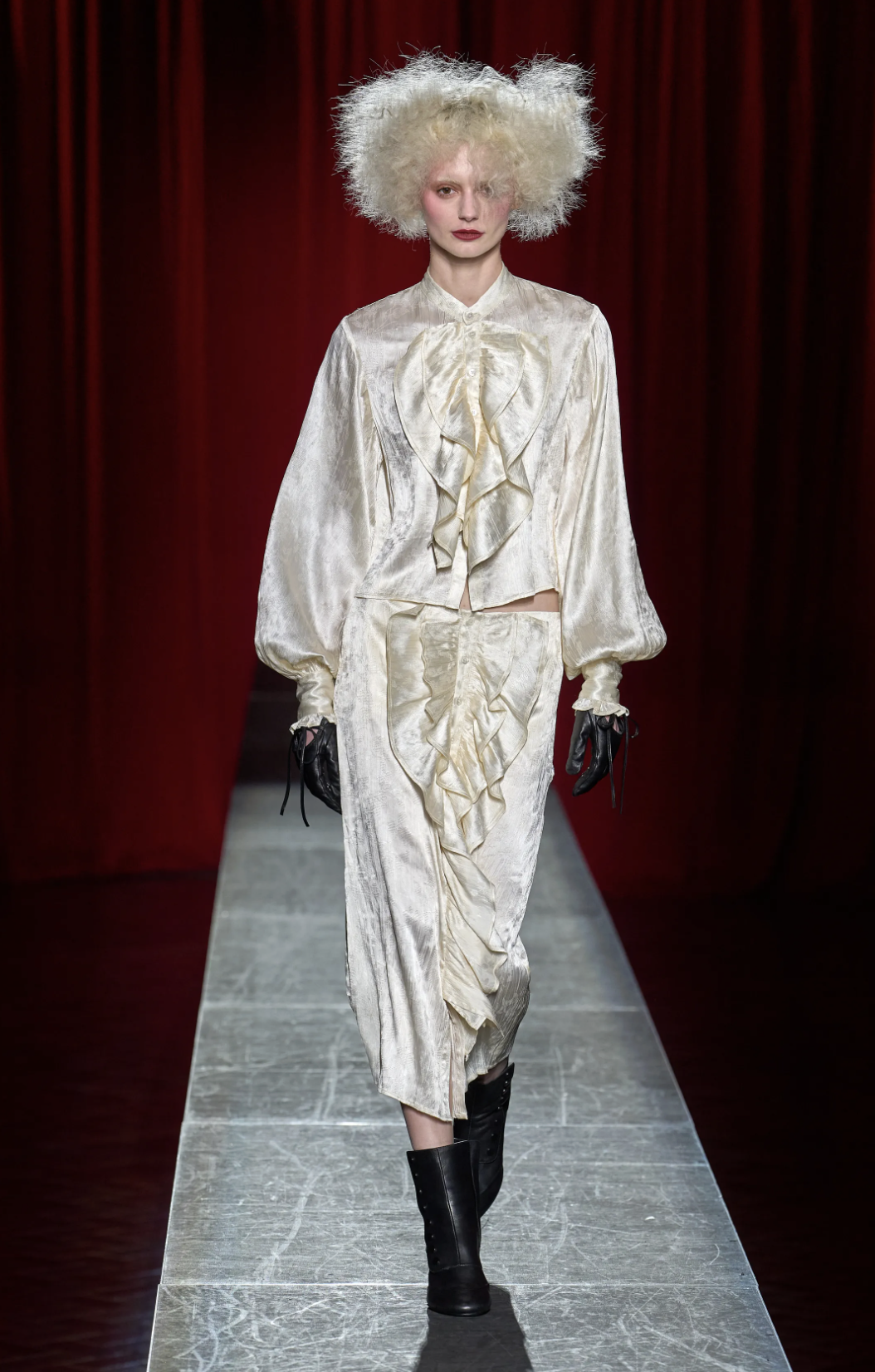
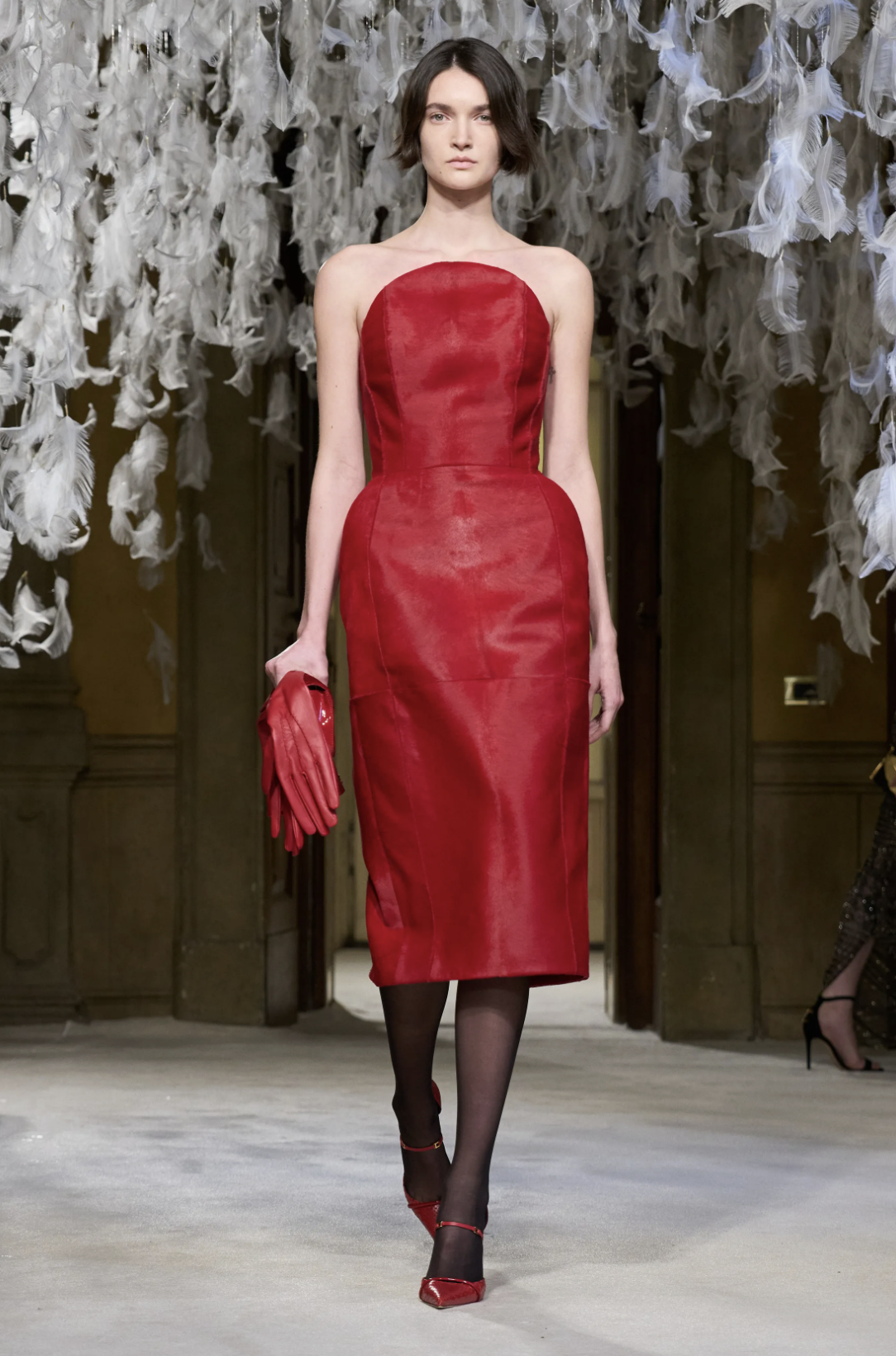
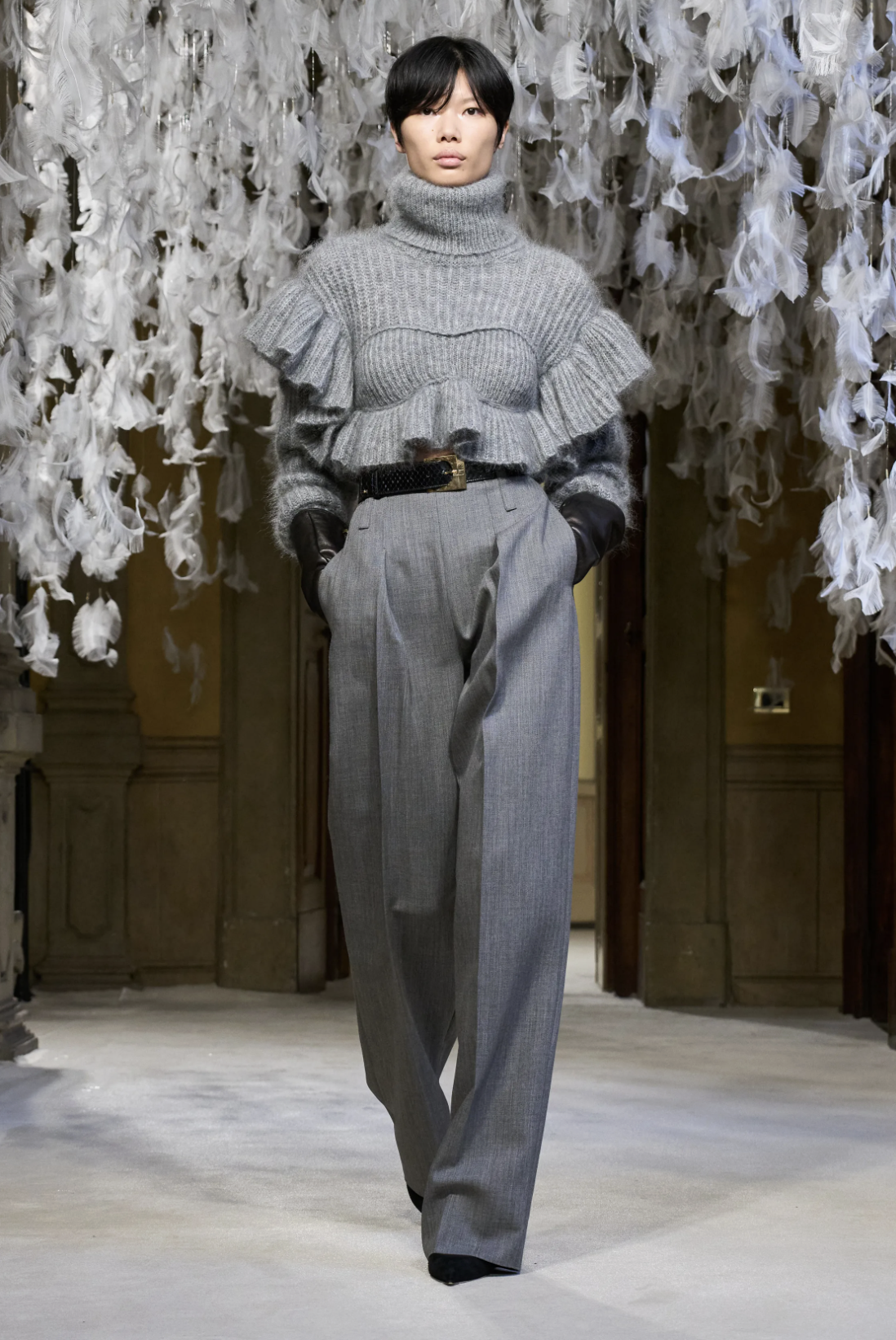
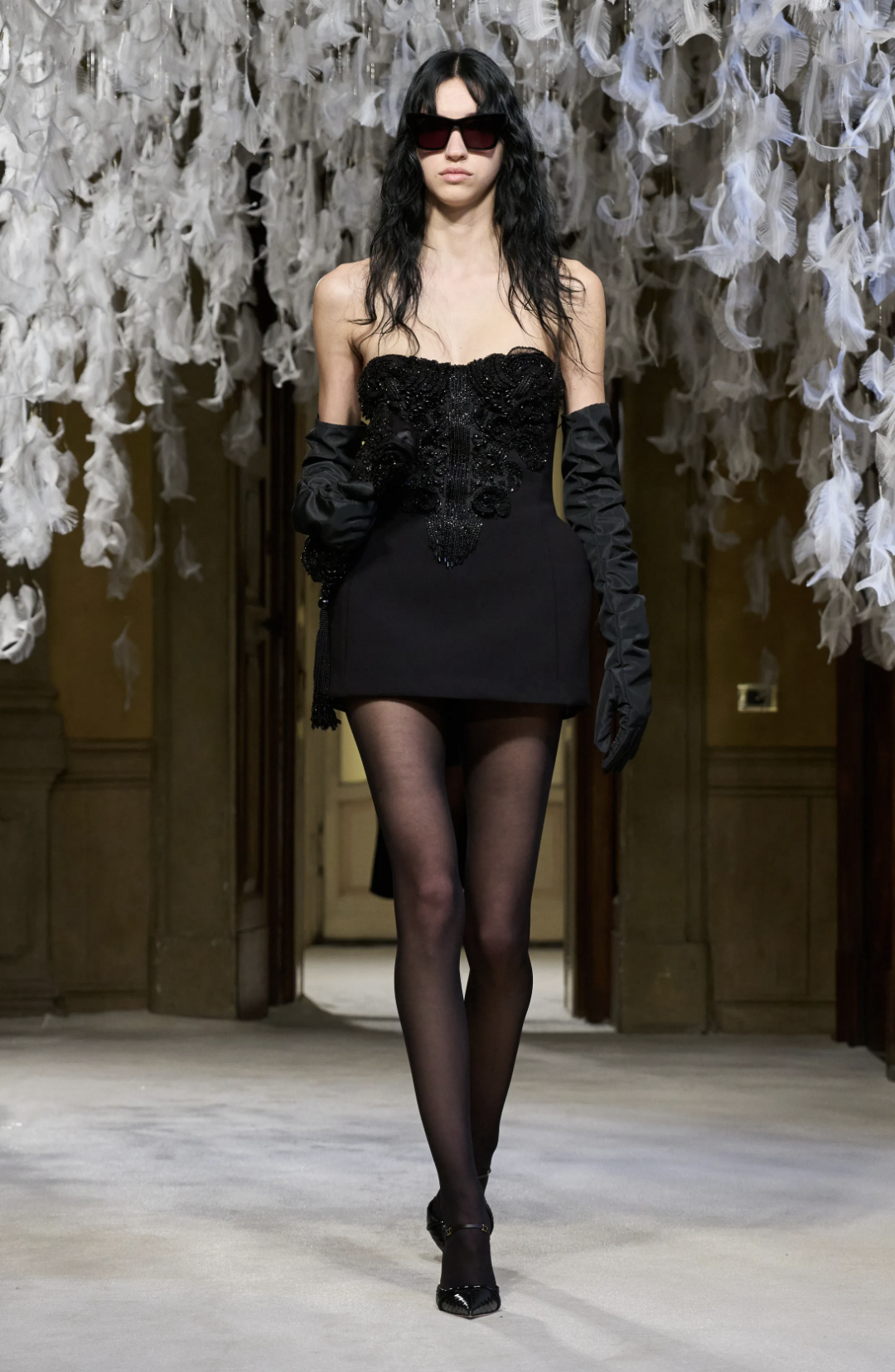
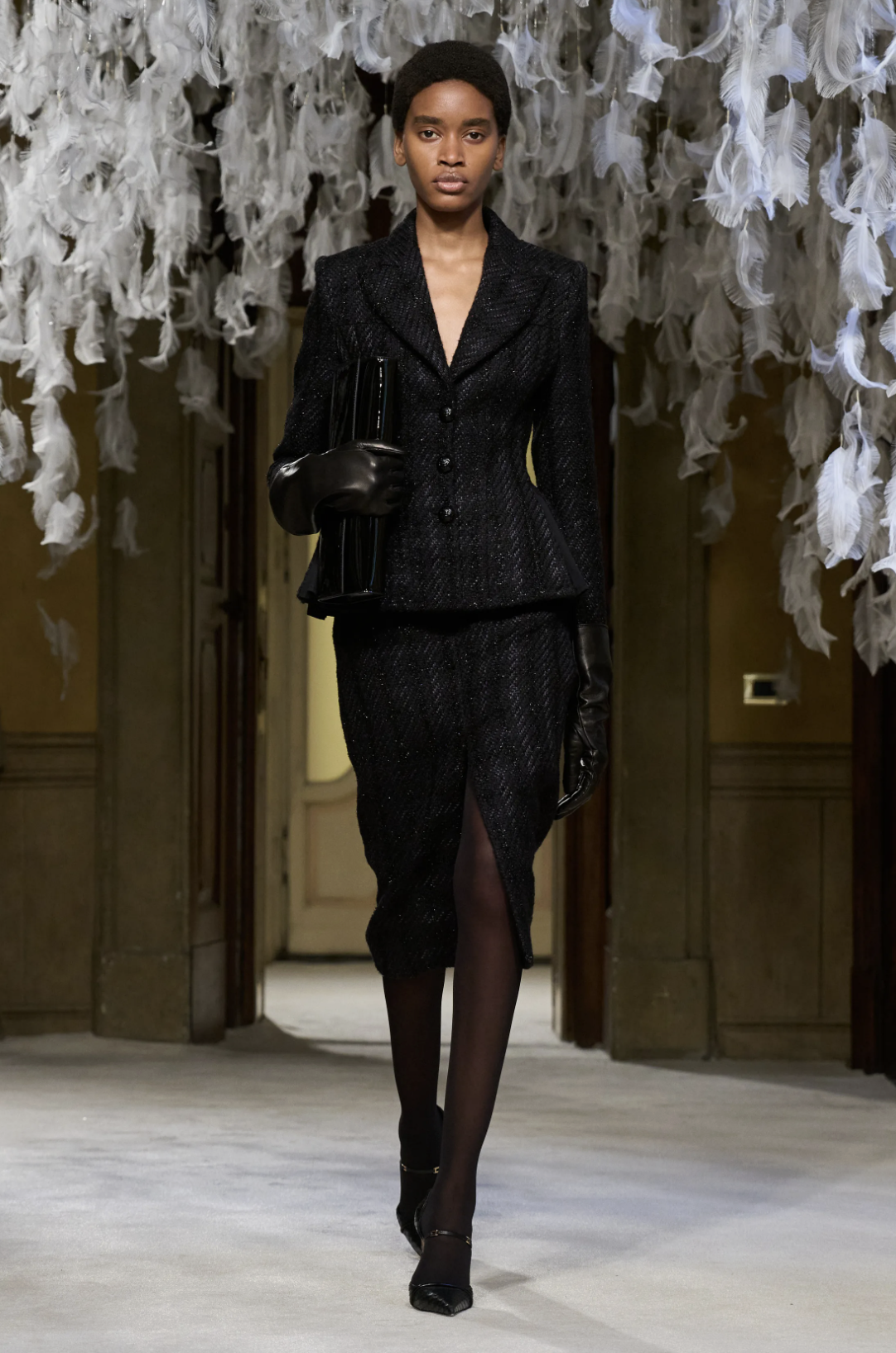
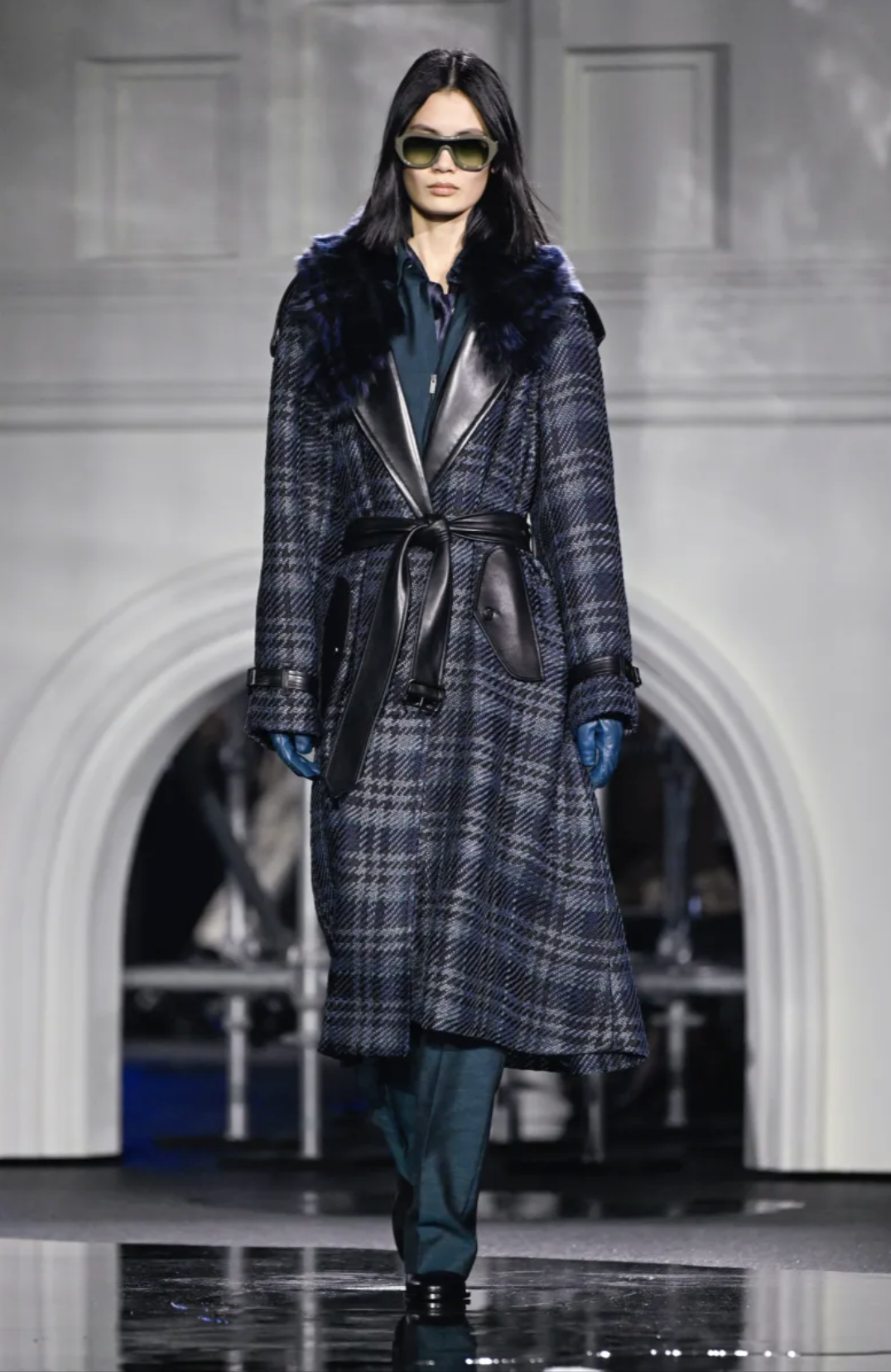
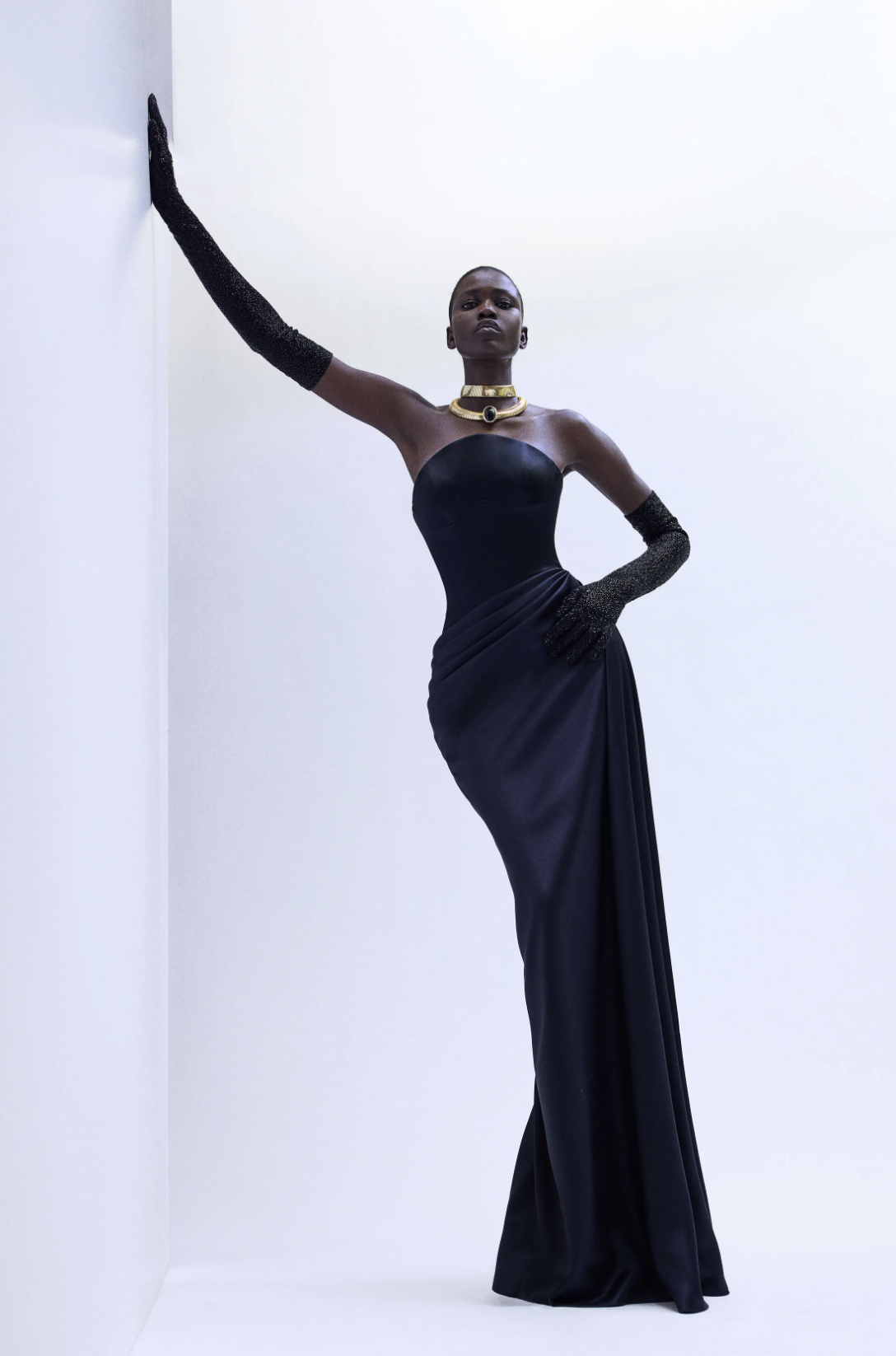
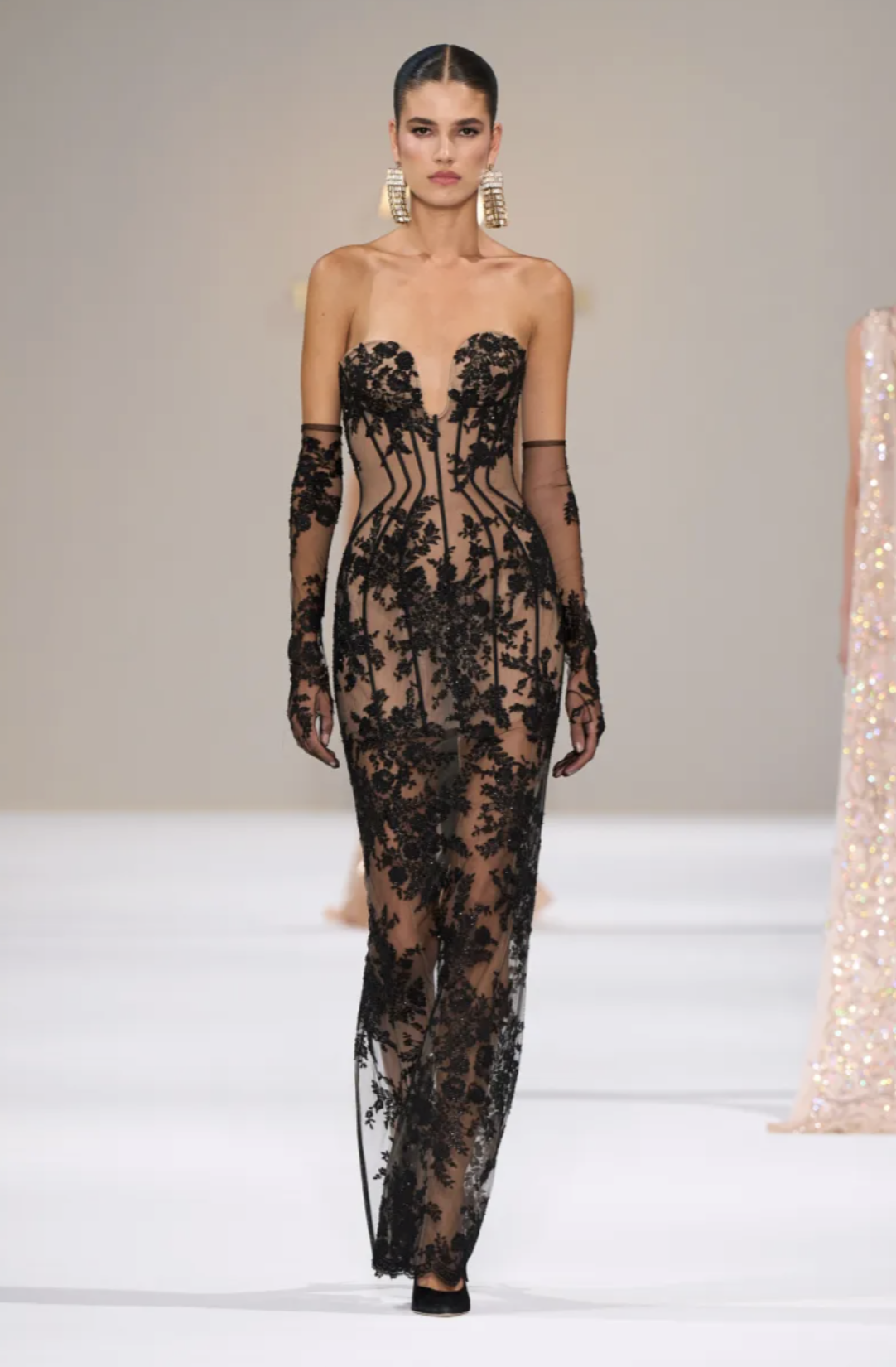
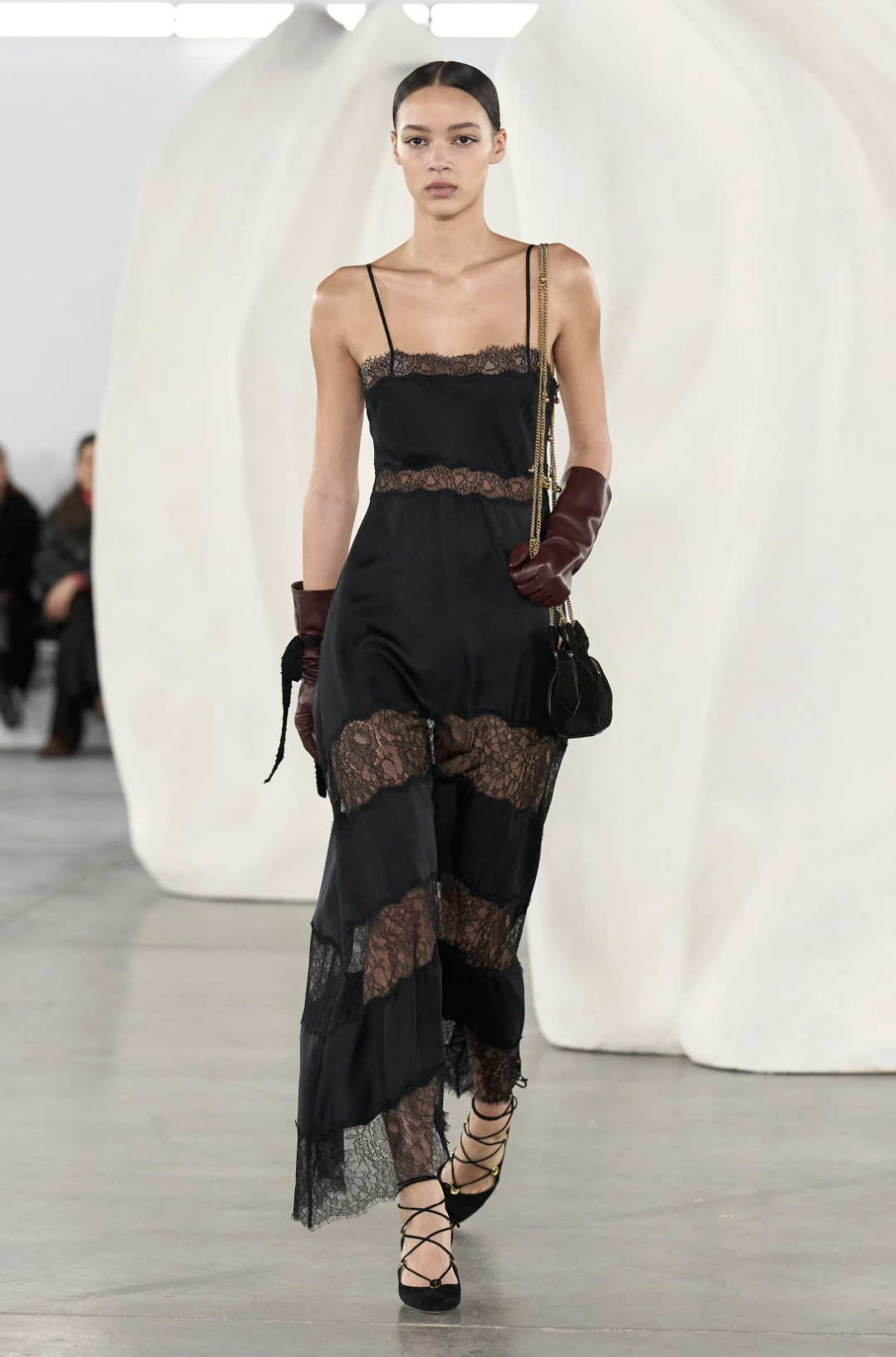
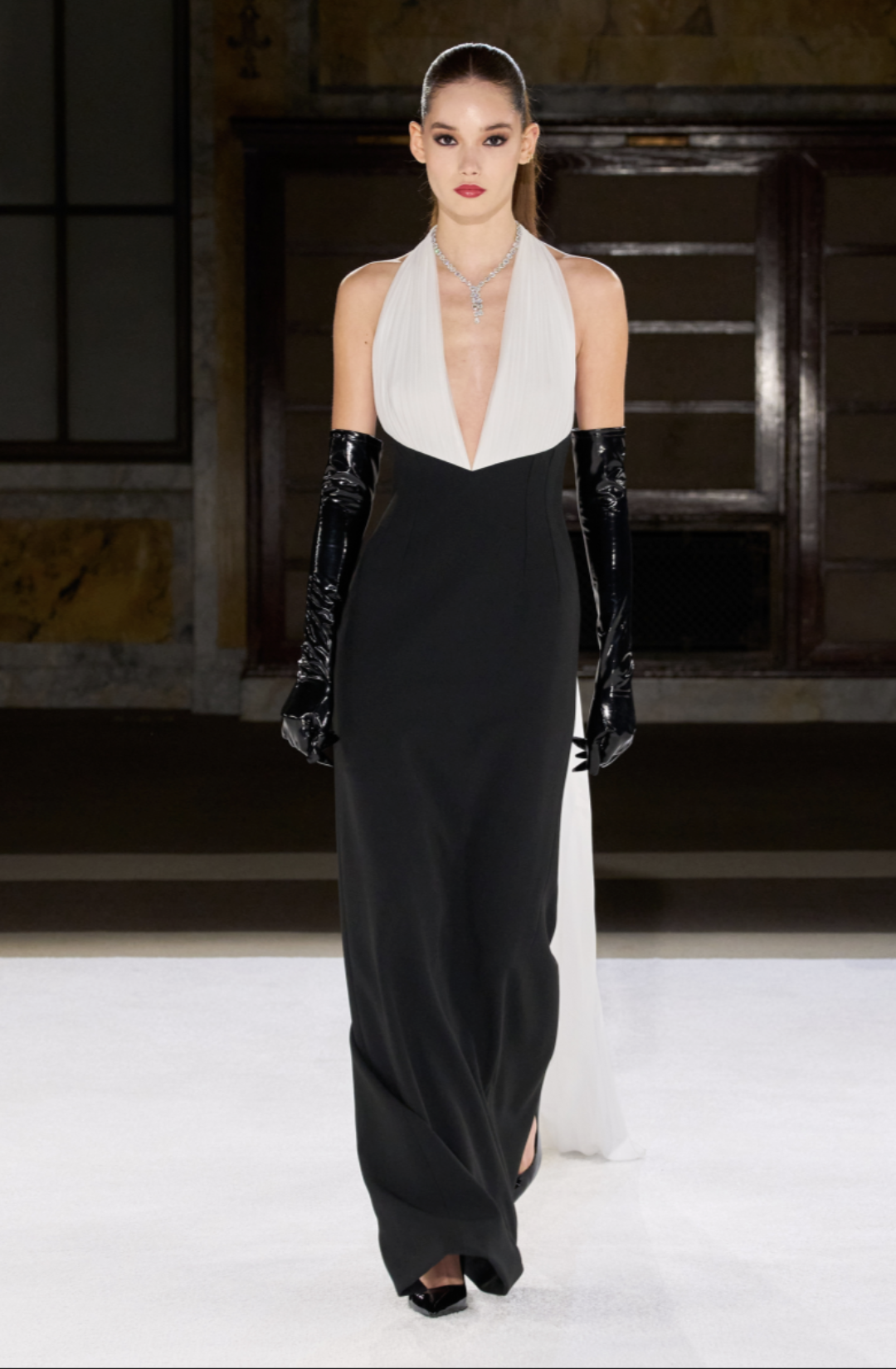
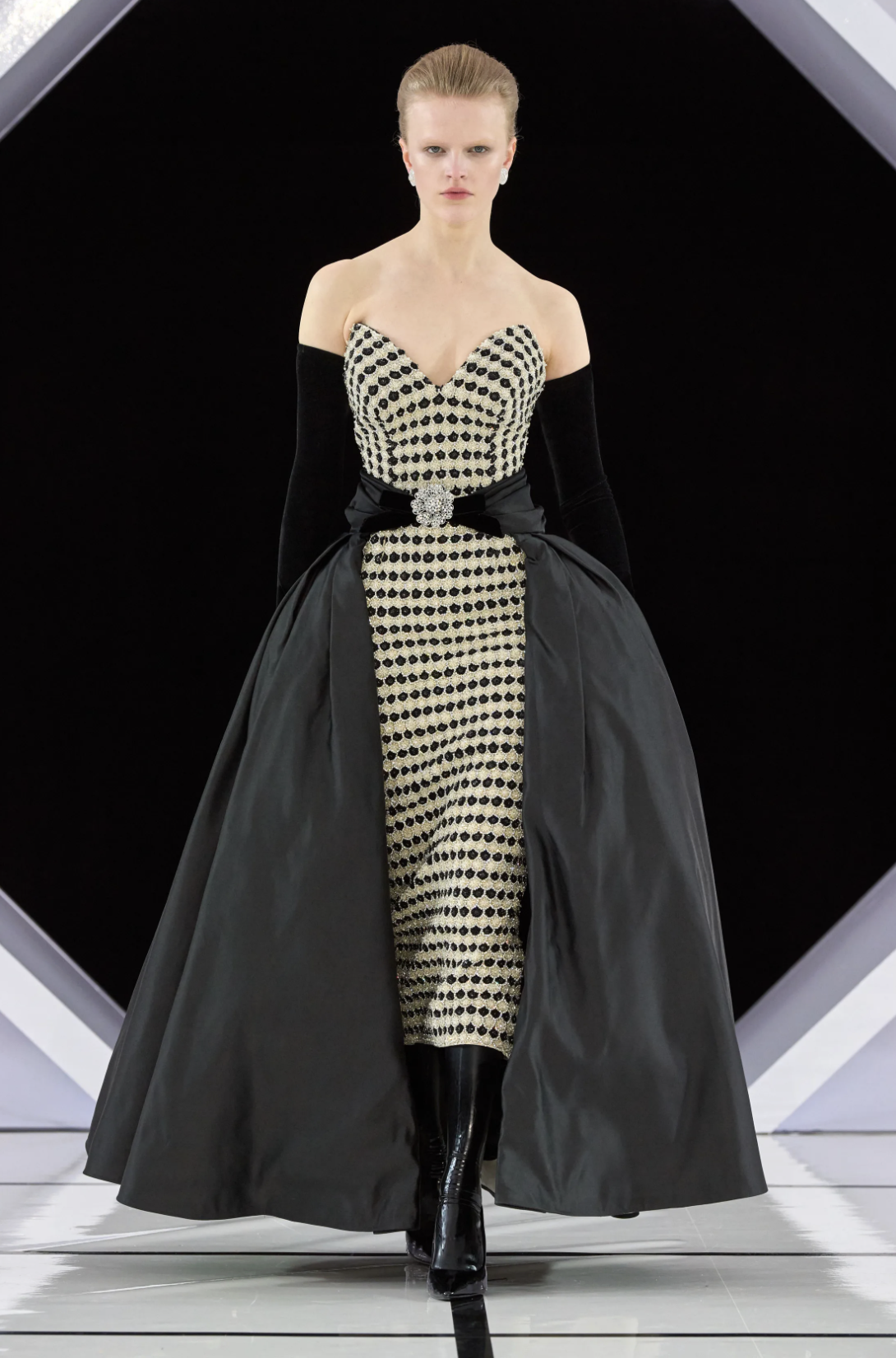
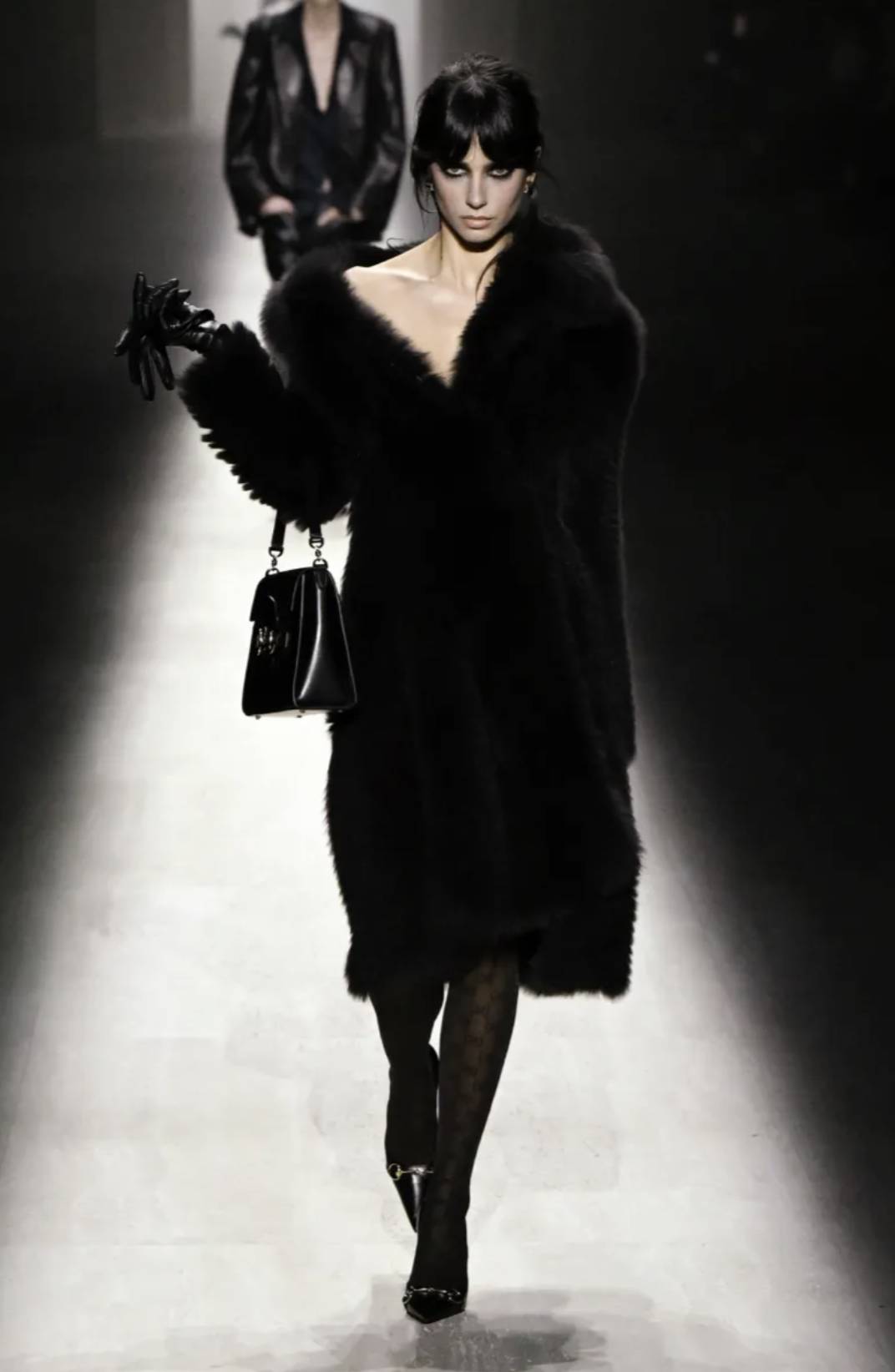
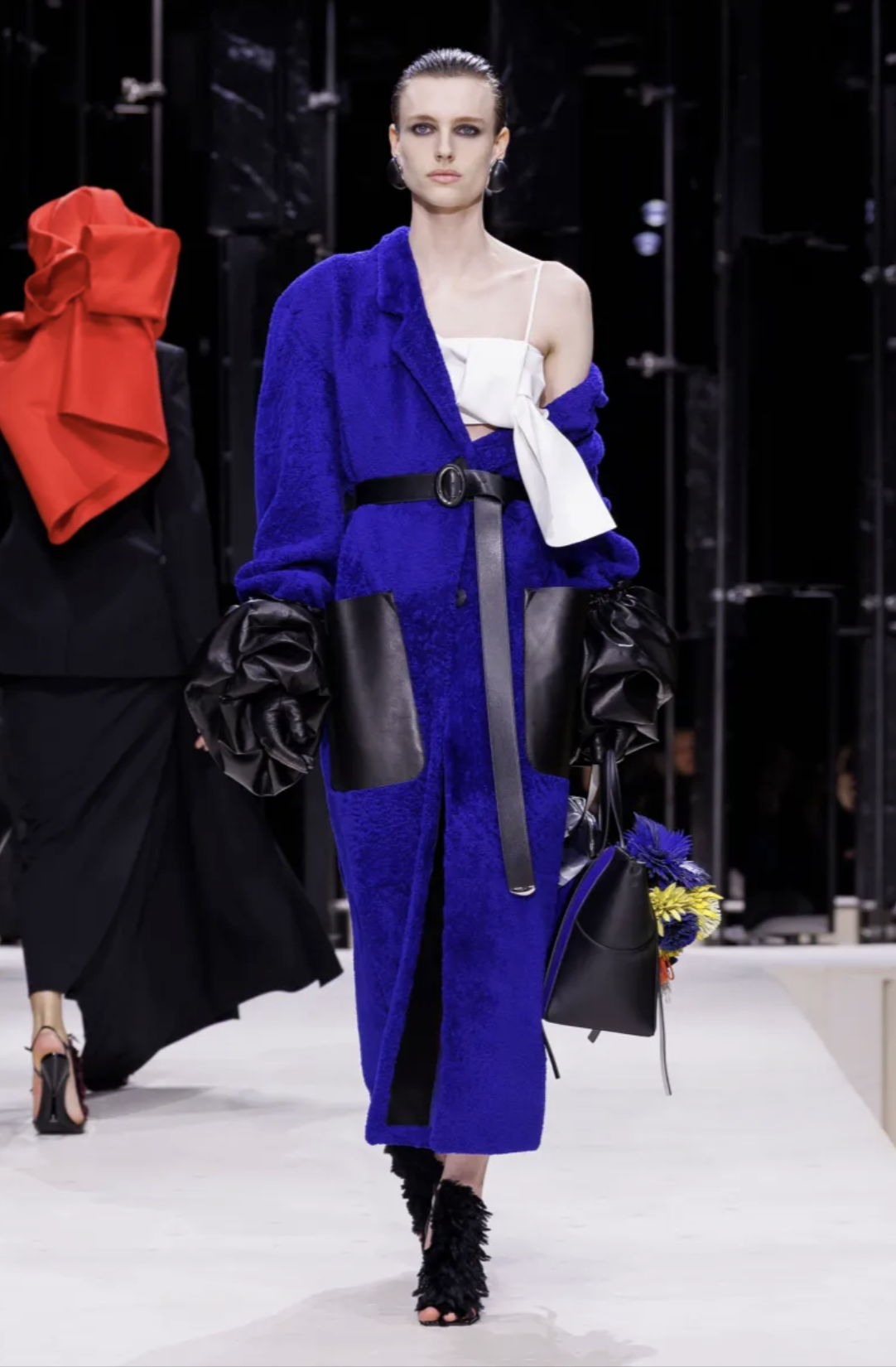
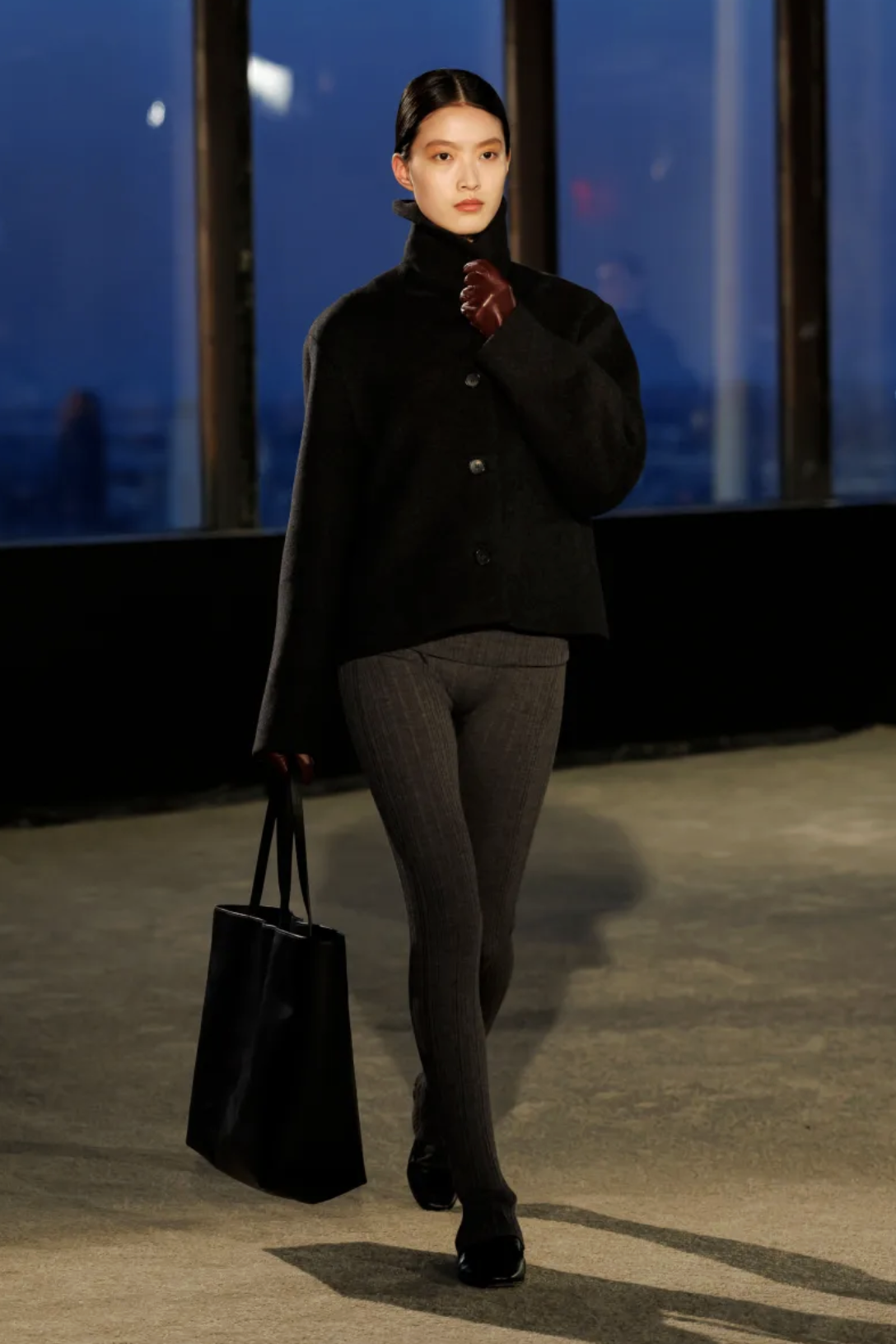
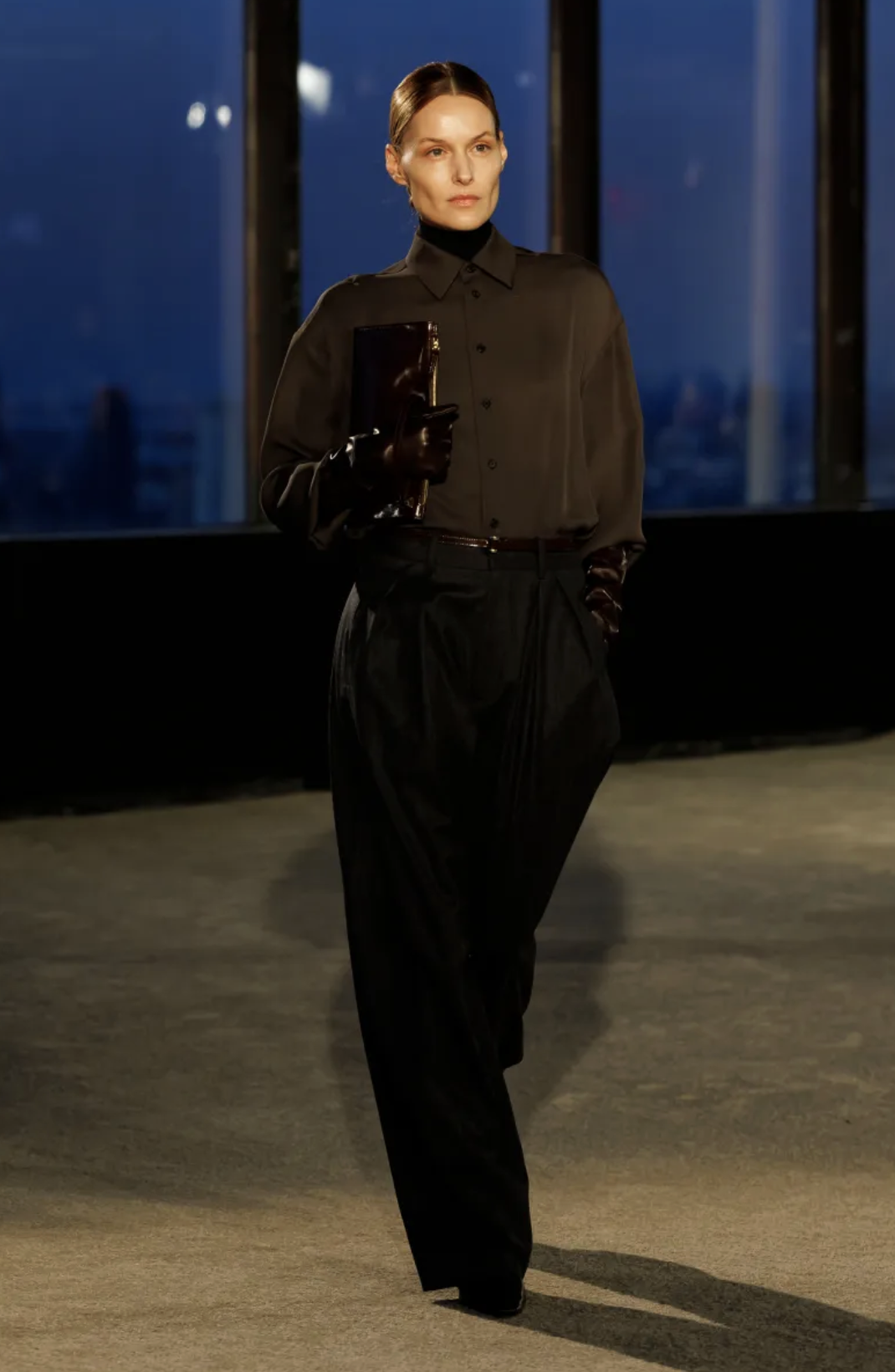
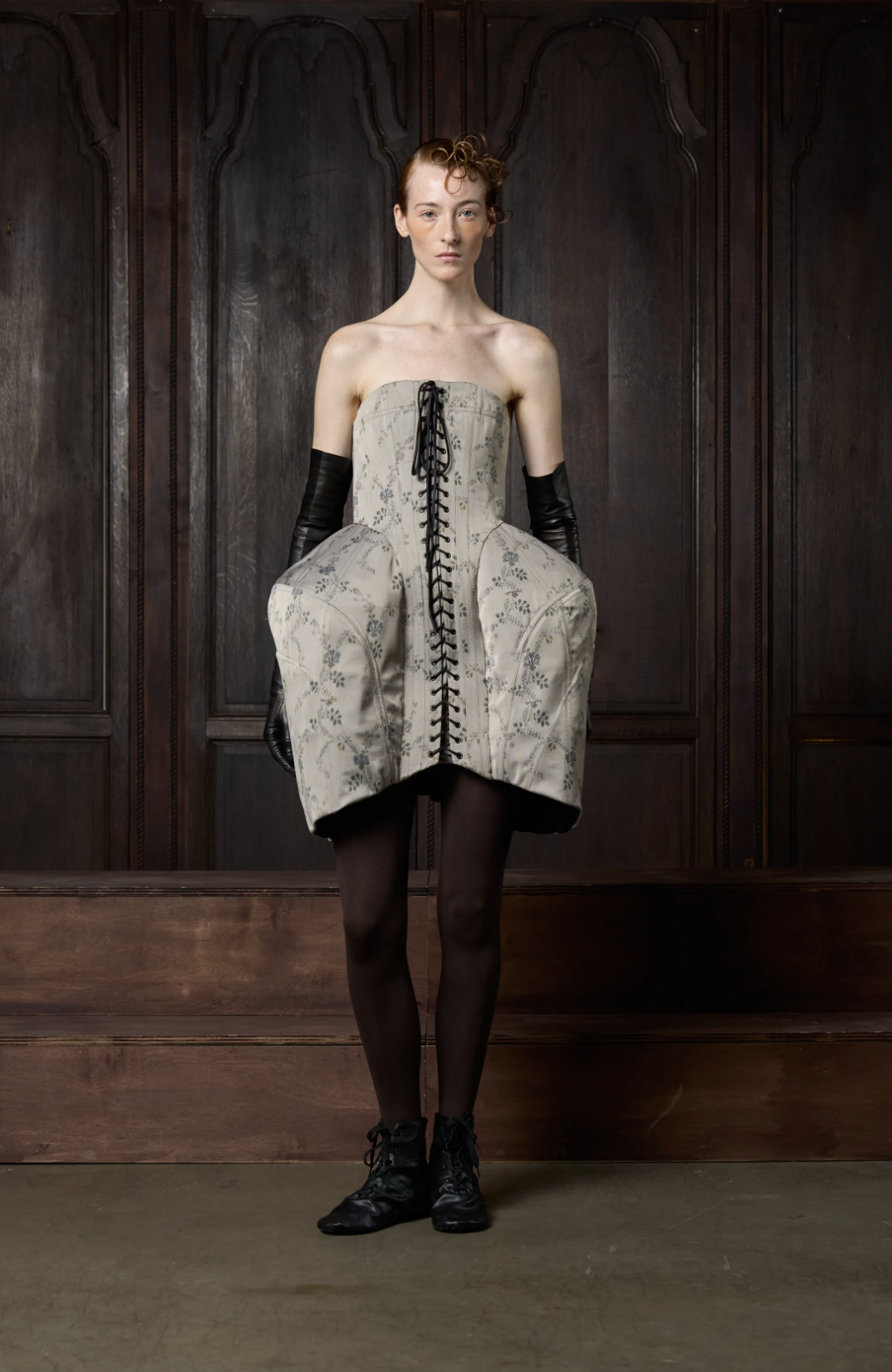
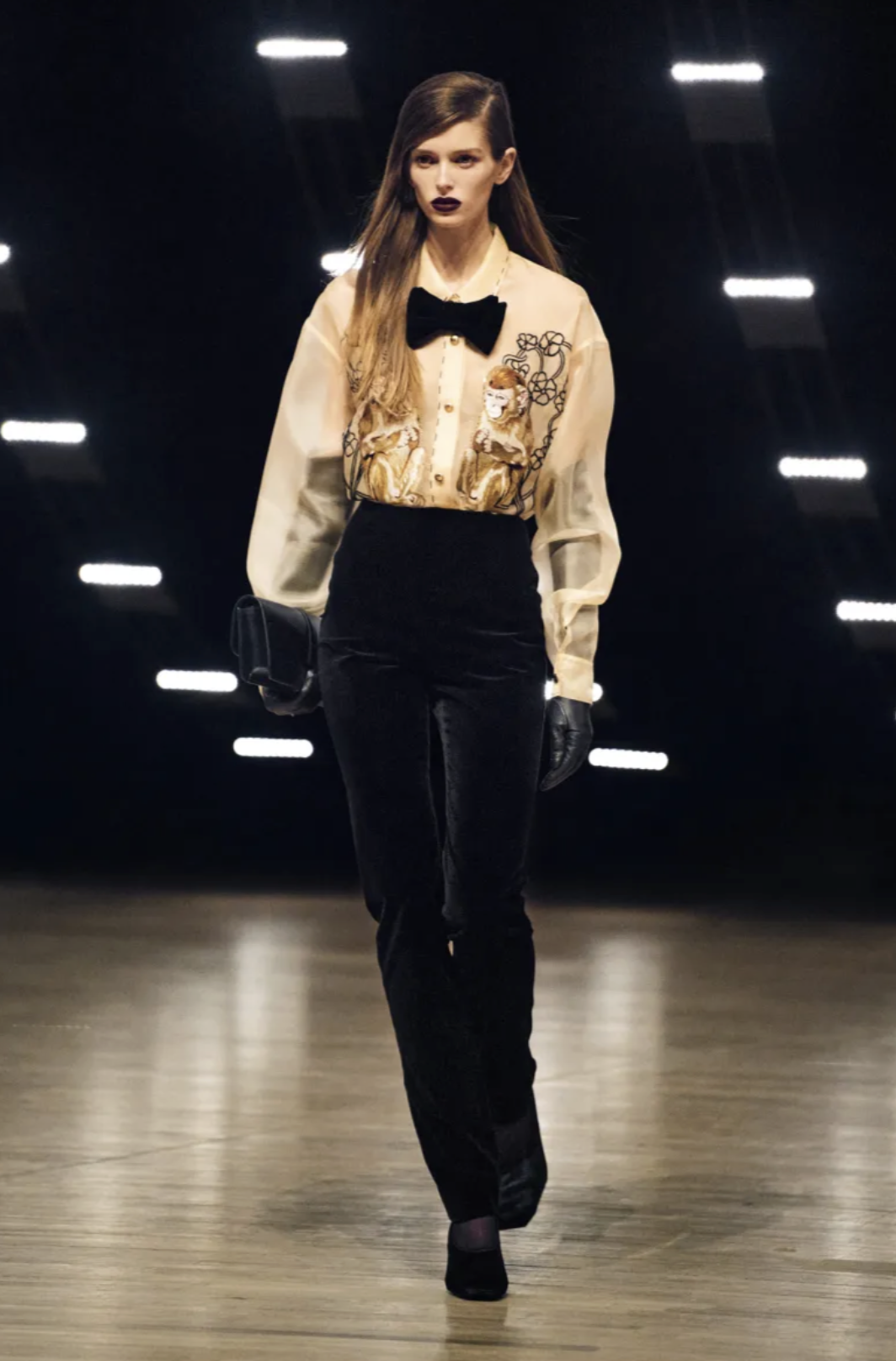
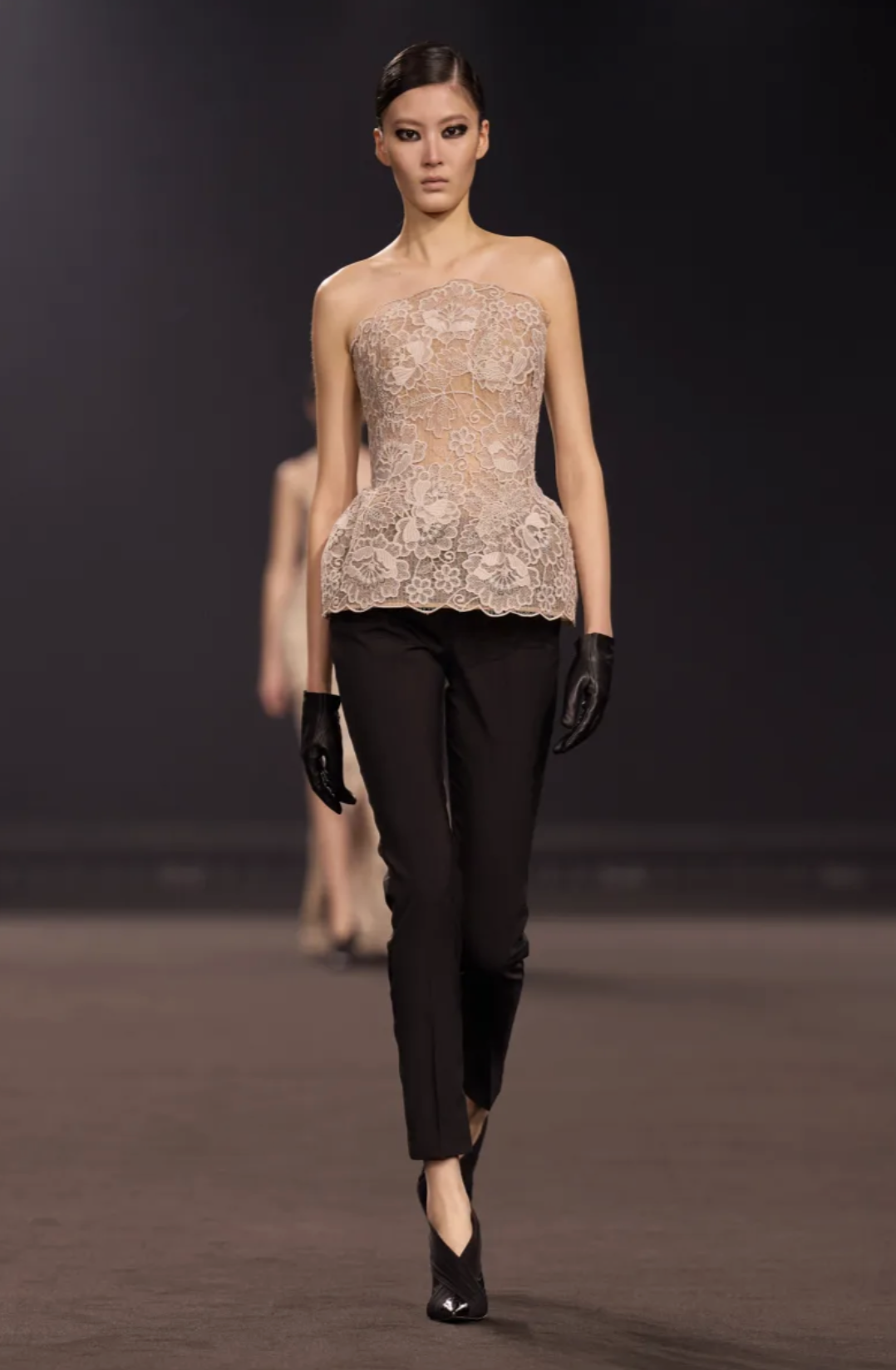
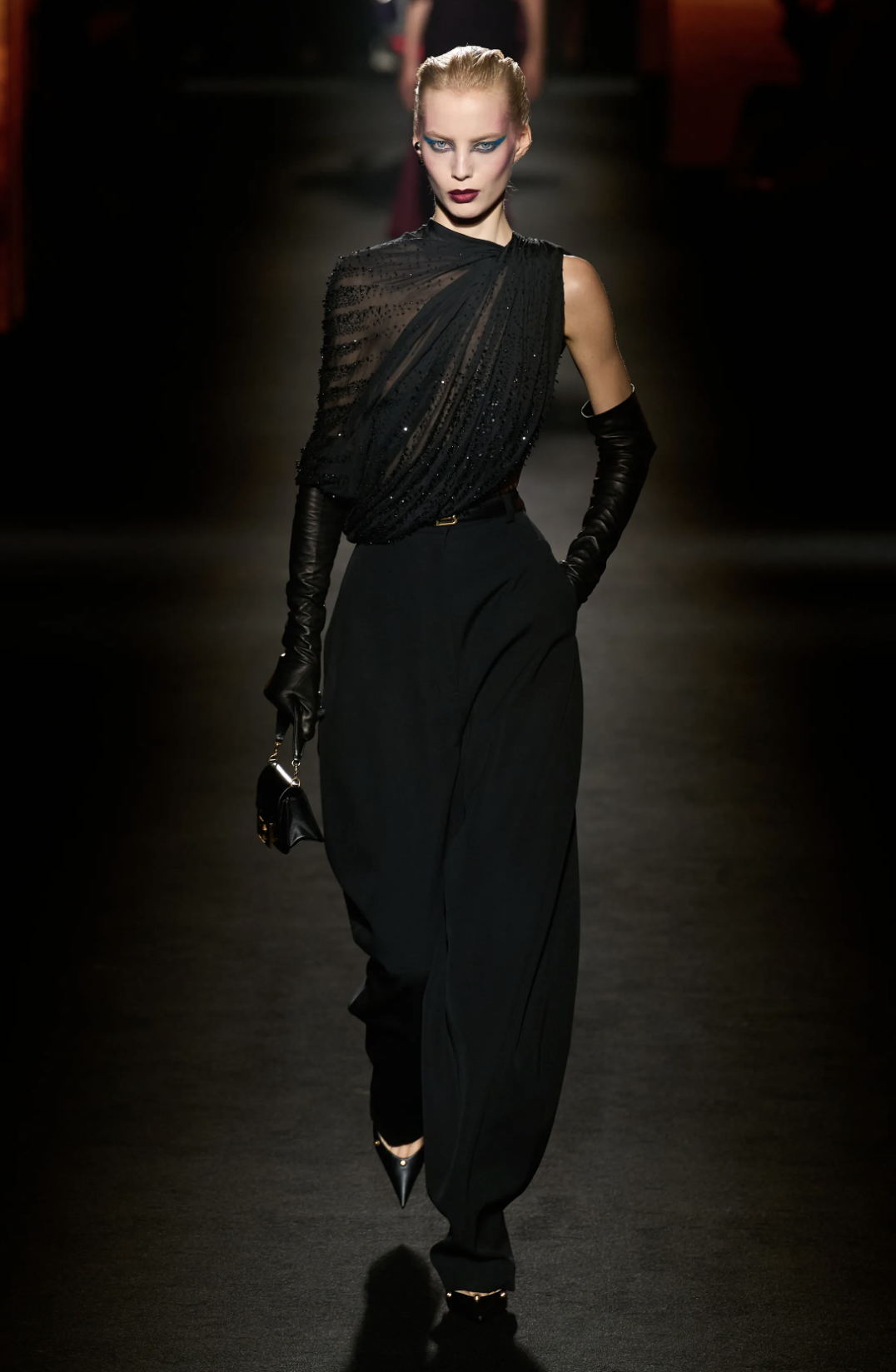
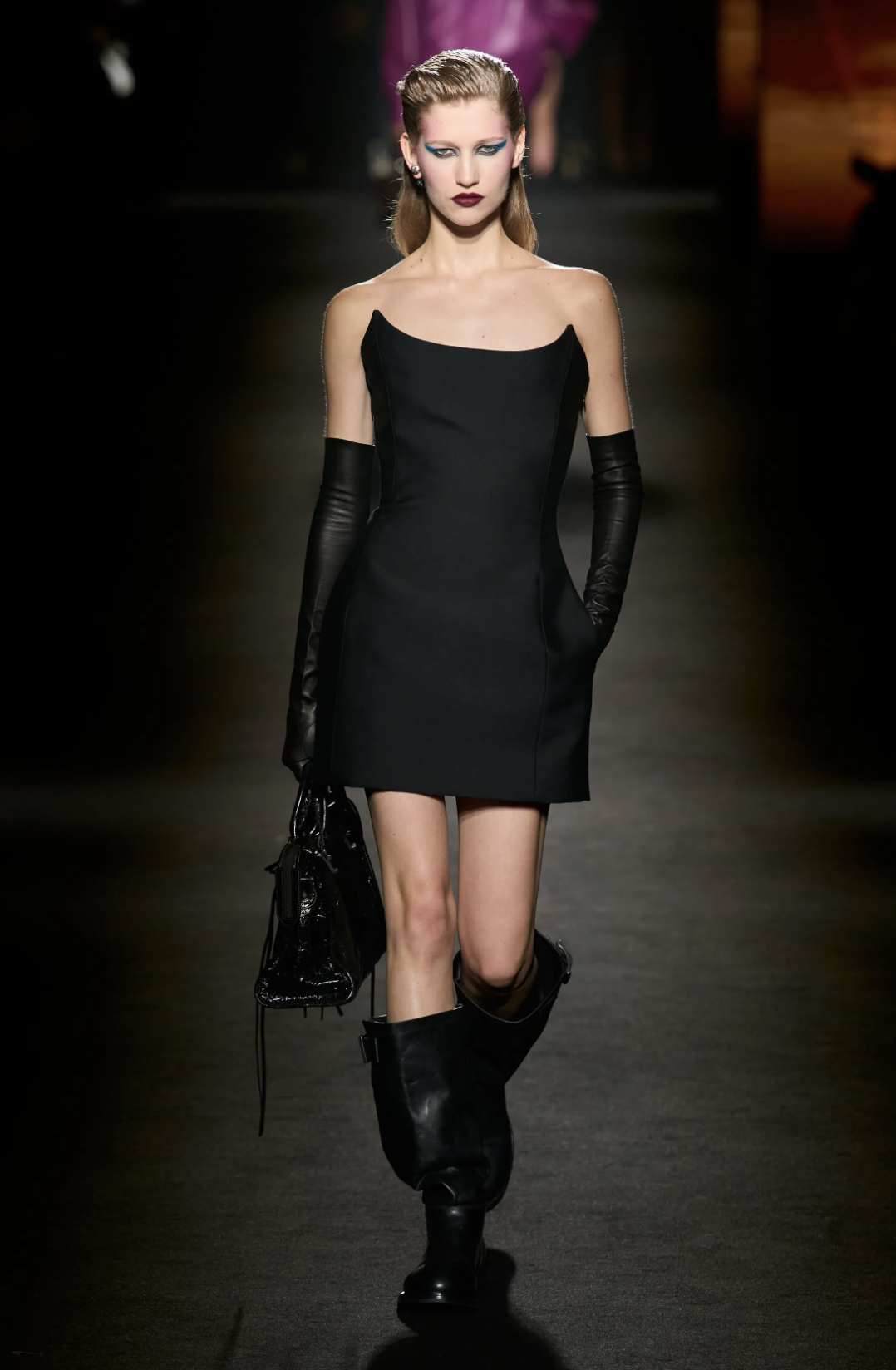
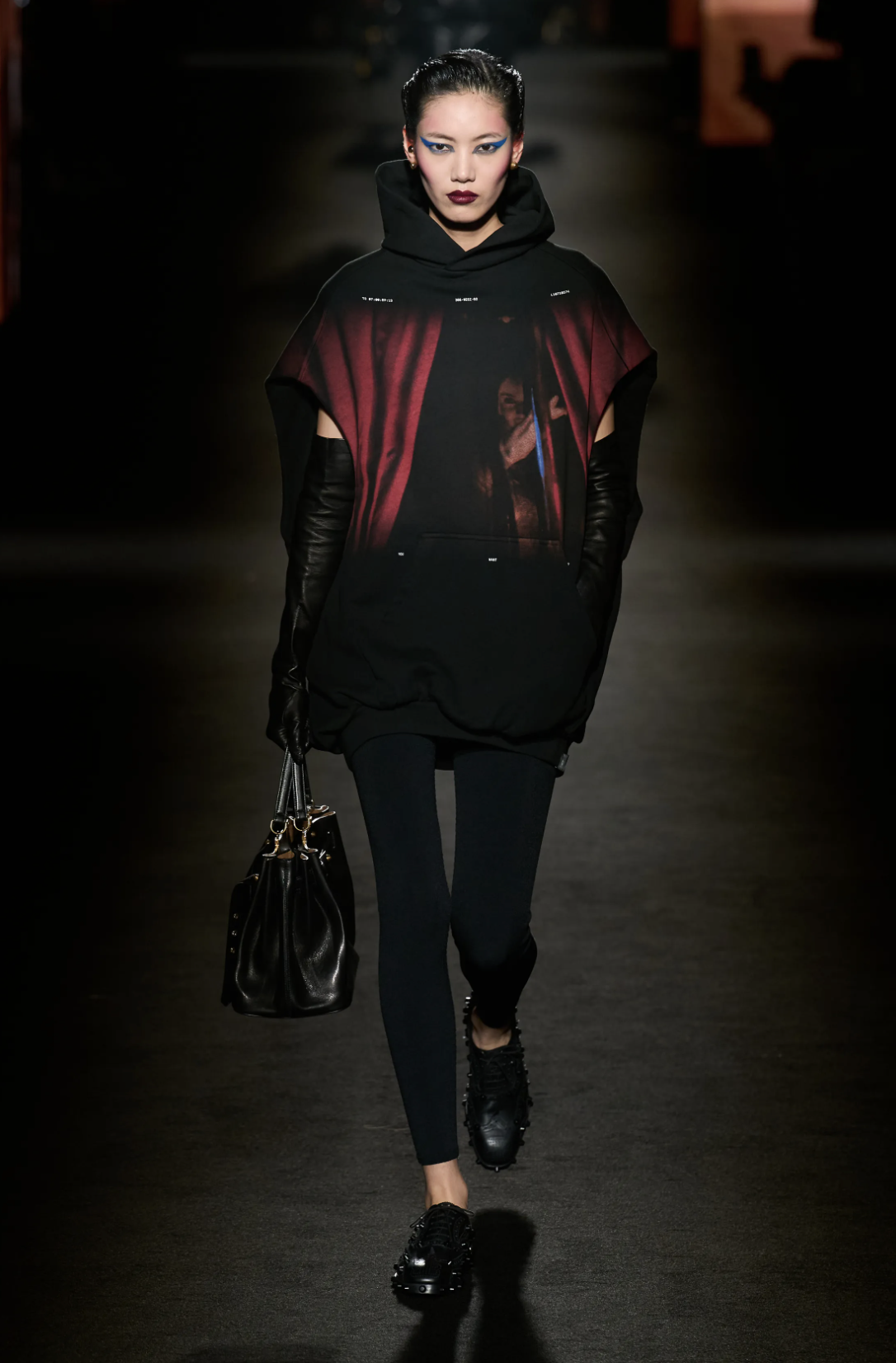
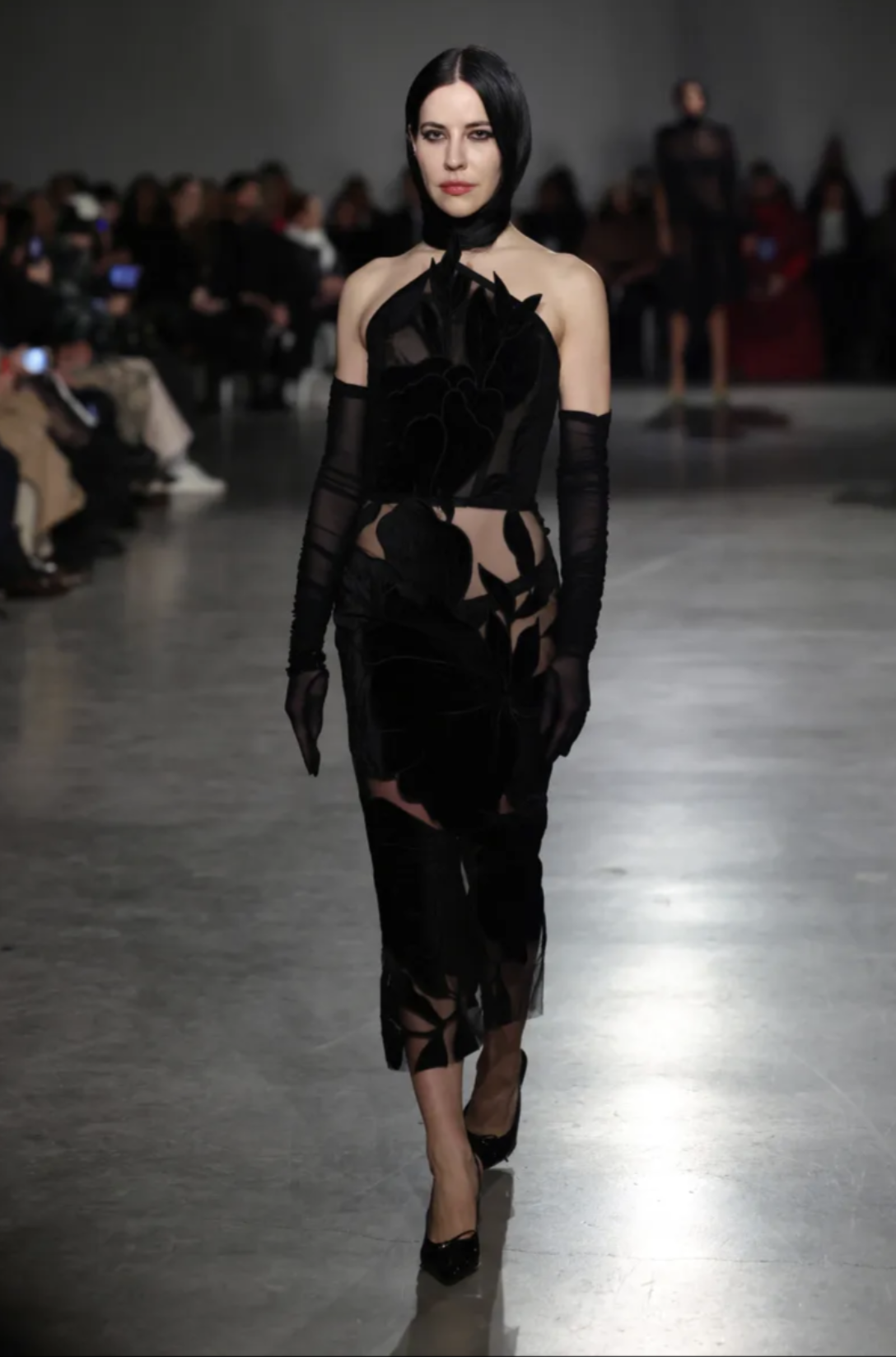
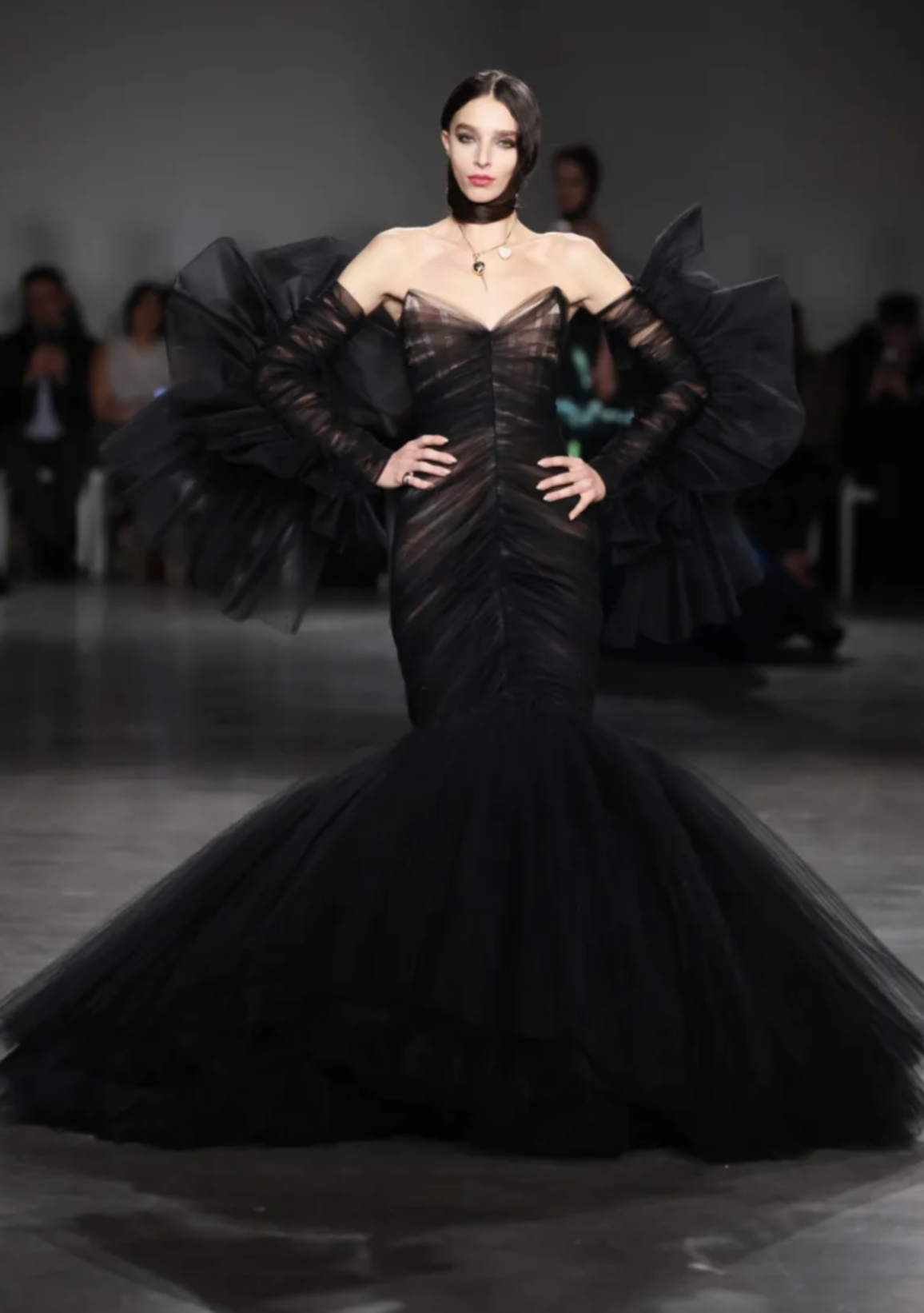
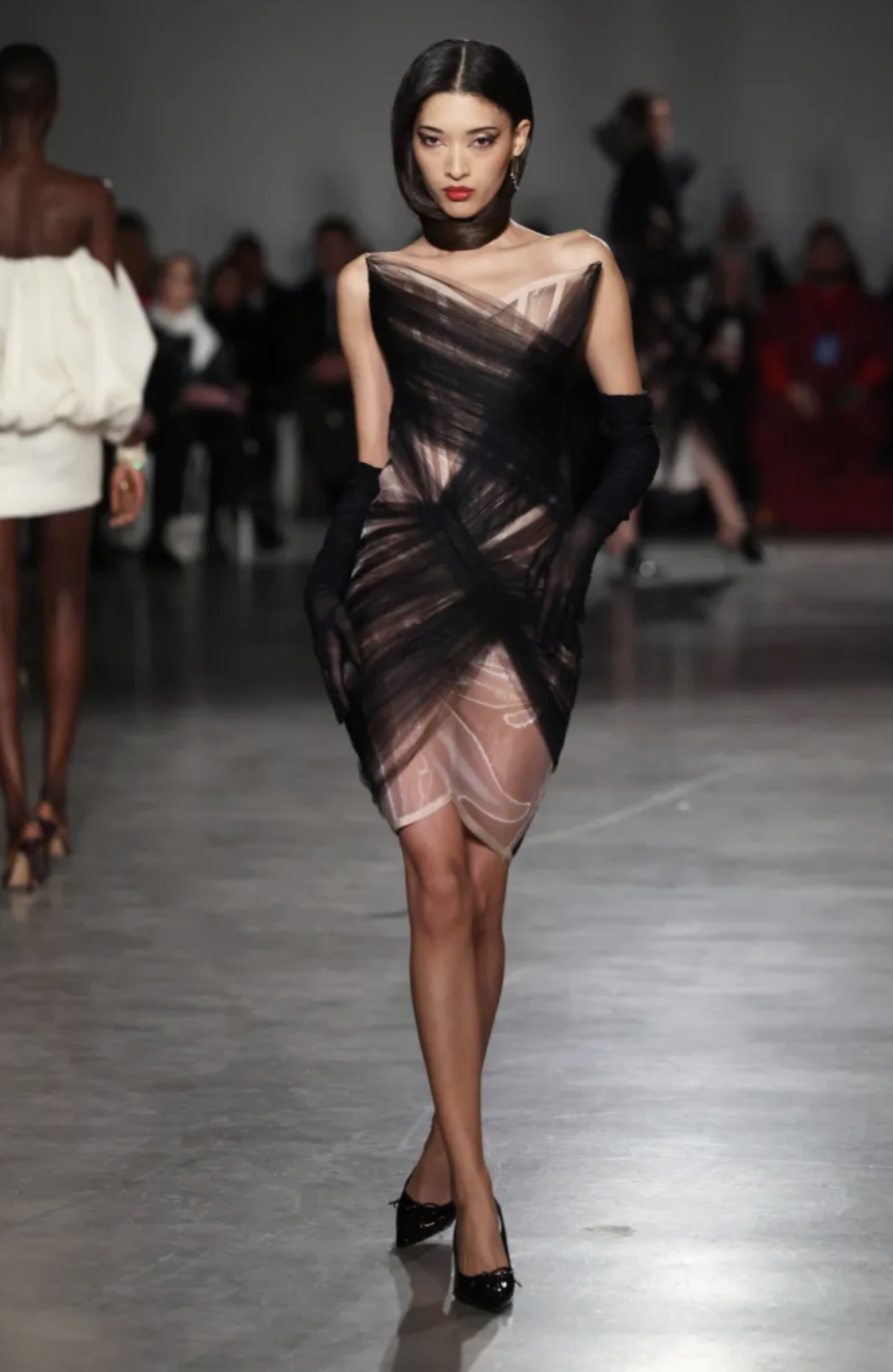
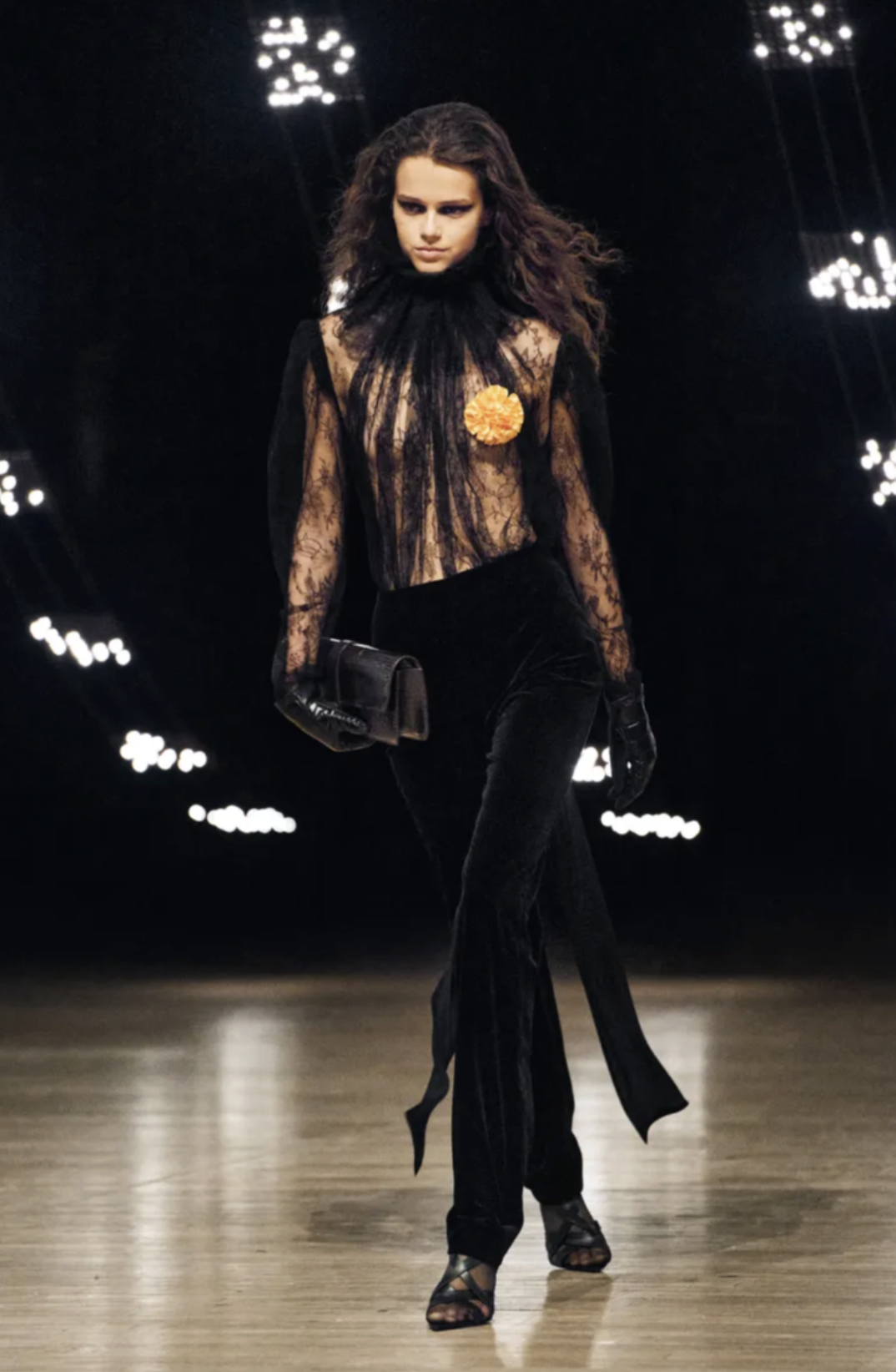
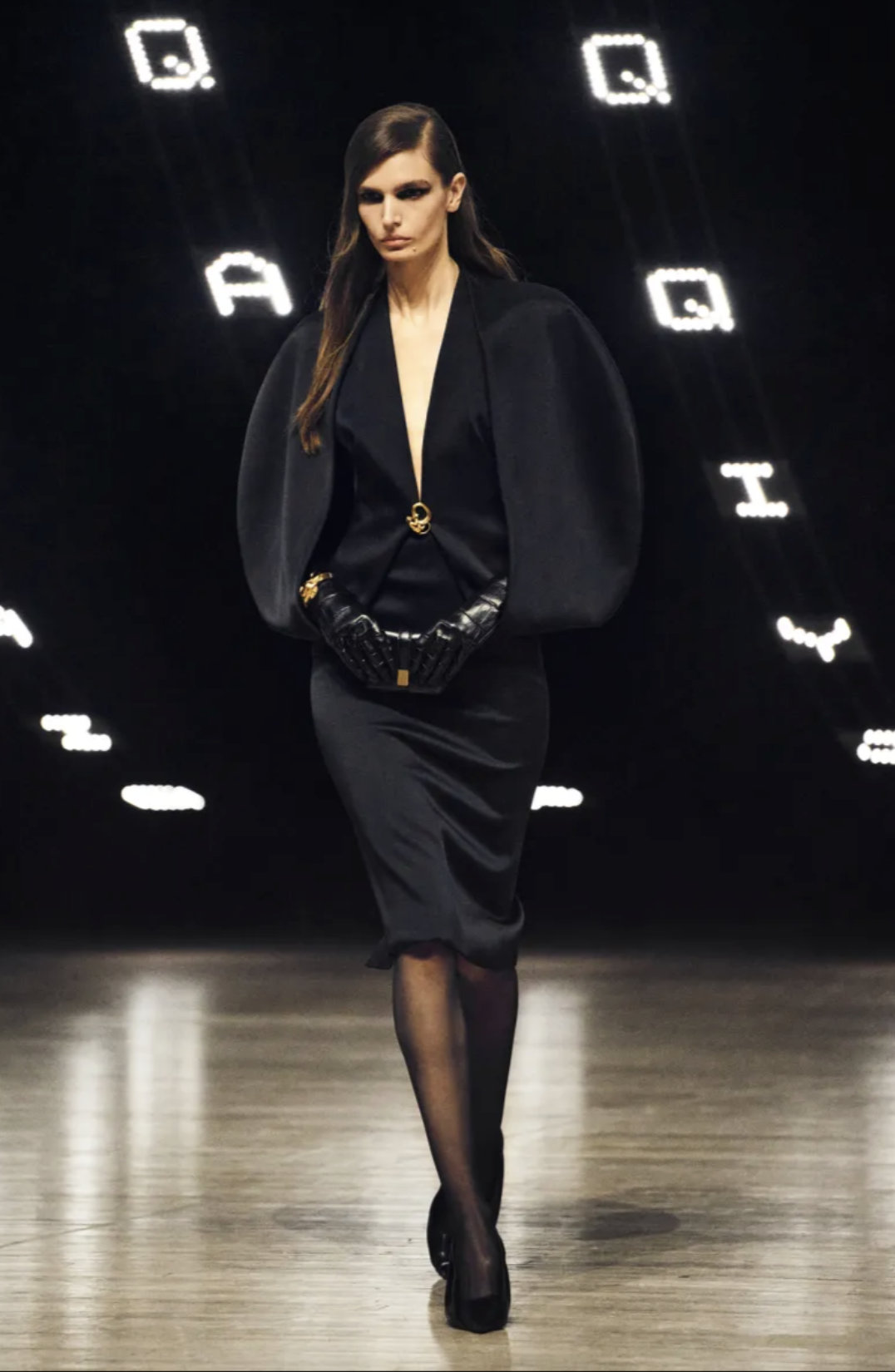
Few accessories arrive with as much inherited etiquette as the glove, which makes watching designers dismantle those expectations especially satisfying. Across FW26, opera lengths flirt with aristocratic formality while flashes of colour interrupt the familiar black; biker styles bring leather-clad irreverence into far more polished company. Exaggerated proportions push the idea further still, holding centuries-old codes of decorum up to a funhouse mirror.
Viviano: Gothic literature fan fiction in the best possible way. The Bride-inspired hair meets ruffles worthy of The Phantom of the Opera, then biker gloves arrive with a tongue-in-cheek grin. We are 100% here for this literary hybrid.
Elisabetta Franchi: An impressive study in variation, shifting glove length and colour throughout the collection to show how dramatically one accessory can alter the mood of a silhouette.
Burberry + Ulla Johnson + Kallmeyer: Pops of colour peak out of sleeves, with Burberry blue alongside Ulla Johnson’s burgundy and Kallmeyer’s red giving gloves their own visual authority.
Tamara Ralph + Naeem Khan + Pamella Roland + Richard Quinn + Meruert Tolegen + Balenciaga + Christian Siriano: The opera glove gets an extensive runway study, interpreted across different fabrics and silhouettes so that the same sweeping length can move from old-world elegance to contemporary glamour.
Gucci: One glove off, confrontationally. A perfectly bratty disruption of an accessory historically associated with demure manners.
Givenchy: Volume blows the familiar glove wildly out of proportion (literally).
ELIE SAAB + Khaite: Biker gloves land in very different company than usual, their toughness sharpened by the refinement surrounding them.
Point Taken
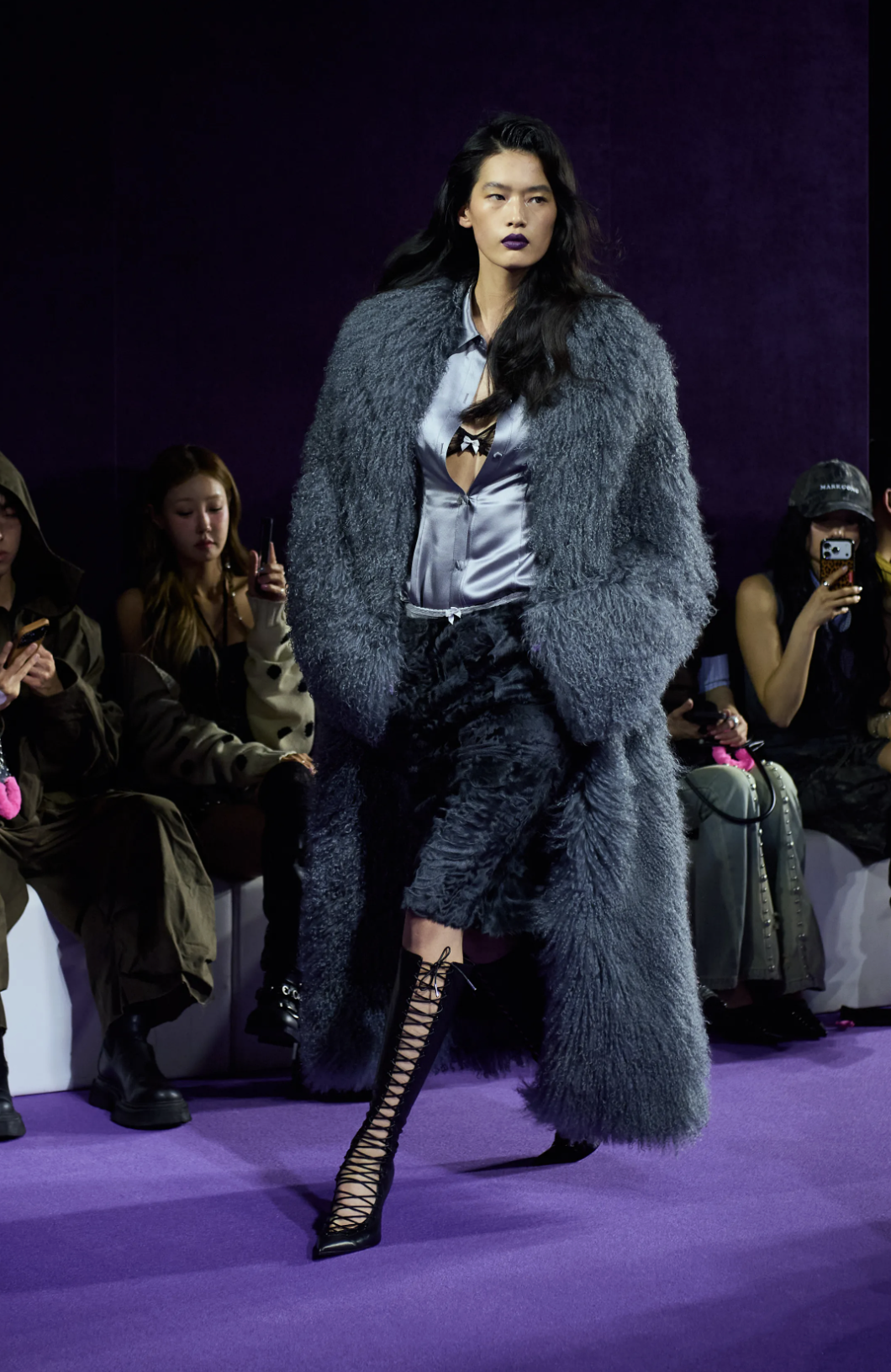
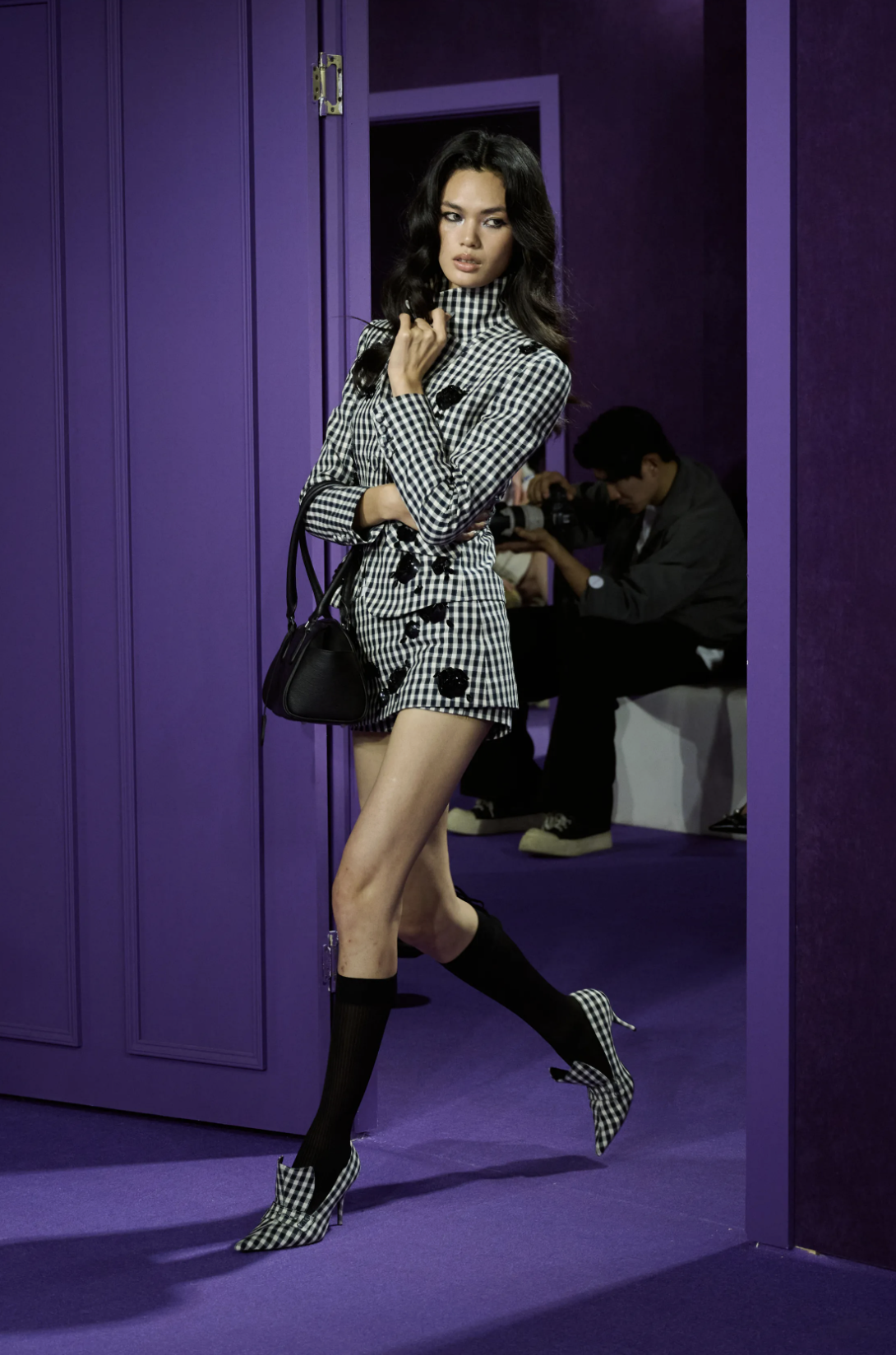
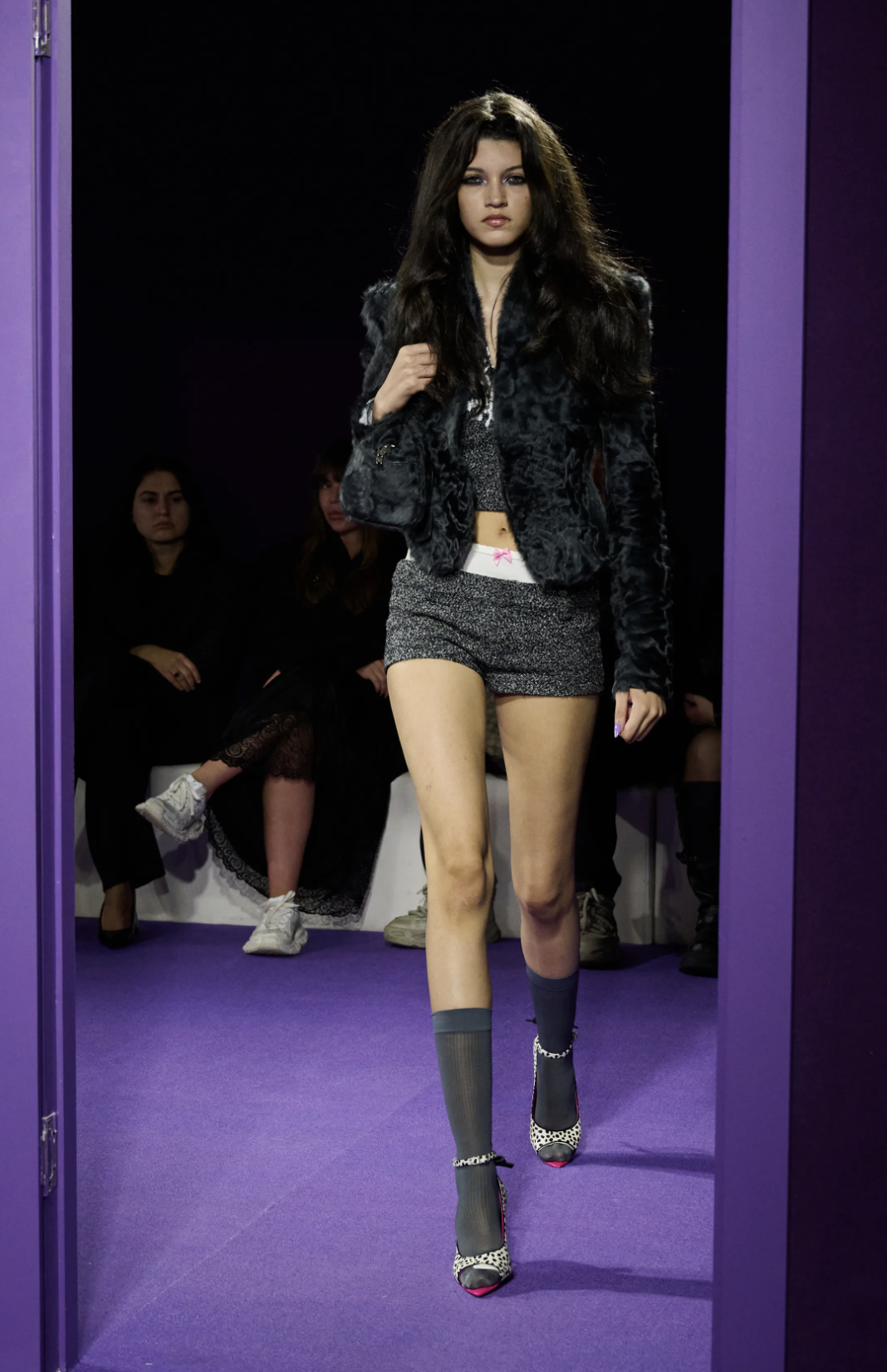
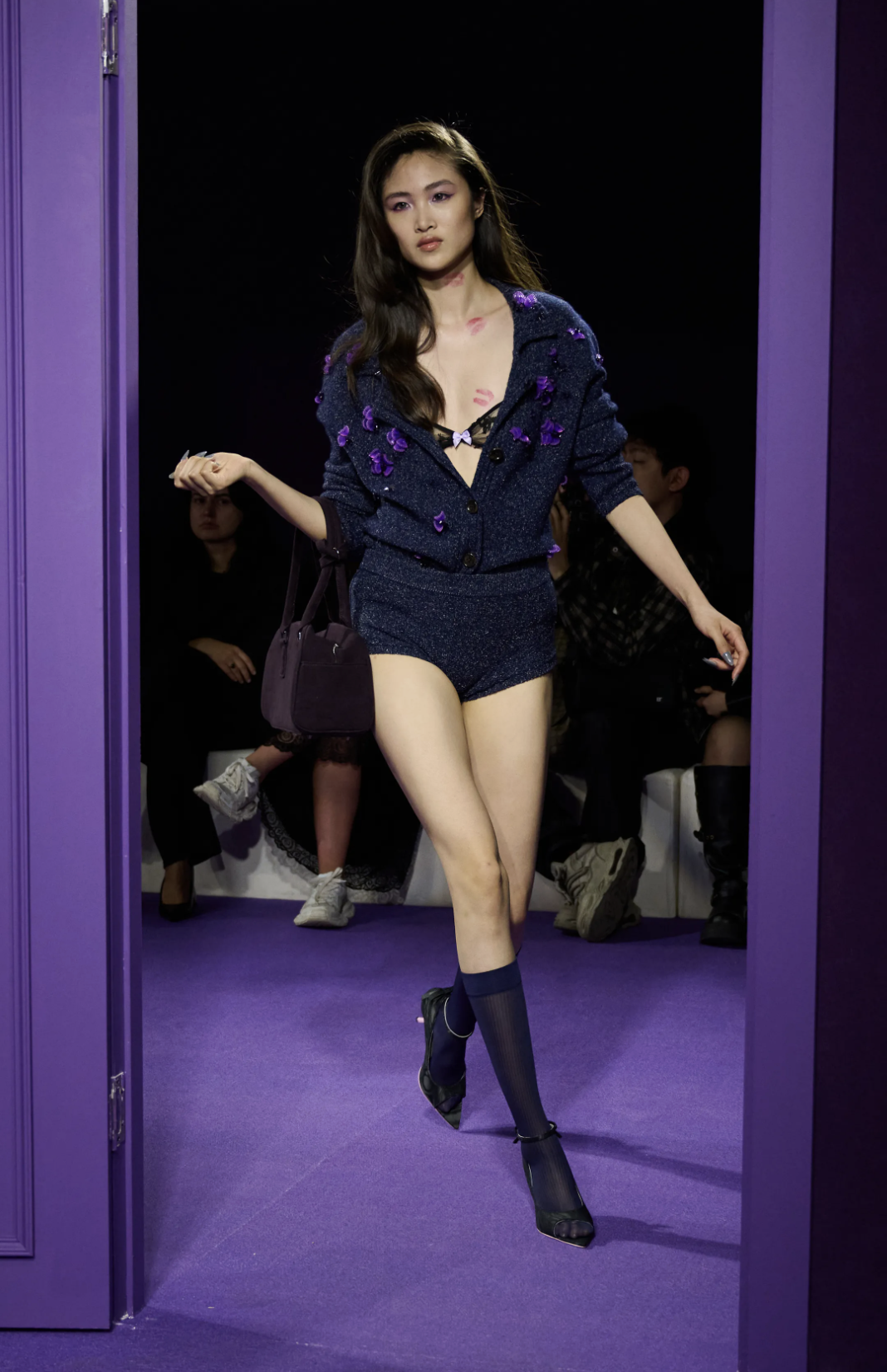
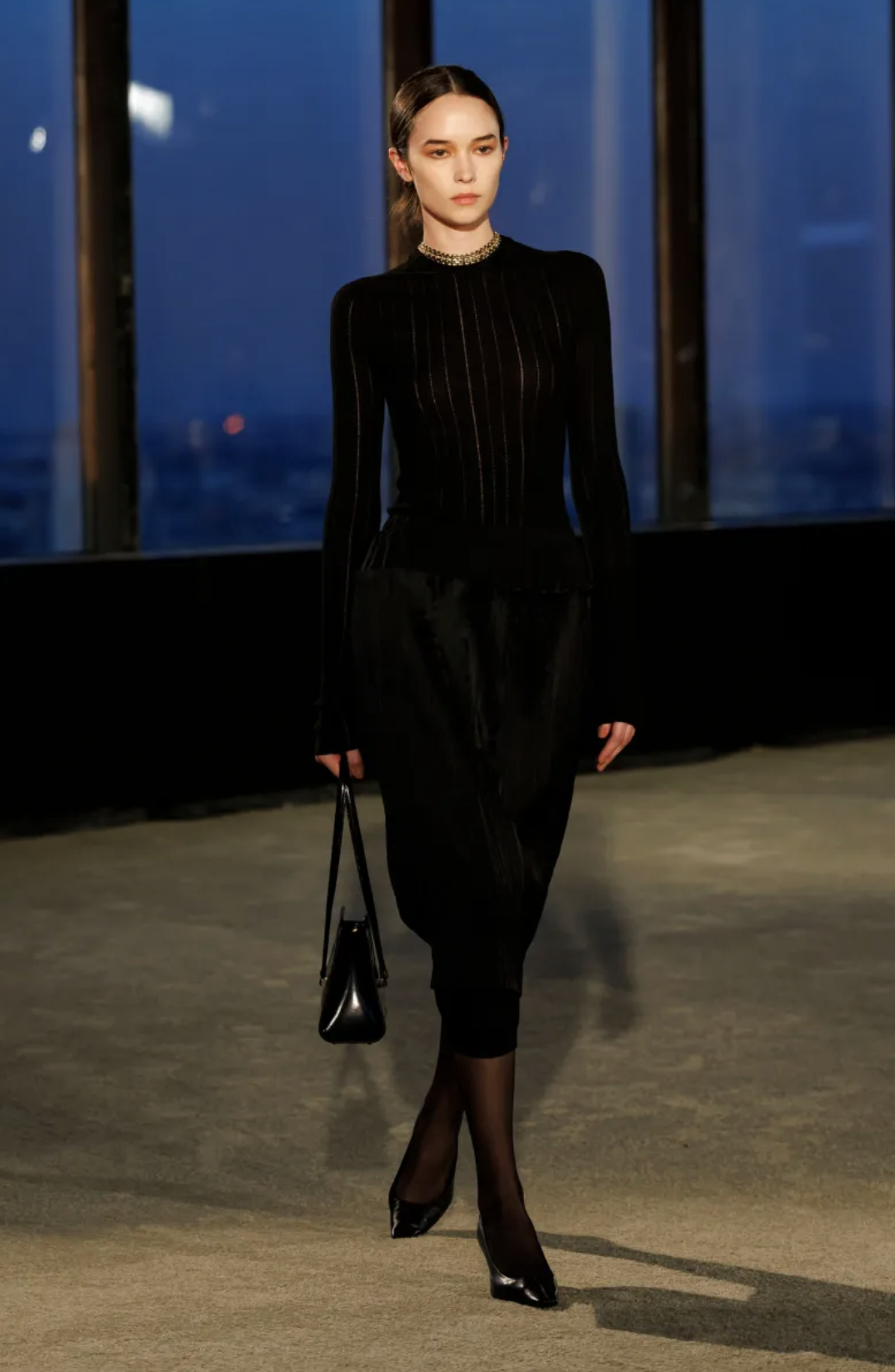
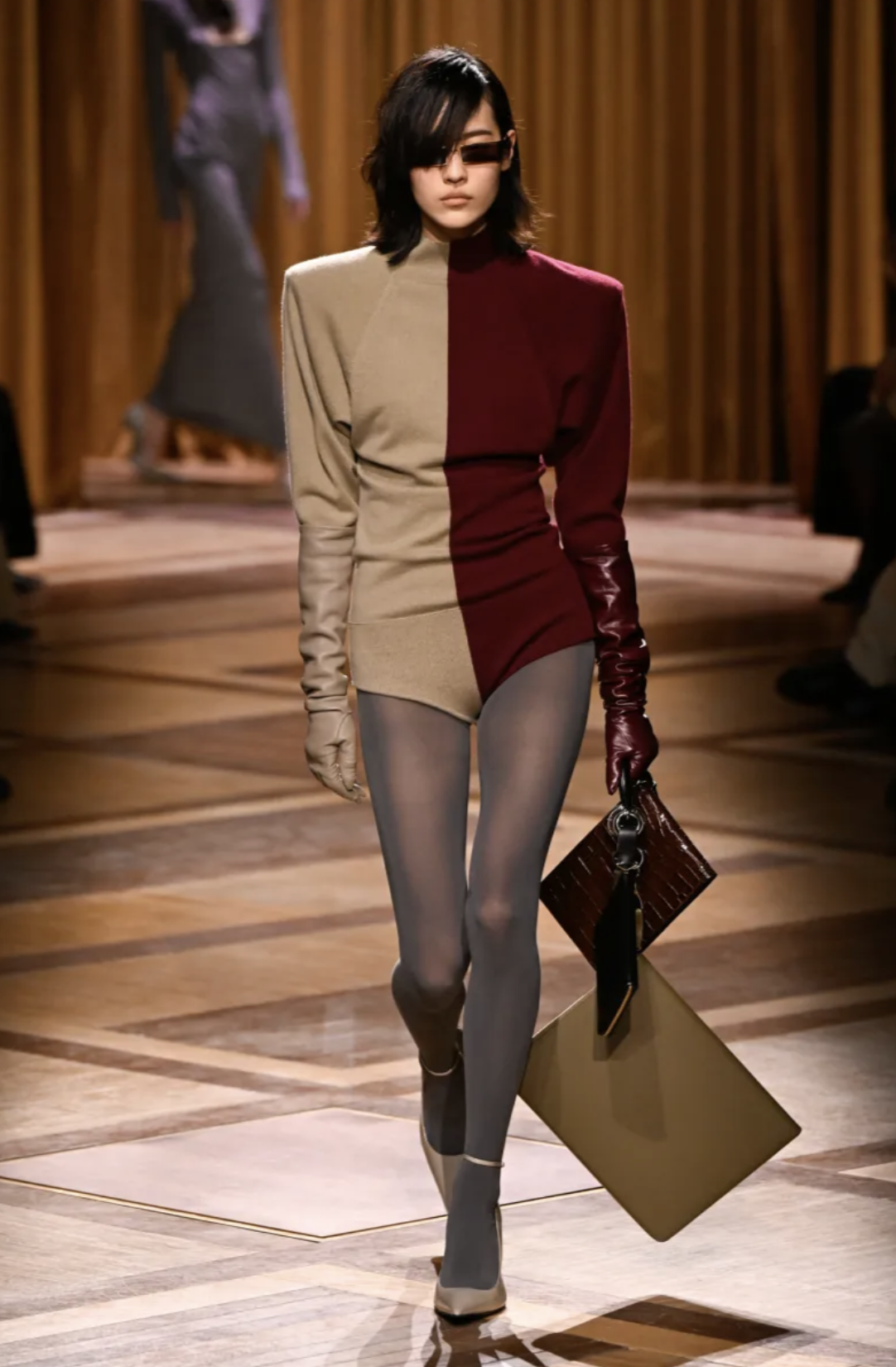
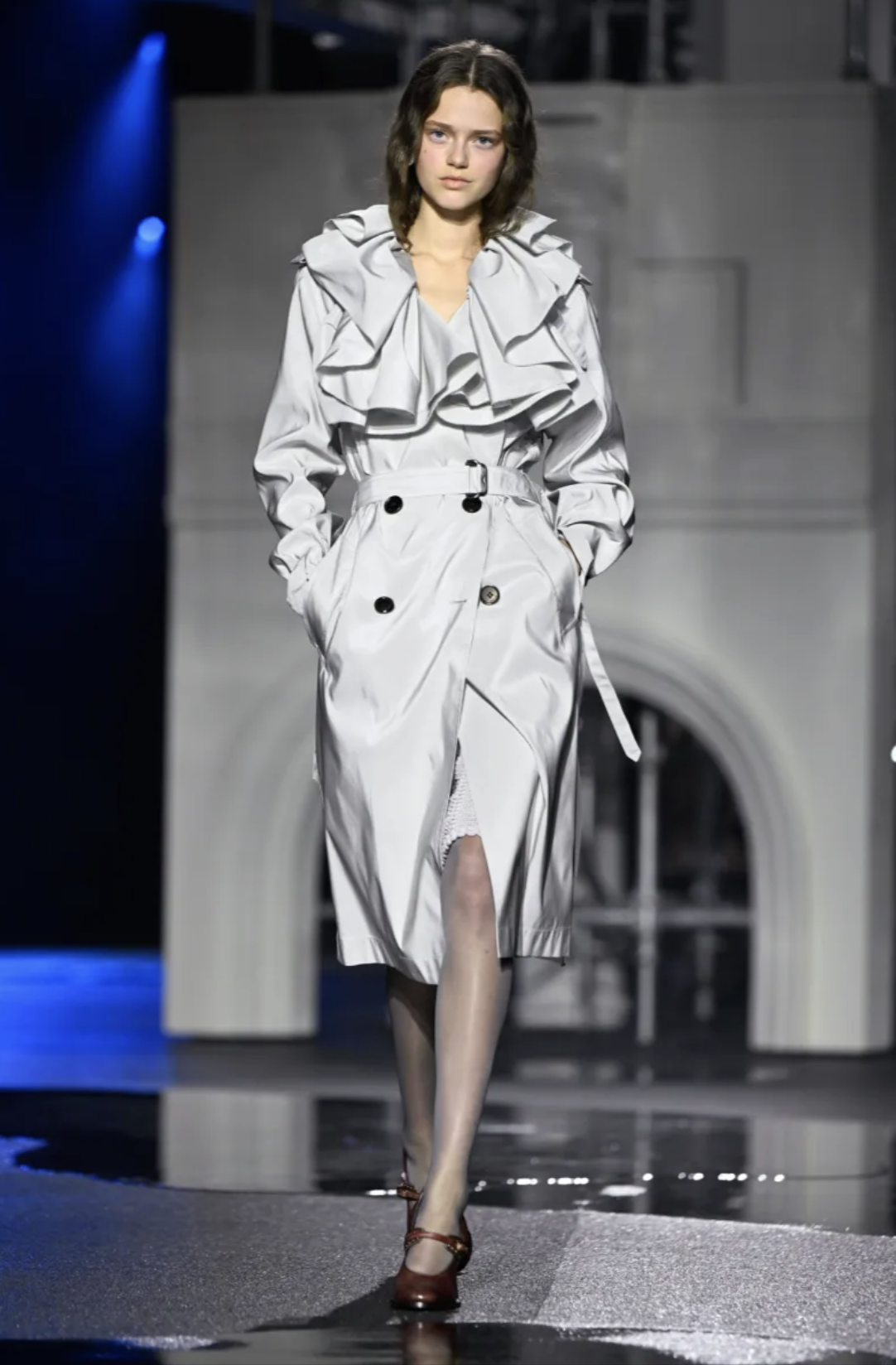
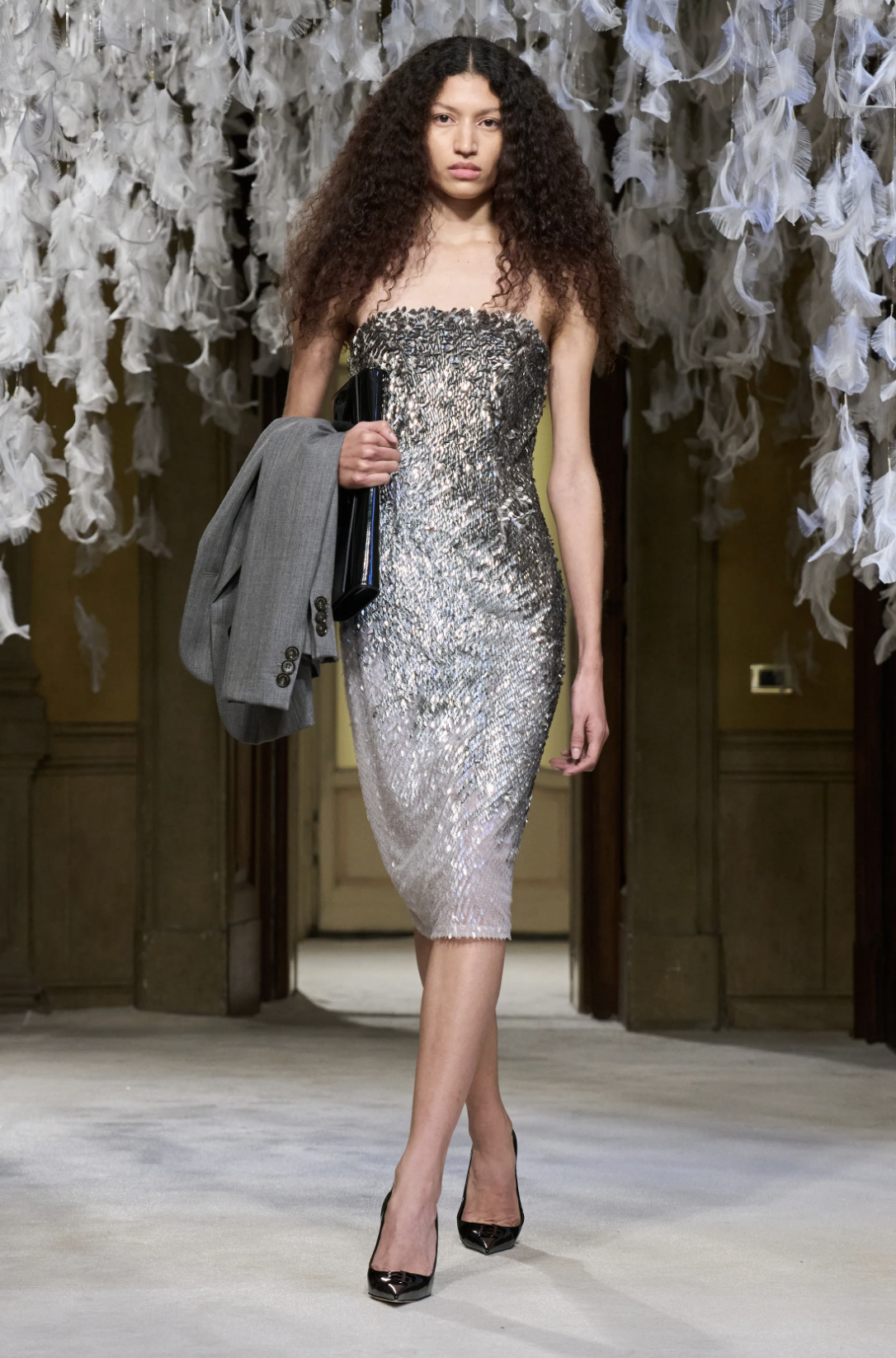
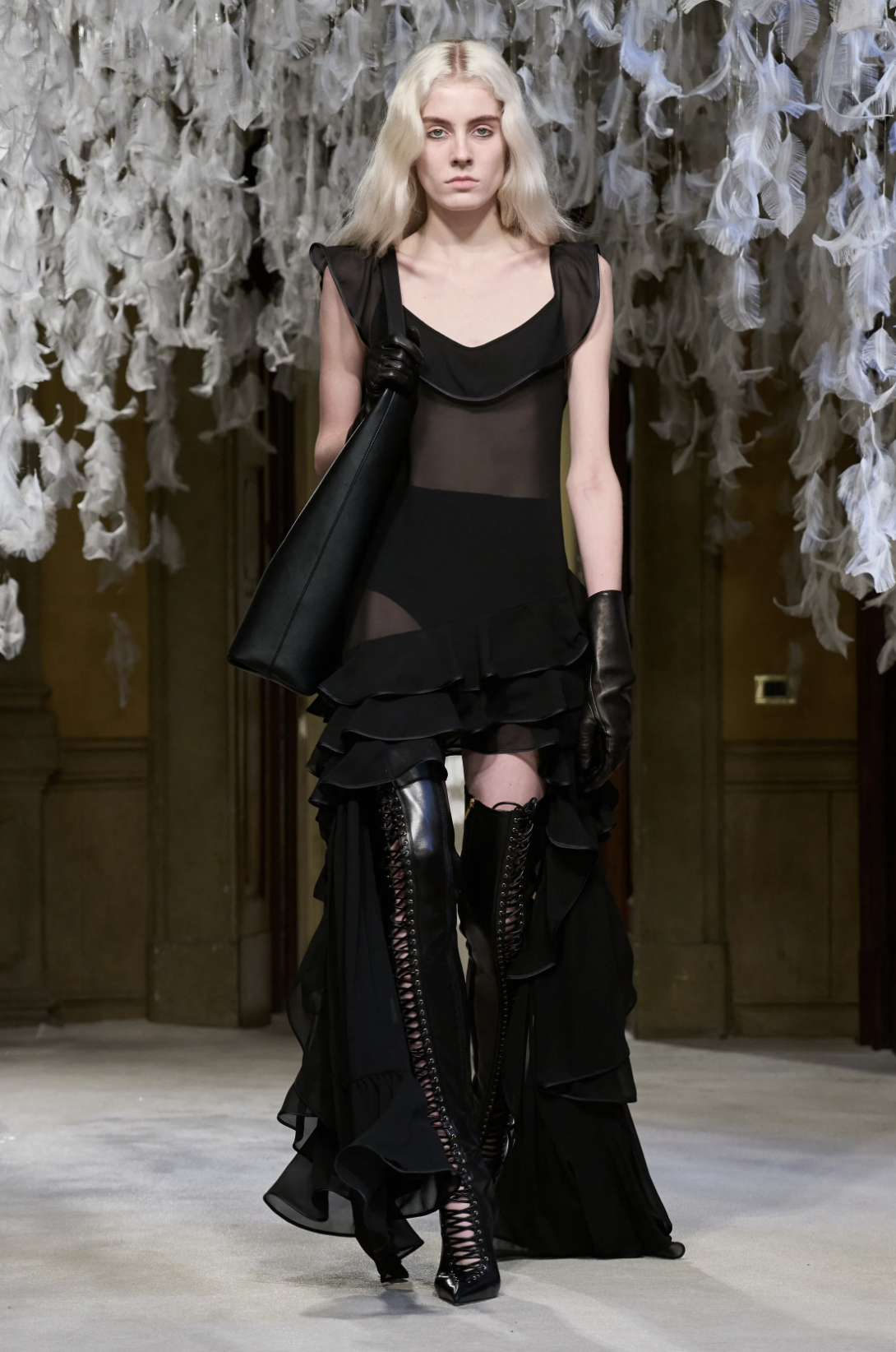
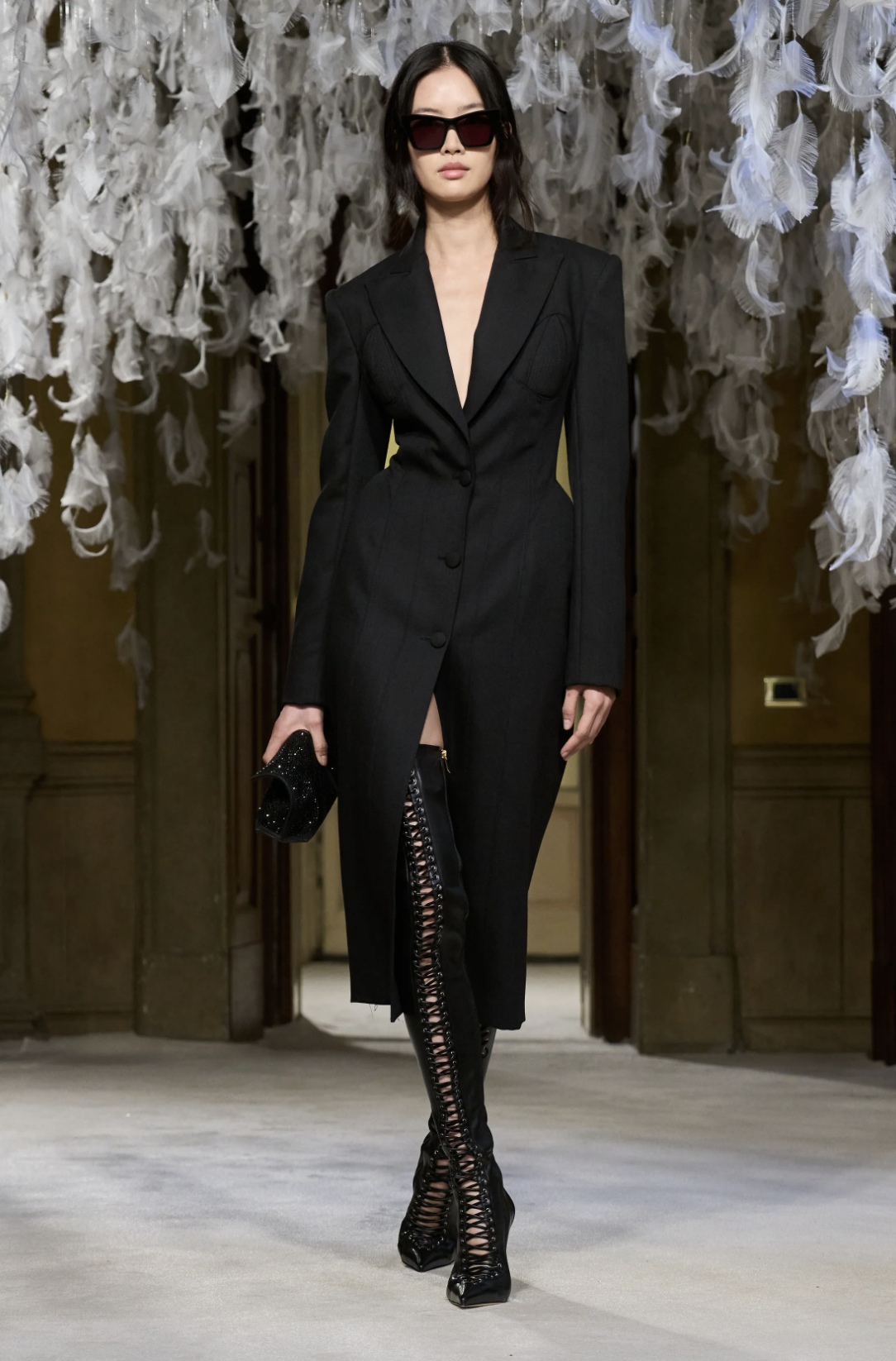
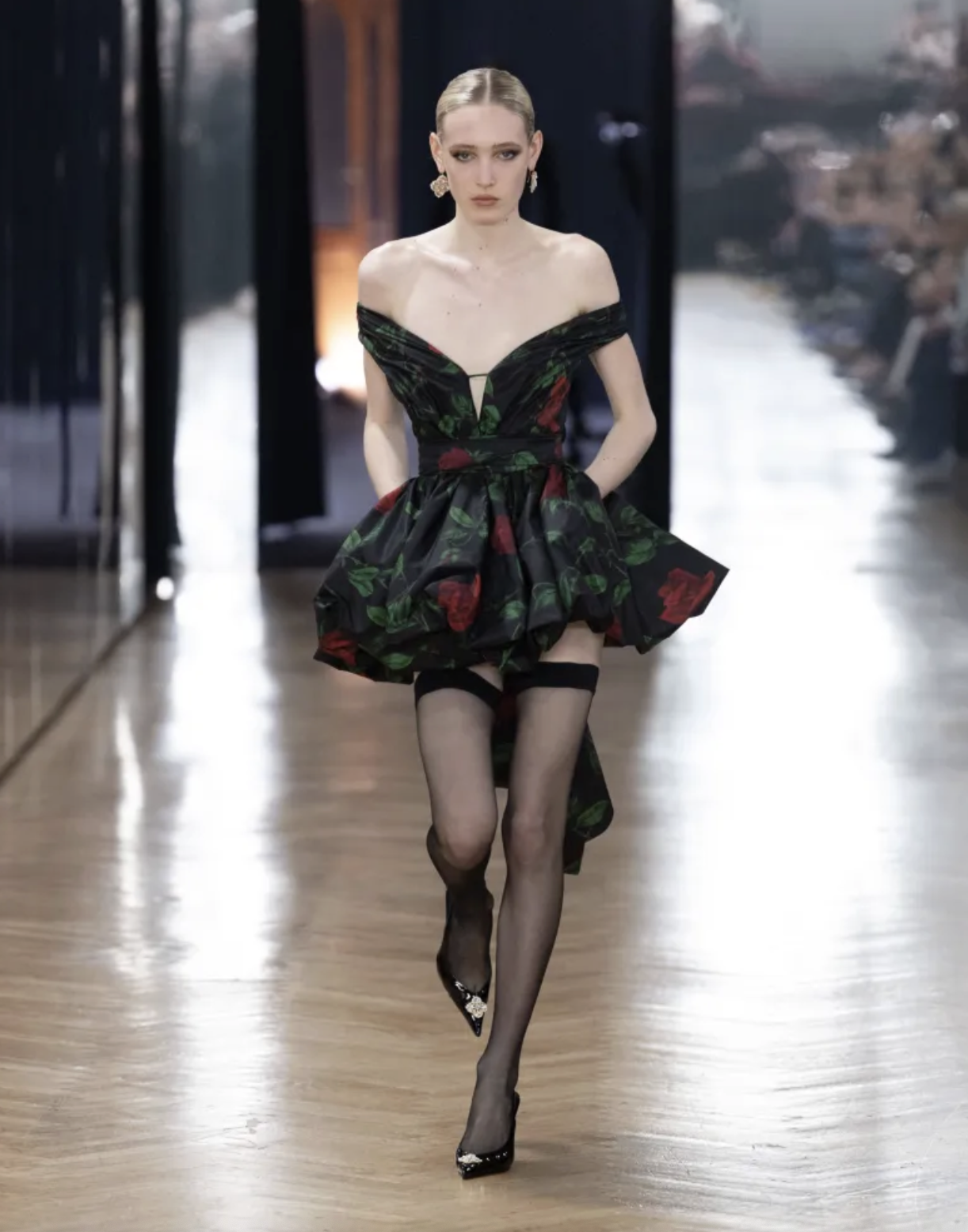
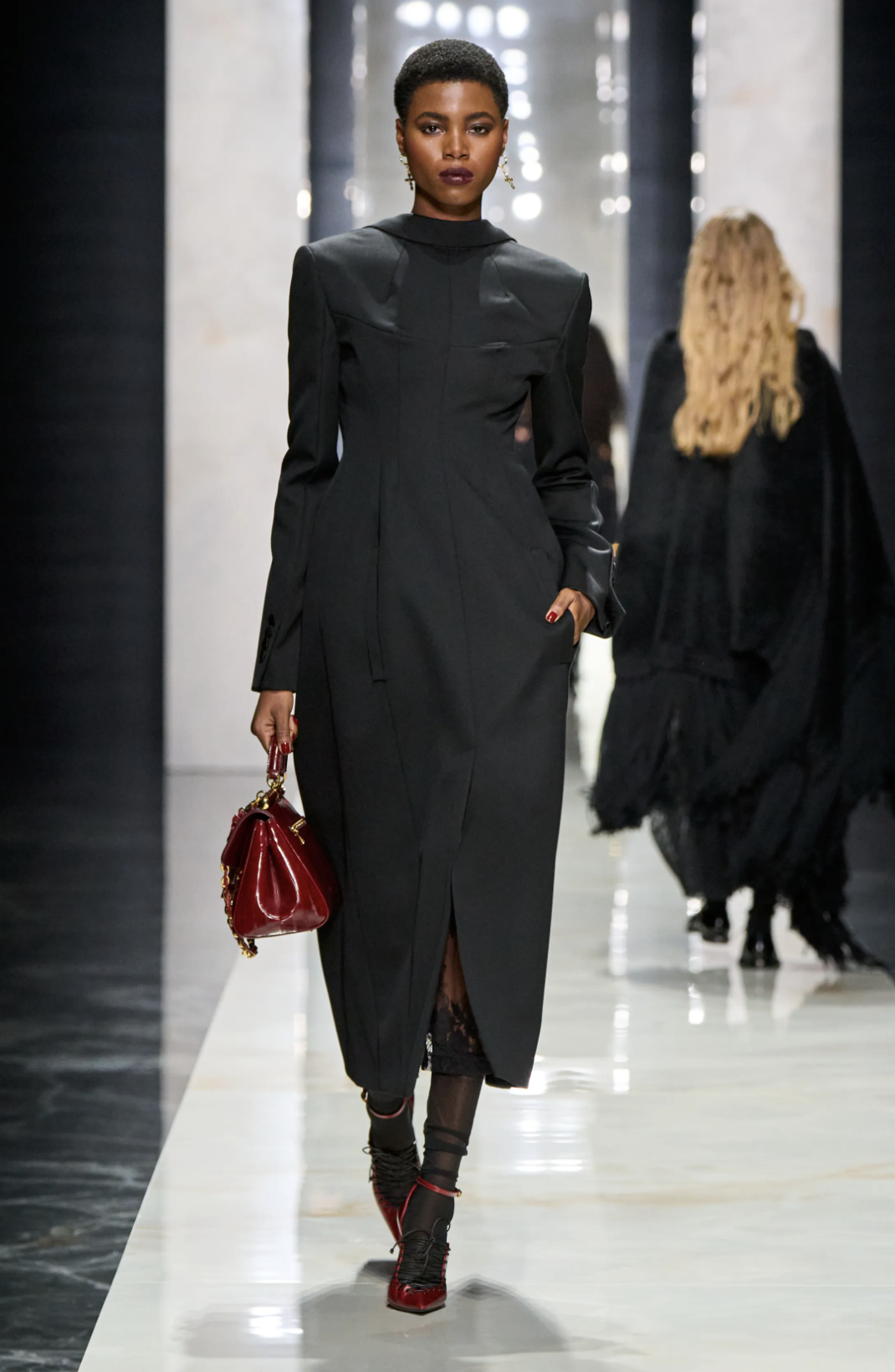
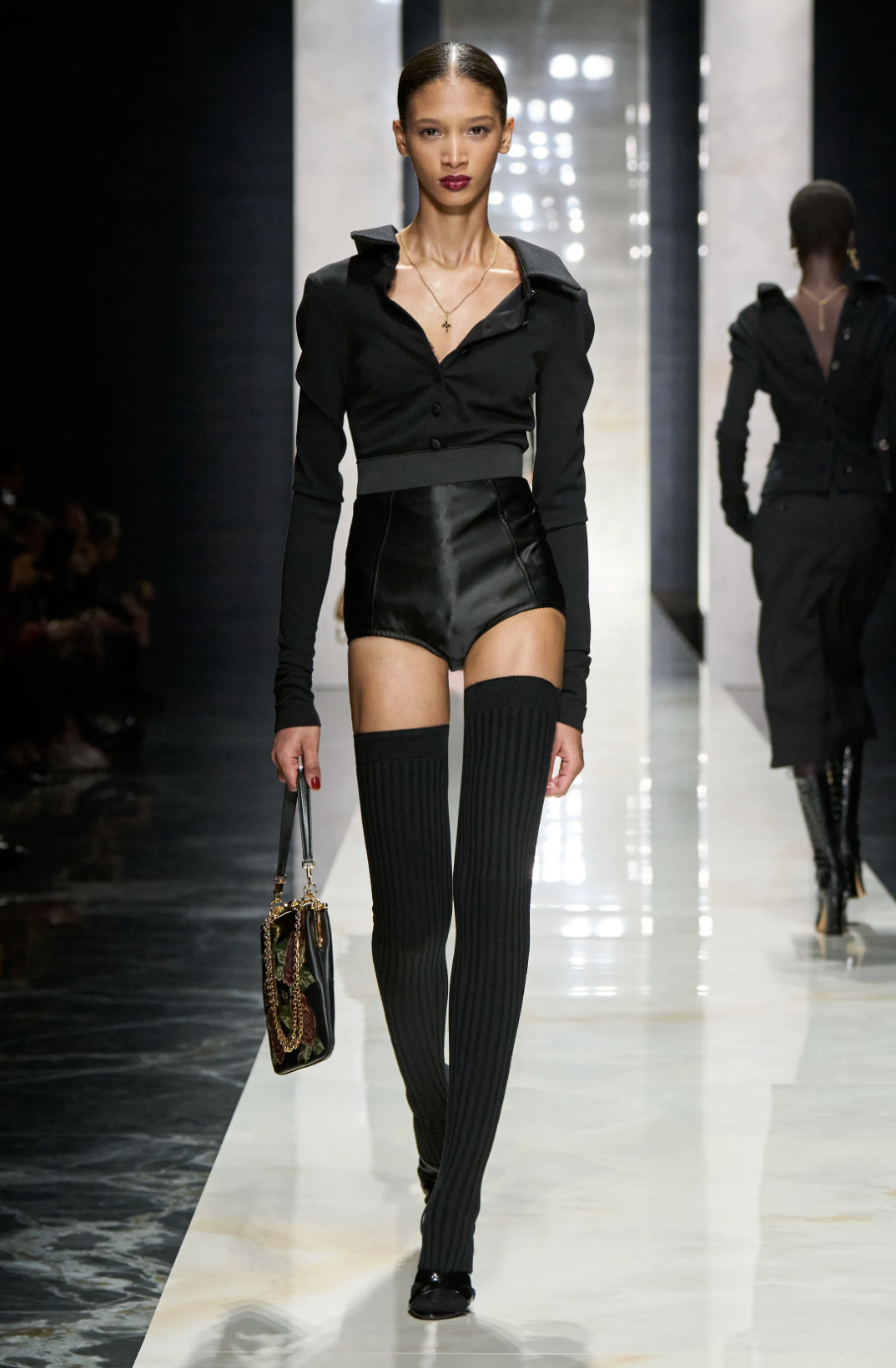
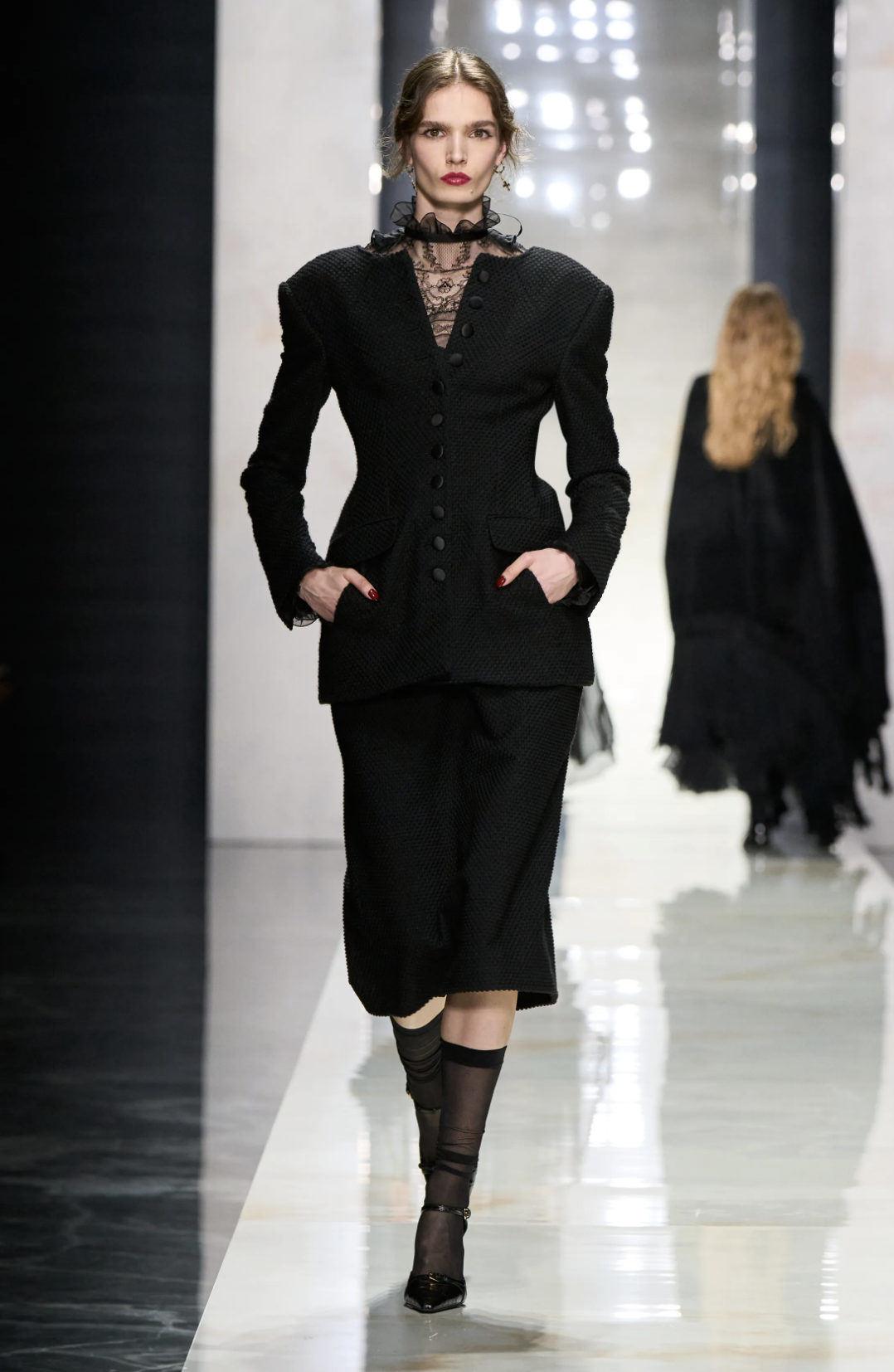
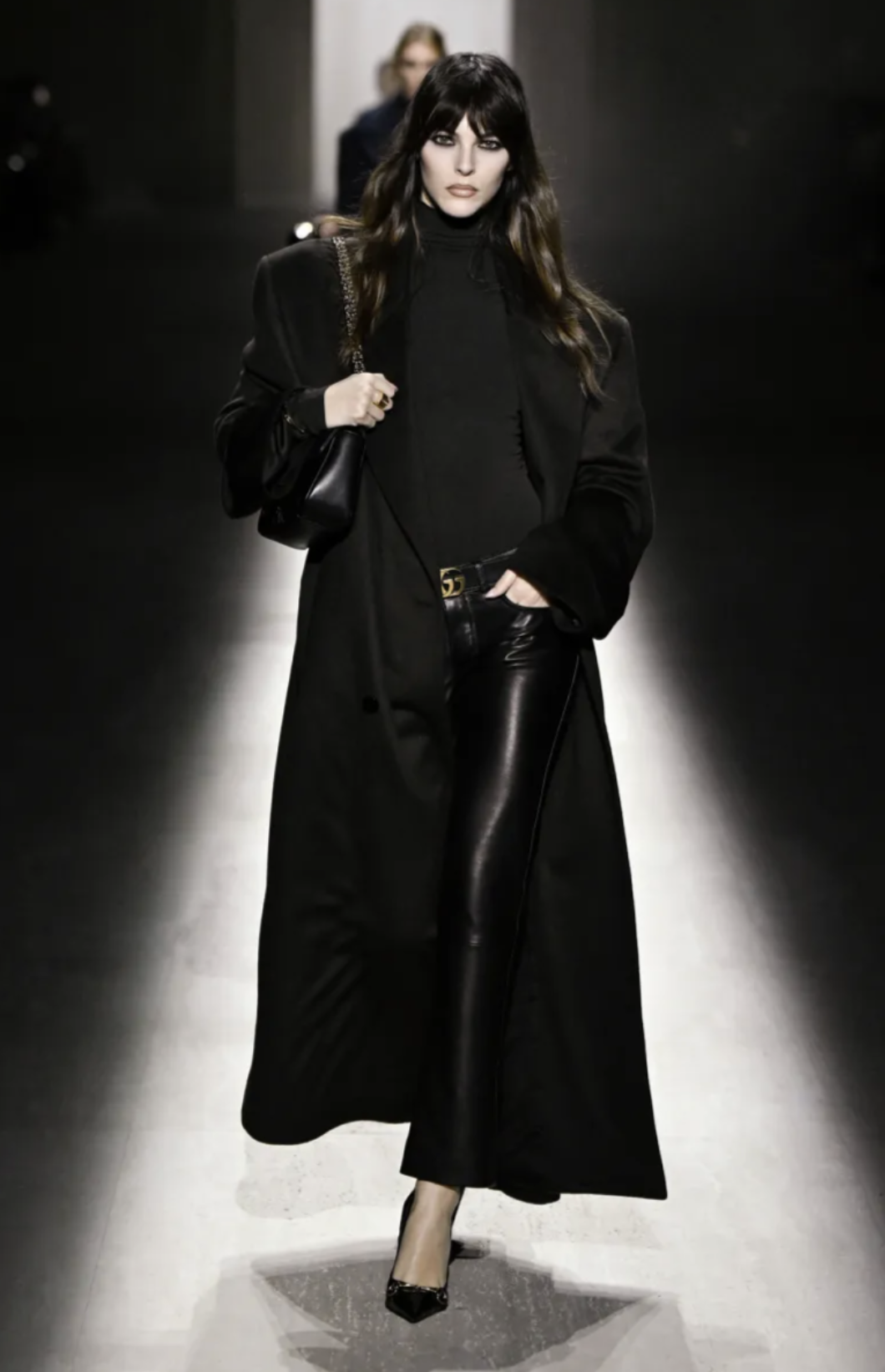
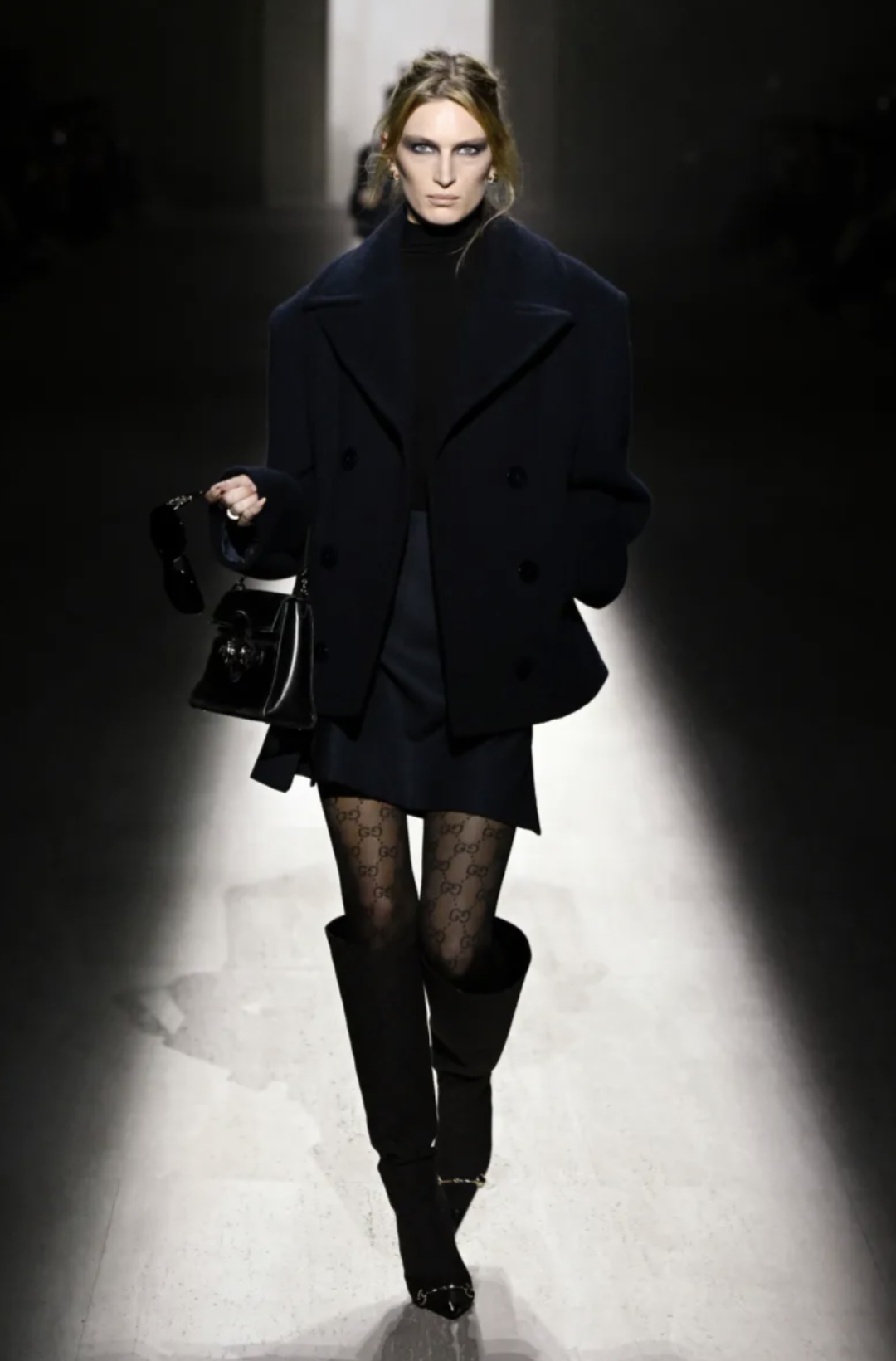
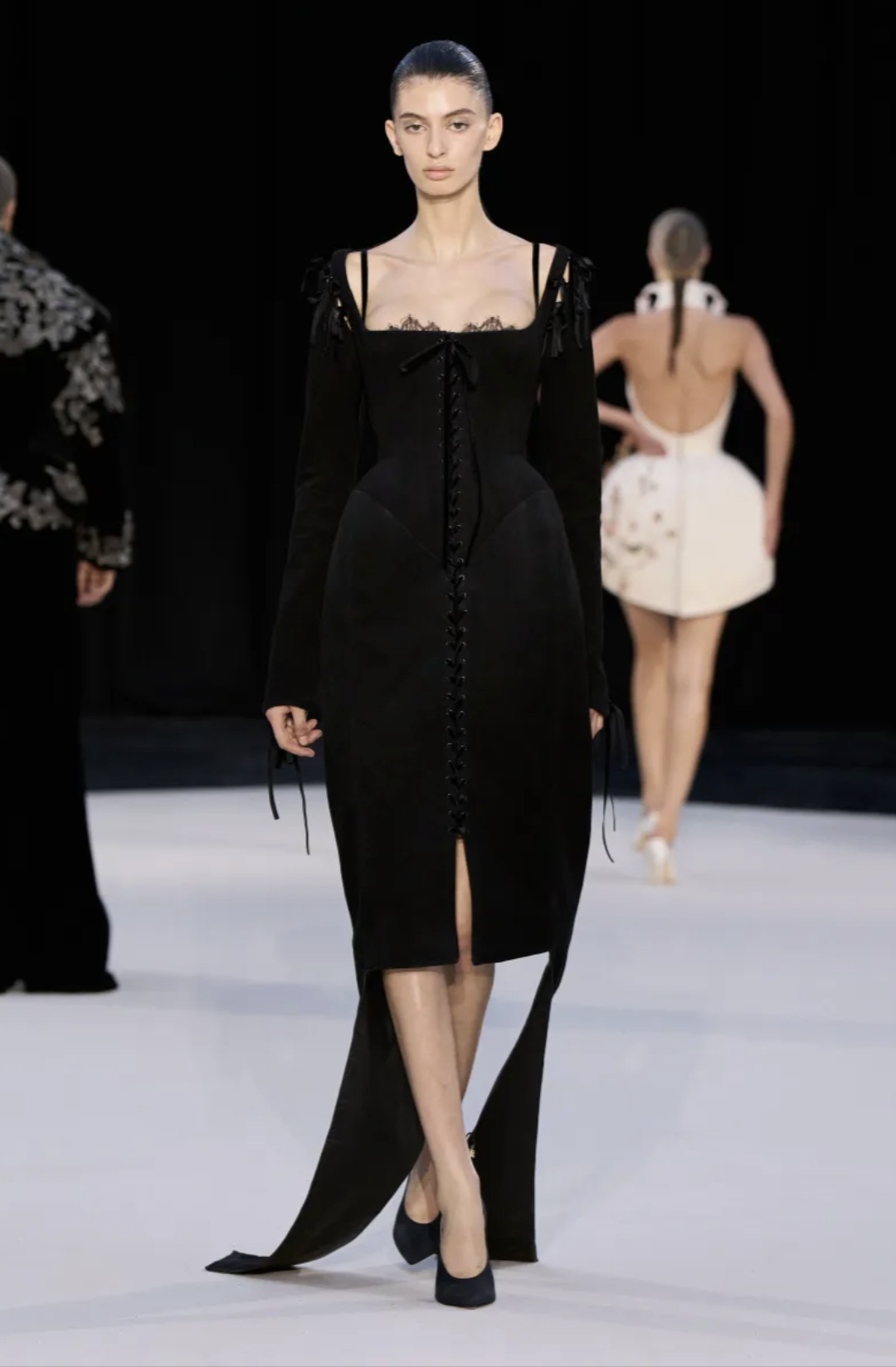
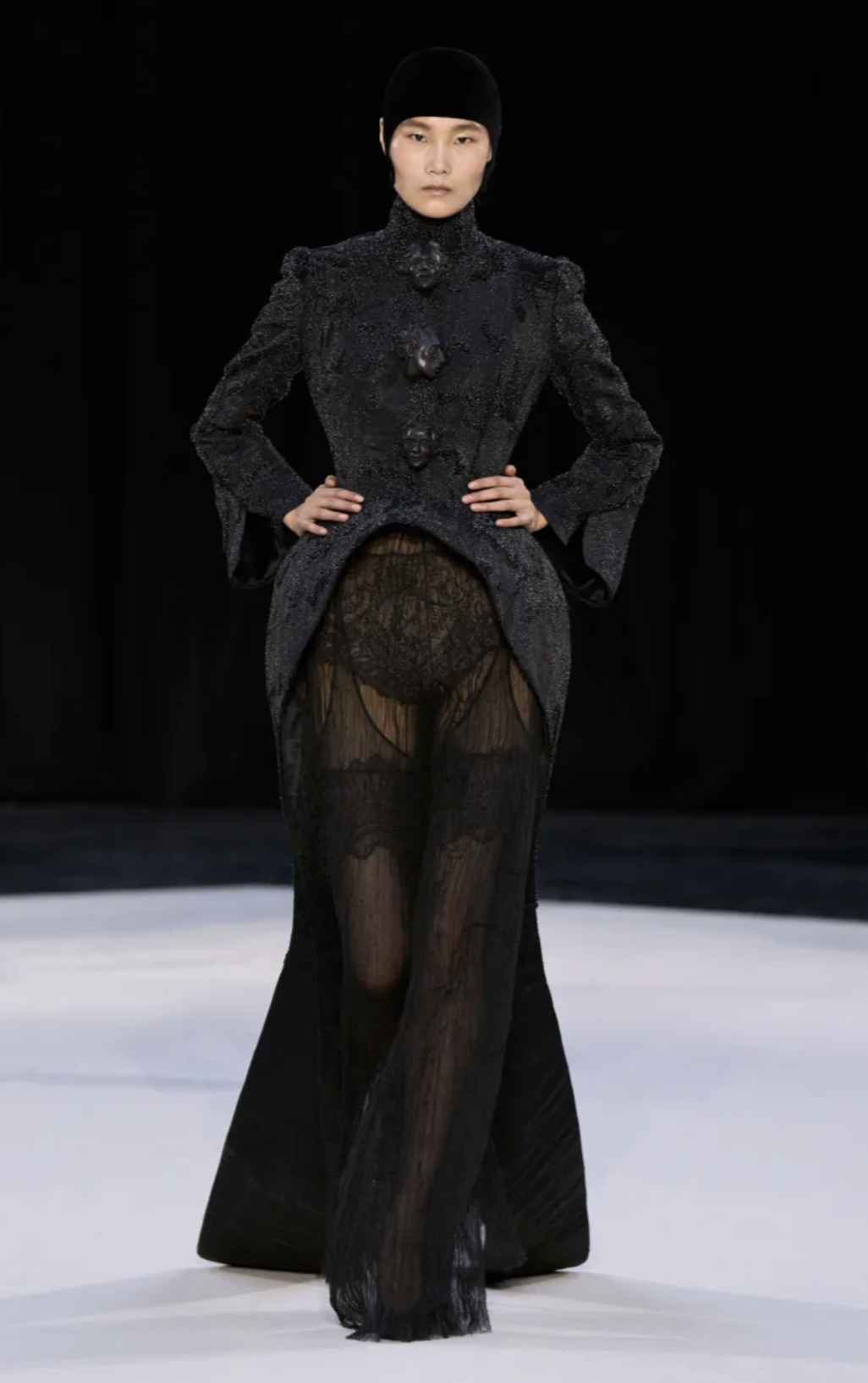
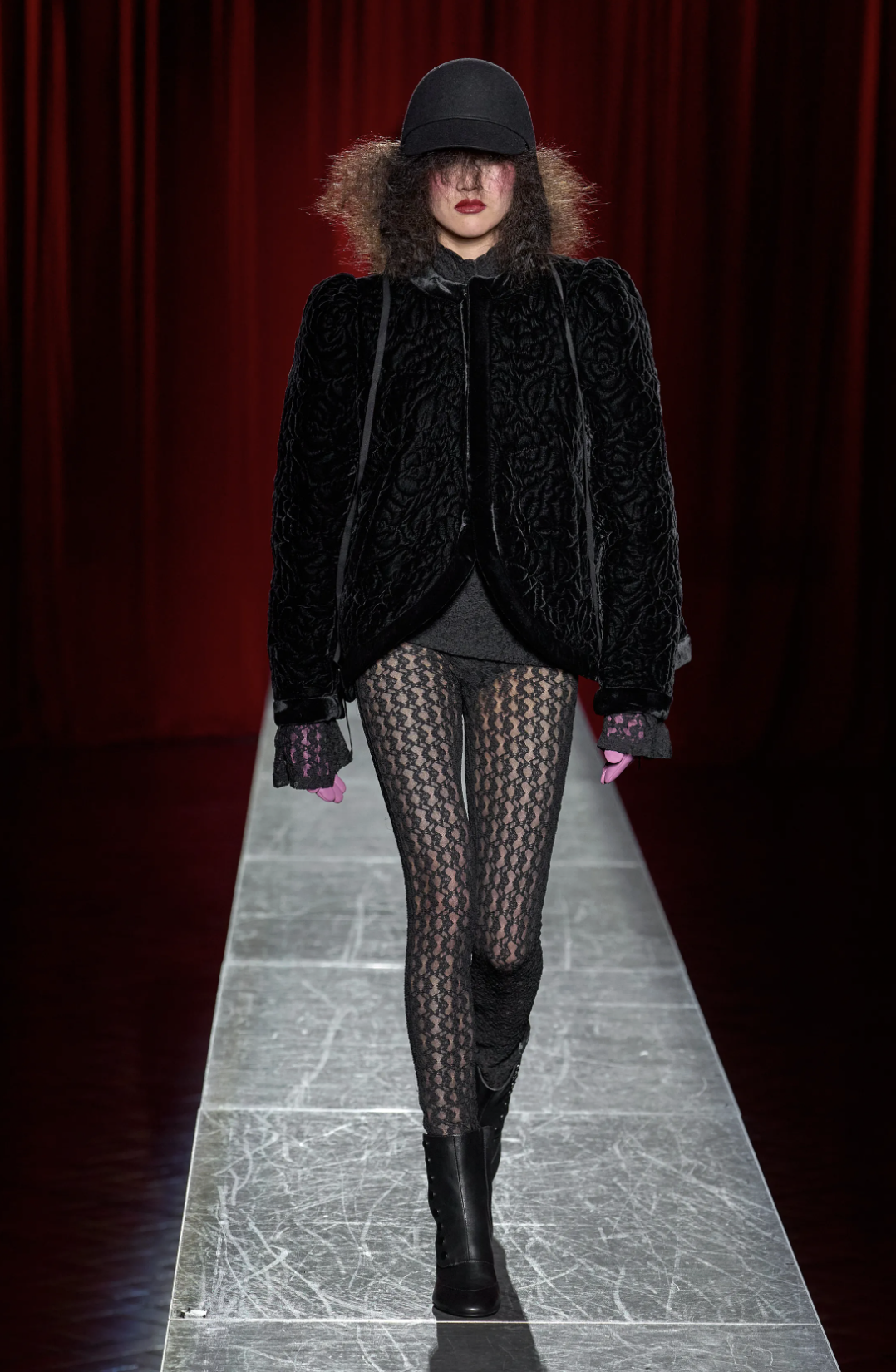
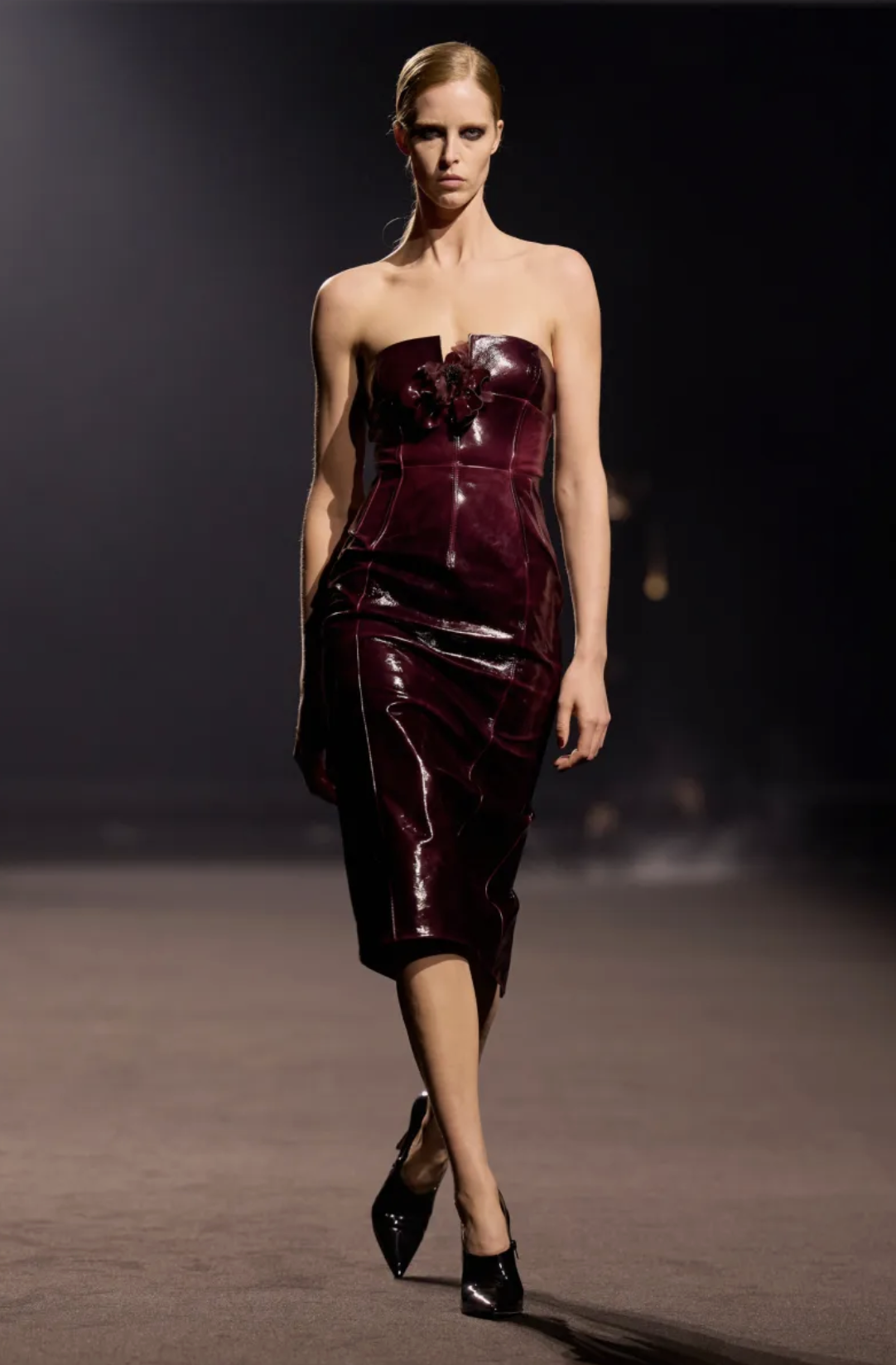
FW26 directs the eye all the way to the floor, treating hosiery and footwear as integral parts of the silhouette. Pattern and shadow transform the leg itself, while pointed toes draw the silhouette into an elongated, razor-sharp line. The styling continues straight down the leg, making bare skin feel almost like a missed opportunity.
Mark Gong: The full thesis in motion. Statement stockings meet razor-pointed shoes, and every model seems to stalk the runway with palpable confidence. We don’t think that’s a coincidence.
Burberry + Mugler: Haunted grey hosiery casts a subtle shadow over the leg, bringing an eerie undertone to otherwise polished styling.
Elisabetta Franchi: Classic pointed pumps share the collection with thigh-high lace-up boots, each calibrated beautifully to the hemline above. Her command of proportion is unmatched.
Blumarine: Stay-ups, hold the garter. The exposed stocking tops give abbreviated hemlines a lingerie-coded finish that keeps the provocation firmly on the chic side of scandalous.
Dolce & Gabbana + Gucci: Both houses cycle through statement stockings and pointed footwear with seductive precision. Sexy, certainly, but sharp enough to best admire from a safe distance.
Ashi Studio + Mugler: A subtle shift of the classic pump: the outer toe extends to a pronounced point while the inner edge remains softly rounded. It’s the kind of detail you notice twice.
Viviano: Pronounced hosiery gives favourite skirts and shorts a longer calendar, making the leg itself part of the outfit as temperatures fall.
The Doctor Is In
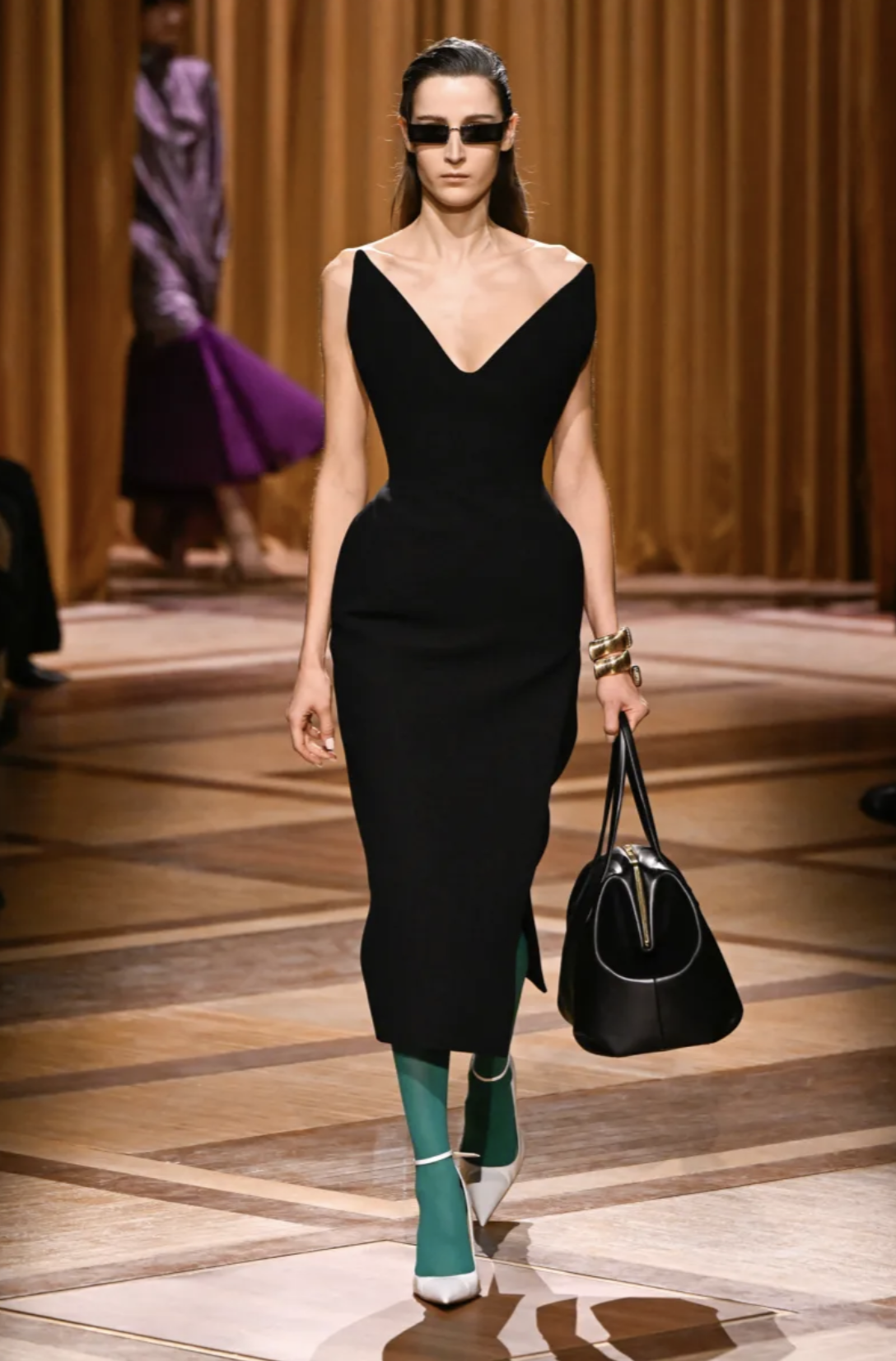
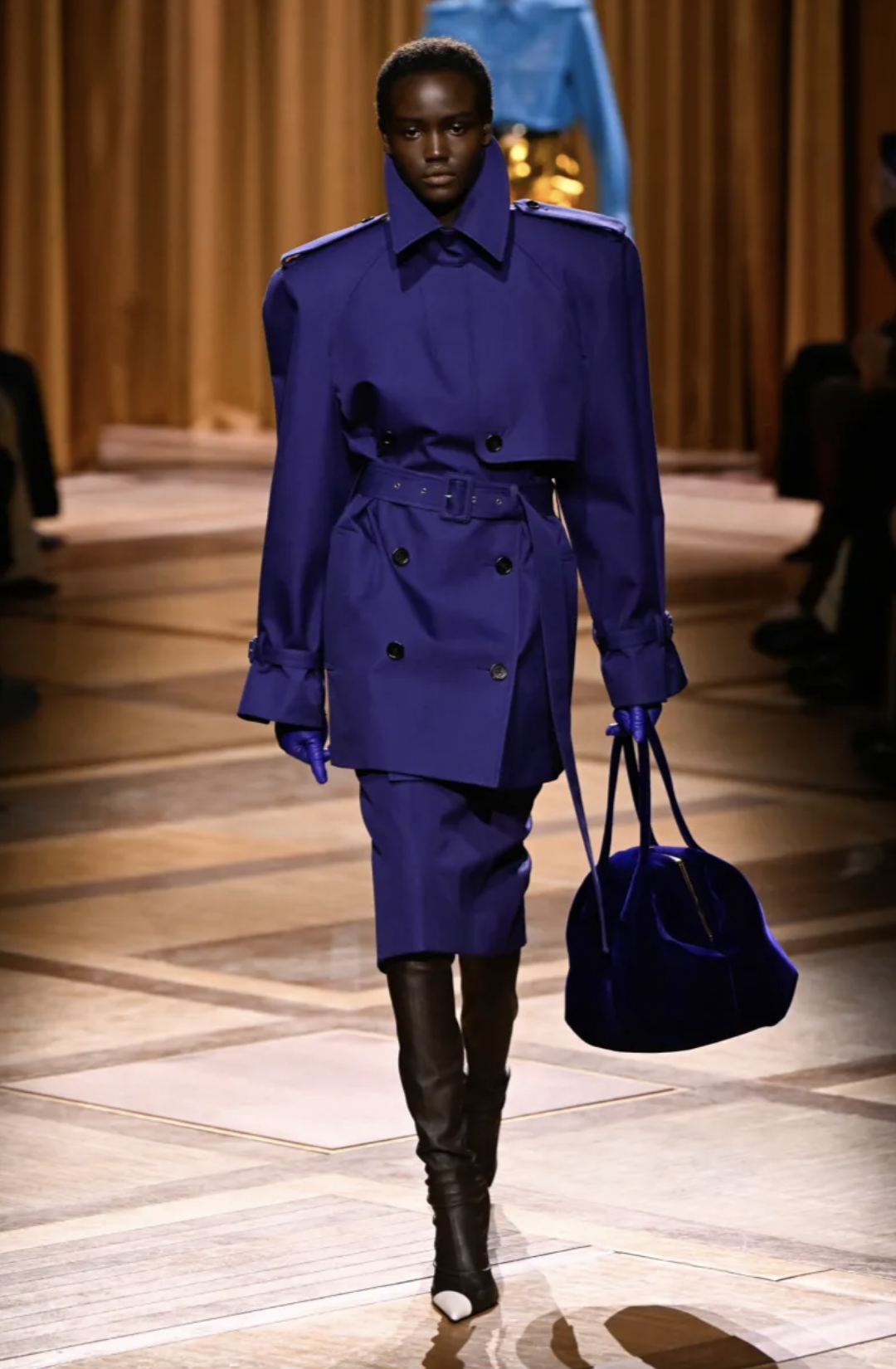
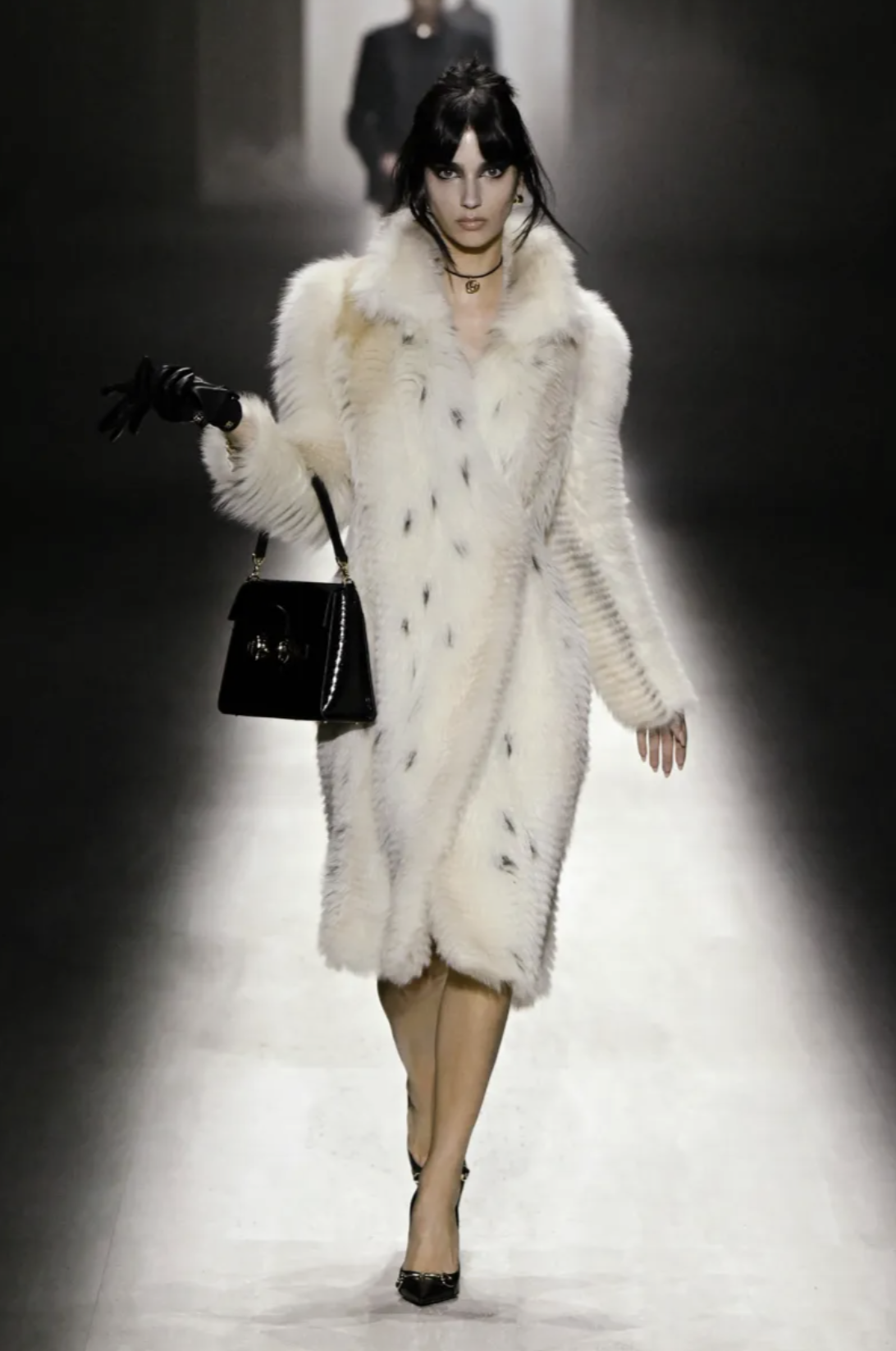
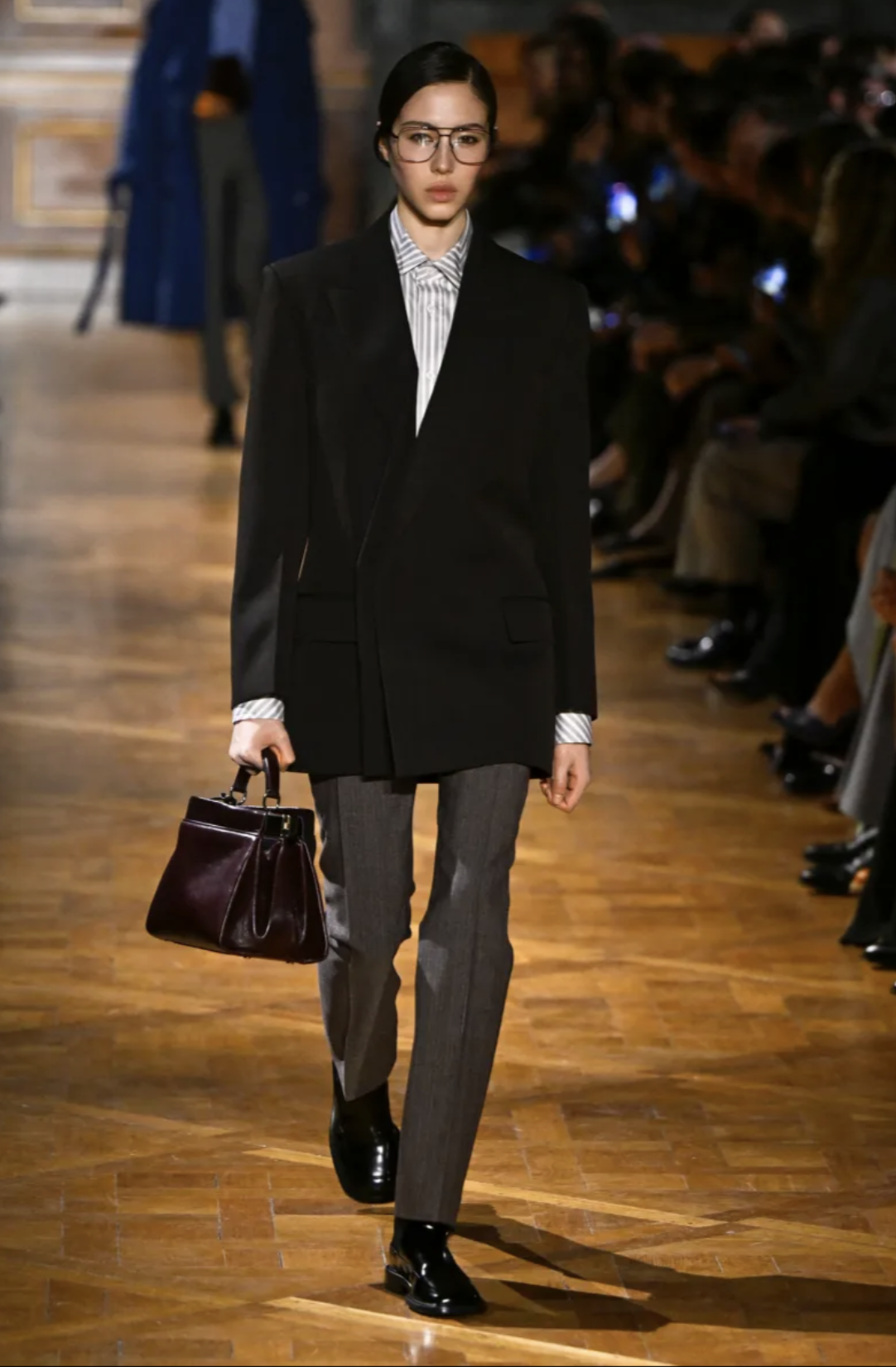
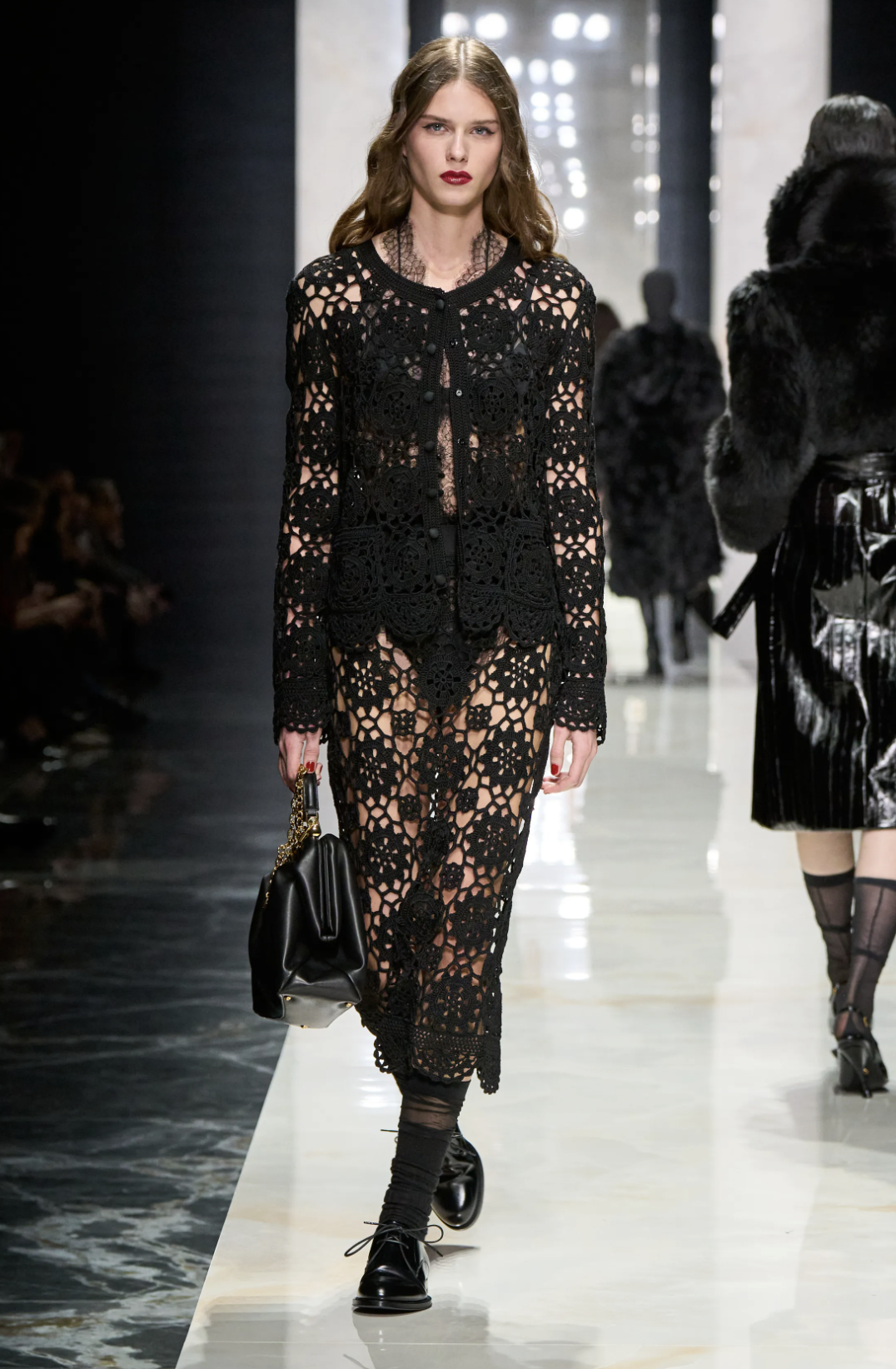
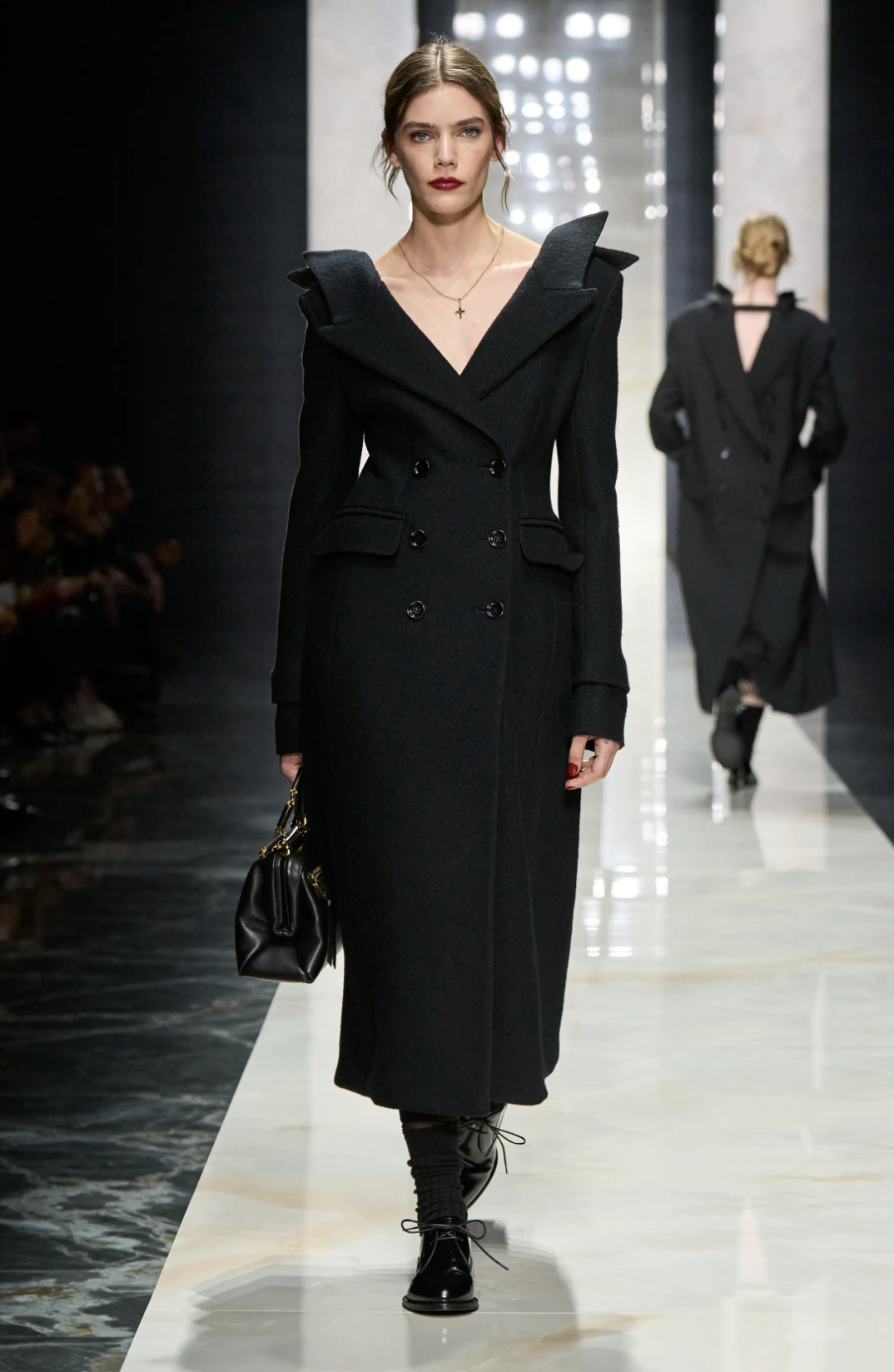
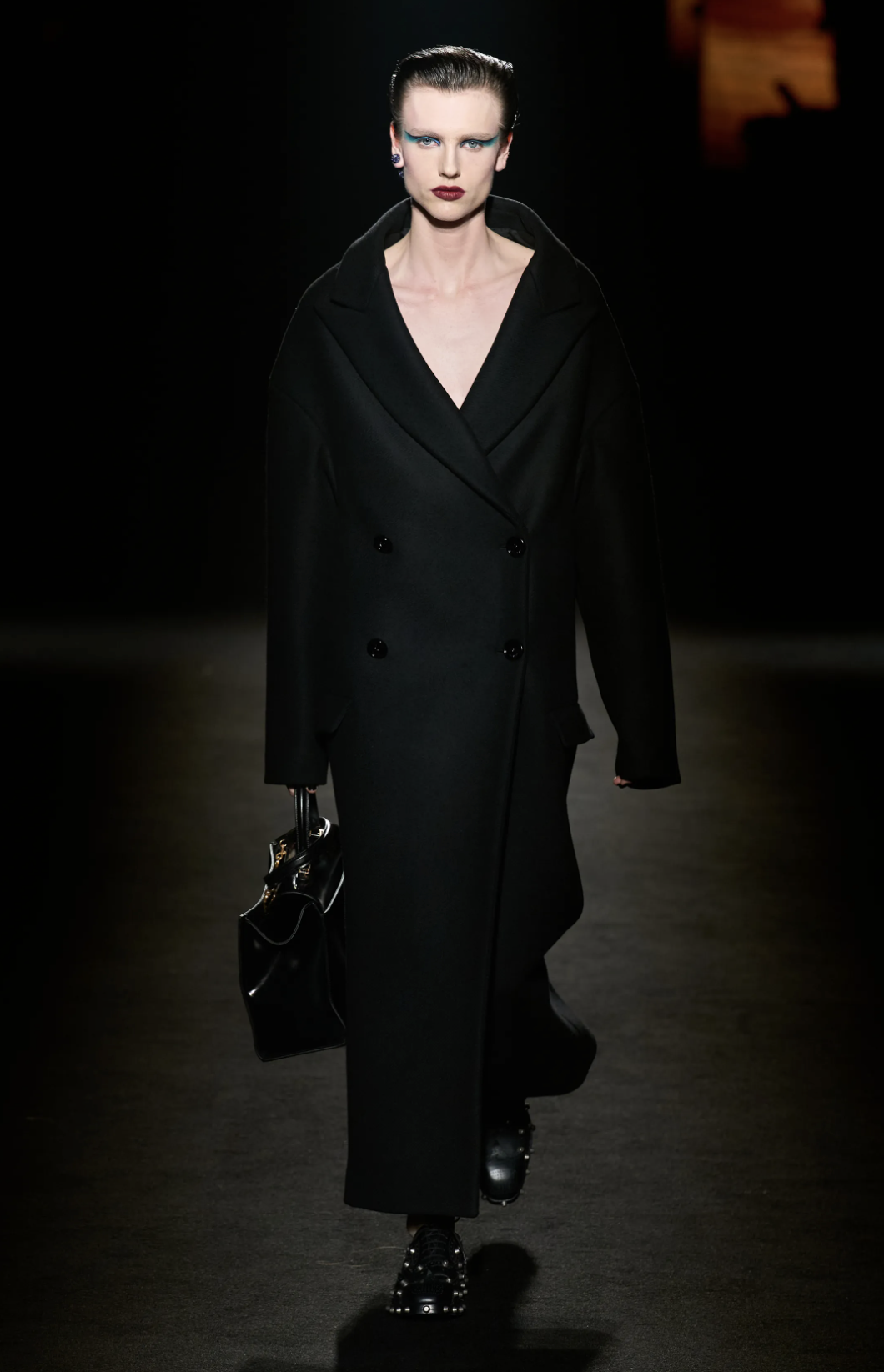
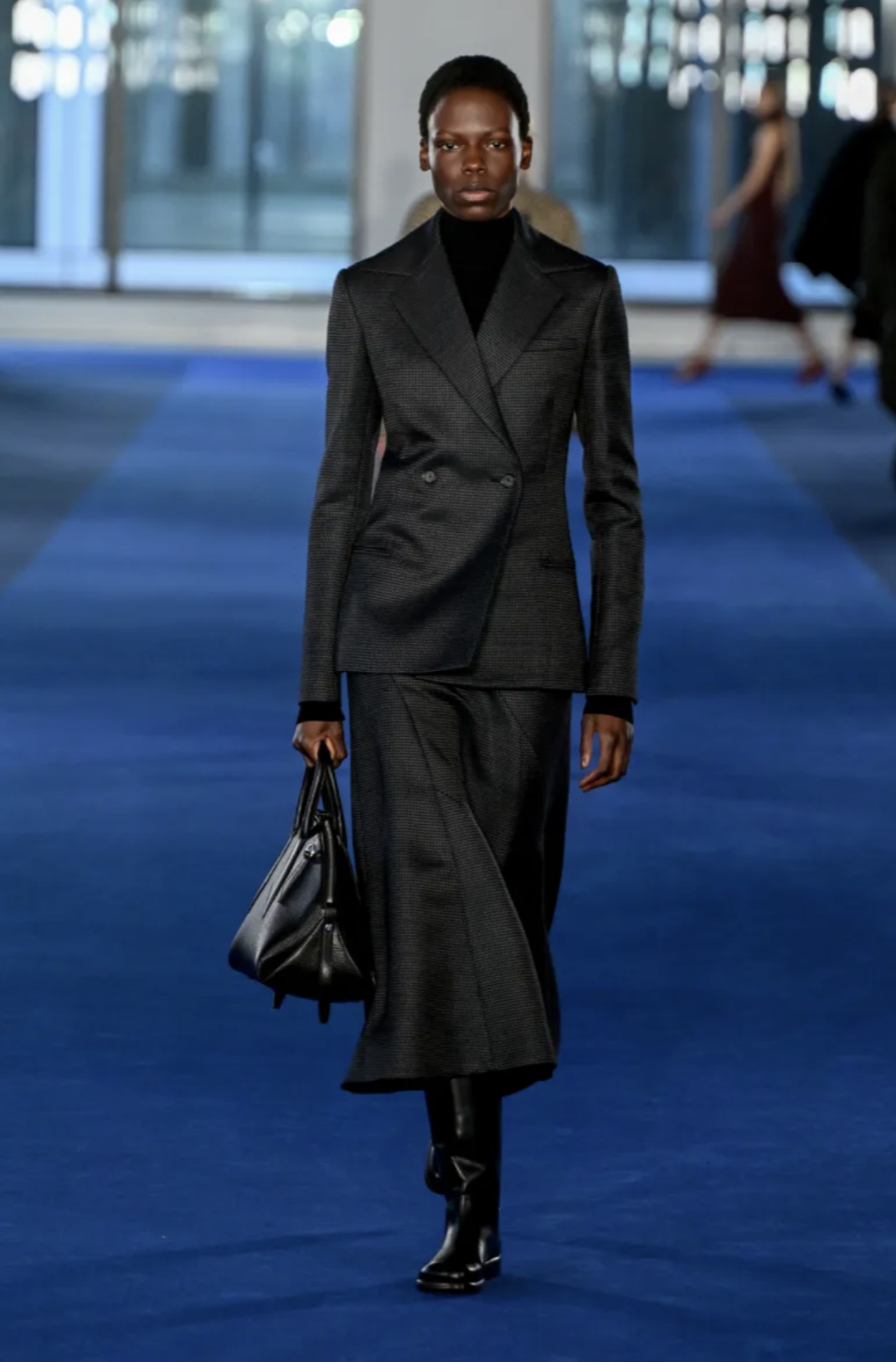
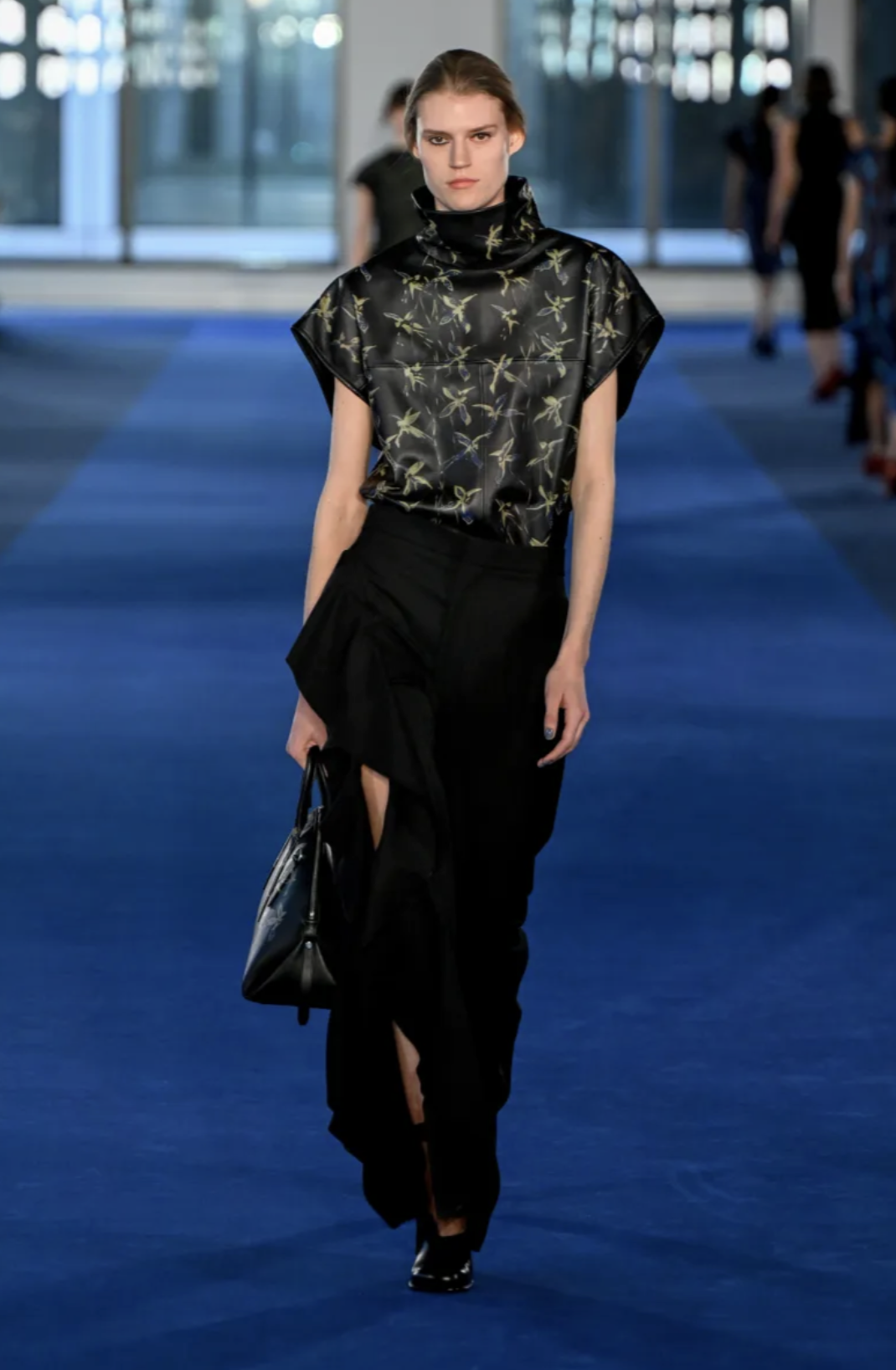
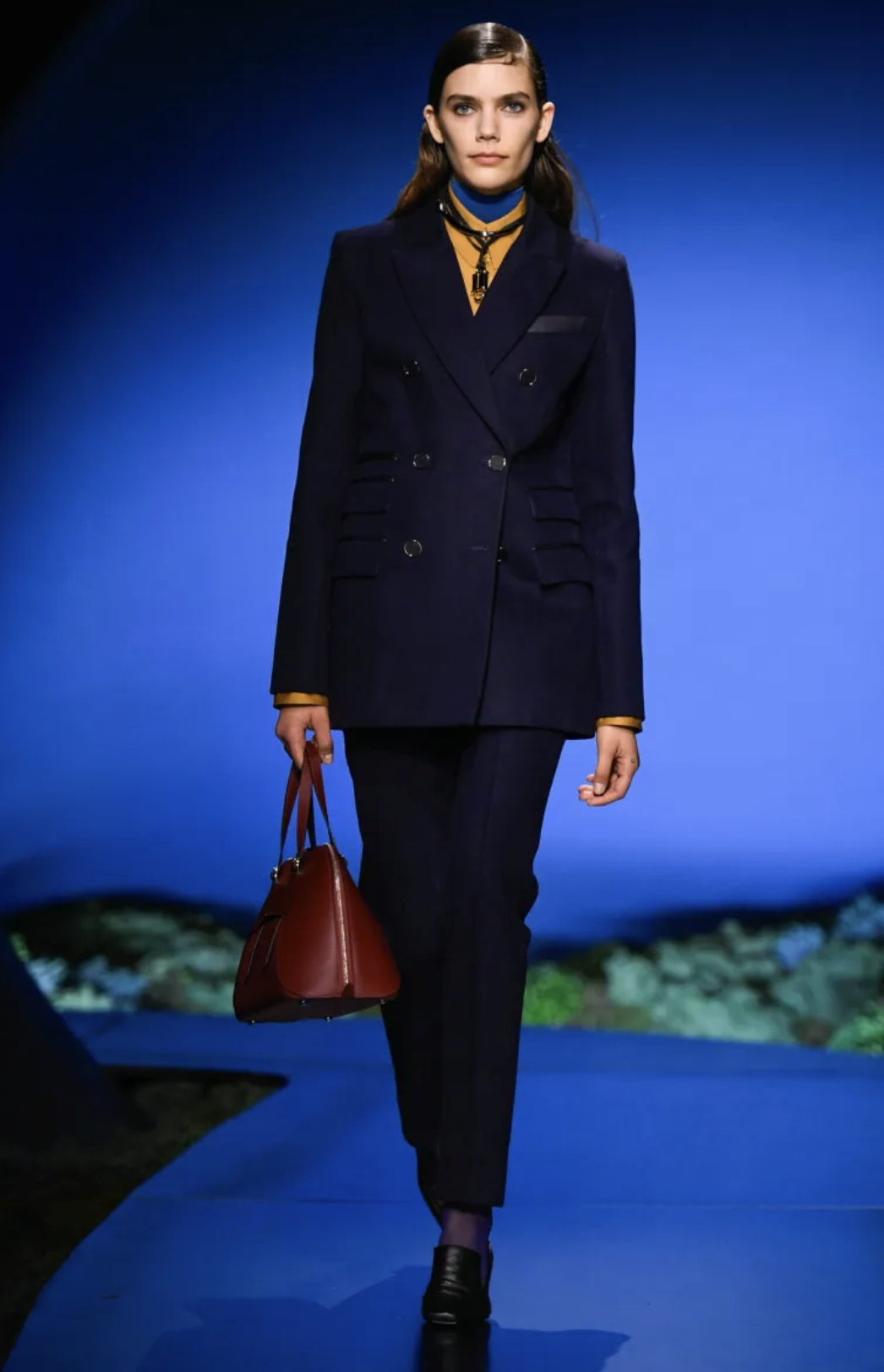
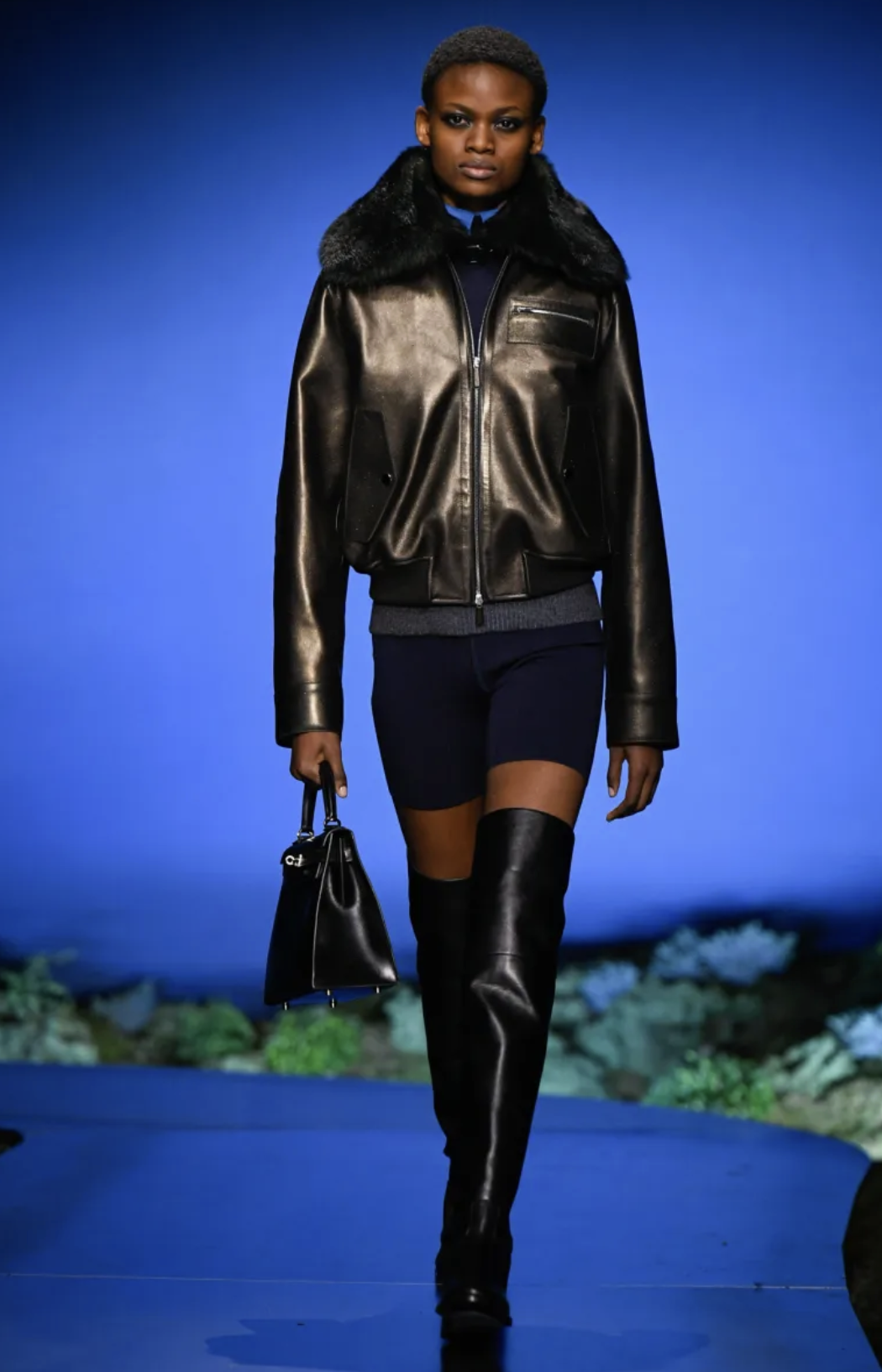
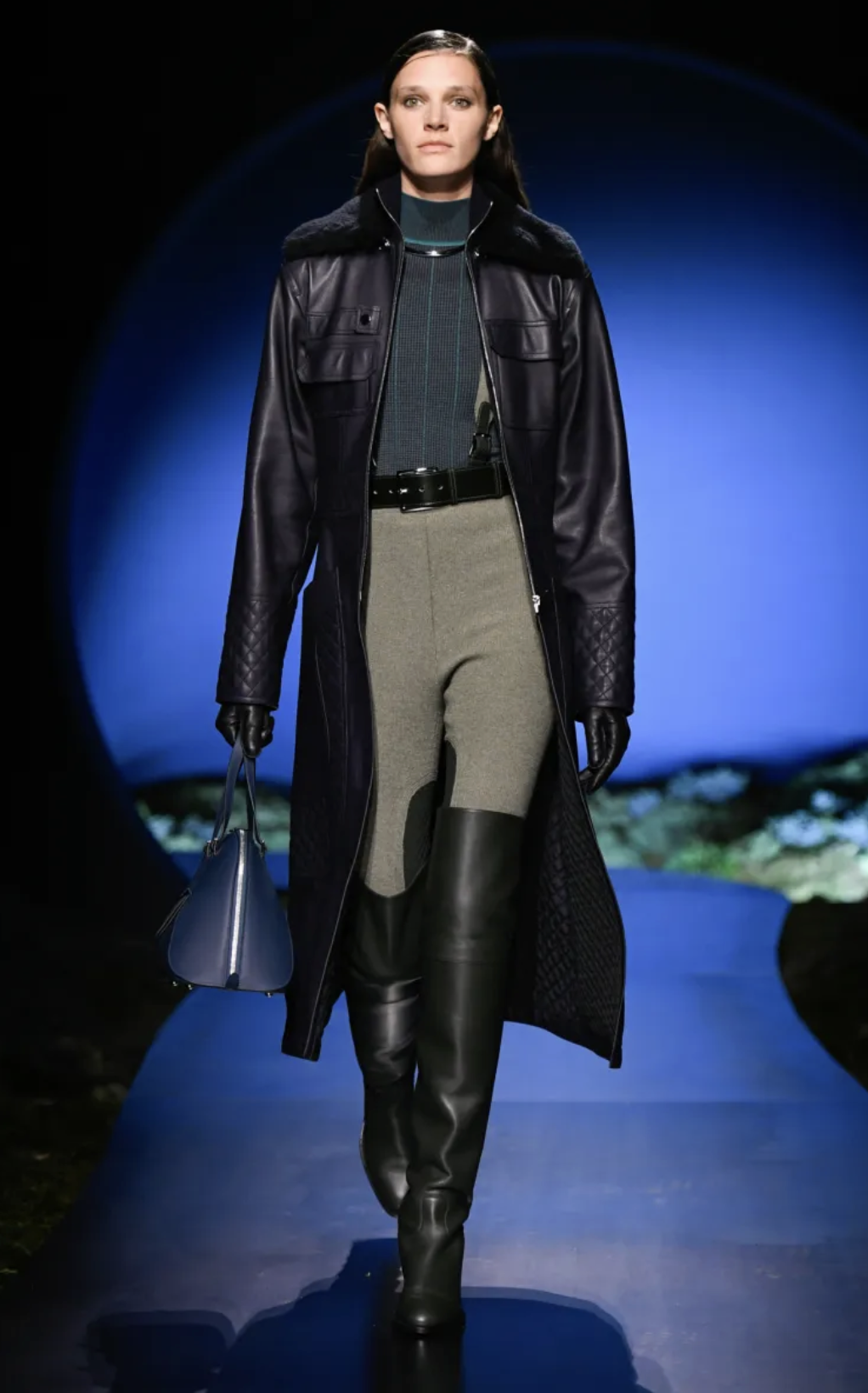
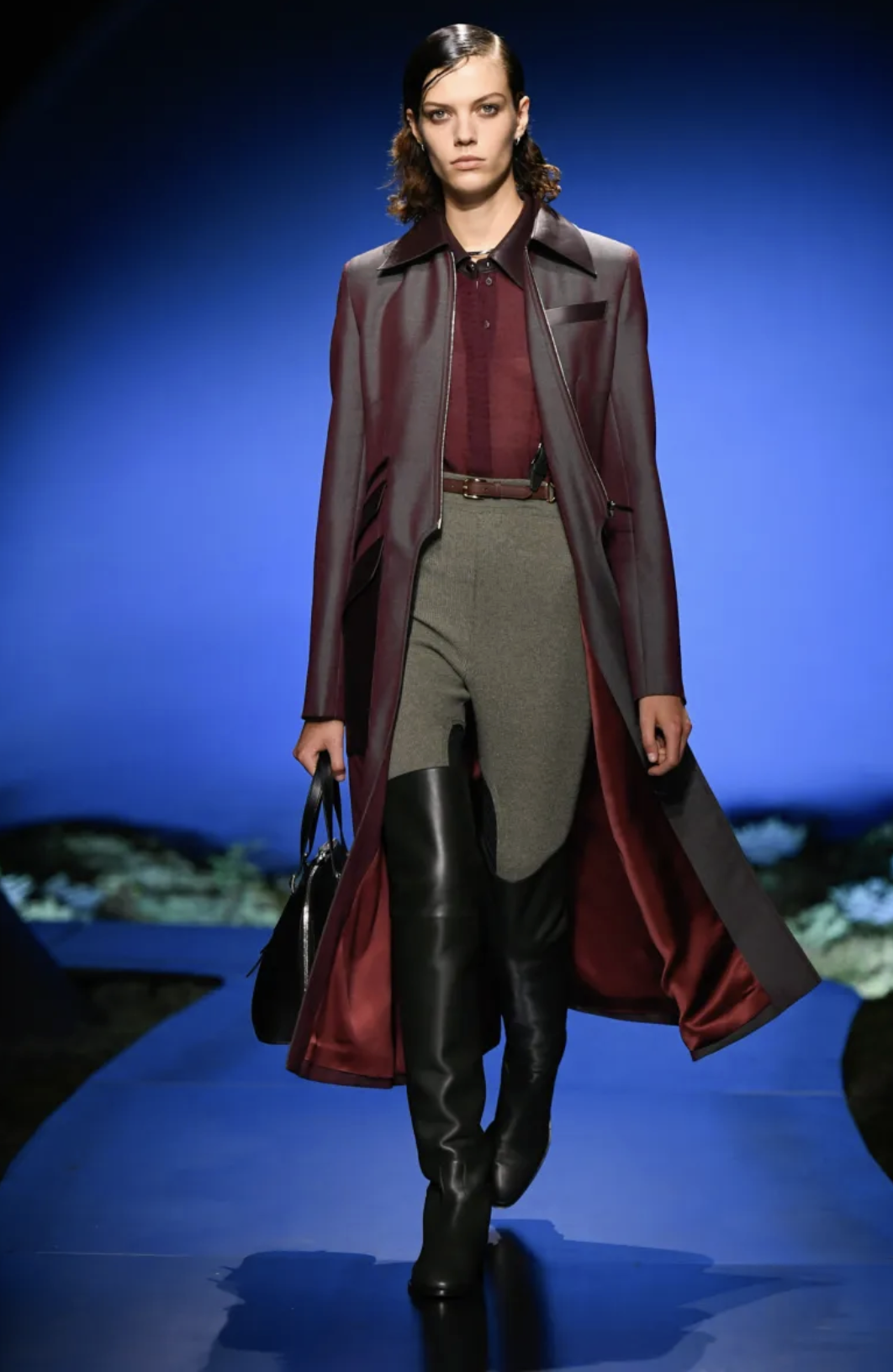
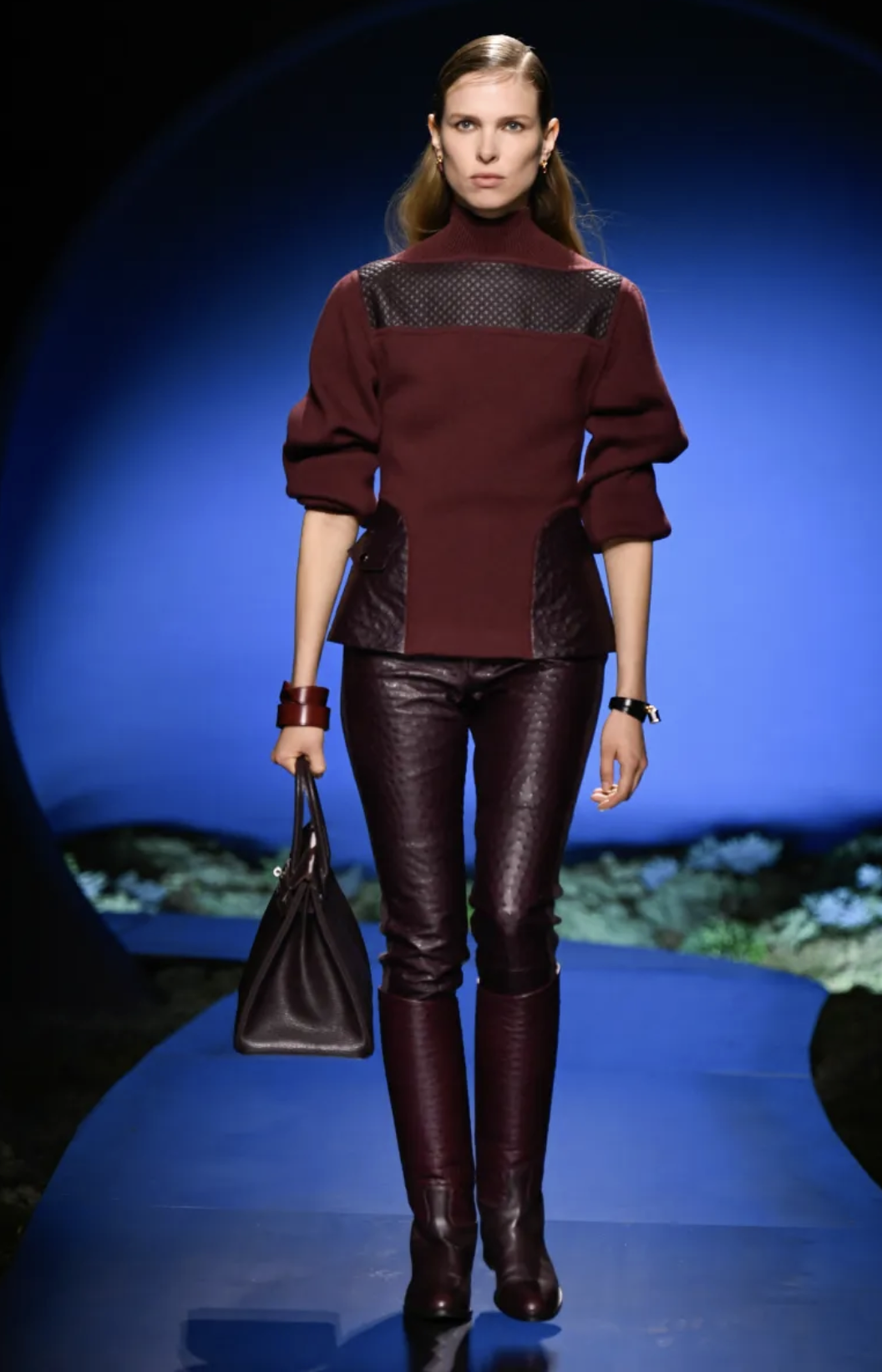
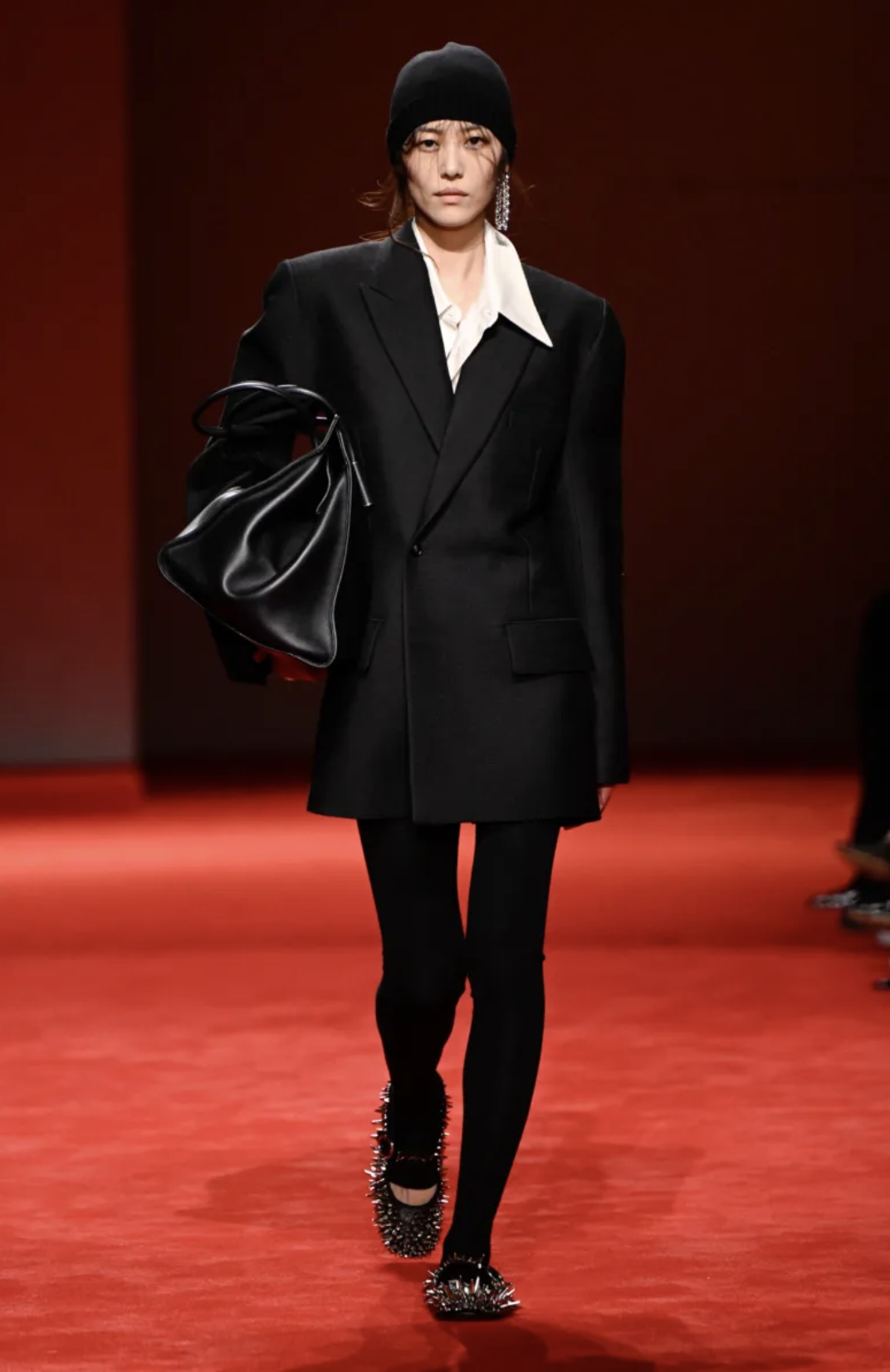
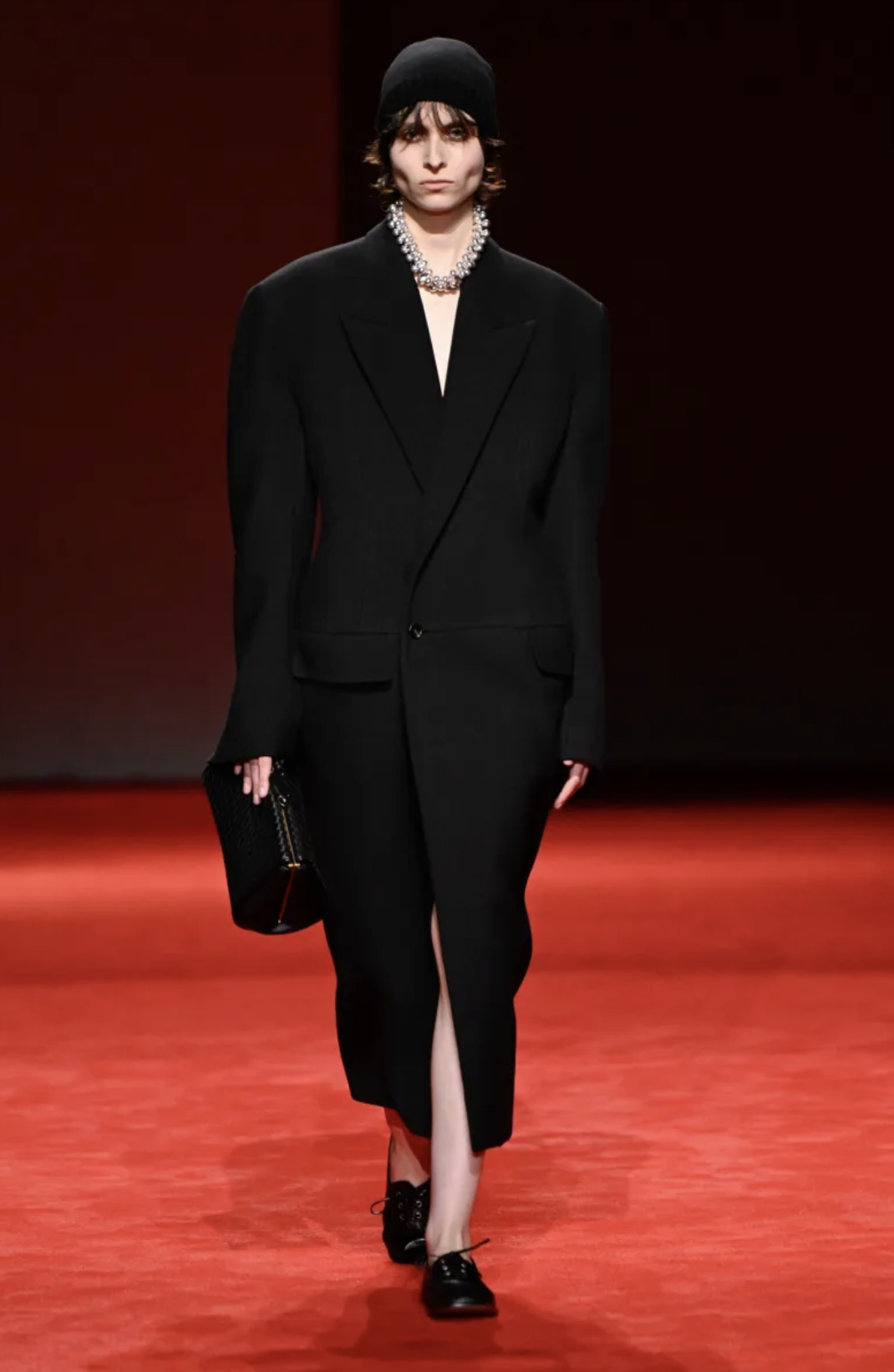
The doctor bag returns with its original authority intact, its structured frame and purposeful proportions feeling especially compelling against FW26’s excesses. Designers play with scale and fabrication while preserving the recognizable architecture, moving easily from compact top-handles to capacious versions that border on luggage. There is something satisfyingly grown-up about a bag that looks prepared for whatever the day may require—or at least leaves everyone wondering what you’re carrying inside.
Mugler: Exactly what we want from a doctor bag. Clean lines establish the classic silhouette, then leather offers the investment-worthy option while saturated colour and velvet make a case for prescribing something with a little more personality.
Gucci + Victoria Beckham: The doctor bag’s little cousins. Compact proportions retain the structured top-handle shape, lending themselves beautifully to the collections’ Dark Academic styling.
Dolce & Gabbana + Balenciaga: Back to the classics. Beautiful leather and disciplined construction strip the silhouette down to the qualities that make a doctor bag feel worthy of investment in the first place.
Hermès + Proenza Schouler: Somewhere between doctor bag and bowler, these interpretations soften the category’s traditional architecture while maintaining its timeless appeal.
Bottega Veneta: Enhance. An oversized interpretation stretches the familiar proportions into something closer to an extraordinarily chic carryall.
Primal Instinct
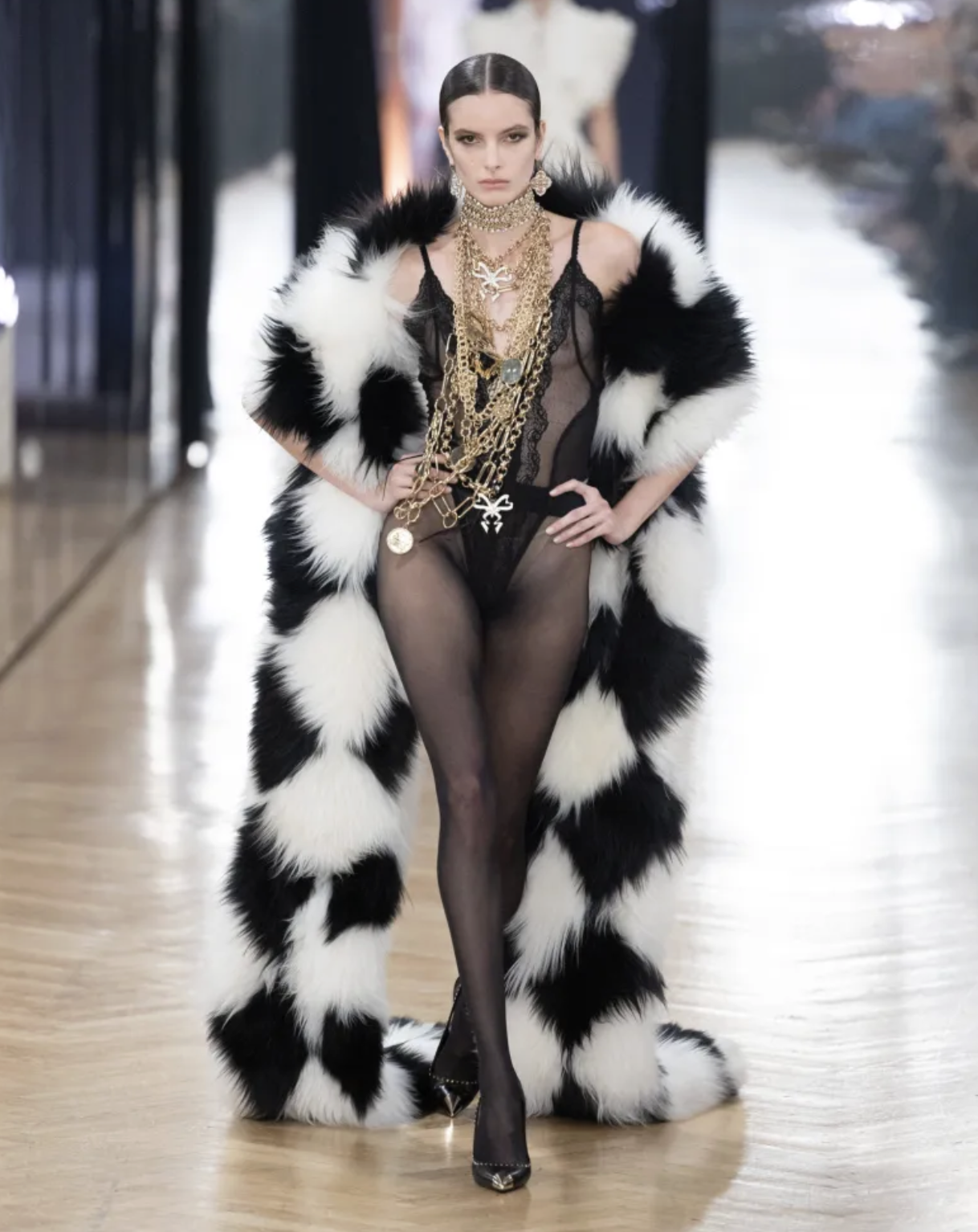
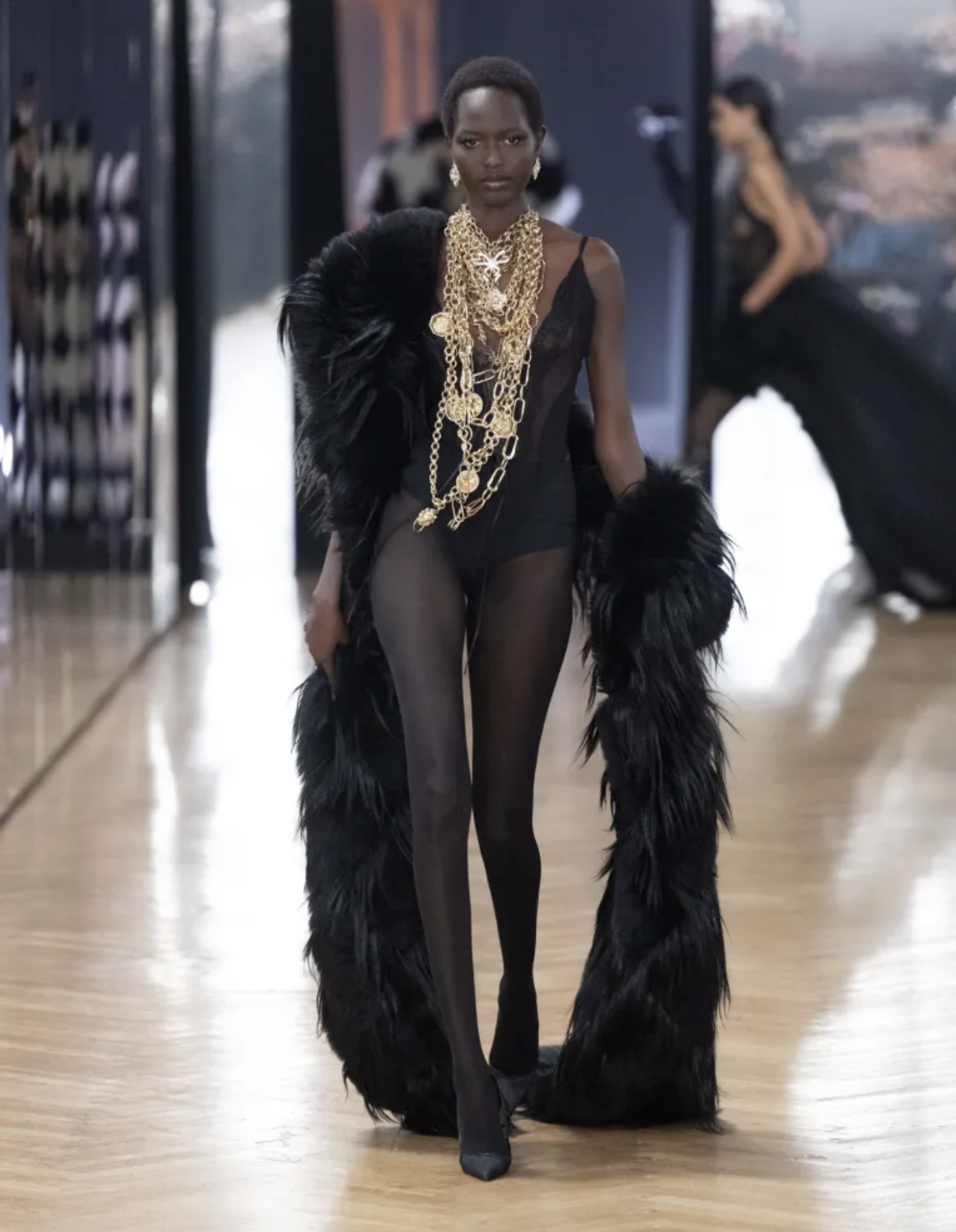
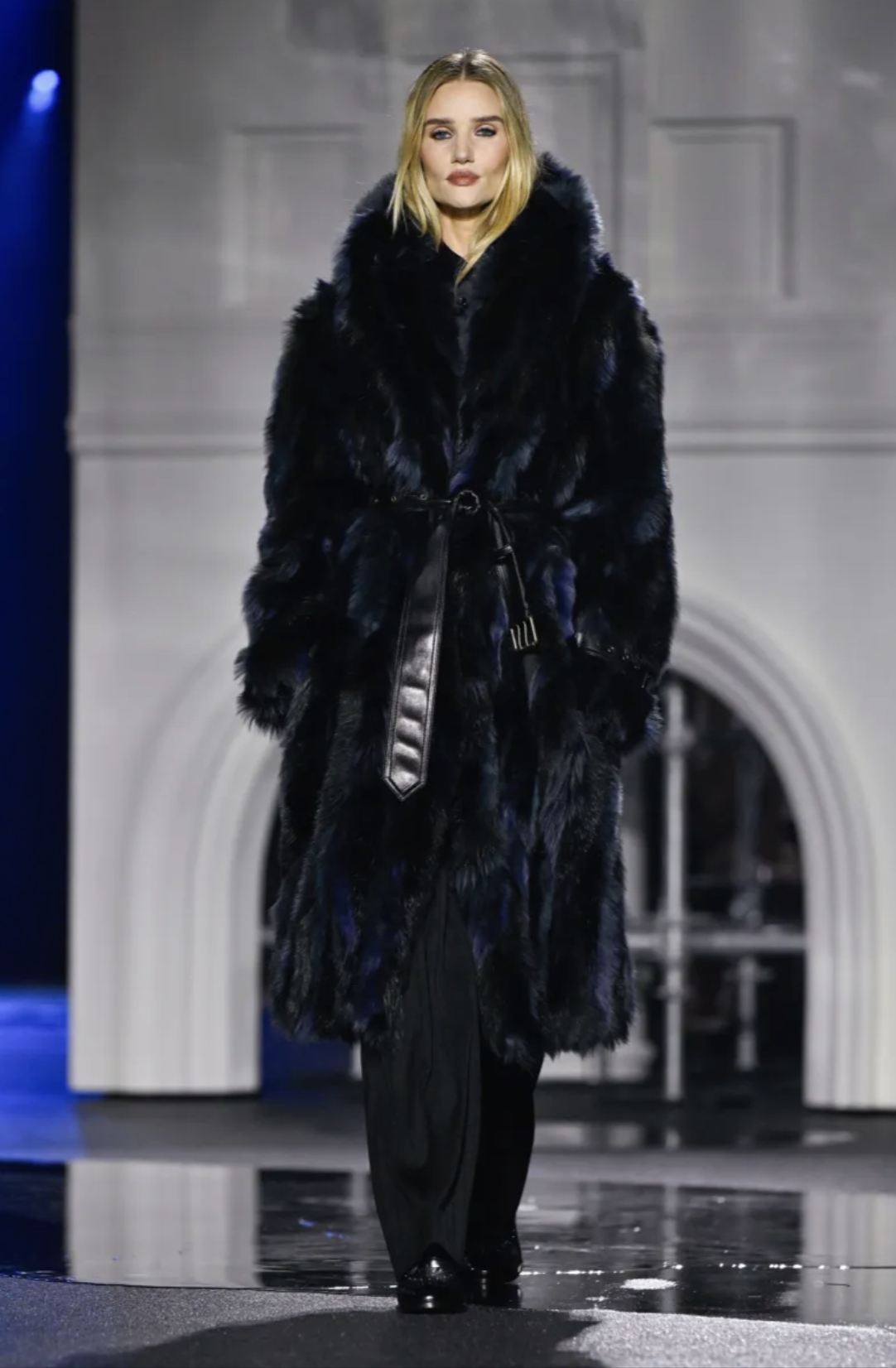
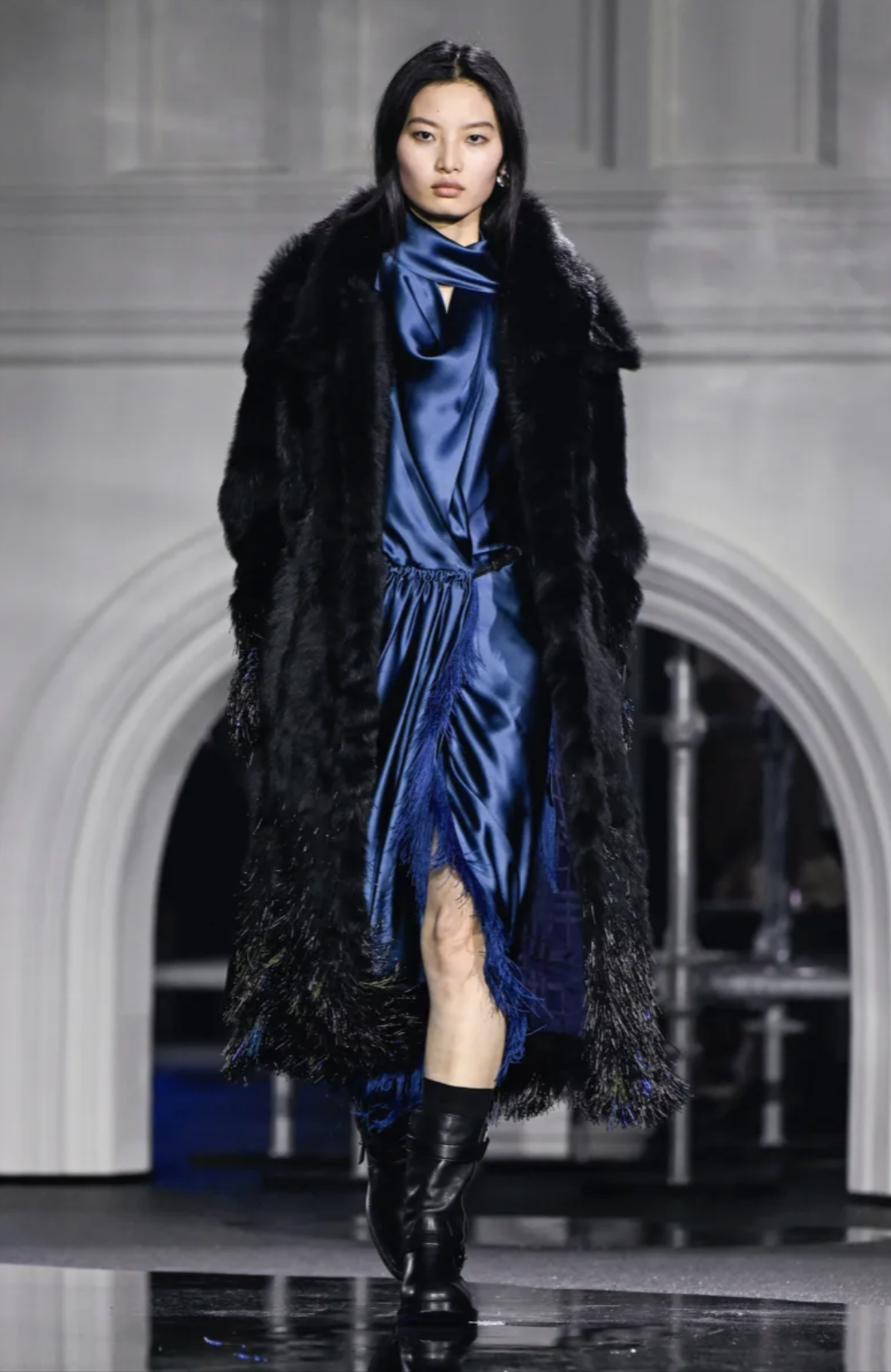
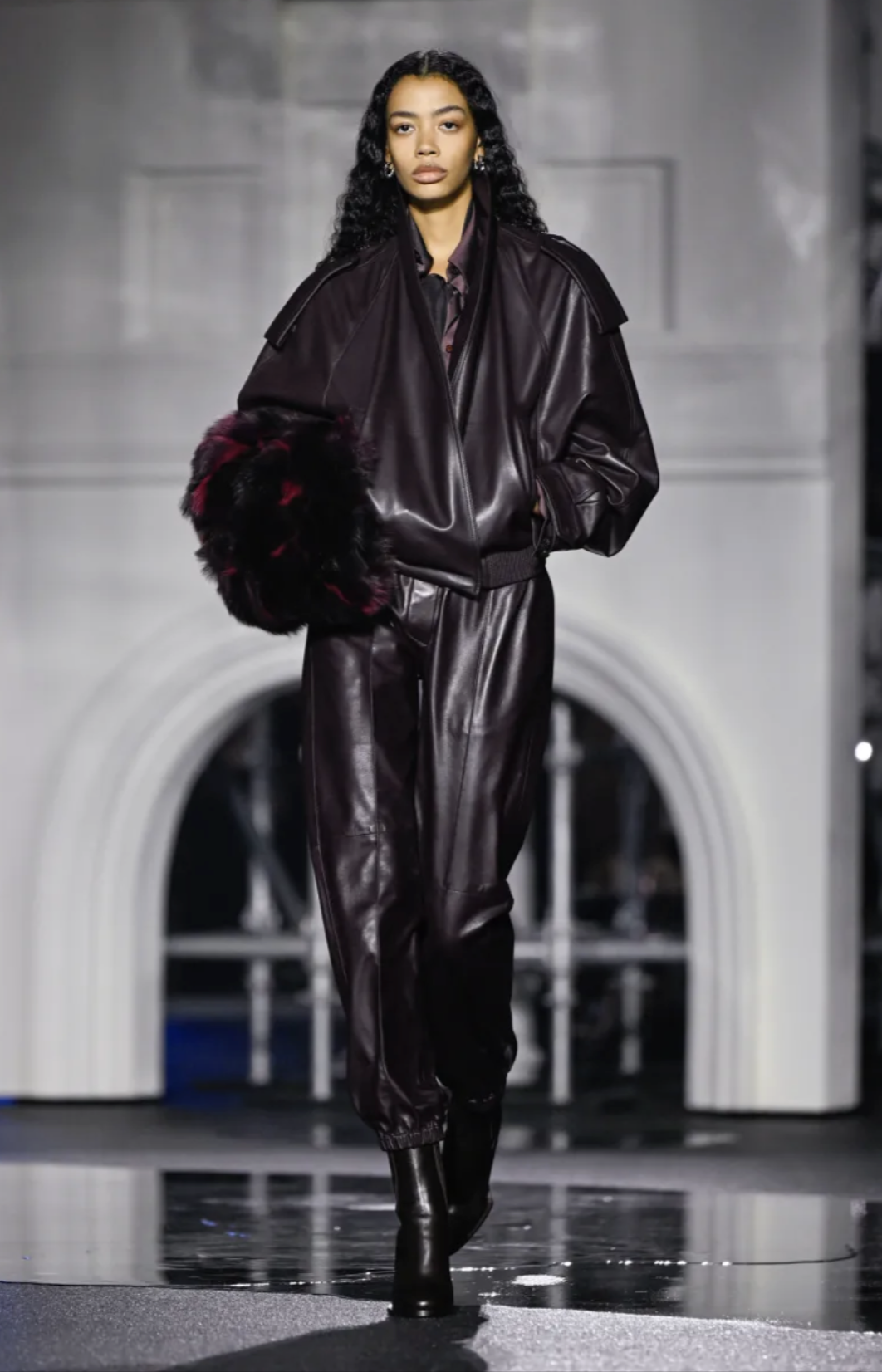
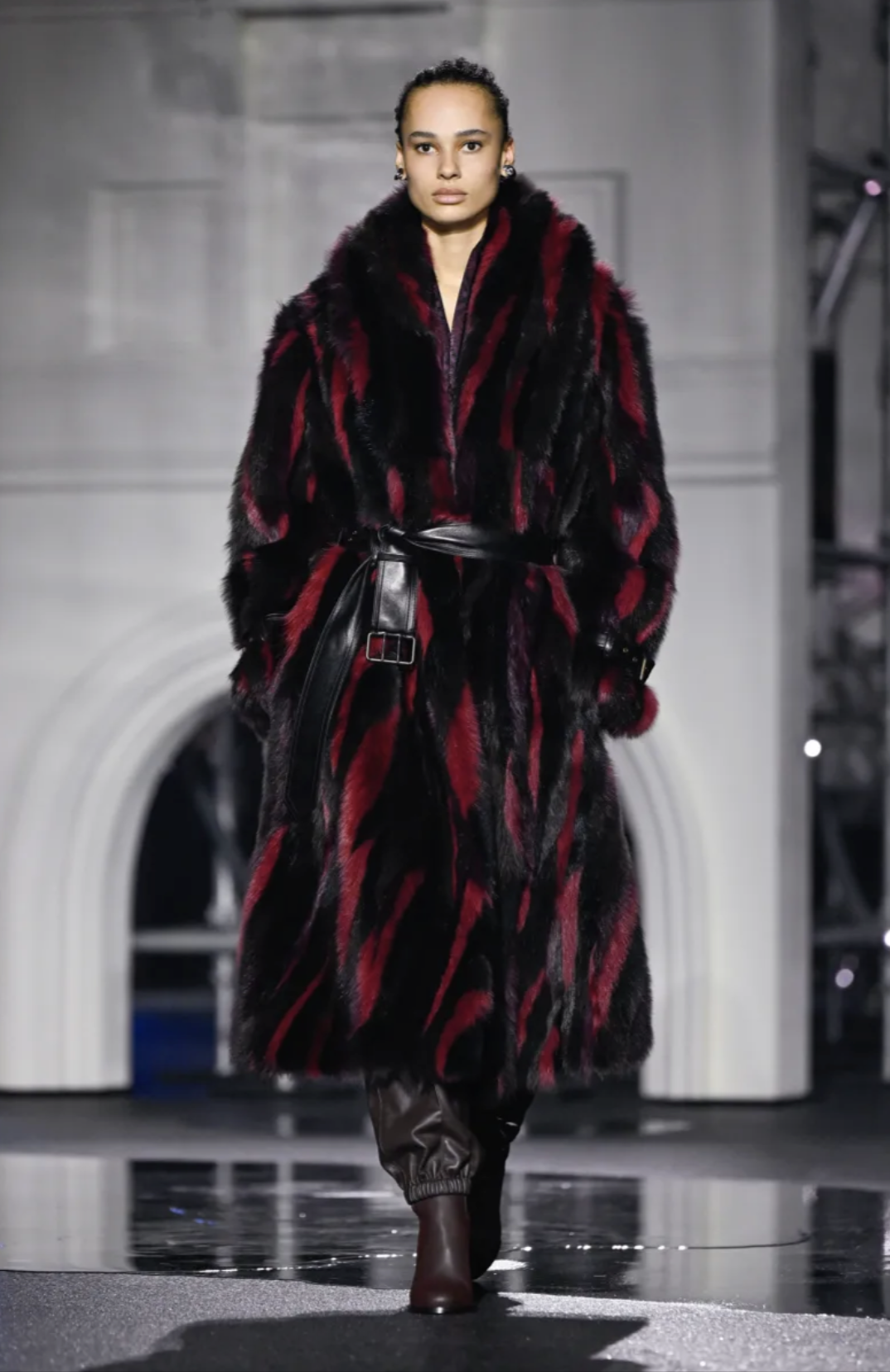
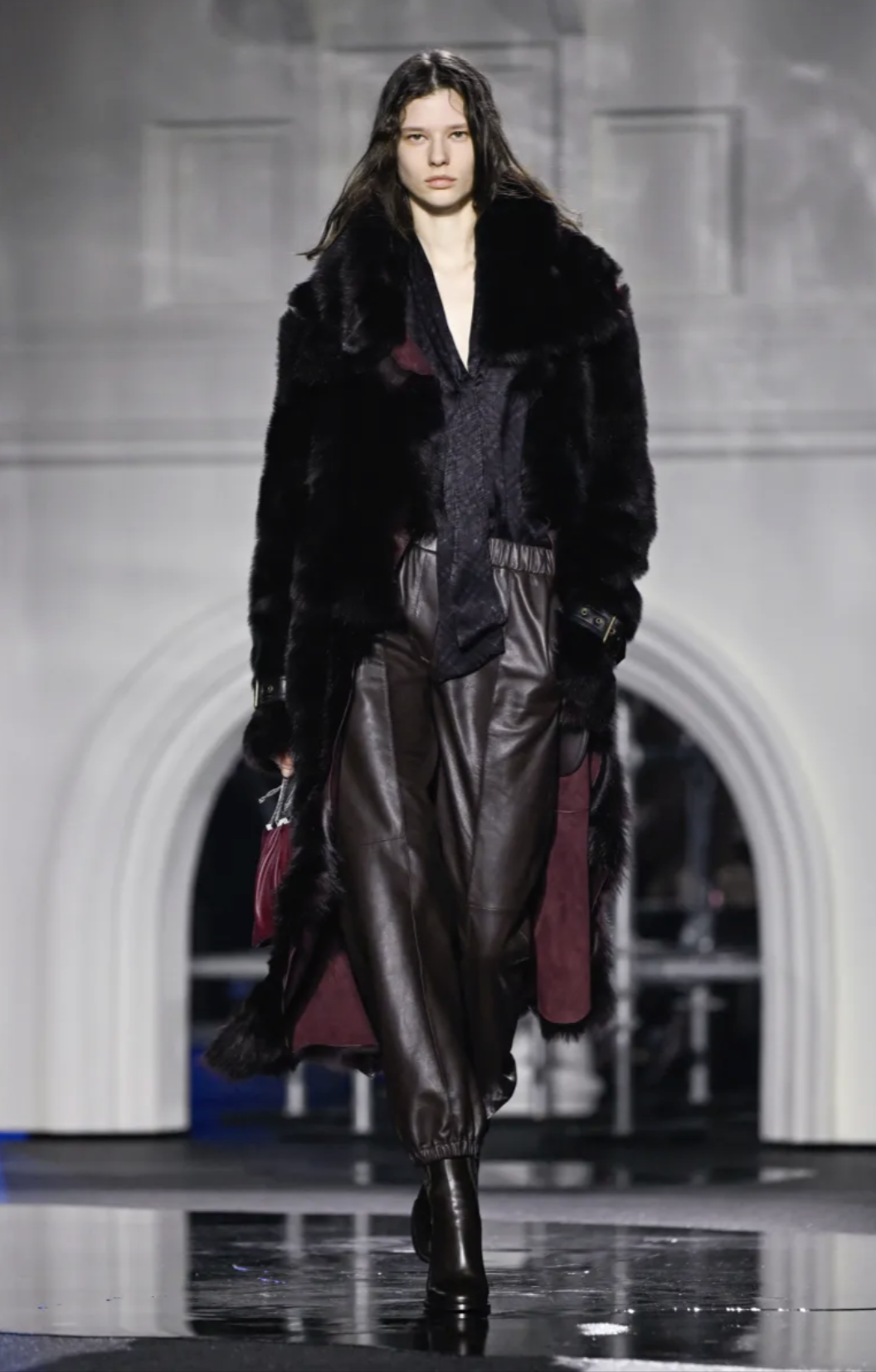
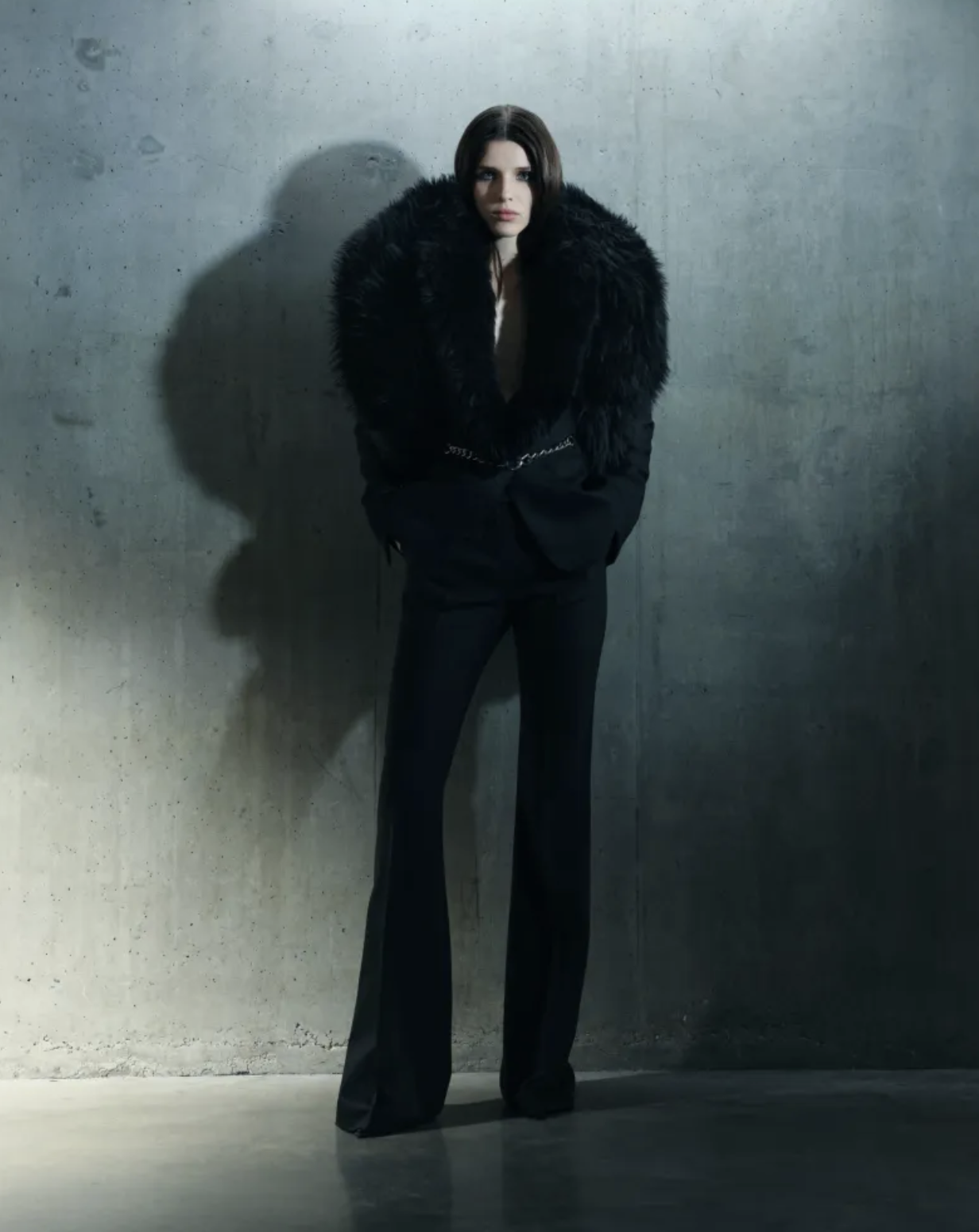
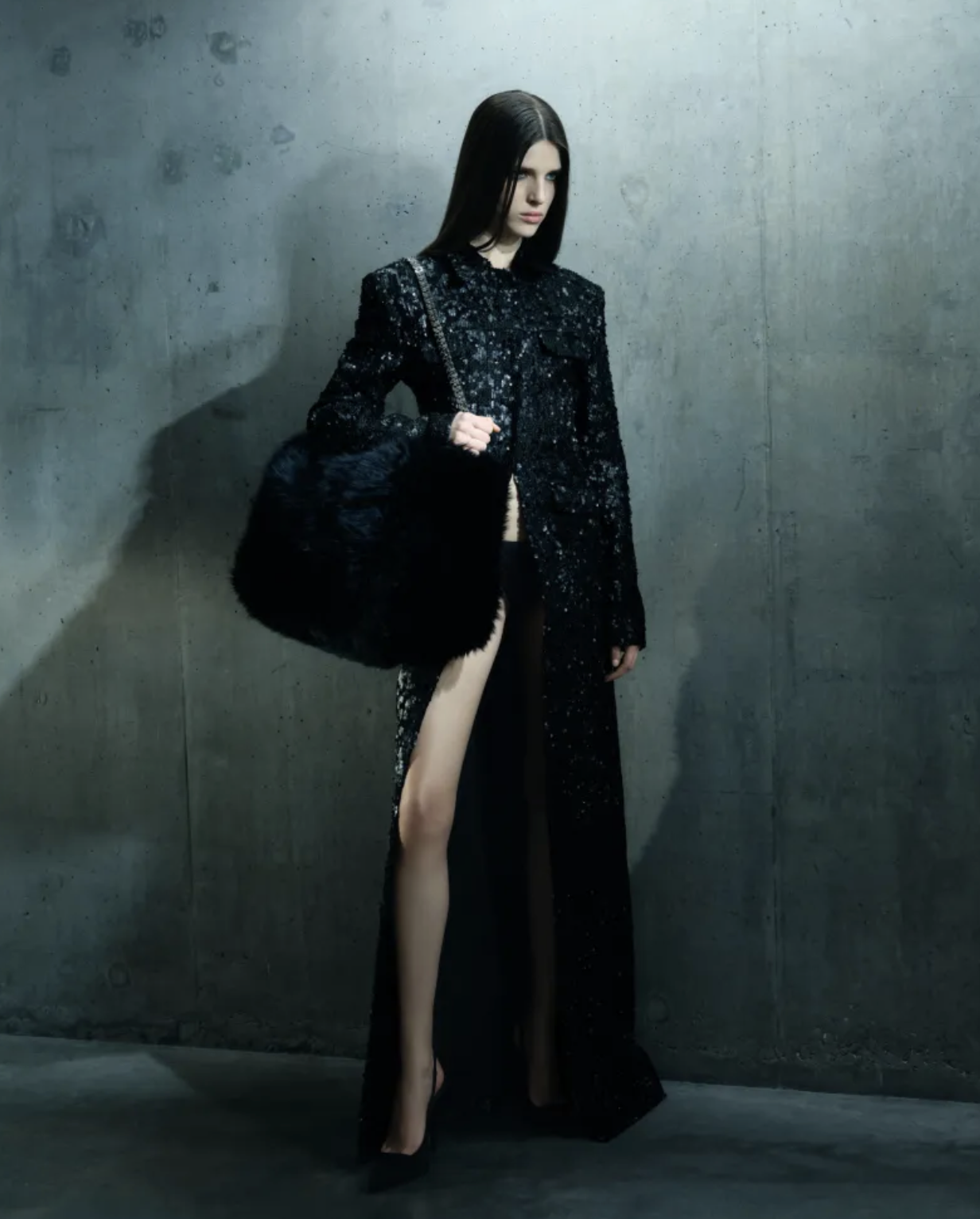
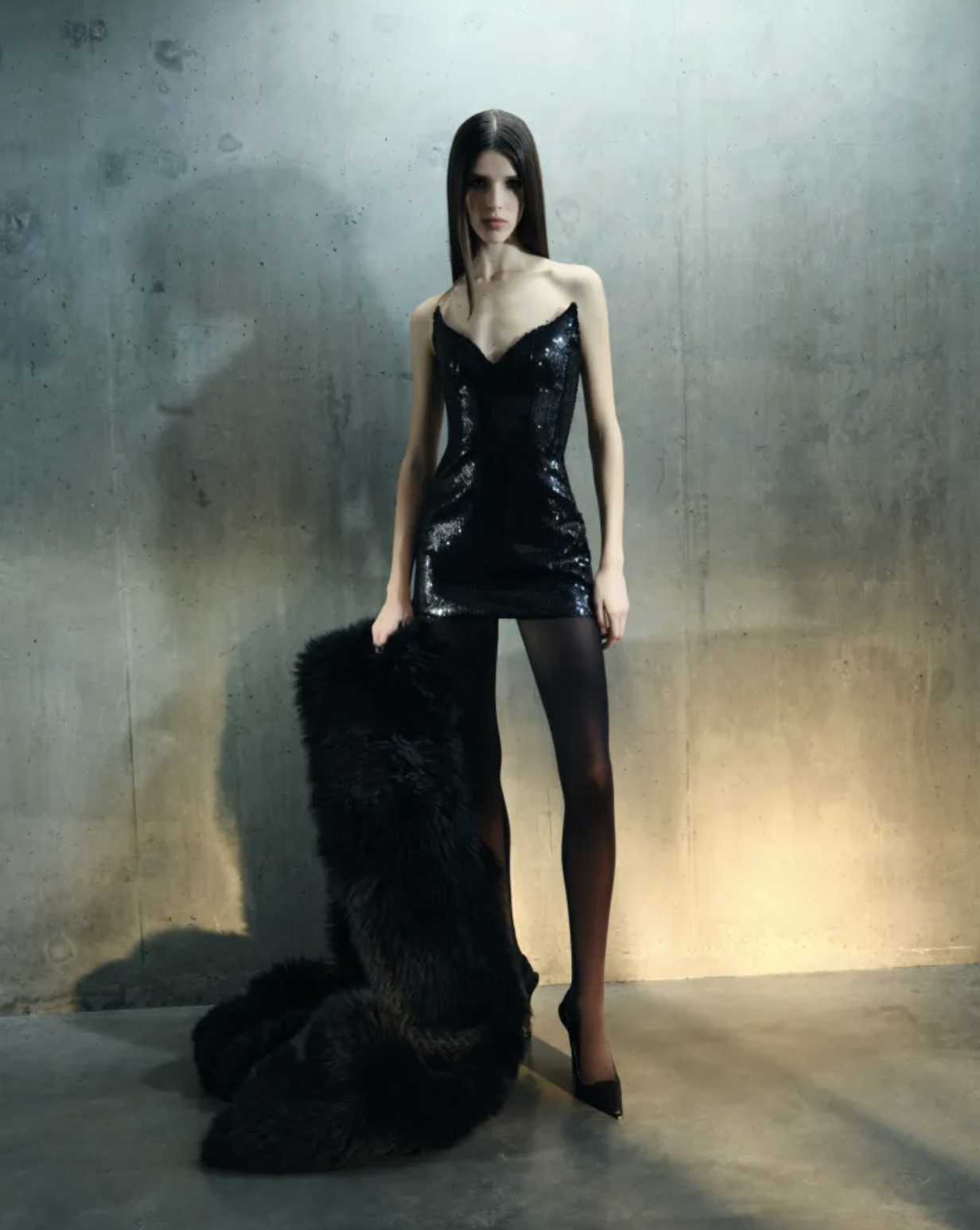
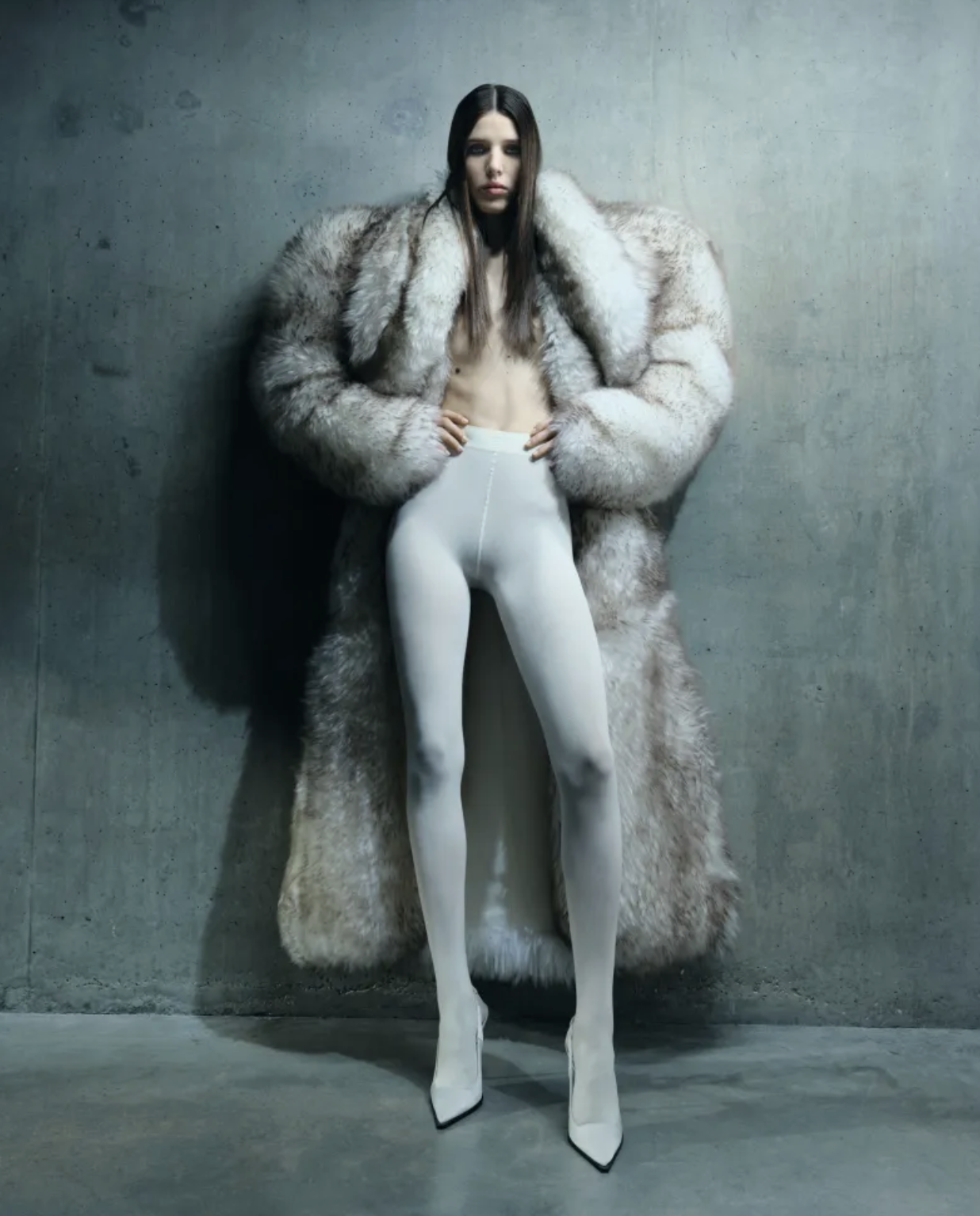
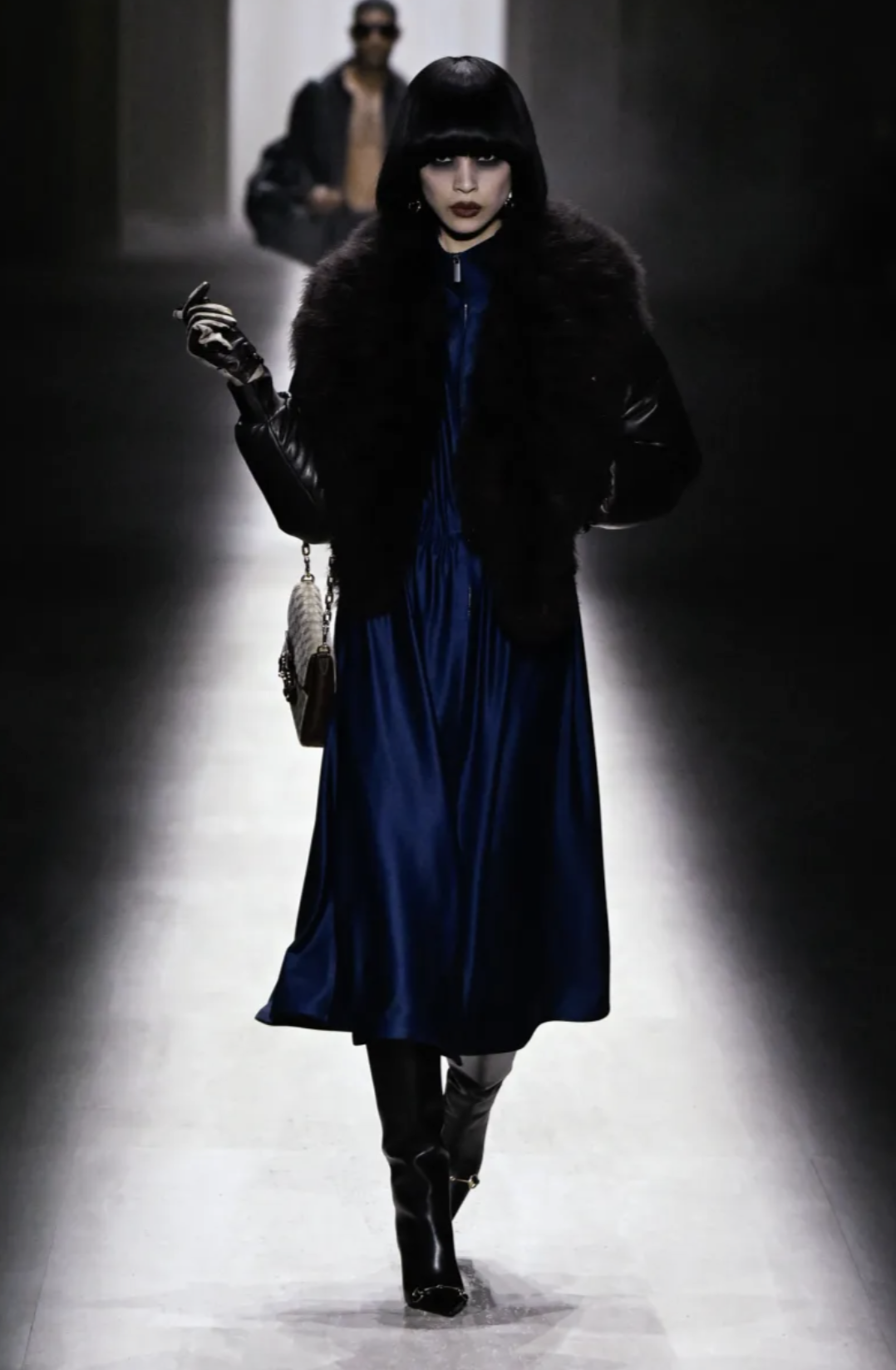
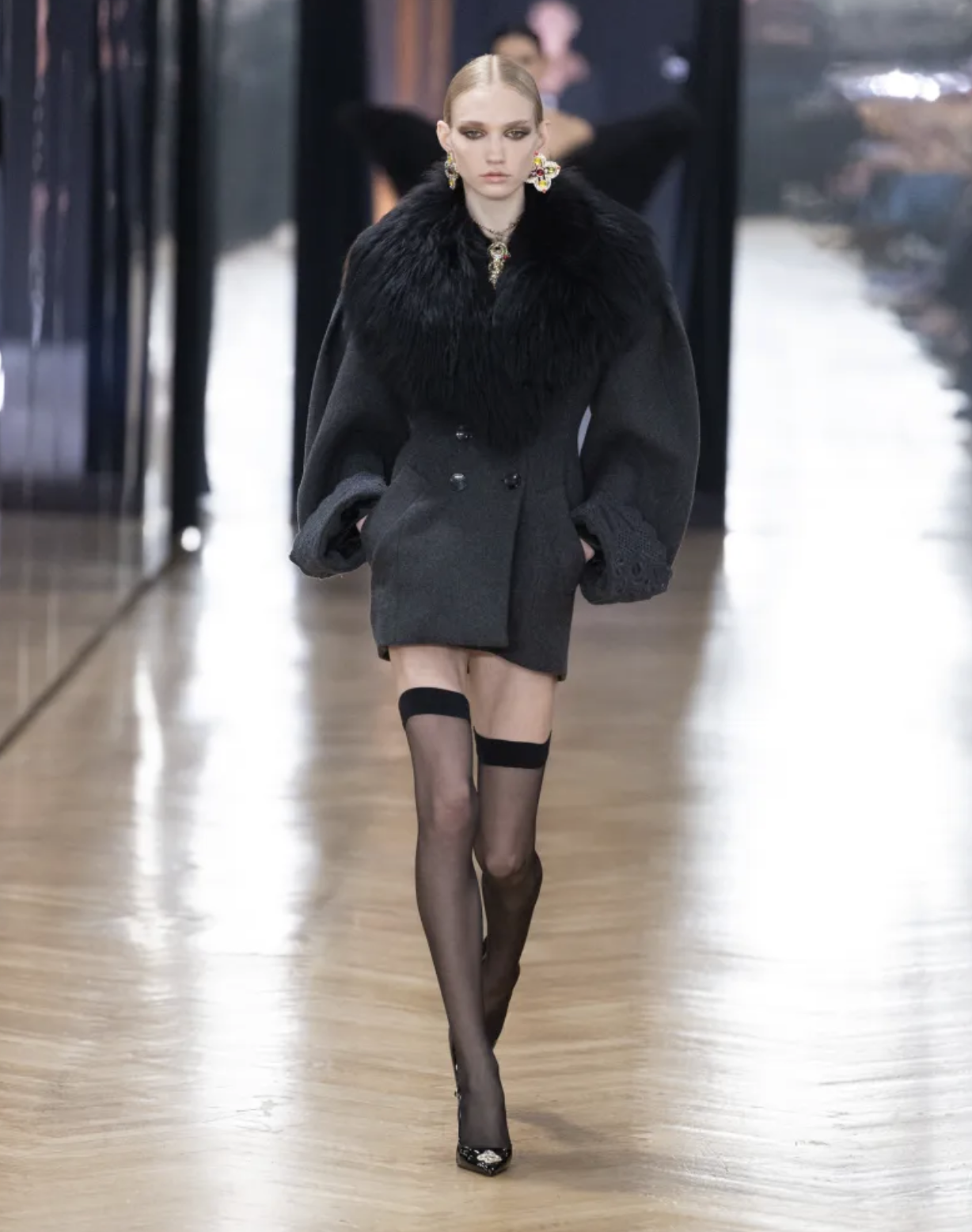
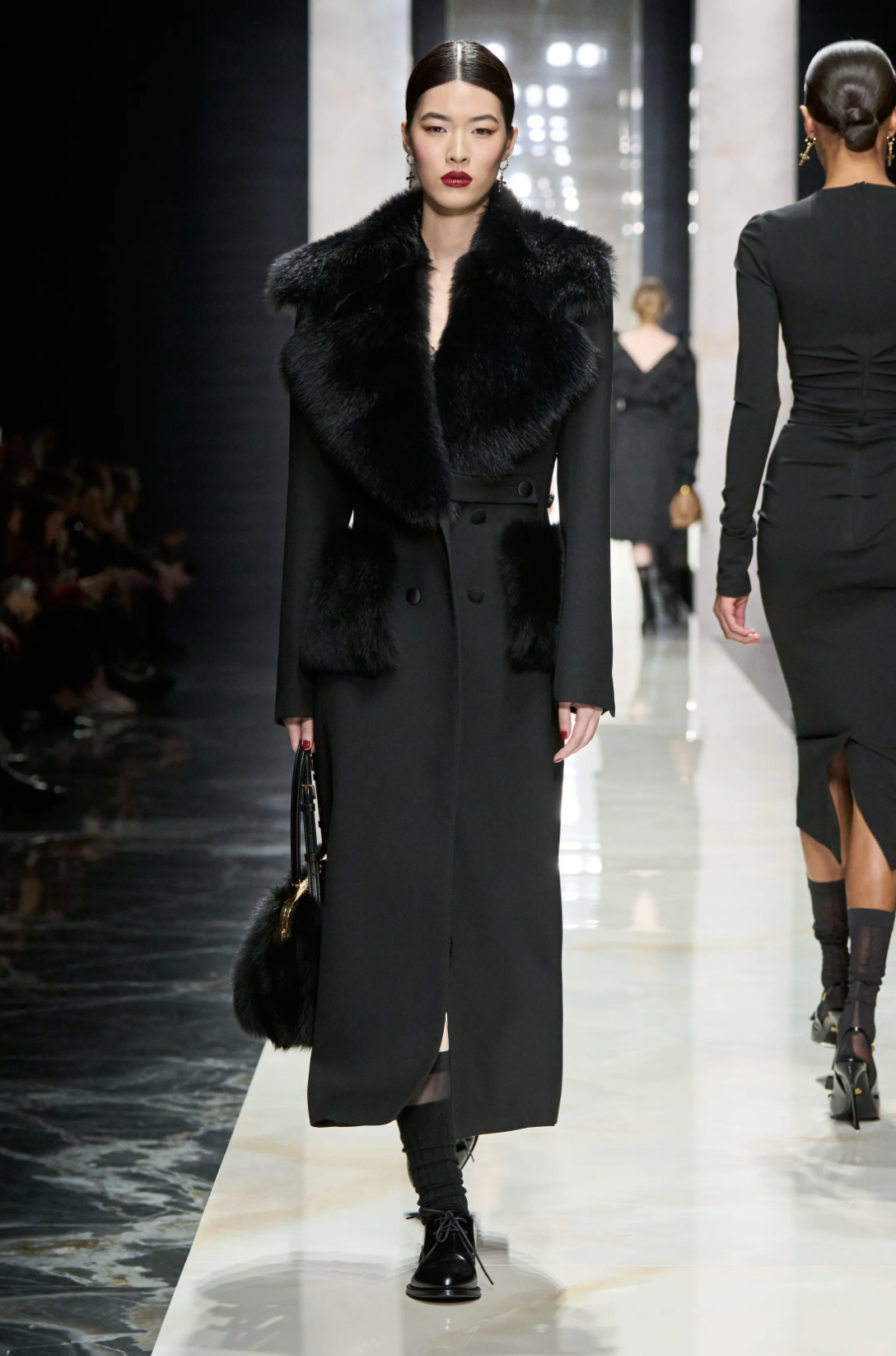
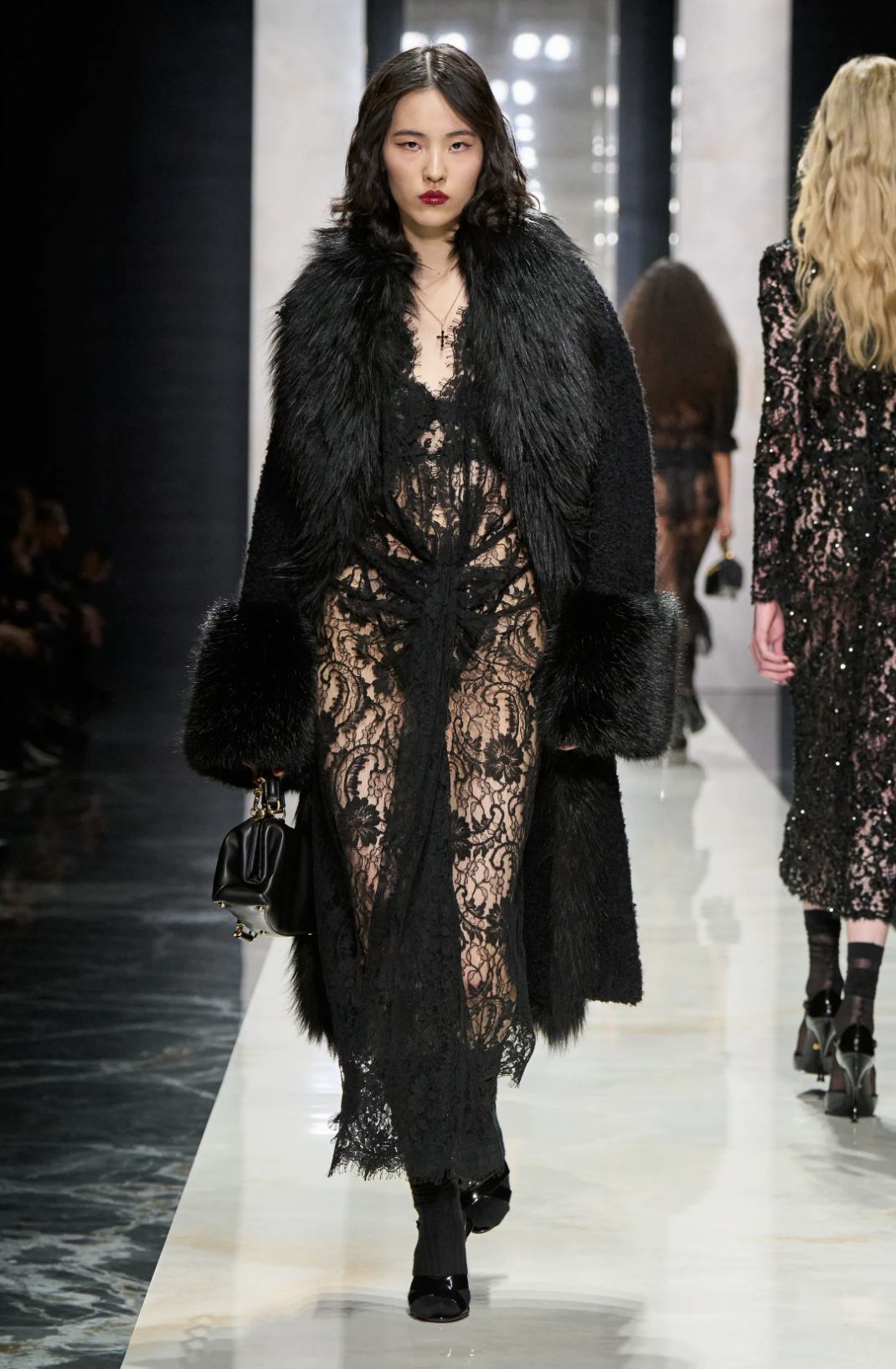
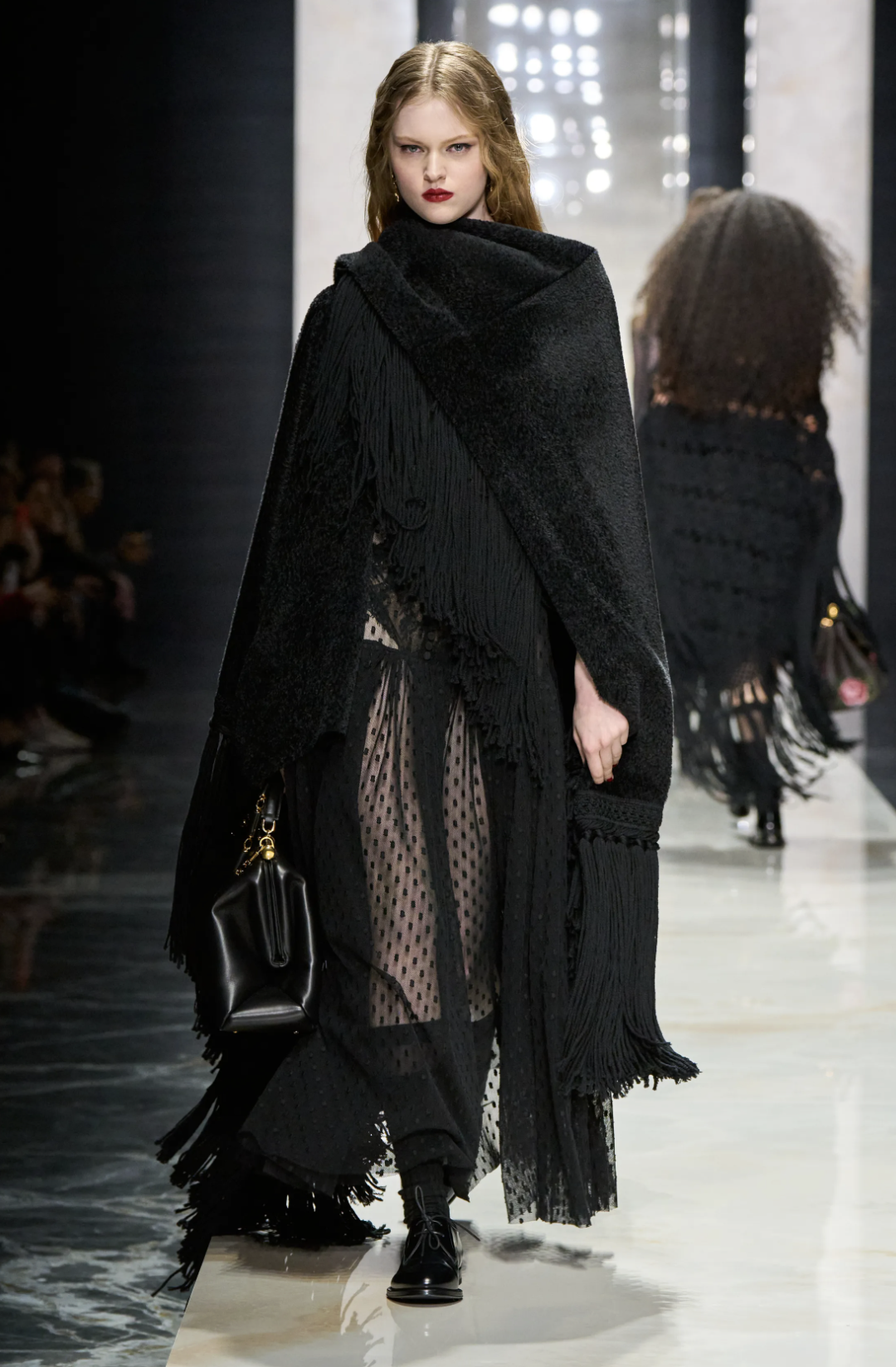
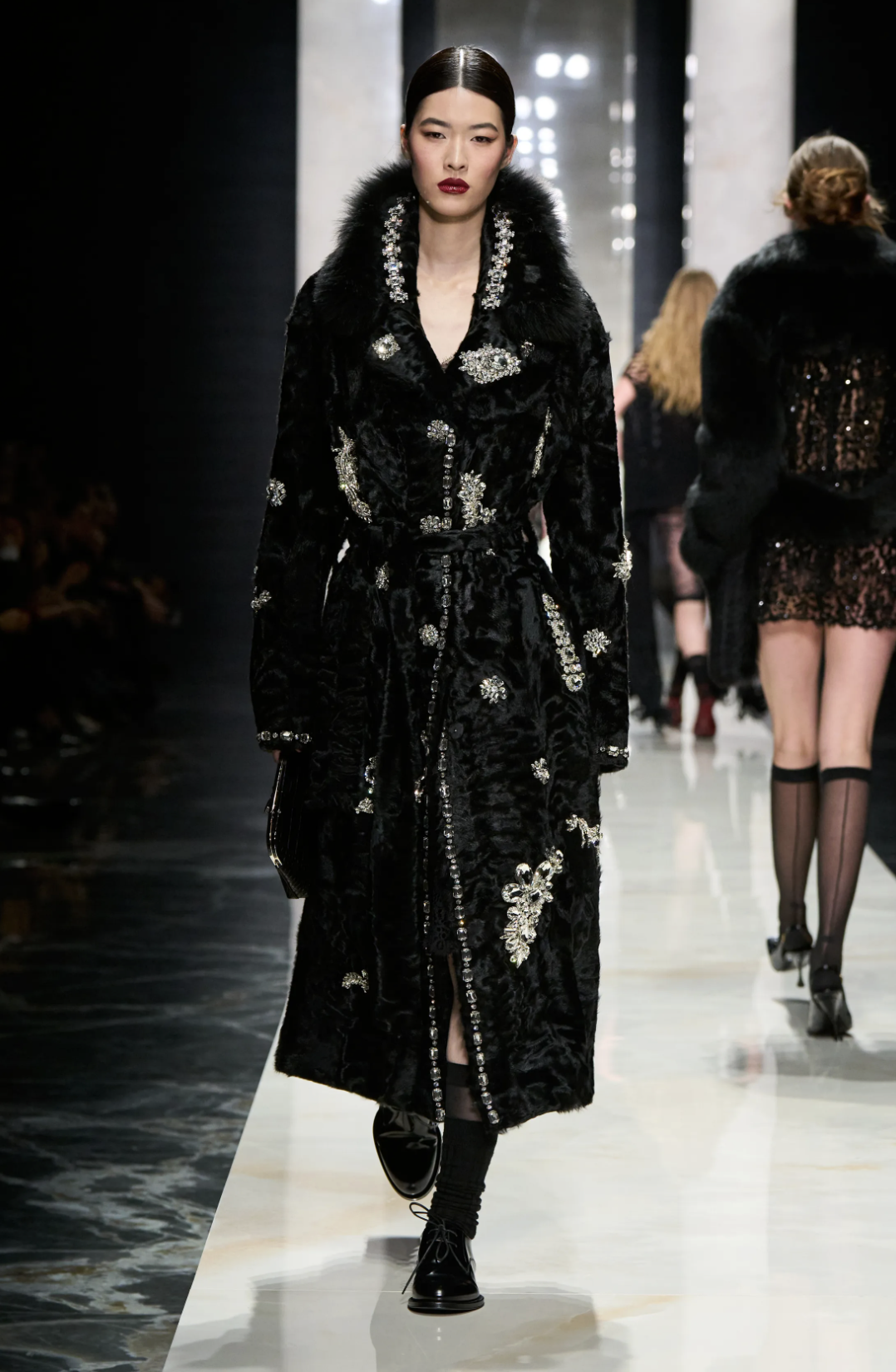
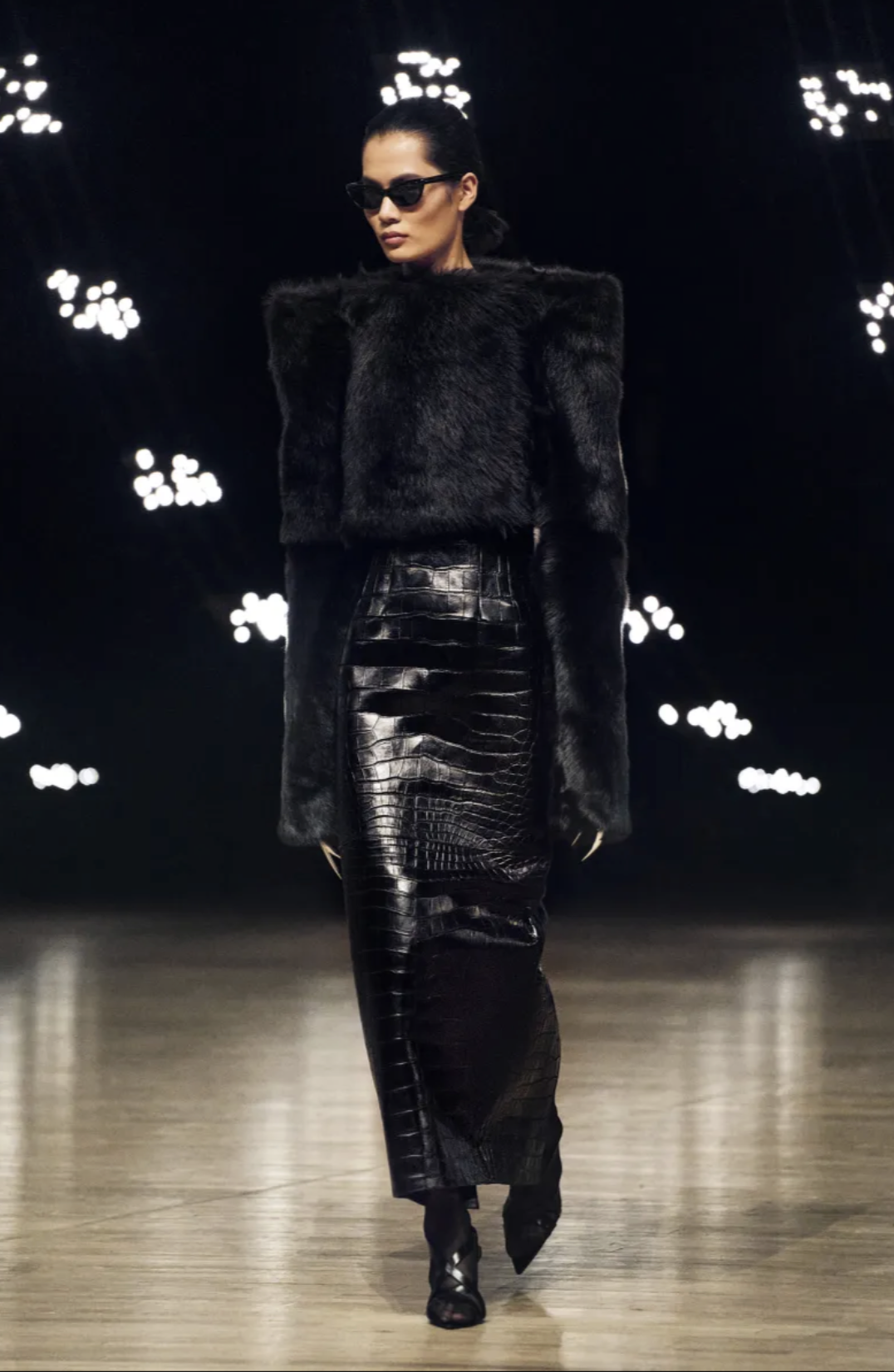
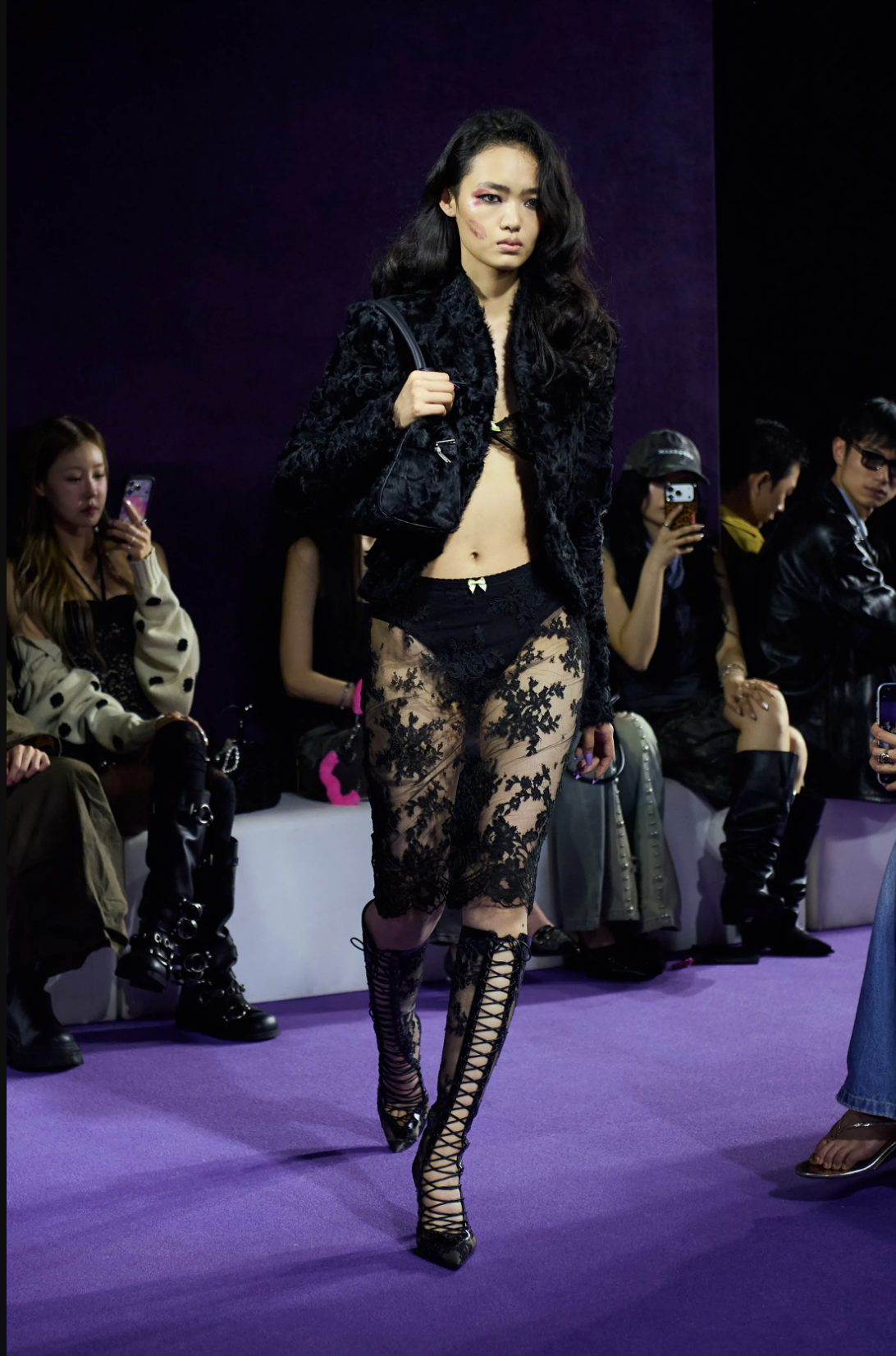
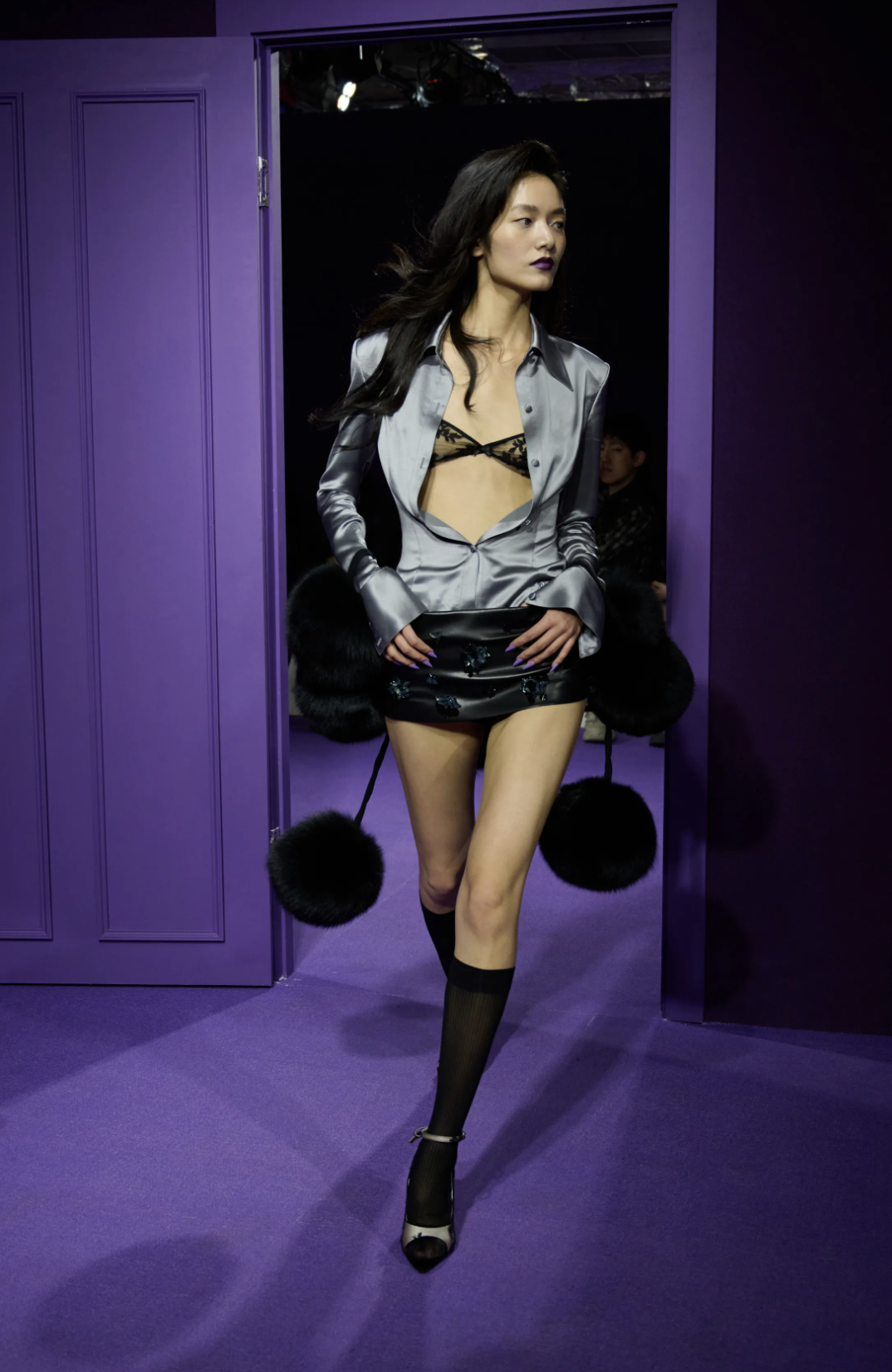
Fur becomes an exercise in appetite for FW26, with designers manipulating volume and placement to radically different ends. A narrow collar can sharpen a tailored coat; elsewhere, enormous pelts swallow the silhouette or trail from the body with unapologetic extravagance. Colour and pattern make the material stranger still, pushing familiar cold-weather luxury somewhere more theatrical.
Blumarine: Cruella de Vil meets Harley Quinn and they’ve ended up at a speakeasy. Harlequin-patterned stoles and extravagant outerwear turn old-Hollywood glamour unhinged.
Burberry: Cool-toned blues and deep burgundies give substantial fur outerwear a rich, almost nocturnal palette, empowering colour to carry as much weight as texture.
David Koma: Fur texture moving from accessories to full outerwear as the collection explores how dramatically scale can change its character.
Gucci + Dolce & Gabbana: A lighter hand. Fur trims tailored wool with just enough softness to interrupt the severity of the silhouette.
Dolce & Gabbana: Black fur becomes the backdrop for intricate embellishment, treating maximalism with the seriousness of a house specialty.
Mark Gong + Khaite: Fur gets a bob, cutting off all that plush volume at the waist for a silhouette that feels very 2026.
Mark Gong: And then there’s the pom-pom stole—part accessory, part punctuation mark, and exactly the kind of odd little flourish we want fashion to give us.
Unnatural Beauty
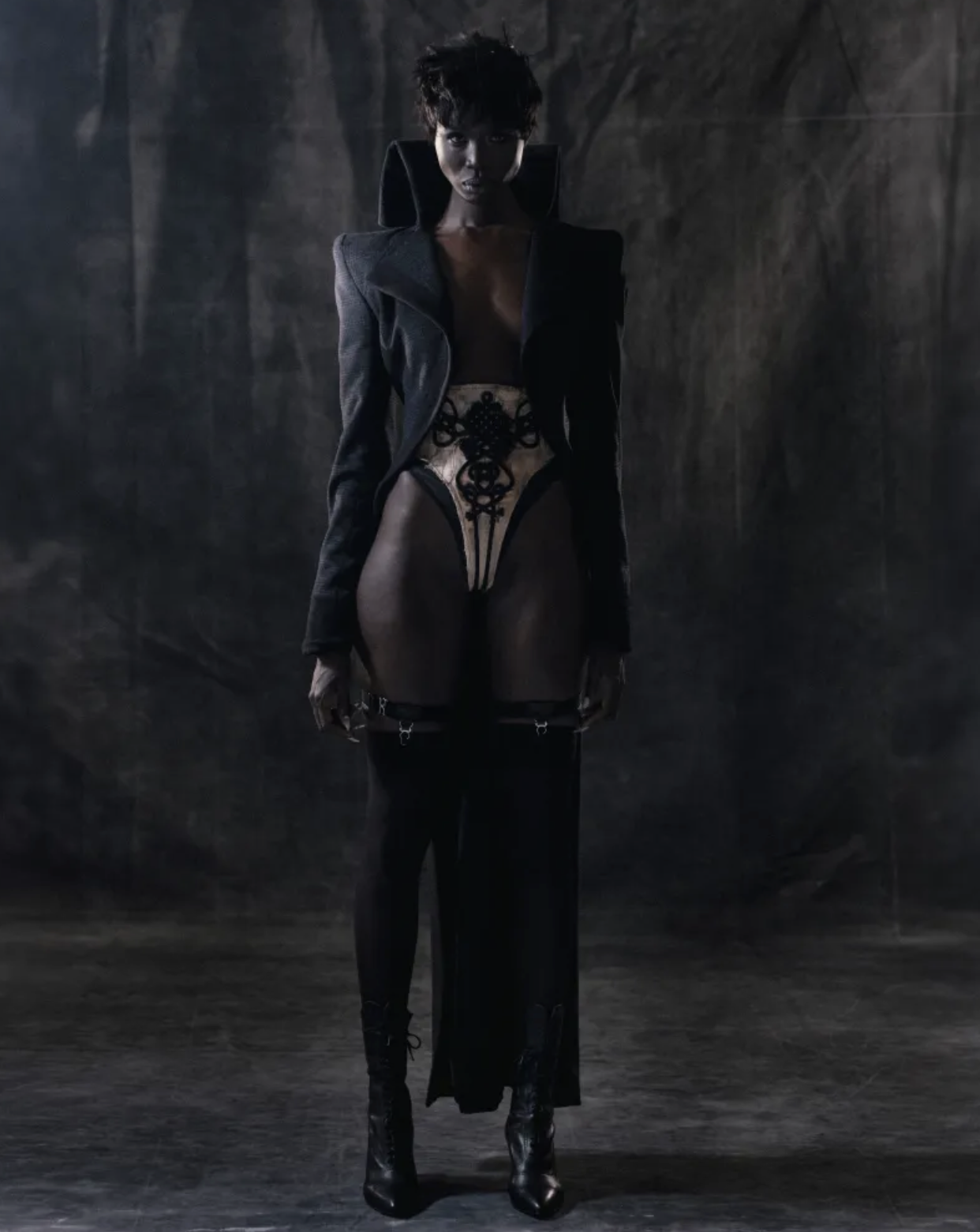
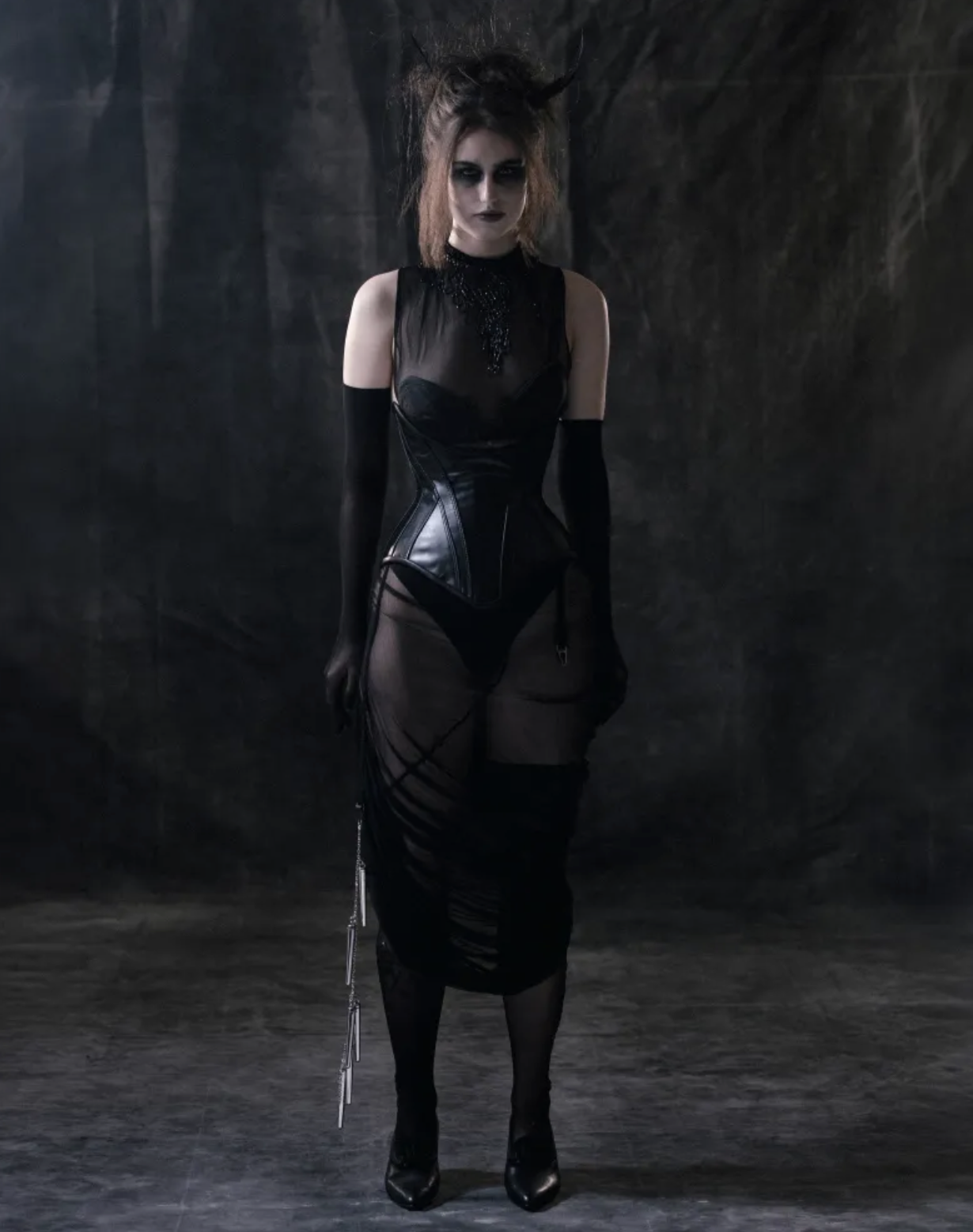
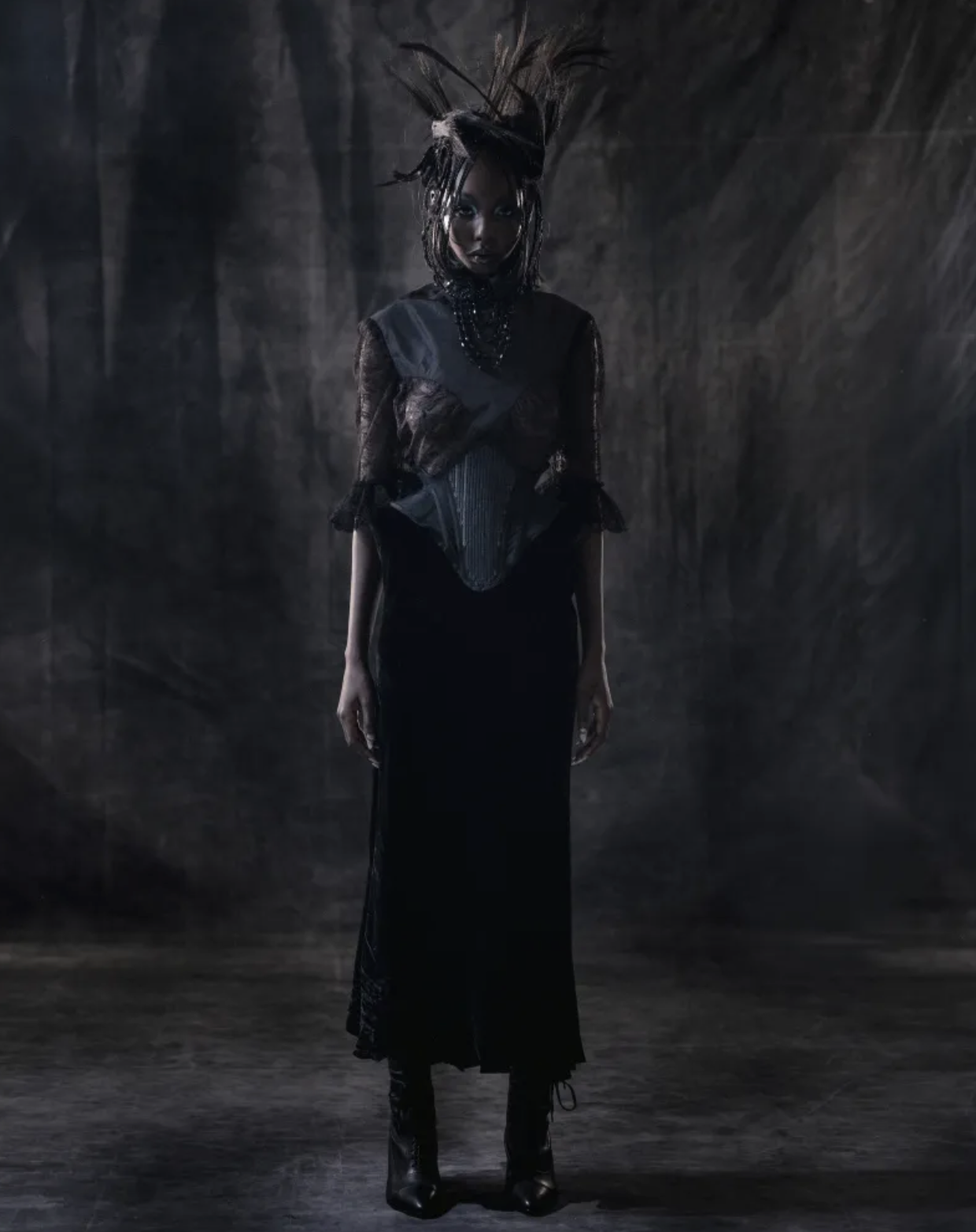
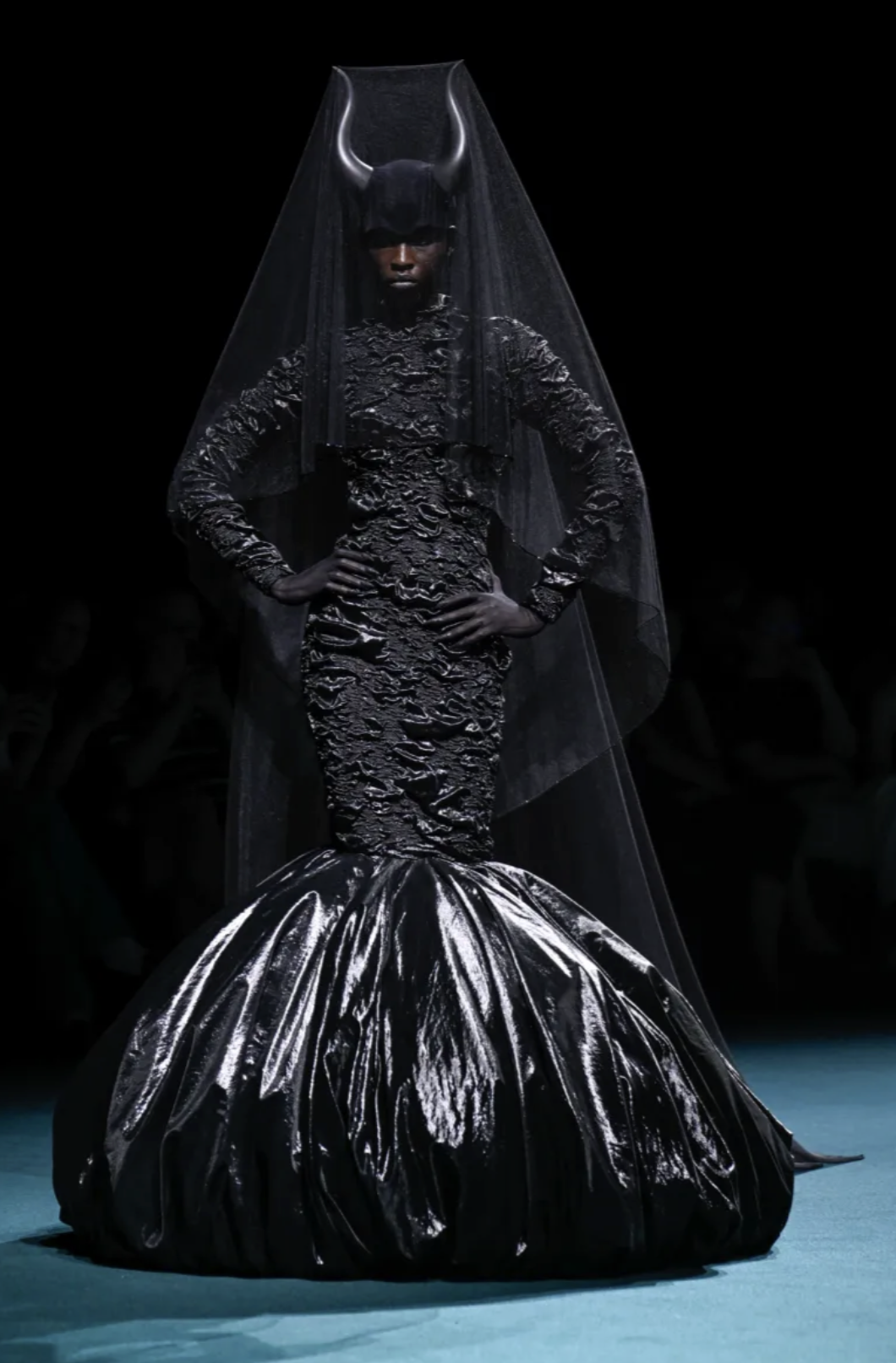
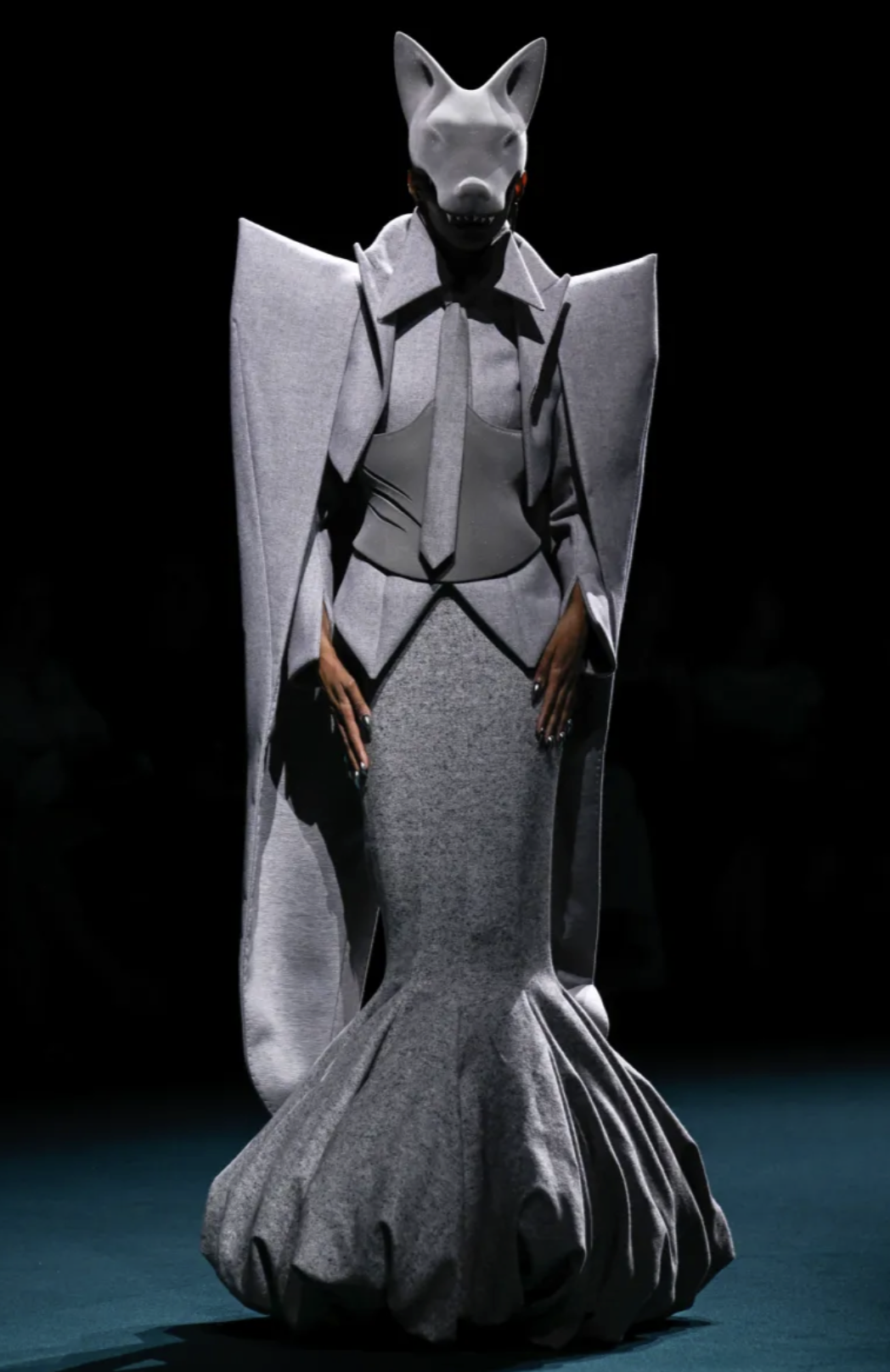
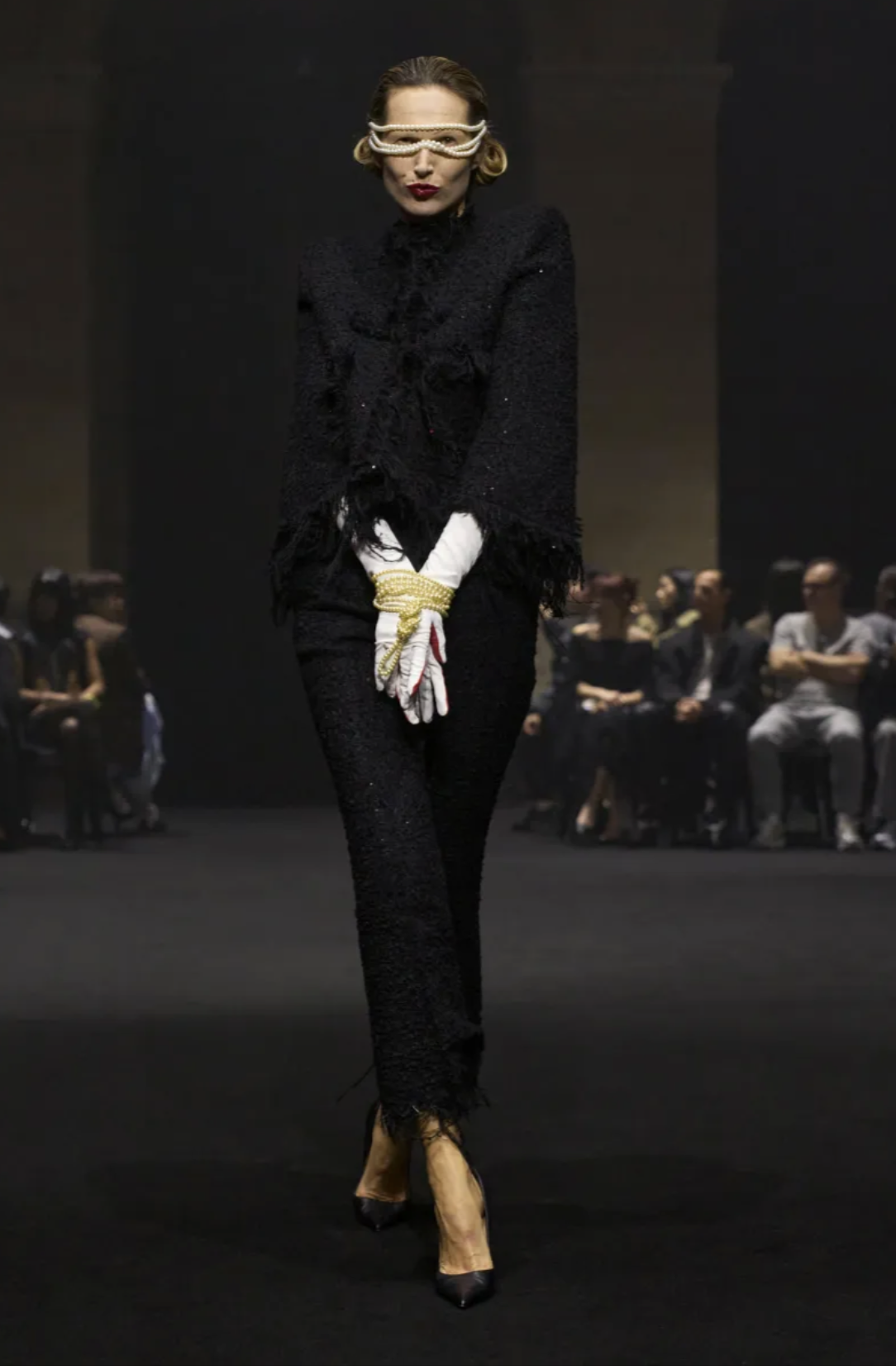
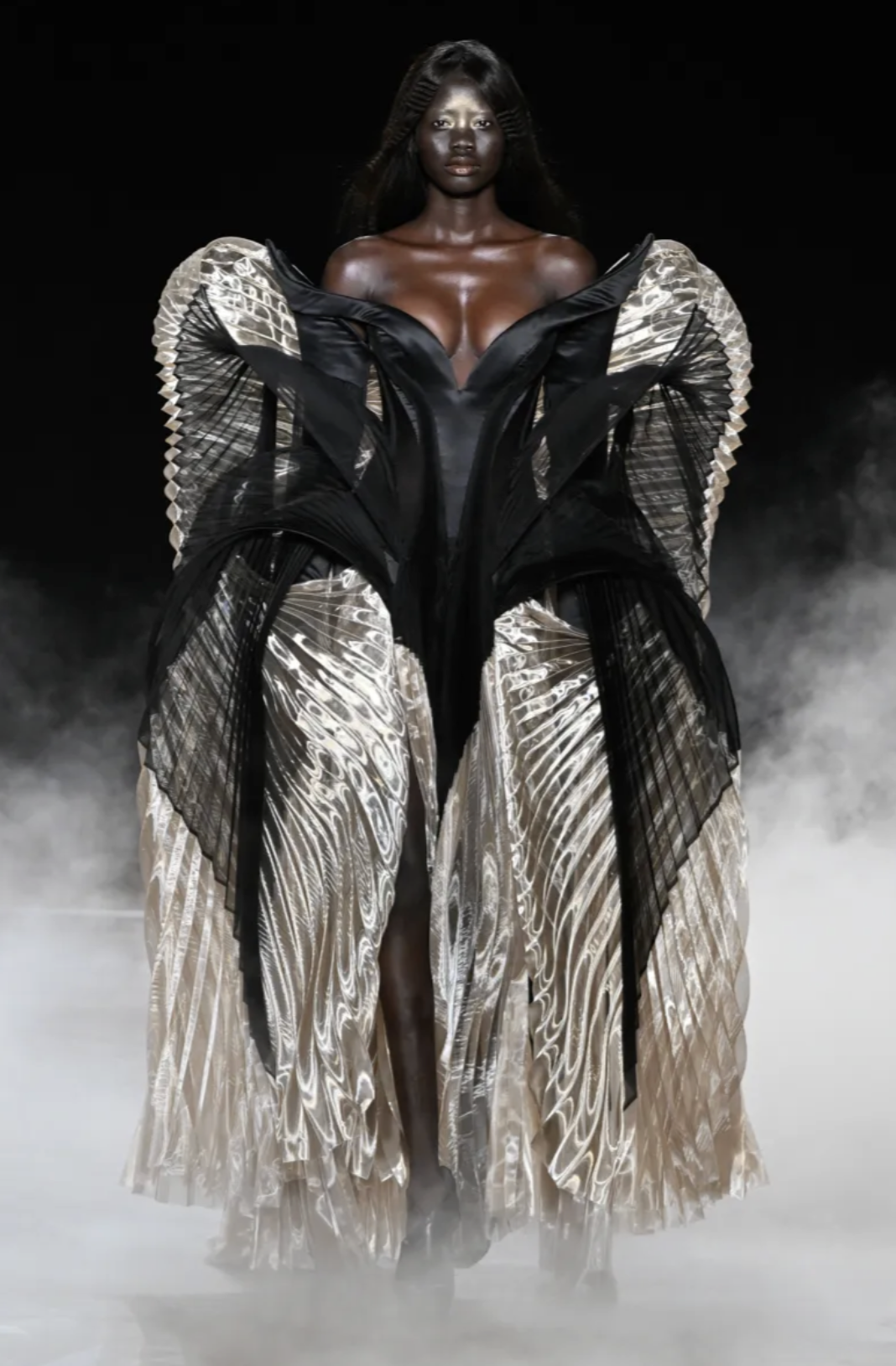
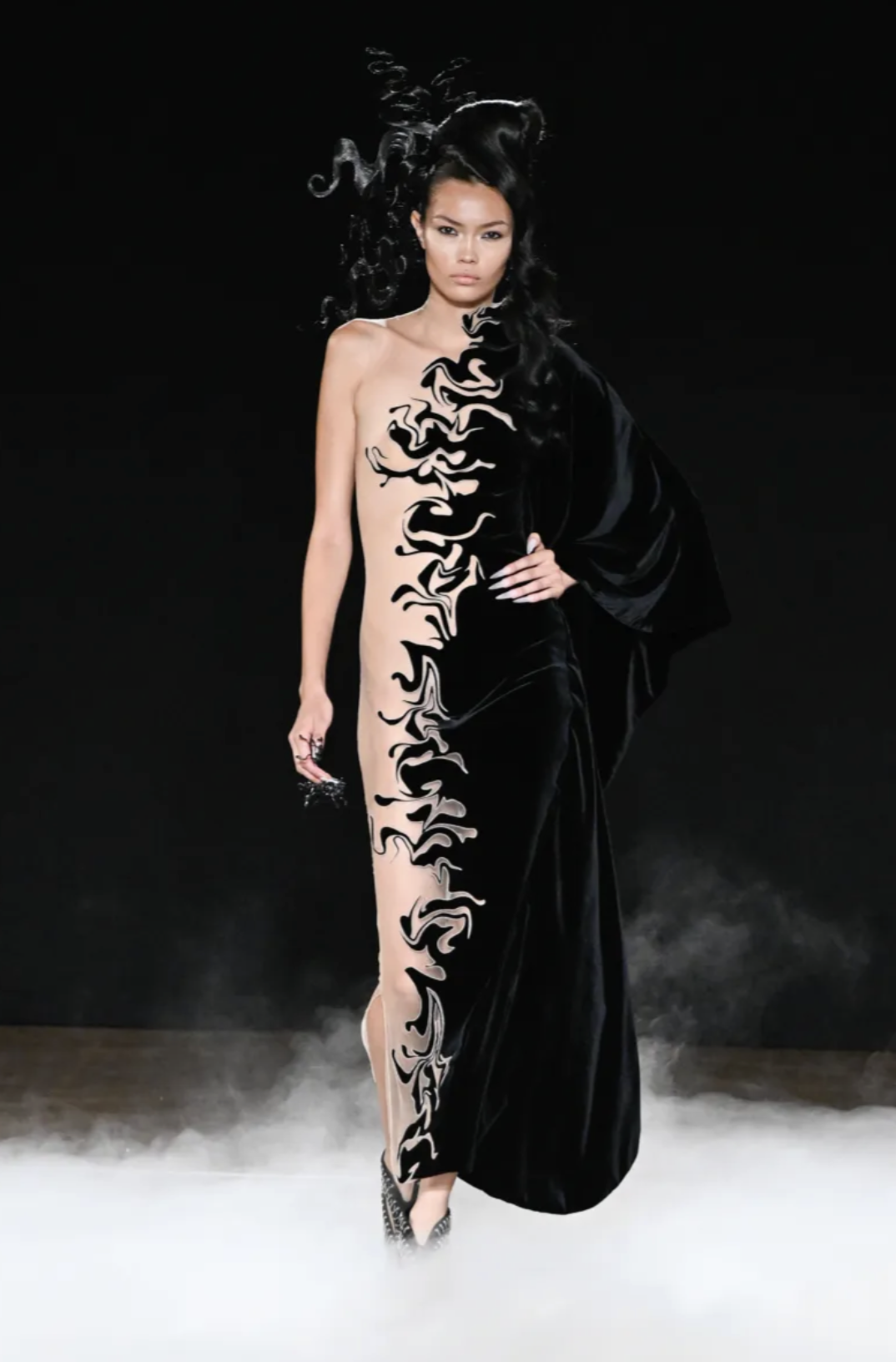
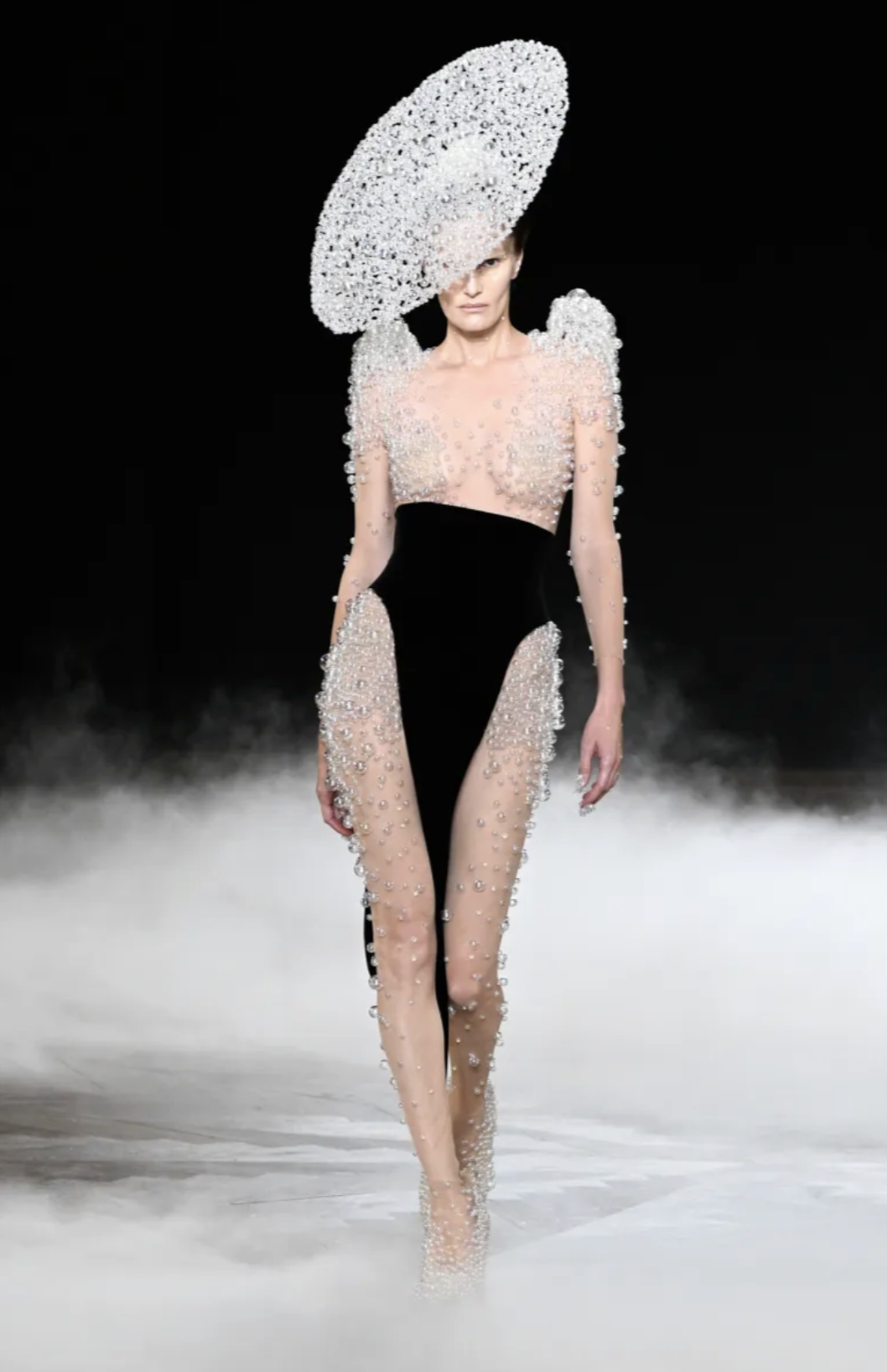
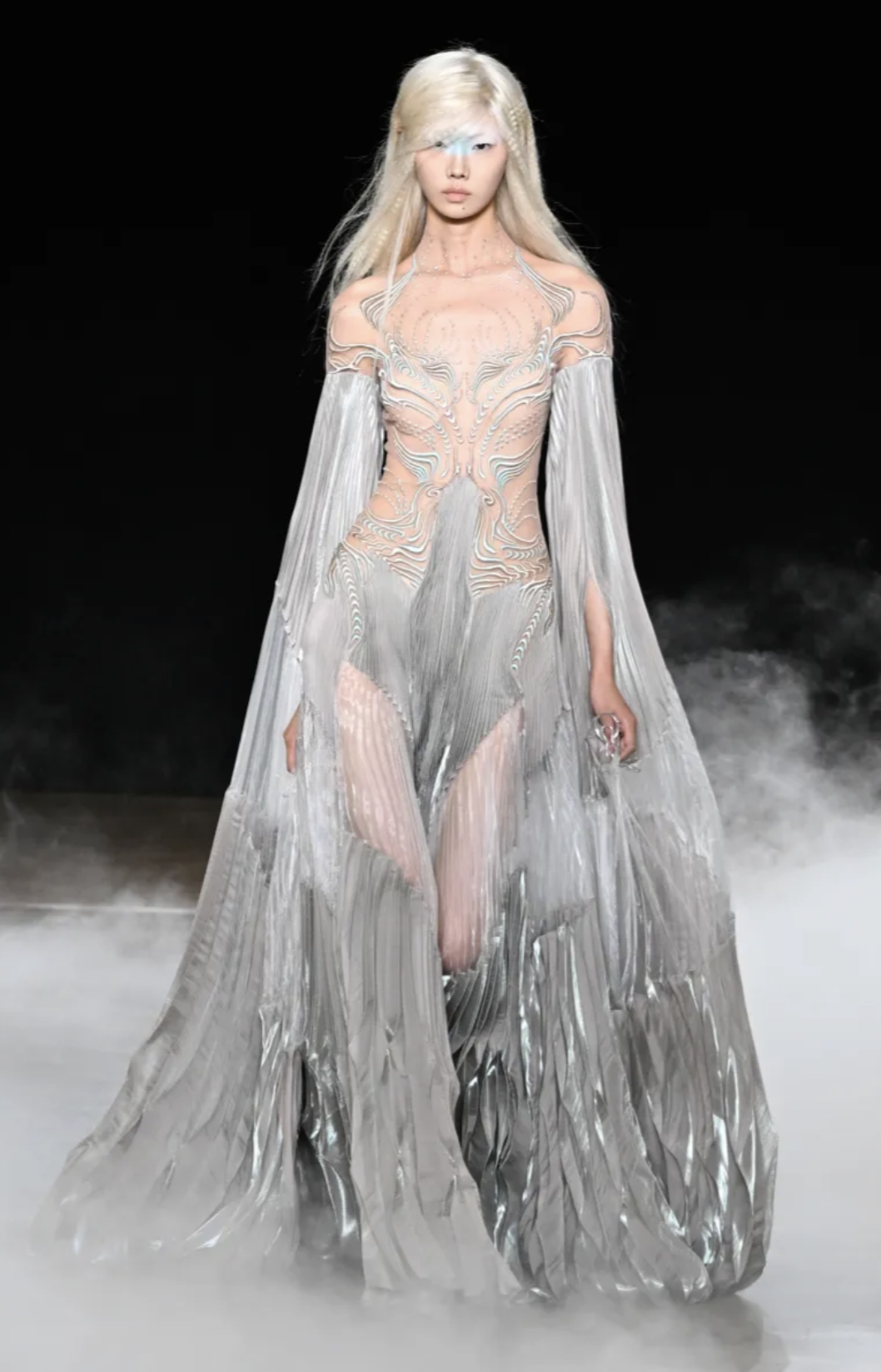
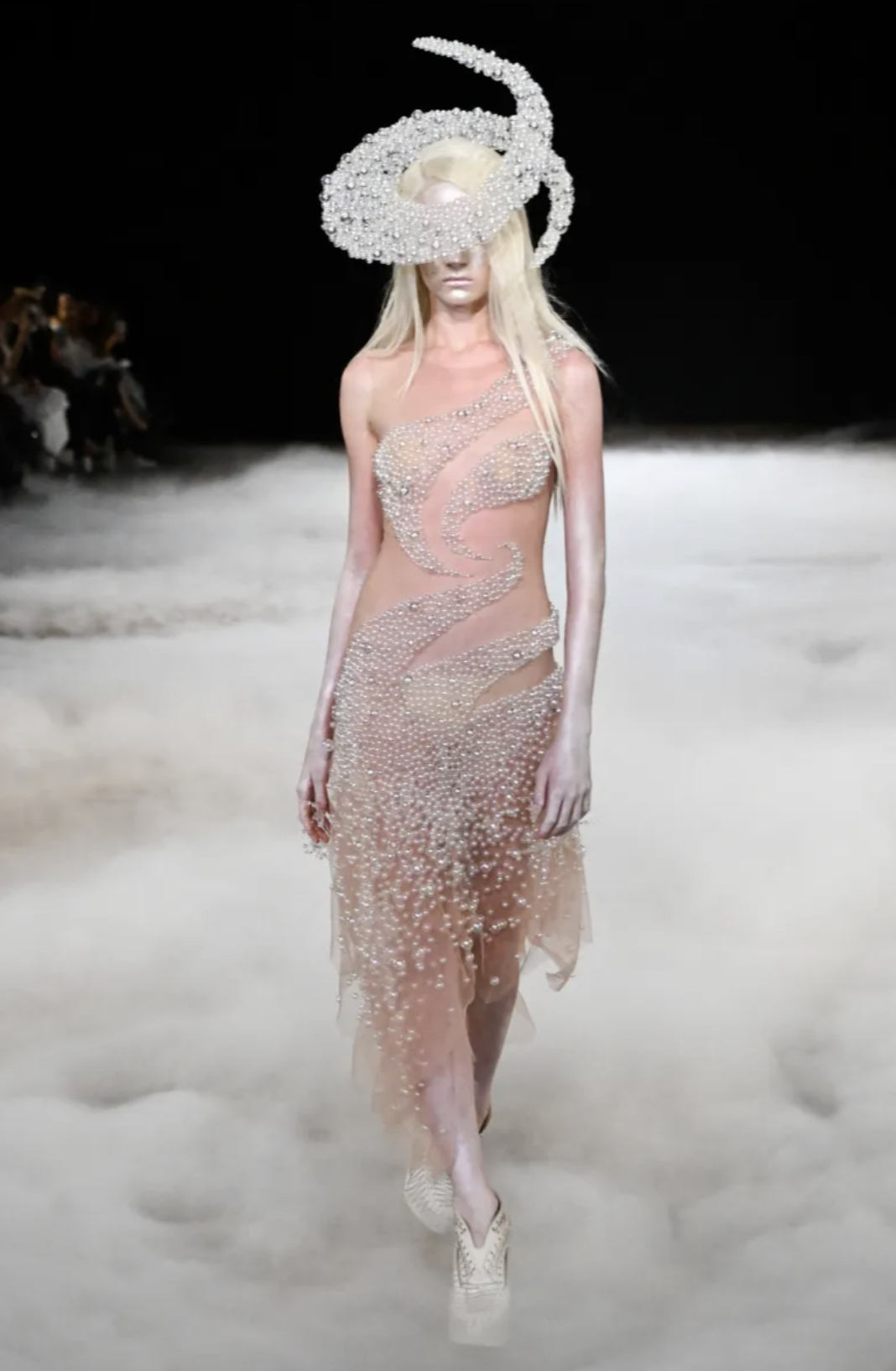
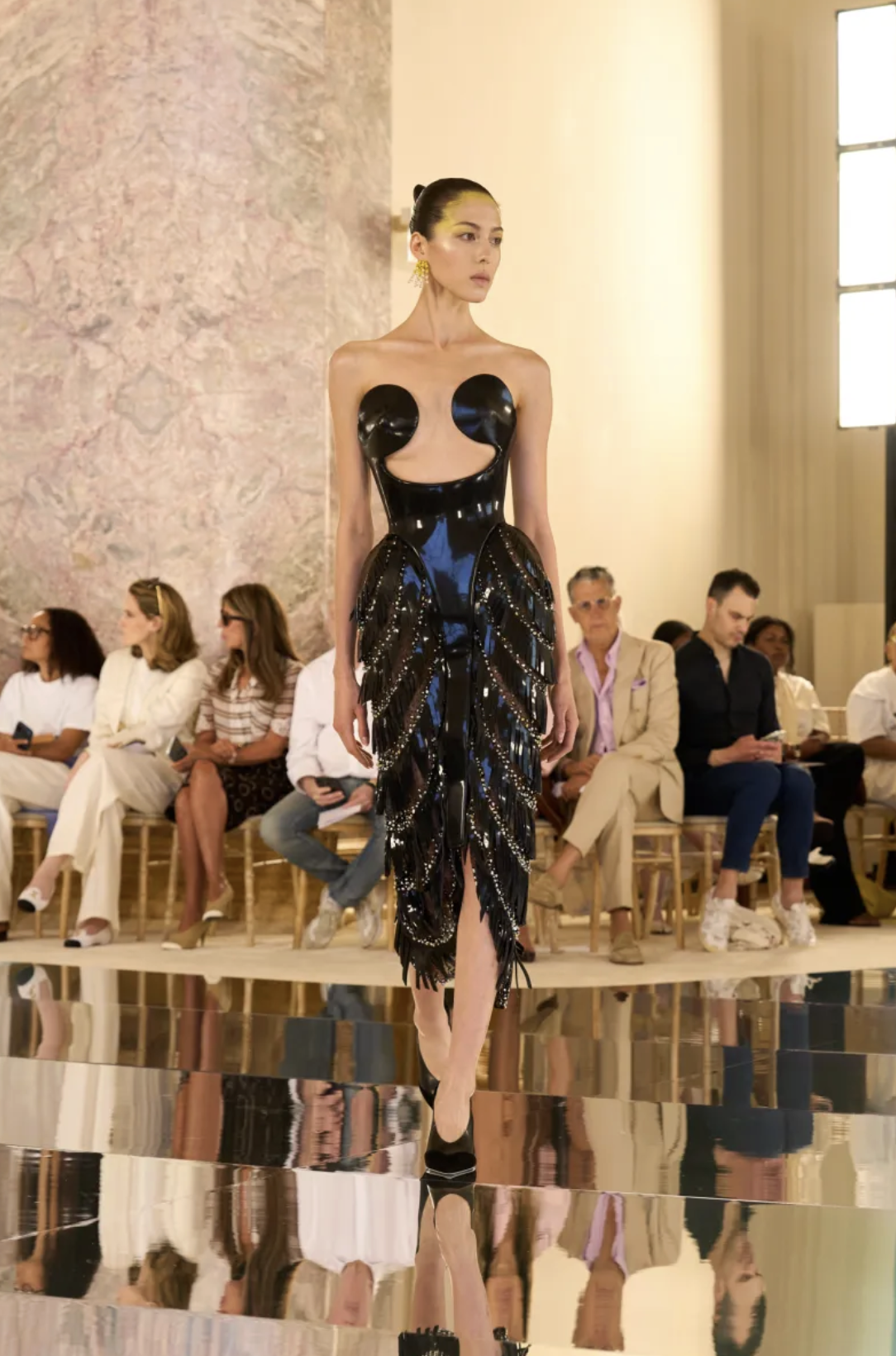
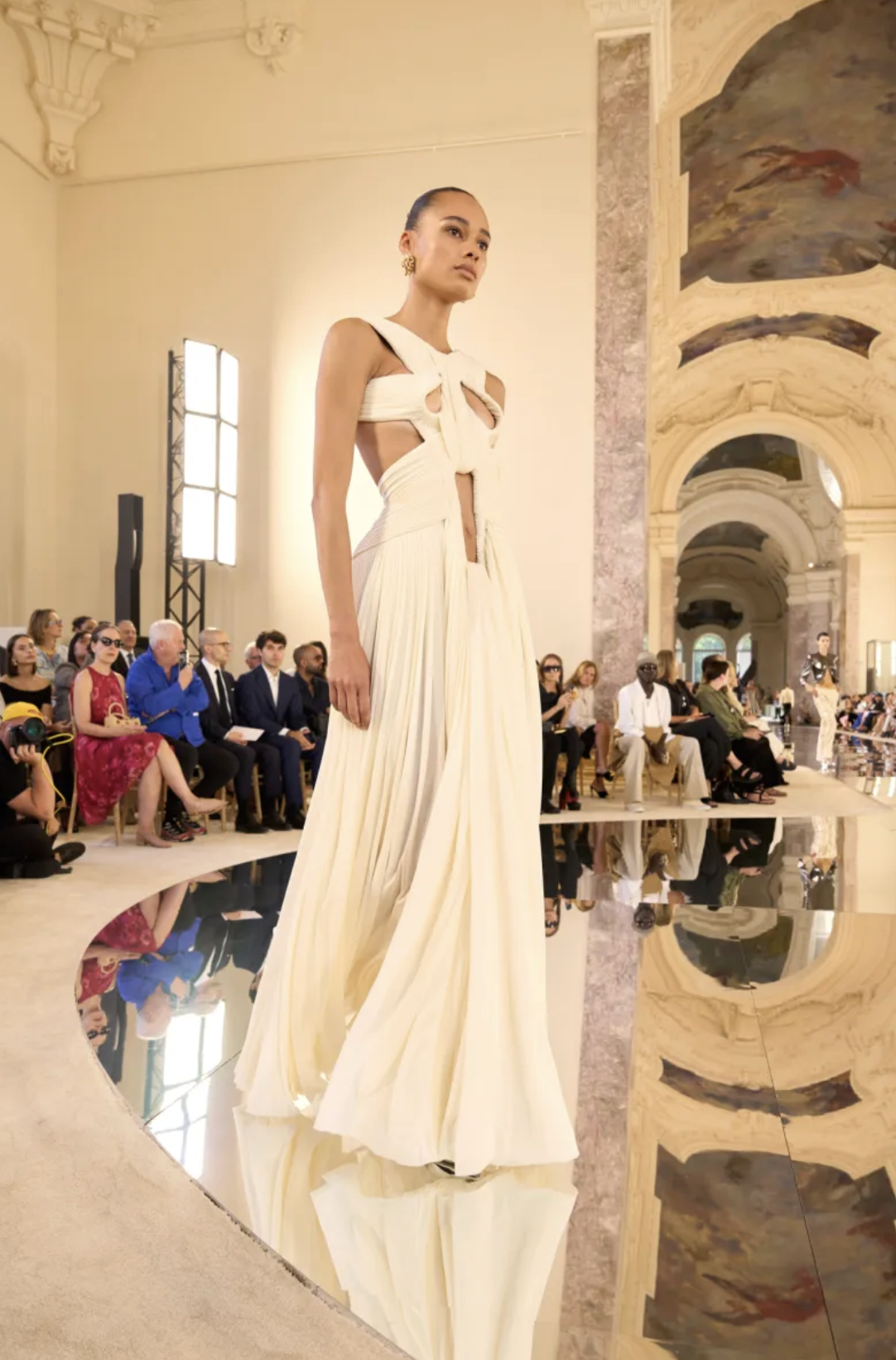
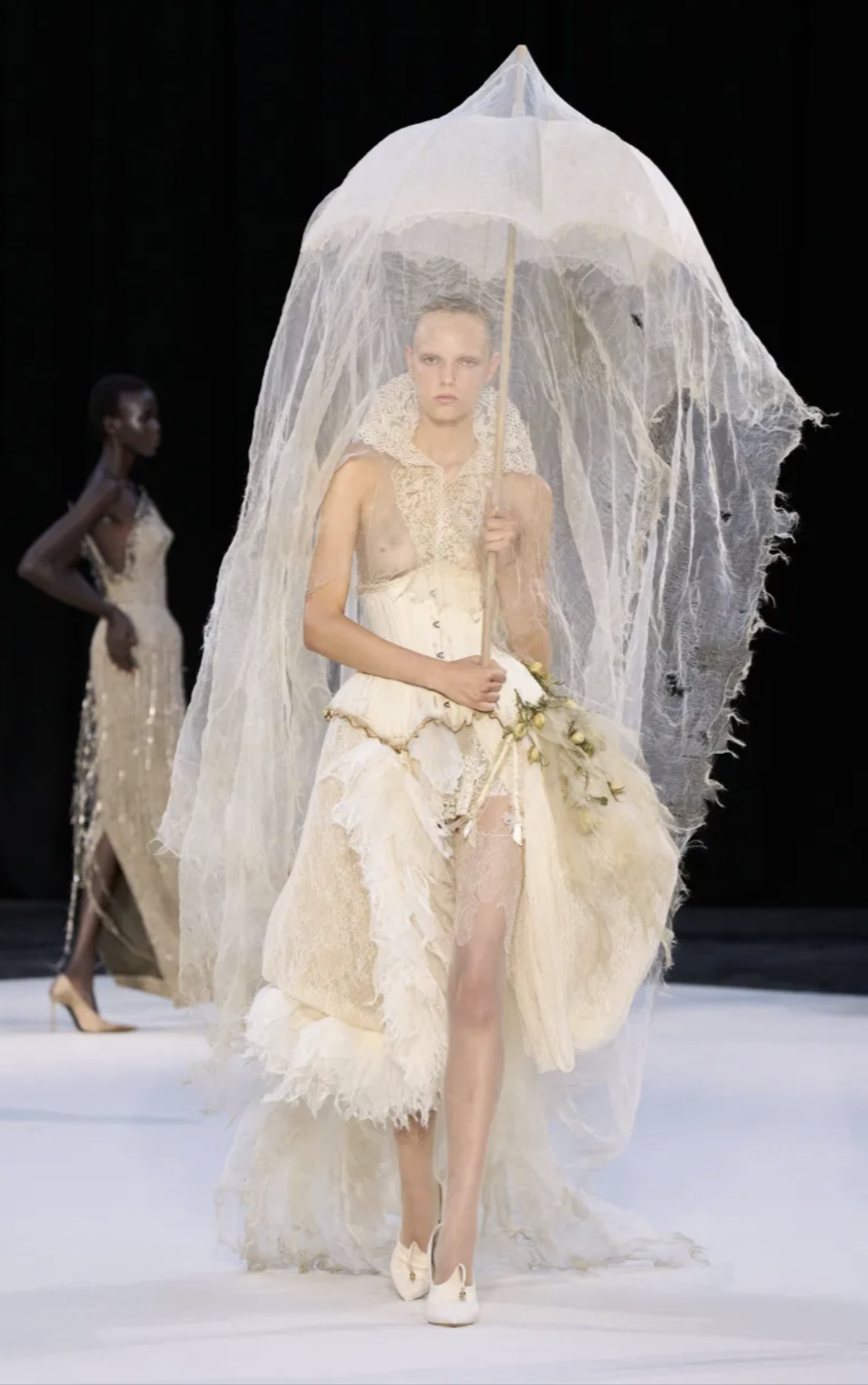
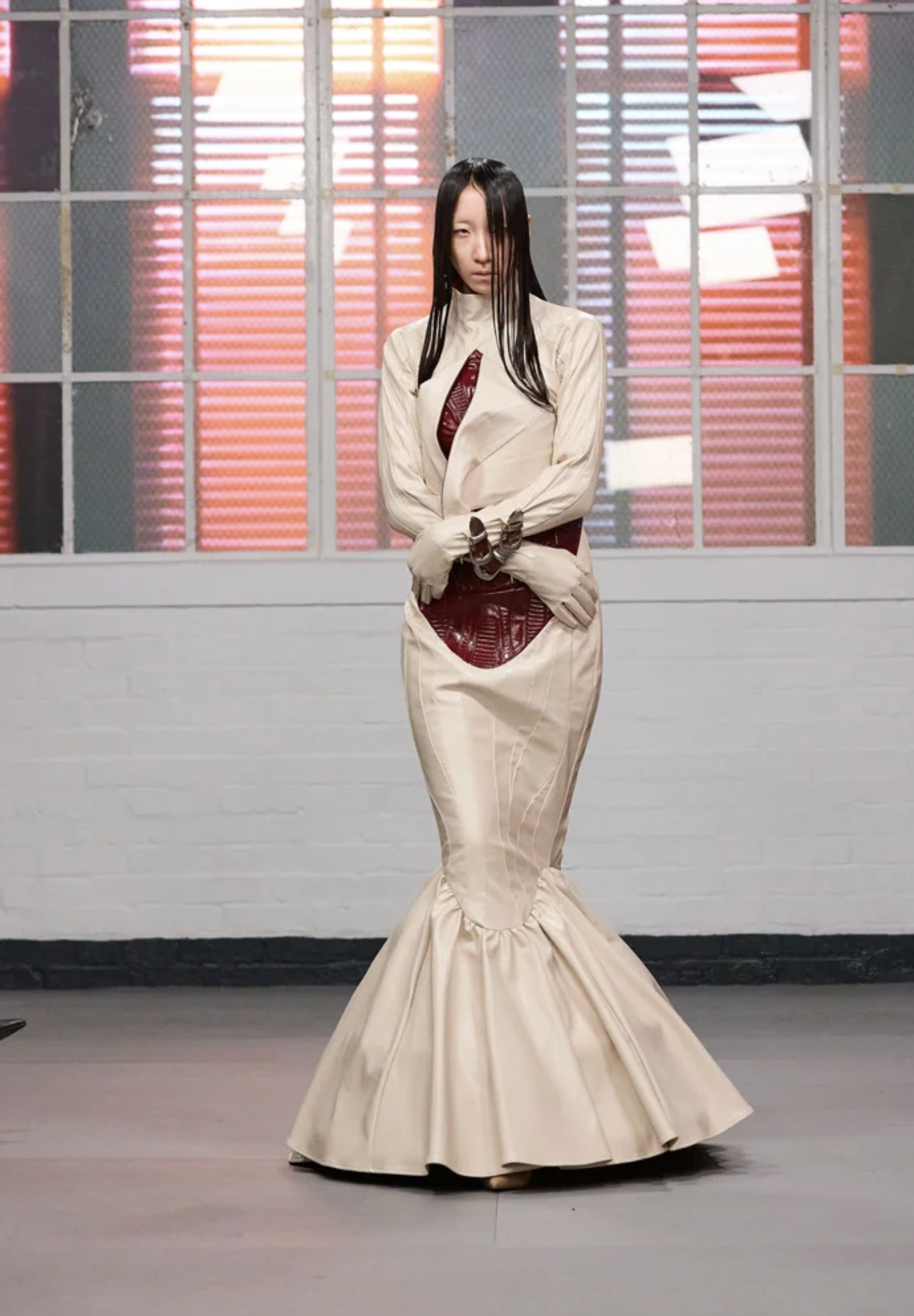
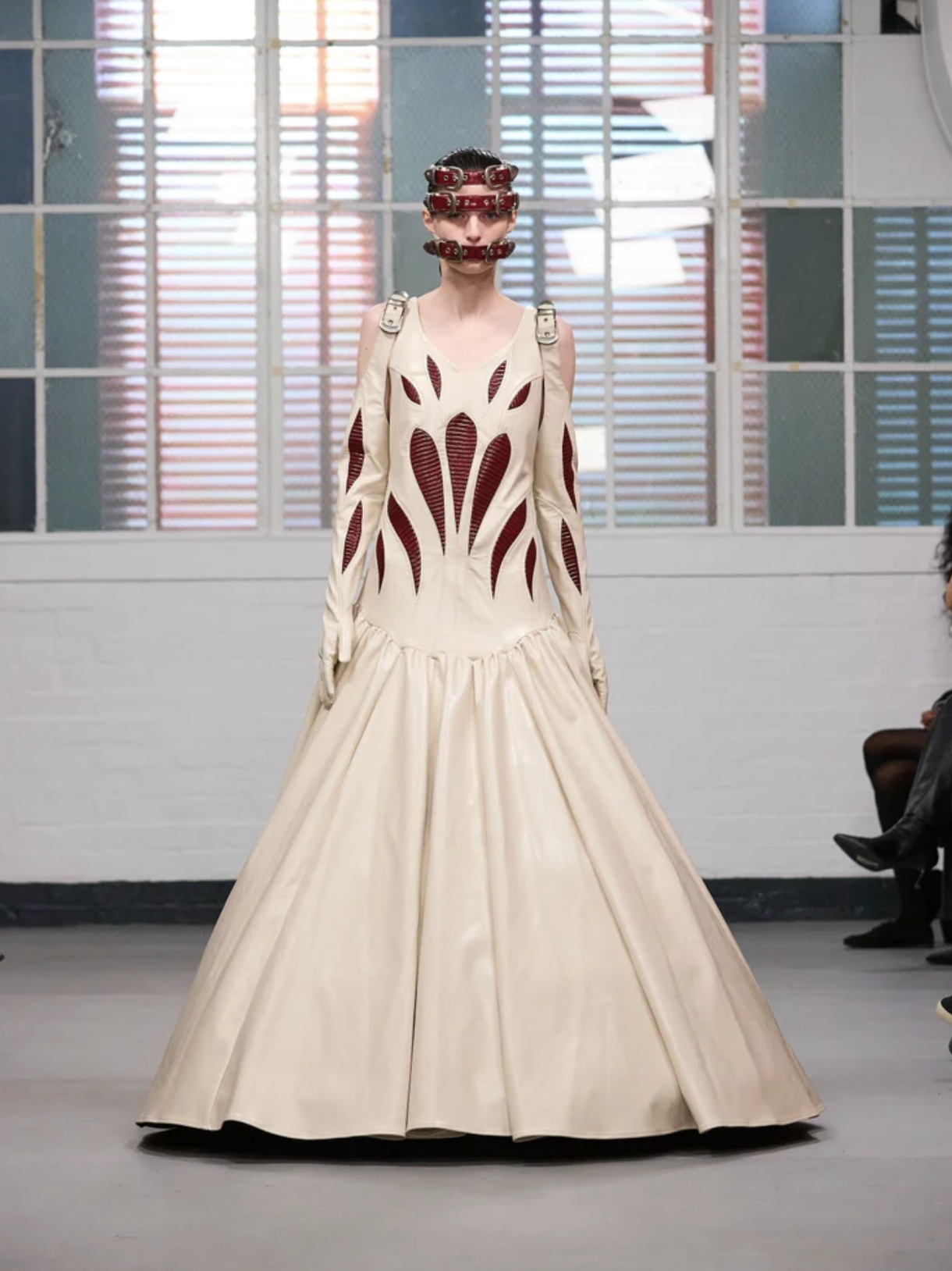
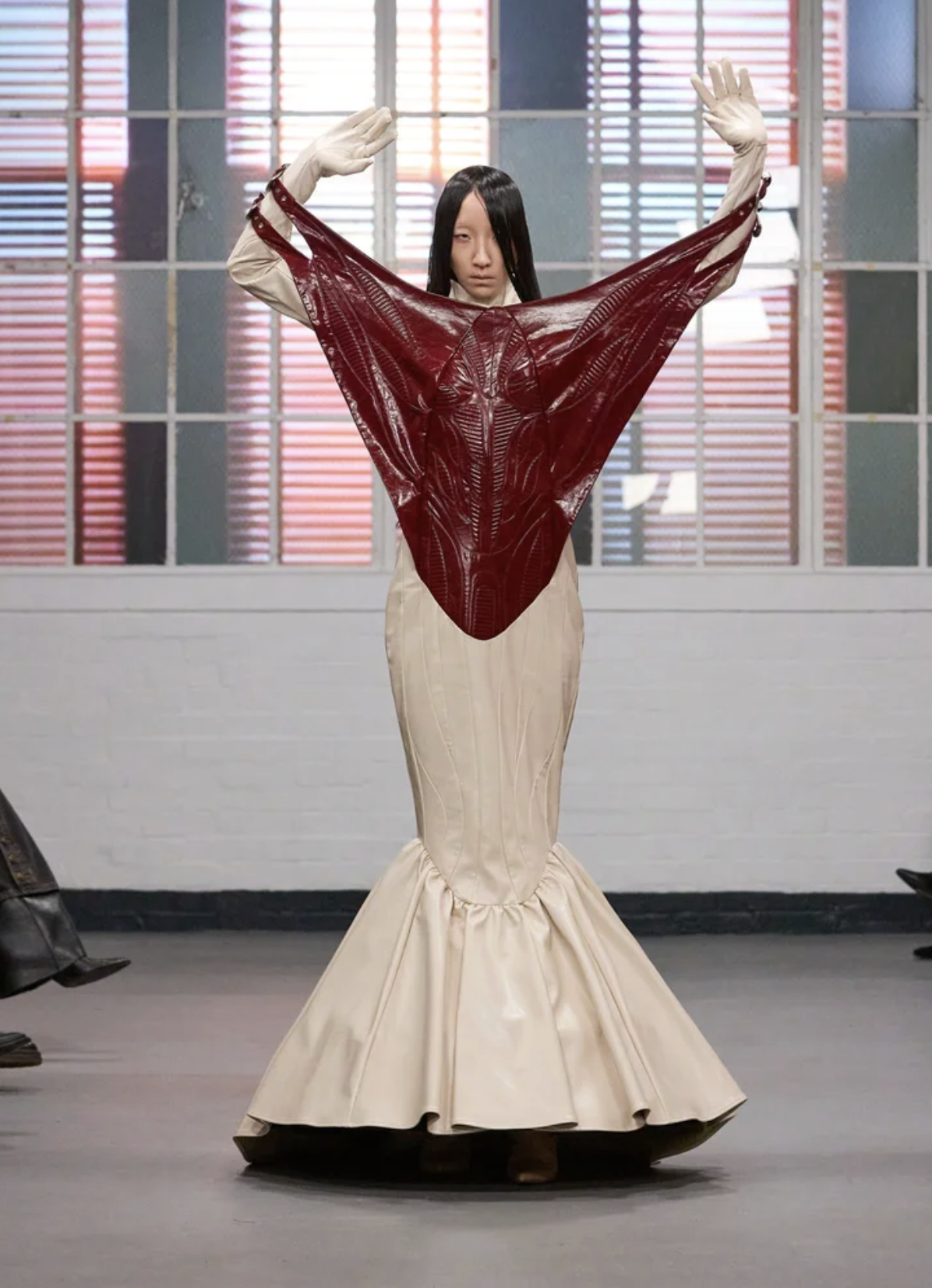
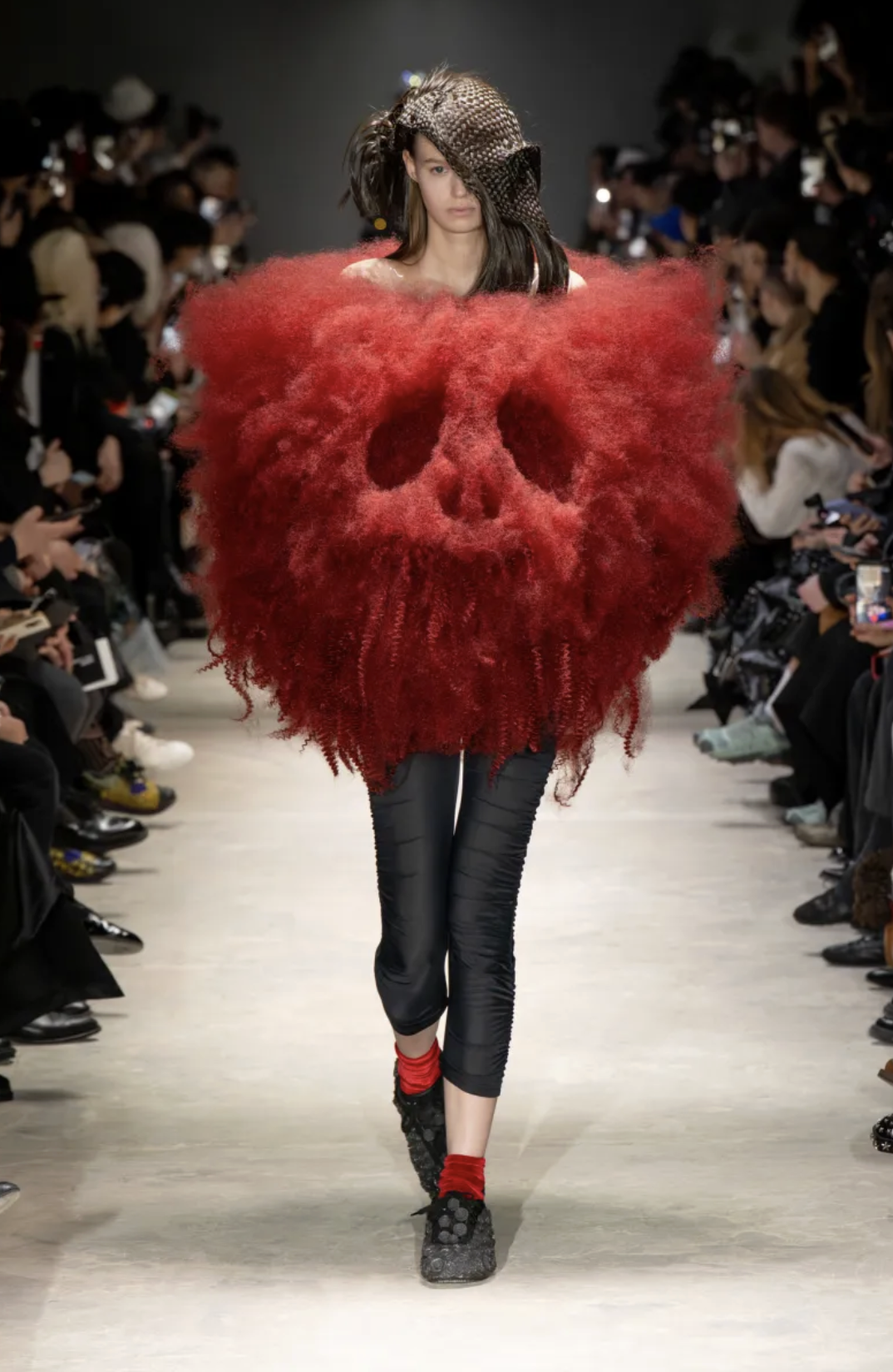
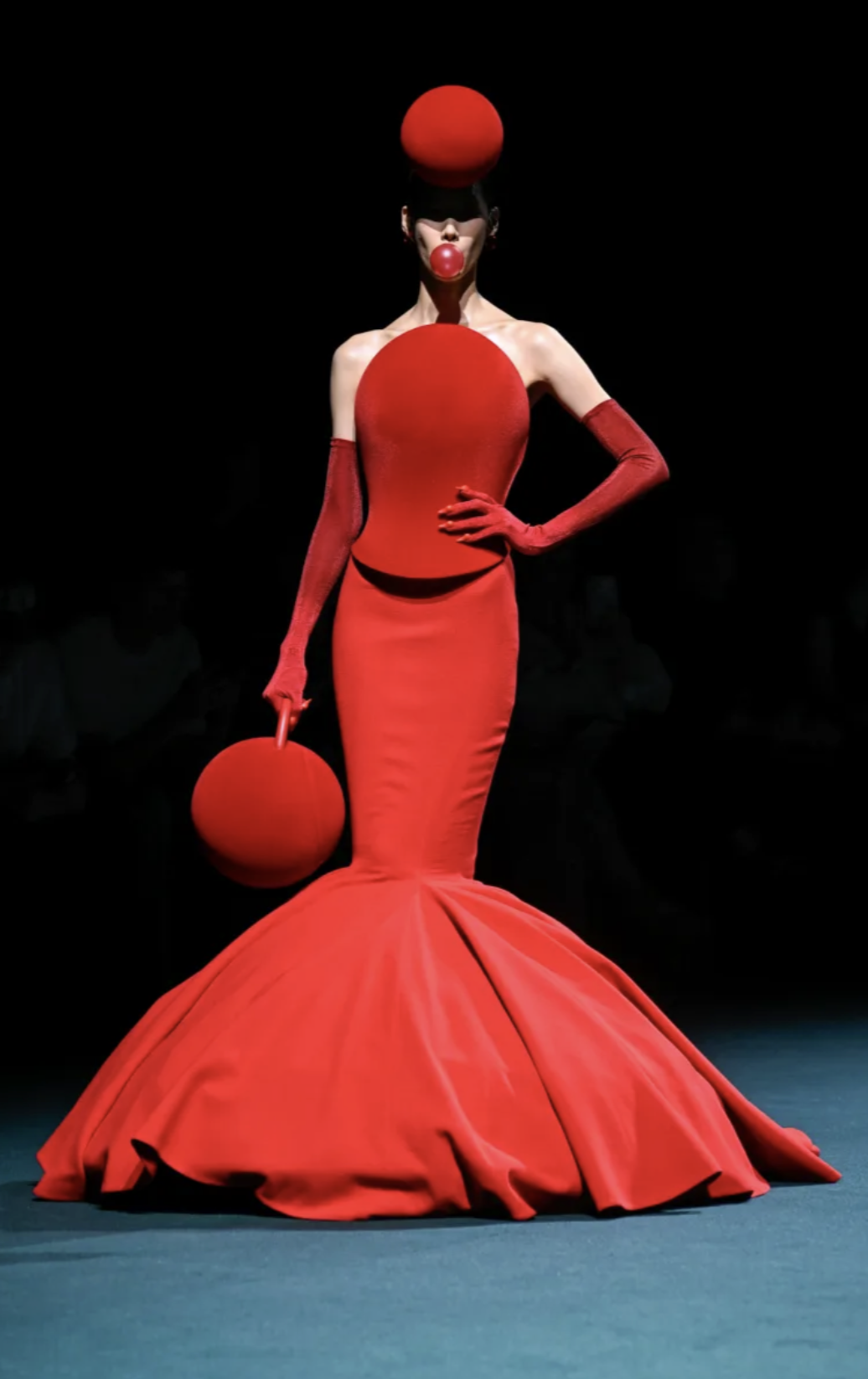
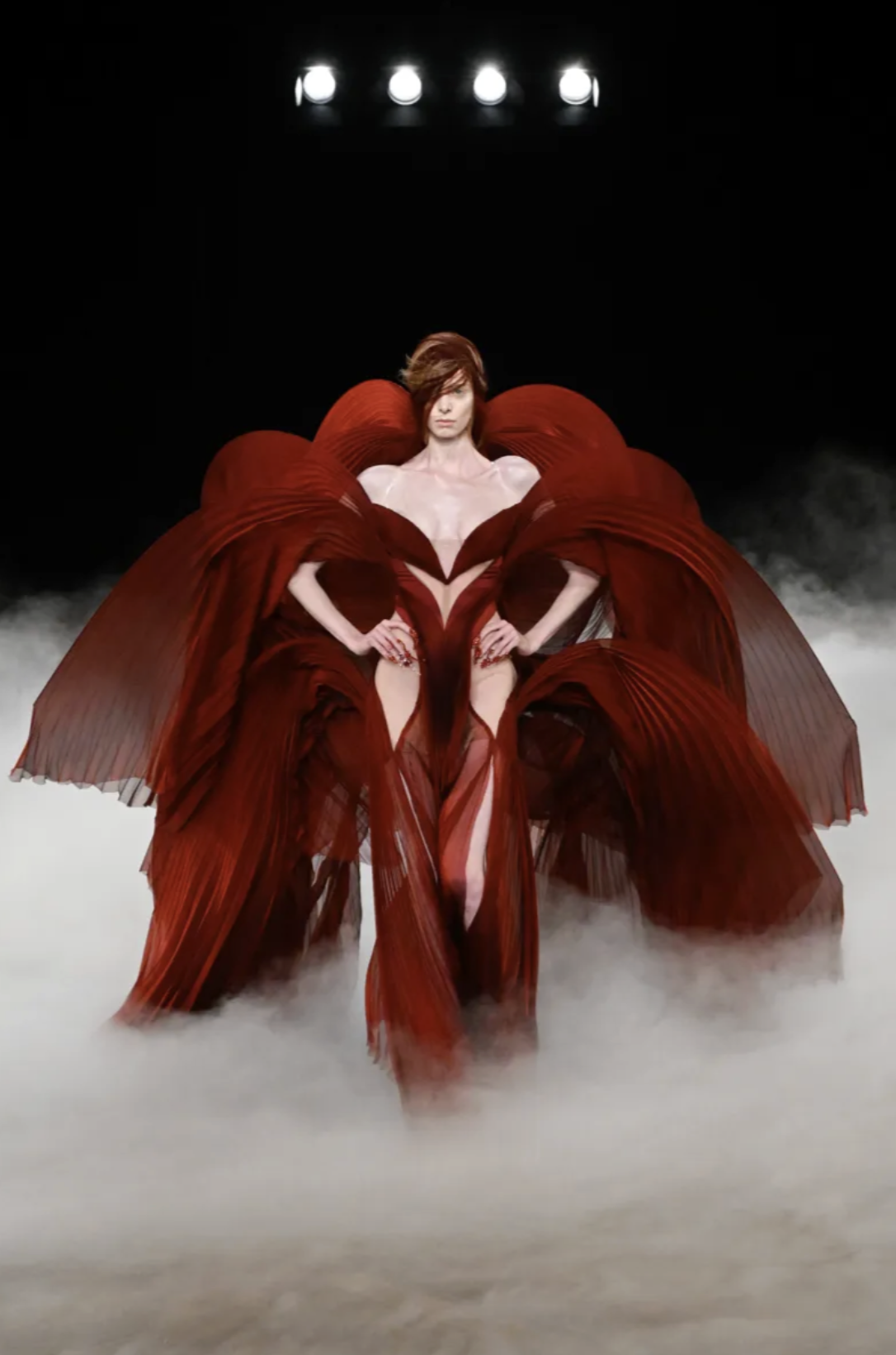
A moment for the wonderfully weird. FW26’s most imaginative designers distort the human silhouette until the familiar becomes uncanny, borrowing from surrealism and body horror while treating the feminine silhouette as raw material for fantasy. Faces disappear, anatomy mutates and garments become like creatures unto themselves; somewhere between sculpture and costume, fashion slips free of practicality and reminds us just how thrilling strange and unusual can be.
Andrew Curwen: Immaculate chaos. Warrior-like separates collide with deliberately unruly styling in a shoot so visually compelling that every detail seems to demand closer inspection.
Robert Wun: Surrealism takes physical form through animal faces and horned silhouettes, with sculptural construction creating figures that are hypnotic precisely because they are so difficult to place.
Matières Fécales: Among the season’s great provocateurs, deliberately disruptive design makes the body itself feel contested territory. Bound and blinded by pearls, this particular figure is equal parts charming and unnerving.
Iris van Herpen: A surrealist master at work. Her garments appear to move beyond the limits of the body, with intricate structures that feel as plausible in a sculpture gallery as they do on a runway.
Schiaparelli Couture: Pop culture gets the couture treatment with the viral Scream-mask dress, where tied cutouts and negative space manipulate the body into a familiar face. Camp, craft and horror collide beautifully.
Ashi Studio: That parasol. Part bridal veil, part tattered halo, it hovers above the model like an apparition—and has our haunted little hearts.
Angus Tsui: Body horror enters the atelier. Anatomical distortions and unsettling interventions make the wearer appear mid-mutation, pushing fashion into territory designed to make the eye linger.
Noir Kei Ninomiya: Somewhere between fairy tale and nightmare, familiar forms turn strange through thorn-like structures and creature-coded interventions. Snow White’s poison apple has officially tempted us.
We leave FW26 collections feeling deeply inspired, but also curious. Fashion is art made in real time, and history has shown us how readily the style of an era mirror the culture surrounding them.
For example, wartime restrictions shaped the narrow, economical silhouettes of the 1940s (which became the wiggle dress) before Dior’s voluminous skirts and dresses announced a return to sartorial abundance in the 1950s. The rising hemlines of the 1960s reflected the decade’s sexual revolution, while hippie style became visual shorthand for a counterculture shaped by political protest. The exaggerated shoulders of the 1980s power suit accompanied a generation of women claiming greater authority within traditionally male-dominated professional spaces. And don’t get us started on the 2000s, when the rise of the jeans and the number on the scale seemed to plummet in equal measure.
With that in mind, it’s tempting to wonder what future fashion historians might make of us now. Across the collections, dark feminine dressing feels assertive and confident, but there is playfulness within that power. Designers are embracing glamour while allowing beauty to become strange, exaggerated or even confrontational at times. There is an appetite for taking up visual space without sacrificing femininity in the process.
What does that say about the culture we’re dressing in now? Are we on the precipice of a darker, stranger era of feminine self-expression? Time will tell.
What do you think?
Tell us in the comments and subscribe to receive our free monthly digital issue to your inbox including a first look at dark feminine style and culture, the chance to vote on next month’s stories and a preview of upcoming giveaways.