The former English teacher brings an educator's perspective to spiritual practice, inviting a more thoughtful conversation about tarot and personal growth
By: Amanda Albert
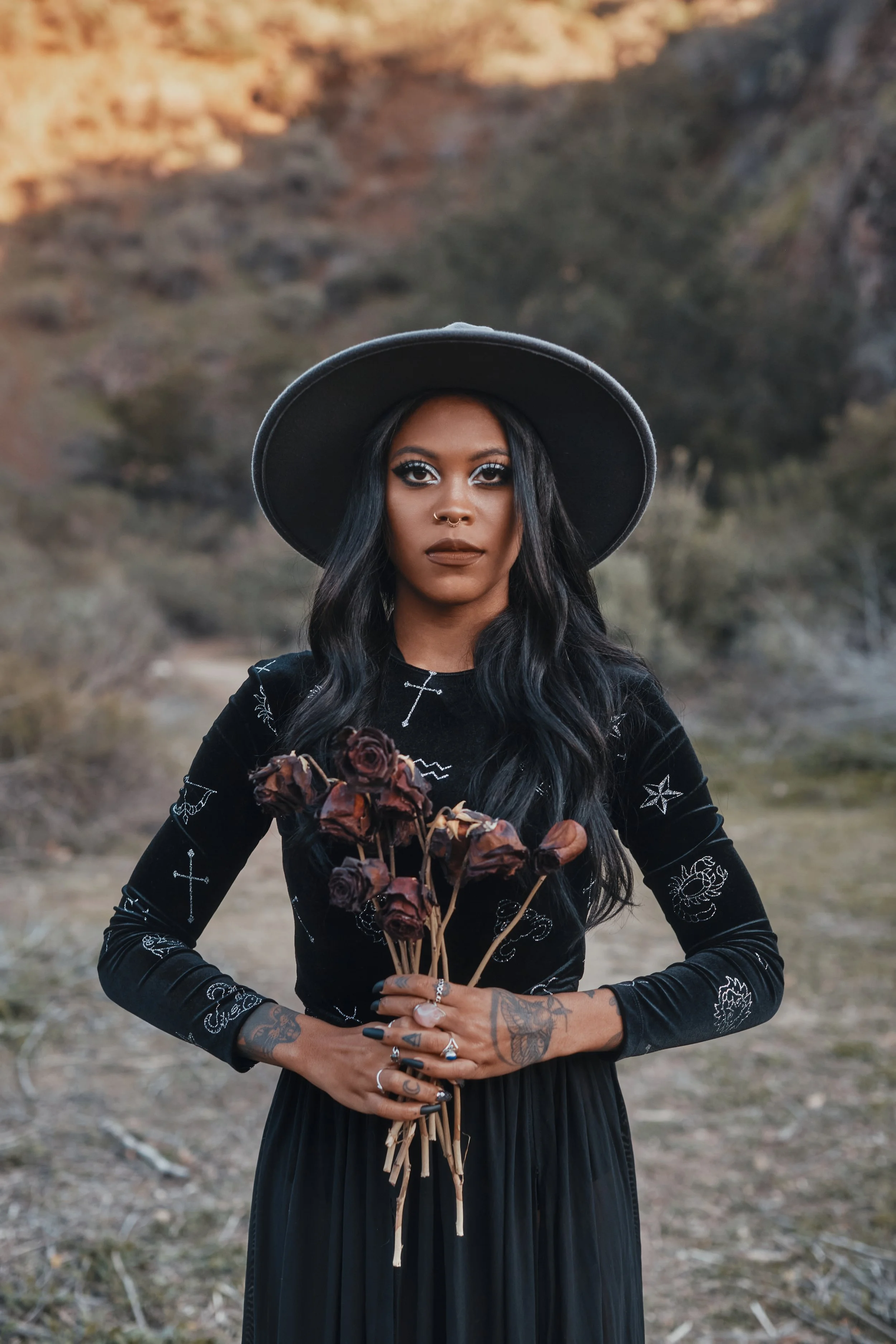
Photography by Madeline Stanley (@Madexposure)
The endlessly curious have a talent for finding new subjects worthy of their fascination. Anastacia Anastascio, The Spiritual Goth, has three Master's degrees and a voracious appetite for exploration that eventually led her beyond the classroom and into the realm of the metaphysical. Her professional journey began teaching English, but a spiritual awakening during the pandemic inspired an unexpected change of course. What started as a personal pursuit soon became a new vocation, giving her academic training fresh purpose in spiritual education.
Today, Anastacia brings an educator's perspective to a subject often surrounded by misconceptions. She encourages people to examine their inner lives with greater honesty, even when the discoveries are uncomfortable. She's also setting the record straight on a few tarot myths, challenging long-held assumptions about the cards and what it actually means to read them.
We caught up with Anastacia to revisit the turning points that shaped her career and explore the philosophy behind her teachings.
1. Your spiritual awakening ultimately led you to leave a career in teaching and pursue an unexpected calling. We'd love to revisit that pivotal chapter. If you're comfortable sharing, what was happening in your life at the time, and how did those experiences inspire you to chart a new path?
When I graduated from The New School in New York City with a bachelor’s degree in creative writing and literature, I honestly didn’t know what to do next. I felt lost. What I did know was that I loved learning, and I thought, “If I love learning this much, maybe I’ll love teaching.” So, I moved back home to LA and earned my Master’s in Teaching at USC.
I taught in the district for five years and gave so much of myself to that work. But I also realized how much it was draining me. I had always been someone with multiple jobs, and between earning my bachelor’s degree and three Master’s degrees, I had never really given myself the chance to slow down.
Then COVID happened, and we collectively had this opportunity to pause. I was still teaching, but now I was doing it from home, and that pause highlighted how depressed I was and how disconnected I felt from myself. I had been in therapy for years, but I still didn’t really know myself in the way I wanted to. I started searching for answers.
Before that, I barely knew anything about astrology or spirituality. But, I was consuming more content online, and there’s a lot of overlap between goth culture and spirituality, so I started exploring. I feel like my spirit guides had been pointing me in that direction for a long time, and I finally slowed down enough to notice.
When I bought my first tarot deck, I opened it in front of a friend and gave her a reading almost immediately. I had barely touched the cards, but the words just poured out of me. It felt like I was channeling, although I didn’t know what that meant yet. All I knew was that something had shifted. Something had awakened in me, and I had to pursue it.
I started my business very soon afterward. Around that time, my favourite podcast, Guys We Fucked, was offering free advertising for Black-owned businesses in support of the Black Lives Matter movement. I didn’t even have a fully established business, but I kept feeling this persistent nudge from my spirit guides to submit an ad. I put it off for weeks. When I finally did it and they read my ad, my business started gaining traction almost immediately.
I began getting clients and studying different modalities, including past-life regression, Reiki, and spiritual coaching. Eventually, I brought those practices together into a coaching program, and both hosts of the podcast joined it.
I stayed in teaching for about two more years before leaving. I knew I was walking away from a career that offered security, but I felt so strongly that I needed to follow this path. That’s how The Spiritual Goth began.
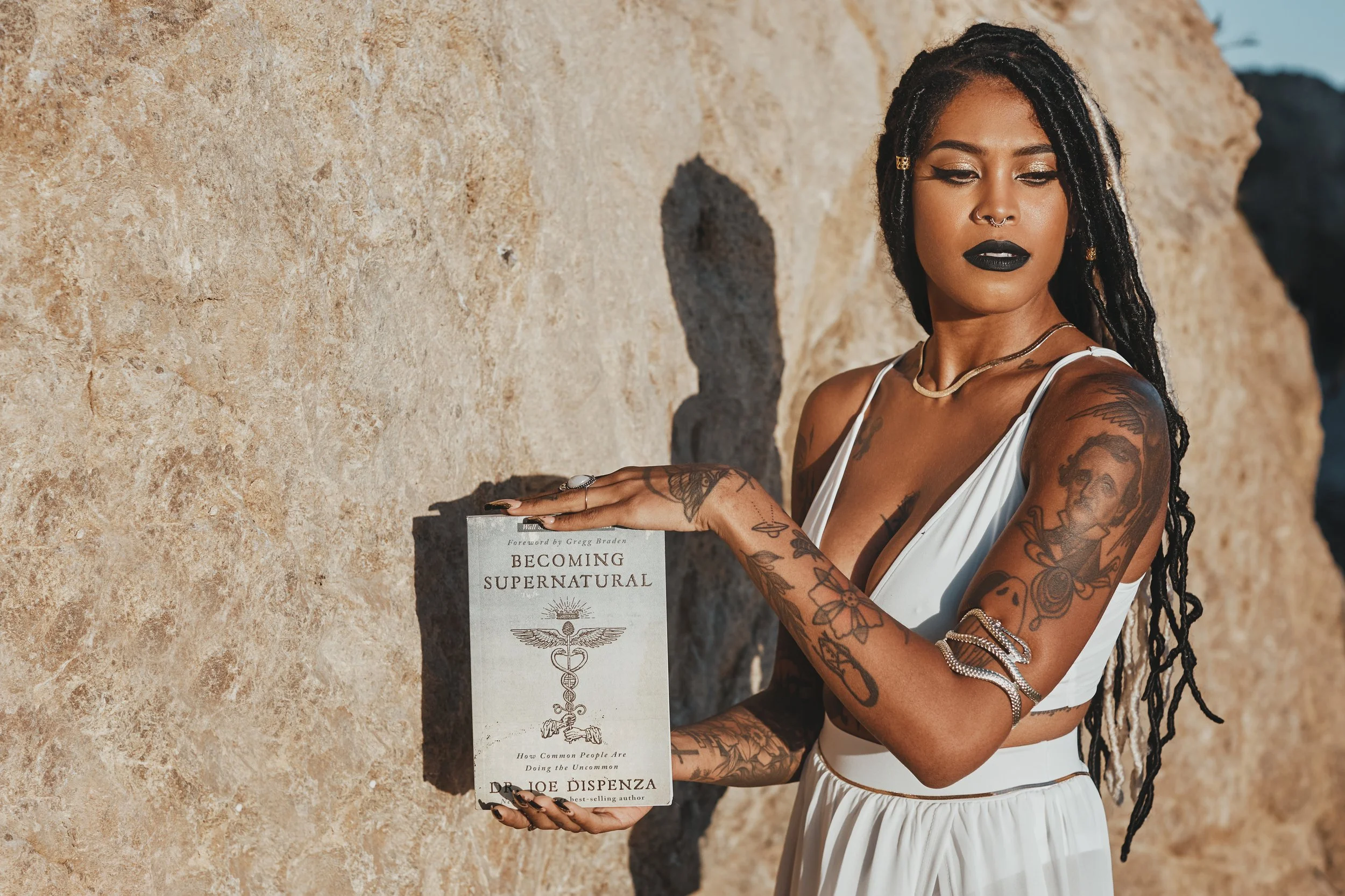
Photography by Madeline Stanley (@Madexposure)
2. Hindsight has a fascinating way of connecting the dots. Looking back on your childhood and teenage years, were there any early behaviours or feelings that you now recognize as signs of your intuitive abilities?
Definitely. As a child, I knew I was sensitive to what other people were feeling. Sometimes I felt like I knew what someone was thinking or what they were about to say, and I would say, “I knew you were going to say that!” My family was very Christian, so those experiences weren’t necessarily seen as gifts. Sometimes I would get in trouble for saying those things out loud.
I also had experiences that I understood as seeing spirits, and I was really afraid of them. Very candidly, I wet the bed later into childhood because I was too scared to go to the bathroom at night. I was afraid I would see a spirit. Think of Haley Joel Osment’s character in The Sixth Sense. That’s how scared I felt. I wanted to be normal so badly.
As I got older, I was always the person who could walk into a party and immediately sense the energy. I was very sensitive to tension or to the feeling that someone’s words weren’t matching what was happening underneath.
Looking back, I feel like I spent a lot of time running away from what I now understand as my spiritual gifts. It wasn’t until my spiritual awakening that those experiences really clicked into place, and I thought, “Okay, maybe it’s time to embrace this.”
3. How did you begin building your practice after deciding to pursue spirituality professionally? We'd love to hear about the steps you took to develop your abilities and navigate the transition from personal exploration to working with clients.
Honestly, I began by learning everything I could. There wasn’t a long period when I was practicing tarot exclusively for myself. After that first reading for my friend, I immediately felt like I needed to give readings to other people. It became a business very quickly, and I started offering paid readings to friends and family.
At the beginning, I used The Tarot Bible by Sarah Bartlett for keywords and traditional meanings. Then I would look at the pictures and use my intuition to bring the reading together.
Starting in the summer of 2020, I put myself through what I call spiritual boot camp. I took as many courses as I could, studied astrology, and worked with a mentor I really loved who helped me explore my mediumship abilities and connect with my spirit guides. I’m a Sagittarius Sun, and I really do love learning, exploring, and trying things. Once I became interested, I wanted to understand everything.
My path wasn’t traditional, and I wouldn’t necessarily recommend my exact timeline to someone else. A lot of people spend time developing a personal relationship with tarot before offering readings professionally. For me, there was this strange confidence I couldn’t explain. I felt very clearly, “This is my business. This is what I do,” and then I committed myself to learning.
Since then, that work has expanded into different modalities, coaching, teaching, and hosting retreats in Ojai, Sedona, and Costa Rica. When I stop and think about how much has happened since my awakening, it’s honestly a little wild. It all started with following that initial curiosity.
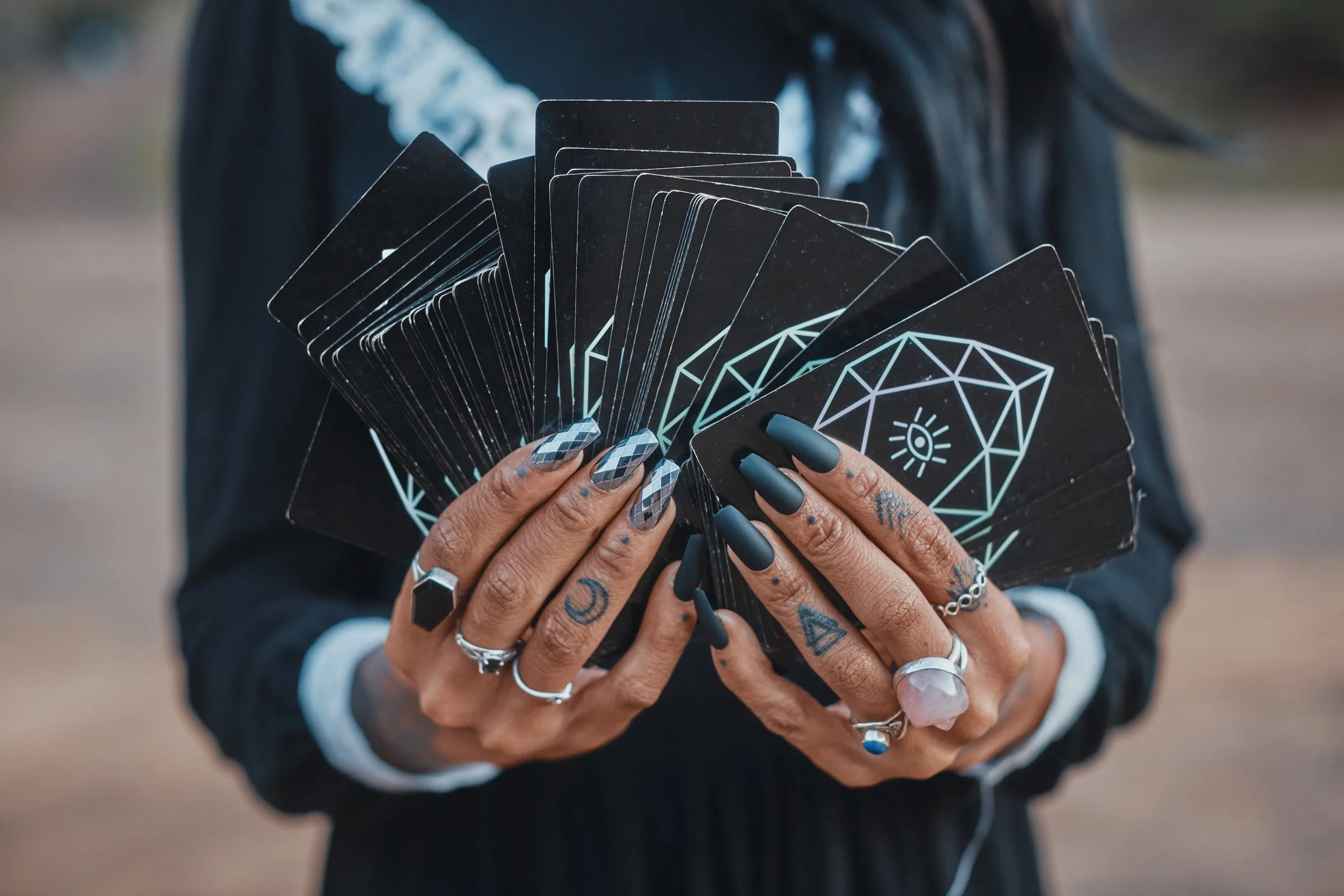
Photography by Madeline Stanley (@Madexposure)
4. Your audience has watched your practice evolve in real time, with Reiki and tarot eventually becoming part of a much broader body of work. How has documenting that evolution publicly influenced your relationship with your audience and your own development as a practitioner?
A lot of my followers have been with me since 2020, so they’ve really watched this unfold. And it hasn’t been a straight line where I started my business and suddenly that was the only thing I was doing. I have ADHD, and it can be hard for me to focus on just one thing. My business has always been at the forefront, but there have been a lot of things competing for my attention. Keeping up with social media through all of that hasn’t always been easy. Sometimes I have so much I want to share, and actually getting it all out consistently is another story.
But I love going back to my early videos because I can see how much I’ve evolved. It’s only more recently that I’ve felt like, “Okay, I’ve figured out how I want to connect with my audience, and how they connect with me.” I’m a teacher. That’s what comes naturally to me. I’m not just interested in making a tarot video about whether someone is going to fall in love with you. I want to explain things and help people understand something they can actually use.
If you’ve followed me for a while, you’ve probably watched me become more comfortable being myself online. You’ve also seen some of my dark nights of the soul. I’m pretty forthcoming about how I’m feeling and what I’m going through, and there have definitely been moments when that’s felt vulnerable. I’m sharing while I’m still figuring things out, and that can be hard.
I think what I’ve learned is that I keep coming back to the same thing: sharing what I know and being authentic to who I am. The more I do that, the clearer I become about the work I want to create.
There’s also this other side of it where, just like I wanted to understand tarot by taking all these courses, I wanted to understand digital marketing. So I studied it and ended up working in social media marketing for tech companies and e-commerce brands. That experience informs how I approach my own content, too. Everything I do somehow becomes academic. I get interested in something, and then I need to learn everything about it.
5. Many of our readers share your sentiment that darkness is an essential part of appreciating the light. With that in mind, we'd love to discuss shadow work, particularly its underlying principles and how you incorporate them into your practice.
To me, shadow work means being willing to look at the parts of yourself that you would rather hide, judge, or pretend aren’t there. That might be jealousy, anger, shame, fear, or patterns you keep repeating. It doesn’t mean those parts make you a bad person. It means you’re human, and there’s something there that deserves your attention.
I’m spiritual, but I’m also a realist. I think focusing only on “love and light” can become a way of avoiding what’s actually happening within you and around you. You can’t pretend yourself into peace. Sometimes you have to acknowledge that you’re hurt, that you’re angry, or that something needs to change. For me, befriending the darkness means understanding those feelings instead of being ashamed of them, while still taking responsibility for how you act.
But I also think people make shadow work much more intimidating than it needs to be. You don’t need to disappear into a dark cave, light 20 candles, and have some huge spiritual experience. It can be journaling, going to therapy, having an honest conversation, or noticing that something triggered you and getting curious about why. It can be catching yourself thinking, “I’m not good enough,” and asking where that belief came from and whether it’s actually true.
In my coaching, I incorporate this by helping people recognize the beliefs and patterns underneath what they’re experiencing. We explore what they’re telling themselves, where those stories began, and how they can start responding differently. I bring spiritual practices into that work, but I also want it to be practical. How are you speaking to yourself? What boundaries are you setting? What choices are you making in your everyday life?
The goal isn’t to turn yourself into someone who only feels positive emotions. It’s to know yourself well enough that the parts you’ve avoided no longer have to run your life. That’s where I think a deeper sense of peace comes from.
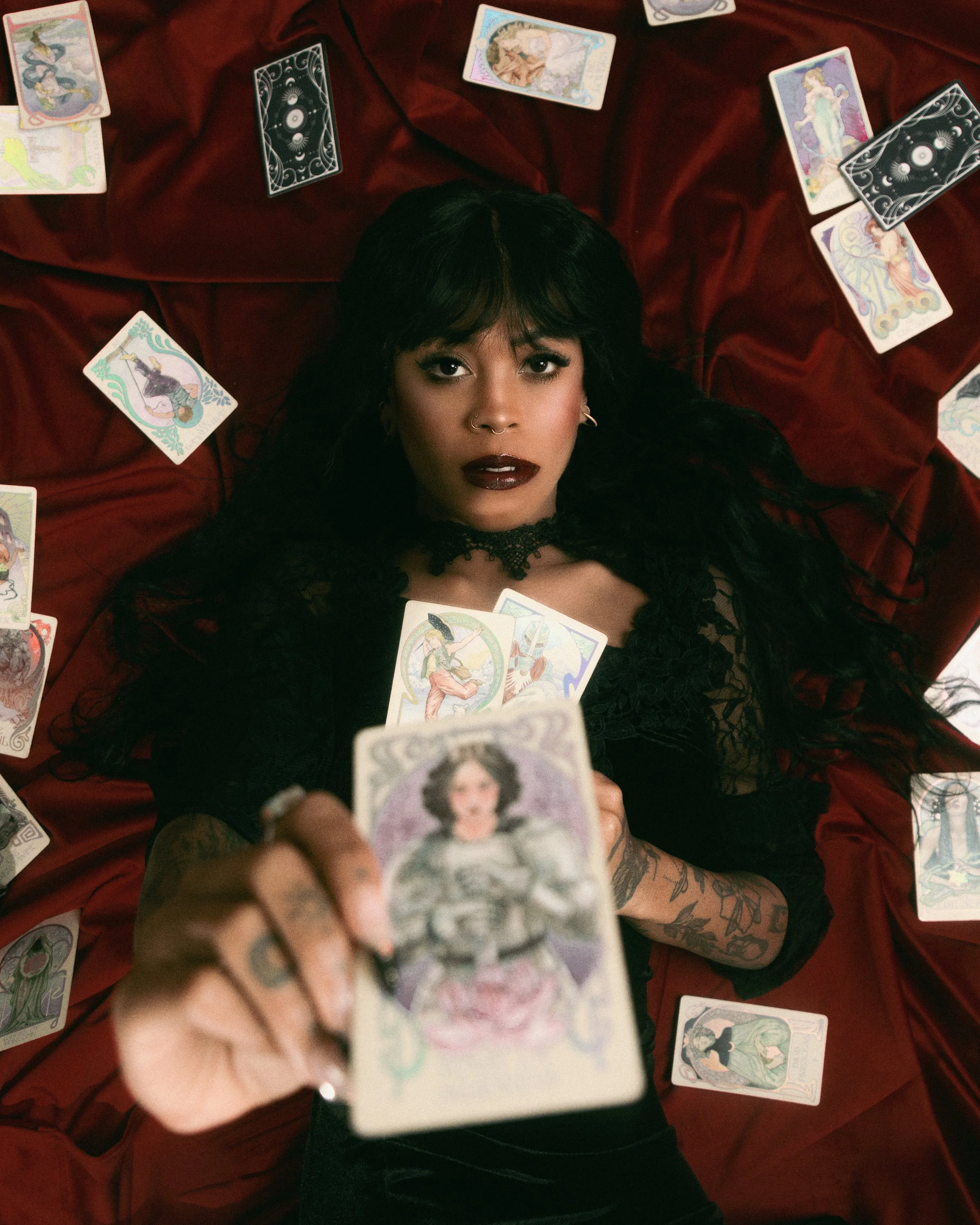
Photography by Maya Holt (@mayapologies)
6. Tarot has become a cornerstone of your content creation. We'd love to trace your relationship with the cards all the way back to the beginning, from what first piqued your curiosity to the role they play in your spiritual practice today.
I don’t have a story about growing up around tarot or finding my mother’s cards as a child. That’s so far from my experience! In 2020, I watched a creator doing tarot content on Instagram, and her message resonated with me. I had never had a reading before. I’d never seen a deck in person or touched a card. I messaged her to say I was interested in learning. She recommended a book and a deck, wished me luck, and that simple exchange ended up changing my life.
Once I started reading, I felt this immediate pull to share it with other people. It wasn’t even a thought of, “I need to make money.” It was, “I can help a lot of people with this.” Starting the business felt like such a natural extension of that.
Through my spiritual exploration, I’ve come to believe that I’ve worked with tarot and been a healer and mystic in past lives. That’s how I make sense of how familiar it felt. It was almost like picking something back up. It’s hard to describe because there wasn’t this big internal debate. It just happened, and I followed it.
Today, tarot is part of my work with clients, my content, and my teaching through Tarot Academy. I help people learn the cards while developing their own intuition, which has become a really meaningful part of my relationship with tarot.
7. For someone curious about learning tarot, what common misconceptions would you encourage them to leave behind?
The biggest misconception is that you have to be born with some special gift to read tarot. I believe everyone can develop their intuition, and tarot is one way to practice that. You don’t need to come from a family of readers or have some dramatic spiritual experience before you’re allowed to pick up a deck.
I’d also leave behind the idea that you have to memorize all 78 cards before you can give a reading. Learning the traditional meanings is important, but so is looking at the imagery, noticing what stands out, and considering how the cards relate to each other and the question being asked. You can use a guidebook while you learn. That doesn’t make your reading any less valid. I started with a book beside me, too.
I also want to address the fear that reading tarot means you’re opening portals or inviting something dangerous into your home. Coming from a Christian family, I understand how intimidating it can feel to explore something you’ve been taught to fear. But there’s no evidence that picking up a tarot deck opens a portal or invites spirits in. Reading tarot and practicing mediumship are different things. You can work with the cards as a tool for reflection, symbolism, and self-discovery without trying to communicate with spirits at all.
Another misconception is that tarot predicts a future that’s already decided. I approach it as a tool for exploring patterns, possibilities, and choices. A reading should help you feel more empowered to navigate your life. It shouldn’t leave you feeling trapped by a prediction or afraid to make your own decisions. And cards like Death or the Devil aren’t reasons to panic. Their names sound intimidating, but their meanings are much more nuanced.
Ultimately, I encourage people to be curious and let themselves be beginners. You don’t need to perform what you think a tarot reader is supposed to look or sound like. Study, practice, ask questions, and give yourself room to develop your own relationship with the cards.
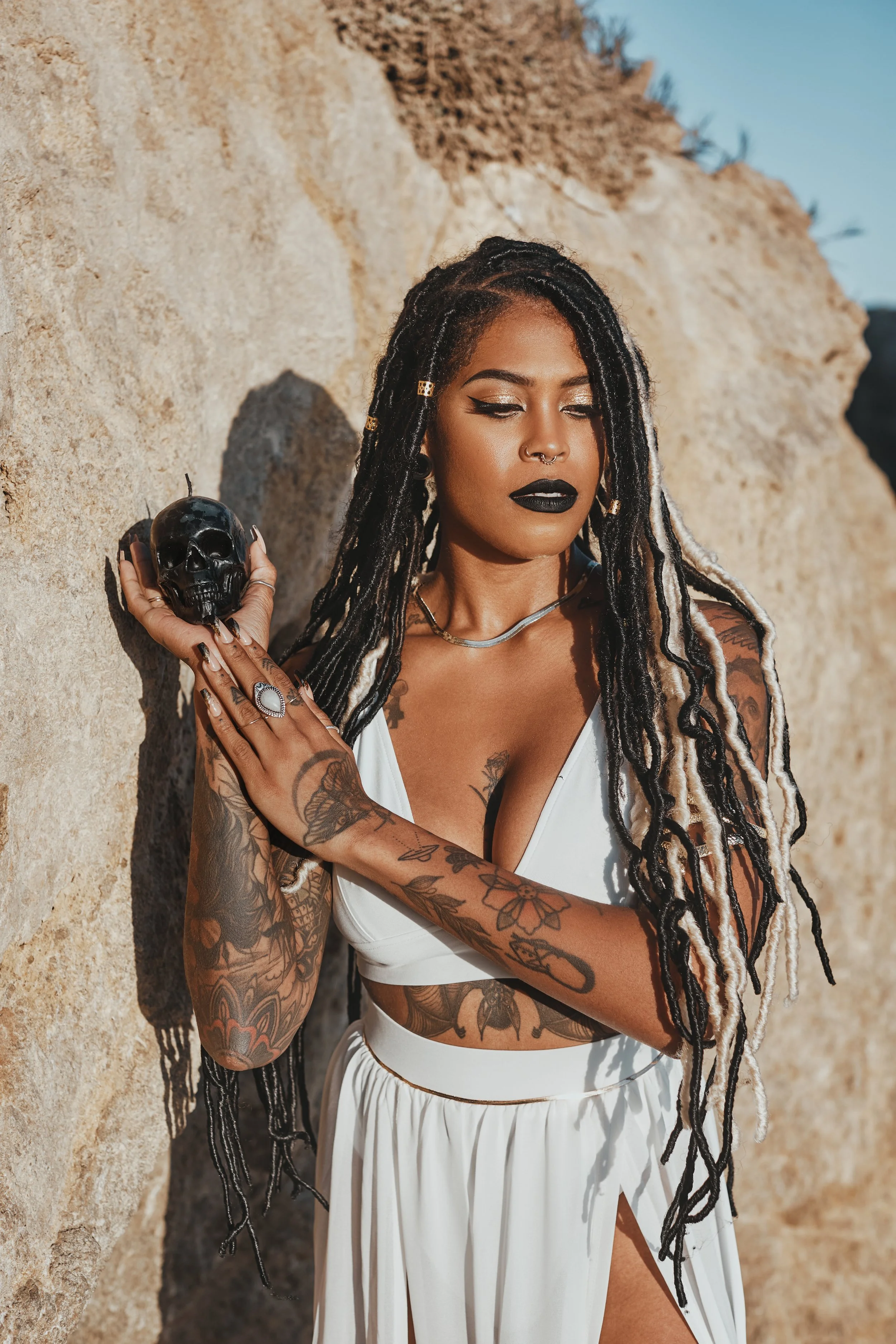
Photography by Madeline Stanley (@Madexposure)
8. Teaching has remained central to your professional identity, even as the subject matter has changed. How has your approach to education evolved through The Spiritual Goth, and what do you find most rewarding about helping others develop their own understanding of spiritual practices?
My teaching transferred over, and then it evolved. Even my spiritual coaching program is very rooted in teaching. We explore healing, shadow work, and what’s happening within someone, but I’m also helping them learn. Education has always been a huge part of how I approach this work.
During a ceremony, I had an experience with an Arcturian spirit guide who told me I was here to teach. That really resonated with me because I feel so called to it. Being able to teach something I’m passionate about, especially something that can help another person grow and live a better life, feels incredibly meaningful.
Something I say all the time is, “Spirituality is the study of you.” When I teach spirituality, I’m helping people learn about themselves. I’m holding up a mirror, but I’m also teaching them how to hold up that mirror for themselves. I might teach someone what the chakras mean, but I also want them to know how to apply that understanding to their own experience.
That, “teach a person to fish,” approach is really important to me. I want to empower people through the knowledge I share, so they can keep using it independently.
I’m teaching my eight-week Tarot Academy course right now, and I love the lightbulb moments. My students have told me they haven’t heard concepts explained in the way I teach them. I want them to understand how to read intuitively, beyond memorizing meanings or repeating what I’ve said.
I’m always asking myself, “how can I explain this in a way that’s going to stay with people?” That’s what I went to school for. I still get to use that training every day, just in a subject that feels deeply connected to who I am.
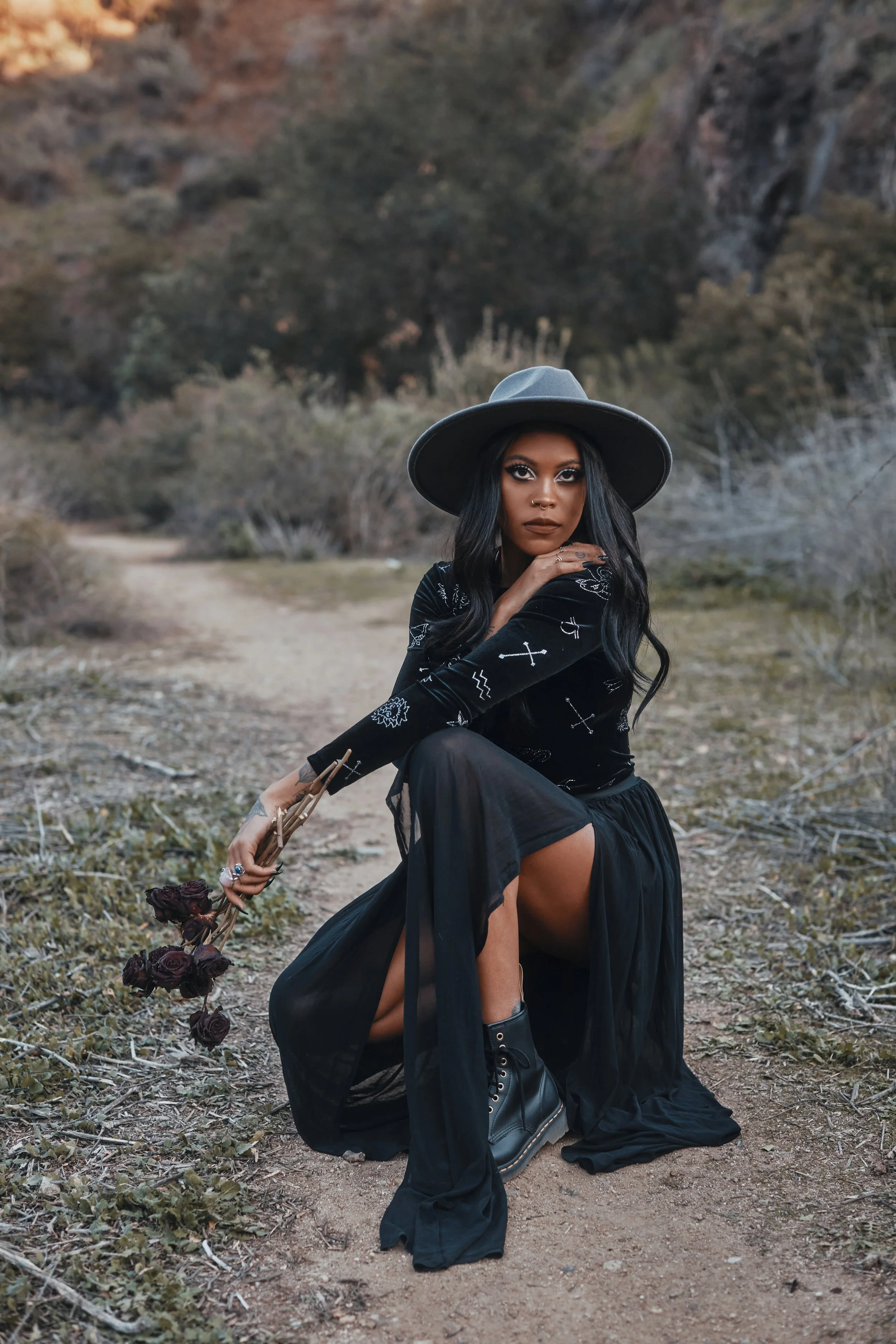
Photography by Madeline Stanley (@Madexposure)
9. Intuition is a term that's frequently thrown around, often without a clear understanding of what it actually means. What does cultivating an intuitive practice involve, and where would you encourage a beginner to start?
To me, cultivating an intuitive practice starts with getting to know yourself. It’s learning how to recognize your own inner responses when there are so many other voices, expectations, and beliefs competing for your attention.
That doesn’t mean every thought or feeling is an intuitive message. Part of the practice is developing discernment. Am I feeling something about this situation, or am I reacting from fear? Is this my own perspective, or something I’ve been taught to believe? You give yourself space to explore those questions rather than immediately assuming you have the answer.
In everyday life, that can help you understand your needs, recognize your boundaries, and make decisions with more self-awareness. Intuition can work alongside practical information and critical thinking.
For someone just starting out, I would honestly say: start journaling. One of the first things I do in my coaching is help clients recognize what they’re really telling themselves. What negative thoughts keep repeating? What beliefs are they carrying? Where did those beliefs come from? A lot of that internal noise can make it hard to hear yourself clearly.
Start learning your own energy, too. Notice how you feel when you’re comfortable, overwhelmed, excited, or pressured. Give yourself opportunities to hear your own thoughts without immediately asking what everyone else thinks.
I would also encourage someone to get a tarot or oracle deck and pull one card a day. Before reaching for the guidebook, look at the card. What do you notice? What feelings, ideas, or associations come up? Write those down, then read the guidebook and use it to expand your understanding.
It’s a simple way to start exercising your intuition and developing a relationship with it. You don’t have to force a huge revelation. Start by paying attention, being curious, and giving yourself room to learn.
Anastacia's story speaks to the courage it takes to reconsider a carefully mapped-out future. Three Master's degrees and a successful teaching career might have made a convincing case for staying the course, but her curiosity had other plans. She's since built a vocation that draws on her greatest strengths while giving her the freedom to pursue new interests as they arise. We admire her willingness to keep learning, especially when it means becoming a beginner all over again.
We also had the pleasure of connecting with Anastacia for a past-life regression session of our own. Curious about what we uncovered? Read about our experience HERE.
Continue your spiritual education with Anastacia, The Spiritual Goth on Instagram for tarot teachings and insights into her practice. Explore her Tarot Academy or visit her website to book a personal reading or spiritual coaching session. Subscribe below to receive our free monthly digital issue for more conversations with the people shaping dark feminine culture.