What happened when I explored a past life under Anastacia's guidance
By: Amanda Albert

I step into the kitchen. It's a small room, sparsely furnished, yet somehow it feels empty. A pot of salty porridge sits on an old-fashioned coal stove, left over from breakfast, but something inside me knows better than to throw it away. We'll need what's left tomorrow.
Faded blues and greens lend this farmhouse a dreary disposition, their colours softened by the grey light filtering through a weathered window above the sink. An old metal milk container stands beside the door. A wooden table occupies the centre of the room, surrounded by five chairs, although only four match. The air smells of damp earth, and my leather work boots feel heavy against the floor.
My body aches and I'm hungry, though neither sensation is unfamiliar. There's a persistent anxiety sitting in the pit of my empty stomach, accompanied by an equally familiar understanding that I must keep it to myself. Lunch needs preparing, and I have five mouths to feed: my husband, our son and two grandsons. There's barely enough food for two.
A calendar hangs on the wall, its lettering written in a language I cannot, today, understand. The illustration tells me it's May, although the chill in the air suggests otherwise. I seem to be somewhere in Eastern Europe, sometime during the 1800s.
I've never seen this kitchen before. I don't recognize the food or understand the language on the calendar. Yet, in this moment, I carry the weight of a life I don't recognize.
Somewhere beyond this farmhouse, in another time and place, Anastacia Anastascio The Spiritual Goth is guiding me through a past-life regression.
Chapter I: Once Upon Another Lifetime
The concept of past lives has appeared across centuries of philosophical thought and spiritual traditions, with astrology offering its own interpretations of the soul's journey. Whether described as reincarnation, rebirth or the continuation of consciousness, the belief raises an intriguing question: what if this isn't our first time around?
The Division of Perceptual Studies at the University of Virginia has spent decades examining a phenomenon that challenges conventional understandings of memory. According to its researchers, “Some young children, usually between the ages of 2 and 5, speak about memories of a previous life they claim to have lived.” The division has documented more than 2,500 cases, some involving accounts that researchers report correspond to the lives of deceased individuals.
Anthroposophical philosophy holds that children retain a closer connection to the spiritual world during their first seven years, offering one interpretation of why such recollections might emerge spontaneously in childhood. Adults interested in the possibility can explore it through past-life regression, although the memories evoked by the practice aren't scientifically verified.
But let's entertain the idea for a moment. If you've lived before, wouldn't you be curious to meet the person you once were?
Psychiatrist Dr. Brian Weiss, author of Many Lives, Many Masters, is among the best-known proponents of past-life regression, exploring its potential as a means of personal insight. His advice to those undertaking the practice is refreshingly uncomplicated: “relax and let what happens happen.”
Anastacia approaches past-life exploration as an opportunity to better understand the lifetime we're living now. Her regression sessions invite participants to consider whether experiences attributed to earlier incarnations might relate to present-day relationships or recurring emotional patterns.
The virtual experience begins with guided meditation designed to encourage deep relaxation. Participants explore whatever imagery or impressions arise, with Anastacia helping them reflect on the possible significance of what they've encountered.
We recently had the pleasure of interviewing Anastacia about her journey into spiritual education. Read our conversation HERE to explore her teaching philosophy and discover how she's challenging common misconceptions surrounding spiritual practices.
Chapter II: A Trip Down Memory Lane
Anastacia sends an intake questionnaire ahead of our appointment, inviting me to reflect on recurring dreams and patterns in my life. It also asks about any unexplained affinity for historical periods or cultures. The questions make for an interesting exercise in self-examination before the regression even begins.
I make a conscious effort to leave my expectations at the door. Whatever unfolds, I want to remain receptive without anticipating a profound revelation or ruling out the possibility that absolutely nothing will happen.
My motivation, however, is personal. I'm a Pisces, the final sign of the zodiac, and recently came across a social media creator who shares astrology content suggesting that this placement could signify one's final incarnation. I've been called an old soul since childhood, and while the theory is speculative, it certainly got me thinking.
If this really is my last lifetime on Earth, what might the others have looked like? The prospect of discovering even a glimpse is enough to pique my curiosity.
We begin with a grounding meditation, imagining a safe space in vivid sensory detail under Anastacia's direction. A full-body relaxation exercise follows, gradually easing me into a more receptive meditative state.
The next visualization feels almost Alice in Wonderland-esque. I climb an imaginary staircase, with each step representing one year of my current life. Then I float back down, metaphorically winding the clock backward until I reach a door. The moment I open it in my mind's eye, my past-life exploration begins.
Anastacia helps me navigate the impressions that take shape on the other side. The closest comparison I can offer is a video game: she has the cheat codes, but I'm holding the controller. Her prompts help me piece together a sense of place and identity from the details around me. She knows which questions to ask, but the answers are mine to discover.
Before long, I'm standing in the farmhouse kitchen described earlier. The scene develops beyond that initial encounter, and we gradually assemble a picture of the woman whose life I'm experiencing. What surprises me is how much I seem to understand without being able to explain it. I don't recognize the surroundings, yet certain responsibilities feel instinctive. Like the anxiety simmering beneath the surface.
Chapter III: Back to the Here and Now
My return to the present brings an opportunity to reflect on what I've encountered. Anastacia and I discuss the emotional patterns that surfaced and whether they might relate to challenges in my own life. She also asks if I recognized anyone during the regression, inviting me to consider possible connections with people I know today.
There's an unexpected addition to the session, too: Reiki.
Anastacia incorporates this energy-healing practice as a way of addressing the emotional wounds explored during the regression. Our attention shifts from the events themselves to the feelings associated with them and the possibility of finding some resolution in the present.
My thoughts return to that farmhouse kitchen. The poverty I had grown accustomed to and the responsibility that seemed impossible to put down are difficult impressions to shake. Whatever their origins, the emotions behind them give me something to examine in my own life.
The reflection continues well beyond our appointment. Certain aspects of my present circumstances begin to make more sense over the following days, prompting small adjustments informed by what I've taken away. These changes feel appropriate for the person I am today.
Whether those insights came from another lifetime or my own subconscious, I'm finding value in what they revealed.
I entered the regression with few expectations and came away with plenty to think about. The imagery was so vivid that I was still turning it over in my mind days later. I can't say with certainty whether I actually visited a previous incarnation, but the session offered a different perspective on some familiar feelings. I've already begun putting those observations to use.
Would I recommend past-life regression? Absolutely, provided you're willing to approach it with an open mind and actively participate in the process. Don't expect a practitioner to snap their fingers and transport you into another lifetime. You'll need to settle into the meditation and engage with the visualization. The impressions that follow may feel simultaneously familiar and foreign. It's up to you, with your practitioner's guidance, to play detective and piece together the clues about where you are and whose life you're exploring.
I couldn't recommend Anastacia more highly. She's a pleasure to work with from beginning to end, communicating clearly throughout the booking process and taking the time to review your intake questionnaire. She explains what to expect before the appointment and checks in regularly to ensure you're comfortable throughout. Her thoughtful follow-up is equally appreciated.
Curious to learn more about the woman behind The Spiritual Goth? Read our interview with Anastacia HERE, follow along on Instagram or visit her website to explore her services and book a session.
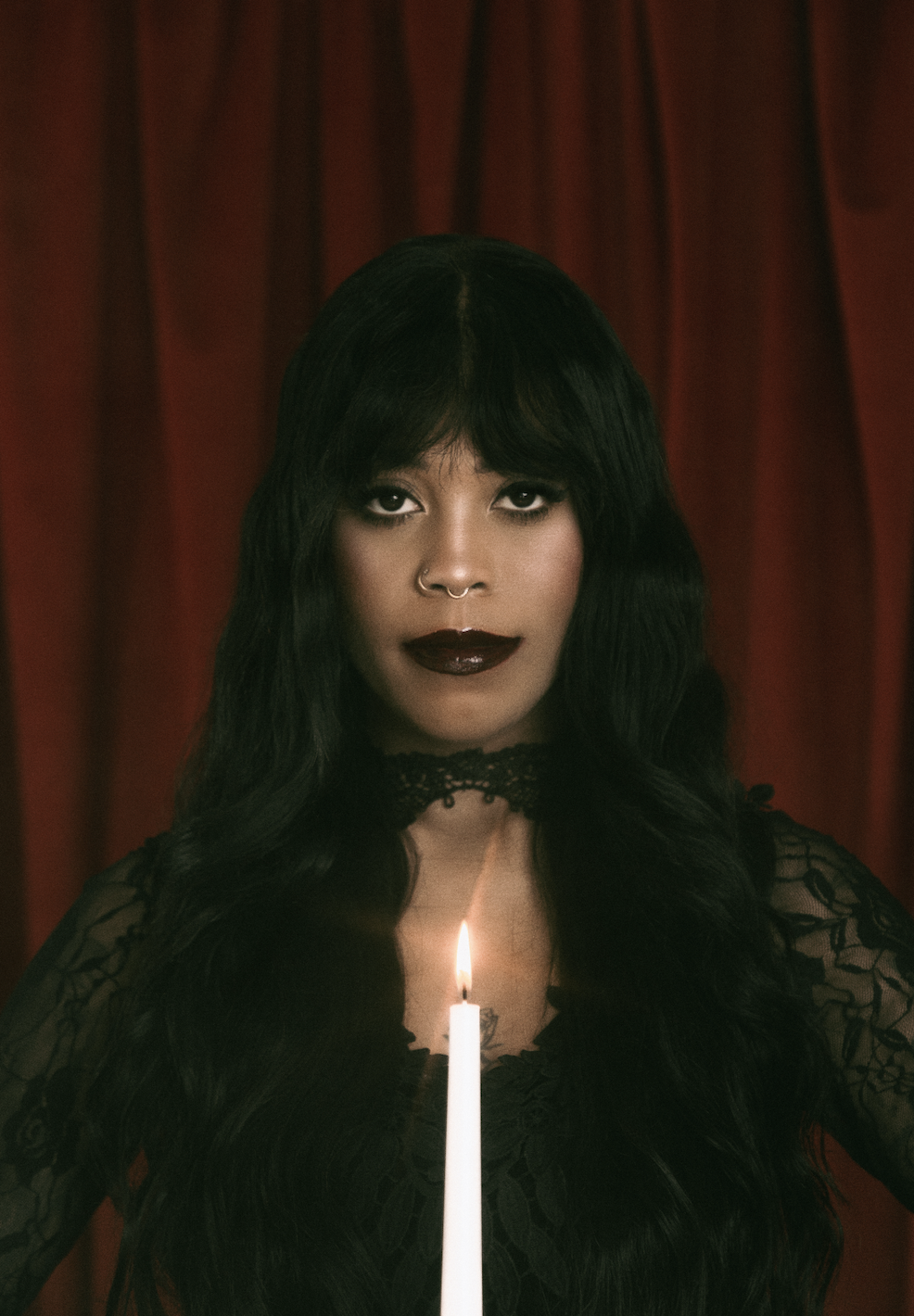
Photography by Maya Holt (@mayapologies) featuring Anastacia Anastascio, The Spiritual Goth