@houseofbizarium: A Study in Expressive Design and Enduring Atmosphere
Nicholas James Langley shares how restoration, early inspiration and dark academic influence converge in his work
By: The Lace Ledger Staff
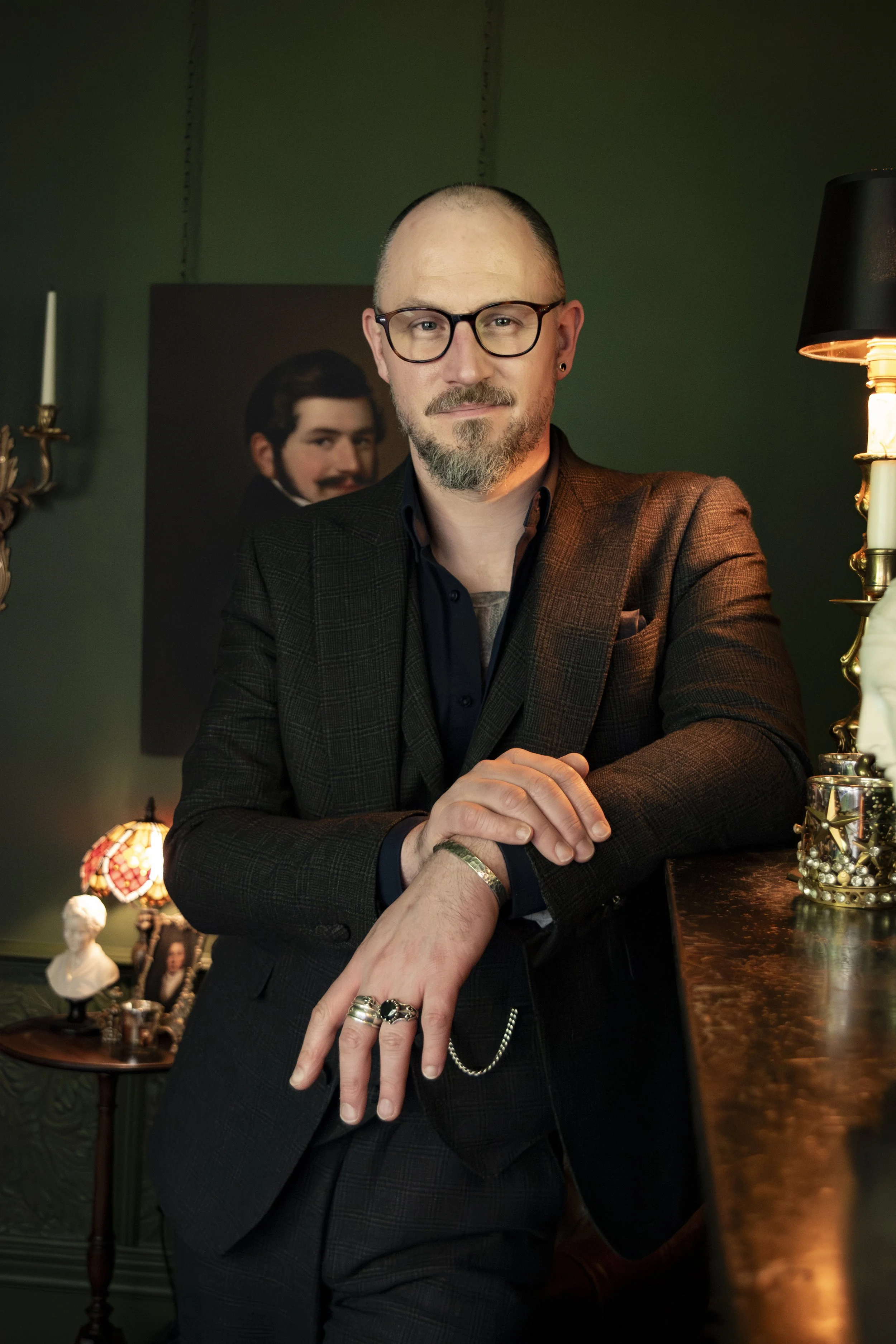
Photo Credit: @houseofbizarium
At @houseofbizarium, interiors are shaped first by mood and atmosphere, which Nicholas James Langley treats not as decorative flourish but as an essential pillar of style. In his Edwardian heritage home, Langley reveals how a deep respect for historical design can be honoured authentically, allowing the past to remain present without slipping into imitation.
Our conversation traces a creative path that endured personal challenge, evolving from tailoring to home restoration and now toward fashion design, while remaining grounded in patience, curiosity and making by hand. Along the way, Langley reflects on the lessons learned through DIY triumphs, missteps and the intuitive choices that give rise to interiors steeped in dark academic and Brontë-coded allure.
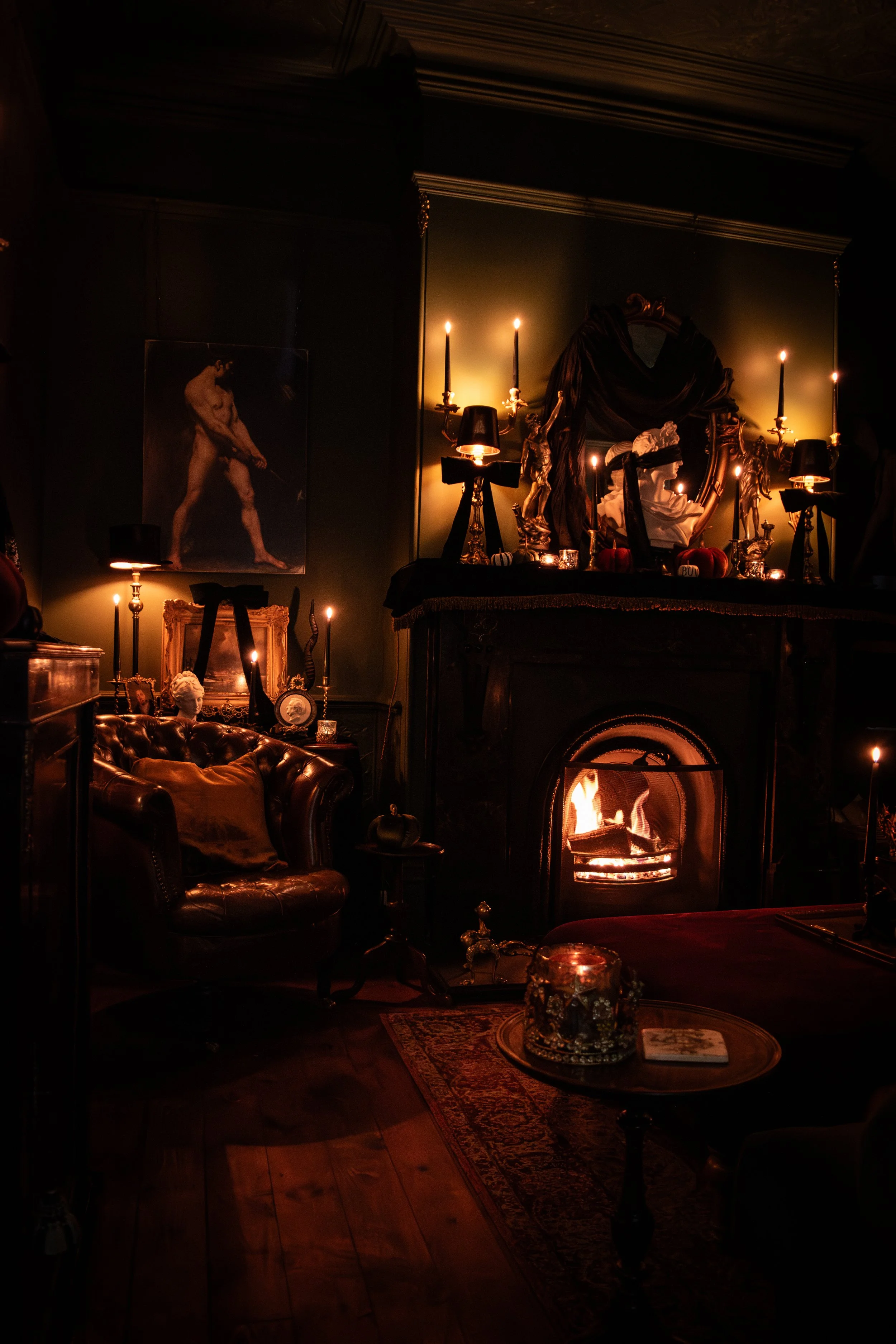
Photo Credit: @houseofbizarium
1. The aesthetic of your account, @houseofbizarium, feels both deeply personal yet widely resonant. Did you always work in design, or was this a passion that slowly demanded to become a profession?
In many ways, yes, design has always been the constant. From a young age, I was drawn to fashion, alongside an unexpected fascination with set design for film and television. That curiosity is likely shaped by weekends spent wandering around crumbling castles, country houses and museums, spaces rich with history and atmosphere.
When it came time to leave school, the path was clear. I studied fashion at a local leading fashion and design college, with my sights firmly set on London. Then life shifted, at 18, cancer changed everything, but not the creativity and passion, that is the one thing that has always driven me.
Plans changed, London was no longer possible, and I stayed local, enrolling in costume and set design. While I initially thought costume would be my home, it was set design that truly captured me, pulling me deeper into interiors, creating ambience and the emotional power of space.
Throughout my studies, illness remain present. There were moments when stepping away felt tempting, but I persevered, eventually finding a way to unite both worlds through a master’s degree in design.
After my studies ended, it took time to find my feet, but it has always been anchored by creativity, design and fashion. As family we established a small business, in our local town 12 years ago, which morphed into a tailoring business which will be celebrating its 10-year anniversary this year. I curate and design within the business, whilst being able to further explore my interiors passions for myself to share with others.
Fashion and interiors are very much merged, both are about expression, storytelling and creating a mood, a careful balance of texture, colour, form and personality.
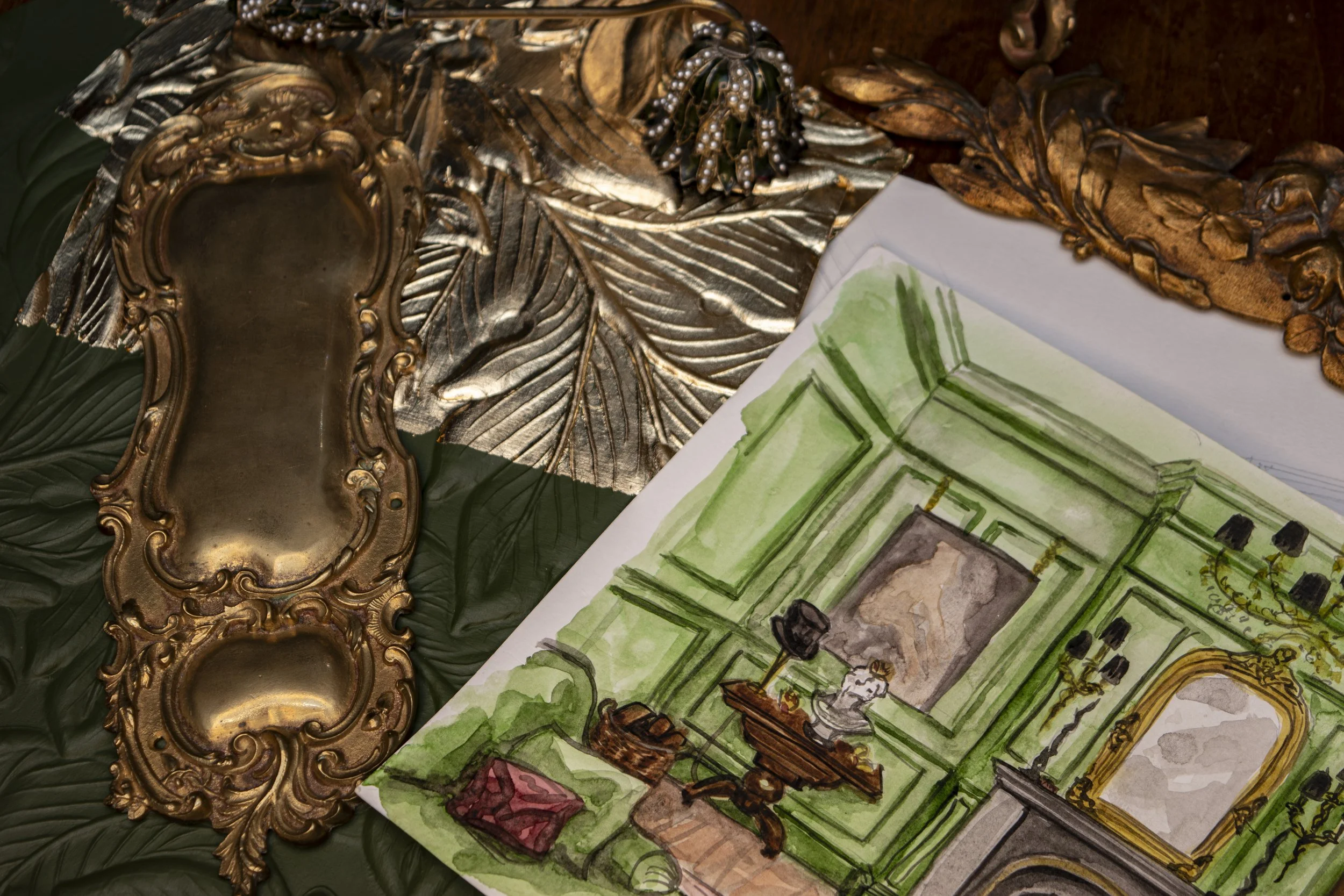
Photo Credit: @houseofbizarium
2. Looking back, were there early signs that you had a strong visual sensibility? Are there objects, rooms, or moments from childhood that now feel like clues?
Yes, looking back the signs were very much there, even if I didn’t recognize them at the time. I was aways drawn to the ambience rather than things alone. Spaces mattered to me, the lighting, the patina in furniture, how the space gave you an embrace.
Some of my strongest memories are wandering through old houses, where I was less interested in the factual historical events and more about the decorative details, the textures, finishes and how the space felt, the echo of footsteps, the musk that age carries, the way time resonates in the space. Those places taught me that objects and interiors carry emotion and narrative. To this day I continue to take in as much decorative architectural and interior detailing as possible.
At home, I was always rearranging, collecting small objects and creating little vignettes, part of the journey is experimentations, finding what works, whether if through clothing, sketching or with objects. I continue to be fascinated by texture, contrast and how to create them.
Now, when I look back those moments are definite clues. They were the early informative resources that have influenced the way I create and the instinct to create spaces and scenes that evoke feeling, nostalgia, heritage and a sense of lived in beauty.
3. Many readers romanticize the idea of restoring an old house. For those standing at the edge of that dream, what is one piece of honest advice you wish someone had given you at the start?
Romanticism is important, it is often what gets through, as it is far from a romantic experience, but I wish someone had told me that restoration is as much about patience as it is passion. Old houses don’t reveal themselves all at once, they are like a strip tease, unfolding slowly, on their own terms, with some unexpected surprises you may not have been bargaining for.
My honest advice would be this: don’t rush to impose a finished vision. Live with the space first, listen to it, see how you move and use the spaces. Let it show you what it needs rather than what you want it to be. Some of the best decisions we have made came from observation.
And don’t be frightened if funds are tight. Limited budgets don’t mean limited results, trust me when I say we are testament to this. They simply demand invention and compromise. Some of the most characterful choices came from making do, restoring rather than replacing, sourcing patiently and seeing potential where others might not.
Constraint, in many ways, sharpens creativity. Although there are times where tantrums will happen when you see something you really love but its completely out of reach, (that’s okay, take a minute, swear, scream, cry if you want it’s okay).
Expect moments of insane frustration, fatigue and lots of mess, it is all part of the process and not sign you are failing. Restoration isn’t about perfection; it is about stewardship. You are not creating something new so much as continuing a story that began long before you arrived but preserving something for the future before it gets lost.
If you enter it with respect, flexibility and a sense of humour, you will be rewards with a home that has soul, not just beauty.
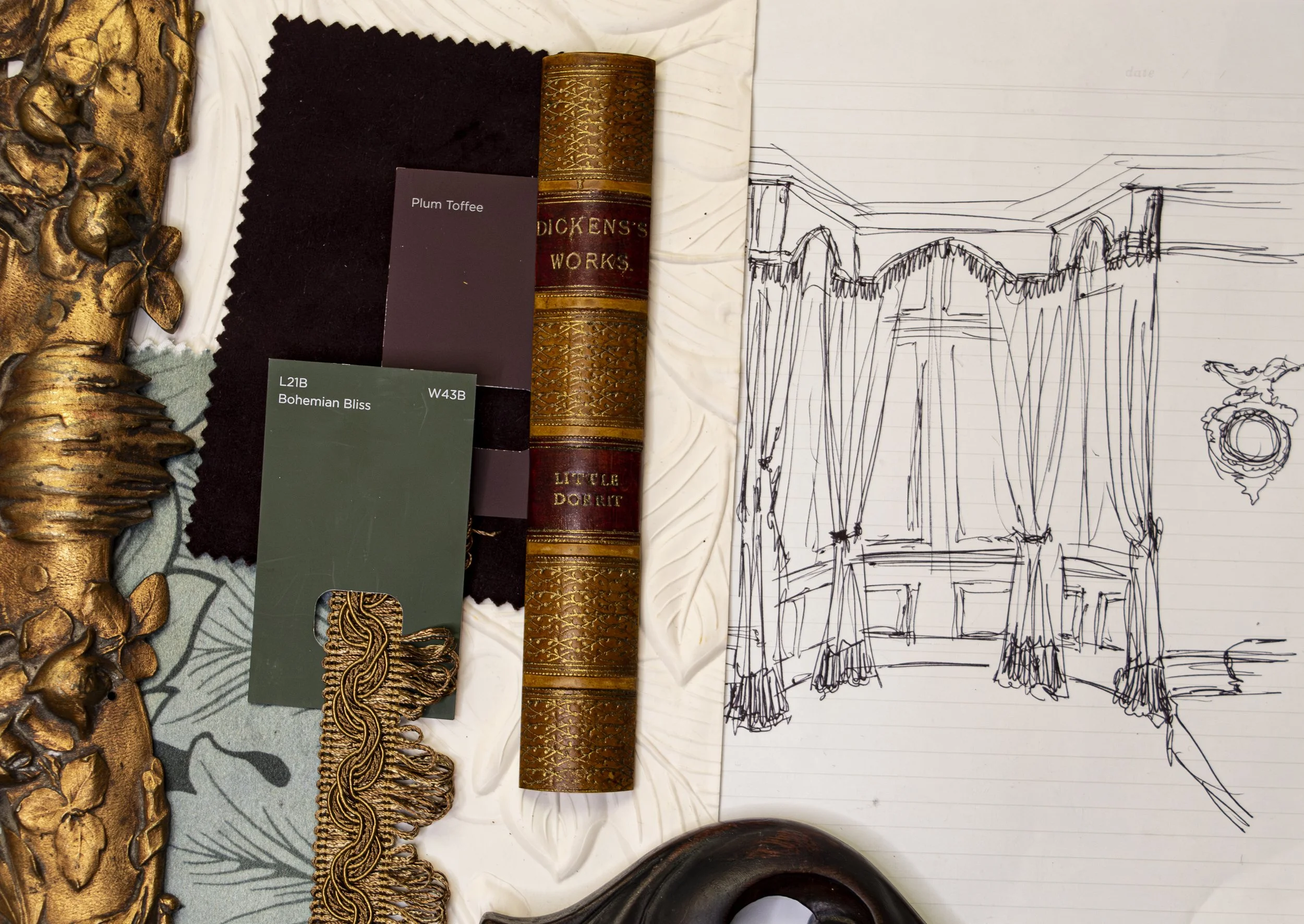
Photo Credit: @houseofbizarium
4. Your use of colour—particularly green—feels elevated. What is your process for choosing a paint colour that feels timeless, atmospheric, and never accidental?
Green has always felt emotionally recharging to me, calming, grounding, quietly restorative but rich and opulent with the right parings. It also carries a strong historical resonance, which I am naturally drawn to. Whether it is earthy Georgian greens to the deeper darker Victorian greens, it is a colour that ages well and feels rooted rather than reactive.
My process is instinct led but considered, I do use samples, but I am not afraid to commit if the colour works harmoniously with everything else, I am building around it, furniture, artwork, textiles, light. I know I can become indecisive, and paint, unlike a wallpaper, or bespoke joinery, is one of the more forgiving elements. If it needs to change, it can, and that freedom encourages confidence rather than hesitation.
I don’t follow trends, though elements of what I create, will and have become fashionable, just as much as it will go out of fashion at some point. For me interiors, like fashion, doesn’t really have anywhere ‘new’ to go and should no longer be about chasing trends, it should be about being able to express ourselves and pull from the references with love and with the breadth of styles and variety available to us, there should be room for everyone to create and express themselves without it been trendy or not.
I break the rules constantly, but the one principle I return to is staying true to the aesthetic you are aiming for. If colour supports the atmosphere, the narrative and the feeling you want a space to hold, then it will never feel accidental. Timelessness comes not from playing it safe, but from committing wholeheartedly to a vision.
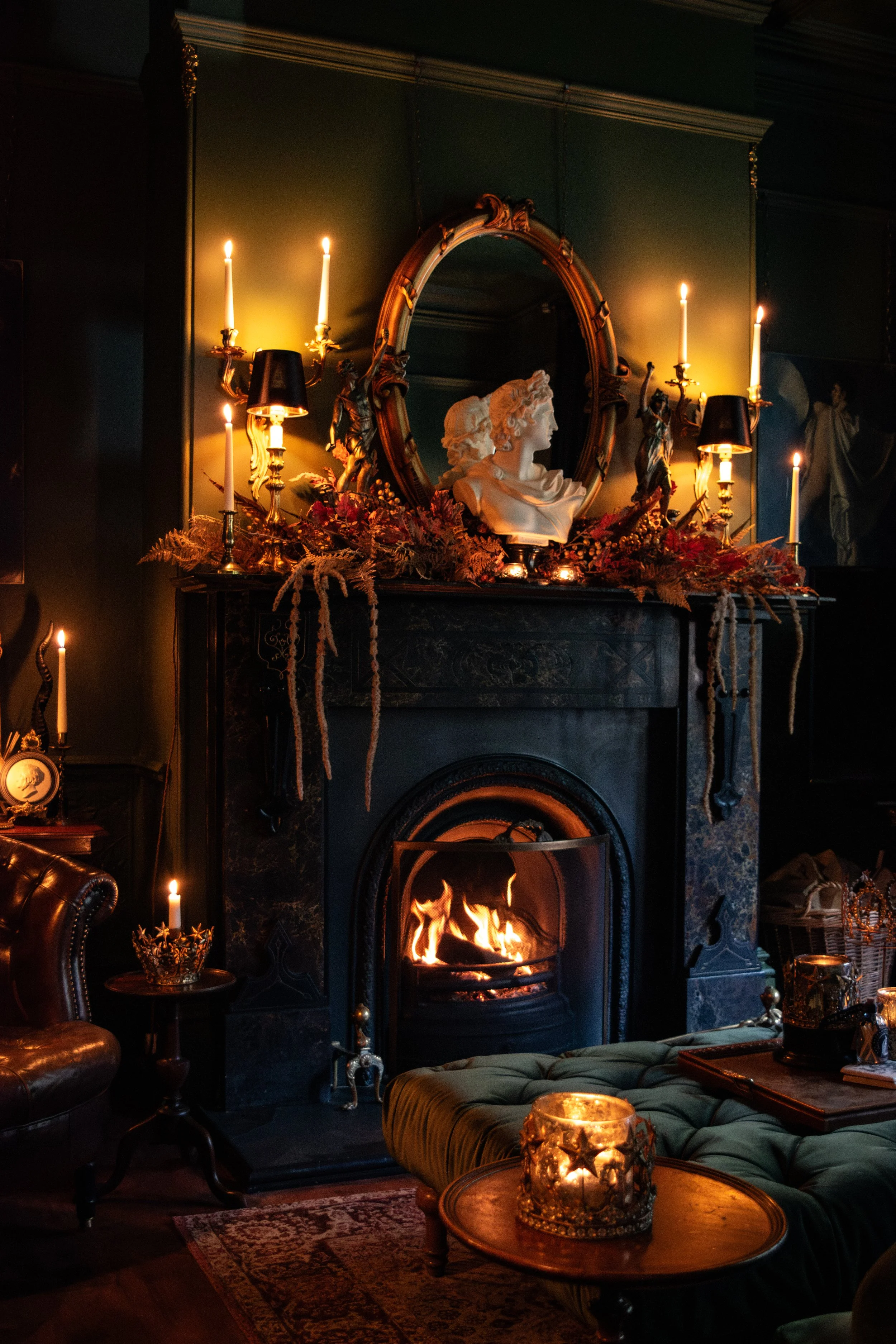
Photo Credit: @houseofbizarium
5. Many readers love vintage and Edwardian interiors but struggle with modern intrusions. How do you recommend integrating contemporary technology—televisions, computers, speakers—into period-inspired spaces without breaking the spell?
For me modern technology is something to be disguised wherever possible. With all the advancements we have, it is frustrating that there aren’t more sympathetic, well-designed solutions that allow technology to sit quietly within period inspired spaces at more affordable price points. Until that exists more widely, concealment remains my instinct.
In our own home, the television lives on an antique table with wheels, pulled into position only when we are using it with the darker colour pallet helping it blend more discretely. I am not the biggest fan of wall mounting above fireplaces, as I don’t want technology to become the focal point of a room built on atmosphere and history. Whilst I could happily live without a television in the room, I also enjoy watching a good film or series in the cosy environment.
Where full concealment isn’t possible, I advocate thoughtful compromise. Reduce visual noise where you can by hiding cables completely, avoid shiny plastics, be mindful of the scale and placement. Technology doesn’t need to shout to function.
Ultimately, period-inspired spaces rely on a little smoke and mirrors, and anything that breaks that illusion should be questioned. If modern interventions are treated as temporary guests rather than permanent features, they can coexist without overpowering the narrative. The goal isn’t to reject the present but allow the past to ambience to remain the dominant voice.
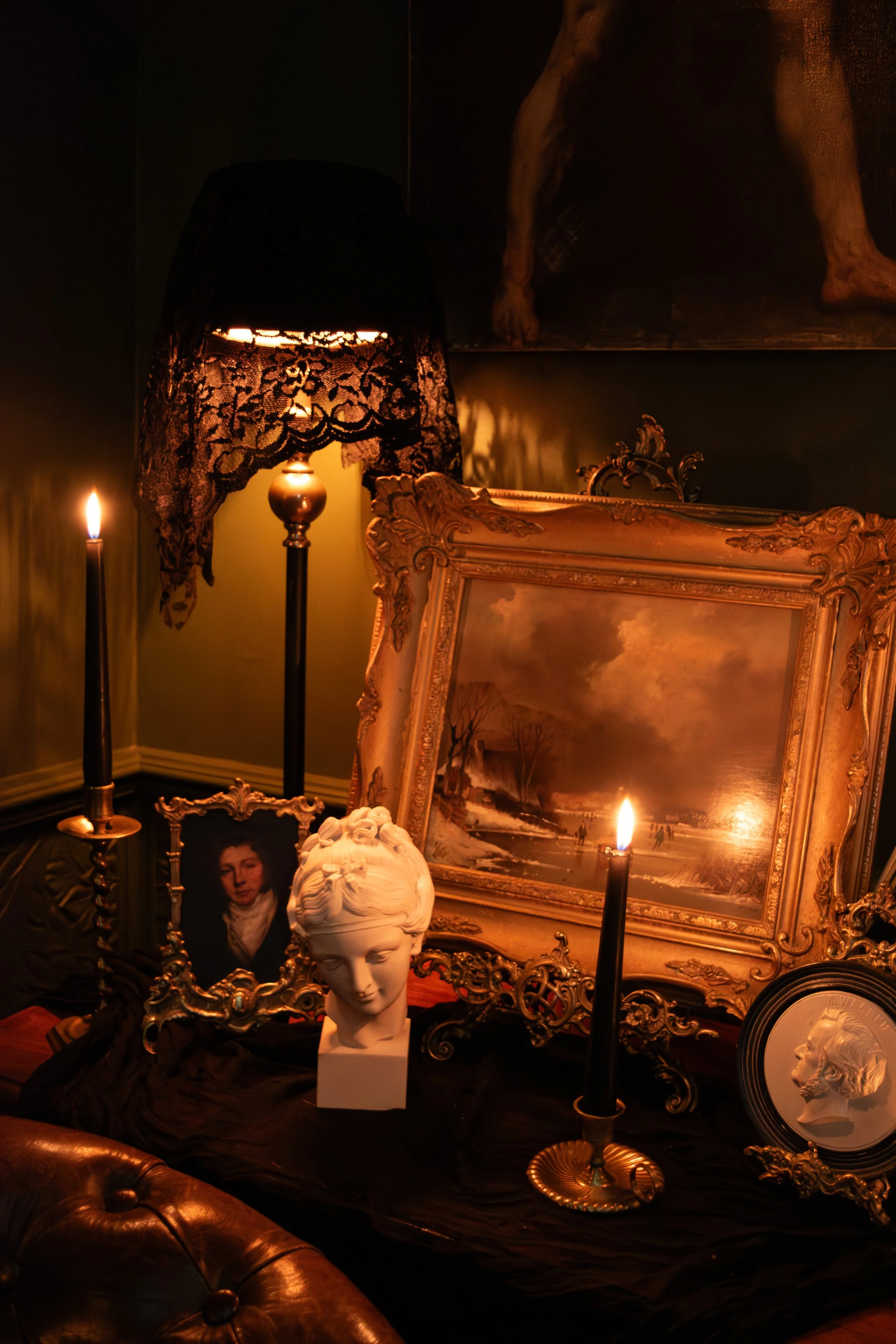
Photo Credit: @houseofbizarium
6. Dark Academic interiors can be easily lost in translation. What separates a truly lived-in Dark Academic home from one that feels staged or overly literal?
I don’t consider myself an academic in the traditional sense, but I have always been drawn to books, particularly those filled with visual reference, antique books filled with illustrations of form and decoration, interiors and fashion plates. For me the term “dark academia” is not just about scholarship and more about creating a space that feels intellectually and historically resonant of a person who is well studied in their remit. A space that houses your tools, your curiosities and your informative resources that inspire the whole creation displayed in a decorative yet functional way.
A space begins to feel overly literal when it veers towards costume, when it starts to feel overly staged as if you would never actually inhabit it. I instinctively display objects as I would use them, visually please, yes that inspires sketching for me or storytelling, but always accessible, practical and occasionally slightly messy. Like the books I would leave on a table in a hurry. That natural sense of function is what separates a lived in space from one that feels contrived.
Signs of use, layering and personal collections are essential. A truly atmospheric dark academic interior evolves time, it is collected, refined, edited and curated slowly. Imperfections are not just tolerated they are embraced, they tell a story, mark the passage of time and hint at the life lived within the walls.
Ultimately, it is the balance of intention and authenticity that matters. A space that feels alive is one where history, intellect and personal taste coexist harmoniously and my biggest advice would be, don’t just collect things for the sake of a look, collect what really interests and inspires you that’s how you will build authenticity in.
7. When it comes to interiors, discernment matters more than budget. What elements are always worth splurging on, and where can readers confidently save without compromising the soul of a space?
Some things are simply worth investing in, the fundamentals that ground your home. Proper electrics, heating, plumbing and joinery, especially if you are not DIY-savvy, are worth engaging the right people and the right quality for. These are the bones of a home and everything else grows from them.
Beyond that patience and careful curation allow almost everything else to be achieve affordably. Doing as much prep work, finishing or restoration yourself, not only saves money but adds a sense of ownership and intimacy to a space, never be afraid to ask for advice along the way. Hunting for the right pieces, for us its antique or vintage, it often yields better quality at a fraction of the price, and the patina they hold adds immeasurably to creating characterful and atmospheric spaces.
Of course, there are moments where professional intervention makes more sense than DIY, jobs that require investment of expensive tools, multiple attempts or specialist skills will almost always cost more in time, materials, frustrations and outlay that bringing in the expert. It is about balance, realizing your strengths and sometimes swallowing your price. Longevity versus replaceability, investment versus patience and always striving for the maximum effect without comprising soul.
Ultimately, interiors are about layering, time and intention. Spend thoughtfully where it counts, save creatively where you can and the results will be a home that feels both lived in and timeless.
8. Brontë-core is having a moment again, with a new Wuthering Heights adaptation on the horizon this month. When you’re thrifting or sourcing for that windswept, romantic mood, what objects or details instantly signal Brontë rather than costume drama?
This is a new trend to me, but if I were approaching this look, I would be taking inspiration from their home and surroundings along the hardships experienced by the sisters and the life they led. Details signalling the harsh windswept landscapes surrounding the parsonage and the modest environment they lived.
To create this look I would pull away from too many pieces and focus on limited pieces and the use of textures from antique papers, a selection of considered antique books well red, the use of delicate antique lace, a fine China teacup & saucer, hand drawn sketches and written notes. For me it would be about using objects that feel touched in time, used as their inspiration, the colours were mostly earthy muddy tones, mixed with dark waxed woods and little touches of dusty pinks and soft greens. All weathered, worn yet rich, feminine yet masculine. It is about harmonizing the contrasts, so the space feels both intimate and expansive, tender and grounded. They led a modest and hard life, so pairing back to the essential’s pieces would be key in creating this look for me.
What would break this spell is anything overtly theatrical and fussy, props that are merely made to look old, or displays that feel rigidly staged. Authenticity will always carry more weight than a bad imitation.
Ultimately, it is about curation, layering objects, textures and light in a way that tells a quiet story, inviting the imagination to wander without ever needing to shout. That is what turns a room into a Brontë inspired world, rather than a bit of set dressing.
9. Every creative practice comes with experiments that succeed—and those that spectacularly don’t. What has been your greatest DIY triumph, and what project went hilariously wrong?
My greatest DIY triumph has been working with wood, something I always loved working with, but only dabbled with throughout my creative life. It took a lot of practice, patience and some trial and error, but I have learned skills that now allow me to repair, replace and add detailing to spaces. Although I am nowhere near building important structures just yet, but there is something quietly satisfying about having a hand in transforming a space with your own hands. It is not just about the visual results, but the confidence and craftsmanship that you carry into every future project.
As for failures, well there have been many and often hilariously so. Spray cans have decorated me more than the objects I was working on, ladders have become a treacherous adversary, unintended holes in walls, not to mention the amount of literal blood, sweat and tears that have gone into the space. If they did a black light on the spaces, I would probably look like a crime scene and without doubt, miscalculating the time frames of doing any project. If you think it’s going to take a day, multiple it by 2 at least.
Some mistakes remain as reminders, adding a little charm and character, while others have been or are yet to be rectified.
In the end, the triumphs are sweet for the failures, and the failures make the successes feel well earned. DIY isn’t about perfection; it is about curiosity and experimentation.
10. You’ve teased an upcoming fashion line, which feels like a natural extension of your world. How does your approach to interiors translate into clothing, and what can we expect from this next chapter?
My approach to interiors translates very naturally into the garments, that I wear and design. I am equally drawn to texture and layering of patterns, to deep rich colours and to creating a strong sense of heritage with unexpected twists that makes them feel more contemporary. Just as I build a room with layers of light, texture and history, I approach design with the same philosophy, every piece enhancing the space or wearer, creating a mood and with a sense of versatility. Pastels don’t interest me, I live in a dark, earthy, rich & moody inspired tones that feel timeless yet personal.
The pieces I have been developing for the family business are quietly opulent, inspired by heritage silhouettes and heritage textiles and go hand in hand with the tailored suiting we offer within that business.
In regards what to expect from this chapter is that a new chapter is in the works, one that I will be unapologetically me.
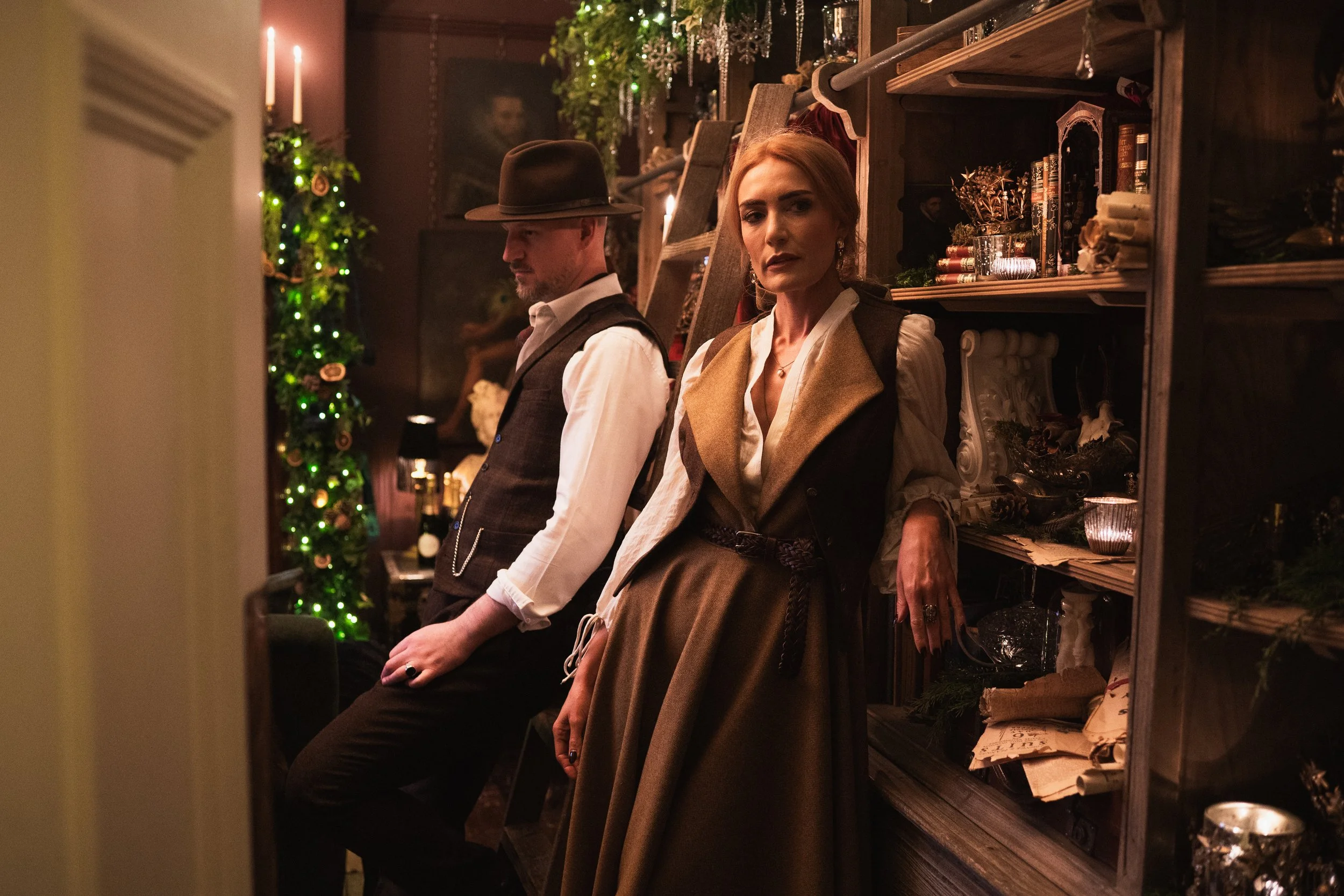
Photo Credit: @houseofbizarium
What emerges through Langley’s approach is a belief that beautiful interiors are less about control and more about stewardship. Whether speaking about restoration, curation, colour or design, his work resists urgency in favour of attentiveness, allowing rooms to evolve as people do, slowly and over time. He reminds us that the most compelling spaces are not designed to be “finished” but to be lived in, altered gently and carried forward with reverent intention.
To follow Langley’s ongoing work and evolving approach to lived-in design, visit @houseofbizarium, and subscribe below to receive our free monthly digital issue, where conversations like this continue to unfold.