The award-winning stripper, scholar and pole community pillar discusses how connection became the foundation of her life's work
By: The Lace Ledger Staff

Imagery courtesy of Dr. Lindsay Byron
One of the great frustrations of being a woman is how often the world asks us to pick a lane. Be serious or be sexy. Nurturing or ambitious. Disciplined or spontaneous. Practical or romantic. Lindsay has spent much of her life proving that these categories don’t need to be mutually exclusive.
Over the course of sixteen years as a dancer, she became one of the most celebrated strippers in Atlanta, earning the title of Best Stripper in Atlanta in 2015 while simultaneously completing a doctorate in literature. Behind those accomplishments was a young woman navigating profound loss, family challenges and the social consequences of being labelled long before she had the opportunity to define herself. Rather than allowing those experiences to dictate the course of her life, she alchemized them into momentum.
Today, Lindsay is best known as the founder of Stripcraft and StripTrips, where she continues to champion pole culture and community through education, mentorship, sentuality and unforgettable experiences around the world. From academia to the strip club, from viral storytelling to building one of the most recognizable brands in the pole community, her journey is a testament to resilience. We caught up with Lindsay to discuss stripping, stigma, literature, entrepreneurship and why she believes some of life's most meaningful connections can begin in the most unexpected places.
1. You’ve spoken openly about losing your father young, alongside the instability surrounding your mother’s challenges, and beginning to strip at eighteen. Looking back now, what first drew you toward the club environment, and what did you imagine that world would be before you stepped inside it yourself?
In hindsight, if you could give your 18-year-old self one piece of advice about working as a dancer, what would it be?
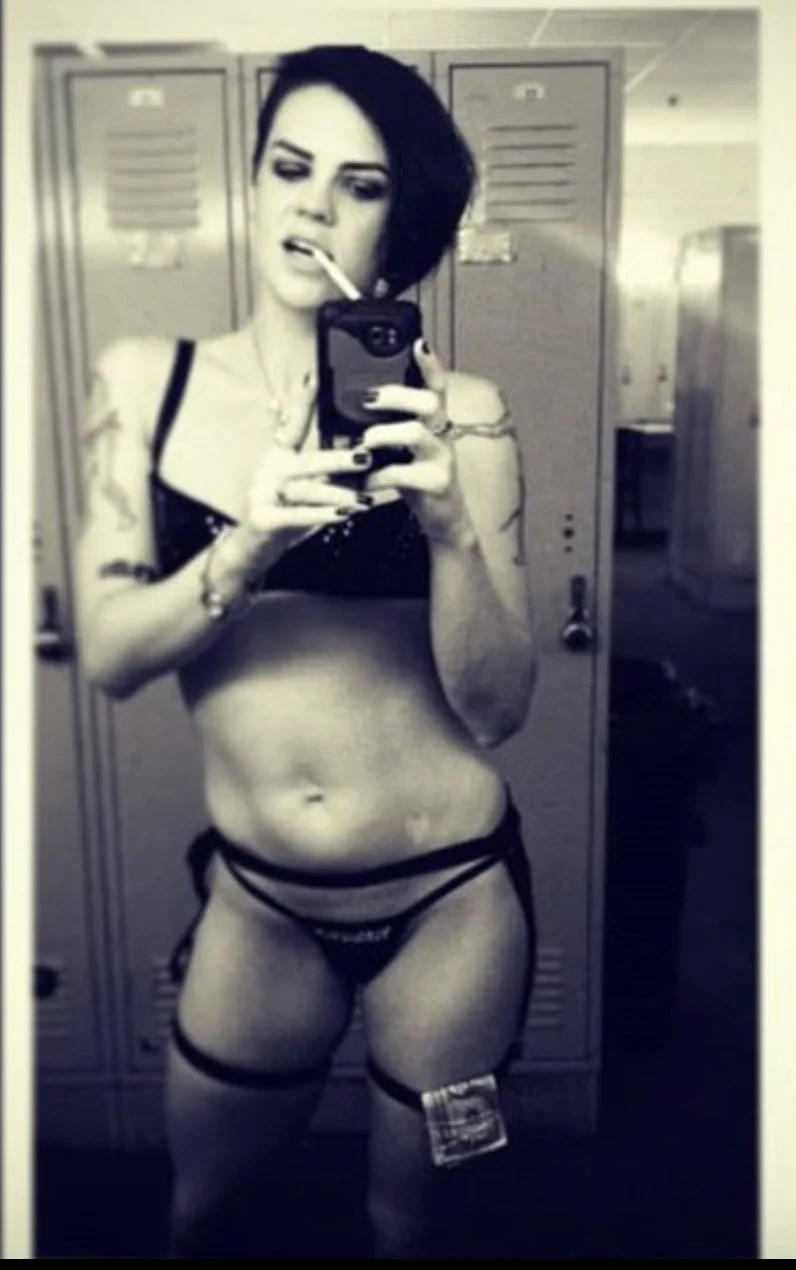
I was drawn to the strip club as a very young woman because of a mix of sexual trauma plus a natural gift for friendliness and salesmanship. I have also always loved being on a stage.
My dad died when I was 16, and my mother–who also recently passed this February–went totally insane, leaving me essentially orphaned and prey to an older man who would ultimately go to jail for his abuse of me. I was labelled the high school slut and a troubled child and was at once outcast for this reputation, as well as secretly desired by many who would never claim me in the light.
These experiences imprinted upon me the currency of my sexuality. I was angry and wanted to wield my sexuality as a weapon.
Imagery courtesy of Dr. Lindsay Byron
2. Across sixteen years working in clubs, you witnessed people at their loneliest, most performative, most generous and occasionally most out-of-character. How did that environment reshape the way you understood intimacy, money and the emotional dynamics between men and women outside the club?
Working in the club was mostly detrimental to my personal sex life and romantic relationships. While I had a few customers I loved and with whom I still keep in touch, nonetheless assault and degradation are frequent in this line of work, and so I developed a serious anger against men. That anger has significantly subsided now that I have been retired from sex work for a decade.
Not all experiences were bad; some felt like holy service to lonely people. Listening to men talk. Hugging them. Looking in their eyes. Showing interest. People have these needs; and some people just cannot get them fulfilled in their normal lives. Filling the physical, emotional, romantic desires of individuals who were otherwise missing this from their lives was a sacred duty.

Imagery courtesy of Dr. Lindsay Byron
3. You were named Best Stripper in Atlanta in 2015; what did that recognition mean to you at that point in your career? What does it mean to you now?
Literally one of my proudest accomplishments. I also have a PhD. I am more proud of the Best Stripper in Atlanta award than I am the doctorate.
Atlanta is a mecca for strip clubs; this was no small honor. In 2015, that recognition was a legitimizing force in my career. It still is.

Imagery courtesy of Dr. Lindsay Byron
4. While becoming an award-winning dancer in Atlanta, you were simultaneously earning your doctorate in literature; what did balancing those two worlds at once look like for you? Did you find that many women around you at the time were also using dancing to build entirely different futures for themselves; whether that meant academia, entrepreneurship or something else?
Most of the other dancers were building something. Few thought of the strip club as the final career destination.
For me, working in the club while simultaneously working as an academic was an eye-opener to the fact that I could not grade papers for peanuts for the rest of my life. The academy offered no job security and no financial promise. I was getting paid more to shake ass than teach the youth.
If I didn’t know already what the world valued in women, I found out then. I adopted a grim pragmatism and decided to pursue the professional path that seemed to offer some promise of social mobility, and incredibly, that was stripping, not the academy.
5. What pushed you toward teaching pole and eventually founding Stripcraft? What did you feel was missing from the way pole and sensual movement were being taught or understood at the time?
I was lucky to be in the right place at the right time when social media first took off in the early 2010s. I had created a “fake” FB account where I could post my dance videos and dressing rooms narratives while hiding from my academic colleagues. I named this profile “Lux ATL,” which was (one of my many) stripper names at that time.
To my surprise, some of my videos and written words went viral, and suddenly people from all over the world were interested in me. The pole community in the mainstream was new. I told my stripper stories and the pole community ate ‘em up.
There was a certain fascination with strippers among the mainstream community, and there continues to be. I am proud to say I was one of the very first prominent strippers to make waves in the pole dance world.
If you google “stripper with a PhD,” even to this day, it’s me that comes up.

Imagery courtesy of Dr. Lindsay Byron
6. Stripcraft seems to have evolved into something much larger than pole training alone. For many women, it now functions almost like a pathway back into confidence and sensuality. Did you always envision it growing in that direction, or did that transformation happen organically through the women coming into the space?
The emotional impact upon women was always the purpose driving Stripcraft. Pole dance and sensual movement was the entry point.
7. Pole has become far more visible within mainstream fitness culture over the last decade, but conversations around stigma still linger beneath the surface. From your perspective, do you feel public attitudes toward pole and the women who practice it have genuinely evolved?
I think it is almost totally socially-acceptable to be a pole dancer. There will always be a stigma surrounding stripping; I do not see that changing.
8. Between Stripcraft, your writing and the larger conversations you continue creating around sensuality, your work keeps expanding into new territory. What feels most exciting to you about this next chapter? What can we expect to see next for you and for Stripcraft?
StripTrips are the cornerstone of my business. These platonically-sexy vacations offer good times for bad girls worldwide. Producing these trips is one of the great joys of my life.
Please know that my hand touches almost every inch of a StripTrip, which is an intricately orchestrated multi-day event. I am personally finding the properties, planning activities, even booking vendors. I’m making phone calls and spreadsheets. StripTrips create lifelong friendships and incredible memories, and they are where I pour most of my attention.
I also teach a cohort of pole dancers here in Atlanta; the group is called StripClub. Helping develop these women into beautiful, strong dancers is also a massive joy in my life.
In the future, expect more StripTrips–including an Anne Rice themed book club trip to New Orleans in 2027–more teaching in person here in Atlanta, and maybe even a second memoir.
If there is a thread connecting every chapter of Lindsay's story, it is her belief in the transformative power of connection. Whether listening to customers searching for companionship, teaching women through Stripcraft or creating unforgettable experiences through StripTrip, her work has consistently centred on bringing people together. At the heart of it all is a deep appreciation for community and the relationships that sustain us through life's most difficult and meaningful moments.
As for what's next, we are already counting down the days until her Anne Rice-inspired StripTrip to New Orleans in 2027. A city steeped in gothic history and vampire mythology feels like the perfect setting for Lindsay's next adventure and ours!
This conversation only scratches the surface of Lindsay's story. Her memoir, Too Pretty to Be Good, explores many of these experiences in greater detail. You can also follow her on Instagram to keep up with future StripTrips and the work she continues to do within the pole community and subscribe below to receive our free monthly digital issue, where conversations like this continue to unfold.